europe

Journalist working for AFP news agency killed in Ukraine
French international news agency Agence France-Presse says its Ukraine video coordinator was killed Tuesday during a rocket attack near the eastern Ukrainian city of Bakhmut.
In a tweet, AFP said other agency journalists were with Arman Soldin at the time of the Grad rocket bombardment.
French media outlets reported that the late afternoon attack took place in the vicinity of Chasiv Yar, a town near Bakhmut. Russian forces have been trying to capture the city for nine months, making Bakhmut the focus of the war's longest battle.
Soldin was 32 years old and born in Sarajevo, now the capital of Bosnia, according to the French media reports.
AFP said it was “devastated” at Soldin's death and “all of our thoughts go out to his family and loved ones.”
In May 2022, French journalist Frederic Leclerc-Imhoff, who was working in Ukraine for BFM-TV, was killed near Severodonetsk in the east.
3 years ago

Arrested over protesting King Charles’ coronation: Group says will take legal action
An anti-monarchy group says it plans to take legal action against London’s Metropolitan Police after several of its members were arrested as they prepared to protest the coronation of King Charles III.
Civil liberties groups are accusing the police, and Britain’s Conservative government, of stifling the right to protest with new powers to clamp down on peaceful but disruptive demonstrations.
The police force expressed “regret” late Monday that the activists were prevented from protesting, but defended its handling of the coronation, which drew hundreds of thousands of people into the streets of London — hundreds of protesters among them.
Police arrested 64 people around Saturday’s coronation, most for allegedly planning to disrupt the ceremonies. Four have been charged, most have been released on bail, and six members of anti-monarchist group Republic have been freed and told they will not face any charges.
Republic chief executive Graham Smith said three senior police officers had come to his house and apologized in person for the arrest that saw him held in custody for 16 hours.
“I said for the record I won’t accept the apology,” Smith said, adding that the group “will be taking action.”
The U.K.’s recently passed Public Order Act, introduced in response to civil disobedience by environmental groups, allows police to search demonstrators for items including locks and glue and imposes penalties of up to 12 months in prison for protesters who block roads or interfere with “national infrastructure.”
Police said the Republic members had items that could be used to “lock on” to infrastructure. Republic said the items were ties for their placards and police acknowledged its “investigation has been unable to prove intent to use them to lock on and disrupt the event.”
“We regret that those six people arrested were unable to join the wider group of protesters in Trafalgar Square and elsewhere on the procession route,” police said.
The Conservative government defended police handling of the protests, London Mayor Sadiq Khan, a member of the Labour Party, requested “further clarity” from the force. He said the right to peaceful protest is an integral part of democracy.
Conservative lawmaker David Davis said the new powers of arrest were too broad.
“No-one wants a day ruined, but the right to put up placards is virtually absolute in British democracy,” he told the BBC on Tuesday.
The Metropolitan Police force is already under intense pressure after a series of scandals involving its treatment of women and minorities. Confidence in the force plummeted after a serving officer raped and killed a young woman in London in 2020.
An independent review commissioned after the murder said the force was riddled with racism, misogyny and homophobia.
End/UNB/AP/MB
3 years ago

EU, Ukraine together on Europe Day, but Kyiv remains outside
For the first time, Ukraine and the European Union are marking Europe Day, that celebration of “peace and unity,” together. Don’t let anyone be fooled too much, though.
European Commission President Ursula von der Leyen, the head of the EU's executive branch, made a special trip to Kyiv on Tuesday to deliver the warm words of common destiny after Ukrainian President Volodymyr Zelenskyy said that his nation would from now on “celebrate Europe Day together with all of free Europe."
More than a year into the war with invading Russia, Ukraine wants to badly join the bloc as an essential part to anchor its future in the Western world. “Europe Day,” when the 27 current members celebrate their bond as one, also shows how far that moment is still off.
Also Read: Putin tells Red Square parade ‘real war’ unleashed on Russia
Next month, it will be one year already since the EU nations granted Ukraine candidate status, lavished the nation with praise, boosted it with aid and military support and sanctioned Kyiv’s enemy Russia with ever more sanctions. Some leaders often dress in the blue and yellow of Ukraine’s national flag and “Slava Ukraini,” which means Glory to Ukraine, ends all so many EU speeches.
Yet, frustration on the Ukraine side is evident, because the beginning of membership negotiations is still out of sight. Weary and hoarse, dressed in army olive-drab, Zelenskyy visited the Netherlands last week with a heartfelt plea for a “positive assessment” to start the talks.
“We do all our best during the war. We do all the reforms what we have to do,” he told the host, one of the original six EU members dating back to 1958.
Time, however, is an extremely flexible concept in the EU, and patience an essential one.
Also Read: Ukraine’s Zelenskyy convinced Putin will face court justice
“I am absolutely impressed by what the president’s team is doing,” Dutch Prime Minister Mark Rutte said, with Zelenskyy standing beside him. “Fighting a war against Russia and at the same time making concrete steps in terms of clearing the way in terms of this whole process towards EU accession.”
Then he fell back on the time-set mechanics of the EU, which foresees the next assessment in about a half-year, in October. All this to a leader who is counting in weeks and months when his nation might be on the road to victory — or ruin.
The best advice, though, is for Ukraine to stay the course.
“A promise has been made and in essence it is now in the hands of Ukraine. The EU cannot postpone things forever,” said Ghent University Professor Hendrik Vos, an expert on EU decision making.
But unexpected things can happen, as suddenly overflowing cereal silos in several eastern EU nations proved early this spring. To help Ukraine export its grain, sunflower and other farm produce after Russia closed off the Black Sea route, the EU lifted trade restrictions to give a free passage through the bloc and hopefully on to needy world markets.
Yet in neighboring nations like Poland, Hungary, Slovakia and Romania, stocks built up, prices plummeted and that extremely vocal and influential group of voters — the EU’s 10 million farmers — started grumbling, indicating that membership promises are about much more than just sentimental shows of support.
“Of course we have solidarity with Ukraine,” said Christine Lambert, the president of the COPA EU farmers union, “but there are also significant economic aspects to this,” adding that “it’s sort of creating a hole in our budget. It will result in problems and farmers can’t bear these problems alone.”
Apart from making sure that France and Germany never go to war again, the founding principles of the EU also included avoiding hunger in the bloc in the wake of World War II. It allowed farming to take on an exceptionally important role in EU policies and even now it takes up almost a third of the EU’s designated budget.
The war and climate change have put EU farmers increasingly in a squeeze and taking in — and on — a nation like Ukraine, which is historically seen as the breadbasket of Europe, would be especially challenging.
Before the war, Ukraine still had a major stake in the global market of wheat, barley, corn and sunflower oil. Farming accounted for more than 40% of exports.
Opening up to such competition strikes fear in the hearts of many farmers, especially if it comes within a few years. Lambert pointed out how EU farmers need to meet tough environmental and social rules, which Ukrainians so far don't have to comply with.
Once Ukraine joins, it will in principle have the whole market of the current 27 nations at its disposal, but it will also need to abide by EU rules. And Vos said that goes right down to the size of chicken battery cages to meet animal welfare standards.
“Farmers will be saying they don’t want unfair competition from big Ukraine chicken farms that don’t have to play by the rules,” Vos said.
And Ukraine will only be able to join if it gets major financial aid from the current members to rebuild its nation and upgrade to EU standards. It will turn many of the EU nations that now get money from EU coffers into net contributors. Little wonder many in the EU push any membership date into the unspecified future yonder.
“Many years. We’ll need that time to see that obligations are satisfied,” Lambert said.
Such considerations from a small group of stakeholders won’t stop the groundswell of history though. In the EU’s successive sweeps of expansion, short-term financial losses never stood in the way in the end.
When the Iberian Peninsula wrested itself free from dictatorship during the 1970s, poor and needy Spain and Portugal were embraced in the EU a decade later despite the cost.
When the Berlin Wall came down and the Soviet Union collapsed in the early 1990s, the EU took in eight eastern nations in 2004, also at a major cost to the existing members.
Each time, talks on nitty gritty issues went on deep into countless nights but eventually compromises were found — more money was given to grumbling members, sometimes long transition times imposed.
Russia's war in Ukraine could well be an equal watershed in EU history.
“At a certain point there is no way back. The groundbreaking decision has been taken. There can be incremental talks about money until the end. But they won’t stop it,” Vos said.
3 years ago

Ukraine farmers risk losing their lives or livelihoods
A grassy lane rutted with tire tracks leads to Volodymyr Zaiets’ farm in southern Ukraine. He is careful, driving only within those shallow grooves — veering away might cost him his life in the field dotted with explosive mines.
Weeds grow tall where rows of sunflowers once bloomed. Zaiets’ land hasn't been touched since the fall of 2021, when it was last seeded with wheat. Now, it's a minefield left by retreating Russian forces.
Zaiets eschewed official warnings and demined this patch of land himself, determined not to lose the year’s harvest. He expects that 15% of his 1,600 hectares (4,000 acres) of farmland was salvaged.
Workers like Victor Kostiuk still spot mines, but he's ready to start the tractor.
“We have to do it,” he says, “Why be afraid?”
Across Ukraine, the war has forced grain growers into a vicious dilemma. Farmers in areas now free from Russian occupation are risking their lives to strip their land of explosives before the critical spring planting season. Even then, they must cope with soaring production and transportation costs caused by Russia’s blockade of many Black Sea ports and recent restrictions that neighboring countries imposed on Ukrainian grain.
The dual crisis is causing many farmers to cut back on sowing crops. Bottlenecks in shipping grain by land and sea are creating losses, with expectations of a 20% to 30% reduction in grain output, poorer quality crops and potentially thousands of bankruptcies next year, according to industry insiders, Ukrainian government officials and international organizations.
The “drastic reduction” of grain crops potentially threatens global food security, said Pierre Vauthier, head of the U.N. Food and Agriculture Organization in Ukraine. “That is the main thing everybody eats. So that’s why it is a big concern.”
More than a year since Russia's invasion, the Ukrainian agriculture industry is starting to see the full impact of what's been dubbed “ the breadbasket of the world,” whose affordable supplies of wheat, barley and sunflower oil are crucial to Africa, the Middle East and parts of Asia where people are going hungry.
The FAO says 90% of agricultural businesses lost revenue and 12% reported lands contaminated with mines. Land planted with grain dropped last year to 11.6 million hectares (28.6 million acres) from 16 million hectares (around 40 million acres) in 2021. That's expected to fall to 10.2 million hectares (25.2 million acres) this year.
In the southern Kherson province, between the threat of missiles from the sky and mines on the ground, farmers make the same, often tragic, calculation: Take the risk and plant or lose their livelihoods.
The region is among the highest wheat-producing areas in Ukraine and the most heavily mined. Demining services are overstretched, with infrastructure and civilian homes prioritized over farms.
But growers can’t wait: April and May are key planting months for corn, the autumn months for wheat. Many are switching to planting oil seeds that are less costly.
“We have nearly 40 big farmers in our area, and nearly everyone is unable to access their lands except two,” said Hanna Shostak-Kuchmiak, head of the Vysokopillya administration that includes several villages in northern Kherson.
Zaiets is one, and Valerii Shkuropat from the nearby village of Ivanivka is the other.
“Our heroes,” said Shostak-Kuchmiak, “who were driving their cars around picking up mines and bringing them to our deminers.”
Neither farmer felt they had the choice. Both knew that without a harvest this year, they will be insolvent by next.
Everyone understands the risks, said Shkuropat, who’s vast 2,500 hectares (more than 6,000 acres) of land once grew peas, barley, millet and sunflowers. He estimates that half can be planted.
Last month, one of his workers was killed and another was wounded while picking up metal missile remnants.
“If we sow, if we grow crops, people will have jobs, salaries and they will have a means to feed their families,” Shkuropat said. “But if we don’t do anything, we will have nothing.”
Russia’s blockade of Ukraine’s Black Sea ports stripped the country of the advantage it once enjoyed over other grain-exporting countries. Transit costs, now four to six times higher than prewar levels, have rendered grain production prohibitively expensive.
High costs of fuel, fertilizer and quality seeds only add to farmers' woes. Most must sell their grain at a loss.
Farmers are responding by seeding less, said Andrii Vadaturskyi, CEO of Nibulon, a top Ukrainian grain shipping company.
“No one is paying attention to the fact that already 40% less wheat has been seeded (this year), and we expect 50% less corn will be seeded in Ukraine,” he said, drawing on data from 3,000 farmers.
Nibulon once paid an average of $12 to ship a ton of grain from the southern port city of Odesa. Now it pays $80-$100 per ton, Vadaturskyi said,
HarvEast CEO Dmytro Skornyakov said that his agricultural company pays almost $110 in logistics costs to export every ton of corn.
“It covers our expenses, but doesn’t give us any profit,” he said.
Negotiations are underway on renewing the U.N.-brokered agreement that allows Ukrainian grain to safely leave three Black Sea ports. Shippers say the deal isn't working efficiently.
Russian inspections are causing long wait times for vessels, piling on fees and making the sea route expensive and unreliable, Ukrainian grain shippers say. Russia denies slowing inspections.
“We had some vessels which were waiting close to 80 days in the queue simply to be loaded,” said Vadaturskyi of Nibulon. “Someone has to lose that money, either the buyer, owner of the vessel or trader.”
Transit routes through Europe are open even as Poland, Romania, Slovakia, Bulgaria and Hungary temporarily banned Ukrainian wheat, corn and some other products over concerns about their own farmers' profits.
But those routes are slow and costly. Shipping by sea accounted for 75% of Ukrainian grain exports at the start of the year.
Meanwhile, some farmers won't risk planting their fields.
Oleh Uskhalo’s land in Potomkyne is awash with ammunition, the vast wheat farms reduced to a graveyard of scorched equipment.
Inside a bombed-out grain shed lies piles of wheat grain — Ushkalo’s entire prewar harvest — rotting under the sun.
“We can go on for another year,” he said. After that, he doesn’t know. He hopes for government compensation.
“I cannot send (my workers) to a field where I know mines and bombs are,” Uskhalo said. “To send a person to blow themselves up? I can’t do that.”
He faces resistance from his employees, eager to earn wages.
“The tractor drivers, they say, ‘We can go, we can sign a document stating that we take full responsibility,’” Uskhalo said.
It’s too risky, he told them.
In the distance, he can see a tractor equipped with disk tillers, a type of plow. “I wonder if it’s Volodymyr Mykolaiovych,” he said, referring to Zaiets.
“All it takes is for one of those disks to hit a mine and that’s it.”
That’s what happened to Mykola Ozarianskyi.
In April, the farmer took a chance: He hopped on his tractor in his village of Borozenske, in Kherson, to head to a friend’s sunflower field to cut stalks.
He swerved to turn down a side farm road. He remembers the explosion, then waking up in a hospital bed with a collapsed lung and broken ribs.
Every day, he thinks of his 16 hectares (around 40 acres) of land, still unseeded.
“I will do it,” he said, straining to speak while a tube drains blood from his chest. “For a farmer, not planting means death.”
3 years ago

Burials held in Serbia for some victims of mass shootings
Heart-wrenching cries echoed as funerals were held in Serbia on Saturday for some of the victims of two mass shootings that happened just a day apart this week, leaving 17 people dead and 21 wounded, many of them children.
The shootings on Wednesday in a school in Belgrade and on Thursday in a rural area south of the capital city have left the nation stunned with grief and disbelief.
Though Serbia is awash with weapons and no stranger to crisis situations following the wars of the 1990s, a school shooting like the one on Wednesday has never happened before. The most recent previous mass shooting was in 2013 when a war veteran killed 13 people.
The shooter on Wednesday was a 13-year-old boy who opened fire on his fellow students, killing seven girls, a boy and a school guard. A day later, a 20-year-old man fired randomly in two villages in central Serbia, killing eight people.
Classmates and hundreds of other people cried unconsolably as one of the girls killed in the school shooting was laid to rest in Belgrade in a small white coffin that was covered with heaps of flowers. Overwhelmed by grief, the girl's mother could barely stand on her feet. One girl collapsed during the service amid screams and sobbing.
While the country struggled to come to terms with what happened, authorities promised a gun crackdown and said they would boost security in schools. Thousands lit candles and left flowers near the shooting site in Belgrade, in an outpouring of sadness and solidarity.
“My soul aches for them,” said Vesna Kostic, who came to pay respect outside the school on Saturday. “I keep looking for a cause, a reason why this has happened to him (the shooter), why this has happened to us.”
Serbian media reported that four of the eight children killed in the school shooting, as well as the Vladislav Ribnikar school guard, would be buried at cemeteries in Belgrade on Saturday, the second day of a three-day mourning period for the victims.
Some 50 kilometers (30 miles) to the south, a mass funeral service was being held in the small village of Malo Orasje for five young men who were gunned down in the shooting rampage on Thursday evening.
Sobbing mourners lined up to light candles while waiting for the coffins to be placed on five benches outside the village church for a service.
“Five graves! He (the killer) shut down five families,” one villager told N1 television. “How could this happen?”
Serbian police have said that the suspected shooter stopped a taxi after his rampage and made the driver to take him to a village further south, where he was arrested on Friday. Officers later said they found weapons and ammunition in two houses he was using there.
The suspect, identified as Uros Blazic, was questioned by prosecutors in the central town of Smederevo on Saturday, state media reported. He faces charges of first-degree murder and unauthorized possession of guns and ammunition.
The motive for both shootings remained unclear. The 13-year-old boy, who is too young to be criminally charged, has been placed in a mental clinic. His father was arrested for allegedly teaching his son to use guns and not securing his weapons well enough.
The suspected village shooter wore a pro-Nazi T-shirt, authorities said, and complained of “disparagement,” though it was unclear what he meant. Populist leader Aleksandar Vucic promised the “monsters” will “never see the light of day again.”
The wounded in the two shootings have been hospitalized and most have undergone complicated surgical procedures. A girl and a boy from the school shootings remain in serious condition, and the village victims are stable but under constant observation.
The school shooting left six children and a teacher wounded, while 14 people were wounded in the villages of Malo Orasje and Dubona. The dead in Dubona included a young, off-duty policeman and his sister.
Authorities released a photo showing the suspected shooter upon arrest — a young man in a police car in a blue T-shirt with the slogan “Generation 88” on it. The double eights are often used as shorthand for “Heil Hitler” since H is the eighth letter of the alphabet.
Apart from the gun crackdown, officials have announced stepped-up monitoring of social networks and the media. Already by Saturday, several people had been questioned for posting threats or videos supporting the killers on social networks, the Tanjug news agency reported.
Serbia's education ministry outlined a crisis plan for the students of Vladislav Ribnikar school to gradually return to classes next Wednesday. A team of experts, backed the U.N. children's agency UNICEF, will offer support and oversee the process, a ministry statement said.
Experts have repeatedly warned that decades of crises and economic hardship, coupled with corrupt institutions and a high level of intolerance in public speech and politics, could push some people over the edge.
The populist-led Balkan country has refused to fully face its role in the wars of the 1990s, war criminals are largely regarded as heroes and minority groups routinely face harassment and sometimes physical violence.
“The question now is whether our society is ready to reject the model of violence,” psychologist Zarko Korac warned. “When you glorify a war criminal you glorify his crimes and you send a message that it is legitimate.”
3 years ago
Charles III crowned in ancient rite at Westminster Abbey
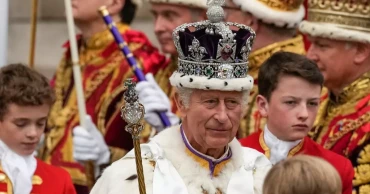
King Charles III was crowned Saturday at Westminster Abbey, receiving the bejeweled St. Edward's Crown in a ceremony built on ancient traditions at a time when the monarchy is striving to remain relevant in a fractured modern Britain.
Trumpets sounded inside the medieval abbey and the congregation shouted “God save the king!” at a ceremony attended by more than 2,000 guests, including world leaders, aristocrats and celebrities. Outside, thousands of troops, tens of thousands of spectators and a smattering of protesters converged.
It was the culmination of a seven-decade journey for Charles from heir to monarch.
To the royal family and government, the occasion — code-named Operation Golden Orb — was a display of heritage, tradition and spectacle unmatched around the world. The rite was expected to by watched by millions, though the awe and reverence the ceremony was designed to evoke are largely gone — and many greeted the day with a shrug.
Some even met it with disdain. Republican protesters gathered outside to holler “ Not my king ” for a celebration of an institution they say stands for privilege and inequality, in a country of deepening poverty and fraying social ties. A handful were arrested.
Nonetheless, thousands of people from across the U.K. and around the world camped overnight along a 1.3-mile (2-kilometer) route that the king and his wife, Camilla, traveled to reach the abbey in a gilt-trimmed, horse-drawn carriage.
The church buzzed with excitement and was abloom with fragrant flowers and colorful hats as the congregation of international dignitaries and nobles arrived. Among them were U.S. First Lady Jill Biden, French President Emmanuel Macron, Canadian Prime Minister Justin Trudeau, eight current and former British prime ministers and celebrities including Judi Dench, Emma Thompson and Lionel Richie.
At a traditional Anglican service slightly tweaked for modern times, Charles, clad in crimson and cream robes, swore on a Bible that he is a “true Protestant.”
But a preface was added to the coronation oath to say the Church of England “will seek to foster an environment where people of all faiths and beliefs may live freely," and the epistle from the King James Bible was read by Prime Minister Rishi Sunak, Britain's first Hindu leader.
A gospel choir performed a newly composed “Alleluia,” and, for the first time, female clergy took part in the ceremony. It was also the first to include representatives of the Buddhist, Hindu, Jewish, Muslim, and Sikh faiths.
In an ancient display of kingly power, Charles was anointed with oil from the Mount of Olives in the Holy Land and presented with an orb, swords and scepters, before Archbishop of Canterbury Justin Welby placed the solid gold crown bedecked with more than 400 precious stones on the monarch’s head. As trumpets sounded, gun salutes were fired across the U.K.
For 1,000 years and more, British monarchs have been crowned in grandiose ceremonies that confirm their right to rule. Charles is the 40th sovereign to be crowned in the abbey — and, at 74, the oldest.
These days, the king no longer has executive or political power, and the service is purely ceremonial since Charles automatically became king upon death of his mother, Queen Elizabeth II, in September.
The king does remain the U.K.’s head of state and a symbol of national identity — and Charles will have to work to bring together a multicultural nation and shore up support for monarchy at at time when it is waning, especially among younger people.
The anti-monarchy group Republic said six of its members, including its chief executive, were arrested as they arrived at a protest. Police have said they will have have a “low tolerance” for people seeking to disrupt the day, sparking criticism that they are clamping down on free speech.
The multimillion-pound cost of the all the pomp — the exact figure unknown — also rankled some amid a cost-of-living crisis that has meant many Britons are struggling to pay energy bills and buy food.
Read more: Crowds, dignitaries gather for King Charles III's coronation
Still, Charles has sought to lead a smaller, less expensive royal machine for the 21st century. His was a shorter affair than Elizabeth's three-hour coronation, with fewer guests and an abbreviated procession — though there was still plenty to see: judges in wigs, soldiers with gleaming medals attached to red tunics, members of the House of Lords, world royalty, heads of state, public servants, key workers and local heroes.
The notoriously feuding royal family put on a show of unity. Heir to the throne Prince William, his wife, Kate, and their three children were all in attendance. William’s younger brother Prince Harry, who has publicly sparred with the family, arrived alone. His wife Meghan and their children remained at home in California.
Towards the end of the ceremony, William knelt before his father and pledged loyalty to the king — before kissing him on the cheek.
Then Welby invited everyone in the abbey to swear “true allegiance” to the monarch. He invited people watching on television to pay homage, too — though that part of the ceremony was toned down after some criticized it as a tone-deaf effort to demand a public oath of allegiance for Charles.
Today's public is very different from the audience that saw Elizabeth crowned. Almost 20% of the population now comes from ethnic minority groups, compared with less than 1% in the 1950s. More than 300 languages are spoken in British schools, and less than half of the population describe themselves as Christian.
Still, people came from around the world, and across Britain, to be part of the occasion.
“It’s just to be surrounded by love and to see our King Charles. He’s our mainstay," said Jill Coughlin, a royal fan from Essex, east of London. "We loved our queen and this is just further generations. So it’s wonderful for us, absolutely wonderful.”
3 years ago

Ukraine downs Russian hypersonic missile with US Patriot
Ukraine's air force claimed Saturday to have downed a Russian hypersonic missile over Kyiv using newly acquired American Patriot defense systems, the first known time the country has been able to intercept one of Moscow's most modern missiles.
Air Force commander Mykola Oleshchuk said in a Telegram post that the Kinzhal-type ballistic missile had been intercepted in an overnight attack on the Ukrainian capital earlier in the week. It was also the first time Ukraine is known to have used the Patriot defense systems.
“Yes, we shot down the ‘unique’ Kinzhal,” Oleshchuk wrote. “It happened during the night time attack on May 4 in the skies of the Kyiv region.”
Oleshchuk said the Kh-47 missile was launched by a MiG-31K aircraft from the Russian territory and was shot down with a Patriot missile.
The Kinzhal is one of the latest and most advanced Russian weapons. The Russian military says the air-launched ballistic missile has a range of up to 2,000 kilometers (about 1,250 miles) and flies at 10 times the speed of sound, making it hard to intercept.
A combination of hypersonic speed and a heavy warhead allows the Kinzhal to destroy heavily fortified targets, like underground bunkers or mountain tunnels.
The Ukrainian military has previously admitted lacking assets to intercept the Kinzhals.
Ukraine took its first delivery of the Patriot missiles in late April. It has not specified how many of the systems it has, but they have been provided by the United States, Germany and the Netherlands.
Germany has acknowledged sending at least one system and the Netherlands has said it has provided two.
Defense Minister Oleksii Reznikov said he first asked for Patriot systems when visiting the U.S. in August 2021, months before Russia’s full-scale invasion but seven years after Russia illegally annexed Ukraine’s Crimea peninsula.
He has described possessing the system as “a dream” but said he was told in the U.S. at the time that it was impossible.
3 years ago

Crowds, dignitaries gather for King Charles III's coronation
Tens of thousands of spectators, thousands of troops, hundreds of guests and a smattering of protesters converged Saturday around London's Westminster Abbey, where King Charles III, a man who waited seven decades to become king, will be crowned with all the pomp and pageantry Britain can muster.
And it can muster a lot.
There will be crowns and diamonds, soaring music, purple robes and magnificent hats — and a rousing cheer of “God Save the King” inside the abbey and in the streets outside.
The church buzzed with excitement and was abloom with fragrant flowers and colorful hats as guests began to arrive two hours before the ceremony. Streaming into the abbey were celebrities such as Judi Dench, Emma Thompson and Lionel Richie, alongside politicians, judges in wigs, soldiers with gleaming medals attached to red tunics and members of the House of Lords in their red robes.
Thousands of people from across the U.K. and around the world camped overnight along a 1.3-mile (2-kilometer) route to catch a glimpse of the monarch as he travels from Buckingham Palace to the medieval abbey where kings have been crowned for a millennium.
The crowds grew during morning, in intermittent rain, along the route, which the newly crowned king and Queen Camilla will take back to the palace, this time in a 261-year-old gilded carriage accompanied by 4,000 troops, forming Britain’s biggest military parade in 70 years.
To the royal family and government, the occasion — code-named Operation Golden Orb — is a display of heritage, tradition and spectacle unmatched around the world.
Dean of Westminster David Hoyle who will help lead the service, predicted it would be spectacular.
“I’m used to ceremony on a national level. Even I think this is pretty jaw-dropping,” he said.
But to republican protesters who gathered to holler “ Not my king,” it’s celebration of an institution that stands for privilege and inequality.
The anti-monarchy group Republic said six of its members, including its chief executive, were arrested as they arrived at the protest. Police have said they will have have a “low tolerance” for people seeking to disrupt the day, sparking criticism that they are clamping down on free speech.
For 1,000 years and more, British monarchs have been crowned in grandiose ceremonies that confirm their right to rule.
These days, the king no longer has executive or political power, and the service is purely ceremonial since Charles automatically became king upon death of his mother, Queen Elizabeth II, in September.
The king remains the U.K.’s head of state and a symbol of national identity — and Charles will have to work to unite a multicultural nation at at time when reverence for the monarchy has been replaced, for many, with apathy.
Double-digit inflation is also making everyone in the U.K. poorer, and he has sought to lead a smaller, less expensive royal machine for the 21st century.
So this will be a shorter affair than Elizabeth's three-hour coronation.
In 1953, Westminster Abbey was fitted with temporary stands to boost the seating capacity to more than 8,000, aristocrats wore crimson robes and coronets, and the coronation procession meandered 5 miles (8 kilometers) through central London so an estimated 3 million people could cheer for the glamorous 27-year-old queen.
Organizers this time have shortened the procession route, trimmed the coronation service to less than two hours and sent out 2,300 invitations to world royalty, heads of state, public servants, key workers and local heroes, plus a smattering of celebrities.
The guest list includes U.S. First Lady Jill Biden, French President Emmanuel Macron, Australian Prime Minister Anthony Albanese, Canadian leader Justin Trudeau and eight current and former British prime ministers.
The king's family will be on hand, including his sparring sons Prince William and Prince Harry — though not Harry's wife Meghan and their children, who remain at home in California.
Built around the theme “Called to Serve,” the coronation service will begin with one of the youngest members of the congregation — a boy chorister — greeting the king. Charles will respond by saying, "I come not to be served but to serve.”
The moment is meant to underscore the importance of young people — and is a new addition in a service laden with the rituals through which power has been passed down to new monarchs throughout the centuries.
The symbolic peak of the two-hour service will come halfway through when Archbishop of Canterbury Justin Welby places the solid gold St. Edward’s Crown on the monarch’s head. Trumpets will sound and gun salutes will be fired across the U.K.
In another change, Charles has scrapped the traditional moment at the end of the service when nobles were asked to kneel and pledge their loyalty to the king.
Instead, Welby will invite everyone in the abbey to swear “true allegiance” to the monarch. He'll invite people watching on television to pay homage, too — though that part of the ceremony has been toned down after some criticized it as a tone-deaf effort to demand public support for Charles. Welby will now suggest people at home take a “moment of quiet reflection” or say “God Save the King.”
The public’s response to Charles, though, during the service and along the parade route, is key, said George Gross, a visiting research fellow at King’s College, London and an expert on coronations.
“None of this matters if the public don’t show up,’’ Gross said. ‘’If they don’t care, then the whole thing doesn’t really work. It is all about this interaction.’’
And today's public is very different from the audience that saw Elizabeth crowned.
Almost 20% of the population now come from ethnic minority groups, compared with less than 1% in the 1950s. More than 300 languages are spoken in British schools, and less than half of the population describe themselves as Christian.
Although organizers say the coronation remains a “sacred Anglican service,” the ceremony will for the first time include the active participation of other faiths, including representatives of the Buddhist, Hindu, Jewish, Muslim, and Sikh traditions.
3 years ago

Royal Drama: King’s fractious family on stage at coronation
King Charles III lives in a palace, travels in a chauffeur-driven Bentley and is one of Britain’s richest men, but he's similar to many of his subjects in one very basic way: His family life is complicated — very complicated.
There’s a second wife, an embarrassing brother, and an angry son and daughter-in-law, all with allies who aren’t shy about whispering family secrets in the ears of friendly reporters.
The new king will hope to keep a lid on those tensions when his royally blended family joins as many as 2,800 guests for Charles' coronation on May 6 at Westminster Abbey. All except Meghan, the Duchess of Sussex, are attending.
How Charles manages his family drama over the coming weeks and years is crucial to the king’s efforts to preserve and protect the 1,000-year-old hereditary monarchy he now embodies. Without the respect of the public, the House of Windsor risks being lumped together with pop stars, social media influencers and reality TV contestants as fodder for the British tabloids, undermining the cachet that underpins its role in public life.
Royal historian Hugo Vickers says people should look past the sensational headlines and focus on what Charles accomplishes now that he is king.
Also read: King’s coronation draws apathy, criticism in former colonies
“In a sense, he sort of becomes a new man when he becomes king,” said Vickers, author of “Coronation: The Crowning of Elizabeth II.”
“Look at him as he is now, look at him the way he is approaching everything, look at his positivity and look at how right he’s been on so many issues,” he added. “Unfortunately, he had those difficult times with his marriages and some of the other issues, but we live in a very tricky era.”
The horror show came back to haunt Charles last week, when the king’s estranged younger son, Prince Harry, dropped a new round of allegations Tuesday about the royal family into the middle of the coronation buildup.
In written evidence for his invasion of privacy claim against a British newspaper, Harry claimed his father prevented him from filing the lawsuit a decade ago. The prince said Charles didn’t want to dredge up graphic testimony about his extramarital affair with the former Camilla Parker-Bowles when he was married to the late Princess Diana.
Diana was the mother of Harry and his elder brother and heir to the throne, William, the Prince of Wales. Camilla, now the queen consort, went on to marry Charles in 2005 and will be crowned alongside her husband at Westminster Abbey.
If the past is any indication, attention will now shift to body language, seating plans and even wardrobe choices during the coronation, as royal watchers look for any signs of a thaw in the family tensions.
But Joe Little, managing editor of Majesty magazine, doesn’t expect Harry to have a lot of contact with the rest of his family. In any case, Harry won’t be in the U.K. for long, so there’s not much time for fence mending.
"The stuff that we discovered (Tuesday) is really not going to help his cause,” Little said. “But, you know, will there be time to go over all that with the king and the Prince of Wales? Unlikely.”
The royal soap opera didn’t begin with the current generation of royals. After all, Edward VIII sparked a constitutional crisis in 1936 when he abdicated the throne to marry the twice-divorced American Wallis Simpson.
Charles’ grandfather, George VI, is credited with saving the monarchy with a life of low-key public service after he replaced his flamboyant elder brother. The late Queen Elizabeth II burnished the family’s reputation during a 70-year reign, in which she became a symbol of stability who cheered the nation’s victories and comforted it during darker times.
But Charles grew up in a different era, under the glare of media attention as deference to the monarchy faded.
He has been a controversial figure ever since the very public breakdown of his marriage to Diana, who was revered by many people for her looks and her compassion.
Diana alleged that there had been “three people” in the marriage, pointing the finger at Charles’ longtime love Camilla Parker-Bowles.
Camilla, initially reviled by Diana’s fans, has worked hard to rehabilitate her image. Her ex-husband and their children are expected to attend the coronation, with her grandsons serving as pages of honor.
She supports a raft of causes, ranging from adult literacy to protecting the victims of sexual assault and domestic violence. But even that effort has sparked tensions.
Harry claimed in his memoir “Spare” that the senior royals leaked unflattering stories about him to the news media in return for more favorable coverage, particularly to improve Camilla's image.
At the time of their marriage in 2018, Harry and Meghan were celebrated as the new face of the monarchy. Meghan, a biracial American actress, brought a touch of Hollywood glamour to the royal family and many observers hoped she would help the Windsors connect with younger people in an increasingly multicultural nation.
Those hopes quickly crumbled amid allegations that palace officials were insensitive to Meghan’s mental health struggles as she adjusted to royal life.
Harry and Meghan walked away from frontline royal duties three years ago and moved to California, from which they have lobbed repeated critiques at the House of Windsor.
In a 2021 interview with Oprah Winfrey they hinted at racism in the palace, alleging that one unidentified member of the royal family had inquired about the color of their unborn son’s skin before his birth.
Harry, i n a Netflix series broadcast last year, said the episode was an example of unconscious bias and that the royal family needed to “learn and grow” so it could be “part of the solution rather than part of the problem.”
The repeated attacks led to months of speculation about whether the couple would be invited to the coronation. The palace finally answered that question two weeks ago when it announced that Harry would attend but Meghan would remain in California with their two children.
And then there is Charles' brother Prince Andrew, who became a toxic time bomb inside the royal family when the world learned about his friendship with convicted sex offender Jeffrey Epstein and the financier's long-time girlfriend, Ghislaine Maxwell.
Epstein, who was convicted of sex crimes in 2008, died in a New York jail cell in 2019 while awaiting trial on a second set of charges. Maxwell was convicted last year of helping procure young girls for Epstein and is serving a 20-year sentence at a federal prison in Florida.
Andrew gave up his royal duties in 2019 after a disastrous interview with the BBC in which he tried to explain away his links to Epstein and Maxwell. He was stripped of his honorary military titles and patronages as he prepared to defend a civil lawsuit filed by a woman who said she was forced to have sex with the prince when she was a teenager.
Andrew denied the allegations but settled the suit last year before it came to trial. While terms of the agreement weren’t released, The Sun newspaper reported that Charles and the late queen paid the bulk of the estimated 7 million pound ($8.7 million) settlement.
“I think it was inevitable that when Charles became king, a lot of the personal stuff would come back to haunt him,″ Little said. “I think as far as the king is concerned, he just has to shrug his shoulders and get on with the job in hand.”
3 years ago

Liverpool to mark coronation, notes 'strong views' of fans
Liverpool will play the national anthem before the start of its Premier League game on Saturday to mark the coronation of King Charles III and acknowledged Friday that “some supporters have strong views on it.”
The team said it would play “God Save the King” after the league had contacted clubs playing home games and “strongly suggested” they note the historic occasion.
Liverpool supporters booed the national anthem — which was formerly “God Save the Queen” — when it was played ahead of the FA Cup final a year ago and the Community Shield in July because of what is perceived to be a long-held opposition toward the establishment.
Queen Elizabeth II held the throne for seven decades until her death in September at the age of 96.
Liverpool fans booed the national anthem in the 1980s and during what some refer to as the “managed decline” of the city during the tenure of the Conservative Party-led government. Deepening those feelings were the actions of the government following the Hillsborough Stadium disaster, and many from the left-leaning city continue to feel let down by the state.
Liverpool hosts Brentford at Anfield on Saturday afternoon. The club tucked its plans into an announcement that also discussed charity initiatives and support of the city of Liverpool hosting the Eurovision Song Contest.
“Just over a week ago, the Premier League contacted all home clubs and strongly suggested to mark this historic occasion across home matches this weekend and provided a list of activity for clubs to get involved in,” Liverpool said on its website.
Before kickoff, “players and officials will congregate around the center circle when the national anthem will be played,” the club said. “It is, of course, a personal choice how those at Anfield on Saturday mark this occasion and we know some supporters have strong views on it.”
During Wednesday's 1-0 win over Fulham at Anfield, fans in the Kop voiced their disapproval of the coronation using explicit song lyrics.
“The club’s position is my position,” Liverpool manager Jurgen Klopp said Friday at his pre-match news conference. “This is definitely a subject which I cannot really have a proper opinion about. I'm from Germany, we don't have a king or a queen. I'm 55 years old, have really no experience with that.”
Royal weddings are “massive things in Germany,” he added, likening it to watching a movie.
“I'm pretty sure a lot of people in this country will enjoy the coronation, some will maybe not really be interested and some will not like it,” Klopp said.
3 years ago