Middle-East
Syria's interim president lands in Saudi Arabia on first trip abroad
Syria's interim president made his first trip abroad Sunday, traveling to Saudi Arabia in a move likely trying to signal Damascus' shift away from Iran as its main regional ally.
Ahmad al-Sharaa, who was once aligned with al-Qaida, landed in Riyadh alongside his government's foreign minister, Asaad al-Shaibani. The two men traveled on a Saudi jet, with a Saudi flag visible on the table behind them.
Saudi state television trumpeted the fact that the first trip by al-Sharaa, first known internationally by the nom de guerre Abu Mohammed al-Golani, made Riyadh his first destination.
Syria's new three-star, tricolor flag flew next to Saudi Arabia's own at the airport as al-Sharaa in a suit and tie walked off the plane. He was scheduled to meet with Saudi Crown Prince Mohammed bin Salman, the kingdom's de facto ruler, on the trip.
Saudi Arabia had been among the Arab nations that poured money into insurgent groups that tried to topple former President Bashar Assad after Syria's 2011 Arab Spring protests turned into a bloody crackdown. However, its groups found themselves beaten back as Assad, supported by Iran and Russia, fought the war into a stalemate in Syria.
That changed with the December lightning offensive led by al-Sharaa's Hayat Tahrir al-Sham. The group was once affiliated with al-Qaida but has since denounced its former ties.
Arab nations reject Trump's plan to relocate Palestinians from Gaza
Al-Sharaa and HTS have carefully managed their public image in the time since, with the interim president favoring an olive-colored military look similar to Ukrainian President Volodymyr Zelenskyy, appointing women to roles and trying to maintain ties to Syria's Christian and Shiite Alawite populations.
That also includes keeping both Iran and Russia largely at arms' length as well. Iran has yet to reopen its embassy in Damascus, which had been a key node in running operations through its self-described “Axis of Resistance,” including Assad's Syria, Lebanon's Hezbollah militia and other partners. Russia meanwhile would like to maintain access to air and sea bases it has in Syria, but took in Assad when he fled Syria during the advance.
Those moves appear aimed at reassuring the West and trying to get crippling sanctions lifted on Syria. Rebuilding the country after over a decade of war will likely cost hundreds of billions of dollars, not to mention covering the needs of Syria's people, millions of whom remain impoverished.
Saudi Foreign Minister Prince Faisal bin Farhan visited Damascus in January and said Riyadh has been “actively engaging in dialogue” to lift sanctions on Syria. Saudi Arabia, unlike Al-Sharaa’s key allies in Turkey and Qatar, restored ties with Assad in 2023 alongside most of the Arab world. Getting sanctions lifted could go a long way in cementing their relationship.
Israel frees 183 Palestinians, Hamas releases 3 in ceasefire deal
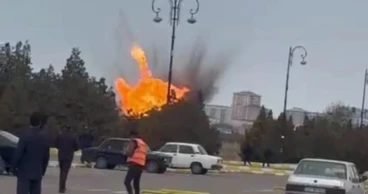
Meanwhile, Syria's interim government still faces challenges from the Islamic State group and other militants in the country. On Saturday, a car bomb exploded in Manbij, a city in Syria's Aleppo governorate, killing four civilians and wounding nine, SANA reported, citing civil defense officials.
Turkish-backed Syrian rebels had seized Manbij in December, part of a push by Ankara to secure Syrian territory close to its border for a buffer zone.
10 months ago
Arab nations reject Trump's plan to relocate Palestinians from Gaza
Arab nations have dismissed US President Donald Trump’s proposal to move Palestinians from Gaza to neighbouring Egypt and Jordan, reports AP.
On Saturday, Egypt, Jordan, Saudi Arabia, the United Arab Emirates, Qatar, the Palestinian Authority, and the Arab League issued a joint statement following a foreign ministers' meeting.
The statement declared their opposition to any plans that would force Palestinians to leave Gaza and the occupied West Bank.
It warned that such proposals could "threaten the region’s stability, escalate the conflict, and undermine the chances for peace and coexistence among its peoples."
10 months ago
Sick, wounded children cross from Gaza to Egypt after months
A group of 50 Palestinian children who are sick and injured began crossing into Egypt for medical treatment on Saturday through Gaza's Rafah crossing, marking the first time the border has been opened in nearly nine months, reports AP.
This reopening is a significant development in the ceasefire agreement between Israel and Hamas, which was reached earlier this month. Israel had agreed to allow the crossing to reopen after Hamas released the last surviving female hostages in Gaza.
Malaysia to build mosque, school, hospital in Gaza: Anwar
Egypt's Al-Qahera television broadcast footage showing Palestinian Red Cross ambulances arriving at the crossing gate, with some children being transferred from gurneys to ambulances on the Egyptian side.
These children were then taken to hospitals in the Egyptian city of el-Arish and other locations. Among them was a young girl who had lost her foot and was seen being loaded into an Egyptian ambulance.
The Gaza Health Ministry reported that about 60 family members accompanied the children. These children are the first in what is expected to be a series of regular evacuations for treatment abroad.
Over the past 15 months, Israel's military actions in Gaza, which were in response to Hamas's attack on Israel in October 2023, have severely damaged Gaza's health infrastructure, leaving most hospitals inoperable. More than 110,000 Palestinians have been injured, and there is a dire need for treatment, especially for specialized surgeries.
Thousands of Palestinians return to a shattered northern Gaza
According to Mohammed Zaqout, the director of hospitals in Gaza's Health Ministry, over 6,000 patients are ready for evacuation, while more than 12,000 are in urgent need of care. However, he noted that the small number of evacuations will not meet the overall demand, expressing hope that more patients would be evacuated in the future.
Rafah is Gaza's only crossing that does not connect to Israel. Israeli forces took control of the Rafah crossing in May, following an offensive in the southern region of Gaza. Egypt also closed its side of the border in protest.
Prior to the war, the Rafah crossing had been essential for allowing Palestinians to seek medical treatment abroad, including chemotherapy, as Gaza's health system was severely constrained by a 15-year blockade imposed by Israel and Egypt.
The process of reopening the crossing required diplomatic efforts and the resolution of security issues among Israeli, Egyptian, and Palestinian officials. Hamas had controlled the Rafah border since 2007 after it took over Gaza from the Palestinian Authority (PA).
Israel bars thousands of Palestinians from northern Gaza over ceasefire dispute
Israel continues to maintain a military presence at the Rafah crossing and the nearby Philadelphia Corridor, a strip of land along the border. It has refused to allow Hamas to take control of the crossing again, accusing it of smuggling weapons through tunnels, although Egypt claims to have destroyed these tunnels years ago. Israel also rejects the idea of the PA officially managing the crossing.
Instead, Palestinian border officers who were previously employed by the PA will staff the crossing, although they will not wear PA insignia.
European Union monitors will also be present, as they were before 2007. Negotiations regarding the second phase of the ceasefire agreement, which involves a permanent ceasefire, a full Israeli withdrawal from Gaza, and the release of remaining hostages, are set to begin on Monday. Israel has expressed resistance to the idea of the PA overseeing Gaza post-conflict.
10 months ago
Israel frees 183 Palestinians, Hamas releases 3 in ceasefire deal
Hamas has released three male hostages who had been held in the Gaza Strip for over a year, while Israel has freed 183 Palestinian prisoners in the fourth exchange under a ceasefire agreement that has paused 15 months of intense conflict, reports AP.
The hostages, Yarden Bibas and French-Israeli Ofer Kalderon, were handed over to Red Cross officials in Khan Younis, while American-Israeli Keith Siegel, appearing frail, was later released in Gaza City. All three were abducted during the Hamas-led attack on Israel on 7 October 2023, which triggered the war. Their release brings the total number of hostages freed since the ceasefire began on 19 January to 18.
Israeli fire kills 2 Palestinians in occupied West Bank
The handovers proceeded in an orderly manner, unlike Thursday’s chaotic hostage release, where militants struggled to control a crowd. This time, armed and masked militants stood in formation as the hostages walked onto a stage, waved, and were then led off to be transferred to the Red Cross.
In Tel Aviv’s Hostages Square, thousands gathered to watch the releases live on a large screen, waving signs and cheering. Meanwhile, in Israel, a bus carrying 32 Palestinian prisoners departed Ofer Military Prison for the West Bank, where crowds greeted them with celebrations, lifting the freed prisoners onto their shoulders in jubilation. The Israeli Prison Authority confirmed that all 183 Palestinian prisoners scheduled for release had been freed—most sent to Gaza, while some returned to the West Bank, and seven serving life sentences were transferred to Egypt ahead of deportation.
Ceasefire Provides Temporary Relief to War-Torn Gaza
The ceasefire, aimed at ending the deadliest and most destructive war between Israel and Hamas, has held for two weeks. It has facilitated increased aid deliveries to Gaza and enabled hundreds of thousands of displaced Palestinians to return to the ruins of their homes in the north.
Under the ceasefire’s initial six-week phase, 33 Israeli hostages are to be exchanged for nearly 2,000 Palestinian prisoners. Israel has been informed by Hamas that eight of those hostages were either killed in the 7 October attack or died in captivity.
Separately, 50 sick and wounded Palestinian children were allowed to leave Gaza for treatment in Egypt through the Rafah border crossing, marking the first time the enclave’s only exit has opened since Israel captured it nine months ago. A European Union civilian mission was deployed on Friday in preparation for reopening the crossing.
Two killed in Lebanon as protests continue against Israel
The reopening of Rafah marks another key milestone in the ceasefire’s first phase. Next week, Israel and Hamas will begin negotiations on a second phase, which aims to secure the release of the remaining hostages and extend the truce indefinitely. However, if no agreement is reached, the war could resume in early March.
Despite the ceasefire, Israel remains committed to dismantling Hamas, particularly after the militant group quickly reasserted control over Gaza once the truce began. A key far-right member of Israeli Prime Minister Benjamin Netanyahu’s coalition has called for the war’s resumption once the first phase of the ceasefire concludes. Meanwhile, Hamas insists that it will not release the remaining hostages unless Israel ends the war and withdraws entirely from Gaza.
Families Rejoice as Hostages Return
Keith Siegel, 65, originally from Chapel Hill, North Carolina, was taken hostage from Kibbutz Kfar Aza alongside his wife, Aviva, who was released in a previous ceasefire. She has since led a high-profile campaign for her husband's release. His friends and neighbours gathered to watch the live broadcast of his release, some cheering while others were moved to tears.
The release of 35-year-old Yarden Bibas has renewed concerns over the fate of his wife, Shiri, and their two sons, Ariel and Kfir, who were just four years old and nine months old when abducted. The family was taken from Kibbutz Nir Oz, and Kfir, the youngest of approximately 250 hostages taken on 7 October, became a symbol of the helplessness and anger surrounding the hostage crisis in Israel. Hamas has claimed that Shiri and her sons were killed in an Israeli airstrike, but Israel has not confirmed this. Gal Hirsch, Netanyahu’s special coordinator for hostage affairs, expressed “grave concern for their lives” and urged negotiators to provide information about their condition.
Ofer Kalderon, 54, was also abducted from Kibbutz Nir Oz. His family in Kfar Saba, north of Tel Aviv, rejoiced upon seeing footage of him walking onto the stage in Khan Younis before being transferred to the Red Cross. His children, Erez and Sahar, were taken hostage alongside him but were released in November 2023. Family members said they had struggled to move forward until their father’s return.
“We are sorry it took so long, Ofer,” said Eyal Kalderon. “Soon, we will be whole again. We hope every family experiences this, until the last one.”
French President Emmanuel Macron expressed France’s “relief and joy” at Kalderon’s release after 483 days of captivity, describing his ordeal as “unimaginable hell.” He reaffirmed France’s commitment to securing the release of another French-Israeli hostage still held in Gaza.
During the weeklong ceasefire in November 2023, more than 100 hostages taken on 7 October were freed, but approximately 80 remain in Gaza, with at least a third believed to have died.
The war, sparked by Hamas’ 7 October attack, resulted in the deaths of approximately 1,200 people, mostly civilians. In response, Israel launched an air and ground offensive that has killed over 47,000 Palestinians, more than half of whom were women and children, according to Gaza’s Health Ministry. The Israeli military claims to have killed over 17,000 Hamas fighters, though it has not provided evidence. Israel holds Hamas responsible for civilian casualties, arguing that the group operates within residential areas.
10 months ago
18 killed in Sudan plane crash
A small plane crash in a remote region of South Sudan on Wednesday resulted in the deaths of at least 18 people, an official confirmed.
According to Gatwech Bipal, the minister of information in Unity state, the flight was chartered by the Chinese oil company Greater Pioneer Operating Company and had 21 people on board, including two pilots. The crash occurred as the plane was taking off near an oil field, preparing to head toward Juba’s international airport.
Some 70 people killed in attack on hospital in Sudan's Darfur region, WHO chief says
The cause of the crash remains unknown, and authorities have yet to disclose the identities of the victims. Local media reports suggest that oil workers were among those on board.
11 months ago
Israeli fire kills 2 Palestinians in occupied West Bank
Two Palestinians have been killed by Israeli fire in the occupied West Bank, according to officials, reports AP.
The Palestinian Health Ministry reported that one of the victims, a 23-year-old man, was shot dead in Tulkarem, while a 25-year-old man was killed in a strike on Jenin, where Israel had launched a major operation earlier this month.
Trump’s Palestinian refugee idea falls flat with Arab allies and confounds a Republican senator
The ministry does not differentiate between civilians and combatants in its statements. There has been no immediate response from the Israeli military.
Violence in the West Bank has intensified since Hamas' attack from Gaza on 7 October 2023 triggered the ongoing war. According to the ministry, more than 800 Palestinians have been killed, most of whom appear to have been militants engaged in battles during Israeli arrest raids. However, the fatalities also include individuals killed in violent protests and civilian bystanders.
Additionally, there has been a rise in settler violence against Palestinians and Palestinian attacks on Israelis since the war began.
Thousands of Palestinians return to a shattered northern Gaza
Israel seized the West Bank, Gaza, and East Jerusalem in the 1967 Mideast war. The Palestinians seek these three territories for a future state.
11 months ago
Two killed in Lebanon as protests continue against Israel
Two people were killed and 17 others wounded on Monday in southern Lebanon as protests against Israeli presence continued for a second day, according to health officials, reports AP.
The protests were sparked by the attempts of residents displaced by the ongoing Israel-Hezbollah conflict to return to their villages, where Israeli troops are still stationed. The shooting occurred a day after 24 people were killed and more than 130 injured when Israeli forces opened fire on protesters who breached roadblocks along the border.
Prioritise reconstruction of Gaza, West Bank, Lebanon: Prof Yunus
A U.S.-brokered ceasefire agreement on November 27 had stipulated that Israeli forces withdraw from southern Lebanon, while Hezbollah would relocate north of the Litani River by January 26. Although the Lebanese army and U.N. peacekeepers had already deployed in some areas before the deadline, Israel remained in more than a dozen villages. On Sunday, the United States and Lebanon announced that the deadline to meet the ceasefire terms had been extended until February 18.
In a speech aired on Monday, Hezbollah leader Naim Kassem rejected the extension, stating that Israel must withdraw immediately as the 60 days had passed. He insisted that any delay in the withdrawal was the responsibility of the United Nations, the U.S., France, and Israel. Kassem also claimed that Hezbollah had adhered to the ceasefire and had considered retaliating against Israeli airstrikes, but Lebanese authorities had advised against it.
Protests resumed on Monday, particularly in eastern border villages, as residents again attempted to return to their homes. Israeli troops opened fire, killing one person in the town of Odaisseh and wounding seven others across four villages, according to the Health Ministry.
The Israeli military has blamed Hezbollah for inciting the protests, stating that soldiers fired warning shots when demonstrators approached. In Aitaroun, a village near the border, unarmed residents, some waving Hezbollah flags, marched together or rode motorcycles, escorted by ambulances, bulldozers, and Lebanese army tanks. They approached Israeli positions but were unable to enter.
Despite ceasefire Israeli airstrikes on Lebanon continue
Saleem Mrad, the head of the municipality of Aitaroun, declared, "Our village is ours, and we will bring it back more beautiful than it was before. We are staying." Another resident, Hassan al-Ahmad, emphasized the importance of sacrifice, saying, “If there had not been blood spilled, the land would not have been liberated.”
In the village of Yaroun, Israel reportedly dropped a bomb at the entrance to deter residents from advancing further. Meanwhile, in Bint Jbeil, Hezbollah supporters distributed flyers with images of their slain leader, Hassan Nasrallah, declaring “Victory has arrived,” and some residents waved Hezbollah flags.
Israel has accused the Lebanese army of delaying its deployment in the region, while the Lebanese military has blamed Israel for stalling its withdrawal, which has hindered the Lebanese army’s efforts. Some family members who entered border villages on Sunday discovered the bodies of their relatives. Since the beginning of the conflict, Israeli strikes have claimed over 4,000 lives in Lebanon, though the Lebanese authorities do not distinguish between combatants and civilians in their reported tolls.
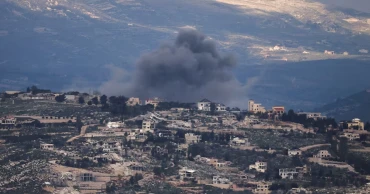
Since the ceasefire began, Israel has conducted near-daily operations, including house demolitions, shelling, and airstrikes in southern Lebanon, accusing Hezbollah of violating the ceasefire by attempting to move weapons. Lebanon, in turn, has accused Israel of hundreds of ceasefire violations.
11 months ago
Thousands of Palestinians return to a shattered northern Gaza
Hundreds of thousands of Palestinians streamed into Gaza’s most heavily destroyed area on Monday after Israel opened the north for the first time since the early weeks of the war with Hamas, a dramatic reversal of their exodus 15 months ago.
As the fragile ceasefire held into a second week, Israel was informed by Hamas that eight of the hostages to be freed during the deal's first phase are dead.
Joyous crowds of Palestinians, some holding babies or pushing wheelchairs, walked along a seaside road all day and into the night, carrying bedrolls, bottles of water and other belongings. A few armed, masked Hamas fighters flashed a victory sign. The crowd was watched over by Israeli tanks on a nearby hill.
The United Nations said over 200,000 people were observed moving north in Gaza on Monday morning alone.
Israel bars thousands of Palestinians from northern Gaza over ceasefire dispute
Palestinians who have been sheltering in squalid tent camps and former schools are eager to return to their homes — even though they are likely damaged or destroyed. Many had feared that Israel would make their displacement permanent.
Yasmin Abu Amshah, a mother of three, said she walked 6 kilometers (nearly 4 miles) to reach her damaged but habitable Gaza City home. She saw her younger sister for the first time in over a year.
“It was a long trip, but a happy one,” she said.
Many saw their return as an act of steadfastness after Israel’s military campaign, launched in response to the Hamas militant group's Oct. 7, 2023, attack on southern Israel. The return was also seen as a repudiation of US President Donald Trump’s suggestion that many Palestinians be resettled in Egypt and Jordan, which those countries have rejected.
11 months ago
Trump’s Palestinian refugee idea falls flat with Arab allies and confounds a Republican senator
President Donald Trump’s push to have Egypt and Jordan take in large numbers of Palestinian refugees from besieged Gaza fell flat with those countries' governments and left a key congressional ally in Washington perplexed on Sunday.
Fighting that broke out in the territory after ruling Hamas attacked Israel in October 2023 is paused due to a fragile ceasefire, but much of Gaza’s population has been left largely homeless by an Israeli military campaign. Trump told reporters Saturday aboard Air Force One that moving some 1.5 million people away from Gaza might mean that "we just clean out that whole thing.”
Trump relayed what he told Jordan’s King Abdullah when the two held a call earlier Saturday: “I said to him, ‘I’d love for you to take on more because I’m looking at the whole Gaza Strip right now, and it’s a mess.’”
He said he was making a similar appeal to Egyptian President Abdel Fattah el-Sissi during a conversation they were having while Trump was at his Doral resort in Florida on Sunday. Trump said he would “like Egypt to take people and I’d like Jordan to take people.”
Egypt and Jordan, along with the Palestinians, worry that Israel would never allow them to return to Gaza once they have left. Both Egypt and Jordan also have perpetually struggling economies and their governments, as well as those of other Arab states, fear massive destabilization of their own countries and the region from any such influx of refugees.
Jordan already is home to more than 2 million Palestinian refugees. Egypt has warned of the security implications of transferring large numbers of Palestinians to Egypt’s Sinai Peninsula, bordering Gaza.
Trump suggested that resettling most of Gaza’s population of 2.3 million could be temporary or long term.
Jordan's foreign minister, Ayman Safadi, said Sunday that his country's opposition to what Trump floated was “firm and unwavering.” Some Israel officials had raised the idea early in the war.
Egypt's foreign minister issued a statement saying that the temporary or long-term transfer of Palestinians “risks expanding the conflict in the region.”
Trump does have leverage to wield over Jordan, which is a debt-strapped, but strategically important, U.S. ally and is heavily dependent on foreign aid. The U.S. is historically the single-largest provider of that aid, including more than $1.6 billion through the State Department in 2023.
Much of that comes as support for Jordan’s security forces and direct budget support.
Read: Trump putting pressure on Jordan and Egypt to accept more refugees and floats plan to 'just clean out' Gaza
Jordan in return has been a vital regional partner to the U.S. in trying to help keep the region stable. Jordan hosts some 3,000 U.S. troops. Yet, on Friday, new Secretary of State Marco Rubio exempted security assistance to Israel and Egypt but not to Jordan, when he laid out the details of a freeze on foreign assistance that Trump ordered on his first day in office.
Meantime, in the United States, even Trump loyalists tried to make sense of his words.
“I really don't know,'' said Sen. Lindsey Graham, when asked on CNN’s “State of the Union” about what Trump meant by the ”clean out" remark. Graham, who is close to Trump, said the suggestion was not feasible.
“The idea that all the Palestinians are going to leave and go somewhere else, I don’t see that to be overly practical,” said Graham, R-S.C. He said Trump should keep talking to Mideast leaders, including Saudi Crown Prince Mohammed bin Salman and officials in the United Arab Emirates.
“I don’t know what he’s talking about. But go talk to MBS, go talk to UAE, go talk to Egypt,” Graham said. “What is their plan for the Palestinians? Do they want them all to leave?”
Trump, a staunch supporter of Israel, also announced Saturday that he had directed the U.S. to release a supply of 2,000-pound bombs to Israel. Former President Joe Biden had imposed a hold due to concerns about their effects on Gaza's civilian population.
Egypt and Jordan have made peace with Israel but support the creation of a Palestinian state in the occupied West Bank, Gaza and east Jerusalem, territories that Israel captured in the 1967 Mideast War. They fear that the permanent displacement of Gaza’s population could make that impossible.
Read more: A federal judge temporarily blocks Trump’s executive order redefining birthright citizenship
In making his case for such a massive population shift, Trump said Gaza is “literally a demolition site right now.”
“I’d rather get involved with some of the Arab nations, and build housing in a different location," he said of people displaced in Gaza. "Where they can maybe live in peace for a change.”
11 months ago
Israel bars thousands of Palestinians from northern Gaza over ceasefire dispute
Israel kept thousands of Palestinians from returning to their homes in northern Gaza on Sunday as it accused Hamas of violating a fragile ceasefire by changing the order of hostages it has released. Local health officials said Israeli forces fired on the crowd, killing two people and wounding nine.
Israeli forces also opened fire in Lebanon on protesters demanding their withdrawal by Sunday's deadline in line with a separate ceasefire agreement with the Hezbollah militant group. Health officials in Lebanon said at least 15 people were killed and more than 80 wounded, AP reports.
Israel says it hasn't withdrawn because Lebanese forces are not deploying quickly enough, while Lebanon says its forces cannot move into areas until Israeli troops leave.
US President Donald Trump meanwhile suggested that most of Gaza's population should be at least temporarily resettled elsewhere, including in Egypt and Jordan, to “just clean out” the war-ravaged enclave.
Egypt, Jordan and the Palestinians have previously rejected such a scenario, fearing Israel might never allow refugees to return.
Senior Hamas official Bassem Naim said Palestinians would never accept such a proposal, “even if seemingly well-intentioned under the guise of reconstruction.” He said the Palestinians can rebuild Gaza “even better than before” if Israel lifts its blockade.
Trump putting pressure on Jordan and Egypt to accept more refugees and floats plan to 'just clean out' Gaza
Under the Israel-Hamas ceasefire, Israel on Saturday was to begin allowing Palestinians to return to their homes in northern Gaza on foot through the Netzarim corridor bisecting Gaza. Israel put that on hold until Hamas frees a civilian hostage who Israel said should have been released Saturday. Hamas in turn accused Israel of violating the agreement.
Crowds of people carrying their belongings filled a main road leading to a closed Israeli checkpoint. “We have been in agony for a year and a half,” said Nadia Qasem.
Fadi al-Sinwar, also displaced from Gaza City, said “the fate of more than a million people is linked to one person,” referring to the Israeli hostage, Arbel Yehoud.
“See how valuable we are? We are worthless," he said.
11 months ago