middle-east
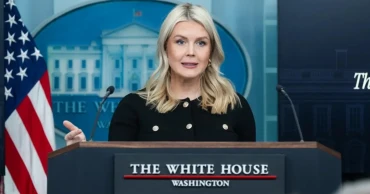
US looking at potential leaders for Iran: White House
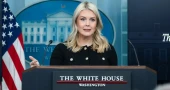
The United States is reviewing potential candidates who could lead Iran, the White House said, a day after President Donald Trump suggested Washington should be involved in selecting the country’s next leader.
White House Press Secretary Karoline Leavitt told reporters that US intelligence agencies and government officials were assessing possible figures who could take leadership in Iran, reports Al Jazeera.
“I know there’s a number of people that our intelligence agencies and the United States government are looking at, but I won’t get any further on that,” Leavitt said.
Her remarks came after Trump stated that the United States should play a role in determining Iran’s future leadership following the recent escalation of conflict in the region.
Leavitt also addressed Trump’s earlier statement that there would be no deal with Iran except “unconditional surrender.”
She said the president meant that Iran would effectively reach a state of unconditional surrender once it no longer posed a threat to the United States and once the objectives of the US military operation, named “Operation Epic Fury,” were fully achieved.
“When the president, as commander-in-chief of the US armed forces, determines that Iran no longer poses a threat to the United States of America and the goals of Operation Epic Fury have been fully realized, Iran will essentially be in a place of unconditional surrender, whether they say it themselves or not,” Leavitt added.
13 hours ago
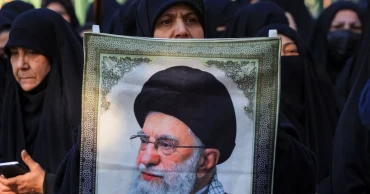
Moscow condemns Khamenei killing, offers condolences to Iran
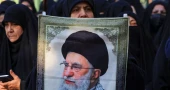
Russia has expressed solidarity with Iran and condemned the killing of Supreme Leader Ayatollah Ali Khamenei, calling it an act of “U.S.-Israeli aggression.”
Deputy Foreign Minister Andrey Rudenko visited the Iranian embassy in Moscow on Friday to offer condolences on behalf of Russian Foreign Minister Sergey Lavrov. During the visit, Rudenko signed a book of condolences for Khamenei’s family and for other officials killed in the attack, reports Al Jazeera.
In a statement, the Russian Foreign Ministry said Rudenko denounced the assassination of senior officials of a sovereign nation and emphasized Moscow’s support for the Iranian people.
Rudenko also met with Iran’s ambassador to Russia, Kazem Jalali, reaffirming Russia’s solidarity with Tehran amid the ongoing conflict in the region.
13 hours ago
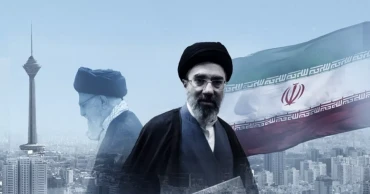
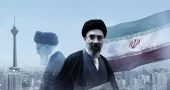
Mojtaba Khamenei emerges as possible successor to late Iranian Supreme Leader
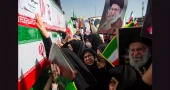
Mojtaba Khamenei, the son of Iran’s late Supreme Leader Ayatollah Ali Khamenei, has long been considered a contender to succeed his father, despite never holding an elected or official government position.
The 1969-born cleric has largely operated behind the scenes, building influence within Iran’s political and military structures and maintaining close ties to the paramilitary Revolutionary Guard.
Last week, an Israeli airstrike targeting the supreme leader’s office killed Ayatollah Khamenei and Mojtaba’s wife, Zahra Haddad Adel. Mojtaba has not been seen publicly since and is believed to be in hiding as U.S. and Israeli strikes continue in Iran.
Hard-liners in the 88-member Assembly of Experts, which selects the next supreme leader, may now view him more favorably, portraying his family’s deaths as martyrdom amid the ongoing conflict with the United States and Israel.
Mojtaba Khamenei has been described as the “power behind the robes,” serving as gatekeeper, advisor, and administrator in his father’s office. He oversaw internal operations, helped consolidate control over billions in state-run foundations, and influenced domestic politics, including support for hard-line President Mahmoud Ahmadinejad during the 2005 election and the disputed 2009 re-election, which triggered the Green Movement protests.
If appointed, Mojtaba would inherit control of Iran’s military, the Revolutionary Guard, its nuclear program, and the country’s ballistic missile arsenal—key instruments of power in the ongoing U.S.-Israel-Iran conflict.
U.S. President Donald Trump has criticized him as “a lightweight” and claimed he should have a role in selecting Iran’s next leader, highlighting the international stakes of the succession.
Mojtaba Khamenei’s potential rise underscores the complex mix of hereditary influence, clerical authority, and military power that shapes the future of the Islamic Republic, as the country faces escalating regional tensions and global scrutiny.
14 hours ago

Trump says US evacuating ‘thousands’ from Middle East
U.S. President Donald Trump said in a Truth Social post that the State Department is “moving thousands of people out of various countries throughout the Middle East” amid rising regional tensions.
Trump described the evacuations as being carried out “quietly, but seamlessly,” and praised Marco Rubio for “doing a great job.”
The State Department confirmed on Thursday that 20,000 Americans have returned home and said it is ramping up chartered flights, but provided no further details, reports Al Jazeera.
The evacuations follow Trump’s advisory earlier this week urging Americans to leave more than a dozen countries in the Middle East. The administration has faced criticism over the timing and scale of the effort, as concerns grow over regional security amid ongoing conflicts involving Iran, Israel, and other countries in the region.
Officials say the effort aims to protect U.S. citizens from escalating hostilities and ensure safe passage out of areas affected by airstrikes, missile attacks, and civil unrest.
16 hours ago
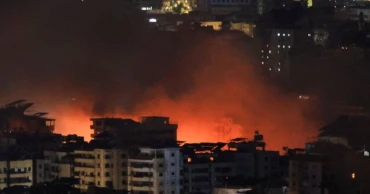
Israeli attacks in Lebanon kill over 120
Israeli air strikes across Lebanon have killed at least 123 people and wounded hundreds this week, according to Lebanon’s Ministry of Public Health, as fighting intensifies along Israel’s northern front with Hezbollah.
The ministry said the death toll from Israeli attacks since Monday has risen to 123, with at least 683 others injured.
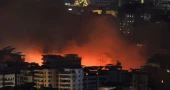
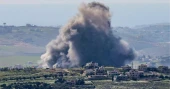
Lebanese state media reported that Israeli warplanes launched fresh strikes early Friday on several towns in southern Lebanon, including Srifa, Aita al-Shaab, Touline, as-Sawana and Majdal Selem.
Another air strike hit the eastern town of Douris at dawn, while Israel also targeted Beirut’s southern suburb of Dahiyeh, a stronghold of Hezbollah.
Israeli forces also carried out raids around Sidon, the largest city in southern Lebanon. Lebanon’s health ministry said at least five people were killed and seven injured in the attack.
As the violence escalated, Hezbollah warned Israeli residents living within 5 kilometres of the border with Lebanon to leave the area.
The warning came shortly after Israel urged residents of Beirut’s southern suburbs to evacuate, triggering a mass exodus from the densely populated Dahiyeh district where about half a million people live.
The Israeli military said it has carried out at least 26 rounds of strikes in the area, claiming the attacks targeted Hezbollah infrastructure, including an executive headquarters and a drone storage facility.
Hezbollah said Israel’s attacks on Lebanese territory and civilians would not go unanswered. The group said its fighters launched several attacks early Friday on Israeli ground forces that had entered Lebanese territory.
According to Hezbollah, its fighters targeted Israeli troops near Maroun al-Ras and Kfar Kila inside Lebanon. It also claimed attacks on Israel’s Yoav military camp in the occupied Golan Heights and a naval base in Haifa.
There were no immediate reports of casualties from those attacks.
The Israeli army said it would not evacuate its border towns and has sent more troops into Lebanon, describing the move as necessary to protect nearby Israeli communities.
Meanwhile, thousands of Lebanese civilians have fled their homes after Israeli evacuation warnings. Many displaced families have taken shelter on beaches and in temporary locations across Beirut.
Aid groups warned that the humanitarian situation is rapidly worsening as shelters struggle to accommodate the large number of displaced people.
The United Nations human rights chief expressed concern over Israel’s large-scale evacuation orders in southern Lebanon and Beirut’s southern suburbs, saying the mass displacement raises serious questions under international humanitarian law.
The International Committee of the Red Cross said the evacuation orders have affected vulnerable groups including the elderly, the sick and people with disabilities. The Lebanese Red Cross has been helping evacuate patients from hospitals in affected areas.
The latest escalation comes as fighting between Israel and Iran-aligned Hezbollah has intensified amid the wider regional conflict involving Iran.
With inputs from ALJAZEERA
16 hours ago
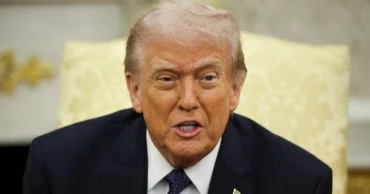
Trump demands Iran’s ‘unconditional surrender’
U.S. President Donald Trump on Friday appeared to rule out negotiations with Iran unless it agrees to “unconditional surrender,” as Israeli airstrikes pounded southern Lebanon and Iran launched retaliatory strikes against Israel and Gulf countries on the seventh day of the ongoing war.
The strikes in Lebanon were the heaviest since a 2024 ceasefire ended the last conflict between Israel and the Iran-backed Hezbollah, which fired rockets at Israel in the opening days of the latest hostilities. Over 95,000 people have fled Beirut’s suburbs and southern Lebanon following evacuation warnings.
The U.S. and Israel have targeted Iranian military capabilities, leadership, and nuclear infrastructure, with shifting war goals that at times included overthrowing Iran’s government or influencing leadership selection. Trump, in a social media post, said that after Iran’s surrender and the selection of a “great & acceptable” leader, the U.S. would help rebuild Iran’s economy.
The war has affected more than a dozen countries, spiking oil prices. Qatar’s Energy Minister Saad al-Kaabi warned of global economic fallout and predicted oil could reach $150 per barrel following disruption at Qatar’s largest LNG plant.
Trump previously urged Iranians to “take back your country” with U.S. immunity guarantees, and suggested involvement in selecting a new supreme leader to replace the late Ayatollah Ali Khamenei, dismissing Khamenei’s son, Mojtaba, as a “lightweight.” Iranian state TV reported that the country’s Assembly of Experts is now discussing convening to select a new leader, amid attacks on clerical infrastructure.
Israel said it launched a “broad-scale” strike on Tehran, targeting underground bunkers, while Iranian missile and drone attacks hit Israel, Kuwait, Qatar, Saudi Arabia, and Bahrain, with no immediate casualty reports. Six U.S. troops have died; total deaths include over 1,230 in Iran, more than 120 in Lebanon, and around a dozen in Israel.
The U.S. military said it struck an Iranian drone carrier, IRIS Shahid Bagheri, setting it ablaze. Earlier, a U.S. submarine sank an Iranian frigate off Sri Lanka, killing 87 crew members; 32 were rescued.
In Lebanon, Israel conducted at least 11 airstrikes around Beirut’s southern suburbs, prompting hospital evacuations. No immediate casualties were reported. Nawaf Salam condemned both Israel and Hezbollah, saying Lebanon did not choose this war. Meanwhile, Hezbollah called on fighters to “defend the nation” and escalate attacks.
The United Nations human rights chief Türk expressed extreme concern over civilian displacement, describing the situation as “blanket, massive displacement orders” by Israel.
The conflict continues to escalate across the Middle East, affecting global energy markets and regional security.
16 hours ago
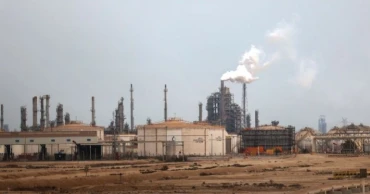
Gulf energy exports may halt if Iran war continues: Qatar
Qatar’s energy minister has warned that escalating war involving Iran could halt energy exports from the Gulf region within weeks, potentially disrupting global markets and affecting economic growth worldwide.
Energy Minister Saad al-Kaabi said in an interview with the Financial Times that if the conflict continues for several weeks, it could seriously impact global GDP and energy supply chains.
He warned that energy prices would surge and shortages could emerge, triggering a chain reaction that may disrupt industrial production worldwide.
The warning comes after Iran launched missile and drone attacks targeting energy facilities in Qatar and other Gulf countries in retaliation for strikes by the United States and Israel.
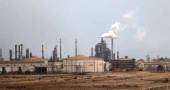
Following the attacks, Qatar temporarily halted production of liquefied natural gas (LNG), which accounts for about 20 percent of global supply and is vital for balancing demand in Asian and European markets.
Al-Kaabi said exporters in the Gulf could soon invoke “force majeure,” a legal clause that allows companies to suspend contractual obligations during extraordinary circumstances.
He added that even if the conflict ended immediately, it could take weeks or months for Qatar to restore normal energy shipments.
Energy analysts also warned that tanker traffic through the Strait of Hormuz, a key route for global oil and gas shipments, has already dropped sharply due to the conflict.
Experts said many Gulf producers that rely on the route may have to shut down oil fields if the disruption continues, which could cause longer-term supply problems.
Meanwhile, the conflict shows no sign of easing, with US officials warning of further military action against Iran while Tehran continues missile attacks across the region.
Iranian President Masoud Pezeshkian said his country remains committed to peace but will defend its sovereignty, blaming the United States and Israel for triggering the conflict.
With inputs from ALJAZEERA
17 hours ago
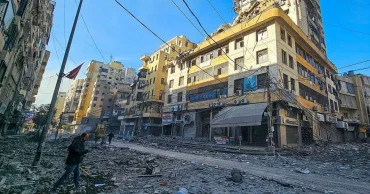
Israel launches new strikes on Iran as regional tensions grow
Israel launched a new wave of air strikes on Iran on Friday, targeting what it called key regime infrastructure in Tehran as the war entered its seventh day.
The Israel Defense Forces (IDF) said the latest operation was the 15th round of strikes since the conflict began. It said about 50 fighter jets were involved in attacks that destroyed a military command bunker in Tehran which Iranian leaders had planned to use during the war.
Residents in Tehran told BBC Persian that the latest attacks were the most intense so far. Several people said they experienced constant explosions overnight and described it as the “worst night” since the conflict started.
At the same time, Iran launched further attacks on Israel and other parts of the region, according to the Israeli military. Gulf countries including Saudi Arabia, Qatar and Bahrain said their air defence systems intercepted missiles and drones overnight.
The United Arab Emirates said its forces intercepted nine ballistic missiles and 109 drones on Friday. Authorities reported that three drones fell inside the country. Since the conflict began, three people have been killed and more than 100 injured in attacks there.
The war has also affected daily life across the region. Qatar said it intercepted a drone targeting the Al-Udeid air base, the largest US military base in the Middle East. Authorities advised residents to avoid large outdoor gatherings, while the country’s airspace remains closed.
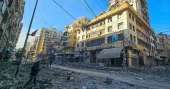
In Lebanon, Israel carried out fresh strikes on Beirut’s southern suburbs, saying it was targeting Hezbollah positions. Thousands of residents had earlier been warned to leave the area.
Air travel and shipping across the region have also been disrupted. Nearly 20,000 flights have been cancelled since the conflict began, while some shipping companies are avoiding the Suez Canal due to security risks.
Evacuation efforts are underway for foreign nationals. The United Kingdom said it would send more charter flights from Oman to bring back its citizens. More than 160,000 Britons have registered their presence in the region with the Foreign Office.
The conflict began last week after joint US and Israeli strikes on Iranian military and missile facilities. Iran responded with missile and drone attacks on Israel and several US allies in the Gulf, widening tensions across the Middle East.
With inputs from BBC
18 hours ago
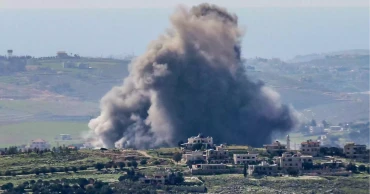
Hezbollah warns Israeli residents to evacuate areas near border
Hezbollah has warned Israeli residents living within 5km (3 miles) of the Lebanon border to leave the area.
The warning was issued early Friday through a message posted in Hebrew on the group’s Telegram channel, Reuters reported.
Hezbollah said Israel’s military actions against Lebanese sovereignty, its attacks on civilian infrastructure and what it described as an expulsion campaign would not go unanswered.
The warning came after the Israeli military launched a series of strikes on Lebanon late Thursday night, following instructions for residents to leave the southern suburbs of Beirut, an area considered a stronghold of Hezbollah.
Shortly afterward, the Israel Defense Forces (IDF) said it had also begun a “broad-scale wave of strikes against Iranian terror regime infrastructure in Tehran.”
#From this BBC
23 hours ago
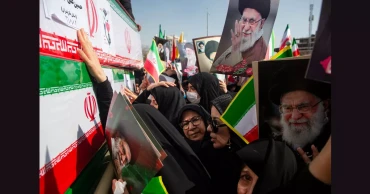
Iranian officials hold talks on potential new leadership
Iranian state television reported on Friday that a leadership council had started discussing how to convene the country’s Assembly of Experts, which will select the new supreme leader.
The leadership council includes President Masoud Pezeshkian, judiciary chief Gholam Hossein Mohseni Ejehi and cleric Ayatollah Ali Reza Arafi.
The statement provided no timeline on the selection of the supreme leader, nor information on whether the Assembly of Experts would meet in person or remotely for the vote.
Buildings associated with the Assembly of Experts, a 88-member clerical panel, have been attacked during the Israeli-U.S. airstrike campaign.
Meanwhile, intense Israeli airstrikes pounded the capitals of Iran and Lebanon early Friday as the U.S. apparently struck an Iranian drone carrier at sea in its unrelenting campaign against the Islamic Republic’s fleet of warships.
Iran launched new retaliatory attacks in the Middle East at the end of a full week of bombardment, which U.S. Defense Secretary Pete Hegseth warned was “about to surge dramatically.”
1 day ago