middle-east
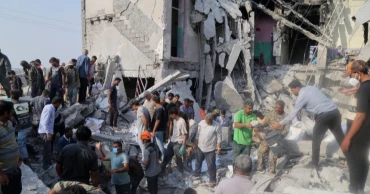
Up to 3.2m people uprooted in Iran, UN reports
Up to 3.2 million people have been forced to leave their homes in Iran since the outbreak of the Israel-US war on February 28, the UN High Commissioner for Refugees (UNHCR) has reported.
The agency said the estimate comes from early assessments of displaced households across the country.
“This number is expected to rise further as hostilities continue, signaling a concerning escalation in humanitarian needs,” the UNHCR said in a statement.
Sources- Al Jazeera
UN Security Council fails to adopt resolution calling for halt to Middle East crisis
2 months ago
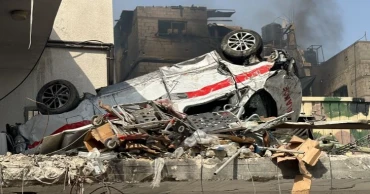
15 medical workers killed, 45 injured in Israeli attacks on Lebanon
At least 15 medical workers, including ambulance crew members, have been killed and 45 others injured in intensified Israeli attacks in Lebanon this month, according to Lebanon’s Information Ministry.
Officials said the casualties occurred during recent Israeli strikes as the violence continued to escalate. Since March 2, at least 634 people have been killed in Lebanon in Israeli attacks, the ministry added.
Israel threatens to take Lebanese territory if Hezbollah attacks continue
Meanwhile, Lebanon’s National News Agency reported that Israel carried out fresh airstrikes in the southern part of the country.
One of the attacks targeted the outskirts of the towns of Haris and Kafra in the Nabatieh governorate. Another strike hit an area near Naqoura in the Tyre district, the report said.
Sources- Al Jazeera
2 months ago

Israel threatens to take Lebanese territory if Hezbollah attacks continue
Israel’s Defence Minister Israel Katz has issued a warning to Lebanon’s government, saying it must prevent Hezbollah from launching attacks on northern Israel or the Israeli military will enter Lebanese territory and take action itself.
Katz said Hezbollah fired heavy barrages toward Israel a day earlier, according to a report by The Times of Israel.
“I warned the president of Lebanon that if the Lebanese government cannot control its territory and stop Hezbollah from threatening northern communities and launching attacks on Israel, we will take control of the area and handle it ourselves,” Katz said.
Sources- Al Jazeera
Two oil tankers ablaze in Iraqi waters, 1 dead, 25 evacuated
2 months ago
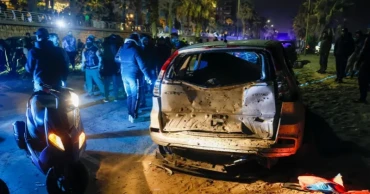
Israeli airstrikes hit Beirut seafront, several killed
Several people were killed in Israeli airstrikes across Lebanon, including at least eight in attacks on Beirut’s seafront area, far from the Hezbollah stronghold that has been the main target of Israel’s bombardment.
The strikes were reported during a night of heavy bombing across the Lebanese capital. Loud explosions were heard in the Dahia area of southern Beirut, a Hezbollah stronghold from where thousands of residents have already fled amid intensified Israeli attacks.
Some of the airstrikes also hit other parts of Beirut, including the Corniche seafront at Ramlet al-Baida.
Lebanon’s Health Ministry said at least eight people were killed in what appeared to be a direct strike on a car. Reports suggested that a second strike occurred after people gathered at the scene to assist the victims, causing additional casualties.
There had been no specific warning about the attack in the beachfront area, where hundreds of people displaced by the conflict in other parts of Lebanon had been staying in makeshift shelters.
Meanwhile, Hezbollah said it fired more than 100 rockets toward Haifa and other areas of northern Israel as Israel signalled plans to intensify its air campaign against the group.
According to reports, the rocket barrage appeared to be a coordinated operation between Hezbollah and Iran, described as the first joint action against Israel since the conflict began.
#With inputs from BBC
2 months ago
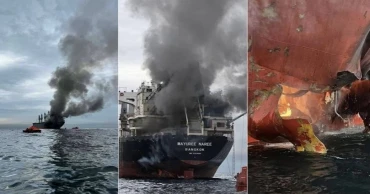
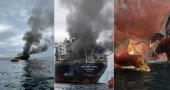
Two oil tankers ablaze in Iraqi waters, 1 dead, 25 evacuated
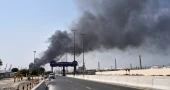
Two foreign oil tankers caught fire in Iraqi territorial waters near the al-Faw port on Thursday.
Authorities evacuated 25 crew members, but at least one has died, while firefighting teams continue to battle the flames, reports Al Jazeera.
Preliminary investigations suggest the attack may have involved explosive-laden boats linked to Iran, according to Iraqi officials and a Reuters report.
2 months ago
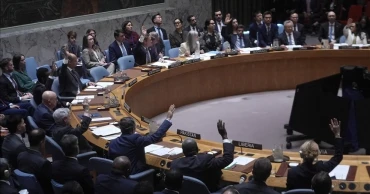
UN Security Council fails to adopt resolution calling for halt to Middle East crisis
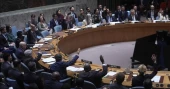
The UN Security Council on Wednesday failed to adopt a draft resolution calling for an immediate halt to military activities and urging all parties to avoid further escalation in the Middle East.
The resolution, proposed by Russia, also sought to condemn attacks on civilians and civilian infrastructure. However, it did not pass after receiving four votes in favour, two against and nine abstentions.
Russia, China, Pakistan and Somalia supported the proposal, while the United States and Latvia voted against it.
Russia’s UN Ambassador Vassily Nebenzia expressed disappointment over the outcome, saying some council members failed to gather the “strength and wisdom” needed to support the resolution.
Earlier the same day, the Security Council adopted another resolution related to the Middle East crisis, which followed the joint US-Israeli military strikes on Iran that began on Feb 28 and Tehran’s subsequent retaliatory attacks across the region.
The resolution, introduced by Bahrain on behalf of the Gulf Cooperation Council (GCC), was approved with 13 votes in favour and two abstentions. It condemns Iran’s attacks on GCC countries and Jordan, calls on Tehran to immediately stop such actions and declares them a breach of international law and a threat to international security.
Reacting to the decision, Iran’s UN Ambassador Amir Saeid Iravani said the resolution was “a manifest injustice” against Iran, describing it as unlawful and inconsistent with the UN Charter and international law.
2 months ago
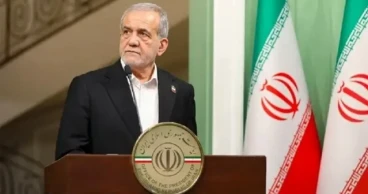
Iran sets conditions to end war with US, Israel
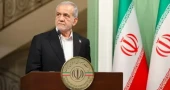
Iranian President Masoud Pezeshkian on Wednesday outlined several conditions for ending the ongoing conflict with the United States and Israel, saying Tehran is committed to regional peace but expects its rights to be recognised.
In a post on social media platform X, Pezeshkian said the conflict could only end if Iran’s “legitimate rights” are acknowledged, compensation is paid for damages and strong international guarantees are provided to prevent future attacks.
Earlier, Iran’s armed forces warned of a major retaliation if the United States carried out strikes on Iranian ports.
Abolfazl Shekarchi, spokesperson for Iran’s armed forces, told state-run IRIB TV that no port, economic centre or location in the Persian Gulf would be beyond Iran’s reach if Washington attacked Iranian port facilities.
His comments came after the US Central Command posted a warning on its Persian-language account on X urging civilians in Iran to stay away from port areas where Iranian naval operations were taking place.
The latest escalation follows joint US-Israeli attacks launched on Feb 28 targeting Tehran and several other Iranian cities. The strikes killed Iran’s then Supreme Leader Ali Khamenei, along with senior military commanders and civilians.
Iran later retaliated by launching multiple missile and drone attacks on Israeli and US-linked targets across the Middle East.
2 months ago
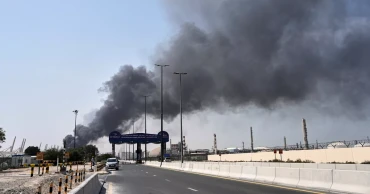
Beyond strikes and explosions: The broader cost of Iran conflict
The conflict with Iran is already costing the United States and its allies billions of dollars in military spending, and analysts say the expenses could rise significantly.
Estimates from several think tanks cited by CNN suggest the war is currently costing around $891.4 million per day, as US forces deploy aircraft carriers, fighter jets, bombers and ground troops throughout the region.
However, the overall cost extends far beyond military hardware and operations. The conflict is beginning to affect the global economy, driving up oil prices, disrupting airline and shipping routes, and increasing the cost of transporting goods worldwide.
With no clear resolution in sight, experts warn that the economic and financial burden of the war could escalate rapidly.
“This is highly unpredictable and so we won’t know the cost of it until it’s over,” Lindsay Koshgarian, programME director of the National Priorities Project at the Institute of Policy Studies, told CNN.
“The cost of the war in Iraq ended up being almost $3 trillion,” she said. “So this could, this could be astronomical, easily.”
Direct cost of war
The daily costs of military operations are already staggering.
A report by the Centre for Strategic and International Studies (CSIS) estimates the war is costing around $891.4 million per day based on the Pentagon’s publicly known operations.
The biggest expenses come from the deployment of air and naval forces.
Air operations alone are estimated to cost about $30 million per day, while naval operations cost roughly $15 million daily. Ground operations add another $1.6 million each day.
Some of the most expensive assets include:
Air assets
Tanker and cargo aircraft: $9 million per day
Carrier air wing: $5 million
Non-stealth fighters: $5 million
Stealth fighters: $5 million
Naval assets
Aircraft carrier: $6 million per day
Destroyer: $5 million
Ground assets
Artillery brigade: $1 million
National Guard battalion: less than $1 million
The scale of spending has already eclipsed previous operations targeting Iran.
According to CSIS, the first 100 hours of the current war cost about $3.7 billion.
By comparison, the US operation known as Operation Midnight Hammer, which targeted Iran’s nuclear facilities in June 2025, cost between $2.04 billion and $2.26 billion, according to the Costs of War project at Brown University.
That strike lasted only about two and a half hours.
How expensive could the war become?
The total cost will depend largely on how long the conflict lasts and whether it escalates further.
Kent Smetters, faculty director of the Penn Wharton Budget Model, told CNN that a wo-month war could cost between $40 billion and $95 billion, depending on the intensity of fighting and whether the United States deploys ground forces.
Oil prices and energy markets
The economic shock from the war is being felt far beyond the battlefield.
One of Iran’s most powerful strategic tools is its ability to disrupt global energy markets.
Oil prices surged to nearly $120 a barrel after the conflict began before easing to around $90, according to market data cited by the Associated Press.
The surge reflects fears that the war could disrupt energy flows through the Strait of Hormuz, the narrow waterway that carries roughly 20% of global oil and natural gas supplies.
Any sustained disruption to this route could trigger further spikes in fuel prices worldwide.
Ultimately, the real cost of the war with Iran may be measured not only by military spending but also by its wider economic impact.
Higher fuel prices, disrupted trade routes and declining travel demand could slow global economic growth, fuel inflation and place additional pressure on government finances worldwide.
Analysts say the conflict is increasingly becoming a test of economic resilience as much as military capability.
#With input from Agencies
2 months ago
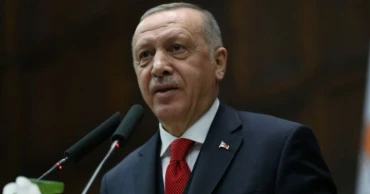
War must stop before it spreads across region: Erdogan
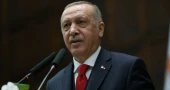
Turkish President Recep Tayyip Erdogan has warned that the ongoing war must be brought to an end before it spreads across the entire region and causes greater damage to the global economy.
“This war must be stopped before it grows bigger and sets the whole region ablaze,” Erdogan said.
He cautioned that if the conflict continues, it will lead to more deaths and destruction of property, while the economic impact on the world will rise even further.
Sources- Al Jazeera
Iran escalates attacks on oil infrastructure amid global energy fears
2 months ago
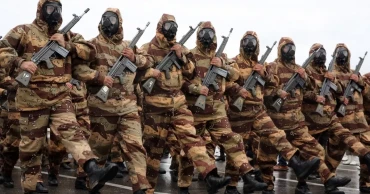
IRGC lists tech firms as potential targets amid regional conflict
Iran’s Revolutionary Guard Corps (IRGC) has indicated that offices and infrastructure of major U.S. tech companies with Israeli links could be “legitimate targets” amid the ongoing regional war, according to the IRGC-affiliated Tasnim news agency.
The report identified companies including Google, Microsoft, Palantir, IBM, Nvidia, and Oracle.
The listed sites, many providing cloud-based services, are located across Israeli cities and some Gulf nations. “As the scope of the regional war expands to infrastructure, the scope of Iran’s legitimate targets expands,” Tasnim cited the IRGC as saying.
Separately, Iran threatened “economic centres and banks” connected to U.S. and Israeli entities, following what it described as an attack on an Iranian bank. A spokesperson for the IRGC-owned Khatam al-Anbiya Headquarters warned that civilians should avoid a one-kilometre radius around these institutions.
2 months ago