middle-east
Gulf energy exports may halt if Iran war continues: Qatar
Qatar’s energy minister has warned that escalating war involving Iran could halt energy exports from the Gulf region within weeks, potentially disrupting global markets and affecting economic growth worldwide.
Energy Minister Saad al-Kaabi said in an interview with the Financial Times that if the conflict continues for several weeks, it could seriously impact global GDP and energy supply chains.
He warned that energy prices would surge and shortages could emerge, triggering a chain reaction that may disrupt industrial production worldwide.
The warning comes after Iran launched missile and drone attacks targeting energy facilities in Qatar and other Gulf countries in retaliation for strikes by the United States and Israel.
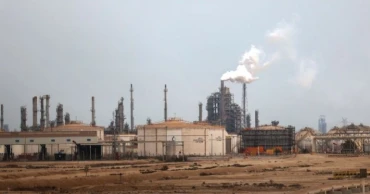
Following the attacks, Qatar temporarily halted production of liquefied natural gas (LNG), which accounts for about 20 percent of global supply and is vital for balancing demand in Asian and European markets.
Al-Kaabi said exporters in the Gulf could soon invoke “force majeure,” a legal clause that allows companies to suspend contractual obligations during extraordinary circumstances.
He added that even if the conflict ended immediately, it could take weeks or months for Qatar to restore normal energy shipments.
Energy analysts also warned that tanker traffic through the Strait of Hormuz, a key route for global oil and gas shipments, has already dropped sharply due to the conflict.
Experts said many Gulf producers that rely on the route may have to shut down oil fields if the disruption continues, which could cause longer-term supply problems.
Meanwhile, the conflict shows no sign of easing, with US officials warning of further military action against Iran while Tehran continues missile attacks across the region.
Iranian President Masoud Pezeshkian said his country remains committed to peace but will defend its sovereignty, blaming the United States and Israel for triggering the conflict.
With inputs from ALJAZEERA
2 months ago
Israel launches new strikes on Iran as regional tensions grow
Israel launched a new wave of air strikes on Iran on Friday, targeting what it called key regime infrastructure in Tehran as the war entered its seventh day.
The Israel Defense Forces (IDF) said the latest operation was the 15th round of strikes since the conflict began. It said about 50 fighter jets were involved in attacks that destroyed a military command bunker in Tehran which Iranian leaders had planned to use during the war.
Residents in Tehran told BBC Persian that the latest attacks were the most intense so far. Several people said they experienced constant explosions overnight and described it as the “worst night” since the conflict started.
At the same time, Iran launched further attacks on Israel and other parts of the region, according to the Israeli military. Gulf countries including Saudi Arabia, Qatar and Bahrain said their air defence systems intercepted missiles and drones overnight.
The United Arab Emirates said its forces intercepted nine ballistic missiles and 109 drones on Friday. Authorities reported that three drones fell inside the country. Since the conflict began, three people have been killed and more than 100 injured in attacks there.
The war has also affected daily life across the region. Qatar said it intercepted a drone targeting the Al-Udeid air base, the largest US military base in the Middle East. Authorities advised residents to avoid large outdoor gatherings, while the country’s airspace remains closed.
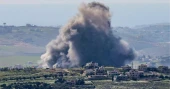
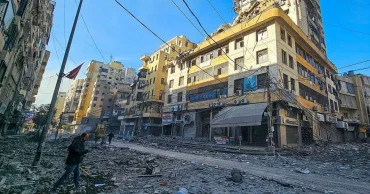
In Lebanon, Israel carried out fresh strikes on Beirut’s southern suburbs, saying it was targeting Hezbollah positions. Thousands of residents had earlier been warned to leave the area.
Air travel and shipping across the region have also been disrupted. Nearly 20,000 flights have been cancelled since the conflict began, while some shipping companies are avoiding the Suez Canal due to security risks.
Evacuation efforts are underway for foreign nationals. The United Kingdom said it would send more charter flights from Oman to bring back its citizens. More than 160,000 Britons have registered their presence in the region with the Foreign Office.
The conflict began last week after joint US and Israeli strikes on Iranian military and missile facilities. Iran responded with missile and drone attacks on Israel and several US allies in the Gulf, widening tensions across the Middle East.
With inputs from BBC
2 months ago
Hezbollah warns Israeli residents to evacuate areas near border
Hezbollah has warned Israeli residents living within 5km (3 miles) of the Lebanon border to leave the area.
The warning was issued early Friday through a message posted in Hebrew on the group’s Telegram channel, Reuters reported.
Hezbollah said Israel’s military actions against Lebanese sovereignty, its attacks on civilian infrastructure and what it described as an expulsion campaign would not go unanswered.
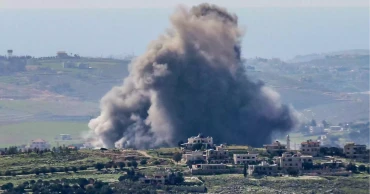
The warning came after the Israeli military launched a series of strikes on Lebanon late Thursday night, following instructions for residents to leave the southern suburbs of Beirut, an area considered a stronghold of Hezbollah.
Shortly afterward, the Israel Defense Forces (IDF) said it had also begun a “broad-scale wave of strikes against Iranian terror regime infrastructure in Tehran.”
#From this BBC
2 months ago
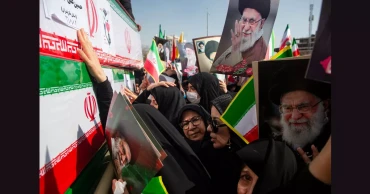
Iranian officials hold talks on potential new leadership
Iranian state television reported on Friday that a leadership council had started discussing how to convene the country’s Assembly of Experts, which will select the new supreme leader.
The leadership council includes President Masoud Pezeshkian, judiciary chief Gholam Hossein Mohseni Ejehi and cleric Ayatollah Ali Reza Arafi.
The statement provided no timeline on the selection of the supreme leader, nor information on whether the Assembly of Experts would meet in person or remotely for the vote.
Buildings associated with the Assembly of Experts, a 88-member clerical panel, have been attacked during the Israeli-U.S. airstrike campaign.
Meanwhile, intense Israeli airstrikes pounded the capitals of Iran and Lebanon early Friday as the U.S. apparently struck an Iranian drone carrier at sea in its unrelenting campaign against the Islamic Republic’s fleet of warships.
Iran launched new retaliatory attacks in the Middle East at the end of a full week of bombardment, which U.S. Defense Secretary Pete Hegseth warned was “about to surge dramatically.”
2 months ago
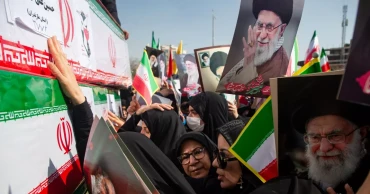
Trump wants to be involved in picking Iran's next leader
US President Donald Trump said Thursday that he should have a role in selecting Iran’s next supreme leader as the United States and Israel continued heavy strikes on Iran for a sixth straight day, while Tehran carried out retaliatory attacks across the region.
The intensifying conflict has already affected at least 14 countries in the Middle East and beyond, raising fears of a wider regional war.
Speaking to the news site Axios, Trump dismissed Mojtaba Khamenei, widely seen as a potential successor to his father, Iran’s slain supreme leader Ali Khamenei. Khamenei was reportedly killed in the opening phase of the war.
Trump said he wanted a leader who could bring “harmony and peace” to Iran and argued that the United States should have a role in determining the country’s next leadership.
His remarks are likely to fuel speculation about whether Washington and Israel aim to overthrow Iran’s Islamic Republic or simply force policy changes from Tehran.
War intensifies across the region
The fighting has escalated steadily, with Iran launching missiles and drones at Israel, US military bases and several countries aligned with Washington.
US Defense Secretary Pete Hegseth warned that American military power over Tehran would soon increase significantly.
Israel’s military said its strikes have already destroyed most of Iran’s air defense systems and missile launchers, though Israeli army chief Eyal Zamir cautioned that the threat from Iran has not yet been eliminated.
According to officials, the conflict has killed at least 1,230 people in Iran, more than 120 in Lebanon and around a dozen in Israel. Six US soldiers have also died.
Trump urges Iranians to rise against governmentIn brief remarks at the White House, Trump again called on Iranians to reclaim their country from the current leadership.
He said the United States would grant “total immunity” to Iranians who support such a change, though he provided no details about what that would entail.
Iran, however, has rejected any suggestion of negotiations.
Iran’s ambassador to Egypt, Mojtaba Ferdousi Pour, told The Associated Press that Tehran had not sought talks with Washington and denied Trump’s claim that Iran wanted negotiations.
He said trust between the two countries had collapsed after two failed rounds of nuclear deal discussions that ultimately led to war.
“There will be no trust in Trump,” he said.
Naval clash and rising tensions
Iran’s Foreign Minister Abbas Araghchi accused the US Navy of committing an “atrocity at sea” after an Iranian frigate, the IRIS Dena, was sunk in the Indian Ocean.
The ship had been returning from a naval exercise hosted by India and was carrying nearly 130 crew members, Araghchi said. At least 87 sailors were killed, while 32 were rescued by Sri Lankan authorities.
Sri Lanka said another Iranian warship with more than 200 sailors near its coast was being escorted to a naval base outside Colombo.
Attacks spread to Gulf states
The US military said an Iranian drone carrier was also struck and set on fire during operations.
Adm. Brad Cooper said American forces have sunk more than 30 Iranian vessels during the conflict, including a drone carrier comparable in size to a World War II aircraft carrier.
Meanwhile, several Gulf countries reported attacks linked to the conflict.
Kuwait activated air defense systems and the US State Department announced the temporary closure of the US Embassy there.
In United Arab Emirates, a drone was intercepted near the Al Dhafra Air Base, which hosts US forces, while falling debris injured several people.
Qatar evacuated residents near the US Embassy in Doha as a precaution and later reported a missile attack. Saudi Arabia said it destroyed a drone near its border with Jordan.
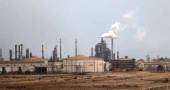
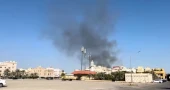
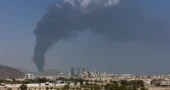
Bahrain said an Iranian missile struck a state-owned oil refinery on Thursday, sparking a fire that was later extinguished without casualties.
Meanwhile, Ilham Aliyev accused Iran of “terror and aggression” after drones crashed near an airport and a school in Azerbaijan, injuring several civilians. Tehran denied launching drones toward the country.
The fighting has also disrupted global oil shipping through the Strait of Hormuz and the Gulf of Oman, pushing oil prices higher and sending US stock markets downward.
Fighting expands to Lebanon
As the conflict spread, Israel issued an evacuation warning for residents in the southern suburbs of Beirut before launching strikes Thursday evening.
The Lebanese health ministry said at least 123 people have been killed since hostilities resumed between Israel and the Iran-backed militant group Hezbollah.
A spokesperson for the UN peacekeeping mission in southern Lebanon said peacekeepers had witnessed clashes, including ground combat, as additional Israeli forces crossed the border.
2 months ago
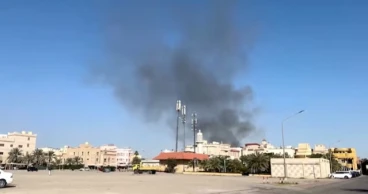
US embassy in Kuwait suspends operations
The United States has temporarily suspended operations at its embassy in Kuwait City, the State Department said in a statement.
The department said no injuries among US personnel have been reported, but emphasised that the safety of Americans abroad remains its top priority.
In its advisory, the State Department urged US citizens currently in Kuwait to leave the country if they can do so safely using commercial or other available transportation.
It also advised those unable to depart to remain indoors and shelter in place until further notice.
#From BBC
2 months ago
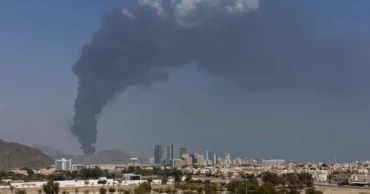
More Iranian attacks reported across the Gulf region
Iran has launched a series of attacks across several Gulf countries, with most missiles and drones intercepted by air defence systems, according to officials and reports from the region.
The strikes appear to be part of a broader campaign targeting multiple Gulf states, including Qatar, the United Arab Emirates, Saudi Arabia, Bahrain and Kuwait.
In Qatar, authorities said the country’s air defences intercepted 13 incoming missiles, while one missile landed in Qatari territorial waters.
Saudi Arabia’s Defence Ministry said its air defences shot down three ballistic missiles that were heading toward Prince Sultan Air Base. The incident marks the second such attempted attack on the base in recent days.
Earlier reports from Bahrain said two hotels and a residential building in the capital were targeted in an attack. However, there were no immediate reports of casualties.
In Kuwait, the military said missiles and drones were launched toward the country overnight. Videos circulating online appeared to show an explosion and fire near an airbase located south of Kuwait City.
Amid the heightened security concerns, the US Embassy in Kuwait announced a temporary suspension of its services, citing safety reasons.
The latest incidents indicate a widening pattern of attacks across the Gulf region, although air defence systems in several countries have so far intercepted most of the incoming threats.
#From ALJAZERRA
2 months ago
Satellite images show multiple strikes near Iran school
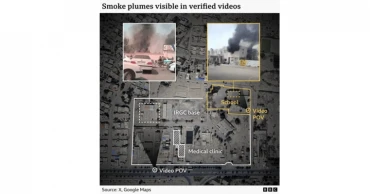
Satellite imagery and verified videos suggest that an Iranian primary school and a nearby military facility were struck multiple times during an attack in southern Iran that authorities say killed at least 168 people, many of them children.
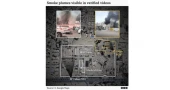
Analysis of satellite images and footage indicates extensive damage around the Shajareh Tayebeh primary school in Minab and an adjacent compound belonging to the Islamic Revolutionary Guard Corps (IRGC).
Images show one building inside the IRGC base completely flattened, while the school building appears partially collapsed. Satellite analysis also identified several burn marks and impact craters across the area, suggesting multiple strikes occurred almost simultaneously.
Munitions expert N R Jenzen Jones said the concentration of impact sites close to each other indicates that the area may have been targeted with several strikes at once.
Verified videos recorded shortly after the incident show chaotic scenes as families and rescuers searched through the rubble for victims. Some people were seen holding up children’s schoolbags and books recovered from the debris.
Aerial footage filmed days later showed rows of freshly dug graves, reportedly for victims of the attack.
Iranian authorities blamed the United States and Israel for the strike, but neither country has accepted responsibility. Israel said it was not aware of any military operations in the area, while US Defense Secretary Pete Hegseth said Washington was investigating the incident and stressed that the United States does not target civilians.
The attack reportedly took place around 10:45am local time on Saturday, the first working day of the week in Iran.
Footage verified from the scene shows smoke rising from both the school building and the nearby IRGC compound. Murals and Persian alphabet decorations on the school’s walls could be seen in the videos, confirming the location.
Other footage filmed from outside the nearby military base shows signs marking the entrance to facilities belonging to the IRGC, including the “Seyed al-Shohada educational and cultural corps” and a medical clinic linked to the IRGC navy.
Satellite images taken several days later revealed broader destruction than initially visible in the videos. Analysts identified at least five damaged buildings in the area along with visible craters and scorch marks.
Satellite imagery expert Jamon Van den Hoek of Oregon State University said the pattern of damage suggests one or more intended targets were located very close to each other, though the exact objective of the attack remains unclear.
Another analyst, Oz Smith of McKenzie Intelligence Services, said a crater visible inside the two-storey school building suggests a munition designed to penetrate deeper levels may have been used.
Earlier satellite images indicate the school and the IRGC base were once part of the same compound, although a wall separating them appeared in images taken several years later.
Questions also remain about who carried out the attack. Iran insists the United States and Israel were responsible, but both governments have denied involvement in the strike on the school.
Without physical evidence from the site, such as remnants of weapons used, analysts say it is difficult to determine who launched the attack.
Iranian officials say most of the 168 people killed were children. The education ministry said the school had 264 students enrolled.
A list published by Iranian media included the names of dozens of victims, many between the ages of six and 11, though these details could not be independently verified.
Photos from funerals broadcast by Iranian state media showed large crowds attending burial ceremonies, with several small coffins draped in the Iranian flag.
The US-based Human Rights Activists News Agency says more than 1,100 Iranian civilians have been killed since the conflict began, including at least 183 children.
With inputs from BBC
2 months ago
Iran vows harsh response if US launches ground invasion
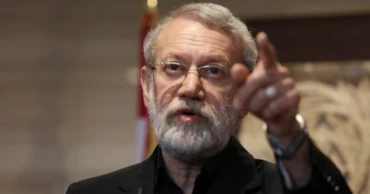
A senior Iranian official has warned that Iran is prepared to confront any potential United States ground invasion, threatening to capture and kill American troops if they enter the country amid the escalating conflict involving the US, Israel and Iran.
Ali Larijani, secretary of Iran’s Supreme National Security Council, said Iran’s forces are ready to respond forcefully if Washington deploys troops inside Iranian territory. His remarks came as US officials, including President Donald Trump, have not ruled out sending ground forces to Iran.
“Some American officials have said they intend to enter Iranian territory with several thousand troops,” Larijani said in a statement, warning that such a move would bring serious consequences.
Referring to Iran’s late supreme leaders Ruhollah Khomeini and Ali Khamenei, Larijani said followers loyal to their legacy are ready to confront invading forces.
“The valiant sons of Imam Khomeini and Imam Khamenei are waiting for you, ready to disgrace corrupt American officials by killing and capturing thousands,” he said.
Larijani, considered one of the most influential figures in Iran and a close adviser to the assassinated supreme leader Khamenei, made the remarks as fighting intensifies following a joint US-Israeli strike that killed Khamenei on Saturday.
Since the latest conflict erupted, the United States and Israel have launched thousands of airstrikes on targets across Iran, while Tehran has retaliated with missile and drone attacks against Israeli and US-linked targets across the Middle East.
President Trump said the war was progressing better than expected for Washington and its allies, claiming US and Israeli forces have gained control of Iranian airspace and are continuing strikes across the country.
Despite the pressure, Iranian leaders have vowed to continue fighting in retaliation for Khamenei’s killing and to resist the US-Israeli military campaign.
“We will not negotiate with the United States,” Larijani said earlier this week, signalling Tehran’s hardline stance.
Meanwhile, Trump has expressed interest in influencing the selection of Iran’s next supreme leader following Khamenei’s death. He said he wanted to be “involved in the appointment” of the successor, citing what he described as a successful US intervention in Venezuela earlier this year.
Trump previously pointed to the January 3 US operation in Venezuela, in which Venezuelan President Nicolas Maduro was detained and taken to the United States for trial. Shortly afterwards,
Vice President Delcy Rodriguez assumed the presidency with Washington’s backing and began cooperating with the US government, including allowing American authorities to sell Venezuelan oil.“What we did in Venezuela is the perfect scenario,” Trump told The New York Times.
The US president has also voiced opposition to Mojtaba Khamenei, the slain leader’s son and a potential successor.
“Khamenei’s son is unacceptable to me. We want someone that will bring harmony and peace to Iran,” Trump told Axios.
Iran’s next supreme leader will ultimately be chosen by the Assembly of Experts, a body of senior Islamic scholars responsible for selecting and supervising the country’s highest authority.
With inputs from ALJAZEERA
2 months ago
War spreads across Middle East as Iran launches missiles, drones
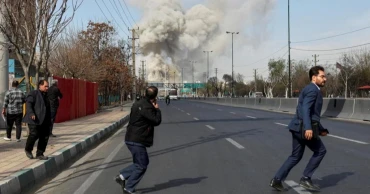
The conflict involving Iran, Israel and the United States has intensified across the Middle East, with fresh missile and drone attacks reported across several countries on Thursday as the war entered its sixth day.
Images from Tehran showed extensive damage to residential buildings after days of joint US and Israeli strikes on the Iranian capital. Explosions were also seen across the city as the bombardment continued.
Meanwhile, Israel’s military said it had detected another wave of missiles fired from Iran toward the country. The Israeli air defence system was activated and residents in affected areas were instructed to remain in protected shelters.
The conflict has increasingly spread beyond Iran and Israel, affecting several Gulf countries. The defence ministry of the United Arab Emirates said it intercepted six ballistic missiles and 131 drones launched from Iran on Thursday. However, one missile and six drones landed inside the country.
Authorities said three people—foreign nationals from Pakistan, Nepal and Bangladesh—have been killed since the attacks began, while at least 94 others were injured.
Explosions were also reported in Doha and Manama as Gulf states responded to Iranian strikes with air defence systems. Bahrain said it had intercepted dozens of Iranian missiles and drones targeting the country since the weekend.
Elsewhere, Azerbaijan reported that two Iranian drones struck its territory in the Nakhchivan region. One drone hit a terminal building at Nakhchivan International Airport while another landed near a school in Shakarabad village, injuring two civilians.
In the Gulf waters, a tanker was damaged after being struck, while Iranian media reported that the country’s navy had targeted a US ship in the region.
Satellite images analysed by BBC Verify also revealed damage to several Iranian military sites, including the headquarters of the Iranian Air Force in western Tehran. Missile installations near Garmdarah and Khorramabad were also hit, with infrastructure and tunnel entrances showing visible damage.
The economic impact of the conflict has begun to spread globally. Energy prices have surged, with gas prices rising about 80% compared with the start of the week and crude oil prices climbing more than 10%.
Energy infrastructure has also been affected. Qatar temporarily shut down operations at the Ras Laffan Industrial City, the world’s largest liquefied natural gas facility, raising concerns about global fuel supplies.
European countries are also increasing their military presence in the region. France, Italy, Spain and the Netherlands have announced plans to deploy naval assets to protect Cyprus after a drone attack targeted the British military base at RAF Akrotiri earlier this week.
Meanwhile, security alerts were issued in parts of Cyprus during a visit by UK Defence Secretary John Healey after a potential threat was detected near the base, though authorities later said no object was heading toward the site.
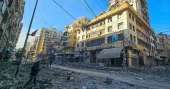
The conflict has also affected civilians across the region. In Beirut, residents returned to find a residential building destroyed following an overnight Israeli strike. Locals said they had evacuated earlier in the week due to security fears.
In northern Iraq, Kurdish Iranian opposition groups denied reports that their fighters had crossed into Iran to join the conflict. Representatives said their forces could not move without air protection and called for a no-fly zone.
Meanwhile, travel disruptions continue. A UK government charter flight scheduled to evacuate citizens from the region was delayed due to technical issues but is expected to depart from Muscat later on Thursday.
As fighting spreads across multiple countries, concerns are growing that the war could further destabilise the Middle East and threaten global energy supplies and regional security.
With inputs from BBC
2 months ago