middle-east
Hezbollah claims attacks on Israeli bases as IDF launches fresh strikes on Tehran, Beirut
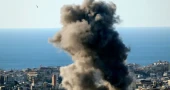
Hezbollah claimed it carried out attacks on three Israeli military sites, while the Israel Defense Forces confirmed launching simultaneous strikes on Tehran and Beirut, marking a sharp escalation in regional tensions.
In separate statements posted on Telegram, Hezbollah said it targeted the Nafah base in the Golan Heights with what it described as a large missile salvo. The group also claimed it struck the Meron and Ramat David air bases in northern Israel using drones.
Hezbollah said the attacks were conducted “in response to the criminal Israeli aggression that targeted dozens of Lebanese cities and towns.”
The Israeli military has not commented on Hezbollah’s claimed attacks.
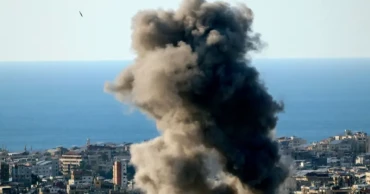
Meanwhile, the IDF said it was conducting simultaneous targeted strikes against military targets in the Iranian capital, Tehran, and the Lebanese capital, Beirut.
“The IDF is currently conducting simultaneous targeted strikes against military targets in Tehran and Beirut,” the military said in a statement.
IDF Arabic-language spokesman Avichay Adraee said “a wave of extensive airstrikes” was underway.
The strikes came about an hour after the Israeli military issued what it described as an urgent warning to residents of Beirut’s southern suburbs and dozens of villages, urging them to evacuate. The IDF said it was targeting Hezbollah command centres and storage facilities.
#With Inputs from BBC
3 days ago
US Embassy in Riyadh hit amid US-Israel strikes on Iran
The conflict between Israel, the United States and Iran deepened on Tuesday as US and Israeli military operations expanded across the Middle East, including a confirmed strike on the US Embassy in Riyadh and actions that have effectively halted traffic through the strategic Strait of Hormuz.
Saudi authorities reported that at least two drones struck the US Embassy compound in the Saudi capital, igniting a fire and causing minor damage, though there were no immediate reports of casualties. The kingdom’s defence forces later intercepted several additional drones travelling toward Riyadh and nearby cities.
Meanwhile, Iran’s Islamic Revolutionary Guard Corps (IRGC) stated that it has closed the Strait of Hormuz — a vital global shipping artery through which around one‑fifth of the world’s oil supplies typically transit — and would target any vessel attempting to transit the waterway in response to the strikes.
The closure has triggered alarm in global markets, with oil prices rising sharply amid fears that prolonged disruption could choke energy supplies. Commercial shipping firms and insurers are reported to be avoiding the strait due to the heightened risk.
The escalation follows joint US‑Israeli air and missile strikes on Iranian territory that targeted government and military infrastructure, part of what Washington described as efforts to thwart Tehran’s regional influence. These actions have drawn swift retaliation from Iranian forces, including missile and drone attacks against targets in Israel and Gulf states hosting US military bases.
The widening confrontation has raised concerns among international leaders about a broader regional conflict with far‑reaching economic and security consequences, underscoring deepening instability in the Middle East. Analysts warn the situation remains highly volatile as diplomatic and military responses continue to unfold.
With inputsa from ALJAZEERA
4 days ago
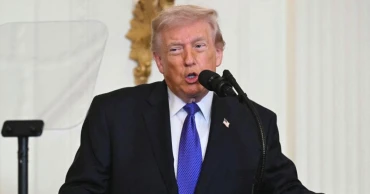
Tehran makes new threat to Gulf shipping as US says ‘hardest hits’ on Iran yet to come
Tehran has threatened to block and even “set fire” to vessels attempting to pass through the strategically vital Strait of Hormuz as tensions escalate following large-scale US and Israeli strikes on Iran.
An adviser to Iran’s Islamic Revolutionary Guard Corps warned on state television that the waterway is effectively closed and ships entering the area would face a “serious response.” The Strait of Hormuz handles roughly one-fifth of the world’s oil and gas supplies, making it one of the most critical global energy routes.
US Secretary of State Marco Rubio said the “hardest hits” against Iran are “yet to come,” declining to disclose operational details. He described Saturday’s US action as “pre-emptive,” arguing Washington acted because it anticipated Israeli strikes would trigger Iranian retaliation against American forces.
Rubio said the US objective is to destroy Iran’s ballistic missile capabilities and limit threats to global shipping posed by its navy. While he added that the US would welcome change led by the Iranian people, he insisted regime change was not the stated mission.
President Donald Trump, speaking at the White House for the first time since the strikes, defended the decision to launch military action as the “last, best chance” to stop Iran’s leadership. He said the US is continuing “large-scale combat operations.”
Meanwhile, Iran has fired missiles toward Israel, with the Israeli military saying its air defence systems were intercepting incoming threats. Israel has also intensified strikes in Tehran and targeted positions in Lebanon it described as linked to Hezbollah. Lebanese health authorities reported dozens killed and hundreds displaced in Beirut following Israeli bombardment.
Saudi Arabia confirmed that two drones struck the US embassy compound in Riyadh, causing a limited fire and minor structural damage. Separately, an air base near Dubai used by Australian forces was hit by a drone over the weekend, though no Australian personnel were injured.
The conflict is also rattling global markets. The cost of chartering a supertanker to transport oil from the Middle East to China has surged to a record high of more than $400,000 per day, nearly double last week’s rate, according to financial data providers.
In Tehran, damage was reported at the historic Golestan Palace, a UNESCO-listed royal complex dating back to the Qajar era. Iranian media said nearby explosions affected the site, prompting concern over cultural heritage protection.
The US State Department has urged American citizens across much of the Middle East to depart via commercial means due to “serious safety risks.” An updated military briefing from US Central Command said six American service members have been killed so far in the conflict.
British Prime Minister Keir Starmer said the UK’s decision not to join the US-Israeli operation was “deliberate,” adding that his government does not support “regime change from the skies.”
As missile exchanges and air strikes continue, fears are mounting that the conflict could further disrupt global energy supplies and draw more regional actors into a widening war.
With inputs from BBC
4 days ago
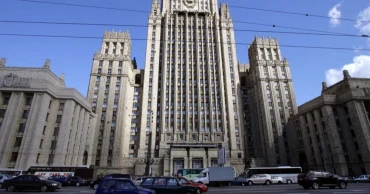
Russia condemns US-Israel strikes on Iran, calls them ‘unprovoked aggression’
Russia on Saturday strongly condemned the joint U.S.-Israeli strikes on Iran, describing them as “a preplanned and unprovoked act of armed aggression against a sovereign and independent U.N. member state” and urged an immediate halt to the military operations and a return to diplomacy.
In a statement on Telegram, the Russian Foreign Ministry accused “Washington and Tel Aviv” of using concerns over Iran’s nuclear program as a cover for pursuing regime change. It warned that the attacks could trigger a “humanitarian, economic, and possibly radiological catastrophe” in the region and said the actions risk plunging the Middle East into “an abyss of uncontrolled escalation.”
Russia, a major trade partner and arms supplier to Iran, condemned the attacks but is expected to carefully assess its response, given recent warming ties with the United States. Russian President Vladimir Putin has praised U.S. President Donald Trump’s mediation efforts in Ukraine, and Moscow and Washington have been in talks to revive economic relations.
Russian Foreign Minister Sergey Lavrov spoke by phone with Iranian Foreign Minister Abbas Araghchi, who briefed him on Iran’s attempts to repel the attacks and said Tehran would seek to convene an urgent U.N. Security Council session. Lavrov reiterated Russia’s condemnation and Moscow’s readiness to help broker peace. Kremlin spokesman Dmitry Peskov said Putin discussed the situation with Russia’s Security Council via videoconference.
The statement called the bombing of nuclear facilities under International Atomic Energy Agency safeguards “unacceptable” and placed full responsibility for the escalation on the U.S. and Israel. It said, “Responsibility for the negative consequences of this manmade crisis, including an unpredictable chain reaction and spiraling violence, lies entirely with them.”
NATO chief says alliance won’t join war on Iran
Russia also criticized what it called repeated destabilizing attacks by the U.S., accusing Washington of undermining the “international legal pillars of the world order.”
Historically, Russia has balanced its Middle East relations carefully, maintaining warm ties with Israel while deepening economic and military cooperation with Iran. Last week, Iranian forces and Russian sailors conducted joint drills in the Gulf of Oman and the Indian Ocean to enhance operational coordination and exchange military experience, according to Iran’s state-run IRNA news agency.
In January last year, Putin and Iranian counterpart Masoud Pezeshkian signed a broad cooperation pact amid Western sanctions. The West alleges that Russia and Iran signed a $1.7 billion deal for Shahed drones in 2022, and the U.S. claims Iran transferred short-range missiles to Moscow, though neither side has confirmed these claims.
Ukrainian President Volodymyr Zelenskyy voiced support for the strikes, calling Iran “an accomplice of Putin” for supplying drones and weapons technology during Russia’s war in Ukraine. Russia and Iran also backed Syrian President Bashar Assad during the civil war, though Assad ultimately fled to Russia following an opposition offensive.
Some analysts in Moscow say the Israel-Iran confrontation could divert global attention from the war in Ukraine and potentially weaken Western support for Kyiv.
4 days ago
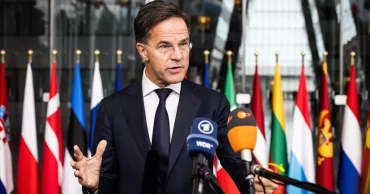
NATO chief says alliance won’t join war on Iran
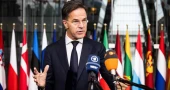
NATO Secretary-General Mark Rutte has praised the military actions of the United States and Israel against Iran but made it clear that the alliance has no plans to become involved in the Middle East conflict.
Speaking to Germany’s ARD television from Brussels, Rutte said it is “really important” what the United States is doing “together with Israel” to degrade Iran’s ability to develop nuclear weapons and ballistic missiles.
However, he stressed that NATO as an alliance will not participate. “There are absolutely no plans whatsoever for NATO to get dragged into this or to be part of it,” Rutte said, while noting that individual NATO allies may still choose to support US efforts.
#From AlJazeera
4 days ago
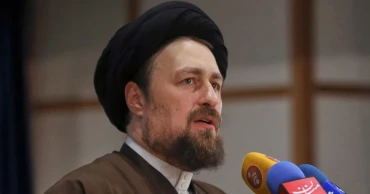
Possible successors to Iran’s next supreme leader
Iran's leaders are scrambling to replace Supreme Leader Ayatollah Ali Khamenei, who ruled the country for 37 years before he was killed in the surprise U.S. and Israeli bombardment.
It's only the second time since the 1979 Islamic Revolution that a new supreme leader is being chosen. Potential candidates range from hard-liners committed to confrontation with the West to reformists who seek diplomatic engagement.
The supreme leader has the final say on all major decisions, including war, peace and the country's disputed nuclear program.
In the meantime, a provisional governing council composed of President Masoud Pezeshkian, hard-line judiciary chief Gholamhossein Mohseni Ejei and senior Shiite cleric Ayatollah Ali Reza Arafi is guiding the country through its biggest crisis in decades. Foreign Minister Abbas Araghchi said Sunday that a new supreme leader would be chosen early this week.
The supreme leader is appointed by an 88-member panel called the Assembly of Experts, who by law are supposed to quickly name a successor. The panel consists of Shiite clerics who are popularly elected after their candidacies are approved by the Guardian Council, Iran’s constitutional watchdog.
Khamenei had major influence over both clerical bodies, making it unlikely the next leader will mark a radical departure.
Here are the top contenders.
Mojtaba Khamenei
The son of Khamenei, a mid-level Shiite cleric, is widely considered a potential successor. He has strong ties to Iran's paramilitary Revolutionary Guard but has never held office. His selection could prove awkward, as the Islamic Republic has long criticized hereditary rule and cast itself as a more just alternative.
Ayatollah Ali Reza Arafi
Arafi is a member of the provisional government council. The senior Shiite cleric was handpicked by Khamenei to be a member of the Guardian Council in 2019, and three years later he was elected to the Assembly of Experts. He leads a network of seminaries.
Hassan Rouhani
Rouhani, a relative moderate, was president of Iran from 2013 to 2021 and reached the landmark nuclear agreement with the Obama administration that U.S. President Donald Trump scrapped during his first term. Rouhani served on the Assembly of Experts until 2024, when he said he was disqualified from running for reelection. Rouhani criticized it as an infringement on Iranians' political participation.
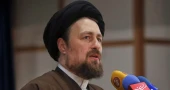
Hassan Khomeini
Khomeini is the most prominent grandson of the founder of the Islamic Republic, Ayatollah Ruhollah Khomeini. He is also seen as a relative moderate, but has never held government office. He currently works at his grandfather’s mausoleum in Tehran.
Ayatollah Mohammed Mehdi Mirbagheri
Mirbagheri is a senior cleric popular with hard-liners who serves on the Assembly of Experts.
He was close to the late Ayatollah Mohammad Taghi Mesbah Yazdi, a fellow hard-liner who wrote that Iran should not deprive itself of the right to produce “special weapons,” a veiled reference to nuclear arms.
During the COVID-19 pandemic, Mirbagheri denounced the closure of schools as a “conspiracy.”
He is currently the head of the Islamic Cultural Center in Qom, the main center for Islamic teaching in Iran.
4 days ago
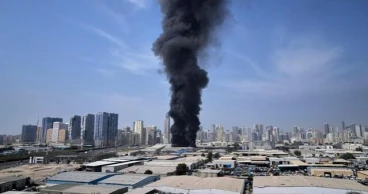
Tehran’s streets eerily empty amid heavy airstrikes
Tehran’s streets have been largely deserted with people sheltering during airstrikes.
The paramilitary Basij force, which has played a central role in crushing recent nationwide protests, set up checkpoints across the city, according to witnesses.
In the northern Iranian city of Babol, a student, speaking anonymously over concerns of retribution, told the AP that armed riot police were on the streets Saturday night and into the early hours of Sunday after the death of Khamenei.
“We don’t know whether to be happy about the elimination of the criminals who oppress us or to remain silent in the face of the U.S. and Israel’s war against the country and its interests and the terror that is taking place,” he said.
Meanwhile, the war in the Middle East spiraled further Monday as Israel and the U.S. pounded Iran. Tehran and its allies hit back against Israel, neighboring Gulf states, and targets critical to the world’s production of oil and natural gas.
4 days ago
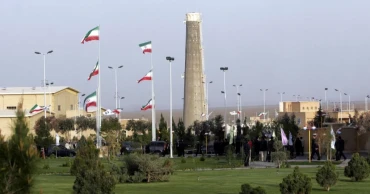
US-Israeli airstrikes targeted Natanz enrichment facility, alleges Iran’s nuclear ambassador
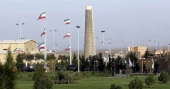
Iran’s Ambassador to the International Atomic Energy Agency (IAEA), Reza Najafi, on Monday accused the United States and Israel of carrying out airstrikes on the Natanz nuclear enrichment facility in Iran. His claim contradicts IAEA Director-General Rafael Grossi, who said the agency has “no indication” that any Iranian nuclear sites have been hit.
Speaking at the IAEA headquarters in Vienna during a special Board of Governors session requested by Russia, Najafi said, “Again they attacked Iran’s peaceful safeguarded nuclear facilities yesterday. Their justification that Iran wants to develop nuclear weapons is simply a big lie.” When asked about the targeted site, he identified Natanz, located roughly 220 kilometers south of Tehran. The site houses both above- and below-ground laboratories and was central to Iran’s uranium enrichment program, including advanced centrifuges capable of enriching uranium up to 60%, close to weapons-grade levels.
US Jets downed in Kuwait as Iran strikes region
Israel previously struck Natanz’s above-ground Pilot Fuel Enrichment Plant on June 13, leaving it “functionally destroyed,” and damaged underground halls holding centrifuge cascades. A follow-up U.S. strike on June 22 further hit the underground facilities.
Grossi, addressing the Board, reiterated that “up to now” no nuclear installations, including the Bushehr Nuclear Power Plant or Tehran Research Reactor, show signs of damage. The IAEA continues trying to contact Iranian authorities but has received no response due to communication constraints. He warned that military actions in the region raise nuclear safety risks, though radiation levels in neighboring countries remain normal.
Najafi also criticized the U.S., accusing former President Donald Trump of using “deception and disinformation” to justify military actions. He called the strikes “unlawful, criminal and brutal” and urged the IAEA board members to “categorically condemn” them.
4 days ago
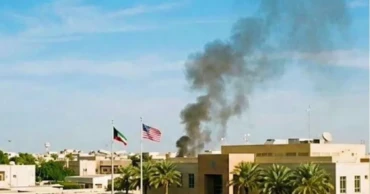
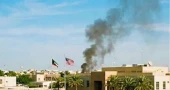
Fire breaks out at US Embassy in Kuwait after Iranian attack
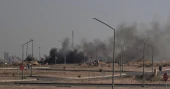
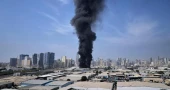
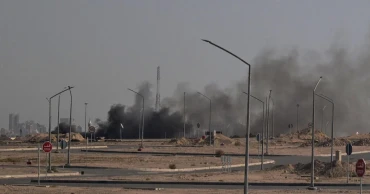
Fire and smoke were seen rising from the U.S. Embassy compound in Kuwait following an Iranian attack on the country on Monday.
Video obtained by The Associated Press showed thick smoke and alarms ringing inside the embassy.
The U.S. government earlier warned its citizens in Kuwait to take cover and stay indoors. It also advised people not to visit the embassy, without giving further details.
4 days ago
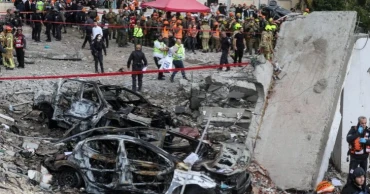
Tehran refuses negotiations; Israeli air strikes kill 31 in Lebanon
Iran has dismissed reports of renewed nuclear negotiations with the United States as Israeli strikes continue across Lebanon and Iran.
Ali Larijani, secretary of Iran’s National Security Council, denied claims in US media that Tehran had made a fresh push for talks.
He said Iran will not negotiate with the US at present as the country is defending itself and that its armed forces did not initiate the conflict.
Trump, who a day earlier had encouraged Iranians to “take over” their government, signaled Sunday that he was open to dialogue with Iran’s new leadership, reports AP.
A spokesperson for Iran’s foreign ministry told Al Jazeera that the country attempted diplomatic engagement twice: during the interrupted 2025 negotiations and again now, while facing renewed US-Israeli attacks.
Iranian retaliatory strikes have hit Tel Aviv, Jerusalem, and Beit Shemesh, killing at least nine in central Israel.
Israel announces ‘offensive campaign against Hezbollah’
The Israeli army’s chief of staff, Eyal Zamir, said in a meeting following Hezbollah rocket fire on Israel, “We have launched an offensive campaign against Hezbollah.”
Lebanese authorities reported that Israeli air attacks on the country have so far killed at least 31 people and wounded 149 others.
According to Lebanon’s National News Agency, Israeli air attacks hit the southern suburbs of Beirut and southern Lebanon, leaving 20 dead and 91 wounded in the capital’s suburbs and 11 dead and 58 wounded in the south.
Israel launched the strikes after Hezbollah fired rockets at northern Israel, widening the conflict triggered by joint US-Israel attacks on Iran. Forced displacement threats from Israel have caused hundreds of thousands of people to flee their homes in southern Lebanon.
Trump said US attacks on Iran will continue until all Washington’s objectives are achieved and vowed to avenge the deaths of three American soldiers.
Iran has continued strikes on US assets across the Gulf, killing one person in Bahrain, with Iraq and Kuwait also reporting Iranian raids following the killing of Supreme Leader Ayatollah Ali Khamenei and up to 40 top officials.
US embassy in Kuwait warns of ongoing missile and drone threats
The US embassy in Kuwait said there is a “continuing threat of missile and UAV attacks” over the country. “The US Embassy in Kuwait urges US citizens in Kuwait to shelter in place, review security plans in the event of an attack, and to stay alert in case of additional future attacks,” it said in a statement, adding that embassy personnel are sheltering in place.
Two killed in US-Israeli attacks on Iran’s Sanandaj
The Iranian Fars news agency reported that at least two people were killed in an “enemy attack” on the central city of Sanandaj. It said the city was targeted by enemy missiles, destroying several residential buildings near the police station. The Tasnim news agency said US and Israeli forces dropped six missiles on different parts of the city, including densely populated neighbourhoods. Footage verified by Al Jazeera showed fire and huge clouds of smoke in the sky during one attack.
Trump has turned ‘America First’ to ‘Israel First’, Larijani says
Larijani said in a post on X that Trump has plunged the Middle East into chaos with his “delusional fantasies and now fears more American casualties.” He added, “He turned his self-made ‘America First’ slogan into ‘Israel First’ and sacrificed American soldiers for Israel’s power-hungry ambitions.” He said it is American soldiers and their families who will pay the cost, adding that Iran will continue to defend itself.
Oil prices soar, stock markets fall amid regional conflict
Crude oil prices rose sharply while stocks fell as investors weighed the fallout from US-Israeli attacks on Iran. Brent crude rose as much as 13 percent in Asia on Monday morning before stabilising, with the international benchmark up by about 5 percent at $76.48 per barrel as of midday Tokyo time. Asian stock markets opened lower, with Hong Kong’s Hang Seng Index and Japan’s Nikkei 225 down about 2 percent and 1.5 percent, respectively. In the US, stock futures fell significantly outside regular market hours, with futures tracking the S&P 500 and Nasdaq Composite both down about 0.7 percent, signalling a volatile day ahead on Wall Street.
4 days ago