middle-east
Iran warns ‘great crime’ will not go unanswered after Khamenei killed
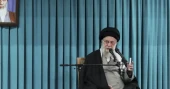
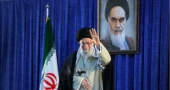
Iran’s Cabinet issued a warning early Sunday that a “great crime will never go unanswered” following what it said was a joint U.S.-Israeli military operation that killed Supreme Leader Ayatollah Ali Khamenei.
The warning came after Iranian state media reported that Khamenei, 86, was killed in an airstrike that hit his compound in central Tehran.
Iranian state television interrupted its broadcast to announce his death.
“To the noble and proud people of Iran: With the ultimate grief and sorrow this is to inform you that following the barbaric attack by the criminal governments of America and the evil Zionist regime, the true example of faith, jihad and resistance, the Supreme Leader of the Revolution Grand Ayatollah Khamenei achieved the blessing of martyrdom,” the anchor said.
Semi-official media reported that Khamenei’s daughter and son-in-law were among those killed in the U.S.-Israeli strikes.
The Fars News Agency, citing unidentified sources, also said a grandchild and a daughter-in-law died in Saturday’s attacks, without providing further details.
Iran’s government announced 40 days of national mourning and declared a seven-day nationwide public holiday in memory of the late leader, reports AP.
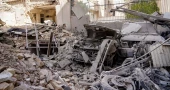
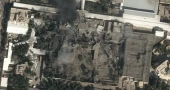
State television said Khamenei was inside his Tehran compound when the attack began, adding that satellite images from Airbus showed extensive bombing damage at the site.
His death at his workplace, state TV said, “showed that he consistently stood among the people and at the forefront of his responsibilities, confronting what officials call global arrogance.”
Iranian state media later formally confirmed that Ayatollah Ali Khamenei had died.
State television and the state-run IRNA news agency reported his death without giving further details.
U.S. President Donald Trump had earlier said Khamenei was killed in a joint American-Israeli operation against Iran.
Australian Prime Minister Anthony Albanese said he backs U.S. actions aimed at preventing Iran from threatening global peace and security. “We support the United States acting to prevent Iran from obtaining a nuclear weapon and to prevent Iran continuing to threaten international peace and security,” Albanese wrote on social media on Saturday.
The Arab League said the Israeli-U.S. airstrikes marked a point at which the Arab-Israeli conflict had turned into a “full-scale regional war.”
Its U.N. observer, Maged Abdelaziz, told an emergency meeting of the Security Council that Israel was using the Iran conflict to avoid ending its occupation of Palestinian territories and to impose its “hegemony on the Middle East by using military means.”
Despite reports of limited progress in U.S.-Iran talks in Geneva two days earlier, Abdelaziz said Israel carried out “a wanton military attack” that it claimed “was intended to prevent Iran from acquiring nuclear weapons.”
He added, “At the same time, Israel itself refuses to join the Nuclear Non-Proliferation Treaty,” and declines to place its nuclear facilities under the safeguards of the International Atomic Energy Agency.
The IAEA said its Board of Governors will hold a special session in Vienna on Monday after a request from Russia.
A diplomatic note dated Feb. 28 said the meeting would address “matters related to military strikes of the United States and Israel against the territory of the Islamic Republic of Iran that started in the morning of 28 February 2026, preceded by repeated open threats of such action, including against nuclear facilities under the IAEA safeguards.” The session will be held ahead of the board’s regular meeting.
3 months ago
Khamenei dead in strike, Iranian media confirm
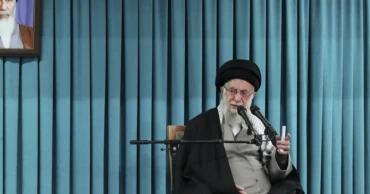
Iranian news agencies Tasnim and Fars have confirmed the death of the country’s Supreme Leader, Ayatollah Ali Khamenei, saying he was killed at his office in the early hours of Saturday while “performing his assigned duties”.
According to Fars, the Iranian government has announced 40 days of public mourning following Khamenei’s killing, along with seven days of public holidays.
An IRGC-aligned outlet reported that the supreme leader’s daughter, son-in-law and grandson were also killed in the strike. The reports came after US President Donald Trump and Israeli officials claimed that Khamenei had been killed, allegations that Iranian officials had earlier dismissed as “psychological warfare”.
Following the reports, people were seen pouring into the streets of the Iranian capital, Tehran, Al Jazeera reported.
Public ceremonies are expected in the coming days as part of the 40-day mourning period, even as bombardments continue across the country. A few hours earlier, a loud explosion was heard again in the capital.
Khamenei became head of the Islamic Republic in 1989 after the death of Ayatollah Ruhollah Khomeini, the leader of Iran’s 1979 Islamic revolution. While Khomeini was the ideological architect of the revolution that ended the Pahlavi monarchy, Khamenei went on to shape Iran’s military and paramilitary structures, which form the backbone of its defence strategy and regional influence.
Before assuming the role of supreme leader, Khamenei served as Iran’s president during the devastating war with Iraq in the 1980s. Analysts say that the prolonged conflict, combined with Iran’s sense of isolation as Western countries supported Iraqi leader Saddam Hussein, deepened Khamenei’s distrust of the West in general and the United States in particular. This outlook would later define his decades-long rule and reinforce the belief that Iran must remain in a permanent state of defence against both external and internal threats.
Meanwhile, Reza Pahlavi, son of Iran’s deposed Shah, said “their hour of liberation is at hand” in a short post on X, thanking Trump for the military operation launched against Iran. “The courageous Iranian people have paid a heavy price for freedom,” he added.
Pahlavi, who is seeking to lead Iran, said he has outlined a plan “for an orderly, transparent transition to a democratic Iran”.
3 months ago
Global tensions rise as US-Israeli strikes on Iran fuel fears of 'wider war'
Coordinated military strikes by the United States and Israel on Iranian targets have sharply escalated global tensions, triggering widespread concern over the risk of a broader regional conflict.
World leaders and neighbouring countries have urged restraint as fears grow that the rapidly intensifying situation could spiral into a wider war.
Iranian state media, citing the Red Crescent, on Saturday evening said at least 201 people were killed and more than 700 injured.
U.S. President Donald Trump urged the Iranian public to “seize control of your destiny” by rising up against the Islamic leadership that has ruled the nation since 1979.
In a video announcing the “major combat operations," Trump told Iranians that “when we are finished, take over your government. It will be yours to take. This will be probably your only chance for generations."
Meanwhile, Iran retaliated by firing missiles and drones toward Israel and U.S. military bases in the region, and exchanges of fire continued into the night.
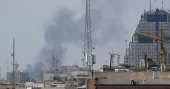
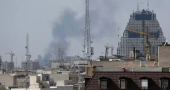
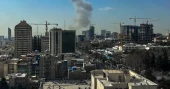
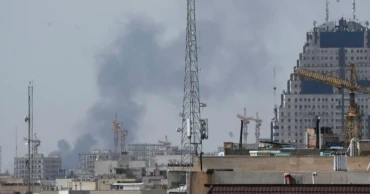
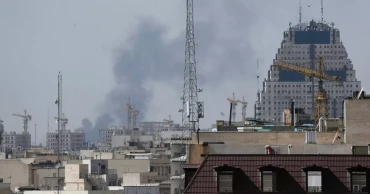
Some of the first strikes on Iran appeared to hit near the offices of 86-year-old Supreme Leader Ayatollah Ali Khamenei. Smoke rose from the capital as part of strikes that Iranian media said occurred nationwide.
Iranian Foreign Minister Abbas Araghchi told NBC News that Khamenei and President Masoud Pezeshkian are alive “as far as I know,” and called the attack “unprovoked, illegal and absolutely illegitimate.”
He also said Iran will continue to exercise its inherent and lawful right of self-defense until the ongoing aggression by the United States and Israel is ceased “fully and unequivocally.”
Araghchi made the remarks in a letter to the UN secretary-general and the president of the UN Security Council on Saturday.
Besides, Foreign Ministry spokesperson Esmaeil Baqaei has denounced the United States and the Israeli regime for killing civilians, including dozens of students in a primary school, in their unprovoked attacks on Iranian cities.
“The US & Israel launched an egregious, unwarranted act of aggression against Iran by indiscriminately targeting Iranian cities. In just one single case, they targeted a primary school in Minab, Hormozgan Province, killing and maiming tens of innocent young girls,” Baqaei wrote in a post on his X account on Saturday afternoon.
Calling the attack on the school “a blatant crime” he said, “The world must stand up to this grave injustice and the UNSC must act now in exercise of its primary responsibility under the Charter.”
How world leaders react
Global leaders have voiced deep concern following military strikes by Israel and the United States on Iran, and Tehran’s subsequent retaliation, warning of the risk of a wider regional conflict across the Middle East.
The United Nations Human Rights Chief, Volker Türk, called for “restraint” and urged all parties to “see reason, to de-escalate, and for a return to the negotiating table.”
“I deplore the military strikes across Iran this morning by Israel and the United States of America, and the subsequent retaliatory strikes by Iran,” he said, stressing that civilians ultimately bear the brunt of armed conflict. He reminded those involved that protecting civilians is “paramount” under international law.
The European Union’s top diplomat, Kaja Kallas, described the latest developments as “perilous.”
A spokesperson for the Government of the United Kingdom said London does not want to see “further escalation into a wider regional conflict.” The statement emphasised that the immediate priority is the safety of UK nationals in the region, adding that Britain stands ready to protect its interests.
Prime Minister Keir Starmer chaired a meeting of the government’s emergency Cobra committee and is expected to hold a series of calls with allies.
The BBC reported that the UK was not involved in the US-Israeli strikes.
Germany said it had been informed of the attack in advance, with Chancellor Friedrich Merz consulting relevant security ministers.
In Rome, the office of Italian Prime Minister Giorgia Meloni said she had held a conference call with ministers and intelligence chiefs and would consult allies and regional leaders to support efforts aimed at easing tensions.
Australian Prime Minister Anthony Albanese said his country supported the US in acting to prevent Iran from obtaining a nuclear weapon and from continuing to threaten international peace and security.
Meanwhile, Russia condemned the US-Israeli strikes, calling them a “reckless move.” The Russian foreign ministry said it was “condemnable” that the attacks were being carried out under what it described as the guise of renewed negotiations, referring to recent US-Iran nuclear talks.
Moscow also urged the international community to assess what it termed “irresponsible actions aimed at undermining peace, stability, and security” in the region.
As diplomatic activity intensifies, world leaders continue to call for restraint, warning that any further escalation could destabilise an already volatile Middle East.
Oil prices poised for volatility amid fears of wider conflict
Oil markets, currently closed for the weekend, are expected to see sharp price swings next week as uncertainty lingers over the impact of U.S. and Israeli strikes on Middle East oil supplies.
Earlier projections suggested any price spike would be short-lived if oil shipping routes and infrastructure—such as Iranian pipelines and the Kharg Island terminal—remain unaffected. However, disruption to infrastructure or tanker traffic through the Strait of Hormuz could trigger a sharper and more prolonged surge.
Brent crude has already climbed to a seven-month high of $72.87. Iran exports about 1.6 million barrels per day, mostly to China, and any disruption could push Chinese buyers to seek alternative supplies, driving global prices higher.
Around 20% of global oil passes daily through the Strait of Hormuz, used heavily by Saudi Arabia, Iraq and the UAE. Analysts say Iran is unlikely to close the strait as it would harm its own exports and key customer China.
Pre-conflict forecasts suggested limited strikes could raise prices by $5–$10 on market fears alone, while a broader war disrupting tanker traffic could push crude above $90 per barrel and send U.S. gas prices well above $3 per gallon, from last week’s average of $2.98.
# With input from agencies
3 months ago
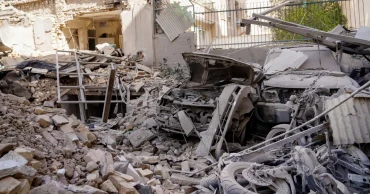
201 killed, 747 injured as US–Israel strikes hit 24 provinces in Iran
The Iranian Red Crescent Society has reported that at least 201 people have been killed and 747 others injured in attacks across Iran, according to Mehr news agency.
A spokesperson for the humanitarian organisation said US and Israeli strikes have affected 24 provinces. More than 220 Red Crescent teams have been deployed to the impacted areas, and rescue efforts are ongoing.
Meanwhile, Donald Trump stated that the United States has initiated “major combat operations” in Iran, following Israel’s announcement that it had carried out missile strikes on the country. Iranian media, citing the Red Crescent, confirmed the casualty toll of at least 201 deaths across 24 provinces.
In response, Iran has launched retaliatory strikes targeting Israel and US assets in several Middle Eastern countries, including Qatar, United Arab Emirates, Kuwait, Bahrain, Jordan, Saudi Arabia and Iraq, reports Al Jazeera.
Multiple explosions were reported in the capital, Tehran, along with blasts in other parts of the country. State media also reported that a strike on a school in southern Iran left more than 80 people dead.
Amid the escalating exchanges, several countries in the region have closed their airspace.
Separately, Iran’s Foreign Ministry spokesperson Esmail Baghaei said the US attacks do not “serve the interests of the American people”.
“This is something that is imposed on Iran. We never sought war. We were going to resolve this issue diplomatically. And this was the demand of all the countries of the region and the international community”, he told Al Jazeera.
“This was asserted by the US, and we believe that it is just to advance the whims of the Israeli regime. And I think this war would not serve the interests of the American people.”
Moreover, Baghaei said that Iran was “friendly with all countries of the region”.
“The problem is that the US is conducting this war of aggression at the cost of everyone, including the countries of the region.”
3 months ago
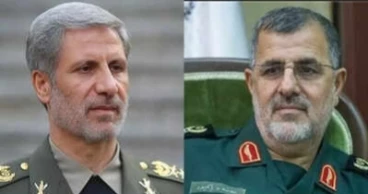
Iran’s IRGC chief, defence minister reportedly killed in Israeli strikes
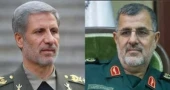
Iranian Islamic Revolutionary Guard Corps (IRGC) commander General Mohammad Pakpour and Defence Minister Amir Nasirzadeh were reportedly killed in Israeli airstrikes inside Iran on Saturday morning.
Israeli officials said Pakpour, Nasirzadeh, and Iran’s intelligence chief were likely among those targeted.
The full number of casualties has not yet been confirmed.
Several senior Iranian military and regime figures were reportedly targeted, including Supreme Leader Ayatollah Ali Khamenei and President Masoud Pezeshkian, though their status remains unverified.
If confirmed, Pakpour’s death would deal a major blow to Iran’s security establishment.
As IRGC commander, he coordinated internal security and regional military operations, including responses to joint US–Israeli strikes.
The IRGC is responsible for Iran’s missile and aerospace programs, elite overseas operations, domestic security, and major economic networks.
Targeting the IRGC chief signals a shift from attacking military infrastructure to directly hitting Iran’s leadership core.
Analysts warn that the strikes could disrupt command chains in the IRGC and Iran’s broader security apparatus.
Iran has already started retaliatory actions in the region, and further escalation is possible.
The situation remains fluid, and official confirmation from Iranian authorities is pending.
With inputs from Gulf News
3 months ago

Some oil companies suspend fuel shipments in Strait of Hormuz: Reports
Several leading oil producers and trading firms have temporarily halted fuel shipments through the Strait of Hormuz following escalating attacks in the region, according to media reports.
A senior executive at a major trading company told Reuters that their vessels would remain stationary for the next few days as a precautionary measure, reports Al Jazeera.
Roughly 20 million barrels of crude oil and other petroleum products pass daily through the narrow but strategically vital corridor between the Arabian Peninsula and Iran. Any prolonged disruption in shipments through the waterway could trigger significant turbulence in global energy markets, analysts warn.
US-Israel attack on Iran: How world reacts
3 months ago
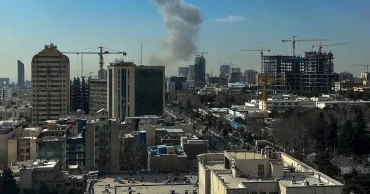
US-Israel attack on Iran: How world reacts
Global leaders have voiced deep concern following military strikes by Israel and the United States on Iran, and Tehran’s subsequent retaliation, warning of the risk of a wider regional conflict across the Middle East.
The United Nations Human Rights Chief, Volker Türk, called for “restraint” and urged all parties to “see reason, to de-escalate, and for a return to the negotiating table.”
“I deplore the military strikes across Iran this morning by Israel and the United States of America, and the subsequent retaliatory strikes by Iran,” he said, stressing that civilians ultimately bear the brunt of armed conflict. He reminded those involved that protecting civilians is “paramount” under international law.
At least 51 students killed as US-Israel strikes on Iran escalate into regional crisis
The European Union’s top diplomat, Kaja Kallas, described the latest developments as “perilous.” In a statement on X, she noted that the European Union has imposed strong sanctions on Iran and supported diplomatic solutions, including on the nuclear issue. She added that she had spoken to Israel’s and other regional foreign ministers, underscoring that the protection of civilians and adherence to international humanitarian law remain a priority.
A spokesperson for the Government of the United Kingdom said London does not want to see “further escalation into a wider regional conflict.” The statement emphasised that the immediate priority is the safety of UK nationals in the region, adding that Britain stands ready to protect its interests.
Tehran hits back across region after US and Israel attack Iran
Prime Minister Keir Starmer chaired a meeting of the government’s emergency Cobra committee and is expected to hold a series of calls with allies.
The BBC reported that the UK was not involved in the US-Israeli strikes.
Germany said it had been informed of the attack in advance, with Chancellor Friedrich Merz consulting relevant security ministers.
In Rome, the office of Italian Prime Minister Giorgia Meloni said she had held a conference call with ministers and intelligence chiefs and would consult allies and regional leaders to support efforts aimed at easing tensions.
Australian Prime Minister Anthony Albanese said his country supported the US in acting to prevent Iran from obtaining a nuclear weapon and from continuing to threaten international peace and security.
Meanwhile, Russia condemned the US-Israeli strikes, calling them a “reckless move.” The Russian foreign ministry said it was “condemnable” that the attacks were being carried out under what it described as the guise of renewed negotiations, referring to recent US-Iran nuclear talks.
Moscow also urged the international community to assess what it termed “irresponsible actions aimed at undermining peace, stability, and security” in the region.
As diplomatic activity intensifies, world leaders continue to call for restraint, warning that any further escalation could destabilise an already volatile Middle East.
3 months ago
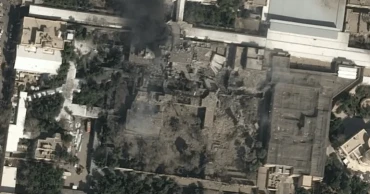
57 students killed as US-Israel strikes on Iran escalate into regional crisis
Iranian state media reported that an Israeli strike hit an elementary girls’ school in Minab, Hormozgan province, killing at least 57 students dead and 60 others wounded.
Iran's state news agency IRNA reported this information.
The massive joint attack by the United States and Israel on Iran has escalated tensions across the Middle East, raising fears of a broader regional conflict.
Iranian retaliation has targeted US assets in several Gulf Arab states, including Bahrain, Kuwait, Qatar, and the United Arab Emirates, where American military bases are hosted.
Iran’s Islamic Revolutionary Guard Corps (IRGC) claimed responsibility for strikes against “all Israeli and US military targets in the Middle East,” vowing that the operation “will continue relentlessly until the enemy is decisively defeated.”
At least one person was reported killed in Abu Dhabi after Iranian missiles were intercepted, while Bahrain reported a missile attack on the headquarters of the US Navy’s 5th Fleet.
The attacks have triggered widespread disruption of civil aviation. At least eight countries — Iran, Israel, Iraq, Jordan, Qatar, Bahrain, Kuwait, and the UAE — closed their airspace. Several international carriers, including Air France, British Airways, Lufthansa, Turkish Airlines, and Qatar Airways, canceled flights to the region.
Middle East airspace closure also disrupts flights from Dhaka
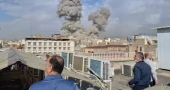
In Iran, explosions were reported in multiple cities, including Tehran, Kermanshah, Qom, Tabriz, Isfahan, Ilam, Karaj, and Lorestan province. Tehran strikes targeted University Street, Jomhouri area, and near the offices of Supreme Leader Ayatollah Ali Khamenei, along with the Islamic Revolutionary Guard Corps headquarters.
US President Donald Trump outlined the campaign’s objectives, saying the US aims to “destroy their missiles and raze their missile industry to the ground” and “annihilate their navy.” He urged Iranian military personnel to surrender, promising immunity to those who comply but warning of “certain death” for those who resist. Trump acknowledged possible US casualties in the operation, which the Pentagon has dubbed “massive and ongoing.”
Regional actors are closely monitoring the conflict. Kataib Hezbollah, an Iraqi paramilitary group, has threatened imminent attacks on US bases in retaliation. Russia called for an immediate halt to US and Israeli attacks, urging diplomatic resolution, while Saudi Arabia condemned Iranian missile strikes on Gulf states, warning of “dire consequences” for continued violations of sovereignty. The European Union urged restraint and diplomacy to prevent nuclear escalation. Pakistan condemned attacks on Iran, while Indonesia signaled readiness to facilitate US-Iran dialogue.
The Nobel Peace Prize-winning International Campaign to Abolish Nuclear Weapons condemned the military strikes, warning that the attacks “risk provoking further escalation” and increase the danger of nuclear proliferation.
Source: Agencies
3 months ago
Tehran hits back across region after US and Israel attack Iran
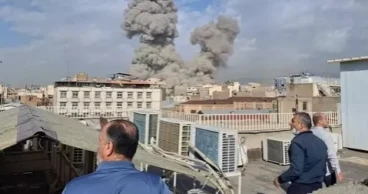
The United States and Israel have launched co‑ordinated military strikes on the Islamic Republic of Iran in a dramatic escalation of Middle Eastern tensions, with President Donald Trump describing the action as a “massive and ongoing” campaign that could continue for several days.
Early on Saturday, explosions were reported in the Iranian capital, Tehran, and other cities as US and Israeli forces targeted a range of military and governmental sites across the country. Israel characterised its role as necessary to counter what it sees as an imminent threat from Tehran, while Washington said it was acting to degrade Iran’s nuclear and ballistic missile capabilities.
Iran vows to press on with missile campaign until enemies are defeated
President Trump warned that American lives may be lost during the campaign and urged the Iranian people to “take over your government,” calling for a change of regime. He also accused Tehran of seeking to rebuild its nuclear programme despite earlier strikes on Iranian facilities that he previously claimed had destroyed them.
The strikes appear to have been months in the making. The Israeli military stated they followed “close and joint planning” with the US armed forces, aimed at dozens of military targets across Iran.
Iran’s Retaliation and Regional Impact
In response to the strikes, Iran launched what officials described as an unprecedented wave of retaliatory missiles and drones towards Israel and United States military installations across the Gulf region.
New wave of Iranian missiles launched toward Israel, army says
Sirens and reports of explosions were heard in the United Arab Emirates, Bahrain, Qatar, Kuwait and Saudi Arabia, with airspace closures and air‑defence systems scrambled as countries braced for further attacks. At least one person was reported killed in the UAE after missiles were intercepted.
Iran’s Revolutionary Guards have said they view all US and Israeli assets in the Middle East as “legitimate targets with no red lines,” signalling a further broadening of the conflict.
Wider Tensions and International Reaction
The conflict comes amid a backdrop of failed nuclear negotiations between Washington and Tehran, and follows earlier clashes in 2025 that saw missile exchanges between Iran and Israel.
International reaction has been mixed. While some US allies emphasise the need for regional security, others have expressed grave concern over the escalation and called for immediate de‑escalation to prevent a broader war.
At this stage, the situation remains highly volatile, with the potential for further military action across the Middle East as both sides prepare for an intensification of hostilities.
Source: Agencies
3 months ago
Iran vows to press on with missile campaign until enemies are defeated
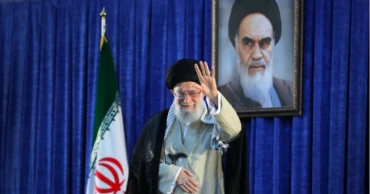
Iran’s Islamic Revolutionary Guard Corps said its military campaign would continue without pause until its adversaries are decisively beaten, claiming that Israeli and US military targets across the Middle East have already been hit by Iranian missiles.
In a statement, the Islamic Revolutionary Guard Corps said all US assets in the region are now regarded as legitimate targets, warning of further strikes, reports Al Jazeera.
Regional authorities reported heightened tensions as Bahrain said a missile attack targeted the headquarters of the US Navy’s 5th Fleet. A missile was intercepted over Qatar, while an explosion was reported in Abu Dhabi, the capital of the United Arab Emirates. Several countries in the region temporarily shut their airspace amid the escalating situation.
Meanwhile, multiple explosions were heard in Tehran, with blasts also reported in other parts of Iran.
There was no immediate official response from Iranian authorities, though state media reported that President Masoud Pezeshkian was safe.
3 months ago