middle-east
‘Yellow line’, the unofficial Israeli buffer zone reshaping daily life in Gaza
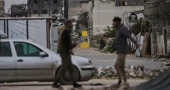
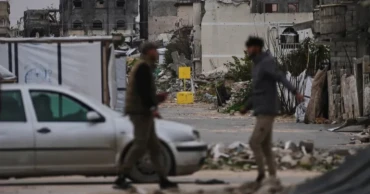
Just metres from the yellow painted concrete blocks marking the Israeli army’s most recent redeployment line in eastern Gaza City, displaced Palestinian Zaid Mohammed and his family of six are living in a small tent. The yellow line marks the area Israeli forces pulled back to under the first phase of the Gaza ceasefire that began in October and stretches up to 6.5km inside the enclave, covering about 58 percent of Gaza.
The line separates an eastern zone under Israeli control from a western area with fewer movement restrictions but continued risks of air strikes and displacement. Zaid’s shelter stands amid widespread destruction, with rubble from flattened neighbourhoods stretching for miles.
“Shelling and gunfire continue around the clock,” Zaid told Al Jazeera, noting the proximity of Israeli forces. Residents near the line report frequent gunfire, explosions and nights lit only by military flares amid total darkness.
The yellow line refers to Israeli-designated military zones and buffer areas inside the Gaza Strip that have repeatedly shifted during the war, according to UN agencies and humanitarian groups. These evolving zones function as de facto internal borders, shaping civilian movement, access and survival.
Read More: Gaza reports 14 dead after Israel says it killed two top Hamas figures
During a December visit, Israeli military chief Lieutenant General Eyal Zamir described the yellow line as “a new border line”, leaving Israel in control of nearly 60 percent of Gaza, including Rafah and Beit Hanoon. The line emerged through successive forced displacement orders, often issued amid active bombardment, giving civilians little time to flee.
UN officials say that at times more than 70 percent of Gaza was under evacuation orders or deemed unsafe. With few visible markers, Palestinians rely on memory and instinct as neighbourhoods shift rapidly from safe to dangerous. Aid agencies warn the uncertainty fuels trauma, disrupts livelihoods and normalises danger, especially for children, even during periods of calm.
With inputs from AL JAZEERA
4 months ago
Israel launches major Gaza search for last hostage
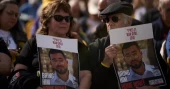
Israel said on Sunday its military has launched a large-scale operation in Gaza to locate the last remaining hostage, as international mediators press Israel and Hamas to advance to the next phase of a ceasefire.
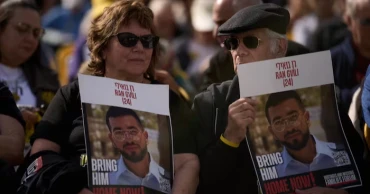
The announcement came as Israel’s Cabinet met to consider reopening the Rafah border crossing with Egypt, a key step tied to the recovery of the final hostage, Ran Gvili. The meeting followed talks a day earlier between Prime Minister Benjamin Netanyahu and senior US envoys on the ceasefire’s next stage.
Netanyahu’s office said late Sunday that Israel would open the Rafah crossing after the operation is completed, in line with understandings reached with the United States. Israeli media quoted military officials as saying the search could take several days.
The return of all remaining hostages, whether alive or dead, is a central requirement of the first phase of the ceasefire that began on Oct 10. The previous hostage was recovered in early December.
The military said it was searching a cemetery in northern Gaza near the Yellow Line, separating Israeli-controlled areas. An Israeli official, speaking anonymously, said Gvili may be buried in the Shijaiya-Tuffah area of Gaza City, with rabbis and forensic experts assisting search teams.
Gvili’s family has urged Israel not to proceed to the second ceasefire phase until his remains are returned, though the Trump administration has already said the next phase has begun.
Separately, the closed headquarters of the UN agency for Palestinian refugees in east Jerusalem was set on fire overnight. UN officials said settlers were seen looting the compound, while Israel’s fire service worked to contain the blaze. UNRWA accused Israel of undermining its operations, a charge Israel denies.
4 months ago
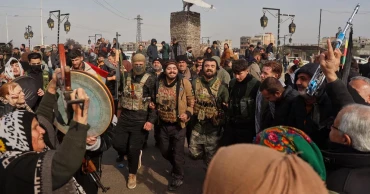
Syrian army announces 15-day extension of ceasefire with Kurdish-led forces
Syria’s defense ministry announced on Saturday that a ceasefire between government forces and Kurdish-led fighters has been extended by 15 days, just hours after a four-day truce expired.
In a statement, the ministry said the extension was intended to support a US-led operation to transfer suspected Islamic State militants from prisons in northeastern Syria to detention facilities in Iraq.
The Kurdish-led Syrian Democratic Forces confirmed the ceasefire extension, saying they remain committed to the agreement. “Our forces affirm their commitment to the agreement and their dedication to respecting it, which contributes to de-escalation, the protection of civilians, and the creation of the necessary conditions for stability,” the group said in a statement.
The ceasefire follows weeks of heavy fighting between government troops and the SDF, during which the Kurdish-led group lost large areas it had previously controlled. Earlier on Saturday, the SDF urged the international community to act to prevent further escalation.
Read More: Syrian troops move into northern towns after Kurdish fighters pull back
Tensions have remained high as government forces continue to send reinforcements to northeastern Syria. Talks aimed at merging SDF fighters into state forces stalled earlier this month, triggering renewed clashes, despite an earlier agreement signed in March.
State television reported that authorities released 126 boys under 18 from a prison near Raqqa on Saturday and returned them to their families. The prison also holds Islamic State detainees. The US military has said thousands of such prisoners are being transferred to Iraq, with 150 moved earlier this week.
4 months ago
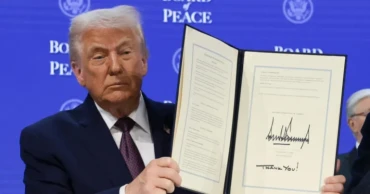
Trump unveils Gaza redevelopment plan without consulting Palestinians
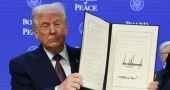
US President Donald Trump has unveiled a controversial plan to rebuild Gaza, promising coastal tourism, high-rise buildings, industrial zones, and 500,000 new jobs, without consulting Palestinians, at the World Economic Forum in Davos, Switzerland.
The so-called “Board of Peace”, chaired by Trump and including Jared Kushner, Israeli Prime Minister Benjamin Netanyahu, and former UK Prime Minister Tony Blair, is set to oversee the reconstruction. Membership requires a $1 billion fee for a permanent seat, and the board’s charter suggests ambitions beyond Gaza, potentially challenging the United Nations.
Trump and Kushner presented a four-phase development blueprint, starting from Rafah in the south to Gaza City in the north, featuring more than 100,000 housing units, 180 skyscrapers along the coastline, a new airport, and industrial zones. The plan claims to create $25 billion in investment and raise Gaza’s GDP to $10 billion by 2035.
The proposal conditions reconstruction on the full disarmament of Hamas and the withdrawal of Israeli forces. A Palestinian National Committee, led by technocrats, is to manage the territory, while cooperating Hamas members may be reintegrated into a new police force.
Critics, including Palestinian civil society leaders, have condemned the plan as “imperialist” and said it marginalises local populations, ignoring property rights, justice for war crimes, and the needs of displaced residents. Gaza, devastated by Israeli bombardments since October 2023, has seen over 80 percent of its infrastructure destroyed, leaving 2.3 million residents displaced and basic services in collapse.
Hamas rejected the plan, stating that Palestinians would not accept it, while Trump described it as a business-like and entrepreneurial approach to reconstruction.
With inputs from ALJAZEERA
4 months ago
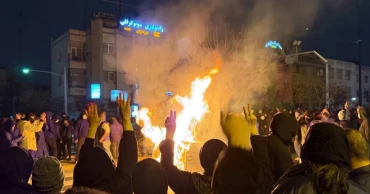
Extent of Iran’s protests and lethal crackdown emerges amid blackout
Iran is facing its deadliest crackdown on dissent since the 1979 Islamic Revolution, as authorities suppress nationwide protests with lethal force, despite cutting off internet and communication across the country.
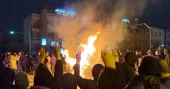
Cities and towns are filled with smoke, with fire-damaged mosques, government offices, and banks lining the streets. State media reported at least $125 million in damage across more than 20 cities. Activists say the death toll continues to rise, accusing security forces of using long-standing tactics — firing from rooftops, shooting birdshot into crowds, and deploying motorcycle-riding Revolutionary Guard volunteers to beat and detain protesters.
“The vast majority of protesters were peaceful,” said Raha Bahreini of Amnesty International. “The authorities have opened fire unlawfully, targeting crowds that included children and families.”
Protests began on Dec. 28 at Tehran’s Grand Bazaar over the collapse of Iran’s currency, the rial, and spread nationwide. Violence escalated on Jan. 8 after calls from exiled crown prince Reza Pahlavi. Deputy Interior Minister Ali Akbar Pourjamshidian said more than 400 cities were affected.
Videos show security forces, including the Basij volunteer arm of the Revolutionary Guard, using shotguns, batons, and assault rifles. Many demonstrators suffered severe injuries, including eye wounds consistent with birdshot. Iran’s Farabi Eye Hospital mobilized all available doctors to treat the injured.
Casualty reports vary: the Iranian government said 3,117 were killed, including civilians and security personnel, while the U.S.-based Human Rights Activists News Agency reported 5,137 deaths, including 4,834 protesters. State media also reported widespread damage to banks, ATMs, government buildings, and vehicles.
Amid fears of U.S. military action, an American aircraft carrier and warships are moving toward the Middle East. Observers warn that Iran could see renewed protests around Feb. 17, the 40-day mourning period for those killed. Satellite images show large numbers of mourners at Tehran’s Behesht-e Zahra cemetery, chanting against Iran’s leadership.
4 months ago
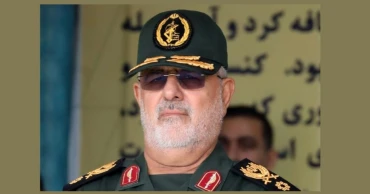
Iran says ‘finger on trigger’ as Trump claims Tehran wants talks
Iran’s powerful Revolutionary Guard has warned the United States that its forces remain on high alert, even as President Donald Trump said Tehran appears willing to enter negotiations.
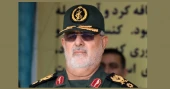
In a statement aired by state television on Thursday, Revolutionary Guard commander Gen Mohammad Pakpour said his forces have their “finger on the trigger,” cautioning both Washington and Israel against what he described as potential miscalculations.
He urged the US and Israel to draw lessons from past conflicts, including what he called the “12-day imposed war,” and said the Guard stood fully prepared to carry out any orders from Iran’s supreme leader, Ayatollah Ali Khamenei.
Despite the sharp rhetoric, signs of immediate US military action appeared to ease this week. Speaking at the World Economic Forum in Davos, Trump said the United States had struck Iranian uranium enrichment facilities last year to prevent Tehran from developing a nuclear weapon.
New Israeli settlement Yatziv inaugurated near Beit Sahour
“We can’t let that happen,” Trump said, adding that Iran “does want to talk,” and that the US would engage in discussions.
At the same time, Iran’s military leadership issued further warnings. Gen Ali Abdollahi Aliabadi, head of Iran’s joint command headquarters, said any US attack would make “all US interests, bases and centres of influence” legitimate targets.
Earlier this week, Trump had warned Iran’s leaders that the United States would respond decisively if there were any attempt on his life, linking such a scenario to potential retaliation over actions targeting Khamenei.
The heightened tensions come as Iran’s leadership deals with the fallout from nationwide protests that erupted in late December. Authorities have since suppressed the unrest through a forceful crackdown, alongside a sweeping internet blackout described by monitoring group NetBlocks as a “national kill-switch,” now in its second week.
Hackers disrupt Iran state TV as protest crackdown death toll tops 4,000
On Wednesday, Iranian officials released their first official casualty figures from the protests, saying 3,117 people were killed.
#With inputs from Agencies
4 months ago
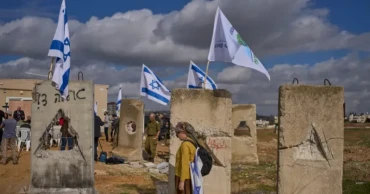
New Israeli settlement Yatziv inaugurated near Beit Sahour
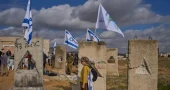
Israeli settlers on Monday inaugurated a new settlement on a hilltop overlooking the Palestinian town of Beit Sahour in the occupied West Bank, marking the formal recognition of what had until recently been an unauthorised outpost.
The settlement, named “Yatziv,” meaning “stable” in Hebrew, was set up with prefabricated homes in November and received official approval last month. The inauguration was held under heavy security, with Israeli soldiers deployed around the site as settlers gathered for the ceremony.
Finance Minister Bezalel Smotrich, who oversees Israeli settlement policy, attended the event and said the new settlement would be permanent. He has led an expanded programme of settlement construction and legalisation of outposts over the past three years.
Settlers have long sought control of the hilltop, citing its location in a chain of settlements surrounding Jerusalem and its historical significance to Jews. The move gained momentum after a deadly stabbing attack on an Israeli at a nearby junction late last year, according to settlement leaders.
On Dec 21, Smotrich approved Yatziv along with 18 other outposts, bringing an end to a two-decade campaign by settlers to establish a presence at the site.
The international community largely considers Israeli settlements in the occupied West Bank illegal under international law. Palestinians say the continued expansion restricts movement and development, undermining prospects for a future Palestinian state. They seek the West Bank, captured by Israel in 1967, as part of such a state.
Palestinian officials say the land belongs to families from Beit Sahour. Mayor Elias Isseid said the new settlement is part of a growing ring of Israeli communities around the town, connected by roads that lead directly to Jerusalem while bypassing Palestinian areas.
In the past, the site had been discussed as a possible location for a Palestinian children’s hospital with international support, but the project was never implemented and the land was later used as a military base.
Yatziv is the latest addition to a series of settlements that have expanded around Beit Sahour in recent years.
4 months ago
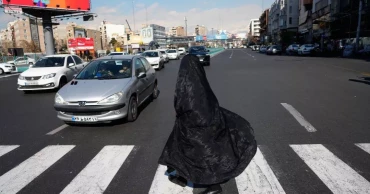
Hackers disrupt Iran state TV as protest crackdown death toll tops 4,000
Hackers briefly disrupted Iranian state television satellite broadcasts to air footage backing the country’s exiled crown prince and urging security forces not to turn their weapons on the people, according to online videos seen early Monday.
The broadcast interference came as activists said the death toll from a sweeping crackdown on nationwide protests had climbed to at least 4,029, with fears the figure could rise further as information continues to emerge from a country still facing internet shutdowns.
Footage aired late Sunday on several satellite channels run by Islamic Republic of Iran Broadcasting showed clips of exiled Crown Prince Reza Pahlavi along with images of people in what appeared to be police uniforms. A message urged the army and security forces not to target civilians and to stand with the nation.
Iran’s semiofficial Fars news agency, which is close to the Revolutionary Guard, quoted state television as saying the signal in some areas had been “momentarily disrupted by an unknown source,” without elaborating on the content that was aired.
Pahlavi’s office acknowledged the disruption showing the crown prince but did not comment further.
The latest hacking incident follows a series of similar disruptions in recent years, including one in 2022 that aired footage of exiled opposition leaders and messages critical of Iran’s top leadership.
Meanwhile, tensions between Tehran and Washington remain high over the crackdown. President Donald Trump has warned Iran against killing peaceful protesters or carrying out mass executions following the demonstrations.
Ship-tracking data reviewed by the AP showed the USS Abraham Lincoln aircraft carrier and several US warships passing through the Strait of Malacca after leaving Singapore, putting them on a route that could take them to the Middle East. US media, citing unnamed officials, reported the carrier was heading toward the region.
Diplomatic pressure on Tehran also mounted as the World Economic Forum withdrew an invitation for Iran’s Foreign Minister Abbas Araghchi to speak at its annual meeting in Davos, citing the loss of civilian lives in Iran. The Munich Security Conference also cancelled invitations for Iranian officials.
According to the US-based Human Rights Activists News Agency, at least 4,029 people have been killed since protests erupted on Dec 28 over Iran’s struggling economy. The group said most of the dead were demonstrators, along with members of the security forces, children and bystanders. It also reported more than 26,000 arrests.
Iranian authorities have not released an official death toll. Supreme Leader Ayatollah Ali Khamenei on Saturday said the unrest had left “several thousand” people dead and blamed the United States for the violence.
4 months ago
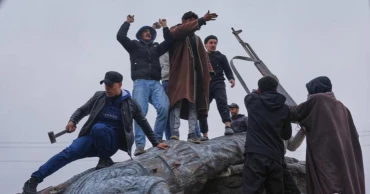
Syria-SDF ceasefire deal to end fighting in northeast
The Syrian government on Sunday announced a ceasefire agreement with the Kurdish-led Syrian Democratic Forces (SDF), paving the way for Damascus to regain control over much of the country’s northeast after more than a decade.
The deal follows weeks of escalating tensions that erupted into clashes earlier this month, prompting a major military advance by government forces toward the east. The SDF has since largely withdrawn from key front-line positions in eastern Aleppo province.
SDF commander Mazloum Abdi confirmed the agreement in a video message, saying his forces had accepted the deal and would pull out of Raqqa and Deir el-Zour provinces “to stop the bloodshed.”
“We will explain the terms of the agreement to our people in the coming days,” Abdi said.
Syria’s Defence Ministry said it had ordered all fighting to stop along the front lines following the announcement.
Since the fall of former president Bashar Assad in December 2024, Syria’s new leadership has struggled to fully assert authority over the war-battered country. A previous agreement in March to integrate the SDF into the state structure failed after both sides accused each other of violating its terms.
Following the latest military push, government forces have effectively taken control of Raqqa and Deir el-Zour provinces, which are strategically vital due to their oil and gas fields, Euphrates river dams and key border crossings.
State media showed President Ahmad al-Sharaa signing the agreement in Damascus. Although Abdi was not present due to bad weather, his signature appeared on the document. Al-Sharaa said Abdi is expected to visit Damascus on Monday.
“This is a victory for all Syrians, regardless of background,” al-Sharaa told journalists. “We hope Syria will move from division toward unity and progress.”
Both the Syrian government and the SDF are allies of Washington. US envoy Tom Barrack met al-Sharaa on Sunday as government forces advanced into Raqqa and across Deir el-Zour province, with Abdi reportedly joining the talks by phone.
Barrack welcomed the agreement, saying it marked a turning point toward “renewed dialogue and cooperation for a unified Syria.”
Under the deal, the SDF will be dismantled and its fighters integrated into Syria’s military and security forces. Senior SDF officials are expected to take up senior roles in state institutions.
The group will hand over Raqqa and Deir el-Zour, both Arab-majority provinces, along with border crossings and energy facilities. In Hassakah province, the Kurdish heartland, only the civilian administration will return to Damascus, while Kurdish-run agencies overseeing prisons and camps holding Islamic State detainees will also be transferred to government control.
There is no clear timeline for implementation. Al-Sharaa said the process would be gradual, beginning with a halt to hostilities.
Clashes earlier this month had briefly subsided after Abdi announced his forces would withdraw east of the Euphrates River. However, fighting resumed when Syrian troops seized Tabqa and pushed deeper into Raqqa province.
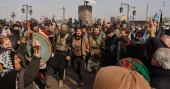
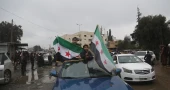
By Sunday evening, government convoys had entered Raqqa city, where residents welcomed them with celebrations, waving Syrian flags and setting off fireworks.
Crowds gathered in the streets chanting and firing shots into the air.
“Today, everyone is born anew,” said local resident Yahya Al Ahmad.
Meanwhile, thousands of Kurdish families fled toward the SDF-held city of Qamishli, where temporary shelters were set up. Many residents there expressed cautious hope about the agreement, alongside lingering mistrust.
Syria’s ambassador to the United Nations, Ibrahim Olabi, said the deal marked a turning point.
“This is a moment for Syrians to put aside their differences and move forward. It is a victory for Syria,” he said.
4 months ago
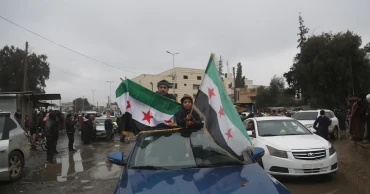
Syria announces nationwide ceasefire with Kurdish-led forces after two weeks of clashes
The Syrian government has announced an immediate nationwide ceasefire with the Kurdish-led Syrian Democratic Forces (SDF), ending nearly two weeks of fighting and paving the way for the reintegration of the group into Syria’s military and state institutions.
Syrian state media said the ceasefire is part of a broader 14-point agreement that will see the SDF integrated into national structures, effectively restoring Damascus’s control over most of the country.
Speaking in Damascus, President Ahmed al-Sharaa said the deal would allow Syrian state institutions to reassert authority over three key eastern and northern governorates al-Hasakah, Deir Ezzor and Raqqa.
The announcement followed a meeting between al-Sharaa and the US special envoy to Syria, Tom Barrack, who welcomed the agreement as a step toward a “unified Syria.”
Syrian forces seize key town and oil fields from Kurdish-led SDF in eastward offensive
SDF commander Mazloum Abdi was expected to attend the meeting but was unable to travel due to weather conditions. His visit has been postponed until Monday, al-Sharaa said.
Kurdish-led forces established an autonomous administration during Syria’s civil war nearly a decade ago, with strong backing from the United States, which armed and trained the SDF as its main local partner in the fight against the Islamic State group.
With US military support, the SDF drove Islamic State from much of northeastern Syria and later governed both Kurdish- and Arab-majority areas.
Under the new agreement, signed by al-Sharaa and Abdi, Syrian authorities will take control of civilian institutions, border crossings, and oil and gas fields that formed the backbone of Kurdish self-rule.
SDF military and security personnel will be integrated into Syria’s defence and interior ministries after a vetting process, while Damascus will assume responsibility for prisons and detention camps holding tens of thousands of foreign Islamic State fighters and their families.
The government also reaffirmed its pledge to recognise Kurdish cultural and linguistic rights, including granting Kurdish official language status and recognising the Kurdish New Year as a national holiday — the first formal recognition of Kurdish rights since Syria gained independence from France in 1946.
US conducts retaliatory strike in Syria, kills leader linked to deadly IS ambush
The agreement also confirms Syria’s continued participation in the US-led coalition against Islamic State.
The deal follows months of stalled negotiations after a previous integration attempt failed and comes after Syrian government forces moved into Raqqa and nearby oil facilities following an SDF withdrawal earlier on Sunday.
Al-Sharaa said last week it was unacceptable for a militia to control a quarter of the country and hold its main oil and commodity resources.
#With inputs from BBC
4 months ago