middle-east
As Iran threatens Israel, the danger of Tehran's long-vaunted missile program remains in question
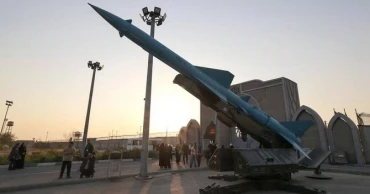
As Iran threatens to attack Israel over the assassination of a Hamas leader in the Iranian capital, its long-vaunted missile program offers one of the few ways for Tehran to strike back directly, but questions loom over just how much of a danger it poses.
The program was behind Iran's unprecedented drone-and-missile assault on Israel in April, when Iran became the first nation to launch such a barrage since Iraqi dictator Saddam Hussein lobbed Scud missiles at Israel in the 1991 Gulf War.
But few of the Iranian projectiles reached their targets. Many were shot down by a U.S.-led coalition, while others apparently failed at launch or crashed while in flight. Even those that reached Israel appeared to miss their marks.
Now a new report by experts shared exclusively with The Associated Press suggests one of Tehran's most advanced missiles is far less accurate than previously thought.
The April assault showed "some ability to strike Israel,” said Sam Lair, a research associate at the James Martin Center for Nonproliferation Studies who worked on the analysis. But "if I were supreme leader, I would probably be a little disappointed.”
If Iranian missiles are not able to hit targets precisely “that recasts their role,” Lair added. “They’re no longer as valuable for conducting conventional military operations. They may be more valuable simply as terror weapons.”
As an example, he recalled the harassing missile fire seen on cities in the Iran-Iraq war in the 1980s, when Iran could fire a variety of missiles at a large city and hope some got through.
Iran has repeatedly said it will retaliate for the killing of Ismail Haniyeh. Israel is widely suspected of carrying out the assassination, though it has not claimed it.
The Iranian mission to the United Nations did not respond to a request for comment. But Supreme Leader Ayatollah Ali Khamenei tacitly acknowledged the country's failure to strike anything of importance in Israel.
“Debates by the other party about how many missiles were fired, how many of them hit the target and how many didn’t, these are of secondary importance,” Khamenei said. “The main issue is the emergence of the Iranian nation” and the Iranian military "in an important international arena. This is what matters.”
A fusillade of missiles and drones
Retaliation had been expected for days after a suspected Israeli strike on April 1 hit an Iranian diplomatic compound in Damascus, Syria, killing two Iranian generals and five officers, as well as a member of the Lebanese Shiite militia Hezbollah.
Footage aired on state television showed that Iran's April 13 assault began with Revolutionary Guard commander Gen. Hossein Salami speaking by telephone with Brig. Gen. Amir Ali Hajizadeh, the commander of the Guard’s aerospace division.
“Start the ‘True Promise’ operation against Zionist regime’s bases,” he ordered.
As the missiles headed skyward, people across Iran stopped what they were doing and pointed their mobile phones at the launch noise from their cars and the balconies of their homes. Videos analyzed by the AP showed multiple launch sites, including on the outskirts of Arak, Hamadan, Isfahan, Kermanshah, Shiraz, Tabriz and Tehran.
Grainy footage later released through pro-Iranian military social media accounts showed missiles thundering off truck-based mobile launchers. Iran’s bomb-carrying Shahed drones, widely used by Russia in its war on Ukraine, leaped off metal stands, their engines whirring like lawnmowers through the night sky. Some were launched by pickup trucks racing down runways.
The triangle-shaped drones went first, taking hours to reach their targets. Then came the Paveh cruise missiles, taking a shorter time, and finally the Emad, Ghadr and Kheibar Shekan ballistic missiles, which needed only minutes, according to an analysis by the Wisconsin Project on Nuclear Arms Control. Drones and missiles also came from Yemen, likely fired by the Iranian-backed Houthi rebels.
Israeli officials estimated that Iran launched 170 drones, 30 cruise missiles and 120 ballistic missiles. In Jordan, an AP journalist filmed what appeared to be a ballistic missile being intercepted above the Earth’s atmosphere, likely by an Israeli Arrow 3 missile, with the blast radiating out like a circle.
The U.S., the United Kingdom, France and Jordan all shot down incoming fire. The Americans claimed to have downed 80 bomb-carrying drones and at least six ballistic missiles. Israeli missile defenses were also activated, though their initial claim of intercepting 99% of the projectiles appeared to be an exaggeration.
The attack “was very clearly not something symbolic and not something trying to avoid damage,” said Fabian Hinz, a missile expert and research fellow at the International Institute for Strategic Studies who studies Iran. It was “a major attempt to overcome Israeli defenses.”
U.S. officials, who spoke on condition of anonymity to discuss intelligence matters, told the AP they assessed that 50% of the Iranian missiles failed at launch or crashed before reaching their target.
Strike on air basesuggests poor accuracy
In the aftermath, analysts at the James Martin Center for Nonproliferation Studies examined the strike on the Nevatim Air Base some 65 kilometers (40 miles) south of Jerusalem in the Negev Desert. The center's experts long have studied Iran and its ballistic missile program.
The base came into immediate focus after the suspected Israeli strike on the Iranian diplomatic mission in Syria. Iran's ambassador to Syria, Hossein Akbari, claimed that the strike was conducted by Israeli F-35Is, which are based at Nevatim.
The air base also figured into Iranian military propaganda. Iranian state television aired footage in February of a Revolutionary Guard test that targeted a mock-up resembling F-35I hangars at Nevatim. Ballistic missiles, including some of the kinds used in the April attack on Israel, destroyed the mock-up.
In the attack, at least four Iranian missiles struck Nevatim, as seen in satellite images and footage released by the Israeli military.
The only debris found in the area — collected from the Dead Sea — suggests Iran used Emad missiles to target Nevatim, the analysts said. The liquid-fueled Emad, or “pillar” in Farsi, is a variant of Iran's Shahab-3 missile built from a North Korean design with a reported range of 2,000 kilometers (1,240 miles). That indicates the Emads were likely fired from the Shiraz area, which is within the estimated limits of the missile's likely capabilities, the analysts said.
Based on Iran's focus on the F-35I, the James Martin analysts assumed the likely target point for the Iranian fire would be a cluster of aircraft hangars. The position also serves as a near-central point within the Nevatim base itself.
That offers “a much more valuable target" than just "poking holes in the runway,” Lair said. But none of the Iranian missiles directly hit those hangars.
Assuming Iran targeted the hangars, the James Martin analysts measured the distance between the hangars and the impact zones of the missiles. That gave an average of about 1.2 kilometers (0.75 miles) for the “circular error probable” — a measurement used by experts to determine a weapon's accuracy based on the radius of a circle that encompasses 50% of where the missiles landed.
That's far worse than a 500-meter (1,640-foot) error circle first estimated by experts for the Emad. After a U.N. weapons ban on Iran ended in 2020, Iran separately advertised the Emad to potential international buyers as having a 50-meter (164-foot) circle — a figure that is in line with top missile specifications for systems deployed elsewhere, said Hinz, the IISS missile expert.
The results from April's attack were nowhere near that precise.
"This means the Emad is much less accurate than previous estimates indicated," Lair said. “This indicates the Iranians are a generation behind where previous assessments thought they were in accuracy."
The poor performance may be attributable to electronic warfare measures designed to confuse the missile’s guidance system, as well as potential sabotage, poor missile design and the distances involved in the attack.
What's next
In the past, Iranian threats to retaliate against Israel generally took the form of either attacks by Iranian-backed forces in the Mideast or assaults aimed at Israeli targets elsewhere, such as embassies or tourists aboard.
Geography limits the options for a direct Iranian military attack. Iran shares no border with Israel, and the two countries are some 1,000 kilometers (620 miles) apart at the shortest distance.
Iran’s air force has an aging fleet led by F-14 Tomcats and Mikoyan MiG-29 fighter jets from the Cold War, but they would be no match for Israel's F-35Is and its air defenses. That means Iran again would need to rely on missiles and long-range drones.
It could also enlist help from allied militias such as Lebanon's Hezbollah and Yemen's Houthi rebels to overwhelm Israel's defenses. Israel and Hezbollah exchanged heavy fire on Aug. 25.
Always present in the background is the risk that Tehran could develop a nuclear weapon, a threat that Iranian officials have repeated in recent months. While Iran insists its nuclear program is peaceful, Western intelligence agencies and the International Atomic Energy Agency say Tehran had an organized military nuclear program until 2003.
U.S. intelligence agencies said in a report in July that Iran has “undertaken activities that better position it to produce a nuclear device, if it chooses to do so.” However, building a weapon and miniaturizing it to put on a ballistic missile could take years.
“Iran has the largest inventory of ballistic missiles in the region and continues to emphasize improving the accuracy, lethality and reliability of these systems,” the report from the director of national intelligence said. “Iran probably is incorporating lessons learned" from the April attack.
1 year ago
Netanyahu pushes back against new pressure over Gaza and hostages: ‘No one will preach to me’
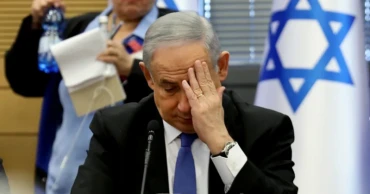
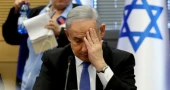
Israeli Prime Minister Benjamin Netanyahu on Monday pushed back against a new wave of pressure to reach a cease-fire deal in Gaza after hundreds of thousands of Israelis protested and went on strike and U.S. President Joe Biden said he needed to do more after nearly 11 months of fighting.
In his first public address since Sunday’s mass protests showed many Israelis’ furious response to the discovery of six more dead hostages, Netanyahu said he will continue to insist on a demand that has emerged as a major sticking point in talks — continued Israeli control of the Philadelphi corridor, a narrow band along Gaza’s border with Egypt where Israel contends Hamas smuggles weapons into Gaza. Egypt and Hamas deny it.
Netanyahu called the corridor vital to ensuring Hamas cannot rearm via tunnels. “This is the oxygen of Hamas,” he said.
And he added: “No one is more committed to freeing the hostages than me. ... No one will preach to me on this issue.’
Israelis had poured into the streets late Sunday in grief and anger in what appeared to be the largest protest since the start of the war. The families and much of the public blamed Netanyahu, saying the hostages could have been returned alive in a deal with Hamas. A rare general strike was held across the country on Monday.
Late Monday, several thousand demonstrators gathered outside Netanyahu’s private home in central Jerusalem, chanting, “Deal. Now.” and carrying coffins draped in the Israeli flag. Scuffles broke out when police snatched away the coffins, and several protesters were arrested. Thousands more marched outside Netanyahu’s Likud party in Tel Aviv, according to Israeli media.
But others support Netanyahu’s drive to continue the campaign in Gaza, which was triggered by Hamas’ Oct. 7 attack into Israel and has killed tens of thousands of Palestinians in the territory. Netanyahu says the assault will force militants to give in to Israeli demands, potentially facilitate rescue operations and ultimately annihilate the group.
Key ally the United States is showing impatience. Biden spoke to reporters as he arrived at the White House for a Situation Room meeting with the U.S. mediation team in the negotiations. Asked if Netanyahu was doing enough, Biden responded, “No.”
He insisted that negotiators remain “very close” to a deal, adding, “Hope springs eternal.”
Hamas has accused Israel of dragging out months of negotiations by issuing new demands, including for lasting Israeli control over the Philadelphi corridor and a second corridor running across Gaza. Hamas has offered to release all hostages in return for an end to the war, the complete withdrawal of Israeli forces and the release of a large number of Palestinian prisoners, including high-profile militants — broadly the terms called for under an outline for a deal put forward by Biden in July.
Netanyahu has pledged “total victory” over Hamas and blames it for the failure of the negotiations. On Monday, he said he is ready to carry out the first phase of the cease-fire — a plan that would include the release of some hostages, a partial pullout of Israeli troops and the release of some prisoners held by Israel. But he rejected a full withdrawal from Gaza, saying he saw no other party that could control Gaza’s borders.
Israeli media have reported deep differences between Netanyahu and top security officials, including Defense Minister Yoav Gallant, who say the time is ripe for a cease-fire.
An official confirmed a shouting match between Gallant and Netanyahu at a security cabinet meeting Thursday, where Netanyahu held a vote in favor of maintaining control over the Philadelphi corridor.
Gallant cast the lone vote against the proposal, saying Netanyahu was favoring border arrangements over the lives of hostages. The official spoke on condition of anonymity to discuss the closed-door meeting. Gallant on Sunday called on the security cabinet to overturn the decision.
Khalil al-Hayya, the Hamas official leading the negotiations, told the Qatari network Al Jazeera late Sunday that Netanyahu had deemed keeping the Philadelphi corridor “more important” than winning the hostages’ release.
Al-Hayya also said Hamas had offered “great flexibility,” including reducing its demand for 500 Palestinian prisoners to be released in exchange for each captive Israeli soldier to 50, and from 250 Palestinian prisoners or each Israeli civilian hostage to 30. He accused Israel of introducing new conditions including increasing the number of prisoners who would be deported upon release and banning the release of elderly or ill prisoners serving life sentences.
Israel said the six hostages found dead in Gaza were killed by Hamas shortly before Israeli forces arrived in the tunnel where they were held.
Hamas’ armed wing, the al-Qassam Brigades, appeared to say in a statement Monday that it now had a policy of killing any hostages that Israel tries to rescue. It said that after Israeli troops rescued four hostages in a deadly raid in June, it issued new orders to its fighters guarding hostages on how to deal with them if Israeli troops approach. It said that Netanyahu’s insistence on using military pressure instead of reaching a deal “will mean they (hostages) will return to their families in coffins.”
Three of the slain hostages were reportedly among those who would have been released in the first phase of the cease-fire proposal outlined by Biden in July.
Thousands attended the funeral Monday for one of the six, Israeli-American Hersh Goldberg-Polin. He was one of the best-known hostages, with his parents leading a high-profile campaign for the captives’ release, meeting with Biden and Pope Francis and addressing the Democratic National Convention last month.
The general strike, called by Israel’s largest trade union, the Histadrut, ended early after a labor court accepted a petition from the government calling it politically motivated.
It was the first such strike since the start of the war, aiming to shut down or disrupt major sectors of the economy, including banking and health care. Some flights at Israel’s main international airport, Ben-Gurion, either departed early or were slightly delayed.
“There’s no need to punish the whole state of Israel because of what is happening, overall, it is a victory for Hamas,” said one passenger, Amrani Yigal.
But in Jerusalem, resident Avi Lavi said that “I think this is fair, the time has come to stand and to wake up, to do everything for the hostages to come back alive.”
Municipalities in Israel’s populated central area, including Tel Aviv, participated. Others, including Jerusalem, did not.
Some 250 hostages were taken on Oct. 7. More than 100 were freed during a cease-fire in November in exchange for the release of Palestinians imprisoned by Israel. Eight have been rescued by Israeli forces. Israeli troops mistakenly killed three Israelis who escaped captivity in December.
Roughly 100 hostages remain in Gaza, a third of whom are believed to be dead.
Hamas-led militants killed some 1,200 people, mostly civilians, when they stormed into southern Israel on Oct. 7. Israel’s retaliatory offensive in Gaza has killed over 40,000 Palestinians, according to local health officials, who do not say how many were militants.
The war has displaced the vast majority of Gaza’s 2.3 million people, often multiple times, and plunged the besieged territory into a humanitarian catastrophe, including new fears of a polio outbreak.
Meanwhile, Israel continued its six-day raid on the Jenin refugee camp in the Israeli-occupied West Bank. AP reporters saw bulldozers tearing up roads. The Palestinian Red Crescent said Israeli forces were blocking their ambulances from reaching the wounded.
Palestinians in a town outside Jenin held a funeral for a 58-year-old man, Ayman Abed, who was arrested the day before and died in Israeli custody. The Israeli military said he died from a “cardiac event,” but did not provide details. Human rights groups have reported abuses of Palestinians detained by Israel, and the military has confirmed the deaths of at least 36 Palestinians in its detention centers since October.
Israel says it has killed 14 militants in Jenin and arrested 25 militants. Palestinian health officials say at least 29 people have been killed, including five children.
Mohannad Hajj Hussein, a Jenin resident, said electricity and water were cut off. “We are ready to live by candlelight and we will feed our children from our bodies and teach them resistance and steadfastness in this land,” he said. “We will rebuild what the occupation destroyed and we will not kneel.”
1 year ago
Israelis erupt in protest to demand a cease-fire after 6 more hostages die in Gaza
Tens of thousands of grieving and angry Israelis surged into the streets Sunday night after six more hostages were found dead in Gaza, chanting “Now! Now!” as they demanded that Prime Minister Benjamin Netanyahu reach a cease-fire with Hamas to bring the remaining captives home.
The mass outpouring appeared to be the largest such demonstration in 11 months of war and protesters said it felt like a possible turning point, although the country is deeply divided.
Israel’s largest trade union, the Histadrut, further pressured the government by calling a general strike for Monday, the first since the Oct. 7 Hamas attack that started the war. It aims to shut down or disrupt major sectors of the economy, including banking, health care and the country’s main airport.
Cease-fire negotiations have dragged on for months. Many blame Netanyahu for failing to reach a deal, which opinion polls show a majority of Israelis favor. But the prime minister also has significant support for his strategy of “total victory” against Hamas, even if a deal for the hostages has to wait.
Thousands of people, some of them weeping, gathered Sunday night outside Netanyahu's office in Jerusalem. In Tel Aviv, hostages' relatives marched with coffins to symbolize the toll.
“We really think that the government is making these decisions for its own conservation and not for the lives of the hostages, and we need to tell them, ‘Stop!’” said Shlomit Hacohen, a Tel Aviv resident.
Three of the six hostages found dead — including an Israeli-American — were reportedly scheduled to be released in the first phase of a cease-fire proposal discussed in July. This fueled fury and frustration among the protesters.
“Nothing is worse than knowing that they could have been saved,” said Dana Loutaly. “Sometimes it takes something so awful to shake people up and get them out into the streets.”
The military said all six hostages were killed shortly before Israeli forces arrived. “Whoever murders hostages doesn’t want a deal,” Netanyahu said, blaming the Hamas for the stalled negotiations.
One hostage was Israeli-American Hersh Goldberg-Polin, 23, a native of Berkeley, California, who lost part of his left arm to a grenade in the attack. In April, Hamas issued a video that showed him alive, sparking protests in Israel.
The army identified the others as Ori Danino, 25; Eden Yerushalmi, 24; Almog Sarusi, 27; Alexander Lobanov, 33; and Carmel Gat, 40.
The Israeli Health Ministry said autopsies had determined the hostages were shot at close range and died on Thursday or Friday. The army said the bodies were recovered from a tunnel in the southern Gaza city of Rafah, around a kilometer (half a mile) from where another hostage was rescued alive last week.
Lt. Col. Nadav Shoshani, a military spokesperson, said Israeli forces found the bodies several dozen meters (yards) underground as “ongoing combat” was underway, but that there was no firefight in the tunnel itself. He said there was no doubt Hamas had killed them.
Hamas has offered to release the hostages in return for an end to the war, the withdrawal of Israeli forces from Gaza and the release of a large number of Palestinian prisoners, including high-profile militants.
Izzat al-Rishq, a senior Hamas official, said the hostages would still be alive if Israel had accepted a U.S.-backed cease-fire proposal that Hamas said it had agreed to in July.
Funerals began, with more outrage. Sarusi's body was wrapped in an Israeli flag. “You were abandoned on and on, daily, hour after hour, 331 days,” his mother, Nira, said. “You and so many beautiful and pure souls.”
Divisions in Israel, and in the government
Netanyahu has vowed to continue the fighting until Hamas is destroyed.
Top security officials say the intense pressure on Hamas has created favorable conditions for a cease-fire deal. The army, noting the difficulty of rescue operations, has acknowledged that a deal is the only way to bring home large numbers of hostages safely.
But critics have accused the prime minister of putting his personal interests over those of the hostages. The war's end likely will lead to an investigation into his government’s failures in the Oct. 7 attacks, the government's collapse and early elections.
Some analysts said the public outcry over the six hostages who died could signal a new level of political pressure on Netanyahu.
“I think this is an earthquake. This isn’t just one more step in the war,” said Nomi Bar-Yaacov, associate fellow in the International Security Program at Chatham House, shortly before Sunday's protests.
Divisions also have been exposed within the government. Senior military and security officials, including Defense Minister Yoav Gallant, have warned that time is running out.
Israel's Channel 12 reported that Netanyahu got into a shouting match at a security Cabinet meeting Thursday with Gallant, who accused him of prioritizing control of a strategic corridor along the Gaza-Egypt border — a major sticking point in the talks — over the lives of the hostages.
An Israeli official confirmed the report and said three of the hostages — Goldberg-Polin, Yerushalmi and Gat — had been slated to be released in the first phase of a cease-fire proposal discussed in July. The official was not authorized to brief media about the negotiations and spoke on condition of anonymity.
“In the name of the state of Israel, I hold their families close to my heart and ask forgiveness,” Gallant said Sunday. The Cabinet was meeting Sunday night.
A forum of hostage families has demanded a “complete halt of the country” to push for a cease-fire and hostage release.
Even a mass outpouring of anger would not immediately threaten Netanyahu or his far right government. He still controls a majority in parliament. But he has caved in to public pressure before. A general strike last year helped lead to a delay in his controversial judicial overhaul.
A family's high-profile campaign
Goldberg-Polin’s parents, U.S.-born immigrants to Israel, became perhaps the most high-profile relatives of hostages on the international stage. They met with U.S. President Joe Biden and Pope Francis and on Aug. 21, they addressed the Democratic National Convention — after sustained applause and chants of “bring him home.”
Biden on Sunday said he was “devastated and outraged.” The White House said he spoke with Goldberg-Polin’s parents and offered condolences.
Some 250 hostages were taken on Oct. 7. Israel now believes 101 remain in captivity, including 35 who are thought to be dead. More than 100 were freed during a cease-fire in November in exchange for the release of Palestinians imprisoned by Israel. Eight have been rescued by Israeli forces. Israeli troops mistakenly killed three Israelis who escaped captivity in December.
Hamas-led militants killed some 1,200 people, mostly civilians, when they stormed into southern Israel on Oct. 7. Israel's retaliatory offensive in Gaza has killed over 40,000 Palestinians, according to local health officials, who do not say how many were militants.
On Sunday, an Israeli strike hit a car on a road in southern Gaza and killed four Palestinians, according to Aqsa Martyrs Hospital officials and an AP journalist who counted the bodies.
The war has displaced the vast majority of Gaza's 2.3 million people, often multiple times, and plunged the besieged territory into a humanitarian catastrophe.
1 year ago
Iran’s president says his country needs more than $100 billion in foreign investment
Iran’s president said Saturday his country needs some $100 billion in foreign investment to achieve an annual target of 8% economic growth up from the current rate of 4%.
The remarks by Masoud Pezeshkian, who was elected in July, came in his first live televised interview by state TV.
Pezeshkian said Iran needs up to $250 billion to reach its goal but more than half is available from domestic resources. Experts say growth in GDP of 8% would reduce double-digit inflation and unemployment rates.
Hundreds of entities and people in Iran — from the central bank and government officials to drone producers and money exchangers — are already under international sanctions, many of them accused of materially supporting Iran’s Revolutionary Guard and foreign militant groups such as Hamas, Hezbollah and the Houthis.
Pezeshkian in his interview complained about the sanctions and said his administration plans to reduce inflation, which is running at more than 40% annually, “if we solve our problems with neighbors and the world.” He did not elaborate.
Pezeshkian confirmed that his first visit abroad will be to neighboring Iraq and he would then fly to New York to attend the United Nations General Assembly meeting on Sept. 22-23. He said while he was in New York he would meet with Iranian expatriates to invite them to invest in Iran. Out of more than 8 million Iranian expatriates, some 1.5 million Iranian live in the United States.
Pezeshkian, who is viewed as a reformist, was sworn in last month and parliament approved his cabinet earlier in August, promising a softer tone both inside and outside the country. His predecessor, Ebrahim Raisi, a hard-line protege of Iran's supreme leader who led the country as it enriched uranium near weapons-grade levels, died in a helicopter crash in May, along with seven other people.
Iran’s economy has struggled since 2018 after then-President Donald Trump pulled the U.S. out of the deal to constrain Tehran's nuclear program and imposed more sanctions. Pezeshkian said during his presidential campaign that he would try to revive the nuclear deal.
1 year ago
Polio vaccine campaign begins in Gaza a day before fighting is expected to pause
A campaign to inoculate children in Gaza against polio and prevent the spread of the virus has begun, the Health Ministry said Saturday, as Palestinians in the Hamas-governed enclave and the occupied West Bank reeled from Israel's military offensives.
Meanwhile, Israel's military late Saturday in a terse announcement said it had “located a number of bodies during combat” in Gaza. The army was trying to identify the bodies, including whether they were hostages, but said the process would take several hours. “We ask to refrain from spreading rumors,” it said. There were no further details.
A small number of children in Gaza received vaccine doses a day before the large-scale rollout and limited pauses in the fighting agreed to by Israel and the U.N. World Health Organization. Associated Press journalists saw about 10 children receiving doses at Nasser hospital in Khan Younis.
“There must be a cease-fire so that the teams can reach everyone targeted by this campaign,” said Dr. Yousef Abu Al-Rish, Gaza's deputy health minister, describing scenes of sewage running through crowded tent camps. Polio is spread through fecal matter.
But Israeli Prime Minister Benjamin Netanyahu's office in a statement said “Israel will allow a humanitarian corridor only” and “areas will be established that will be safe for administering the vaccines for a few hours.”
Israel said the vaccination program would continue through Sept. 9 and last eight hours a day. It will allow health workers to administer vaccines with the aim of reaching some 640,000 Palestinian children.
The vaccination campaign comes after the first polio case in 25 years in Gaza was discovered this month. Doctors concluded a 10-month-old had been partially paralyzed by a mutated strain of the virus after not being vaccinated due to fighting. Most people who contract the disease do not experience symptoms, and those who do usually recover in a week or so. But there is no cure.
“I was terrified and waiting for the vaccination to arrive and for everyone to receive it,” said Amal Shaheen, whose daughter received a dose Saturday.
Healthcare workers in Gaza have warned of the potential for a polio outbreak for months. The territory's humanitarian crisis has deepened during the war that broke out after Hamas-led militants stormed into southern Israel on Oct. 7, killing some 1,200 people and abducting around 250. Israel’s retaliatory offensive has killed more than 40,000 Palestinians, according to Gaza’s Health Ministry, which does not say how many were militants.
The ministry said hospitals received 89 dead on Saturday, including 26 who died in an overnight Israeli bombardment, and 205 wounded — one of the highest daily tallies in months.
Meanwhile, parts of the West Bank remained on edge as Israel's military continued its large-scale military campaign, the deadliest since the Israel-Hamas war began.
Two car bombs exploded in Gush Etzion, a bloc of Israeli settlements. Israel's military killed both attackers after the explosions in a compound in Karmei Tzur and at a gas station, Israel's military said. The military later said a soldier died Saturday during “operational activities” in Jenin, without details, and another was severely injured.
Hamas did not claim the attackers as its fighters but called it a “heroic operation." The militant group said earlier this month after a bombing in Tel Aviv it would continue such attacks.
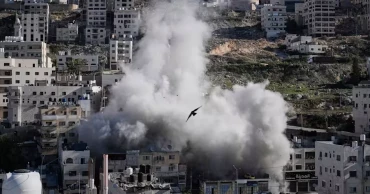
Israel continued its large-scale raid — including destruction of infrastructure, airstrikes and gunbattles — into urban refugee camps in the cities of Jenin and Tulkarem, in the northern West Bank. Israel's incursion started Tuesday, causing alarm among the international community that the war might widen beyond Gaza.
The medical charity Doctors Without Borders in a statement said it was alarmed by the scale and intensity of Israel's incursion and asserted that Israeli forces have “obstructed access to health facilities and blocked — and even targeted — ambulances.”
Israel's military on Saturday said 23 militants had been killed since the incursion, including 14 in the Jenin area.
Some people fled Jenin. Holding a baby, Oroba al-Shalabi said Israeli gunfire had pelted her windows.
“We began screaming that we had small children, but they (the Israeli soldiers) didn’t respond at first. The more we screamed, the more they shot at the house, shattering the TV and the windows around us,” she said.
The family cowered in their kitchen until soldiers entered, she said, separating women and children from the men and searching everyone’s phones before letting her flee.
Israel has described the West Bank operation as a strategy to prevent attacks on Israeli civilians, which have increased during the war in Gaza including near settlements that the international community largely considers illegal. The Palestinian Health Ministry noted a surge in Palestinian deaths by Israeli forces, with at least 663 in the West Bank since the war began.
In central Gaza, Israeli airstrikes hit a multi-story building housing displaced people in and around Nuseirat, a built-up refugee camp, in Khan Younis and in Gaza City, officials at area hospitals said. The Health Ministry announced a “repeated attack” on al-Ahli hospital in Gaza City. There were no immediate details, and the Israeli military didn’t comment.
The United States, Qatar and Egypt have spent months trying to mediate a cease-fire that would see the remaining hostages released. But the talks have repeatedly bogged down as Netanyahu has vowed “total victory” over Hamas and the militant group has demanded a lasting cease-fire and the full withdrawal of Israeli forces from the territory.
Israelis gathered again Saturday night to rally against the government and urge a deal to bring remaining hostages home.
“Why are they still in Gaza?” the crowd chanted.
1 year ago
Baby in Gaza infected with polio strain linked to mistakes in eradication campaign: Scientists
The baby in Gaza who was recently paralyzed by polio was infected with a mutated strain of the virus that vaccinated people shed in their waste, according to scientists who say the case is the result of “an unqualified failure” of public health policy.
The infection, which marked the first detection of polio in the war-torn Palestinian territory in more than 25 years, paralyzed the lower part of one leg in the unvaccinated 10-month-old child. The baby boy was one of hundreds of thousands of children who missed vaccinations because of the fighting between Israel and Hamas.
Scientists who have been monitoring polio outbreaks said the baby's illness showed the failures of a global effort by the World Health Organization and its partners to fix serious problems in their otherwise largely successful eradication campaign, which has nearly wiped out the highly infectious disease. Separately, a draft report by experts deemed the WHO effort a failure and “a severe setback.”
The polio strain in question evolved from a weakened virus that was originally part of an oral vaccine credited with preventing millions of children worldwide from being paralyzed. But that virus was removed from the vaccine in 2016 in hopes of preventing vaccine-derived outbreaks.
Public health authorities knew that decision would leave people unprotected against that particular strain, but they thought they had a plan to ward off and quickly contain any outbreaks. Instead, the move resulted in a surge of thousands of cases.
“It was a really horrible strategy,” said Columbia University virologist Vincent Racaniello, who was not involved with the report or the WHO. “The decision to switch vaccines was based on an incorrect assumption, and the result is now we have more polio and more paralyzed children.”
A draft copy of the report commissioned by the WHO and independent experts said the plan underestimated the amount of the strain in the environment and overestimated how well officials would be able to squash outbreaks.
The plan led to vaccine-linked polio outbreaks in 43 countries that paralyzed more than 3,300 children, the report concluded.
Even before the Gaza case was detected, officials reviewing the initiative to tinker with the vaccine concluded that “the worst-case scenario has materialized,” the report said.
The report has not yet been published, and some changes will likely be made before the final version is released next month, the WHO said.
The strain that infected the baby in Gaza had lingered in the environment and mutated into a version capable of starting outbreaks. It was traced to polio viruses spreading last year in Egypt, according to genetic sequencing, the WHO said.
In 2022, vaccine-linked polio viruses were found to be spreading in Britain, Israel and the U.S., where an unvaccinated man was paralyzed in upstate New York.
Scientists now worry that the emergence of polio in a war zone with an under-immunized population could fuel further spread.
Racaniello said the failure to track polio carefully and to sufficiently protect children against the strain removed from the vaccine has had devastating consequences.
“Only about 1% of polio cases are symptomatic, so 99% of infections are silently spreading the disease,” he said.
The oral polio vaccine, which contains a weakened live virus, was withdrawn in the U.S. in 2000. Doctors continued to vaccinate children and eventually moved to an injected vaccine, which uses a dead virus and does not come with the risk that polio will be present in human waste. Such waste-borne virus could mutate into a form that triggers outbreaks in unvaccinated people.
The report's authors faulted leaders at the WHO and its partners, saying they were unable or unwilling “to recognize the seriousness of the evolving problem and take corrective action.”
WHO spokesman Oliver Rosenbauer acknowledged that the vaccine strategy “exacerbated” the risk of epidemics linked to the vaccine.
He said in an email that immunization “was not implemented in such a way to rapidly stop outbreaks or to prevent new strains from emerging.” Rosenbauer said not hitting vaccination targets was the biggest risk for allowing vaccine-linked viruses to emerge.
“You need to reach the children with the vaccines … regardless of which vaccines are used,” he said.
The WHO estimates that 95% of the population needs to be immunized against polio to stop outbreaks. The U.N. health agency said only about 90% of Gaza’s population was vaccinated earlier this year.
To try to stop polio in Gaza and the wider region, the WHO and its partners plan two rounds of vaccination campaigns later this week and next month, aiming to cover 640,000 children. Authorities will use a newer version of the oral polio vaccine that targets the problematic strain. The weakened live virus in the new vaccine is less likely to cause vaccine-derived outbreaks, but they are still possible.
Racaniello said it was “unethical” that the WHO and its partners were using a vaccine that is unlicensed in rich countries precisely because it can increase the risk of polio in unvaccinated children.
The oral polio vaccine, which has reduced infections globally by more than 99%, is easy to make and distribute. Children require just two drops per dose that can be administered by volunteers. The oral vaccine is better at stopping transmission than the injected version, and it is cheaper and easier to administer.
But as the number of polio cases caused by the wild virus have plummeted in recent years, health officials have been struggling to contain the increasing spread of vaccine-linked cases, which now comprise the majority of polio infections in more than a dozen countries, in addition to Afghanistan and Pakistan, where transmission of the wild virus has never been stopped.
“This is the result of the Faustian bargain we made when we decided to use" the oral polio vaccine, said Dr. Paul Offit, director of the Vaccine Education Center at the University of Philadelphia. “If we really want to eradicate polio, then we need to stop using the vaccine with live (weakened) virus.”
1 year ago
24 people missing after floods tore through northern Yemen village
Floodwaters swept through a village in northern Yemen, inundating homes and shops and leaving at least 24 people missing, authorities said Wednesday.
Heavy rains over the past few days pounded the Melhan district in Al-Mahwit province, triggering floods that caved in seven homes and four shops, according to a statement by Yemen's Houthi rebels.
Yemen was already the poorest Arab nation before it was plunged into civil war in 2014, when Iran-backed Houthi rebels took control of the capital, Sanaa, and much of the country’s north, forcing the government to flee to the south, then to Saudi Arabia.
Seasonal monsoon rains in the late summer often turn into flooding in Yemen, but there are indications that the country is experiencing more extreme weather events due to climate change.
A 2024 report by Yemen's Red Crescent projected that the country will see less precipitation overall, but that flooding events are expected to be more severe in the monsoon season. Yemen’s rainy season begins in late March, and rains intensify in July through mid-August.
The World Health Organization said this week that Yemenis were suffering “disproportionately from climate change due to their already undermined capacities, limited resources and fragile infrastructure.”
It warned that more heavy rains were expected in the coming weeks and months. Though the country's conflict and disorder makes determining the true toll of the floods difficult, the organization said that at least 36 people had been killed in the western province of Hodeida alone by flooding in recent weeks, and in the central province of Marib there are roughly 8,400 internally displaced families.
A Saudi-led coalition entered the war in March 2015, backed at the time by the U.S., in an effort to restore the internationally recognized government. The war has killed more than 150,000 people including civilians and combatants, and in recent years deteriorated largely into a stalemate and caused one of the world’s worst humanitarian crises.
1 year ago
Israel launches large-scale military operation in occupied West Bank, killing 9 Palestinians
Israel launched a large-scale military operation in the occupied West Bank on Wednesday, with its forces killing at least nine Palestinians and sealing off the volatile city of Jenin, according to Palestinian officials.
Israel has carried out near-daily raids across the West Bank since Hamas' Oct. 7 attack out of Gaza triggered the ongoing war there. Israel says it is rooting out militants to prevent attacks on its citizens, while Palestinians in the West Bank fear it intends to broaden the war and forcibly displace more of them.
Lt. Col. Nadav Shoshani, an Israeli military spokesman, said “large forces” had entered Jenin, long a militant stronghold, as well as Tulkarem and the Al-Faraa refugee camp dating back to the 1948 Mideast war, all in the northern West Bank.
He said the nine dead were all militants, including three killed in an airstrike in Tulkarem and four in an airstrike in Al-Faraa. He said another five suspected militants were arrested, and that the raids were the first stage of an even larger operation.
Palestinian militant groups said they were exchanging fire with Israeli troops. The governor of Jenin, Kamal Abu al-Rub, said on Palestinian radio that Israeli forces had surrounded the city, blocking exit and entry points and access to hospitals, and ripping up infrastructure in the camp.
The Palestinian Health Ministry in the West Bank said Israeli forces had blocked the roads leading to a hospital with dirt barriers and surrounded other medical facilities in Jenin. Shoshani said the military was trying to prevent militants from taking shelter in hospitals.
An Associated Press reporter saw army vehicles blocking all the entrances to Al-Faraa camp. Military jeeps and bulldozers entered the camp and soldiers were seen patrolling its alleyways by foot. Water leaked onto the damaged streets from houses where fighting had damaged tanks and pipes. Shots rang out every few minutes.
Israeli Foreign Minister Israel Katz drew comparisons with Gaza and called for similar measures in the West Bank.
“We must deal with the threat just as we deal with the terrorist infrastructure in Gaza, including the temporary evacuation of Palestinian residents and whatever steps might be required. This is a war in every respect, and we must win it," he wrote on the platform X.
Shoshani said there was no plan to evacuate civilians.
Hamas called on Palestinians in the West Bank to rise up, calling the raids part of a larger plan to expand the war in Gaza and blaming the escalation on U.S. support for Israel. The militant group called on security forces loyal to the Western-backed Palestinian Authority, which cooperate with Israel, to “join the sacred battle of our people."
Nabil Abu Rudeineh, a spokesman for Palestinian Authority President Mahmoud Abbas, condemned the raids as a “serious escalation” and called on the United States to intervene. Abbas later announced he was cutting short a visit to Saudi Arabia and returning to the West Bank, where his government is based.
At least 652 Palestinians in the West Bank have been killed by Israeli fire since the war in Gaza began over 10 months ago, according to the Palestinian ministry. Most have died during raids, which often trigger gunbattles with militants.
Israel says the operations are required to dismantle Hamas and other militant groups. Attacks on Israelis have risen since the start of the war.
The Palestinian Health Ministry said the bodies of seven people were brought to the hospital in Tubas, another West Bank city, and another two were brought to the hospital in Jenin. The ministry identified two killed in Jenin as Qassam Jabarin, 25, and Asem Balout, 39.
Israel captured the West Bank, Gaza and east Jerusalem in the 1967 Mideast war. The Palestinians want all three for a future state.
Israel has built scores of settlements across the West Bank, which are home to over 500,000 Jewish settlers. They have Israeli citizenship, while the 3 million Palestinians in the West Bank live under Israeli military rule, with the Palestinian Authority exercising limited control over population centers.
The war in Gaza erupted when Hamas-led militants stormed into southern Israel and rampaged through army bases and farming communities, killing some 1,200 people, mostly civilians, and abducting around 250. The militants are still holding some 110 hostages, around a third of whom are believed to be dead, after most of the rest were released during a November cease-fire.
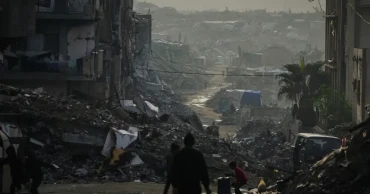
Israel responded with an offensive that has killed over 40,000 Palestinians, according to Gaza's Health Ministry, which does not say how many were militants. Around 90% of Gaza's population has been displaced, often multiple times, and Israeli bombardment and ground operations have caused vast destruction.
Israeli strikes in Gaza overnight and into Wednesday killed at least 24 people, including five women and five children, according to Palestinian health officials. AP reporters at two hospitals confirmed the toll.
One strike hit tents housing displaced people near the central town of Deir al-Balah, killing eight including two brothers, 6 and 17 years old.
“He’s alive!” their mother shouted as the teenager's body was carried to the morgue. She later sobbed and cradled both of them.
Israel says it tries to avoid harming civilians and blames their deaths on Hamas because the militants fight in dense residential areas. The military rarely comments on individual strikes in Gaza, which often kill women and children.
The U.S., Qatar and Egypt have spent months trying to mediate a cease-fire that would see the remaining hostages released. But the talks have repeatedly bogged down as Israeli Prime Minister Benjamin Netanyahu has vowed “total victory” over Hamas and the militant group has demanded a lasting cease-fire and a full withdrawal from the territory.
There was no sign of a breakthrough after days of talks in Egypt, and the negotiations move to Qatar this week.
1 year ago
Biden pushed Gaza pier over warnings it would undercut other aid routes, watchdog says
President Joe Biden ordered the construction of a temporary pier to deliver humanitarian aid to Gaza earlier this year even as some staffers for the U.S. Agency for International Development expressed concerns that the effort would be difficult to pull off and undercut the effort to persuade Israel to open “more efficient” land crossings to get food into the territory, according to a USAID inspector general report published Tuesday.
Biden announced plans to use the temporary pier in his State of the Union address in March to hasten the delivery of aid to the Palestinian territory besieged by war between Israel and Hamas.
But the $230 million military-run project known as the Joint Logistics Over-the-Shore system, or JLOTS, would only operate for about 20 days. Aid groups pulled out of the project by July, ending a mission plagued by repeated weather and security problems that limited how much food and other emergency supplies could get to starving Palestinians.
“Multiple USAID staff expressed concerns that the focus on using JLOTS would detract from the Agency’s advocacy for opening land crossings, which were seen as more efficient and proven methods of transporting aid into Gaza,” according to the inspector general report. “However, once the President issued the directive, the Agency’s focus was to use JLOTS as effectively as possible.”
At the time Biden announced plans for the floating pier, the United Nations was reporting virtually all of Gaza’s 2.3 million people were struggling to find food and more than a half-million were facing starvation.
The Biden administration set a goal of the U.S. sea route and pier providing food to feed 1.5 million of Gaza's people for 90 days. It fell short, bringing in enough to feed about 450,000 people for a month before shutting down.
High waves and bad weather repeatedly damaged the pier, and the U.N. World Food Program ended cooperation with the project after an Israeli rescue operation used an area nearby to whisk away hostages, raising concerns about whether its workers would be seen as neutral and independent in the conflict.
U.S. National Security Council spokesman Sean Savett said Tuesday that the project “had a real impact” of getting food to hungry Palestinian civilians despite the obstacles.
“The bottom line is that given how dire the humanitarian situation in Gaza is, the United States has left no stone unturned in our efforts to get more aid in, and the pier played a key role at a critical time in advancing that goal,” Savett said in a statement.
The watchdog report also alleged the United States had failed to honor commitments it had made with the World Food Program to get the U.N. agency to agree to take part in distributing supplies from the pier into Palestinian hands.
The U.S. agreed to conditions set by the WFP, including that the pier would be placed in north Gaza, where the need for aid was greatest, and that a U.N. member nation would provide security for the pier. That step was meant to safeguard WFP's neutrality among Gaza's warring parties, the watchdog report said.
Instead, however, the Pentagon placed the pier in central Gaza. WFP staffers told the USAID watchdog that it was their understanding the U.S. military chose that location because it allowed better security for the pier and the military itself.
Israel's military ultimately provided the security after the U.S. military was unable to find a neutral country willing to do the job, the watchdog report said.
1 year ago
Hospital in central Gaza empties out as Israeli forces draw near
One of Gaza's last functioning hospitals has been emptying out in recent days as Israel has ordered the evacuation of nearby areas and signaled a possible ground operation in a town that has been largely spared throughout the war, officials said Monday.
The Al-Aqsa Martyrs Hospital in Deir al-Balah is the main hospital serving central Gaza. The Israeli military has not ordered its evacuation, but patients and people sheltering there fear that it may be engulfed in fighting or become the target of a raid.
Also on Monday, Israeli strikes in Gaza City and Khan Younis killed at least 19 people, according to local officials, and fighting between Israel and Hezbollah resumed across the Lebanon border.
Israeli forces have invaded several hospitals in Gaza over the course of the 10-month-old war, accusing Hamas of using them for military purposes, allegations denied by Palestinian health officials.
Israeli evacuation orders now cover around 84% of Gaza's territory, according to the United Nations, which estimates that around 90% of Gaza's population of 2.3 million have been forced from their homes. Many have been displaced multiple times.
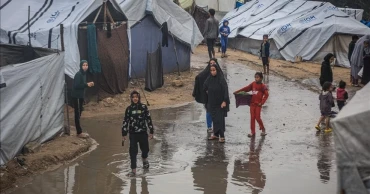
The evacuation orders have reduced the size of the humanitarian zone declared by Israel at the start of the war while crowding more Palestinians into it. Thousands of Palestinian families have packed into tent camps along the beach where aid groups say food and clean water are scarce and disease spreads quickly.
The most recent satellite images available from PlanetLabs and analyzed by The Associated Press show the increase in tent density along the beachfront since July 19.
AP reporters saw people fleeing the hospital and surrounding areas on Monday, many on foot. Some pushed patients on stretchers or carried sick children, while others held bags of clothes, mattresses and blankets. Four schools in the area were also being evacuated.
"Where will we get medicine?" Adliyeh al-Najjar said as she rested outside the hospital gate. “Where will patients like me go?”
Fatimah al-Attar fought back tears as she left the hospital compound heading in the direction of the tent camps. “Our fate is to die,” she said. “There is no place for us to go. There is no safe place.”
The U.N. Office for Humanitarian Affairs known as OCHA said that since Friday the Israeli military has issued three evacuation orders for over 19 neighborhoods in northern Gaza and in Deir al Balah, affecting more than 8,000 people staying in these areas.
The order covers an area including or near UN and other humanitarian centers, the Al Aqsa hospital, two clinics, three wells, one water reservoir and one desalination plant, said Jens Laerke, a spokesman for OCHA.
“This effectively upends a whole lifesaving humanitarian hub,” Laerke said.
Doctors Without Borders, an international charity known by its French acronym MSF, said an explosion around 250 meters (yards) from the hospital on Sunday caused panic, accelerating the exodus.
“As a result, MSF is considering whether to suspend wound care for the time being, while trying to maintain life-saving treatment,” it said on the platform X.
The hospital says it was treating over 600 patients before the evacuation orders, which apply to residential areas about a kilometer (0.6 mile) away. Around 100 patients remain, including seven in intensive care and eight in the children's ward.
The Israeli military said it was operating against Hamas in Deir al-Balah and working to dismantle its remaining infrastructure there. It said the evacuation orders were issued to protect civilians, and did not include nearby hospitals or medical facilities. It said it had also informed Palestinian health officials that the facilities did not need to be evacuated.
The army has excluded hospitals from past evacuation orders, but patients and others have still fled, fearing for their safety.
Israel’s military said Monday that its forces were expanding operations on the outskirts of Deir al-Balah and had discovered weapons in a residential apartment and dismantled an underground Hamas tunnel about 700 meters (765 yards) long.
Local health officials said an Israeli airstrike hit a group of people on the seashore in Gaza City, killing at least seven men while they were fishing.
Another strike hit a vehicle inside the Israeli-declared humanitarian zone near the southern city of Khan Younis, killing at least five people, according to a Kuwaiti field hospital, where the bodies were taken.
The Israeli military did not immediately respond to a request for comment on those attacks.
Monday night, a strike hit a house in Maghazi, a refugee camp near Deir al-Balah, and killed at least seven people, including four children and a woman, according to hospital records and AP journalists who counted the bodies. Ambulances recovered the bodies that were taken to Al Aqsa hospital.
The war began on Oct. 7 when Hamas-led militants attacked Israeli army bases and farming communities. The militants killed some 1,200 people, mostly civilians, and dragged around 250 hostages back to Gaza.
Israel's retaliatory offensive has killed over 40,000 Palestinians, according to Gaza's Health Ministry, and caused heavy destruction across much of the territory. Hamas is still holding around 110 hostages, about a third of whom are believed to be dead, after most of the rest were freed in a cease-fire last year.
Israel has continued carrying out strikes across Gaza as the United States, Egypt and Qatar have tried to broker a lasting cease-fire and the release of the remaining hostages. Major gaps remain despite several months of high-level negotiations.
Hospitals have repeatedly been turned into battlegrounds, both literally and in the rival narratives surrounding the war.
Israel's army has raided a number of medical facilities since the start of the war and has provided some evidence that militants were inside some of them. Medical staff deny the allegations and accuse the army of reckless disregard for civilians.
Hospitals can lose their protected status under international law if they are used for military purposes, but any operations against them must be proportional and seek to spare civilians.
Only 16 of Gaza's 36 hospitals are even partially functioning, according to the World Health Organization, even as they treat casualties from daily Israeli airstrikes across the territory. The difficulty of importing and distributing humanitarian aid in Gaza has contributed to widespread hunger and disease outbreaks, further stressing the health sector.
1 year ago