middle-east
Israel strikes Gaza amid fragile ceasefire, hospitals report 24 dead
Israel carried out a series of airstrikes across the Gaza Strip on Saturday, marking the latest major challenge to the ceasefire that began on October 10. Health officials in Gaza said at least 24 people were killed and 54 others injured, including many children.
The strikes came as global attention intensified on Gaza following Monday’s U.N. Security Council approval of a U.S.-backed plan for stabilizing and governing the territory. The roadmap allows for an international security force, a transitional authority under President Donald Trump, and the possibility of a future independent Palestinian state.
Israel has launched similar attacks during earlier flare-ups in the truce. Health officials said at least 33 Palestinians — mostly women and children — were killed during a 12-hour escalation on Wednesday and Thursday.
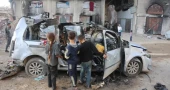
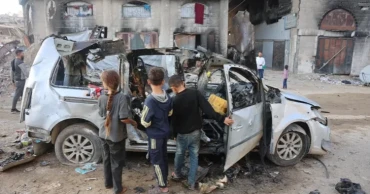
On Saturday, one strike hit a vehicle in Gaza City’s Rimal neighborhood, killing 11 people and wounding more than 20, said Rami Mhanna, managing director of Shifa Hospital. Hospital director Mohamed Abu Selmiya said most of the wounded were children. AP footage showed residents examining the charred vehicle with its roof blown off.
Another strike on a home near Al-Awda Hospital in central Gaza killed at least three people and injured 11. A separate strike on a house in Nuseirat camp killed seven, including a child, and wounded 16 others. Al-Aqsa Hospital confirmed three more deaths — including a woman — from a strike on a home in Deir al-Balah.
Residents described scenes of terror. “I heard a huge explosion and the whole area filled with smoke,” said Khalil Abu Hatab of Deir al-Balah. “The upper floor of my neighbor’s house was gone. This ceasefire is so fragile — there is no safe place.”
Israel’s military said the strikes followed an incident in which an “armed terrorist” crossed into an Israeli-controlled zone in southern Gaza and opened fire, though no soldiers were injured. The military said the crossing occurred on a route used for humanitarian aid deliveries, calling it a severe breach of the ceasefire.
The army also said its forces killed five militants in Rafah and two others in northern Gaza after separate attempts to cross into Israeli-held areas.
The war began on October 7, 2023, when Hamas-led militants attacked southern Israel, killing around 1,200 people and taking more than 250 hostages. Most hostages or their remains have since been returned under various ceasefire deals.
Gaza’s Health Ministry says 69,733 Palestinians have been killed and 170,863 wounded since Israel’s retaliatory offensive began. Officials say the toll continues to rise during the ceasefire due to new strikes and the recovery of bodies from earlier bombardments.
The ministry does not separate civilian and combatant deaths but says women and children form the majority of those killed. Its casualty records, maintained by medical staff under the Hamas-run administration, are widely considered credible by independent analysts.
6 months ago
Israel to seize historic West Bank site as new settlement emerges
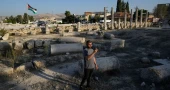
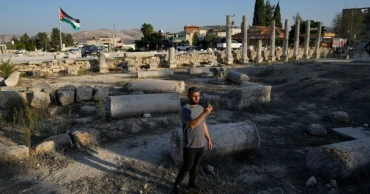
Israel plans to expropriate large sections of the Sebastia archaeological site in the West Bank, according to a government document obtained by The Associated Press, while settlers overnight established a new outpost near Bethlehem, escalating tensions in the occupied territory.
The Israeli Civil Administration’s order, released Nov. 12, targets approximately 1,800 dunams (450 acres) of land, the largest seizure of archaeologically significant territory in the West Bank, Peace Now, an anti-settlement watchdog, said. Sebastia, home to thousands of olive trees, sits atop the ancient capital of Samaria and is believed by Christians and Muslims to contain John the Baptist’s burial site. Israel had previously announced plans to develop the site as a tourist attraction and allocated over $9 million for its expansion. Palestinians have 14 days to file objections to the declaration.
Meanwhile, Israeli settlers inaugurated an unauthorized outpost near Bethlehem following a recent Palestinian attack in the area. Settler leaders framed the move as strengthening ties between Etzion and Jerusalem.
Tensions have also intensified over settler violence. A Palestinian activist documenting abuses was detained and hospitalized, raising concerns over administrative detention without trial.
Human Rights Watch accuses Israel of West Bank war crimes
Human Rights Watch accused top Israeli officials of war crimes for forcibly displacing 32,000 Palestinians from three West Bank refugee camps earlier this year. Satellite analysis found more than 850 homes destroyed or heavily damaged. The military said the raids targeted militant infrastructure but provided no explanation for barring displaced residents from returning.
The unfolding developments highlight growing international scrutiny of Israel’s settlement expansion and actions in the West Bank.
Source: AP
6 months ago

Iran rejects UN Atomic Agency Resolution, warns of retaliatory measures
Iran’s foreign ministry on Friday condemned a resolution by the U.N. atomic watchdog as “anti-Iranian” and warned of unspecified retaliatory actions, state media reported.
The International Atomic Energy Agency (IAEA) on Thursday called on Iran to fully cooperate by providing “precise information” on its near weapons-grade uranium stockpile and granting inspectors access to nuclear sites.
According to the official IRNA news agency, foreign ministry spokesman Esmail Baghaei said Iran informed the Vienna-based agency that, in addition to ending the Cairo agreement reached over the summer, it may take “other actions” in response to the resolution. Baghaei did not detail potential measures but hinted that further uranium enrichment could be among them.
UN atomic watchdog urges Iran to disclose full uranium stockpile
He accused the IAEA of siding with the United States, United Kingdom, France, and Germany and criticized the resolution for ignoring the fact that Iran had suspended inspections due to Israeli and U.S. strikes on its nuclear facilities in June.
After the 12-day air war with Israel in June, which killed nearly 1,100 people including military commanders and nuclear scientists, Iran suspended all cooperation with the IAEA. Although inspections resumed following a September Cairo agreement, Tehran halted its implementation after the U.N. reimposed sanctions via the “snapback” mechanism of the 2015 nuclear deal, escalating tensions further.
The latest resolution is likely to deepen the standoff between Tehran and the U.N. nuclear agency.
Source: AP
6 months ago
Human Rights Watch accuses Israel of West Bank war crimes
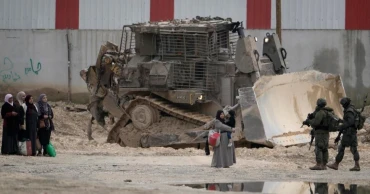
Israel may have committed war crimes and crimes against humanity by forcibly displacing 32,000 Palestinians from three West Bank refugee camps earlier this year, Human Rights Watch said Thursday.
The rights group called for investigations into top Israeli officials, including Prime Minister Benjamin Netanyahu, Finance Minister Bezalel Smotrich, Defense Minister Israel Katz, and senior military commanders, urging prosecution if found responsible.
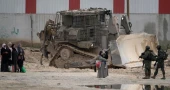
The expulsions, conducted in January and February during a military operation dubbed “Operation Iron Wall,” represent the largest displacement in the West Bank since Israel occupied the territory in 1967. Thousands of Palestinians remain unable to return to their homes, with many living in overcrowded rentals, with relatives, or in public buildings. Some homes were reportedly bulldozed.
Israel defended the raids as necessary to combat militancy, claiming troops dismantled explosives and reduced attacks in the West Bank by 70 percent, though evidence was not provided. The military said operations aim to “reshape and stabilize” the area, including opening new access routes inside the camps.
Human Rights Watch criticized Israel for failing to justify the mass expulsions, restricting displaced residents from returning, and not providing shelter or humanitarian aid. The group said troops stormed homes, ransacked properties, and interrogated residents before displacing them. Satellite imagery analysis showed over 850 homes and buildings destroyed or heavily damaged.
Nadia Hardman, senior researcher at Human Rights Watch, said, “With global attention focused on Gaza, Israeli forces have carried out war crimes, crimes against humanity, and ethnic cleansing in the West Bank that should be investigated and prosecuted.”
The displaced camps, including Tulkarem, Nur Shams, and Jenin, house millions of Palestinian refugees and their descendants dating back to the 1948 Nakba, when hundreds of thousands fled or were expelled from what is now Israel.
6 months ago
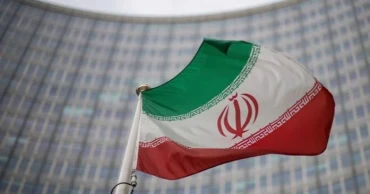
UN atomic watchdog urges Iran to disclose full uranium stockpile
The United Nations’ atomic watchdog on Thursday called on Iran to fully cooperate with the agency, provide detailed information about its near weapons-grade uranium stockpile, and grant inspectors access to its nuclear sites.
The resolution, backed by 19 of the International Atomic Energy Agency’s 35-member board of governors, was proposed by France, the United Kingdom, Germany, and the United States. Russia, China, and Niger opposed it, while 12 countries abstained and one did not vote.
The IAEA said Iran holds 440.9 kilograms of uranium enriched up to 60 percent, close to weapons-grade levels. The stockpile could theoretically allow Iran to produce up to 10 nuclear bombs, though the agency noted it does not indicate that Iran has developed such weapons.
Iran’s ambassador to the IAEA, Reza Najafi, condemned the resolution, describing it as undue pressure and a misleading portrayal of the situation. He said Iran is prepared for constructive engagement but criticized the authors of the resolution for ignoring attacks on its safeguarded nuclear facilities.
Iran had suspended cooperation with the IAEA after Israeli and U.S. strikes on its nuclear sites in June. Although an agreement to resume inspections was reached in September, Iran later halted implementation following the UN’s reimposition of sanctions under the so-called snapback mechanism of the 2015 nuclear deal.
The Thursday resolution instructs IAEA Director General Rafael Grossi to monitor Iran’s compliance, including verification of uranium stockpiles, centrifuge inventories, and related equipment, under the Additional Protocol, which Iran has suspended since 2021.
The IAEA and Western nations maintain that Iran previously pursued a nuclear weapons program before 2003, while Iran continues to insist its nuclear activities are peaceful.
6 months ago
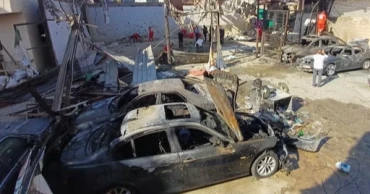
Israeli strikes in Lebanon and Gaza leave dozens dead
Israel’s military launched heavy airstrikes across southern Lebanon on Wednesday, targeting what it described as Hezbollah weapons sites, after an earlier drone attack killed one person and injured several others, including schoolchildren traveling on a bus.
The latest assault followed an airstrike a day earlier that killed 13 people in the Ein el-Hilweh Palestinian refugee camp — the deadliest Israeli attack in Lebanon since last year’s ceasefire brought the Israel-Hezbollah conflict to a halt.
In Gaza, Israeli forces also carried out multiple strikes after reporting gunfire at their troops in the south. Health officials in Gaza said the attacks killed at least 25 Palestinians, marking one of the deadliest days in the territory since the Oct. 10 ceasefire came into effect. Meanwhile, Israeli Prime Minister Benjamin Netanyahu visited a buffer zone inside Syrian territory seized by Israel last year.
Israel Says Hezbollah Is RebuildingOn Wednesday, the Israeli army warned residents of several southern Lebanese villages to evacuate, claiming it would target Hezbollah positions there. Strikes began over an hour later in the villages of Shehour and Deir Kifa.
The military alleged that Hezbollah was trying to reestablish its presence in the area, though it provided no evidence. According to Israel, the sites struck were located among civilian neighborhoods and violated last year’s agreement in which Israel withdrew from southern Lebanon and Beirut pledged to curb Hezbollah’s activity.
Earlier in the day, an Israeli strike on a car in the village of Tiri killed one person and wounded 11 others, including children on a nearby school bus. Israel later said the attack killed a Hezbollah operative.
In Ein el-Hilweh, life appeared normal on Wednesday even as paramedics searched for remains at the blast site, where burned vehicles and debris marked the latest strike. Israel said it targeted a Hamas training facility preparing attacks, a claim Hamas denied, saying the site was merely a sports field.
Netanyahu welcomes UN approval of Trump’s Gaza plan, Hamas rejects proposal
Efforts to Disarm FactionsPalestinian groups in Lebanon’s 12 refugee camps have been turning over their weapons to Lebanese authorities this year. The government also announced plans to work toward disarming Hezbollah, but the group rejected the idea, citing ongoing Israeli strikes and the occupation of border hills.
The United States has recently pressured Lebanon to take stronger action against Hezbollah and cancelled a planned Washington visit by Lebanese army chief Gen. Rudolph Haikal. A senior Lebanese army official told AP that U.S. officials were angered by a military statement accusing Israel of destabilizing Lebanon.
The current Israel-Hezbollah conflict erupted on Oct. 8, 2023, after Hezbollah fired rockets following Hamas’s attack on Israel the day before. Israel responded with a major bombing campaign and later a ground offensive. The war killed more than 4,000 people in Lebanon and caused an estimated $11 billion in damage. Israel reported 127 deaths, including 80 soldiers.
Israeli Strikes Kill 25 in GazaGaza’s Health Ministry reported 25 Palestinians killed and 77 wounded on Wednesday, with casualties coming from both sides of the “yellow line” established under the ceasefire deal. Bodies were taken to hospitals in Gaza City, Khan Younis, and the Muwasi displacement camp.
The Israeli military said the strikes were a response to militants firing on Israeli troops in Khan Younis. Hamas denied the allegation, calling the attacks a “shocking massacre.”
Although Israeli strikes have decreased since the truce began, they have not stopped. More than 300 people have been killed in Gaza since the ceasefire took hold, according to the ministry.
Overall, more than 69,000 Palestinians have been killed since Israel launched its offensive two years ago after militants killed around 1,200 people and abducted 251 in the Oct. 7, 2023 attack.
UN endorses Trump administration’s Gaza plan
Netanyahu Tours Seized Buffer Zone in SyriaNetanyahu’s visit to a demilitarized zone in Syria drew swift condemnation. Israel captured the area last year amid Syria’s instability, adding to concerns it seeks to expand control over the Golan Heights — territory it annexed in 1967 without international recognition.
Syrian officials said the visit was a “grave violation” of sovereignty. Israel has intensified operations in southern Syria in recent months, including advances on farmland, new checkpoints, and activities drawing interest from Israeli settlers.
Negotiations between Syrian and Israeli officials aimed at easing tensions have stalled.
Source: AP
6 months ago

1 Israeli killed, 3 wounded in West Bank attack
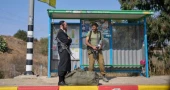
One Israeli was killed and three others injured in a ramming and stabbing attack at a busy intersection south of Jerusalem, Israeli authorities reported. Emergency rescue teams rushed the victims to nearby hospitals. The Israeli military confirmed the incident occurred at a crowded junction in the West Bank.
UN Approves U.S. Gaza Plan, Hamas Rejects It
Israeli Prime Minister Benjamin Netanyahu praised the United Nations’ endorsement of the Trump administration’s plan to stabilize Gaza, while Hamas rejected it, calling it biased. The U.N. Security Council resolution authorizes an international stabilization force to maintain security, oversees a transitional authority called the Board of Peace under U.S. supervision, and outlines a potential pathway to Palestinian statehood.
The plan calls for full demilitarization, disarmament, and deradicalization of Gaza. Hamas criticized the force’s disarmament mandate as compromising neutrality and demanded that international troops remain under U.N. supervision at Gaza’s borders. Meanwhile, the Palestinian Authority welcomed the resolution and pledged cooperation with the U.S., U.N., and other nations.
Support from Arab and Muslim-majority countries, including Turkey, Indonesia, Egypt, and Qatar, helped secure adoption of the resolution. The measure aims to reinforce Gaza’s fragile ceasefire following the October 7 Hamas attack on southern Israel, which triggered a war that has killed thousands on both sides.
Source: AP
6 months ago
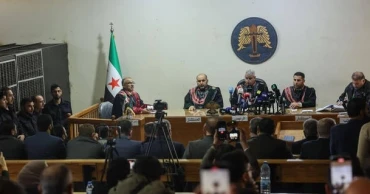
Syria opens first public trial over deadly coastal violence
Syria opened its first public trial Tuesday for some of the hundreds of suspects linked to the deadly sectarian clashes that swept the country’s coastal provinces earlier this year. Fourteen individuals appeared before Aleppo’s Palace of Justice following a months-long investigation into the March violence, which involved clashes between government forces and supporters of ousted President Bashar Assad.
Of the 14 defendants, seven were Assad loyalists and seven were members of the new government’s security forces. The investigating committee referred 563 suspects to the judiciary in total. Charges could include sedition, inciting civil war, attacking security forces, murder, looting, and leading armed gangs, according to state media.
The clashes erupted after armed groups aligned with Assad ambushed the new government’s forces, triggering a counteroffensive that escalated into sectarian revenge attacks. Hundreds of civilians, mainly from the Alawite minority, were killed, adding pressure on interim President Ahmad al-Sharaa to demonstrate commitment to judicial reform and rebuild Syria’s international ties.
A state inquiry estimated over 1,400 deaths during the sectarian violence, though it found no evidence that Syria’s new military leaders ordered attacks on Alawite communities. A United Nations investigation, however, described the attacks on civilians by government-aligned factions as “widespread and systematic,” noting that Alawite men and boys were singled out for execution.
The trial was televised, but the judge adjourned the session, scheduling the next hearing for December. With hundreds of suspects involved, the proceedings are expected to be prolonged. Observers say the trial marks a key step for Syria’s new government to show accountability and adherence to judicial reforms after decades under Assad’s autocratic rule.
The government faces both domestic and international pressure to ensure a fair and transparent legal process while addressing the humanitarian and sectarian tensions left in the wake of the March violence.
6 months ago
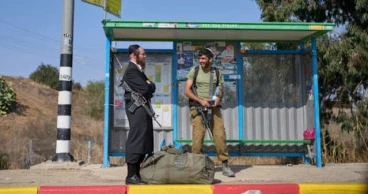
Netanyahu welcomes UN approval of Trump’s Gaza plan, Hamas rejects proposal
Israeli Prime Minister Benjamin Netanyahu on Tuesday praised the U.N. Security Council’s adoption of the Trump administration’s plan to stabilize and govern Gaza, while Hamas dismissed the move as an external attempt to control Palestinian territory.
The U.S.-backed resolution, passed Monday, authorizes an international stabilization force to secure Gaza, supervise borders, and oversee demilitarization after two years of devastating conflict. It also establishes a transitional body — the “Board of Peace” — under the oversight of President Donald Trump and outlines a potential path toward future Palestinian statehood. The mandate for both the force and the board runs through 2027.
Netanyahu said the proposal would bring “peace and prosperity,” stressing its emphasis on disarmament and deradicalization.
Hamas, however, rejected the plan, saying the force’s mandate to disarm non-state groups makes it biased in Israel’s favor. It argued the resolution fails to address Palestinian rights and insisted that any foreign troops must work under full U.N. authority and remain limited to border monitoring.
The Palestinian Authority welcomed the resolution after language referencing Palestinian self-determination was strengthened. It said it is prepared to begin immediate implementation alongside the U.S., U.N. and regional partners.
The U.S. revised the proposal following negotiations with Arab states, adding that reforms within the PA and progress in Gaza reconstruction could create conditions for a credible route to statehood. Washington also committed to launching dialogue between Israel and the Palestinians.
A breakthrough in securing Arab and Muslim-majority support — including from Qatar, Saudi Arabia, Egypt, the UAE, Indonesia, Pakistan, Jordan and Turkey — proved decisive for the resolution’s passage.
The plan envisions international troops securing Gaza’s borders, coordinating with Palestinian police, and facilitating humanitarian assistance. Israeli forces would then withdraw according to benchmarks tied to demilitarization, to be agreed upon by Israel, the stabilization force, the U.S. and ceasefire guarantors.
6 months ago
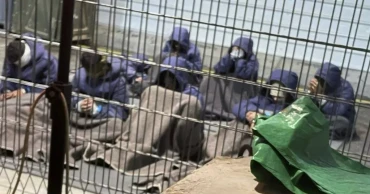
Surge in Palestinian deaths in Israeli custody amid abuse, neglect
The number of Palestinians dying in Israeli detention has surged to nearly 100 since the outbreak of the Gaza war, according to a report by Physicians for Human Rights-Israel (PHRI), citing systemic abuse and denial of medical care in prisons and detention centers.
The report, released Monday, aligns with findings from The Associated Press, which interviewed former guards, nurses, doctors, detainees, and relatives, and analyzed autopsy and prison records. One former military prison guard described routine shackling, beatings, and a facility nicknamed a “graveyard” due to frequent deaths.
PHRI recorded 98 deaths since October 7, 2023, with 27 in 2023, 50 in 2024, and 21 this year. The organization noted the actual toll is likely higher, as Israel has withheld information on many detainees. By contrast, fewer than 30 Palestinians died in custody during the previous decade.
Prison conditions deteriorated as the population doubled to 11,000, primarily from Gaza and the West Bank. Reports highlighted abuse, malnutrition, and medical neglect, with some injuries severe enough to require amputations. Former prisoners recounted witnessing deaths from beatings and starvation, while lawyers said serious investigations into abuse are rare.
The Israeli army and Prison Service said detainees are examined by doctors, receive three meals daily, and that violations of conduct are punished, though they declined to comment on the death toll. PHRI called the situation “alarming” and indicative of a system lacking moral and professional restraint.
6 months ago