middle-east
An Israeli airstrike kills 18 members of a family in Gaza as mediators hope for a cease-fire
An Israel airstrike in Gaza killed at least 18 people, all from the same family, on Saturday, hours after mediators expressed optimism for an imminent cease-fire deal between Israel and Hamas after 10 months of war.
A joint statement by mediators the United States, Egypt and Qatar after two days of talks said a proposal to bridge gaps was presented and they expect to work out implementation details next week in Cairo.
The mediation efforts aim to secure the release of scores of Israeli hostages and stop the fighting that has devastated Gaza, where the death toll has surpassed 40,000 and a possible polio outbreak is feared. Talks are also meant to calm regional tensions that have threatened to explode into a wider war if Iran and Hezbollah militants in Lebanon attack Israel in retaliation for recent killings of militant leaders.
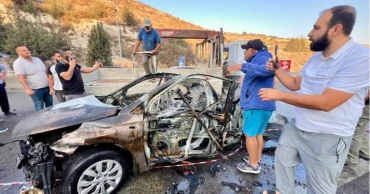
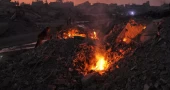
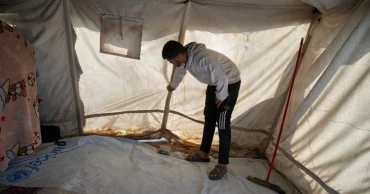
Saturday's airstrike hit a house and adjacent warehouse sheltering displaced people at the entrance to the town of Zawaida, according to the Al-Aqsa Martyrs Hospital in Deir al-Balah, where casualties were taken. An Associated Press reporter there counted the dead.
Among those killed was Sami Jawad al-Ejlah, a wholesaler who coordinated with the Israeli military to bring meat and fish to Gaza. The dead also included his two wives, 11 of their children ages 2 to 22, the children’s grandmother and three other relatives, according to a list provided by the hospital.
“He was a peaceful man,” said Abu Ahmed, a neighbor. More than 40 civilians were sheltering in the house and warehouse at the time, he said.
The Israeli military, which rarely comments on individual strikes, said it struck “terrorist infrastructure” in central Gaza where rockets had been fired toward Israel in recent weeks. It said it was continuing attacks on militants in central Gaza.
Another mass evacuation is ordered in Gaza
Another mass evacuation was ordered for parts of central Gaza. Israeli military spokesperson Avichay Adraee in a post on X said cited Palestinian rocket fire and said Palestinians in areas in and around the urban Maghazi refugee camp should leave.
“The suffering began from the day we left our homes," said Ahmad Omrani, one of those affected by the order, as heavily laden vehicles, bikes and donkey carts weaved through the rubble. "We suffer from fear and anxiety, and fear for the children playing in the street. You cannot sleep, sit or eat well.”
The vast majority of Gaza’s population has been displaced, often multiple times, and around 84% of the territory has been put under evacuation orders by the Israeli military, according to the United Nations.
The war began when Hamas-led militants stormed across the border on Oct. 7, killing about 1,200 people, mostly civilians, and abducting 250 to Gaza. More than 100 were released in a November cease-fire. Around 110 are believed to be in Gaza, though Israeli authorities believe around a third are dead.
Israel says it has killed more than 17,000 Hamas militants, without providing evidence.
Gaza's Health Ministry said at least 40,074 Palestinians have been killed in the war. The ministry does not distinguish between fighters and civilians.
In the Israeli-occupied West Bank, Israel's military said it struck a “terrorist cell” in Jenin. The health ministry there said two bodies were taken to a government hospital. Hamas claimed the two men as commanders in its military wing.
Cease-fire and implementation plans
Mediators have spent months pursuing a three-phase plan in which Hamas would release the hostages in exchange for a lasting cease-fire, the withdrawal of Israeli forces from Gaza and the release of Palestinians imprisoned by Israel.
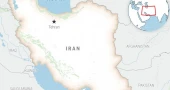
Efforts took on new urgency in recent weeks after the killing of a top Hezbollah commander in an Israeli airstrike in Beirut and of Hamas’ top political leader in an explosion in Tehran that was widely blamed on Israel.
Israel and Hezbollah have traded fire since the war started. An Israeli strike Saturday killed at least 10 Syrians, including a woman and her two children, Lebanon’s Health Ministry said. Israel said it targeted a Hezbollah weapons depot.
In an apparent sign of confidence, mediators were beginning preparations for implementing the cease-fire proposal even before its approval, said an American official, who spoke on condition of anonymity in keeping with rules set by the White House.
Israel's negotiating team expressed to Prime Minister Benjamin Netanyahu “cautious optimism for the possibility to move toward a deal,” a statement from his office said.
An Israeli official said a delegation was set to travel to Cairo on Sunday to continue talks. The official spoke on condition of anonymity because they weren’t authorized to discuss the sensitive talks with the media.
But Hamas has cast doubt on whether an agreement was near, saying the latest proposal diverged significantly from a previous iteration they had accepted in principle. Hamas has rejected Israel’s demands that include a lasting military presence along the border with Egypt and a line bisecting Gaza where it would search Palestinians returning to their homes to find militants.
Israel showed flexibility on retreating from the border corridor, and a meeting between Egyptian and Israeli military officials was scheduled for next week to agree on a withdrawal mechanism, according to two Egyptian officials, who spoke on condition of anonymity because they were not authorized to discuss the private negotiations.
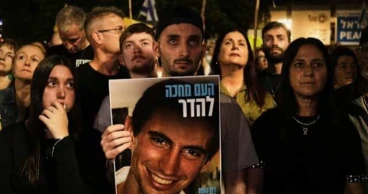
Thousands of Israelis demonstrated again Saturday night for a cease-fire deal. “We need also the cease-fire for our security because the army is not capable to fight so many months,” said protester Uri Aluma.
1 year ago
First case of polio confirmed in a 10-month-old child in Gaza, Palestinian health officials say
Palestinian health officials on Friday reported the first case of polio in an unvaccinated 10-month-old child in the Gaza city of Deir al-Balah, the first case in years in the coastal enclave that has been engulfed in the Israel-Hamas war since Oct. 7.
After discovering the child’s symptoms, tests were conducted in Jordan’s capital of Amman and the case was confirmed to be polio, the health officials said.
The potentially fatal, paralyzing disease mostly strikes children under the age of 5 and typically spreads through contaminated water. Pakistan and Afghanistan are the only countries where the spread of polio has never been stopped.
The World Health Organization did not immediately respond to requests to confirm the case. However, U.N. health and children’s agencies have called for seven-day pauses in the fighting, starting at the end of August, to vaccinate 640,000 Palestinian children against polio.
The humanitarian community has warned of the re-emergence of polio since the latest war erupted when Hamas attacked Israel on Oct. 7, killing around 1,200 people and taking more than 250 hostage. Israel’s devastating retaliatory offensive has killed more than 40,000 people in Gaza in the 10-month-long conflict and created a dire humanitarian situation, which health officials say has created a public health emergency.
In July, WHO said a variant of type 2 was discovered in wastewater samples from southern Khan Younis and central Deir al-Balah, linked to a variant of the polio virus last detected in Egypt last year.
While WHO did not confirm the polio case, it said earlier on Friday that three children in Gaza were found with acute flaccid paralysis — the onset of weakness or paralysis with reduced muscle tone, a common symptom of polio.
The children’s stool samples have been sent for testing to the Jordan National Polio Laboratory, the agency said.
More than 1.6 million doses of the polio vaccine are expected to arrive in Gaza by the end of August, WHO said, in time for the vaccination campaigns which would have to be conducted in two rounds. Children under 10 will be given two drops of the oral vaccine against type 2 of the polio virus.
Health officials in Gaza warned they would not be able to stop the spread of polio and treat people without an urgent cease-fire in place. The stark warning came as international mediators expressed hope that a cease-fire deal is within reach.
Two days of talks had wrapped up in Qatar on Friday, the mediators said, adding that they plan to reconvene in Cairo next week to seal an agreement to stop the fighting.
The mediators have spent months trying to hammer out a three-phase plan in which Hamas would release the hostages in exchange for a lasting cease-fire, the withdrawal of Israeli forces from Gaza and the release of Palestinians imprisoned by Israel.
1 year ago
Mediators are set to hold new Gaza cease-fire talks, hoping to head off an even wider war
International mediators were set to hold a new round of talks Thursday aimed at halting the Israel-Hamas war and securing the release of scores of hostages, with a potential deal seen as the best hope of heading off an even larger regional conflict.
The United States, Qatar and Egypt were to meet with an Israeli delegation in Qatar as the Palestinian death toll from the 10-month-old war climbed past 40,000, according to local health authorities. Hamas, which is not expected to participate directly, accuses Israel of adding new demands to a previous proposal that had U.S. and international support and to which Hamas had agreed in principle.
A cease-fire in Gaza would likely calm tensions across the region. Diplomats hope it would persuade Iran and Lebanon's Hezbollah to hold off on retaliating for the killing of a top Hezbollah commander in an Israeli airstrike in Beirut and of Hamas' top political leader in an explosion in Tehran.
The mediators have spent months trying to hammer out a three-phase plan in which Hamas would release scores of hostages captured in the Oct. 7 attack that triggered the war in exchange for a lasting cease-fire, the withdrawal of Israeli forces from Gaza and the release of Palestinians imprisoned by Israel.
Both sides have agreed in principle to the plan, which U.S. President Joe Biden announced on May 31. But Hamas has proposed “amendments” and Israel has suggested “clarifications,” leading each side to accuse the other of making new demands it cannot accept.
Hamas has rejected Israel's latest demands, which include a lasting military presence along the border with Egypt and a line bisecting Gaza where it would search Palestinians returning to their homes to root out militants. Hamas spokesperson Osama Hamdan told The Associated Press the group is only interested in discussing the implementation of Biden's proposal and not in further negotiations over its content.
A Palestinian official who closely follows the negotiations said Hamas would not take part in Thursday's talks but that its senior officials, who reside in Qatar, were ready to discuss any proposals from the mediators, as they have in past rounds.
Prime Minister Benjamin Netanyahu denies Israel has made new demands, but he has also repeatedly raised questions over whether the cease-fire would last, saying Israel remains committed to “total victory” against Hamas and the release of all the hostages.
The two sides are also divided over the details of the hostage-prisoner exchange, including who among the Palestinian prisoners would be eligible for release and whether they would be sent into exile. Hamas has demanded the release of high-profile militants convicted of orchestrating attacks that killed Israelis.
The most intractable dispute has been over the transition from the first phase of the cease-fire — when women, children and other vulnerable hostages would be released -- and the second, when captive Israeli soldiers would be freed and a permanent cease-fire would take hold.
Hamas is concerned that Israel will resume the war after the first batch of hostages is released. Israel worries that Hamas will drag out the talks on releasing the remaining hostages indefinitely. Hamdan provided documents showing Hamas had agreed to a U.S. bridging proposal under which talks on the transition would begin by the 16th day of the first phase and conclude by the fifth week.
More recently, Hamas has objected to what it says are new Israeli demands to maintain a presence along the Gaza-Egypt border and a road dividing northern and southern Gaza. Israel denies these are new demands, saying it needs a presence along the border to prevent weapons smuggling and that it must search Palestinians returning to northern Gaza to ensure they are not armed.
The demands were only made public recently. Hamas has demanded a full Israeli military withdrawal, which was also part of all previous versions of the cease-fire proposal, according to documents shared with the AP that were verified by officials involved in the negotiations.
The war began when Hamas-led militants stormed across the heavily guarded border on Oct. 7 in an attack that shocked Israel's vaunted security and intelligence services. The fighters rampaged through farming communities and army bases, killing some 1,200 people, mostly civilians.
They abducted another 250 people. Over 100 were released during a weeklong cease-fire in November, and around 110 are believed to still be inside Gaza, though Israeli authorities believe around a third of them died on Oct. 7 or in captivity. Seven were rescued in military operations.
Israel's retaliatory offensive has killed 40,005 Palestinians and wounded 92,401, Gaza's Health Ministry said Thursday, without saying how many were militants. The offensive has left a swath of destruction across the territory and driven the vast majority of Gaza's 2.3 million people from their homes, often multiple times.
Successive evacuation orders and military operations have driven hundreds of thousands of people into a so-called humanitarian zone along the coast where they live in crowded tent camps with few services. Aid groups have struggled to deliver food and supplies, prompting warnings of famine.
Hamas has suffered major losses, but its fighters have repeatedly managed to regroup, even in heavily destroyed areas where Israeli forces had previously operated. Its top leader and one of the architects of the Oct. 7 attack, Yahya Sinwar, is still believed to be alive and hiding inside Gaza, likely sheltering in Hamas' vast tunnel network.
Hezbollah has meanwhile traded fire with Israel along the border in what the Lebanese militant group says is a support front for its ally, Hamas. Other Iran-backed groups across the region have attacked Israeli, American and international targets, drawing retaliation.
Iran and Israel traded fire directly for the first time in April, after Iran retaliated for an apparent Israeli strike on its embassy compound in Syria that killed two Iranian generals. Many fear a repeat after the killing of Hamas leader Ismail Haniyeh, who was visiting Iran for the inauguration of its new president. The explosion was widely blamed on Israel. Israel has not said whether it was involved.
Hezbollah has meanwhile vowed to avenge the killing of its commander, Fouad Shukur, raising fears of an even more devastating sequel to the 2006 war between Israel and the militant group.
Still, Iran and Hezbollah say they do not want a full-blown war, and a cease-fire in Gaza could provide an off-ramp after days of escalating threats and a massive military build-up across the region.
1 year ago
A top Hamas official says the group is losing faith in the US as a mediator in Gaza cease-fire talks
A top Hamas official said the Palestinian militant group is losing faith in the United States’ ability to mediate a cease-fire in Gaza ahead of a new round of talks scheduled for this week amid mounting pressure to bring an end to the 10-month-old war with Israel.
Osama Hamdan told The Associated Press in an interview Tuesday that Hamas will only participate if the talks focus on implementing a proposal detailed by U.S. President Joe Biden in May and endorsed internationally.
The U.S. referred to it as an Israeli proposal and Hamas agreed to it in principle, but Israel said Biden’s speech was not entirely consistent with the proposal itself. Both sides later proposed changes, leading each to accuse the other of obstructing a deal.
Hamas is especially resistant to Israel’s demand that it maintain a lasting military presence in two strategic areas of Gaza after any cease-fire, conditions only made public in recent weeks.
“We have informed the mediators that … any meeting should be based on talking about implementation mechanisms and setting deadlines rather than negotiating something new,” said Hamdan, who is a member of Hamas' Political Bureau, which includes the group's top political leaders and sets its policies. “Otherwise, Hamas finds no reason to participate.”
It was not clear late Wednesday if Hamas would attend the talks beginning Thursday.
Hamdan spoke amid a new push for an end to the war, sparked by the Oct. 7 attack on Israel in which Hamas-led militants killed 1,200 people and dragged about 250 hostages into Gaza. Israel responded with a devastating bombardment and ground invasion that has killed nearly 40,000 Palestinians and decimated wide swaths of the territory.
There are now fears the conflict could ignite a wider conflagration.
In an hourlong interview, Hamdan accused Israel of not engaging in good faith and said the group does not believe the U.S. can or will apply pressure on Israel to seal a deal.
Hamdan claimed Israel has “either sent a non-voting delegation (to the negotiations) or changed delegations from one round to another, so we would start again, or it has imposed new conditions.”
Israeli officials had no immediate comment on the claim, but Israel has denied sabotaging talks and accuses Hamas of doing so.
During the interview, Hamdan provided copies of several iterations of the cease-fire proposal and the group’s written responses. A regional official familiar with the talks verified the documents were genuine. The official offered the assessment on condition of anonymity in order to share information not made public.
The documents show that at several points Hamas attempted to add additional guarantors — including Russia, Turkey and the United Nations — but Israel’s responses always included only the existing mediators, the U.S., Egypt and Qatar.
In a statement Tuesday, the Israeli prime minister’s office said some changes it has asked for were merely “clarifications” adding details, such as to clauses dealing with how Palestinians will return to northern Gaza, how many hostages will be released during specific phases and whether Israel can veto which Palestinian prisoners will be released in exchange for Israeli hostages. It accused Hamas of asking for 29 changes to the proposal.
“The fact is that it is Hamas which is preventing the release of our hostages, and which continues to oppose the outline,” Israeli Prime Minister Benjamin Netanyahu said earlier this month.
Hamdan, however, claimed that more than once Hamas accepted in whole or in large part a proposal put to them by the mediators only to have Israel reject it out of hand, ignore it, or launch major new military operations in the days that followed.
On one occasion, one day after Hamas accepted a cease-fire proposal, Israel launched a new operation in Rafah in southern Gaza. Israel said the proposal remained far from its demands.
Hamdan said that CIA Director William Burns told Hamas via mediators at the time that Israel would agree to the deal.
But, he said, “the Americans were unable to convince the Israelis. I think they did not pressure the Israelis.”
Asked about Hamas' concern about the U.S. role, State Department spokesperson Vedant Patel said: “Well, the United States does not think that Hamas is an honest broker.”
As to whether Hamas will attend the talks, Patel said representatives of Qatar had assured them they would.
“We fully expect these talks to move forward as they should. Our point of view is that all negotiators should return to the table,” Patel said.
Negotiations have taken on new urgency as the war has threatened to ignite a regional conflict.
Iran and the Lebanese militant group Hezbollah are mulling retaliatory strikes against Israel after the killings of Hamas' political leader, Ismail Haniyeh, in Tehran and of top Hezbollah commander Fouad Shukur in Beirut. Israel claimed the latter strike, but has neither confirmed nor denied its role in the blast that killed Haniyeh.
After a brief truce in November that saw the release of more than 100 Israeli hostages, multiple rounds of cease-fire talks have fallen apart. Around 110 people taken captive remain in Gaza, about a third of them believed to be dead.
Hamdan accused Israel of stepping up its attacks on Hamas leaders after the group agreed in principle to the latest proposal put forward by mediators.
Israel said a July 13 operation in Gaza killed Mohammed Deif, the shadowy leader of Hamas’ military wing. More than 90 other people also died, local health officials said.
Hamdan insisted Deif is alive.
Two weeks later, Haniyeh was killed, with Hamas and Iran blaming Israel. Hamas then named Yahya Sinwar, its Gaza chief seen as responsible for the Oct. 7 attack, to replace Haniyeh — who had been considered a more moderate figure.
Hamdan acknowledged there are “some difficulties” and delays in communicating with Sinwar, who is believed to be hiding deep in the network of tunnels in the Gaza Strip. But Hamdan insisted this does not pose a major barrier to the negotiations.
The most intractable sticking point in the talks remains whether and how a temporary cease-fire would become permanent.
Israel has been wary of proposals that the initial truce would be extended as long as negotiations continue over a permanent deal. Israel seems concerned Hamas would drag on endlessly with fruitless negotiations.
Hamas has said it is concerned Israel will resume the war once its most vulnerable hostages are returned, a scenario reflected in some of Netanyahu’s recent comments.
All versions of the cease-fire proposal shared by Hamdan stipulated that Israeli forces withdraw completely from Gaza in the deal's second phase.
Recently, however, officials with knowledge of the negotiations told the AP that Israel had introduced new demands to maintain a presence in a strip of land on the Gaza-Egypt border known as the Philadelphi corridor, as well as along a highway running across the breadth of the strip, separating Gaza’s south and north. Hamas has insisted on a full withdrawal of Israeli forces.
Hamdan said the group had not yet received in writing the new conditions.
Hamdan acknowledged Palestinians have suffered immensely in the war and are yearning for a cease-fire, but insisted the group couldn't simply give up its demands.
“A cease-fire is one thing," he said, "and surrender is something else.”
1 year ago
Israel-Hamas war latest: Israeli strikes kill at least 17 in Gaza overnight, Palestinians say
Palestinian health officials say Israeli strikes across the Gaza Strip overnight and into Wednesday killed at least 17 people, including five children and their parents.
The latest strikes came on the eve of new talks aimed at reaching a cease-fire in the 10-month-long war. The United States, Qatar and Egypt are hoping to broker an agreement, but the sides remain far apart on several issues even after months of indirect negotiations.
One strike hit a family home late Tuesday in the built-up Nuseirat refugee camp in central Gaza, which dates back to the 1948 war surrounding Israel’s creation. It killed five children, ranging in age from 2 to 11, and their parents, according to the nearby Al-Aqsa Martyrs Hospital.
An Associated Press reporter who saw the bodies arrive said they had been dismembered by the blast and that the 2-year-old had been decapitated.
In the nearby Maghazi refugee camp, a strike on a home early Wednesday killed four people and wounded others, the hospital said.
In the southern city of Khan Younis, the Health Ministry’s emergency service said first responders recovered the bodies of four men who were killed in a strike on a residential tower late Tuesday.
Two more people were killed in an Israeli strike on a house in the northern town of Beit Lahiya, according to the emergency service. The strike also wounded five people.
Health authorities in Gaza do not say whether those killed in Israeli strikes are militants or civilians. Israel says it tries to avoid harming civilians and blames their deaths on Hamas because the militants operate in residential areas. The army rarely comments on individual strikes.
1 year ago
Japanese are worried and confused after first-ever megaquake advisory. What does it mean?
Japan, one of the most earthquake-prone nations on earth, issued its first-ever “megaquake advisory” last week after a powerful quake struck off the southeastern coast of the southern main island of Kyushu.
The magnitude 7.1 quake caused no deaths or severe damage but the advisory has led to widespread confusion and a lingering sense of worry — in a country well accustomed to regular quakes — about when the next big one will hit.
The Associated Press explains what the advisory means, what people are being told to do, and what could happen if a massive quake hits Japan.
What is a megaquake advisory?
The Japan Meteorological Agency issued the advisory after concluding that the magnitude 7.1 quake that struck on Aug. 8 on the western edge of the Nankai Trough increased the likelihood of another big one.
There is a 70-80% chance of a magnitude 8 or 9 quake associated with the Nankai Trough within the next 30 years, and the probability is now “higher than normal” after the latest quake, the JMA says.
But that is not a prediction that a megaquake will happen at any specific time or location, says University of Tokyo seismologist Naoshi Hirata, who heads the JMA’s experts panel. He urged people to remain cautious and prepared.
What is the Nankai Trough?
The Nankai Trough is an undersea trench that runs from Hyuganada, in the waters just off the southeastern coast of Kyushu, to Suruga Bay in central Japan. It spans about 800 kilometers (500 miles) along the Pacific coast.
The Philippine Sea Plate there slowly pulls down on the Eurasian Plate and causes it to occasionally snap back, an action that could lead to a megaquake and tsunami, JMA says.
The last Nankai Trough quake off Shikoku in 1946 recorded a preliminary magnitude of 8.0 and killed more than 1,300 people.
How damaging can a megaquake be?
In 2013, a government disaster prevention team said a magnitude 9.1 Nankai Trough quake could generate a tsunami exceeding 10 meters (33 feet) within minutes, killing as many as 323,000 people, destroying more than 2 million buildings and causing economic damage of more than 220 trillion yen ($1.5 trillion) to large swaths of Japan’s Pacific coast.
What is the government doing to prepare?
As a result of the “megaquake advisory,” Japanese Prime Minister Fumio Kishida canceled his planned Aug. 9-12 trip to Central Asia and announced he would lead the government response and ensure preventive measures and communication with the public.
The Fire and Disaster Management Agency instructed 707 municipalities seen as at risk from a Nankai Trough quake to review their response measures and evacuation plans.
Experts and officials have urged people to stay calm and carry on their daily social and economic activities while also securing emergency food and water and discussing evacuation plans with family members.
In a reassuring note on Monday, JMA experts said they have so far found no abnormal seismic or tectonic activity that would indicate a megaquake.
How are people reacting?
The “megaquake advisory,” which is filled with scientific jargon, has worried and baffled people across the country. Some towns closed beaches and canceled annual events, which has led to challenges for travelers during Japan’s Obon holiday week, a time for festivals and fireworks across the nation.
Many people have put off planned trips and rushed to stock up on rice, dried noodles, canned food, bottled water, portable toilets and other emergency goods, leaving shelves empty at many supermarkets in western Japan and Tokyo, even though the capital is outside the at-risk area.
The Summit supermarket chain said microwavable rice is in short supply and the store is limiting purchases to one pack per customer.
Yoshiko Kudo and her husband Shinya said they had trouble understanding what exactly the advisory meant, how worried they should be and what they should do.
“We are trying not to go overboard. Too much worry is not good,” Yoshiko Kudo said.
“We don’t know how to be prepared and to still live normally like the experts tell us,” said Shinya Kudo, a caregiver in his 60s.
Yoneko Oshima, walking by a major train station in Tokyo, said: “It’s scary ... They say there's a (70-80%) chance in the next 30 years, but it could be tomorrow.” Her latest purchase is a portable toilet. She says water is indispensable for her diabetic husband, who needs to take medicine after every meal.
“I plan to take this opportunity to make a list and make sure we have everything at hand,” Oshima said. She hasn’t changed her holiday plans this week, but her daughter canceled a planned trip to Mount Fuji.
In Matsuyama city on the island of Shikoku, which has many hot springs, hotels and resorts reviewed their evacuation procedures and emergency equipment and launched a radio communication system for emergency use. They have received hundreds of cancellations since the advisory was issued, said Hideki Ochi, director of the Dogo Onsen Ryokan Association.
Rail companies serving the region said their trains are operating at slightly reduced speeds as a precaution.
A crisis management task force in the coastal town of Kuroshio in Kochi prefecture, where a tsunami as high as 34 meters (111 feet) was predicted in the government risk analysis, initially set up 30 shelters across town. But only two are still open following Monday’s JMA statement that there has been no indication of an impending megaquake.
Higashi Osaka urged residents on the town website not to engage in “unnecessary and non-urgent” travel in case of a major quake.
The popular seaside town of Shirahama in Wakayama prefecture said its four outdoor hot springs, parks and other facilities would be closed for a week. Saturday’s annual fireworks festival was also canceled.
1 year ago
Israeli strikes on Gaza leave children without parents and parents without children
Reem Abu Hayyah, just three months old, was the only member of her family to survive an Israeli airstrike in the Gaza Strip late Monday. A few miles (kilometers) to the north, Mohamed Abuel-Qomasan lost his wife and their twin babies — just four days old — in another strike.
More than 10 months into its war with Hamas, Israel's relentless bombardment of the isolated territory has wiped out extended families. It has left parents without children and children without parents, brothers or sisters.
And some of the sole survivors are so young they will have no memory of those they lost.
The Israeli strike late Monday destroyed a home near the southern city of Khan Younis, killing 10 people. The dead included Abu Hayyah's parents and five siblings, ranging in age from 5 to 12, as well as the parents of three other children. All four children were wounded in the strike.
“There is no one left except this baby,” said her aunt, Soad Abu Hayyah. “Since this morning, we have been trying to feed her formula, but she does not accept it, because she is used to her mother’s milk.”
The strike that killed Abuel-Qomasan's wife and newborns — a boy, Asser, and a girl, Ayssel — also killed the twins' maternal grandmother. As he sat in a hospital, stunned into near-silence by the loss, he held up the twins' birth certificates.
His wife, Joumana Arafa, a pharmacist, had given birth by Cesarean section four days ago and announced the twins' arrival on Facebook. On Tuesday, he had gone to register the births at a local government office. While he was there, neighbors called to say the home where he was sheltering, near the central city of Deir al-Balah, had been bombed.
“I don’t know what happened,” he said. "I am told it was a shell that hit the house.”
The Israeli military did not immediately respond to a request for comment on the strikes.
The military says it tries to avoid harming Palestinian civilians and blames their deaths on Hamas because the militants operate in dense residential areas, sometimes sheltering in and launching attacks from homes, schools, mosques and other civilian buildings.
But the army rarely comments on individual strikes, which often kill women and children. Gaza's Health Ministry says nearly 40,000 Palestinians have been killed since the start of the war, without saying how many were fighters.
Hamas-led militants killed some 1,200 people, mostly civilians, and abducted around 250 in the Oct. 7 attack into southern Israel that ignited the war. Israeli Prime Minister Benjamin Netanyahu has often said that “they killed parents in front of their children and children in front of their parents" to illustrate the brutality of the attack, most recently in his address to the U.S. Congress last month.
Israel's offensive has left thousands of orphans — so many that local doctors employ an acronym when registering them: WCNSF, or “wounded child, no surviving family.” The United Nations estimated in February that some 17,000 children in Gaza are now unaccompanied, and the number is likely to have grown since.
The Abu Hayyah family was sheltering in an area that Israel had ordered people to evacuate from in recent days. It was one of several such orders that have led hundreds of thousands to seek shelter in an Israeli-declared humanitarian zone consisting of squalid, crowded tent camps along the coast.
The vast majority of Gaza's population has fled their homes, often multiple times. The coastal strip, which is just 25 miles (40 kilometers) long by about 7 miles (11 kilometers) wide, has been completely sealed off by Israeli forces since May.
Around 84% of Gaza's territory has been placed under evacuation orders by the Israeli military, according to the United Nations.
Many families have ignored the evacuation orders because they say nowhere feels safe, or because they are unable to make the arduous journey on foot, or because they fear they will never be able to return to their homes, even after the war.
Abuel-Qomasan and his wife had heeded orders to evacuate Gaza City in the opening weeks of the war. They sought shelter in central Gaza, as the army had instructed.
1 year ago
Iran’s president proposes an ex-nuclear negotiator as foreign minister. A woman is also on the list
Iranian President Masoud Pezeshkian on Sunday proposed former nuclear negotiator Abbas Araghchi as the country’s new foreign minister and also sought to appoint a woman as roads and housing minister. If approved, she would be Iran's first female minister in more than a decade.
Parliament Speaker Mohammad Bagher Qalibaf read out the list of proposed ministers to lawmakers. The hard-line-dominated chamber will have two weeks to review qualifications and give a vote of confidence to the proposed ministers.
Araghchi, 61, a career diplomat, was a member of the Iranian negotiating team that reached a nuclear deal with world powers in 2015 that capped Tehran’s nuclear program in return for the lifting of sanctions.
In 2018, then-President Donald Trump pulled the U.S. out of the deal and imposed more sanctions on Iran. Pezeshkian said during his presidential campaign that he would try to revive the nuclear deal.
Pezeshkian named Gen. Aziz Nasirzadeh, an F-14 Tomcat pilot, as defense minister. He was chief of the Iranian Air Force in 2018-2021. This would be the first time that a member of Iran's air force headed the defense ministry.
Pezeshkian proposed Farzaneh Sadegh as roads and housing minister. Sadegh, 47, is currently a director in the ministry. She would become only the second female minister in Iran since the 1979 Islamic Revolution. It is unclear, however, whether she will be approved. The hard-line parliament seeks more cultural and social restrictions on women based on its interpretations of Islamic sharia. Many lawmakers voiced their opposition when her name was read by the speaker during Sunday's session.
The only previous female minister to be approved by parliament since the revolution was in 2009, when President Mahmoud Ahmadinejad secured a post for Marzieh Vahid Dastgerdi as health minister.
Iranian presidents have, however, appointed women to be vice presidents, a role that is not subject to parliamentary approval. Last week, Pezeshkian appointed Zahra Behrouz Azar as vice president in charge of women's and family affairs.
The first female minister in Iran’s history was Farrokroo Parsa, who served as education minister in 1968-1971. Revolutionary authorities executed her after the 1979 revolution that ousted the pro-Western monarchy and brough Islamists to power.
Pezeshkian proposed Eskandar Momeni, a relatively moderate police general, as interior minister. The ministry deals with enforcing the mandatory wearing of the Islamic veil on women. In 2022, the death of Mahsa Amini in police custody after she was arrested for improper wearing of the hijab led to nationwide protests.
Pezeshkian, then a lawmaker, wrote at the time that it was “unacceptable in the Islamic Republic to arrest a girl for her hijab and then hand over her dead body to her family.”
He in comments has suggested that he wants less enforcement of the hijab law, as well as better relations with the West and a return to the nuclear accord.
The president is likely to face opposition in passing legislation that supports his stated program, however, as the chamber is dominated by hard-liners who mainly supported other candidates during the June- July presidential election.
The president named Mohsen Paknejad as oil minister. Paknejad was formerly a deputy oil minister.
Pezeshkian also proposed to retain current Intelligence Minister Ismail Khatib and current Justice Minister Amin Hossein Rahimi. Pezeshkian also named the current minister of industries, Abbas Aliabadi, as energy minister. On Saturday the president also reappointed Mohammad Eslami as chief of Iran’s civilian nuclear program and one of several vice presidents. They all held their posts under President Ebrahim Raisi, who died alongside Foreign Minister Hossein Amir Abdollahain in a May helicopter crash.
Later on Sunday, Mohammad Javad Zarif, a vice president in charge of strategic affairs, resigned from his post over the proposed ministers.
Following Pezeshkian’s election, Zarif had been charged with forming the committees to choose ministers for Pezeshkian’s administration.
Zarif wrote on the social media platform “X” that he was not happy with how the composition of Pezeshkian's Cabinet was shaping up, saying he failed to fulfill his promises to include more women, young people and ethnic groups.
1 year ago
Ukraine's president acknowledges military incursion onto Russian soil
Days after Ukraine began a surprise military incursion into Russia’s Kursk border region, President Volodymyr Zelenskyy has broken the government’s silence on it by indirectly acknowledging the ongoing military actions to “push the war out into the aggressor’s territory.”
Zelenskyy's comment came in his nightly address late Saturday.
Ukraine’s incursion into Russia continued for a sixth day Sunday. It's the largest such attack since Moscow launched its full-scale invasion on Feb. 24, 2022 and is unprecedented for its use of Ukrainian military units on Russian soil. Ukraine's raid into Russia caught Moscow unaware and was an embarrassment to Russian military leaders who have scrambled to contain the breach.
The Russian Defense Ministry said in a statement on Sunday that its forces engaged Ukrainian troops in Tolpino, Zhuravli and Obshchy Kolodez, the official Tass news agency reported. Tolpino is 25 kilometers (15 miles) from the Ukrainian border.
Evacuation of civilians living in Russia’s border areas with Ukraine continued Sunday. Russian state television aired footage of evacuees at a tent camp in the city of Kursk. According to the report by RTR, more than 20 temporary accommodation centers have been set up in the region.
The exact aims of the operation remain unclear, and Ukrainian military officials have adopted a policy of secrecy, presumably to ensure its success. Military experts have said that it is likely intended to draw Russian reserves away from the intense fighting in Ukraine’s eastern Donetsk region, while a presidential adviser suggested that it may strengthen Kyiv’s hand in any future negotiations with Russia.
But Russian Foreign Ministry spokeswoman Maria Zakharova said Sunday that Ukraine “understands perfectly well” that the recent attacks “make no sense from a military point of view.”
“The Kyiv regime is continuing its terrorist activity with the sole purpose of intimidating the peaceful population of Russia,” she added.
Fire at the Zaporizhzhia Power Plant
Meanwhile, a fire in the vicinity of the Russian-occupied Zaporizhzhia Power Plant was reported by Ukrainian officials late Sunday. According to Yevhen Yevtushenko, the head of the military administration of Nikopol, which is across the river from occupied Enerhodar where the plant is located, Russian forces set fire to automobile tires in the cooling towers to make it appear as though a fire had broken out.
“Perhaps this is a provocation or an attempt to create panic in the settlements on the right bank of the former reservoir,” he said. Zelenskyy also said Russia was using the plant to blackmail Ukraine and playing on Western fears of escalation. Yevhen Balytskyi, the Russia-appointed governor of the occupied Zaporizhzhia region, accused Ukrainian forces of shelling the plant and causing the fire. He provided no evidence for the claim.
Overnight drone and missile attacks
Overnight into Sunday, a Russian drone and missile barrage on Kyiv killed two people, including a 4-year-old boy. Russia attacked Ukraine with four ballistic missiles and 57 Shahed drones, Ukraine's air force said. Air defenses shot down 53 of the drones.
The bodies of a 35-year-old man and his son were found under rubble after missile fragments fell on a residential area in Kyiv’s suburban Brovary district, according to Ukraine’s State Emergency Service. Another three people in the district were wounded in the attack. It was the second time this month that Kyiv has been targeted, said Serhii Popko, head of the Kyiv City Military Administration.
Popko said ballistic missiles didn't reach the capital, but that suburbs took the hit, while drones aiming for the capital were shot down.
In Russia, Kursk’s regional governor said that a Ukrainian missile shot down by Russian air defenses fell on a residential building, wounding 15 people. The Russian Defense Ministry said that 35 drones were shot down overnight over the Kursk, Voronezh, Belgorod, Bryansk and Oryol regions.
Ukraine hasn't commented on the Sunday drone attacks inside Russia. But they come as Ukraine has increased the pace of similar drone attacks largely targeting military infrastructure and oil depots in recent weeks.
Belarus says it's sending forces to its border
Meanwhile, Belarus said that it was sending more troops to its border with Ukraine on Saturday, saying Ukrainian drones had violated its airspace as part of Kyiv’s military incursion into Russia’s Kursk region.
Authoritarian leader Alexander Lukashenko said Belarusian air defense forces destroyed dozens of targets flying from Ukraine over the Mogilev region, which borders Russia, on Friday evening.
“The Ukrainian armed forces violated all rules of conduct and violated the airspace of the Republic of Belarus. In the eastern direction, very close to us in the Kostyukovichi district,” Lukashenko said at a meeting in Minsk on Saturday.
Belarusian Defense Minister Viktor Khrenin said the government regards the violation of its airspace as a provocation and is “ready for retaliatory action."
1 year ago
Israel widens evacuation orders in southern Gaza. Hamas wants plans for a deal instead of more talks
The Israeli military ordered more evacuations in southern Gaza early Sunday, a day after a deadly airstrike on a school-turned-shelter in the north killed at least 80 Palestinians, according to local health authorities. The airstrike was one of the deadliest attacks in the 10-month war.
Hamas appeared to push back against resuming negotiations on Thursday on any new cease-fire proposals. In a statement, it urged mediators United States, Egypt and Qatar to submit a plan to implement what was agreed on last month, based on U.S. President Joe Biden's proposal, “instead of going to more rounds of negotiations or new proposals that provide cover for the occupation’s aggression.”
Israel has repeatedly ordered mass evacuations as its troops return to heavily destroyed areas where they previously battled Palestinian militants. The vast majority of Gaza's population of 2.3 million people have been displaced, often multiple times, in the besieged territory 25 miles (40 kilometers) long by about 7 miles (11 kilometers) wide.
The latest evacuation orders apply to areas of Khan Younis, Gaza’s second-largest city, including part of an Israeli-declared humanitarian zone from which the military said rockets had been fired. Israel accuses Hamas and other militants of hiding among civilians and launching attacks from residential areas.
The humanitarian zone has steadily shrunk during the war with the various evacuation orders. Hundreds of thousands of people have crammed into squalid tent camps with few public services or sought shelter in schools, though the United Nations says hundreds of those have been directly hit or damaged.
Khan Younis suffered widespread destruction during an air and ground offensive earlier this year. Tens of thousands fled again last week after an evacuation order.
The new order came in leaflets dropped from the sky. As smoke rose on the horizon, hundreds of families carrying belongings in their arms left homes and shelters, seeking elusive refuge. One child carried a stuffed Hello Kitty doll as others walked through rubble-filled streets.
“We don’t know where to go,” said Amal Abu Yahia, a mother of three, who had returned to Khan Younis in June to shelter in their severely damaged home. It was the fourth displacement for the 42-year-old widow, whose husband was killed when an Israeli airstrike hit their neighbors’ house in March.
She said they went to Muwasi, a sprawling tent camp along the coast, but couldn't find space.
Ramadan Issa, a father of five in his 50s, fled Khan Younis with 17 members of his extended family, joining hundreds of people walking toward central Gaza.
“Every time we settle in one place and build tents for women and children, the occupation comes and bombs the area," he said, referring to Israel. "This situation is unbearable.”
Gaza's Health Ministry, which doesn’t distinguish between civilians and combatants, says the Palestinian death toll from the war is approaching 40,000. Aid groups have struggled to address the staggering humanitarian crisis, while international experts have warned of famine.
The war began when Hamas-led militants burst through Israel's defenses on Oct. 7 and rampaged through farming communities and army bases near the border, killing around 1,200 people — mostly civilians — and abducting around 250 people. Of the roughly 110 remaining hostages, Israeli authorities believe around a third are dead.
The conflict has threatened to trigger a regional war, as Israel has traded fire with Iran and its militant allies across the region. “I hope that they will think this through and won’t get to a point where they will force us to cause significant damage and increase the chances of war breaking out on additional fronts,” Israeli Defense Minister Yoav Gallant said Sunday.
U.S. Defense Secretary Lloyd Austin spoke to Gallant on Sunday, reiterating America’s commitment to defend Israel and noting the strengthening of the U.S. military force posture and capabilities in the region, according to the Defense Department. It noted Austin has ordered a guided missile submarine to the Middle East and is telling the USS Abraham Lincoln aircraft carrier strike group to sail more quickly to the area. The Lincoln was expected in the region by month's end.
In Lebanon, the Health Ministry said an Israeli strike near the southern town of Taybeh killed two people, without giving details. Israel’s military said it struck a cell of the Lebanese militant group Hezbollah. Hezbollah announced the deaths of three militants, without details, and said it conducted rocket and artillery attacks on Israeli military positions.
In the occupied West Bank, which has seen increased violence since the war began, Israel's military said that an Israeli civilian was fatally shot in an attack by “terrorists” in the area of Mehola Junction. The military said the “terrorists” opened fire from a passing vehicle at other cars, and another civilian was wounded. Soldiers were pursuing the attackers.
Israel's airstrike on Saturday hit a mosque inside a school in Gaza City where thousands of people were sheltering. The Israeli military said it killed 19 Hamas and Islamic Jihad militants. Hamas and Palestinian activists disputed that, saying two of the 19 were killed in earlier strikes and others were known to be civilians or opponents of Hamas.
Northern Gaza has been surrounded by Israeli forces and largely cut off from the world, and it wasn't possible to independently confirm accounts from either side. European leaders and neighbors of Israel condemned the strike.
1 year ago