science-innovation
SpaceX rocket explodes during test in Texas
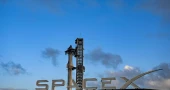
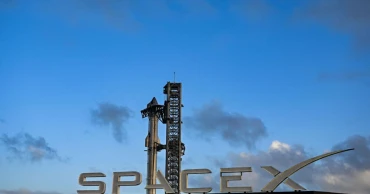
A SpaceX rocket undergoing testing at the company’s Starbase facility in southern Texas exploded late Wednesday, lighting up the night sky with a large fireball.
According to SpaceX, the Starship vehicle suffered a “major anomaly” around 11 p.m. while it was stationed on the test stand in preparation for its tenth flight trial.
Space station leak concerns can delay astronaut visit from India, Poland, Hungary
In a statement shared on X (formerly Twitter), SpaceX confirmed that a safety perimeter was in place during the test and that all staff members were safe and accounted for.
The company, led by CEO Elon Musk, assured that the explosion posed no risk to nearby communities and advised the public against approaching the area. SpaceX added that it is coordinating with local authorities in response to the incident.
8 months ago
What the Shenzhou-20 astronauts are doing after over 50 days in space
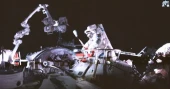
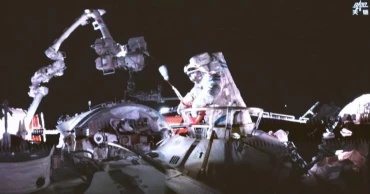
Imagine spending more than 50 days living and working hundreds of miles above the Earth. That has been the real-life experience of China’s Shenzhou-20 astronauts — Chen Dong, Chen Zhongrui, and Wang Jie — aboard the Tiangong Space Station.
Far from a peaceful retreat, their mission has been a busy one. A short video released Monday by China’s state broadcaster CCTV offered a glimpse into their “space business trip,” highlighting a packed schedule filled with scientific experiments, routine health monitoring, and maintenance work — all essential tasks to support future space exploration efforts.
According to a report by CCTV, the three astronauts are in good health, and the various space science experiments are progressing steadily.
Led by experienced astronaut Chen Dong, the crew began their six-month mission after launching into orbit on April 24.
Space station leak concerns can delay astronaut visit from India, Poland, Hungary
Over the past week, they devoted substantial time to space medicine research. During their research, they have explored fundamental aspects of cognitive function in microgravity, focusing on teamwork dynamics, self-awareness in isolation and how astronauts perceive motion, depth, and relationships absent Earth's gravity. These studies are critical for ensuring safe operations during spacewalks and complex tasks.
In addition, they also conducted routine vascular ultrasound scans tracked changes in cardiovascular function over time and used apparatus to capture subtle changes in control and coordination during precise tasks like equipment operation or sample handling, according to the report.
On the front of life science, they focused on the "effects and mechanisms of space microgravity on microorganisms" experiment.
The video showed that in Tiangong's specialized biotechnology experiment rack, the crew observed the growth, developmental patterns, and bioactive compound synthesis of Streptomyces bacteria in weightlessness.
This research is expected to reveal new biological adaptations and potential applications for space-based pharmaceutical research.
The crew carefully sampled liquid cultures, preserving the samples for their eventual journey back to Earth.
Another highlight of their daily routine, in addition to the meticulous space station upkeep, is their rigorous exercise to counter the physical toll of microgravity. The video captures the astronauts running on a treadmill in the space module.
Beyond exercise, the crew undergoes regular checkups like detailed heart monitoring and blood pressure tracking. They also participate in unique health assessments based on traditional Chinese medicine principles, according to the report.
China's space station has now hosted over 200 scientific projects, with nearly 2 tonnes of scientific materials and applied equipment sent to orbit and nearly 100 experimental samples returned to Earth, according to the China Manned Space Agency.
8 months ago
Space station leak concerns can delay astronaut visit from India, Poland, Hungary
A chartered spaceflight for India, Poland and Hungary’s first astronauts in decades has been delayed indefinitely because of leak concerns at the International Space Station.
NASA said Thursday that it wants to monitor the cabin pressure on the Russian side of the orbiting lab before accepting visitors. Officials stressed that the seven astronauts currently at the space station are safe and that other operations up there aren't affected.
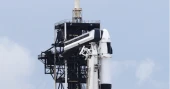
SpaceX was supposed to launch four private astronauts this week on a 14-day space station mission, but bad weather and SpaceX rocket trouble delayed the flight. Then the station leak issue cropped up.
The Russian Space Agency has been dealing with a cabin pressure leak at the station, and recent repairs resulted in what NASA calls “a new pressure signature.” Additional details were not immediately available.
The three Russians aboard the space station recently inspected the inside walls of the aging Zvezda service module, which was launched in 2000. They sealed some areas and measured the current leak rate.
“Following this effort, the segment now is holding pressure,” NASA said in an online update.
Japan's private lunar lander crashes in second failed moon mission
The private mission's delay provides extra time for NASA and the Russian Space Agency “to evaluate the situation” and determine whether more repairs are needed.
The chartered flight was arranged by the Houston company Axiom Space, and was to be Axiom's fourth trip to the space station with paying customers since 2022.
“This is the right thing to do,” Axiom Space's executive chairman Kam Ghaffarian said in a written statement. “We will continue to work with all of our partners to finalize a new launch date.”
8 months ago
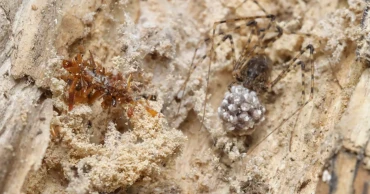
A carnivorous ‘bone collector’ caterpillar dresses in the remains of its prey
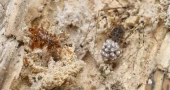
A newly discovered carnivorous caterpillar on the Hawaiian island of Oahu has earned the nickname “bone collector” for its eerie habit of wearing the remains of its prey. This unique insect prowls along spiderwebs, feeding on insects caught in the web and using their body parts—like ant heads and fly wings—to decorate its silk case.
While Hawaii is home to several caterpillars that build protective cases from natural materials like lichen and sand, this is the first known to use the body parts of other insects. “Carnivorous caterpillars already do some wild things, but this one really stands out,” said Dan Rubinoff, a researcher at the University of Hawaii at Manoa.
Google's parent begins year with robust growth despite legal, competitive and economic threats
Scientists believe the bizarre decoration may serve as camouflage, helping the caterpillar avoid detection by the spiders whose webs it raids. The research, published Thursday in Science, reveals that these caterpillars are extremely rare—only 62 have been spotted in over two decades of fieldwork.
Not only do these caterpillars feed on other insects, but they are also cannibalistic, sometimes turning on each other. Their lineage dates back over 6 million years, predating the Hawaiian islands themselves. Today, they cling to survival in a remote mountain forest, threatened by invasive species and habitat loss.
“This discovery highlights the urgent need for stronger conservation efforts,” Rubinoff emphasized.
10 months ago

China prepares for launch of 3-person space station replacement crew
China was making final preparations for the launch on Thursday of a three-person replacement crew for its orbiting space station that will mark a further step toward a possible crewed mission to the Moon and exploration of Mars.
The Shenzhou 20 mission is scheduled to blast off Thursday evening from a launch center in Jiuquan, on the edge of the Gobi Desert in northwestern China, reports AP.
The Tiangong, or “Heavenly Palace,” space station has made China a major contender in space, especially since it was entirely Chinese-built after the country was excluded from the International Space Station over US national security concerns. China's space program is controlled by the People’s Liberation Army, the military branch of the ruling Communist Party.
The addition of mechanical arms to the three-module station has also raised concerns from some that China could use them to disable satellites or other space vehicles during a crisis.
How to catch the shooting stars of spring’s first meteor shower, the Lyrids
Since first launching a man into space in 2003 — becoming only the third country to do so — China's space program has advanced at a steady pace. The space agency has also landed an explorer on Mars and a rover on the less-explored far side of the Moon, and aims to put a person on the Moon before 2030.
The Shenzhou, or “Celestial Vessel,” 20 mission will be commanded by Chen Dong, who is making his third flight. He will be accompanied by fighter pilot Chen Zhongrui and engineer Wang Jie, both making their maiden voyages, according to the China Manned Space Agency.
They will replace three astronauts currently on the Chinese space station. Like those before them, they will stay on board for roughly six months.
The space ship is due to be launched into space atop China's workhorse Long March 2F rocket at 5:17 pm local time (0917 GMT) and reach the Tiangong about 6.5 hours later.
The three-person crew was sent in October last year and they have been in space for 175 days. They are due to return on April 29 after a brief overlap with their replacements. The Tiangong, fully assembled in October 2022, can accommodate up to six people at a time.
While in space, the astronauts will conduct experiments in medical science and new technologies and perform space walks to carry out maintenance and install new equipment, the Manned Space Agency said.
10 months ago
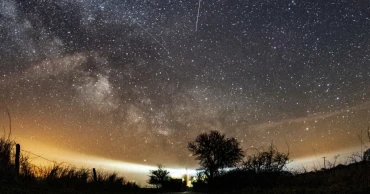
How to catch the shooting stars of spring’s first meteor shower, the Lyrids
Dhaka, April, 21 (AP/UNB)---When the Lyrid meteor shower reaches its peak, it will be spring’s first chance to see shooting stars.
The Lyrids have surprised skygazers in the past with as many as 100 meteors per hour, but it’s not predicted to be as active this time around.
Scientists claim discovery of 'new colour' never seen by humans
During Tuesday morning’s peak, expect to see around six meteors per hour, said Thaddeus LaCoursiere, planetarium program coordinator at the Bell Museum in St. Paul, Minnesota.
The waning crescent moon will be 40% full, meaning a decent level of visibility under clear and dark conditions.
Viewing lasts until April 26. Here’s what to know about the Lyrids and other meteor showers.
What is a meteor shower?
As the Earth orbits the sun, several times a year it passes through debris left by passing comets and sometimes asteroids. The source of the Lyrids is debris from the comet Thatcher.
When these fast-moving space rocks enter Earth’s atmosphere, the debris encounters new resistance from the air and becomes very hot, eventually burning up.
Sometimes the surrounding air glows briefly, leaving behind a fiery tail — the end of a “shooting star.”
You don’t need special equipment to see the various meteor showers that flash across annually, just a spot away from city lights.
How to view a meteor shower
The best time to watch a meteor shower is in the early predawn hours when the moon is low in the sky.
Competing sources of light — such as a bright moon or artificial glow — are the main obstacles to a clear view of meteors. Cloudless nights when the moon wanes smallest are optimal viewing opportunities.
And keep looking up, not down. Your eyes will be better adapted to spot shooting stars if you aren’t checking your phone.
When is the next meteor shower?
The next major meteor shower, the Eta Aquarids, peaks in early May.
END/UNB/AP/MA
10 months ago

‘Flying taxis’ poised to revolutionise urban commuting
The futuristic vision of gliding above traffic in an autonomous "flying taxi" is fast becoming a reality, thanks to the rise of low-altitude economy in China.
At the 5th China International Consumer Products Expo, a dedicated exhibition zone for the low-altitude economy made its debut, featuring companies like EHang Holdings. Ehang, a global leader in urban air mobility (UAM), showed up at the event alongside three unmanned aircraft.
These innovations highlight transformative solutions to urban congestion and offer a glimpse into the future of aerial consumption, Xinhua reports.
Starring at the event was EHang's flagship EH216-S, the world's first and only electric vertical takeoff and landing (eVTOL) aircraft to secure all four certifications required for commercial operation: Type Certificate (TC), Production Certificate (PC), Standard Airworthiness Certificate (AC), and Operational Permit.
Having completed over 66,000 safe flights across 19 countries, including the United States, Japan, UAE and countries in Europe, the pilotless eVTOL is already driving real-world applications in passenger transport, aerial tourism, logistics, and emergency medical services.
The EH216-S achieved a historic breakthrough in March when its affiliated operator received China's first airworthiness certification for crewed UAM services, accelerating global commercialisation.
No sweat: Humanoid robots run a Chinese half-marathon alongside flesh-and-blood competitors
He Tianxing, vice president of EHang, emphasized plans to expand into urban commuting and ultimately achieve fully autonomous low-altitude commercial operations.
The company aims to launch air taxi services as early as this year. Operating from rooftops or designated vertiports, these eVTOLs promise to bypass ground traffic efficiently, doubling as air ambulances or emergency responders.
EHang has already established more than 20 demonstration sites across 16 Chinese cities, including Guangzhou and Shenzhen, and is now eyeing Hainan's unique geography to pioneer low-altitude tourism, island-hopping routes, and intra-city aerial networks.
As low-altitude economy takes flight, EHang's innovations signal a sci-fi-turned-reality era where the skies offer not just escape from gridlock, but a new dimension of smart, sustainable living, He said.
Also at the exhibition, United Aircraft brought the TD550, which obtained the first type certificate for unmanned helicopters in China. "China is entering an era of rapid development of the low-altitude economy," said Zhou Xiaoyue, director of the firm's public relations.
The exhibition aligned with China's broader strategy to advance the low-altitude economy, encompassing UAV, UAM, and other emerging sectors.
The government work report released this March said China will carry out demonstration initiatives on the large-scale application of new technologies, products and scenarios, and promote safe and sound development of emerging industries, including the low-altitude economy.
Many Chinese cities have been moving quickly to establish a foothold in the sector, considering it a new track of industrial development. Mianyang, a city known for its strong scientific and technological foundation in the country's vast western region, has just established a new low-altitude economy research institute.
As China's low-altitude economy takes flight with impressive momentum, the Civil Aviation Administration of China has forecast a significant surge in market value, projecting that the sector would soar from 500 billion yuan (about 69.4 billion U.S. dollars) in 2023 to 1.5 trillion yuan in 2025, and that it could reach an astounding 3.5 trillion yuan by 2035.
10 months ago
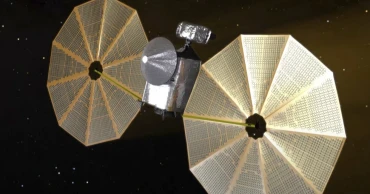
NASA’s Lucy spacecraft is speeding toward another close encounter with an asteroid
NASA’s Lucy spacecraft is gearing up for a close encounter with a small asteroid this weekend, offering scientists a glimpse into the early days of the solar system—and a test run for a bigger journey to come.
Launched in 2021, Lucy is on a 12-year mission to study a total of 11 asteroids, including a rare group known as the Trojans that orbit near Jupiter. Sunday’s flyby marks the second asteroid encounter for the spacecraft and will serve as a trial ahead of its first Trojan asteroid rendezvous in 2027.
AI-enabled drone deployed in Germany to accelerate wildfire detection and response
This weekend, Lucy will pass wihin 596 miles (960 kilometers) of an asteroid named Donaldjohanson, located in the main asteroid belt between Mars and Jupiter. The asteroid is roughly 2.5 miles (4 kilometers) long, though its exact dimensions and shape remain uncertain—a mystery Lucy aims to help solve as it speeds by at over 30,000 mph (48,000 kph).
Donaldjohanson is believed to be a fragment of a much larger object shattered in a cosmic collision around 150 million years ago. Unlike typical round space rocks, scientists suspect this one could have an unusual shape—possibly elongated like a bowling pin or snowman, similar to Arrokoth, the distant Kuiper Belt object NASA explored in 2019. There’s also a chance it could be two separate elongated asteroids.
“We don’t know what to expect. That’s what makes this so cool,” said Hal Levison, the mission’s lead scientist at the Southwest Research Institute. “It’s not going to be a basic potato. We already know that.”
Lucy will power up all three of its science instruments during the flyby to collect images and data. But because the spacecraft must rotate its antenna away from Earth to track the asteroid, no live communication will be possible during the encounter. Scientists at Lockheed Martin’s Mission Control in Colorado expect to begin receiving data roughly 12 minutes after it’s transmitted across the 139 million miles (223 million kilometers) separating Earth from the asteroid.
Among those watching closely will be Donald Johanson, the paleontologist for whom the asteroid is named. He discovered the famous human ancestor “Lucy” in Ethiopia 50 years ago—after whom the spacecraft is named—and plans to be at Mission Control for the flyby.
If all goes as planned, Lucy’s brief encounter with the asteroid will offer valuable practice and insights before it moves on to its ultimate target: the mysterious Trojan asteroids near Jupiter, remnants from the solar system’s formation more than 4 billion years ago.
10 months ago

AI-enabled drone deployed in Germany to accelerate wildfire detection and response
A company that specializes in early wildfire detection has developed a new, AI-based drone it says will help speed up the detection, location and monitoring of fires.
The Silvaguard drone by Dryard Networks was presented Thursday in Eberswalde outside of Berlin as wildfires driven by extreme heat and climate change are becoming a more common, often deadly phenomenon around the globe.
The drone will deliver infrared images, among other things, and works in combination with a fire detection system that the company developed earlier and that's already being used in several countries. The fire detection system, called Silvanet, is designed to detect wildfires at the smoldering stage using solar-powered gas sensors connected via a wireless network.
Each gas sensor can protect an area the size of a football field and be attached to a tree. The plan is that once Silvanet detects a fire, it will trigger a nearby Silvaguard drone to fly to the location and provide detailed images.
ChatGPT’s viral Ghibli-Style images raise AI copyright concerns
“Today we saw a combination of Silvanet — the solar powered gas sensors that detected the fire within minutes — with Silvaguard, the first prototype of an autonomous, an AI enabled drone that we dispatched in response to a fire," said Carsten Brinkschulte, the CEO and co-founder, Dryad Networks.
The drone “flew autonomously to the location of the sensor, detecting the fire, and delivered overhead infrared and optical video from the point of fire,” he said of the newly developed drone.
The company is still waiting to get the go-ahead for the commercial use of Silvaguard drone from authorities.
The information about the fire, including geographic coordinates, video and infrared images, will then be sent to the firefighters who will then know where the fire is spreading and how big it is, which will help them know how many firefighters need to be deployed.
“When it comes to wildfires, time is of the essence, you cannot be fast enough," Brinkschulte said.
11 months ago

China harnesses AI to develop climate-resilient 'Super Crops,' reshaping global agriculture
China is leveraging artificial intelligence (AI) to transform agriculture, particularly in smart breeding, which is paving the way for high-yield, climate-resilient "super crops" that could reshape global food security amid environmental challenges.
At the 2025 Seed Congress, held from March 20 to 23 in Sanya, Hainan Province, smart breeding was a focal point. More than 40 exhibitors presented state-of-the-art technologies and flagship crop varieties, demonstrating how AI-driven breeding is transitioning from concept to reality. Digital exhibits showcased breakthroughs such as AI-powered genomic analysis and cloud-based farm monitoring systems.
Experts at the event highlighted how smart breeding is modernizing traditional techniques into precision agriculture. This transformation is helping to address seed resource constraints, strengthen self-sufficiency in the seed sector, and bolster China's strategic role in the global seed market.
Li Jiayang, an academician at the Chinese Academy of Sciences (CAS), introduced the idea of "intelligent creation of intelligent varieties," emphasizing the integration of AI, biotechnology, and information technology to develop crops that can adapt to environmental conditions.
Another CAS academician, Qian Qian, noted the complexity of crop traits. "Understanding the relationship between genes and traits requires computational power and advanced algorithms," he said. Unlike conventional small-scale breeding, smart breeding follows an industrialized model, pooling extensive resources to efficiently integrate desirable traits.
AI-driven breeding is already yielding significant results. At China National Seed Group, researchers employ a cloud-based system to remotely monitor fields, collecting real-time data on crop health and growth. This allows scientists to address issues promptly and optimize breeding strategies.
One major advancement is in hybrid rice development. Traditionally, breeders tested thousands of combinations to identify a superior hybrid. Now, AI-powered genomic analysis can predict high-yield combinations before field trials commence.
Chinese researchers use Earth science satellite to monitor offshore oil, gas platforms
"We have moved from experience-driven to data-driven breeding," said Li Huihui, deputy director of the National Nanfan Research Institute of the Chinese Academy of Agricultural Sciences.
Another key innovation is "Fengdeng," a seed-focused large language model developed primarily by the Yazhou Bay National Laboratory in Sanya. This AI platform provides expert guidance on breeding, cultivation, and industry trends, equipping farmers and researchers with valuable insights.
Despite these advancements, challenges persist. China's smart breeding sector lags behind global seed industry leaders in data-sharing infrastructure and commercialization. The fragmentation of datasets limits AI’s ability to predict and engineer superior crop varieties.
"Accelerating the development of high-yield, high-quality and climate-resilient 'super varieties' is crucial," Qian said, calling for collaboration among breeding institutions, AI researchers, and agribusinesses to propel smart breeding innovation.
11 months ago