Tech-News
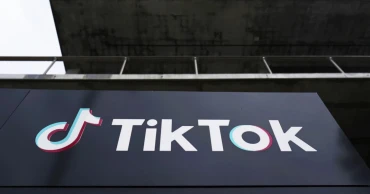
Trump extends TikTok shutdown deadline for fourth time after framework deal with China
President Donald Trump has once again extended the deadline to keep TikTok operational in the United States, pushing it back to December 16 to allow time for finalizing a framework deal reached with China.
The executive order, signed on Tuesday, marked the fourth time Trump has bypassed federal law to prolong the deadline for TikTok’s China-based parent company, ByteDance, to sell its U.S. assets or face a ban. Congress had initially set the deadline for January 19 this year, one day before Trump began his second presidential term.
Speaking to reporters on Tuesday, Trump reiterated that he would discuss the framework with Chinese President Xi Jinping on Friday. He also noted that several companies are interested in acquiring TikTok’s U.S. operations, with details expected to be revealed soon. “I hate to see value like that thrown out the window,” Trump remarked before leaving the White House for a state visit to the United Kingdom with First Lady Melania Trump.
The framework deal emerged after high-level talks in Madrid between U.S. Treasury Secretary Scott Bessent and Chinese Vice Premier He Lifeng. Bessent said the goal was to transfer TikTok’s American operations to U.S. ownership but declined to elaborate on the details.
China’s international trade representative Li Chenggang told reporters that both sides had reached a “basic framework consensus” to resolve TikTok-related issues, reduce investment barriers and expand trade cooperation.
Trump has warmed to the idea of keeping TikTok alive, believing it helped him appeal to younger voters in the 2024 election. However, U.S. lawmakers remain concerned about the app’s potential security risks stemming from its data collection practices.
Analysts caution that the prolonged negotiations may ultimately have limited impact. “The U.S.–China deal on TikTok may look like a breakthrough, but it risks being a Pyrrhic victory,” said Dimitar Gueorguiev, a political science professor at Syracuse University. He noted that TikTok’s once-vaunted algorithm has lost much of its mystique as rivals replicate its features. “Any U.S. buyer is therefore purchasing market share and user base, not transformative technology.”
5 months ago

New York moves forward with rules to curb addictive social media use among minors
New York's Attorney General unveiled proposed regulations on Monday aimed at enforcing a new state law that targets addictive social media content for children and teens, including guidelines for age verification and parental consent.
The Stop Addictive Feeds Exploitation (SAFE) for Kids Act, passed last year, prohibits social media platforms from showing algorithmically curated content to users under 18 without parental approval. Instead, young users would only see posts from accounts they follow.
The law also restricts platforms from sending notifications to minors between 12 a.m. and 6 a.m., a measure intended to reduce late-night screen time.
The proposed rules detail how companies should determine users’ ages and obtain valid parental consent. The Attorney General’s Office said platforms may choose from existing methods of age verification, provided they are both effective and privacy-conscious.
To verify age, companies could request users to upload a photo or confirm an email address or phone number through cross-referencing with existing data, according to the proposed guidelines.
Minors who wish to receive algorithm-driven content or overnight notifications must first allow the platform to seek consent from a parent or guardian.
Supporters argue that personalized feeds, powered by user data and engagement algorithms, contribute to increased social media usage among youth and are linked to rising rates of anxiety and depression.
“Children and teenagers are facing alarming levels of mental health issues, driven in part by addictive social media features,” said Attorney General Letitia James in a statement announcing the proposed rules, which are now open for a 60-day public comment period.
While similar age-verification laws are gaining momentum across the U.S., they have faced pushback from digital rights advocates who raise concerns about user privacy and free expression. Over 20 states have passed such laws, with several currently facing legal challenges.
James’ office acknowledged that platforms like Instagram have already introduced some form of age verification, a development it called encouraging. However, it added that voluntary efforts alone have been insufficient to meet the protective standards set by the SAFE Act.
Once the rules are finalized, social media companies will have 180 days to comply with the new regulations.
5 months ago
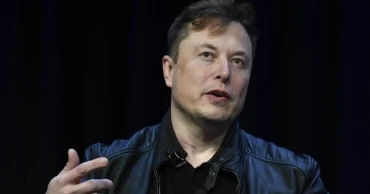
Tesla shares jump as Musk buys $1B stake ahead of shareholder vote on record pay package
Tesla’s stock surged more than 7% in premarket trading on Monday as CEO Elon Musk disclosed the purchase of over 2.5 million shares worth about $1 billion.
According to a regulatory filing, Musk bought the shares on Friday at varying prices, a move analysts say signals his confidence in the company’s future.
The development comes as Tesla prepares for a crucial shareholder vote on a proposed pay package for Musk, which could potentially make him the world’s first trillionaire if a series of highly ambitious performance targets are met over the next decade.
Under the plan, Musk would be awarded shares equal to up to 12% of Tesla in 12 separate tranches if the company achieves milestones including sharp increases in car production, share price and operating profit. The payout, entirely in stock rather than cash, would represent one of the most outsized executive compensation deals in U.S. history.
To unlock the first tranche — equal to 1% of Tesla — Musk would need to lift the company’s valuation to $2 trillion, roughly double its current market capitalization, while meeting other operational goals. Securing the full package would require Tesla to reach a market value of $8.5 trillion, more than twice the worth of Nvidia, the world’s most valuable company today.
The ambitious proposal comes amid mounting challenges for Tesla. Sales have plunged this year, partly due to backlash over Musk’s close alignment with President Donald Trump, while competition from Detroit automakers and Chinese electric vehicle producers has intensified.
Investors have also expressed concern about Musk’s frequent involvement in Washington politics, where he has emerged as one of the most visible members of the Trump administration, particularly in efforts to reduce the size of the federal government.
Tesla’s annual shareholder meeting is scheduled for November 6, when the pay package will be put to a vote.
5 months ago

China launches semiconductor probes ahead of US trade talks in Madrid
China on Saturday announced two investigations targeting the U.S. semiconductor sector, ahead of upcoming trade talks in Spain addressing trade, national security, and TikTok ownership.
China’s Ministry of Commerce said it has opened an anti-dumping probe into certain analog IC chips imported from the U.S., including commodity interface IC chips and gate driver IC chips, typically produced by firms like Texas Instruments and ON Semiconductor. Separately, the ministry announced an anti-discrimination investigation into U.S. actions affecting China’s chip industry.
The move comes ahead of U.S. Treasury Secretary Scott Bessent’s meeting with Chinese Vice Premier He Lifeng in Madrid between Sunday and Wednesday. A Chinese commerce spokesperson said U.S. measures such as export restrictions and tariffs aim to “contain and suppress China’s development” in high-tech industries, including advanced chips and artificial intelligence.
Read: Semiconductor industry creating jobs for Bangladeshi graduates
The announcement follows the U.S. adding 23 Chinese firms to its “entity list” on Friday for alleged threats to national security and foreign policy, including two accused of acquiring chipmaking equipment for SMIC.
The Madrid talks continue a series of negotiations in Geneva, London, and Stockholm this year, aimed at easing trade tensions and delaying higher tariffs.
Source: Agency
5 months ago

Nepal’s internet crackdown reflects global trend of restricting online freedoms
Nepal’s recent ban on major social media platforms — which triggered widespread protests and led to the deaths of at least 19 people — is part of a broader global pattern of declining internet freedom, even in democratic nations, as governments attempt to tighten control over digital spaces.
The Nepalese government blocked access to platforms like Facebook, X (formerly Twitter), and YouTube last week, citing the companies’ failure to register locally as required by new rules. Though the ban was reversed on Tuesday following deadly unrest, the move reflects a growing global strategy to regulate — and in many cases suppress — online expression.
Aditya Vashistha, a Cornell University assistant professor specializing in information science, said the situation in Nepal is consistent with broader efforts seen across South Asia, including in India, Pakistan, and Bangladesh. “Governments are increasingly trying to control narratives and restrict the flow of information,” he noted. “This is a well-worn playbook.”
Push for Local Oversight
Like its neighbors, Nepal has demanded that tech companies set up local representatives and comply with national laws meant to monitor and regulate online content. Officials argue these measures promote accountability, but critics say they’re designed to silence dissent and censor opposition voices online.
Kian Vesteinsson of Freedom House, a U.S.-based nonprofit focused on democracy and human rights, acknowledged that governments have a legitimate interest in setting rules for digital platforms. “It’s reasonable to want regulation,” he said. “But broad shutdowns like Nepal’s cause massive harm — cutting off millions of people from essential tools used for communication, education, business, and healthcare.”
A Global Pattern of Declining Internet Freedom
According to Freedom House, 2024 marked the 14th consecutive year of worsening internet freedom globally. Authoritarian measures are rising, and more people are being arrested simply for sharing political or religious views online. China remains the most restrictive environment for internet use, with Myanmar also ranked at the bottom. While Nepal wasn't specifically analyzed, similar trends are emerging there.
In India, a 2023 telecommunications law granted the government wide-reaching powers to monitor and restrict online communication. Previous laws also brought digital platforms under direct government oversight, officially to combat misinformation and hate speech. However, critics argue these laws are used to suppress dissent.
Pakistan’s parliament passed a bill in early 2024 that gives the government even greater control over social media, including the ability to imprison users for spreading so-called disinformation.
Internet Freedom as a Democratic Pillar
Freedom House emphasizes that unrestricted online access is vital for modern democracy. The ability to share and receive information freely underpins democratic engagement. Yet, more and more governments are using regulations — often justified as efforts to combat crime, protect children, or prevent fraud — to limit freedom of expression.
Vesteinsson pointed out contradictions within the proposed Nepali regulations. For instance, while the law targets serious issues like human trafficking, it also includes provisions to ban anonymous posting, a critical tool for activists and whistleblowers.
The Committee to Protect Journalists condemned Nepal’s social media ban, saying it not only undermines free speech but also obstructs journalists’ work and the public’s right to access information.
VPN Usage Soars, But It’s No Cure-All
In response to the restrictions, use of VPNs (virtual private networks) has surged in Nepal. According to encrypted services provider Proton, VPN signups in Nepal rose by 8,000% since September 3. VPNs allow users to bypass geographic restrictions by masking their location.
However, Vashistha cautioned that VPNs are not a perfect solution. They can be costly, reduce internet speed, and may not be accessible to everyone, especially in low-income areas.
Major tech companies — including Google (YouTube), Meta (Facebook, Instagram, WhatsApp), and X — have not commented on the Nepal situation. TikTok, which registered with the government, remains operational.
Vesteinsson urged these platforms to take stronger measures to protect user data, particularly for human rights activists and others vulnerable to government surveillance.
“It’s critical that these platforms prioritize user safety, especially in repressive environments,” he said.
5 months ago


Anthropic agrees to $1.5 billion settlement with authors over pirated books used in AI training
Artificial intelligence startup Anthropic has agreed to pay $1.5 billion to settle a lawsuit brought by book authors who accused the company of using pirated copies of their works to train its chatbot, Claude.
If approved by a San Francisco federal judge on Monday, the deal would mark a landmark moment in ongoing copyright disputes between AI developers and creative professionals, including writers, artists and publishers.
Under the settlement, Anthropic will pay authors and publishers about $3,000 per book for an estimated 500,000 works. It is believed to be the largest copyright payout ever secured.
“This is the first of its kind in the AI era,” said Justin Nelson, a lawyer for the authors.
The case was originally filed last year by thriller writer Andrea Bartz and nonfiction authors Charles Graeber and Kirk Wallace Johnson, later expanding to cover a wider class of authors and publishers.
Court records show Anthropic downloaded more than 7 million books from pirate sites including Books3, Library Genesis and Pirate Library Mirror. A federal judge previously ruled that while training AI on copyrighted books may qualify as “fair use,” the company illegally obtained the material.
Nepal blocks Facebook, X, YouTube Over failure to register with govt
As part of the settlement, Anthropic has agreed to destroy the pirated book files.
The Authors Guild welcomed the outcome, calling it a “strong message to the AI industry” about the risks of exploiting creative works without permission.
The agreement could influence ongoing lawsuits against OpenAI, Microsoft, Meta, and other AI firms.
Anthropic, founded in 2021 by former OpenAI executives, is valued at $183 billion and expects $5 billion in sales this year, though it has yet to turn a profit.
Source: Agency
6 months ago
Nepal blocks Facebook, X, YouTube Over failure to register with govt
Nepal's government said Thursday it is blocking most social media platforms including Facebook, X and YouTube because the companies failed to comply with regulations that required them to register with the government.
Nepal's Minister for Communication and Information Prithvi Subba Gurung said about two dozen social network platforms that are widely used in Nepal were repeatedly given notices to come forward and register their companies officially in the country. The platforms would be blocked immediately, he said.
TikTok, Viber and three other social media platforms would be allowed to operate in Nepal because they have registered with the government.
Nepal government have been asking the companies to appoint a liaison office or point in the country. It has brought a bill in parliament that aims to ensure that social platforms are properly managed, responsible and accountable.
The bill, which has not yet been fully debated in parliament, has been widely criticized as a tool for censorship and punishing opponents who voice their protests online. Rights groups have called it an attempt by the government to curb freedom of expression and violate citizens’ fundamental rights.
Officials have said it was necessary to bring laws to monitor the social media and ensure that both the users and operators were responsible and accountable of what they share and what is being published or said on these platforms.
6 months ago

Trump to dine with top tech leaders at White House — Musk left off guest list
President Donald Trump will host a dinner with some of the world’s most influential tech executives at the White House on Thursday evening, though Elon Musk will not be among them.
According to the White House, attendees include Microsoft cofounder Bill Gates, Apple CEO Tim Cook, Meta’s Mark Zuckerberg, Google founder Sergey Brin, CEO Sundar Pichai, Microsoft CEO Satya Nadella, OpenAI’s Sam Altman and Greg Brockman, Oracle’s Safra Catz, and several others from the AI and tech sectors.
Musk, once close to Trump and tapped to lead the Department of Government Efficiency, split with the president earlier this year. The break reportedly stemmed from Trump’s revocation of Musk associate Jared Isaacman’s NASA nomination.
Court rules Trump’s use of emergency powers for tariffs was Illegal
The dinner will be held on Trump’s newly remodeled Rose Garden patio, which now resembles the outdoor setup at his Mar-a-Lago resort.
White House spokesman Davis Ingle described it as “the hottest place to be in Washington, or perhaps the world.”
The gathering follows a meeting of the administration’s new Artificial Intelligence Education task force, chaired by First Lady Melania Trump, aimed at promoting AI learning for American youth
Source: Agency
6 months ago
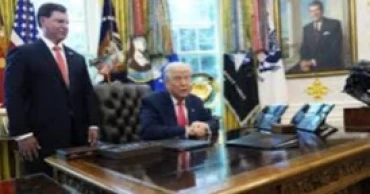
Social security official resigns after blowing the whistle on data mishandling by DOGE
A senior Social Security Administration (SSA) official has stepped down after filing a whistleblower complaint accusing the Department of Government Efficiency (DOGE) of mismanaging highly sensitive personal data belonging to millions of Americans.
Charles Borges, the SSA’s Chief Data Officer, alleged that DOGE officials exposed the Social Security data of over 300 million Americans by uploading it to a cloud platform that lacked proper oversight. He submitted his complaint to the Office of Special Counsel on Tuesday.
In his resignation letter addressed to SSA Commissioner Frank Bisignano, Borges said that, since filing the complaint, his ability to carry out his responsibilities in a “legal and ethical” manner has been compromised. He cited emotional, physical, and mental distress, along with a hostile work environment marked by isolation, retaliation, and fear.
“After raising internal concerns and alerting regulators about significant risks to our citizens' most sensitive information, I have faced exclusion and internal conflict, making my work environment unbearable,” he wrote.
The Project Government Accountability Office, which represents Borges in the whistleblower case, published his resignation letter online Friday. Borges did not speak to the media, but his lawyer Andrea Meza stated that he resigned because he could no longer, in good conscience, remain at the SSA. She added that he plans to continue cooperating with oversight authorities.
In his complaint, Borges warned that the data compromised by DOGE could include medical records, income details, banking information, family relationships, and other personal identifiers.He stressed the potential consequences:“If bad actors were to access this cloud system, Americans could face widespread identity theft, loss of crucial health or food benefits, and the government might be forced to reissue Social Security numbers to everyone — a move that would be extremely costly.”
Borges had held the Chief Data Officer role since January.
The Social Security Administration did not comment on his resignation or the accusations outlined in his letter.
Under former President Donald Trump, DOGE was granted expanded access to vast amounts of personal data as part of its mission to root out waste, fraud, and abuse. The department has been criticized for overreach, and earlier this year, labor and retiree organizations sued the SSA for giving DOGE access to private data. A divided appeals court recently ruled in favor of DOGE, allowing continued access.
6 months ago