Tech-News
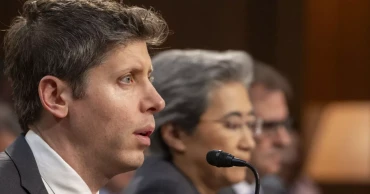
OpenAI CEO Sam Altman and other US tech leaders testify to Congress on AI competition with China
OpenAI CEO Sam Altman and executives from Microsoft and chipmaker Advanced Micro Devices testified on Capitol Hill about the biggest opportunities, risks and needs facing an industry which lawmakers and technologists agree could fundamentally transform global business, culture and geopolitics.
The hearing comes as the race to control the future of artificial intelligence is heating up between companies and countries. Altman's OpenAI is in a furious race to develop the best artificial intelligence model against tech rivals like Alphabet and Meta, as well as against those developed by Chinese competitors.
“I believe this will be at least as big as the internet, maybe bigger,” Altman said in his opening remarks about AI’s potential to transform society. “For that to happen, investment in infrastructure is critical.” Altman urged senators to help usher in the “dual revolutions” of artificial intelligence and energy production that “will change the world we live in, I think, in incredibly positive ways.”
The witnesses included Altman; Lisa Su, chief executive of semiconductor maker AMD; Michael Intrator, co-founder of AI cloud computing startup CoreWeave; and Brad Smith, vice chair and president of Microsoft. The four executives unanimously urged lawmakers to help streamline policy for AI-related projects and fundraising.
The hearing spanned topics ranging from industry debates over chip performance, jobs, human relationships and power generation to grander questions about the global competition with China and the European Union.
“China aims to lead the world in AI by 2030,” said Sen. Ted Cruz, chair of the Senate Commerce, Science and Transportation Committee. “In this race, the United States is facing a fork in the road. Do we go down the path that embraces our history of entrepreneurial freedom and technological innovation? Or do we adopt the command and control policies of Europe?”
Senators were broadly sober in their questioning and united in their concern that the U.S. maintain its dominance in artificial intelligence. Lawmakers from both parties also raised concerns over cybersecurity, data privacy and AI's ability to create content that could confuse or mislead people.
Some partisan fighting did arise. Sen. Bernie Moreno, an Ohio Republican, pressed Su and Smith on whether the Biden administration’s sustainable energy policies hindered the goal of producing more power for AI-related infrastructure.
And Sen. Tammy Duckworth, an Illinois Democrat, criticized cuts by President Donald Trump and billionaire Elon Musk to federal funding for research and to agencies like the Energy Department’s national laboratories and National Science Foundation, painting them as “a self sabotaging attack.”
“Does anyone truly have confidence that had DOGE been around decades ago, they would not have cut the project that created the internet as an example of wasteful, publicly funded research and development?” asked Duckworth.
Google invests in nuclear power with Elementl Power to fuel AI energy needs
But despite some barbs, the hearing maintained a low-key tenor and some bipartisan joking as lawmakers and executives discussed the potential of a technology all present agreed would determine humanity's future.
“Look, there is a race, but we need to understand what we’re racing for,” Sen. Brian Schatz, a Hawaii Democrat, told the witnesses. “It’s not just a sort of commercial race, so we can edge out our nearest competitor in the public sector or the private sector. We’re trying to win a race so that American values prevail.”
Trade policy and AI
Several of the executives warned against U.S. export controls that could end up pushing other countries toward China’s AI technology.
“We totally understand as an industry the importance of national security,” Su said. But she added, if not able to “have our technology adopted in the rest of the world, there will be other technologies that will come to play.” Those technologies are less advanced today but will mature over time, she said.
Altman drew a direct connection between the ability of the U.S. to attract global talent and sell its products globally to national security and its international influence.
“The leverage and the power the U.S. gets from having iPhones be the mobile device people most want, and Google being the search engine that people most want around the world is huge,” Altman said. “We talk maybe less about how much people want to use chips and other infrastructure developed here, but I think it’s no less important, and we should aim to have the entire U.S. stack be adopted by as much of the world as possible.”
Trade rivalry between the U.S. and China has been weighing heavily on the AI industry, including California-based chipmakers Nvidia and AMD.
The Trump administration announced in April that it would restrict sales of Nvidia’s H20 chips and AMD’s MI308 chips to China.
Nvidia has said the tighter export controls will cost the company an extra $5.5 billion. AMD said after reporting its quarterly earnings this week that it will cost the firm $1.5 billion in lost revenue over the coming months.
Motorola Edge 60 Pro Review: Know the Pros and Cons
Still uncertain are additional AI chip controls set by former President Joe Biden’s administration that are set to take effect next week targeting more than 100 countries, including a number of U.S. allies. The policy drew strong opposition from Nvidia and other tech companies, while it was supported by others, including AI company Anthropic, as a way to prevent China’s “sophisticated smuggling operations” to obtain chips from shell companies in third countries.
The Commerce Department said in an email Thursday that Trump plans to replace Biden’s “overly complex, overly bureaucratic” rule with a simpler one but didn’t say when.
AI data center expansion and state competition
The day before the hearing, Altman visited the Abilene, Texas, site of the massive Stargate data center project being built for OpenAI in collaboration with Oracle and other partners. The site was chosen for its potential access to a variety of energy resources, including wind and solar power.
Altman, during the hearing, said that Texas had been “unbelievable" in incentivizing major AI projects. “I think that would be a good thing for other states to study,” Altman said. He predicted that the Abilene site would be the “largest AI training facility in the world.”
But Altman also later cautioned against a patchwork regulatory framework for AI.
“It is very difficult to imagine us figuring out how to comply with 50 different sets of regulations,” said Altman. “One federal framework that is light touch, that we can understand, and it lets us move with the speed that this moment calls for, seems important and fine.”
While the tech industry has long relied on data centers to run online services, from email and social media to financial transactions, new AI technology behind popular chatbots and generative AI tools requires even more powerful computation to build and operate.
A report released by the Department of Energy late last year estimated that the electricity needed for data centers in the U.S. tripled over the past decade and is projected to double or triple again by 2028 when it could consume up to 12% of the nation’s electricity.
9 months ago
Google invests in nuclear power with Elementl Power to fuel AI energy needs
Tech giant Google has teamed up with Elementl Power to develop three advanced nuclear energy sites, as the demand for electricity driven by artificial intelligence continues to surge.
Announced on Wednesday, the collaboration will see Google invest in projects expected to generate 600 megawatts of power each, AP reports.
Although the total investment amount was not disclosed, the partnership underscores the growing role of nuclear energy in supporting AI-driven infrastructure.
“Our collaboration with Elementl Power enhances our ability to move at the speed required to meet this moment of AI and American innovation,” said Amanda Peterson Corio, Google’s head of data centre energy.
The two companies plan to work closely with utility providers and regulated power firms to identify and develop additional nuclear energy projects.
“We look forward to working with Google to execute these projects and bring safe, carbon-free, baseload electricity to the grid,” said Chris Colbert, Chairman and CEO of Elementl Power.
US expands attempt to blow up Google with proposed teardown of its ad technology
As AI technology evolves and expands, so too does its appetite for power, prompting states across the US to position themselves as energy hubs for the tech industry. Policymakers are increasingly backing nuclear energy initiatives, offering incentives and easing regulations to attract investment.
In 2023, 25 US states passed laws promoting advanced nuclear power, while more than 200 pro-nuclear bills have been introduced in state legislatures this year, according to the Nuclear Energy Institute.
Amid growing interest in carbon-free, reliable electricity, tech companies are investing in next-generation nuclear technologies. Amazon revealed in October that it would support small modular reactors, just days after a similar announcement from Google.
In another notable development, Constellation Energy — owner of the defunct Three Mile Island nuclear facility — said in September that it aimed to restart the plant to supply electricity to Microsoft’s data centres. The site, located near Harrisburg, Pennsylvania, was the scene of the United States' most serious nuclear accident in 1979.
In addition to nuclear, Amazon, Google and Microsoft have been actively funding wind and solar energy projects to diversify their low-emission power sources.
Elementl Power was established in 2022.
9 months ago
US expands attempt to blow up Google with proposed teardown of its ad technology
The U.S. Justice Department is doubling down on its attempt to break up Google by asking a federal judge to force the company to part with some of the technology powering the company's digital ad network. The proposed dismantling coincides with an ongoing federal effort to separate Google's Chrome browser from its dominant search engine.
The government's latest proposal was filed late Monday in a Virginia federal court two-and-half weeks after a federal judge ruled that its lucrative digital ad network has been improperly abusing its market power to stifle competition to the detriment of online publishers.
In a 17-page filing, Justice Department lawyers argued that U.S. District Judge Leonie Brinkema should punish Google by ordering the company to offload its AdX business and DFP ad platform, tools that bring together advertisers, who want to market their products, and publishers, who want to sell commercial space on their sites, to bring in revenue.
The government also is seeking other restrictions, including a 10-year ban on Google from operating a digital ad exchange, to undercut the power of a “recidivist monopolist.”
Not surprisingly, it's an idea that Google vehemently plans to oppose when the penalty phase of the antitrust case —known as remedy hearings — begins in late September. Google already has vowed to appeal Brinkema's ruling that the technology powering the ad network has been breaking the law, but can't do that until the judge rules on its punishment in a decision expected late this year or early next year.
‘AI will replace your job, including mine’, warns Fiverr CEO
The Justice Department's proposal “would cause economic chaos and technological dysfunction resulting in harm to millions of advertisers and publishers, and in so doing, degrade the experience of internet users,” Google said in a court filing late Monday.
In its counterproposal, Google outlined a plan that it believes will bring more transparency to its ad network and eventually foster more competition. Google proposed the appointment of a trustee to oversee its behavior for three years.
The attempt to tear down Google's ad network comes on top of the Justice Department's ongoing effort to have the company part with its popular Chrome browser and impose other restrictions to curtail the power of its ubiquitous search engine, which another federal judge branded an illegal monopoly in a ruling last August.
The remedy hearings in the search case are scheduled to conclude later this month, with a ruling from U.S. District Judge Amit Mehta expected by Labor Day.
If the Justice Department is able to persuade the two different judges to order its proposed dismantling of Google, it would be the biggest breakup of a U.S. company since AT&T was forced to spin off its phone service into seven separate regional companies more than 40 years ago.
Google's Play Store for apps running on its Android software that powers most of the world's smartphones also was declared an illegal monopoly by a federal jury in 2023 and is battling a judge's order that would require it to overhaul a commission system that generates billions of dollars in annual revenue.
But hobbling its search engine and digital ad network would be far bigger blows because they are the key cogs in a business that generated $265 billion in revenue last year.
Google is confronting the breakup threats at the same time the advent of artificial intelligence is changing the way consumers are using technology and seeking information online — a shift that could also siphon traffic and money away from a powerhouse that began in a Silicon Valley garage in 1998.
OpenAI reverses course and says its nonprofit will continue to control its business
Despite the adversity, Google is still delivering robust financial growth to its corporate parent Alphabet Inc., which is currently valued at $2 trillion.
Alphabet's share dipped by less than 1% Tuesday to close at $163.20.
10 months ago

‘AI will replace your job, including mine’, warns Fiverr CEO
In a strikingly candid internal message that has now gone viral, Fiverr CEO Micha Kaufman has issued a stark warning about the accelerating impact of artificial intelligence (AI) on the global workforce.
His bold assertion? AI is poised to replace a significant number of white-collar jobs — including, he says, his own.
The email, originally intended for Fiverr employees and later shared online by Neatprompts CEO Aadit Sheth, has ignited widespread discussion among professionals. It signals a dramatic shift in how top tech leaders view the pace and scope of AI-driven disruption across industries.
“AI is coming for your jobs. Heck, it’s coming for my job too,” Kaufman wrote, laying bare the reality many businesses are beginning to confront.
Eight Roles on the Line
Kaufman identified eight job categories that he believes are most at risk of being eliminated or fundamentally reshaped by AI:
ProgrammersDesignersProduct ManagersData ScientistsLawyersCustomer Support ProfessionalsSalespersonsFinance Professionals“It doesn’t matter if you are a programmer, designer, product manager, data scientist, lawyer, customer support, salesperson or a finance person — AI is coming for you,” he emphasised.
According to Kaufman, tasks once thought to be ‘hard’ are being made easier by AI, while ‘easy’ tasks are being fully automated. This shift, he argues, will render many current skillsets obsolete unless professionals take urgent action.
Adapt or Be Left Behind
Rather than sounding an alarmist note, Kaufman positioned his warning as a wake-up call. He urged workers to embrace the change and begin upskilling immediately by learning how to integrate AI tools into their workflows.
He cited a few examples of AI applications transforming various sectors:
Cursor for codingIntercom Fin for customer supportLexis+ AI for legal workHe also advised employees to become proficient in using large language models (LLMs) and to learn prompt engineering — a skill he now sees as essential for navigating the new world of work. His most provocative remark? “Google is dead,” suggesting that traditional search and knowledge discovery methods are being replaced by AI-powered interactions.
AI Before Expansion
Kaufman’s message concluded with a recommendation to business leaders: before considering increasing headcount, companies should focus on enhancing productivity by integrating AI into existing teams. For him, this is no longer a question of choice but of survival.
“Exceptional talent and prompt engineering are the new must-have skills,” he wrote, reflecting a growing sentiment within tech leadership circles that AI literacy will soon become a baseline requirement.
A Tipping Point for the Workforce
The viral nature of Kaufman’s message has sparked debate across social platforms. Some argue that his predictions are overly dire, while others applaud his candour and proactive stance. Regardless of where one stands, the broader consensus is clear: the AI revolution is not a distant threat — it is here, now, and moving fast.
Firefox could vanish if Google loses antitrust battle: Mozilla
As companies scramble to redefine roles and responsibilities in the age of AI, professionals face an urgent choice — adapt or risk being left behind.
Source: With inputs from India Today
10 months ago

Firefox could vanish if Google loses antitrust battle: Mozilla
Imagine a world with no Firefox. That could be our future — and not because people stopped using it, but because of a major legal battle in the US.
Mozilla, the non-profit behind Firefox, just dropped a bombshell: If Google is forced to break up its business, Firefox might not survive. Why? Because Google pays Mozilla to be the default search engine on Firefox — and that deal covers 85% of Mozilla’s revenue!
“If we lose that funding, we’d have to make massive cuts,” said Mozilla’s CFO Eric Muhlheim. That means fewer engineers, slower updates, and possibly the end of Firefox as we know it. And it's not just about the browser — Mozilla’s open-source and climate tech projects would also take a hit.
This comes as the US government tries to rein in Google’s dominance, possibly by forcing it to sell off its Chrome browser. But Mozilla warns: “You might break one monopoly, but you’ll kill the competition with it.”
Apple, Firefox tools aim to thwart Facebook, Google tracking
Here’s the twist: Firefox runs on its own browser engine called Gecko — the only one not controlled by a tech giant. If it disappears, the entire internet becomes even more dependent on Google and Apple.
Judge Amit Mehta asked if a world with more strong search engines would help. Mozilla’s answer? Absolutely. But until that world exists, losing the Google deal could be fatal.
No Google. No Firefox. No real choice online.
Be aware. Big tech changes can have unexpected consequences.
#SaveFirefox #TechNews #GoogleTrial #Mozilla #Firefox #OpenWeb #BigTech #Antitrust #InternetFreedom
Would you like a shorter version for Instagram or a carousel format?
Source: With inputs from India Today
10 months ago
Irish watchdog fines TikTok €530m over data transfers to China
European Union privacy watchdogs fined TikTok 530 million euros ($600 million) on Friday after a four-year investigation found that the video sharing app's data transfers to China breached strict data privacy rules in the EU.
Ireland's Data Protection Commission also sanctioned TikTok for not being transparent with users about where their personal data was being sent and it ordered the company to comply with the rules within six months, AP reports.
The Irish national watchdog serves as TikTok's lead data privacy regulator in the 27-nation EU because the company's European headquarters is based in Dublin.
“TikTok failed to verify, guarantee and demonstrate that the personal data of (European) users, remotely accessed by staff in China, was afforded a level of protection essentially equivalent to that guaranteed within the EU,” Deputy Commissioner Graham Doyle said in a statement.
TikTok said it disagreed with the decision and plans to appeal.
The company said in a blog post that the decision focuses on a “select period” ending in May 2023, before it embarked on a data localization project called Project Clover that involved building three data centres in Europe.
Microsoft and Meta Platforms lead Wall Street higher
“The facts are that Project Clover has some of the most stringent data protections anywhere in the industry, including unprecedented independent oversight by NCC Group, a leading European cybersecurity firm," said Christine Grahn, TikTok's European head of public policy and government relations. “The decision fails to fully consider these considerable data security measures.”
TikTok, whose parent company ByteDance is based in China, has been under scrutiny in Europe over how it handles personal information of its users amid concerns from Western officials that it poses a security risk over user data sent to China. In 2023, the Irish watchdog also fined the company hundreds of millions of euros in a separate child privacy investigation.
The Irish watchdog said its investigation found that TikTok failed to address “potential access by Chinese authorities” to European users' personal data under Chinese laws on anti-terrorism, counter-espionage, cybersecurity and national intelligence that were identified as "materially diverging" from EU standards.
Grahn said TikTok has “has never received a request for European user data from the Chinese authorities, and has never provided European user data to them.”
Under the EU rules, known as the General Data Protection Regulation, European user data can only be transferred outside of the bloc if there are safeguards in place to ensure the same level of protection.
10 months ago
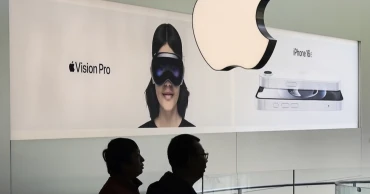
Apple posts stronger-than-expected Q2 results, says majority of US iPhones sold will come from India
Apple CEO Tim Cook said Thursday that the majority of iPhones sold in the U.S. in the current fiscal quarter will be sourced from India, while iPads and other devices will come from Vietnam as the company works to avoid the impact of President Trump's tariffs on its business.
Apple's earnings for the first three months of the year topped Wall Street's expectations thanks to high demand for its iPhones, and the company said tariffs had a limited effect on the fiscal second quarter's results.
Cook added that for the current quarter, assuming things don't change, Apple expects to see $900 million added to its costs as a result of the tariffs, but Cook said the company remains “confident” in this business.
The Cupertino, California-based company earned $24.78 billion, or $1.65 per share, in the first three months of the year, up 4.8% from $23.64 billion, or $1.53 per share, in the same period a year earlier.
Revenue rose 5.1% to $95.36 billion from $90.75 billion.
Analysts, on average, were expecting earnings of $1.62 per share on revenue of $94.19 billion, according to a poll by FactSet.
The numbers for the January-March period provide a snapshot of how Apple was faring before President Trump's unveiling of sweeping tariffs in April that rattled the financial markets amid fears a trade war would reignite inflation and shove the U.S. economy into a recession.
“While it is likely that some of the sales growth was driven by consumers accelerating purchases ahead of expected tariff increases, margins remained healthy on the other side of the balance sheet,” said Thomas Monteiro, an analyst at Investing.com. He added that the company “still has room for maneuver” regardless of the economic backdrop and will “likely not need to significantly deplete cash reserves to keep moving the needle.”
Court sides with Fortnite maker Epic as Apple sanctioned for defying order in App Store case
Apple’s reliance on Chinese factories to make its iPhones and other devices thrust the technology trendsetter into the crosshairs of Trump’s trade war. The exposure caused Apple’s stock price to plunge 23% shortly after the president announced the severity of the reciprocal tariffs, temporarily erasing $773 billion in shareholder wealth in the process.
Most of those losses have since been recovered after Trump temporarily exempted iPhones and other electronics from the reciprocal tariffs, but Apple’s stock remains down by nearly 5% since the April fusillade of tariffs.
Besides the trade war, Apple has been hurt by its inability to live up to its own hype surrounding artificial intelligence features on the iPhone 16 lineup that came out last fall.
The technology wasn’t ready when the iPhone 16 went on sale. Some AI features have rolled out in parts of the world as part of software updates, but Apple still hasn’t been able to live up to its original promise to make Siri smarter and more versatile. The missteps prompted Apple to pull advertising campaigns promoting AI breakthroughs on the iPhone, although the company still intends to release more features powered by the technology at some point.
Apple had been counting on its late entry into the AI craze to revive demand for the iPhone after last year’s sales dipped 2% from 2023’s levels. Apple said Wednesday that its phone sales climbed 1.9% to $46.84 billion for the first three months of the year. Wall Street had expected iPhone sales of $45.62 billion.
But the company continues to see its China business decline, with revenue from the Greater China region down 2.3% to $16 billion for the quarter. Other regions, including the Americas, Europe and the rest of Asia, saw sales increases.
When Trump initially indicated his 145% tariffs on Chinese-made goods would apply to the iPhone, U.S. consumers rushed to stores to buy new devices rather than risk prices spiking higher after the duties began driving up costs. But the flurry of panic buying won't show up until Apple reports its results for the April-June quarter this summer.
EU fines Apple 500 million euros, Meta 200 million in digital cases
Trump's trade war has ramped up the pressure on Cook to work the same diplomatic sleight of hand that enabled the iPhone to avoid being stung by the China tariffs that the president imposed during his first administration.
Cook signaled his intention remain on good terms with Trump by arranging private meetings with him and personally donating $1 million to the president's second inauguration ceremony before sitting on the dais when Trump was sworn into office on January 20. Apple subsequently announced plans to invest $500 billion in the U.S. while hiring 20,000 workers during the next four years.
Trump's trade war also is prompting a push to Apple to shift all the production of the iPhones that it sells in the U.S. from China to India, where the company has been building up its supply chain for the past seven years, according to a recent story in the Financial Times. But the complicated logistics of making such a huge move likely couldn't be completed until next year, at the earliest, leaving Apple vulnerable to the vagaries of Trump's trade war.
Apple's stock fell $5.81, or 2.7%, to $207.51 in after-hours trading.
10 months ago

Microsoft and Meta Platforms lead Wall Street higher
Microsoft and Meta Platforms are driving Wall Street higher on Thursday after profits for the Big Tech companies at the start of the year turned out to be even bigger than analysts expected.
The S&P 500 was up 1% and heading for an eighth straight gain, which would be its longest winning streak since August, AP reports.
The Dow Jones Industrial Average was up 248 points, or 0.6%, as of 10:20 a.m. Eastern time, and the Nasdaq composite was 1.8% higher.
Microsoft jumped 9% after the software giant said strength in its cloud computing and artificial intelligence businesses drove its overall revenue up 13% from a year earlier.
Meta, the parent company of Facebook and Instagram, also topped analysts’ targets for revenue and profit in the latest quarter. It said artificial intelligence tools helped boost its advertising revenue, and its stock climbed 5.3%.
CVS Health, Carrier Global and a bevy of other companies also joined the stream of better-than-expected profit reports that have helped steady Wall Street over the last week. The S&P 500 is back to within 8.5% of its record set earlier this year, after briefly dropping nearly 20% below the mark.
Court sides with Fortnite maker Epic as Apple sanctioned for defying order in App Store case
Still, plenty of uncertainty remains about whether President Donald Trump’s trade war will force the economy into a recession. A couple mixed reports on the U.S. economy Thursday followed up on several recent updates that have suggested it's weaker than expected.
One of Thursday's reports said more US workers filed for unemployment benefits last week than economists had forecast, setting the stage for a more comprehensive report on the job market arriving Friday.
A separate update said US manufacturing activity was better last month than economists expected, though it still contracted again.
And even though companies have been reporting better profits for the first three months of the year than analysts expected, many CEOs are remaining cautious about the rest of the year.
10 months ago

Court sides with Fortnite maker Epic as Apple sanctioned for defying order in App Store case
A federal judge has strongly rebuked Apple, finding that the iPhone maker willfully violated a court injunction in an antitrust case filed by Fortnite maker Epic Games.
U.S. District Judge Yvonne Gonzalez Rogers had ordered Apple to lower the barriers protecting its previously exclusive payment system for in-app digital transactions and allow developers to display links to alternative options. On Wednesday she found that Apple violated a 2021 injunction that, she wrote, sought to “restrain and prohibit the iPhone maker’s anticompetitive conduct” and pricing.
“Apple’s continued attempts to interfere with competition will not be tolerated,” Gonzalez Rogers said in the ruling, which held Apple in contempt.
She ordered that Apple “no longer impede developers’ ability to communicate with users nor will they levy or impose a new commission on off-app purchases.”
Epic CEO and founder Tim Sweeney said on X the company will return Fortnite to Apple's U.S. App Store next week.
Apple did not immediately respond to a request for comment.
Meta launches AI app, Zuckerberg chats with Microsoft CEO Satya Nadella at developer conference
Epic first filed an antitrust lawsuit in 2020 alleging that Apple had built an illegal monopoly around its popular App Store that makes billions of dollars annually from a then-exclusive payment system collecting commissions ranging from 15% to 30% on in-app commerce.
Although Gonzalez Rogers had rejected the monopoly claims, she ordered Apple to lower the barriers protecting its previously exclusive payment system for in-app digital transactions and allow developers to display links to alternative options. The Supreme Court rejected Apple's appeal in the case in January 2024.
“In stark contrast to Apple’s initial in-court testimony, contemporaneous business documents reveal that Apple knew exactly what it was doing and at every turn chose the most anticompetitive option,” the judge wrote Wednesday. She accused the company's Alex Roman, vice-president for finance, of “outright” lying under oath.
“Internally, (longtime Apple executive) Phillip Schiller had advocated that Apple comply with the injunction, but (CEO) Tim Cook ignored Schiller and instead allowed Chief Financial Officer Luca Maestri and his finance team to convince him otherwise. Cook chose poorly,” Gonzalez Rogers wrote.
Amazon launches its first internet satellites to compete against SpaceX's Starlinks
The judge referred the matter to the U.S. Attorney for the Northern District of California to investigate whether criminal contempt proceedings are appropriate.
10 months ago
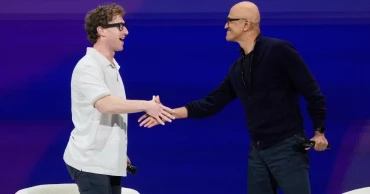
Meta launches AI app, Zuckerberg chats with Microsoft CEO Satya Nadella at developer conference
Working to differentiate itself in the crowded field of artificial intelligence, Meta Platforms has launched a standalone AI app — with a social media component — to compete with OpenAI's ChatGPT.
The Meta AI app, built with the company’s Llama 4 AI system. It includes a “discover” feed that lets users see how others are interacting with AI. It also has a voice mode for interacting with the AI.
“It’s smart for Meta to differentiate its ChatGPT competitor by drawing from the company’s social media roots. The app’s Discover feed is like a version of the OG Facebook Feed but only focused on AI use cases," said Forrester research director Mike Proulx.
By letting users link their Facebook and Instagram accounts, the Meta AI app “gets a leg up on instantly personalizing its user experience with social media context.”
Meta has taken a different approach to AI than many of its rivals, releasing it for free as an open-source product. The company says more than a billion people use its AI products each month.
At the Menlo Park, California-based tech giant's inaugural conference, LlamaCon, on Tuesday Meta CEO Mark Zuckerberg chatted with Microsoft CEO Satya Nadella in a technical discussion around the speed of AI development and how the technology is shifting both their companies — where AI is already writing code — as well as the world.
EU fines Apple 500 million euros, Meta 200 million in digital cases
Acknowledging there is a lot of "hype” around AI, Zuckerberg said “if this is going to lead to massive increases in productivity, that needs to be reflected in major increases in GDP.”
“This is going take some multiple years, many years, to play out,” Zuckerberg said. “I’m curious how you think, what’s your current outlook on what we should be looking for to understand the progress that this is making?”
Nadella brought up the advent of electricity, saying that “AI has the promise, but you now have to sort of really have it deliver the real change in productivity — and that requires software and also management change, right? Because in some sense, people have to work with it differently.”
He said it took 50 years before people figured out to change how factories operated with electricity.
Zuckerberg replied “well we’re all investing as if it’s not going to take 50 years, so I hope it doesn’t take 50 years.”
Meta CEO Mark Zuckerberg wraps up testimony in antitrust case
10 months ago