Tech-News
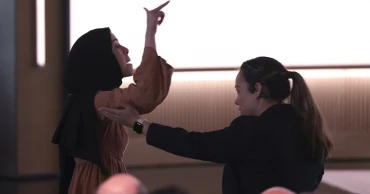
Microsoft employees protest at 50th anniversary party over Israel contract
A pro-Palestinian protest by Microsoft employees interrupted the company’s 50th anniversary celebration Friday, the latest backlash over the tech industry’s work to supply artificial intelligence technology to the Israeli military.
The protest began as Microsoft AI CEO Mustafa Suleyman was presenting product updates and a long-term vision for the company's AI assistant product, Copilot, to an audience that included Microsoft co-founder Bill Gates and former CEO Steve Ballmer.
“Mustafa, shame on you,” shouted Microsoft employee Ibtihal Aboussad as she walked toward the stage and Suleyman paused his speech. “You claim that you care about using AI for good but Microsoft sells AI weapons to the Israeli military. Fifty-thousand people have died and Microsoft powers this genocide in our region.”
“Thank you for your protest, I hear you,” Suleyman said. Aboussad continued, shouting that Suleyman and “all of Microsoft” had blood on their hands. She also threw onto the stage a keffiyeh scarf, which has become a symbol of support for Palestinian people, before being escorted out of the event.
New Jersey criminalizes deepfake media under new law
A second protester, Microsoft employee Vaniya Agrawal, interrupted another part of the celebration during which Gates, Ballmer and current CEO Satya Nadella were on stage — the first public gathering since 2014 of the three men who have been Microsoft's CEO.
An investigation by The Associated Press revealed earlier this year that AI models from Microsoft and OpenAI had been used as part of an Israeli military program to select bombing targets during the recent wars in Gaza and Lebanon. The story also contained details of an errant Israeli airstrike in 2023 that struck a vehicle carrying members of a Lebanese family, killing three young girls and their grandmother.
In February, five Microsoft employees were ejected from a meeting with Nadella for protesting the contracts. While the February event was an internal meeting, Friday's protest was far more public — a livestreamed showcase of the company's past and future. Some employees also rallied outside the event Friday.
“We provide many avenues for all voices to be heard," said a statement from the company Friday. “Importantly, we ask that this be done in a way that does not cause a business disruption. If that happens, we ask participants to relocate. We are committed to ensuring our business practices uphold the highest standards.”
Microsoft founder Bill Gates reminisces about a 50-year-old computer code that transformed technology
Microsoft declined to say whether it was taking further action. Aboussad told the AP she hasn't yet heard anything from the company but she and Agrawal both lost access to their work accounts after the protest and have not been able to log back in, a possible indication that they were being fired.
11 months ago
China pauses TikTok deal after Trump announces new tariffs
President Donald Trump said Friday he is signing an executive order to allow TikTok to continue operating in the U.S. for another 75 days, giving his administration more time to finalize a deal to bring the platform under American control.
The White House had been close to striking a deal to separate TikTok’s U.S. operations into a new company majority-owned by American investors, with ByteDance retaining a minority stake, a source familiar with the talks said.
However, progress was abruptly halted Thursday when Beijing reacted to Trump’s announcement of sweeping new global tariffs, including against China. ByteDance informed the White House that China would not approve any deal until broader negotiations on trade and tariffs take place, the source added.
While Congress had set a January 19 deadline for TikTok’s divestment on national security grounds, Trump extended it unilaterally to this weekend to keep negotiations alive. Several U.S. firms had expressed interest in investing in TikTok.
The potential deal, months in the making, was being finalized with help from Vice President JD Vance’s team and included support from current and prospective investors, ByteDance, and U.S. officials. It included a 120-day period to finalize details.
Trump’s team was confident of Beijing’s support until the new tariffs shifted the political landscape. On Friday, Trump said the deal is still achievable during the extension period.
“My Administration has been working very hard on a Deal to SAVE TIKTOK, and we have made tremendous progress,” Trump wrote on his platform, explaining the need for extra time.
ByteDance confirmed it has been in talks with the U.S. but said no agreement has been finalized and any deal must be approved under Chinese law.
TikTok, headquartered in Los Angeles and Singapore, has reiterated its commitment to user safety. Meanwhile, China’s Foreign Ministry insists it does not require companies to provide data from abroad.
This marks the second time Trump has delayed enforcement of the 2024 law requiring TikTok's divestment, a law supported by Congress and upheld by the Supreme Court on national security grounds.
Rep. Raja Krishnamoorthi, a co-author of the TikTok bill, criticized the delay, urging immediate compliance with the law. “Bidders are lined up, and the clock is ticking. No more excuses,” he said.
Although the executive order to delay enforcement has raised concerns, legal experts say a lawsuit is unlikely due to the challenge of establishing legal standing to sue.
Cornell University’s Sarah Kreps said maintaining the status quo is legally less vulnerable, though concerns persist. Experts like cybersecurity CEO Chris Pierson warn that if ByteDance retains control of TikTok’s algorithm or data, the security risks remain unchanged.
The law allows one 90-day delay if a deal is pending and Congress is notified, but Trump’s move doesn’t meet those conditions, said legal scholar Alan Rozenshtein. He argues Trump’s extension is effectively a refusal to enforce the law, not a legal extension.
Public opinion on TikTok remains divided. A recent Pew survey found one-third of Americans support a ban, down from 50% in 2023, with concerns about data security driving most of the support.
For creators like Terrell Wade, who has 1.5 million TikTok followers, the uncertainty is wearing. “Each new deadline feels less serious,” he said, though he continues building his presence on Instagram, YouTube, and Facebook.
“I just want clarity,” he said, “so we can move on from the constant uncertainty.”
11 months ago

US identifies 16 federal sites for AI data centres, focuses on nuclear power
The US Department of Energy said it has identified 16 federal sites, including storied nuclear research laboratories such as Los Alamos, where tech companies could build data centres in a push to accelerate commercial development of artificial intelligence technology.
The sites are “uniquely positioned for rapid data centre construction, including in-place energy infrastructure with the ability to fast-track permitting for new energy generation such as nuclear,” the agency said in a statement Thursday.
The move follows an executive order signed in January by outgoing President Joe Biden that sought to remove hurdles for AI data centre expansion in the US while also encouraging those data centres, which require large amounts of electricity, to be powered with renewable energy.
While President Donald Trump has since sought to erase most of Biden's signature AI policies, he made clear after returning to the White House that he had no interest in rescinding Biden's data centre order.
“I’d like to see federal lands opened up for data centres," Trump said in January. "I think they’re going to be very important.”
The lands identified as potential sites include a number of national laboratories, such as the New Mexico-cantered Los Alamos and Sandia laboratories and Oak Ridge in Tennessee.
Trump admin to halt $500M federal funding to Brown University
While the tech industry has long relied on data centres to run online services, from email and social media to financial transactions, new AI technology behind popular chatbots and generative AI tools requires even more powerful computation to build and operate.
A report released by the Department of Energy late last year estimated that the electricity needed for data centres in the US tripled over the past decade and is projected to double or triple again by 2028 when it could consume up to 12 per cent of the nation’s electricity.
The United States, under both presidents, has been speeding up efforts to license and build a new generation of nuclear reactors to supply carbon-free electricity.
While Biden's executive order focused on powering AI infrastructure with clean energy sources such as “geothermal, solar, wind, and nuclear,” Thursday's statement from Trump's energy department focused only on nuclear.
But in a lengthy request for information sought from data centre and energy developers, the agency outlines a variety of electricity sources available at each site, from solar arrays to gas turbines.
11 months ago
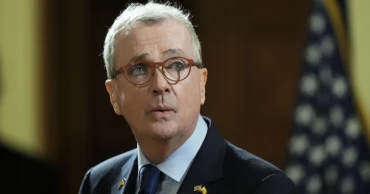
New Jersey criminalizes deepfake media under new law
New Jersey has made it a criminal offense to create and distribute deceptive media generated using artificial intelligence, under a new law signed by Governor Phil Murphy on Wednesday.
The legislation targets the production and circulation of “deepfake” content—AI-generated images, videos, or audio that falsely portray individuals doing or saying things they never did. Those convicted under the law could face up to five years in prison. The law also allows victims to file civil lawsuits against perpetrators.
New Jersey joins at least 20 other U.S. states that have adopted similar laws, particularly focusing on AI-generated media that could affect elections. Additionally, more than a dozen states have passed legislation aimed at curbing digitally altered child sexual abuse content, according to the National Center for Missing & Exploited Children.
This law gained momentum after Francesca Mani, a student at Westfield High School, became a victim of a deepfake video two years ago. She said the person responsible only received a brief school suspension because no law addressed such offenses at the time.
Meta hit with fines by Turkey after refusing to restrict content
“Doing nothing is no longer an option,” said Mani, who stood beside the governor at the bill signing. Recognized by Time magazine as an anti-deepfake activist, she was instrumental in advocating for the law.
Under the measure, deepfakes are defined as any video, audio, or image that would appear realistic to an average person but falsely represents someone's actions or words. The law introduces both criminal and civil consequences for offenders.
Source: With input from agency
11 months ago
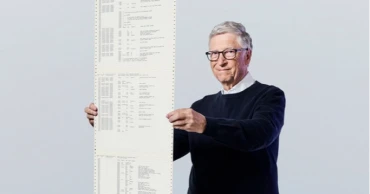
Microsoft founder Bill Gates reminisces about a 50-year-old computer code that transformed technology
Despite the passage of time, Gates still cherishes the groundbreaking code he printed on a teletype machine—a piece of work that, though rudimentary compared to modern artificial intelligence, played a crucial role in launching Microsoft in April 1975. The company, headquartered in Redmond, Washington, marks its 50th anniversary on Friday.
In a blog post, the 69-year-old Gates reminisced about how he and his late high school friend, Paul Allen, embarked on a mission to build the world’s first “software factory.” Their journey began after reading a January 1975 Popular Electronics article about the Altair 8800, an early minicomputer powered by a small chip from Intel, which was relatively unknown at the time.
Inspired by the article, Gates—then a freshman at Harvard—and Allen contacted Micro Instrumentation and Telemetry Systems (MITS), the company behind Altair. They assured its CEO, Ed Roberts, that they had developed software to operate the hardware. However, there was one major problem: the code they promised had yet to be written.
To meet the challenge, the duo turned to BASIC, a programming language created at Dartmouth College in 1964. They had to make it compatible with the Altair despite not having a prototype of the machine. After two months of intense work and little sleep, Gates completed the program, which became the Altair’s first operating system.
“That code remains the coolest I’ve ever written,” Gates noted in his blog post, which also includes an option to download the original program.
This code laid the foundation for a company that revolutionized personal computing, introducing software like Word, Excel, and PowerPoint, as well as the Windows operating system, which continues to dominate the PC market.
“That was the revolution,” Gates said in an accompanying video. “That was the moment that brought personal computing to life.”
Gates’ reflection on this milestone is part of a broader wave of nostalgia as he approaches his 70th birthday in October. This year, he released a memoir detailing his early life as a misunderstood child with few friends. He also marked the 25th anniversary of the philanthropic foundation he established after stepping down as Microsoft’s CEO in 2000. While Microsoft initially struggled post-Gates, it has flourished under current CEO Satya Nadella, now boasting a market value of around $2.8 trillion.
In his memoir, Gates also revisited his complex relationship with Apple’s late co-founder Steve Jobs, whose company will celebrate its 50th anniversary next year.
“Fifty years is a long time,” Gates reflected. “It’s incredible that the dream became a reality.”
11 months ago
Meta hit with fines by Turkey after refusing to restrict content
Meta said it has been hit with a hefty fine for resisting Turkish government demands to limit content on Facebook and Instagram.
President Recep Tayyip Erdogan's government has been trying to restrict opposition voices on social media after widespread protests erupted following the arrest of Istanbul's mayor, who's a key rival.
“We pushed back on requests from the Turkish government to restrict content that is clearly in the public interest, and have been fined by them as a consequence,” the company said in a statement.
The social media company did not disclose the size of the fine, except to say it was “substantial” and did not provide any more details about the content in question. The Associated Press has approached the Turkish government for comment.
“Government requests to restrict speech online alongside threats to shut down online services are severe and have a chilling effect on people’s ability to express themselves,” Meta said.
Meta's head of AI research stepping down
In recent years the Turkish government has increasingly sought to bring social media companies under its control. When protests erupted following the March 19 arrest of opposition Istanbul Mayor Ekrem Imamoglu, many social media platforms such as X, Instagram and Facebook were blocked.
More than 700 individual X accounts, including those belonging to journalists, media outlets, civil society organizations and student groups, were blocked, according to the Media and Law Studies Association. X said it would object.
Dozens have been arrested for social media posts deemed to be supporting the protests.
11 months ago
Meta's head of AI research stepping down
The head of Meta's artificial intelligence research division said she plans to step down, vacating a high-profile position at a time of intense competition in the development of AI technology.
Joelle Pineau, Meta's vice president for AI research, said Tuesday she is leaving at the end of May after eight years with the company.
"Today, as the world undergoes significant change, as the race for AI accelerates, and as Meta prepares for its next chapter, it is time to create space for others to pursue the work," she wrote in a social media post.
Judge allows newspaper copyright lawsuit against OpenAI to proceed
Meta — the parent company of Facebook and Instagram — didn't immediately respond to an emailed request for comment about the move. Pineau didn't announce a replacement.
Based in Montreal, where she is also a computer science professor at McGill University, Pineau has been the face of Meta's “open-source” approach to building AI systems, such as its flagship large language model called Llama, in which core components are publicly released for others to use or modify.
Her announcement comes ahead of the company's debut of a new LlamaCon AI conference on April 29.
Google agrees to pay $28m in racial bias lawsuit
In 2023, she began directing Meta's AI research division, formerly known as Facebook AI Research, which had been founded a decade earlier by a group that included pioneering AI researcher Yann LeCun. LeCun stepped down as the group's director in 2018 but remains Meta's chief AI scientist.
11 months ago

A private European aerospace startup completes the first test flight of its orbital launch vehicle
A rocket by a private European aerospace company launched from Norway on Sunday and crashed into the sea 30 seconds later.
Despite the short test flight, Isar Aerospace said that it successfully completed the first test flight of its orbital launch vehicle by launching its Spectrum rocket from the island of Andøya in northern Norway.
The 28-meter-long (92-foot-long) Spectrum is a two-stage launch vehicle specifically designed to put small and medium satellites into orbit. The rocket lifted off from the pad at 12:30 p.m. (1030 GMT) Sunday and flew for about a half-minute before the flight was terminated, Isar said.
“This allowed the company to gather a substantial amount of flight data and experience to apply on future missions,” Isar said in a statement. “After the flight was terminated at T+30 seconds, the launch vehicle fell into the sea in a controlled manner.”
Video from the launch shows the rocket taking off from the pad, flying into the air and then coming back down to crash into the sea in a fiery explosion.
The launch was subject to various factors, including weather and safety, and Sunday's liftoff followed a week of poor conditions, including a scrubbed launch on March 24 because of unfavorable winds, and on Saturday for weather restrictions.
AI-enabled drone deployed in Germany to accelerate wildfire detection and response
“Our first test flight met all our expectations, achieving a great success,” Daniel Metzler, Isar’s chief executive and co-founder, said in the statement. “We had a clean liftoff, 30 seconds of flight and even got to validate our Flight Termination System.”
The company had largely ruled out the possibility of the rocket reaching orbit on its first complete flight, saying that it would consider a 30-second flight a success. Isar Aerospace aims to collect as much data and experience as possible on the first integrated test of all the systems on its in-house-developed launch vehicle.
Isar Aerospace is separate from the European Space Agency, or ESA, which is funded by its 23 member states.
“Success to get off the pad, and lots of data already obtained. I am sure @isaraerospace will learn a lot," ESA Director General Josef Aschbacher posted on X. "Rocket launch is hard. Never give up, move forward with even more energy!”
European startup scrubs first test flight of Orbital Rocket
ESA has been launching rockets and satellites into orbit for years, but mainly from French Guiana — an overseas department of France in South America — and from Cape Canaveral in Florida.
11 months ago

ChatGPT’s viral Ghibli-Style images raise AI copyright concerns
Fans of Studio Ghibli, the renowned Japanese animation studio behind classics like Spirited Away, were thrilled this week when a new version of ChatGPT allowed them to transform popular memes and personal photos into the distinct style of Ghibli founder Hayao Miyazaki.
However, the trend has also sparked ethical concerns over artificial intelligence tools trained on copyrighted creative works, raising questions about the future of human artists. Miyazaki, 84, known for his hand-drawn animation and whimsical storytelling, has previously expressed skepticism about AI's role in animation.
Janu Lingeswaran, an entrepreneur from Germany, was among the many users experimenting with the tool. He uploaded a photo of his 3-year-old ragdoll cat, Mali, and asked ChatGPT to convert it into the Ghibli style. The result, he said, was stunning.
“I really fell in love with the result,” said Lingeswaran. “We're thinking of printing it out and hanging it on the wall.”
Similar AI-generated Ghibli-style images have surfaced online, including an anime version of Turkish pistol shooter Yusuf Dikec at the 2024 Olympics and a reimagining of the famous Disaster Girl meme.
OpenAI Encourages ‘Ghiblification’ Amid Copyright ConcernsChatGPT creator OpenAI, which is already facing multiple copyright lawsuits over its AI models, has encouraged these “Ghiblification” experiments. OpenAI CEO Sam Altman even changed his social media profile picture to a Ghibli-style AI image.
In a technical paper released Tuesday, OpenAI stated that its new image generation tool takes a “conservative approach” when mimicking the styles of individual artists.
How DeepSeek stacks up against ChatGPT and Gemini
“We added a refusal which triggers when a user attempts to generate an image in the style of a living artist,” the company said. However, it defended the broader use of studio aesthetics, calling the results “truly delightful and inspired original fan creations.”
Studio Ghibli has yet to comment on the trend. The Japanese studio and its North American distributor did not immediately respond to requests for comment.
Miyazaki’s Past Criticism of AI ResurfacesAs Ghibli-style AI images spread across social media, past comments from Miyazaki about AI-generated animation have resurfaced.
In a 2016 documentary, Miyazaki was shown an AI demo featuring a grotesque, writhing body dragging itself forward. The presenter suggested that AI could create “movements that humans can’t imagine,” which could be useful for horror animations like zombies.
Miyazaki, visibly disturbed, responded by sharing a story about a disabled friend who struggles with simple movements.
“Thinking of him, I can’t watch this stuff and find it interesting,” he said. “Whoever creates this has no idea what pain is.”
He strongly rejected the idea of incorporating AI into his work, saying, “This is an insult to life itself.”
Legal Questions Over AI Training on Ghibli’s WorkThe viral Ghibli-style images have reignited concerns over AI’s use of copyrighted material.
Josh Weigensberg, a partner at the law firm Pryor Cashman, said the key legal question is whether OpenAI trained its model on Studio Ghibli’s work without permission.
“Do they have a license or permission to do that training or not?” he asked. OpenAI did not respond to a request for comment on this issue.
Weigensberg noted that while artistic “style” is generally not copyrightable, AI-generated images could still infringe on specific, identifiable elements of Ghibli’s work.
ChatGPT faces second outage in December
“You could freeze a frame from Howl’s Moving Castle or Spirited Away and compare it to an AI-generated image to see if there are identical or substantially similar elements,” he explained.
Artist Karla Ortiz, who is suing AI companies for copyright infringement, called the trend “another clear example of how companies like OpenAI just do not care about artists’ work and livelihoods.”
“They are using Ghibli’s branding, their name, their work, their reputation, to promote OpenAI’s products,” she said. “It’s an insult. It’s exploitation.”
Political Controversy Over AI-Generated Ghibli ArtThe controversy took a political turn on Thursday when the White House posted a Ghibli-style AI image on its official X account. The image depicted a weeping woman from the Dominican Republic who was recently arrested by U.S. immigration agents.
Ortiz condemned the post, calling it an example of AI being used to exploit and distort real-life struggles.
“To see something as brilliant as Miyazaki’s work butchered to generate something so foul,” she wrote on social media, adding that she hoped Studio Ghibli would take legal action against OpenAI.
Source: With input from agency
11 months ago

Judge allows newspaper copyright lawsuit against OpenAI to proceed
A federal judge has ruled that The New York Times and other newspapers can proceed with a copyright lawsuit against OpenAI and Microsoft seeking to end the practice of using their stories to train artificial intelligence chatbots.
U.S. District Judge Sidney Stein of New York on Wednesday dismissed some of the claims made by media organizations but allowed the bulk of the case to continue, possibly to a jury trial.
“We appreciate Judge Stein’s careful consideration of these issues," New York Times attorney Ian Crosby said in a statement. “As the order indicates, all of our copyright claims will continue against Microsoft and Open AI for their widespread theft of millions of The Times’s works, and we look forward to continuing to pursue them.”
The judge's ruling also pleased Frank Pine, executive editor of MediaNews Group and Tribune Publishing, owners of some of the newspapers that are part of a consolidated lawsuit in a Manhattan court.
European startup scrubs first test flight of Orbital Rocket
“The claims the court has dismissed do not undermine the main thrust of our case, which is that these companies have stolen our work and violated our copyright in a way that fundamentally damages our business,” Pine said a statement.
Stein didn't explain the reasons for his ruling, saying that would come “expeditiously.”
OpenAI said in a statement it welcomed “the court’s dismissal of many of these claims and look forward to making it clear that we build our AI models using publicly available data, in a manner grounded in fair use, and supportive of innovation.”
Microsoft declined to comment.
The Times has said OpenAI and its business partner Microsoft have threatened its livelihood by effectively stealing billions of dollars worth of work by its journalists, in some cases spitting out Times’ material verbatim to people who seek answers from generative artificial intelligence like OpenAI’s ChatGPT.
11 months ago