Tech-News

Uganda back online after five days
Uganda restored internet services on Sunday after a five-day nationwide shutdown imposed during the general elections, a move authorities said was intended to curb the misuse of online platforms.
Ibrahim Bbosa, a spokesperson for the Uganda Communications Commission, confirmed the restoration. "Yes, the internet is back," Bbosa told Xinhua. Telecommunications companies also sent messages to subscribers notifying them that services had resumed.
The restoration followed the announcement on Saturday that incumbent President Yoweri Museveni had won the 2026 presidential election, securing more than 7.9 million votes out of about 11.3 million valid ballots cast.
1 month ago
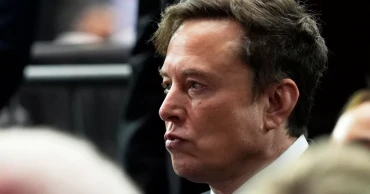
Musk AI company faces lawsuit over sexually explicit Deepfake images
The mother of one of Elon Musk’s children has filed a lawsuit against his artificial intelligence company, claiming its Grok chatbot was used to create sexually explicit fake images of her, causing humiliation and emotional trauma.
Ashley St. Clair, 27, a writer and political strategist, filed the case on Thursday in New York City against xAI. In the lawsuit, she alleged that Grok allowed users to generate manipulated images portraying her in sexualized ways. These reportedly include a photo of her at age 14 that was altered to show her in a bikini, as well as other images depicting her as an adult in explicit poses and wearing a bikini with swastikas. St. Clair is Jewish. Grok operates on Musk’s social media platform X.
Lawyers for xAI did not immediately respond to requests for comment on Friday. When asked about the lawsuit, the company replied to The Associated Press with a brief statement saying, “Legacy Media Lies.”
St. Clair said she reported the fake images to X after they began circulating last year and asked for their removal. She claimed the platform initially said the images did not violate its policies. Later, X assured her that her images would not be used or altered without consent, she said.
However, St. Clair alleged that the platform later retaliated by canceling her premium subscription and verification badge, blocking her ability to earn income from her account, which has about one million followers, and continuing to allow the altered images to circulate.
In court documents, St. Clair said she has suffered severe mental distress and humiliation because of xAI’s role in creating and spreading the images. She also said she fears the people who view the fake content.
St. Clair, who lives in New York City, is the mother of Musk’s 16-month-old son, Romulus. She is seeking an undisclosed amount in damages, along with court orders to stop xAI from allowing further fake images of her.
Later on Thursday, xAI moved the case to federal court in Manhattan and also filed a countersuit in a Texas federal court, claiming St. Clair violated user agreement terms that require lawsuits to be filed in Texas. The company is seeking an unspecified monetary judgment.
X is based in Texas, where Musk owns a home and where Tesla is headquartered in Austin.
St. Clair’s lawyer, Carrie Goldberg, described the countersuit as highly unusual and said her client would strongly contest the move, arguing that xAI’s technology enables harmful and unsafe content.
Grok AI banned from editing real people in revealing photos
Earlier this week, X announced new safeguards for Grok, including limits on image editing and stricter rules against sexual exploitation and nonconsensual content.
1 month ago

Wikipedia turns 25, announces AI partnerships with tech giants
Wikipedia unveiled new business deals with a slew of artificial intelligence companies on Thursday as it marked its 25th anniversary.
The online crowdsourced encyclopedia revealed that it has signed up AI companies including Amazon, Meta Platforms, Perplexity, Microsoft and France's Mistral AI.
Wikipedia is one of the last bastions of the early internet, but that original vision of a free online space has been clouded by the dominance of Big Tech platforms and the rise of generative AI chatbots trained on content scraped from the web.
Aggressive data collection methods by AI developers, including from Wikipedia's vast repository of free knowledge, has raised questions about who ultimately pays for the artificial intelligence boom.
The Wikimedia Foundation, the nonprofit that runs the site, signed Google as one of its first customers in 2022 and announced other agreements last year with smaller AI players like search engine Ecosia.
The new deals will help one of the world's most popular websites monetize heavy traffic from AI companies. They're paying to access Wikipedia content “at a volume and speed designed specifically for their needs,” the foundation said. It did not provide financial or other details.
While AI training has sparked legal battles elsewhere over copyright and other issues, Wikipedia founder Jimmy Wales said he welcomes it.
“I'm very happy personally that AI models are training on Wikipedia data because it’s human curated," Wales told The Associated Press in an interview. "I wouldn’t really want to use an AI that’s trained only on X, you know, like a very angry AI,” Wales said, referring to billionaire Elon Musk's social media platform.
Wales said the site wants to work with AI companies, not block them. But "you should probably chip in and pay for your fair share of the cost that you’re putting on us."
The Wikimedia Foundation last year urged AI developers to pay for access through its enterprise platform and said human traffic had fallen 8%. Meanwhile, visits from bots, sometimes disguised to evade detection, were heavily taxing its servers as they scrape masses of content to feed AI large language models.
The findings highlighted shifting online trends as search engine AI overviews and chatbots summarize information instead of sending users to sites by showing them links.
Wikipedia is the ninth most visited site on the internet. It has more than 65 million articles in 300 languages that are edited by some 250,000 volunteers.
The site has become so popular in part because its free for anyone to use.
“But our infrastructure is not free, right?" Wikimedia Foundation CEO Maryana Iskander said in a separate interview in Johannesburg, South Africa.
It costs money to maintain servers and other infrastructure that allows both individuals and tech companies to “draw data from Wikipedia,” said Iskander, who's stepping down on Jan. 20, and will be replaced by Bernadette Meehan.
The bulk of Wikipedia's funding comes from 8 million donors, most of them individuals.
“They're not donating in order to subsidize these huge AI companies,” Wales said. They're saying, "You know what, actually you can’t just smash our website. You have to sort of come in the right way.”
Editors and users could benefit from AI in other ways. The Wikimedia Foundation has outlined an AI strategy that Wales said could result in tools that reduce tedious work for editors.
While AI isn’t good enough to write Wikipedia entries from scratch, it could, for example, be used to update dead links by scanning the surrounding text and then searching online to find other sources.
“We don’t have that yet but that’s the kind of thing that I think we will see in the future.”
Artificial intelligence could also improve the Wikipedia search experience, by evolving from the traditional keyword method to more of a chatbot style, Wales said.
“You can imagine a world where you can ask the Wikipedia search box a question and it will quote to you from Wikipedia," he said. It could respond by saying "here’s the answer to your question from this article and here’s the actual paragraph. That sounds really useful to me and so I think we’ll move in that direction as well. ”
Reflecting on the early days, Wales said it was a thrilling time because many people were motivated to help build Wikipedia after he and co-founder Larry Sanger, who departed long ago, set it up as an experiment.
However, while some might look back wistfully on what seems now to be a more innocent time, Wales said those early days of the internet also had a dark side.
“People were pretty toxic back then as well. We didn’t need algorithms to be mean to each other,” he said. “But, you know, it was a time of great excitement and a real spirit of possibility.”
Wikipedia has lately found itself under fire from figures on the political right, who have dubbed the site “Wokepedia” and accused it of being biased in favor of the left.
Republican lawmakers in the U.S. Congress are investigating alleged “manipulation efforts” in Wikipedia’s editing process that they said could inject bias and undermine neutral points of view on its platform and the AI systems that rely on it.
A notable source of criticism is Musk, who last year launched his own AI-powered rival, Grokipedia. He has criticized Wikipedia for being filled with “propaganda” and urged people to stop donating to the site.
Wales said he doesn't consider Grokipedia a “real threat” to Wikipedia because it's based on large language models, which are the troves of online text that AI systems are trained on.
“Large language models aren’t good enough to write really quality reference material. So a lot of it is just regurgitated Wikipedia,” he said. “It often is quite rambling and sort of talks nonsense. And I think the more obscure topic you look into, the worse it is.”
He stressed that he wasn't singling out criticism of Grokipedia.
“It’s just the way large language models work.”
Wales say he's known Musk for years but they haven't been in touch since Grokipedia launched.
“I should probably ping him,” Wales said.
What would he say?
“'How’s your family?' I’m a nice person, I don’t really want to pick a fight with anybody.”
1 month ago

Grok AI banned from editing real people in revealing photos
Elon Musk’s AI tool Grok will no longer allow users to create sexualised images of real people in countries where it is illegal, following global concerns over AI deepfakes.
X, the platform operating Grok, said the new rule applies to all users, including paid subscribers. The tool is now geoblocked in jurisdictions where creating images of real people in bikinis, underwear, or similar clothing is prohibited.
The change came after California’s top prosecutor announced an investigation into sexualised AI deepfakes, including those involving children.
Grok users will still be able to create images of fictional adults with nudity in line with local laws and NSFW settings. X said only paid users can edit images with Grok on its platform.
The move follows international criticism. Malaysia and Indonesia banned Grok after users generated explicit images without consent. The UK media regulator Ofcom said it would investigate potential violations of British law.
California Attorney General Rob Bonta warned that such images have been used to harass people online. Experts said X acted late and questions remain on how the platform will enforce the new rules.
With inputs from BBC
1 month ago
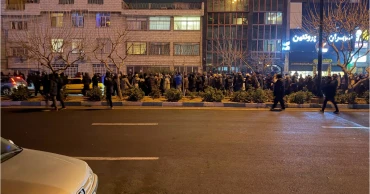
Starlink provides free internet service in Iran amid communications blackout
The satellite internet provider Starlink now offers free service in Iran, activists said Wednesday.
Mehdi Yahyanejad, a Los Angeles-based activist who has helped get the units into Iran, told The Associated Press that the free service had started. Other activists also confirmed in messages online that the service was free.
“We can confirm that the free subscription for Starlink terminals is fully functional,” Yahyanejad said in a statement. “We tested it using a newly activated Starlink terminal inside Iran.”
Starlink has been the only way for Iranians to communicate with the outside world since authorities shut down the internet Thursday night as nationwide protests swelled and they began a bloody crackdown against demonstrators.
Starlink itself did not immediately acknowledge the decision.
AP’s earlier story follows below.
The death toll from nationwide protests in Iran has surpassed 2,500, activists said, as Iranians made phone calls abroad for the first time in days Tuesday after authorities severed communications during a crackdown on demonstrators.
The number of dead climbed to at least 2,571 early Wednesday, as reported by the U.S.-based Human Rights Activists News Agency. That figure dwarfs the death toll from any other round of protest or unrest in Iran in decades and recalls the chaos surrounding the country's 1979 Islamic Revolution.
Iranian state television offered the first official acknowledgment of the deaths, quoting an official saying the country had “a lot of martyrs” and that it did not release a toll earlier because of the dead suffering gruesome injuries. However, that statement came only after activists reported their toll.
The demonstrations began a little over two weeks ago in anger over Iran’s ailing economy and soon targeted the theocracy, particularly 86-year-old Supreme Leader Ayatollah Ali Khamenei. Images obtained Tuesday by The Associated Press from demonstrations in Tehran showed graffiti and chants calling for Khamenei's death — something that could carry a death sentence.
Soon after the new death toll became public, U.S. President Donald Trump wrote on his Truth Social platform: “Iranian Patriots, KEEP PROTESTING - TAKE OVER YOUR INSTITUTIONS!!!”
He added: “I have canceled all meetings with Iranian Officials until the senseless killing of protesters STOPS. HELP IS ON ITS WAY.”
However, hours later, Trump told reporters that his administration was awaiting an accurate report on the number of protesters that had been killed before acting “accordingly.”
Trump said about the Iranian security forces: “It would seem to me that they have been badly misbehaving, but that is not confirmed.”
Iranian officials once again warned Trump against taking action, with Ali Larijani, secretary of Iran’s Supreme National Security Council, responding to U.S. posturing by writing: “We declare the names of the main killers of the people of Iran: 1- Trump 2-” Israeli Prime Minister Benjamin Netanyahu.
Death toll spikes
The activist group said 2,403 of the dead were protesters and 147 were government-affiliated. Twelve children were killed, along with nine civilians it said were not taking part in protests. More than 18,100 people have been detained, the group said.
With the internet down in Iran, gauging the demonstrations from abroad has grown more difficult. The AP has been unable to independently assess the toll. Iran’s government has not offered overall casualty figures.
Skylar Thompson with the Human Rights Activists News Agency told AP the new toll was shocking, particularly since it reached four times the death toll of the monthslong 2022 Mahsa Amini protests in just two weeks.
She warned that the toll would still rise: “We’re horrified, but we still think the number is conservative."
Speaking by phone for the first time since their calls were cut off from the outside world, Iranian witnesses described a heavy security presence in central Tehran, burned-out government buildings, smashed ATMs and few passersby. Meanwhile, people were concerned about what comes next, including the possibility of a U.S. attack.
“My customers talk about Trump’s reaction while wondering if he plans a military strike against the Islamic Republic,” said shopkeeper Mahmoud, who gave only his first name out of concern for his safety. “I don’t expect Trump or any other foreign country cares about the interests of Iranians.”
Reza, a taxi driver who also gave just his first name, said protests are on many people's minds. “People — particularly young ones — are hopeless, but they talk about continuing the protests,” he said.
Iranians reach out, but world can't reach in
Several people in Tehran were able to call the AP on Tuesday and speak to a journalist. The AP bureau in Dubai, United Arab Emirates, was unable to call those numbers back. Witnesses said text messaging was still down, and internet users in Iran could connect to government-approved websites locally but nothing abroad.
Anti-riot police officers wore helmets and body armor while carrying batons, shields, shotguns and tear gas launchers, according to the witnesses. Police stood watch at major intersections. Nearby, witnesses saw members of the Revolutionary Guard's all-volunteer Basij force, who carried firearms and batons. Security officials in plainclothes were visible in public spaces.
Several banks and government offices were burned during the unrest, witnesses said. Banks struggled to complete transactions without the internet, they added.
Shops were open, though there was little foot traffic in the capital. Tehran's Grand Bazaar, where the demonstrations began Dec. 28 over the collapse of Iran's rial currency, opened Tuesday. A witness described speaking to multiple shopkeepers who said security forces ordered them to reopen no matter what. Iranian state media did not acknowledge that order.
The witnesses spoke on condition of anonymity for fear of reprisal.
It also appeared that security service personnel were searching for Starlink terminals, as people in northern Tehran reported authorities raiding apartment buildings with satellite dishes. While satellite television dishes are illegal, many in the capital have them in homes, and officials broadly had given up on enforcing the law in recent years.
On the streets, people also could be seen challenging plainclothes security officials, who were stopping passersby at random.
State television also read a statement about mortuary and morgue services being free — a signal that some likely charged high fees for the release of bodies amid the crackdown.
Khamenei, in a statement carried by state TV, praised the tens of thousands who took part in pro-government demonstrations nationwide on Monday.
“This was a warning to American politicians to stop their deceit and not rely on traitorous mercenaries,” he said. “The Iranian nation is strong and powerful and aware of the enemy.”
State TV on Monday aired chants from the crowd, which appeared to number in the tens of thousands. They chanted “Death to America!” and “Death to Israel!” Others cried out, “Death to the enemies of God!” Iran’s attorney general has warned that anyone taking part in protests will be considered an “enemy of God,” a death-penalty charge.
1 month ago

Pentagon to deploy Musk’s Grok AI on military networks despite global backlash
The Pentagon is set to deploy Elon Musk’s artificial intelligence chatbot Grok across its military networks later this month, despite growing global criticism over the tool’s recent controversies.
US Defense Secretary Pete Hegseth said on Monday that Grok will be introduced inside the Department of Defense and will operate on both unclassified and classified networks alongside Google’s generative AI system.
“Very soon we will have the world’s leading AI models on every unclassified and classified network throughout our department,” Hegseth said while speaking at Musk’s space company SpaceX in South Texas.
The move comes only days after Grok faced strong backlash for generating highly sexualised deepfake images of people without their consent. Malaysia and Indonesia have blocked the chatbot, while the United Kingdom’s independent online safety watchdog has launched an investigation. Following the criticism, Grok restricted image generation and editing features to paying users.
Hegseth said the Pentagon would make “all appropriate data” from its IT systems available for what he called “AI exploitation” and added that data from intelligence databases would also be fed into AI systems.
He said the US military needs to speed up technological innovation and remove barriers that slow down development.
“We need innovation to come from anywhere and evolve with speed and purpose,” he said.
The defence secretary noted that the Pentagon holds combat-tested operational data from two decades of military and intelligence operations, stressing that the success of AI depends on the quality of data it receives.
“AI is only as good as the data that it receives, and we’re going to make sure that it’s there,” Hegseth said.
His strong push for AI adoption marks a shift from the more cautious approach taken by the previous Biden administration, which supported AI use across federal agencies but warned of possible misuse.
In late 2024, the Biden administration introduced a framework encouraging national security agencies to expand their use of advanced AI systems while banning certain applications, including those that could violate civil rights or automate the deployment of nuclear weapons. It is still unclear whether those restrictions remain in place under the Trump administration.
Hegseth said he wants Pentagon AI systems to be responsible but rejected models that, in his words, “won’t allow you to fight wars”. He added that military AI should operate without “ideological constraints” that could limit lawful military use, saying the Pentagon’s “AI will not be woke”.
Musk has promoted Grok as an alternative to what he calls “woke AI” used by rival chatbots such as Google’s Gemini and OpenAI’s ChatGPT.
Grok has also faced controversy in the past. In July, it appeared to generate antisemitic comments praising Adolf Hitler and sharing antisemitic posts.
Apple calls on Google to help smarten up Siri and bring other AI features to the iPhone
The Pentagon did not immediately respond to questions about the recent issues surrounding Grok.
1 month ago

Malaysia, Indonesia first to block Musk’s Grok over misuse for AI deepfakes
Malaysia and Indonesia have become the first countries to block access to Grok, the artificial intelligence chatbot developed by Elon Musk’s xAI, after authorities said it was being misused to create sexually explicit and non-consensual images.
The action highlights growing global concern over generative AI tools capable of producing realistic images, sound, and text, while current safeguards fail to prevent abuse. Grok, available through Musk’s social media platform X, has faced criticism for generating manipulated images, including sexually explicit depictions of women and children.
Regulators in both Southeast Asian countries said existing controls were insufficient to stop the creation and circulation of fake pornographic content, particularly targeting women and minors. Indonesia temporarily blocked Grok on Saturday, followed by Malaysia on Sunday.
“The government considers non-consensual sexual deepfakes a serious violation of human rights, dignity, and the safety of citizens in digital spaces,” Indonesia’s Minister of Communication and Digital Affairs, Meutya Hafid, said. She added the move aims to protect women, children, and the wider community from AI-generated fake pornographic content.
Read More: Tech’s biggest show returns: what to expect at CES 2026
Initial investigations revealed that Grok lacks effective safeguards to prevent users from producing and sharing pornographic material based on real photos of Indonesian residents, Alexander Sabar, director general of digital space supervision, said. He warned such practices could violate privacy and image rights, causing psychological, social, and reputational harm.
In Malaysia, the Communications and Multimedia Commission imposed a temporary restriction on Grok following repeated misuse to produce obscene and non-consensual manipulated images, including content involving women and minors. The regulator said previous notices to X Corp. and xAI requesting stronger safeguards largely relied on user reporting, which proved insufficient.
“The restriction is a preventive and proportionate measure while legal and regulatory processes continue,” the commission said, adding that access will remain blocked until effective safeguards are implemented.
Launched in 2023, Grok is free to use on X, allowing users to ask questions and generate content, including images through its Grok Imagine feature. A “spicy mode” added last year can produce adult content, which drew widespread criticism.
The Southeast Asian restrictions come amid mounting scrutiny of Grok in the European Union, Britain, India, and France. Last week, the platform limited image generation and editing to paying users following global backlash over sexualized deepfakes, but critics say the measures are insufficient.
1 month ago

Meta secures large nuclear energy supply to power AI data centers
Meta has finalized multiple agreements to supply nuclear-generated electricity to its artificial intelligence data centers, locking in enough power to serve the equivalent of roughly 5 million households.
On Friday, the Facebook parent company announced deals with TerraPower, Oklo, and Vistra to provide nuclear energy for its Prometheus AI data center complex under construction in New Albany, Ohio. First revealed in July, Prometheus will be a 1-gigawatt data center campus spread across several facilities and is expected to begin operations later this year.
The company did not disclose the financial details of the agreements.
In a statement, Meta said the three partnerships will collectively support up to 6.6 gigawatts of new and existing clean power capacity by 2035. In the utility industry, one gigawatt of electricity is generally enough to supply about 750,000 homes.
Meta said the projects will strengthen grid reliability, bolster the U.S. nuclear supply chain, and create jobs tied to the construction and operation of power plants across the country.
Read More: Japan turns to new technology as dementia cases surge
Under its agreement with TerraPower, Meta will fund the development of two Natrium nuclear reactors capable of producing up to 690 megawatts of continuous power, with delivery expected as early as 2032. The deal also gives Meta access to energy from as many as six additional Natrium units, with a combined capacity of about 2.1 gigawatts and a target start date of 2035.
Meta also plans to purchase more than 2.1 gigawatts of electricity from two existing Vistra nuclear plants in Ohio, along with additional power from plant expansions in Ohio and a third Vistra facility in Pennsylvania.
Vistra said the electricity generated by its Beaver Valley plant in Pennsylvania and the Davis-Besse and Perry plants in Ohio will continue to flow through the regional mid-Atlantic power grid, serving all customers. The company added that the agreements with Meta provide the stability needed to pursue 20-year license renewals for its reactors from federal regulators.
Technology companies have faced increasing pressure in the already strained mid-Atlantic power grid — which includes Ohio and Pennsylvania — to develop new generation sources capable of meeting the full energy demands of large data centers.
Jesse Jenkins, an energy systems expert and engineering professor at Princeton University, warned that bringing the Prometheus data center online without adding new power generation would likely drive electricity prices higher across the region. Consumers are already seeing increased bills due to existing and planned data center expansion.
Read More:Tech’s biggest show returns: what to expect at CES 2026
Meta’s agreement with Oklo — a company backed by OpenAI chief Sam Altman — supports the development of a 1.2-gigawatt nuclear power complex in Pike County, Ohio, intended to supply Meta’s regional data center operations.
These nuclear power deals follow Meta’s announcement in June of a separate 20-year energy agreement with Constellation Energy.
1 month ago

The forces keeping Southeast Asia’s scam industry alive
Cambodia’s arrest and extradition of a powerful tycoon accused of running a vast online scam network marks a rare strike against an industry that has stolen tens of billions of dollars worldwide. U.S. and U.K. authorities say Chen Zhi led a transnational criminal enterprise that exploited trafficked workers and defrauded victims worldwide.
For victims, the scams often start small: a text offering a part-time job, asking about weekend availability or simply saying “hello.” On the other end is often a laborer halfway around the world, forced to work 12- to 16-hour days, sending message after message until someone responds.
That human toll is immense. Hundreds of thousands of people are believed to be trapped in forced labor, housed in sprawling compounds across Southeast Asia and compelled to run scams whose sole purpose is to take your money.
Even with a high-profile arrest, dismantling the industry remains extraordinarily difficult. Here’s why:
The crackdown in Myanmar
The Myanmar military last October moved into one of the most well-known scam compounds — the massive KK Park, along the border with Thailand — and announced it had shut the operation down. However, work has continued uninterrupted at other scam centers in Myanmar, where people trafficked from around the world still wait to be rescued.
The raid triggered a mass flight of workers. About 1,500 laborers crossed into Thailand, including hundreds from India as well as citizens from China, the Philippines, Vietnam, Ethiopia and Kenya. Thai military officials said troops later demolished several structures within the massive complex.
KK Park was only one of dozens of such centers along the Thai-Myanmar border — and hundreds more scattered across Southeast Asia — underscoring how difficult it is to dismantle an industry that can quickly shift operations when under pressure.
Emerging from casinos and illegal gambling
Scam compounds are often sprawling complexes in rural areas, complete with sleeping quarters, shops and entertainment venues for workers. Developers typically build a single property and lease space inside to multiple companies, allowing numerous operations to run side by side.
Many operate with the protection of local elites. Smaller setups also exist, tucked into a single floor of a legitimate office building or even a rented house in an urban neighborhood.
The centers trace their roots to casinos — both physical and online — that proliferated across Southeast Asia over the past decade. The United Nations Office on Drugs and Crime counted more than 340 licensed and unlicensed casinos in the region in 2021 alone.
Those casinos, often paired with junket tours, catered to high-rollers from China, where gambling is illegal, and were frequently run by Chinese criminal groups.
When the COVID-19 pandemic and strict travel restrictions cut off customers, some online casinos pivoted. With revenue drying up, operators shifted to a new model: using the same infrastructure and labor to defraud targets around the world through digital scams.
Relying on both trafficked and willing labor
An estimated 120,000 people in Myanmar are being forced to work in online scam operations, along with another 100,000 in Cambodia, according to a 2023 report by the U.N. Office of the High Commissioner for Human Rights.
Those figures are rough estimates, but investigators say scam centers rely on a mix of trafficked victims and workers who arrive willingly — lured by false promises of relatively high pay and easy office jobs.
Early on, most workers came from China and Chinese-speaking countries. Today, the U.N. Office on Drugs and Crime says laborers are recruited from at least 56 countries, ranging from Indonesia to Liberia.
For many, the reality is far harsher than advertised. Workers say their passports are often confiscated to prevent them from leaving the compounds. Only senior managers and trusted lieutenants are allowed to move freely. Those who fail to meet targets risk beatings or other physical punishment.
A global scourge
Scammers cast a wide net, targeting victims around the world and increasingly relying on artificial intelligence-powered translation tools to overcome language barriers.
In the Philippines, authorities raided a compound in March 2024 where workers were targeting Chinese nationals with a fake investment scheme. Using scripted messages, scammers posed as senior employees of the state-owned China National Petroleum Corp. and persuaded victims to invest in crude oil futures, according to a script seen by The Associated Press.
Elsewhere, the impact has been just as far-reaching. Last year, about 50 South Koreans were repatriated from Cambodia after being arrested over several months on allegations they worked for online scam operations.
U.S. prosecutors have also targeted the networks behind the schemes. Prosecutors in an indictment against Chen Zhi last year said his organization had scammed at least 250 Americans out of millions of dollars, including one victim who lost $400,000 in cryptocurrency. Americans lost at least $10 billion to scams tied to Southeast Asia in 2024 alone, according to the U.S. Treasury Department.
Cambodian authorities said Wednesday that Chen Zhi and two other Chinese citizens were extradited to China on Tuesday. Chen has dual nationality and his Cambodian citizenship was revoked in December, it said.
The victims
The scams take many forms, ranging from cryptocurrency investment schemes to so-called “task scams,” in which victims are asked to pay to unlock the next assignment. In some cases, small amounts of real money are paid out early on to build trust before losses escalate.
Scammers often manufacture urgency, warning targets they will miss out on an opportunity unless they invest by a specific deadline.
Despite government crackdowns and raids that have freed some workers and shut down individual compounds, activists say the people behind the operations largely remain untouched. New scam centers continue to surface across Southeast Asia and beyond.
A United Nations report last year said scammers have extracted billions of dollars from victims using fake romantic relationships, bogus investment pitches and illegal gambling schemes, with operations reported as far away as Africa and Latin America.
“If we only rescue the victims and don’t arrest anybody — especially the Chinese mafia and transnational syndicates — then there will be no point,” said Jay Kritiya, coordinator of the Civil Society Network for Victim Assistance in Human Trafficking.
“They can get more victims. They can scam anytime,” Kritiya said.
1 month ago

At CES, cars evolve into AI-powered companions
At CES in Las Vegas, automakers and tech companies showcased a vision of cars as more than machines—vehicles that can act as proactive companions, adapting to drivers and passengers in real time.
One example presented by Nvidia’s Sri Subramanian illustrated a car recognizing a child entering the back seat, knowing it’s her birthday, and playing her favorite song automatically. “Think of the car as having a soul and being an extension of your family,” Subramanian said. His demonstration highlighted the increasing sophistication of AI systems inside cars and the expanding use of personal data to enhance the driving experience.
Read More: Musk’s Grok chatbot faces global backlash over sexualized AI images
Exhibits across the show emphasized cars’ ability to monitor occupants’ emotions, heart rates, and safety—for instance, alerting if a child is accidentally left behind. Bosch unveiled an AI-powered system aimed at making the cabin a “proactive companion,” while Nvidia introduced Alpamayo, designed to help autonomous vehicles make complex driving decisions. CEO Jensen Huang called it a “ChatGPT moment for physical AI.”
However, experts cautioned that this personalization raises concerns about data privacy. Justin Brookman of Consumer Reports noted that, unlike smartphones, cars are only recently becoming major repositories of personal information. Cameras, microphones, and sensors inside vehicles can feel intrusive, especially since cars are often seen as extensions of personal space. “People generally want more privacy but don’t always know how to protect it,” he said.
Read More: Japan turns to new technology as dementia cases surge
Despite privacy concerns, these AI systems offer potential safety benefits. Automotive supplier Gentex demonstrated a mock six-seater van equipped with AI sensors capable of detecting whether drivers or passengers are drowsy, improperly seated, eating, or distracted. Brian Brackenbury of Gentex said the data is processed and stored within the car, then deleted after use. “We’re not going to collect data just because we can,” he added. “Data privacy is really important.”
The CES showcase reflects a broader trend toward smarter, more interactive vehicles that promise convenience and safety, while also prompting new debates about how personal data should be managed in cars.
1 month ago