Tech-News
DeepSeek: China’s AI breakthrough shakes tech industry, Wall Street
The Chinese AI model, DeepSeek, has skyrocketed to global prominence, becoming the most downloaded app on Apple’s App Store since its release on January 20.
Initially captivating AI enthusiasts, it soon grabbed the world’s attention, with U.S. President Donald Trump calling it a “wake-up call” for American companies to focus on innovation.
What sets DeepSeek apart is its cost-effective design—built at a fraction of the cost of leading models like OpenAI’s, thanks to fewer advanced chips. This development sent shockwaves through the market, causing Nvidia to lose nearly $600 billion in market value, marking the largest single-day loss in U.S. history.
Tech stocks slide as Chinese rival threatens AI industry; Nvidia falls 17%
Strategic Implications
DeepSeek raises questions about the efficacy of Washington’s tech sanctions on China, particularly its export ban on advanced chips. Undeterred, China has doubled down on AI, with President Xi Jinping emphasizing its strategic importance as the country pivots from traditional manufacturing to advanced tech industries.
What Is DeepSeek?
At its core, DeepSeek is an AI chatbot similar to ChatGPT, powered by the R1 model with 670 billion parameters, making it the largest open-source language model to date. It rivals OpenAI’s models in mathematics, coding, and reasoning while adhering to Chinese government censorship.
Despite its capabilities, DeepSeek operates on a modest budget of $6 million, significantly less than the billions spent by competitors. This was reportedly achieved by combining a stockpile of Nvidia A100 chips with cheaper alternatives.
The Visionary Behind DeepSeek
DeepSeek’s founder, Liang Wenfeng, a Zhejiang University alumnus with expertise in electronic engineering and finance, launched the company in December 2023. Known for his innovative approach, Liang previously led China’s first quant hedge fund, High-Flyer, and has long advocated for China to close the innovation gap with the U.S.
Global Repercussions
DeepSeek’s rise challenges the notion that massive budgets and cutting-edge chips are essential for AI advancement. Analysts suggest this could disrupt the business models of U.S. tech giants like OpenAI. The uncertainty triggered a tech sell-off on January 27, with the Nasdaq falling over 3% and Nvidia losing its top valuation spot to Apple and Microsoft.
Trump says Microsoft is one of the companies eyeing TikTok
China’s Reaction
While the Chinese government has remained silent, state media is hailing DeepSeek as a symbol of the nation’s growing technological prowess. Experts warn, however, that such developments could fuel “tech isolationism,” as China emphasizes self-reliance.
DeepSeek’s emergence signals a transformative moment for the AI industry, reshaping global tech dynamics and challenging the U.S.’s dominance.
With input from agencies
1 year ago
Trump says Microsoft is one of the companies eyeing TikTok
President Donald Trump said that Microsoft is among the U.S. companies showing interest in acquiring TikTok to prevent a potential ban on the app, which could take effect in April.
When asked by reporters, Trump confirmed Microsoft's involvement in discussions for TikTok's ownership transition, a condition mandated by Congress to keep the app operational in the U.S. He also mentioned that other companies are exploring this opportunity but declined to name them.
Trump, speaking aboard Air Force One during a return trip from Miami, expressed his support for competitive bidding, saying it leads to better deals.
Meta to invest up to $65 billion in AI projects in 2025
While representatives from Microsoft and TikTok did not immediately comment, Trump recently extended the deadline for TikTok’s ownership changes by 75 days—from January 19 to April 4. He also proposed that the U.S. acquire a 50% stake in the platform, though details remain unclear on whether this would involve government ownership or another U.S.-based entity.
Reports suggest that AI startup Perplexity AI has proposed a merger with TikTok’s U.S. operations that would allow the U.S. government to hold up to 50% ownership. Additionally, investors like Frank McCourt and former Treasury Secretary Steven Mnuchin have expressed interest in TikTok's U.S. operations.
TikTok-loaded phones listed online for thousands amid app ban
1 year ago
Meta to invest up to $65 billion in AI projects in 2025
Meta Platforms, led by CEO Mark Zuckerberg, is planning a substantial investment of up to $65 billion (£559,051 crore) in artificial intelligence initiatives for 2025.
The funds will primarily be directed towards building a massive new data centre and expanding the company’s AI workforce, Zuckerberg revealed in a Facebook post on Friday.
The proposed data centre is set to be so expansive that it could occupy a significant portion of Manhattan. Meta aims to bring online approximately one gigawatt of computing power by 2025 and anticipates concluding the year with over 1.3 million graphics processing units (GPUs).
TikTok-loaded phones listed online for thousands amid app ban
“This is a massive effort, and over the coming years it will drive our core products and business, unlock historic innovation, and extend American technology leadership,” Zuckerberg stated.
Significant AI Investment
Meta has been heavily investing in AI over recent years, recently committing $10 billion (£86,440 crore) to a new data centre in Louisiana.
Additionally, the company has acquired advanced computer chips to support products such as its AI assistant and Ray-Ban smartglasses. Zuckerberg also highlighted plans to significantly expand Meta’s AI teams in 2025.
The announcement arrives shortly after OpenAI, SoftBank Group, and Oracle Corp. unveiled a $100 billion (£864,404 crore) joint venture, named Stargate, aimed at developing data centres and AI infrastructure across the US.
Musk clashes with OpenAI CEO Sam Altman over Trump-supported Stargate AI data center project
Increased Capital Expenditure
Meta’s planned 2025 capital expenditure marks a 50% rise compared to its estimated spending for 2024, and more than double the amount allocated in 2023. The company is expected to release finalised 2024 capital expenditure figures when it announces its fourth-quarter earnings on 29 January.
Wall Street analysts had anticipated Meta would allocate $51.3 billion (£443,444 crore) for 2025, according to Bloomberg-compiled estimates.
While Meta shares initially dipped during pre-market trading following the announcement, they later rose by as much as 1.7% after markets opened in New York. Broadcom Inc., a key provider of chip design services to Meta, also saw its stock climb by up to 3.9%.
Trump, a populist president, is flanked by tech billionaires at his inauguration
Balancing Overspending and Strategic Positioning
Zuckerberg acknowledged concerns about potential overspending in AI, reiterating comments he made in July. “There’s a meaningful chance that a lot of the companies are over-building now,” he noted, “but the downside of being behind is that you’re out of position for the most important technology for the next 10 to 15 years.”
Unconventional Disclosure
The decision to share Meta’s spending plans on Facebook, five days ahead of the company’s quarterly earnings announcement, deviates from typical corporate practice.
Such projections are usually issued alongside financial results or via formal regulatory filings. However, federal regulators have ruled that social media platforms are suitable for companies to disclose material information to investors.
Robert Schiffman, Senior Credit Analyst at Bloomberg Intelligence, commented positively on the announcement. “Meta’s sharp increase in 2025 capital spending … may be its best use of capital, driving future growth and positioning itself as a leader in AI capabilities,” he remarked.
Source: With inputs from news wirers
1 year ago

A Sundance documentary called ‘The Stringer’ disputes who took AP’s 'napalm girl' photo in Vietnam
After a half-century of public silence, a freelance photographer from Vietnam has asserted he took one of the most renowned and impactful photos of the 20th century — the image of a naked girl fleeing a napalm attack in South Vietnam that has long been credited to a staff photographer from The Associated Press.
Nguyen Thanh Nghe claimed authorship of the Pulitzer Prize-winning “napalm girl” photograph in the new documentary “The Stringer” and on the sidelines of its premiere Saturday night at the Sundance Film Festival in Park City, Utah.
The AP conducted its own investigation and said it has no reason to conclude that anyone other than the long-credited photographer, Nick Ut, made the picture. The news agency said it was “surprised and disappointed” that filmmakers portrayed it as having reviewed the film’s materials and being dismissive. The AP said it saw the film for the first time at Sundance.
Nghe joined the filmmakers for the post-screening Q&A where he said, through a translator, “I took the photo.” The audience cheered enthusiastically. He did not say why he waited so long to make the claim.
The AP said it was calling on the filmmakers to release their contributors from non-disclosure agreements for the film, including Nghe. It also called on the filmmakers to share a visual analysis they commissioned — and the film itself. “We cannot state more clearly that The Associated Press is only interested in the facts and a truthful history of this iconic photo," the agency said.
Investigating an image captured in the fog of war
Nguyen says he took the iconic photo of Kim Phuc on June 8, 1972. Nghe said he went to the town of Trang Bang that day as a driver for an NBC news crew and captured the image of Phuc running down the street, crying and naked with arms outstretched. He said he sold his image to the AP for $20, and they gave him a print of the photo that his wife later destroyed.
Representatives for the AP, who saw the film for the first time Saturday at the premiere, are contesting the film's implication that the company reviewed their findings and dismissed them.
“As recently as December, we reiterated our request to see the filmmakers’ full materials and they did not respond, nor did they include AP’s full response in the film," Lauren Easton, an AP spokesperson, said Sunday. "We were surprised and disappointed that the film portrayed AP as having reviewed the film’s materials and being dismissive of the allegations, which is completely false."
The film’s investigation was led by husband-and-wife team of Gary Knight, founder of the VII Foundation, and producer Fiona Turner. Bao Nguyen, a Vietnamese American filmmaker, directed.
“I’m not a journalist by any stretch of the imagination,” Nguyen said. “I had a healthy skepticism, as I think anyone would, going against a 53-year-old truth. ... But as a storyteller and a filmmaker, I thought it was my both or my responsibility and my privilege to be able to uplift the story of individuals like Nghe.”
AP investigated independently
Before having seen the film, the AP conducted its own investigation over six months and concluded it had “no reason to believe anyone other than Ut took the photo.” Now, the AP is calling on the filmmakers to lift the non-disclosure agreements they placed on their subjects to allow the company to investigate more fully.
Read: Families sue TikTok in France over teen suicides they say are linked to harmful content
“AP stands ready to review any and all evidence and new information about this photo," Easton said.
Knight and Turner met with AP in London last June about the allegations. According to the AP, filmmakers requested the news organization sign a non-disclosure agreement before they provided their evidence. AP would not. The film suggests that evidence was presented to the AP, which the AP says is not true.
A primary source in the film is Carl Robinson, then an AP photo editor in Saigon, who was overruled in his judgment not to use the picture by Horst Faas, AP's Saigon chief of photos. Robinson says in the film that Faas instructed him to “make it staff” and credit Ut for the photo. Both Faas and Yuichi “Jackson” Ishizaki, who developed the film, are dead. Robinson, 81, was dismissed by the AP in 1978.
On Saturday, a Sundance Institute moderator asked why he wanted to come forward with the allegations now. “I didn’t want to die before this story came out,” Robinson told the audience after the screening. “I wanted to find (Nghe) and say sorry.”
A variety of witnesses interviewed by AP, including renowned correspondents such as Fox Butterfield and Peter Arnett and the photo’s subject herself, Phuc, say they are certain Ut took the photo.
The documentary included forensics of the scene
Robinson was one such person the AP attempted to speak to during their investigation but “were told we could only do so under conditions" that they said would have prevented them from “taking swift action if necessary.”
Read: Trump signs executive order on developing artificial intelligence 'free from ideological bias'
The film’s investigation took over two years. The journalists enlisted a French forensics team, INDEX, to help determine the likelihood of whether Ut had been in a position to take the photo. The forensics team concluded that it was highly unlikely that Ut could have done it.
Ut's attorney, James Hornstein, had this to say Sunday after the premiere: “In due course, we will proceed to right this wrong in a courtroom where Nick Ut’s reputation will be vindicated.”
Knight referenced AP’s investigation Saturday, telling the audience that the company's statement is available online. “They said they’re open always to examining the truth. And I think it was a very reasonable thing to say,” Knight said. “Our story is here and it’s here for you all to see.”
He added: “Things happen in the field in the heat of the moment. ... We’re all stronger if we examine ourselves, ask tough questions, and we’re open and honest about what goes on in our profession. Now more than ever, I would argue."
“The Stringer” does not yet have distribution plans.
1 year ago
TikTok-loaded phones listed online for thousands amid app ban
Phones preloaded with TikTok are being sold on platforms like eBay and Facebook Marketplace for thousands of dollars, with some listings reaching as high as $50,000. However, it's unclear if buyers are willing to pay such steep prices.
The surge in listings follows a brief period during which TikTok was unavailable for new downloads in the U.S. As of Sunday, users who had already installed the app could continue using it, but the app remains inaccessible for new downloads from Apple and Google app stores. This has created a market for devices preloaded with TikTok and other ByteDance apps like Lemon8 and CapCut.
While some listings are exorbitantly priced, phones selling for a few hundred dollars have garnered the most interest. For example, Nicholas Matthews, a New York resident, listed an iPhone 14 Plus with TikTok for $10,000. As of Friday, the highest bid he received was $4,550. Matthews expressed modest expectations, saying, “I’m just expecting to sell this one phone.”
With approximately 170 million TikTok users in the U.S., the app remains popular despite ongoing regulatory challenges. The ban does not target individual users, meaning those with the app already downloaded can still use it freely.
Trump pauses US TikTok ban with executive order
eBay has yet to comment on the influx of TikTok-loaded phone listings. Meanwhile, President Donald Trump has directed the Justice Department to delay enforcing the ban until early April. However, significant uncertainties remain, including the legality of Trump’s order and the potential sale of TikTok by its China-based parent company, ByteDance.
1 year ago
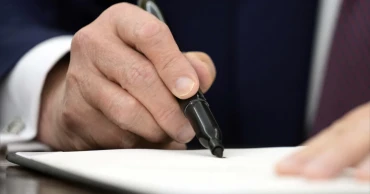
Trump signs executive order on developing artificial intelligence 'free from ideological bias'
President Donald Trump signed an executive order on artificial intelligence Thursday that will revoke past government policies his order says “act as barriers to American AI innovation."
To maintain global leadership in AI technology, "we must develop AI systems that are free from ideological bias or engineered social agendas,” Trump's order says.
The new order doesn't name which existing policies are hindering AI development but sets out to track down and review “all policies, directives, regulations, orders, and other actions taken” as a result of former President Joe Biden's sweeping AI executive order of 2023, which Trump rescinded Monday. Any of those Biden-era actions must be suspended if they don't fit Trump's new directive that AI should “promote human flourishing, economic competitiveness, and national security.”
Last year, the Biden administration issued a policy directive that said U.S. federal agencies must show their artificial intelligence tools aren’t harming the public, or stop using them. Trump’s order directs the White House to revise and reissue those directives, which affect how agencies acquire AI tools and use them.
Biden’s executive order, the Trump administration said, “established unnecessarily burdensome requirements for companies developing and deploying AI that would stifle private sector innovation and threaten American technological leadership.”
Trump's order also calls for the development of an AI action plan within 180 days. Leading the work will be a small group of White House tech and science officials, including a new Special Advisor for AI and Crypto — a role Trump has given to venture capitalist and former PayPal executive David Sacks.
Trump repealed Biden’s 2023 guardrails for fast-developing AI technology just hours after returning to the White House on Monday.
Read: ChatGPT faces outage, users worldwide report problems
The new actions threaten to erase some of the Biden administration’s efforts -- championed by then-Vice President Kamala Harris -- to curb government use of the kinds of AI tools that have been found to unfairly discriminate based on race, gender or disability, from medical diagnosis chatbots spouting false information to face recognition technology tied to wrongful arrests of Black men.
Until Thursday, it wasn't clear if Trump planned to replace Biden's signature AI policy with his own order. Trump had also signed executive orders on AI in his previous term, including a 2019 order directing federal agencies to prioritize research and development in AI that is still on the books.
Alondra Nelson, former acting director of the White House Office of Science and Technology Policy under Biden, said Trump’s order seemed “backward looking” because agencies would be tasked with reviewing initiatives “that are already helping people, with an implicit intent to unwind them.”
The Biden administration’s AI policies, she added, were aimed at protecting both innovation and the public.
“In 60 days, we’ll know which Americans’ rights and safety the Trump Administration believes deserves to be protected in the age of AI, and if there will be a level playing field for every technologist, developer, and innovator or just the tech billionaires,” Nelson said.
Much of Biden’s 2023 order set in motion a sprint across government agencies to study AI's impact on everything from cybersecurity risks to its effects on education, workplaces and public benefits, with an eye on ensuring AI tools weren't harming people. That work is largely done.
Read more: Trump announces 500 bln USD AI infrastructure investment in U.S.
One major piece that remained — until Trump rescinded it Monday — was a requirement that tech companies building the most powerful AI models share details with the government about the workings of those systems before they are unleashed to the public.
The Trump order's focus on “human flourishing” echoes the language of his campaign's long-held promise to cancel Biden's AI policy once back in the White House. It's also in line with ideas espoused by Trump adviser Elon Musk, who has warned against the dangers of what he calls “woke AI” that reflects liberal biases.
In a statement, Americans for Responsible Innovation, a nonprofit organization, said Trump has “made it clear from day one that his top priority on AI is out-innovating the rest of the world.”
“Today’s executive order is a placeholder until the administration has a chance to develop a full strategy for executing that vision,” said the organization’s executive director, Eric Gastfriend.
Agencies had already frozen work on AI policies initiated by the last administration following Trump’s repeal of Biden’s executive order on Monday, Gastfriend said.
“This new instruction shouldn’t come as a surprise,” he said.
1 year ago

Musk clashes with OpenAI CEO Sam Altman over Trump-supported Stargate AI data center project
Elon Musk is clashing with OpenAI CEO Sam Altman over the Stargate artificial intelligence infrastructure project touted by President Donald Trump, the latest in a feud between the two tech billionaires that started on OpenAI's board and is now testing Musk's influence with the new president.
Trump on Tuesday had talked up a joint venture investing up to $500 billion through a new partnership formed by OpenAI, the maker of ChatGPT, alongside Oracle and SoftBank.
The new entity, Stargate, is already starting to build out data centers and the electricity generation needed for the further development of fast-evolving AI technology.
Trump declared it “a resounding declaration of confidence in America’s potential” under his new administration, with an initial private investment of $100 billion that could reach five times that sum.
But Musk, a close Trump adviser who helped bankroll his campaign and now leads a government cost-cutting initiative, questioned the value of the investment hours later.
“They don’t actually have the money,” Musk wrote on his social media platform X. “SoftBank has well under $10B secured. I have that on good authority.”
Altman responded Wednesday to say Musk was “wrong, as you surely know” and inviting Musk to come visit the first site in Texas that is already under construction.
"(T)his is great for the country. i realize what is great for the country isn’t always what’s optimal for your companies, but in your new role i hope you’ll mostly put (America) first,” Altman wrote, using a U.S. flag emoji to represent America.
Behind the feud
The public clash over Stargate is part of a years-long dispute between Musk and Altman that began with a boardroom rivalry over who should run OpenAI, which both men helped found.
Musk, an early OpenAI investor and board member, sued the artificial intelligence company last year alleging it had betrayed its founding aims as a nonprofit research lab benefiting the public good rather than pursuing profits.
Read: Musk's inauguration role cements place in Trump's orbit
Musk has since escalated the dispute, adding new claims and asking for a court order that would stop OpenAI’s plans to convert itself into a for-profit business more fully. A hearing is set for February in a California federal court.
The world’s richest man, whose companies include Tesla, SpaceX and X, last year started his own rival AI company, xAI, that is building its own big data center in Memphis, Tennessee. Musk says it faces unfair competition from OpenAI and its close business partner Microsoft, which has supplied the huge computing resources needed to build AI systems such as ChatGPT.
When did Stargate start?
Tech news outlet The Information first reported on an OpenAI data center project called Stargate in March 2024, indicating that it's been in the works long before Trump announced it.
Another company — Crusoe Energy Systems — announced in July it was building a large and “specially designed AI data center” at the northwest edge of Abilene, Texas at a site run by energy technology company Lancium. Crusoe and Lancium said in a joint statement at the time that the project was “supported by a multibillion-dollar investment” but didn't disclose its backers.
AI technology requires huge amounts of electricity to build and operate and both companies said the project would be powered with renewable sources such as nearby solar farms, in a way that Lancium CEO Michael McNamara said would “deliver the maximum amount of green energy at the lowest possible cost.” Crusoe said it would own and develop the facility.
It's not clear how and when that project became the first phase of the Stargate investment revealed by Trump. Abilene Mayor Weldon Hurt said construction began about nine months ago but “we didn’t know it was going to be quite this big. We thought it was going to be about a third of this size.”
Oracle co-founder Larry Ellison said Tuesday that the Abilene project is the first of about 10 data center buildings currently being built and that number could expand to 20.
Hurt told The Associated Press that the region surrounding Abilene, a city of about 130,000 people, benefits from a wealth of energy sources, including oil, gas, solar and some of the “largest wind farms in the world,” though Trump signaled opposition to wind power this week by temporarily halting approval of wind projects on federal lands.
Read more: Trump Administration shuts down White House Spanish-language page, social media
“We have the capability to produce the energy for this market so it really means a lot for a town like Abilene,” Hurt said. “To have this opportunity here in west-central Texas, to have something like this to make Abilene substantial, we’re just excited about it.”
Where is Microsoft?
Missing from Trump's press conference Tuesday was Microsoft, which has long supported OpenAI with billions of dollars in investments and enabling its data centers to be used to build the models behind ChatGPT and other generative AI tools.
Microsoft said this week it is also investing in the Stargate project but put out a statement noting that its OpenAI partnership will “evolve” in a way that enables OpenAI “to build additional capacity, primarily for research and training of models.”
Asked about Musk's comments about the Stargate deal Wednesday during a CNBC interview at the World Economic Forum in Davos, Switzerland, Microsoft CEO Satya Nadella pivoted to his company's own $80 billion plan to build out its global AI infrastructure, of which $50 billion is being spent in the U.S.
“Look, all I know is, I’m good for my $80 billion,” said Nadella, laughing.
1 year ago
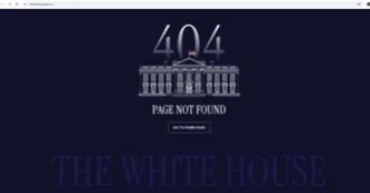
Trump Administration shuts down White House Spanish-language page, social media
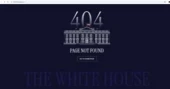
Within hours of President Donald Trump’s inauguration, the new administration took down the Spanish-language version of the official White House website.
The site — currently https://www.whitehouse.gov/es/ — now gives users an “Error 404” message. It also included a “Go Home” button that directed viewers to a page featuring a video montage of Trump in his first term and on the campaign trail. The button was later updated to read “Go To Home Page”.
Hispanic advocacy groups and others expressed confusion at the abrupt change and frustration at what some called the administration’s lack of efforts to maintain communication with the Latino community, which helped propel him to the presidency.
The Spanish profile of the White House’ X, @LaCasaBlanca and the government page on reproductive freedom also were disbanded. Meanwhile, the Spanish versions of other government agencies such as the Department of Labor, Justice and Agriculture remained available for users on Tuesday.
Asked about the changes, White House principal deputy press secretary Harrison Fields responded Tuesday that the administration is “committed to bringing back online the Spanish translation section of the website.”
“It’s day two. We are in the process of developing, editing and tweaking the White House website. As part of this ongoing work, some of the archived content on the website went dormant. We are committed to reloading that content in a short timeline," he said without elaborating.
Trump removed the Spanish version of the page in 2017. At that time, White House officials said they would reinstate it. President Joe Biden reinstated the page in 2021.
The page's removal coincided with Trump’s first-day wave of executive orders highlighted by the launch of an illegal immigration crackdown that was one of his key campaign pledges. Trump on Monday declared a national emergency at the U.S.-Mexico border and announced plans to send U.S. troops to help support immigration agents and restrict refugees and asylum.
According to 2023 Census Bureau estimates, about 43.4 million Americans — 13.7% of the U.S. population age 5 and older — speak Spanish at home. The U.S. has no official language.
Monica Rivera, a brand and communications strategist in New York City of Puerto Rican and Cuban descent, said the shutdown sends a clear signal.
Read: Trump announces 500 bln USD AI infrastructure investment in U.S.
“There are 43 million Latinos who speak Spanish as their first language and removing access to information directly from the White House draws a distinct line as to who they are serving and more dangerously, signals to the administration’s MAGA base that we as Latinos are ‘other’ and a less significant part of this country," Rivera said.
Anthony Hernandez, a paralegal in the nation's capital, wasn’t initially aware of the move and said it suggests what the coming years of a second Trump presidency would look like, with specific issues making headlines while “minor but equally malicious things like that go unnoticed.”
“A move like shutting down the Spanish White House page and X profile serves no purpose other than to cut off resources for millions of Hispanic Americans and immigrants attempting to enter the United States legally," Hernandez said. "And it’s a slap in the face to the millions of Hispanic voters that supported him in this recent election.”
Trump’s secretary of state, Marco Rubio, is Cuban American and speaks Spanish. At his swearing-in Tuesday, he gave remarks in Spanish, thanking God, his family and Trump.
Meanwhile, Hispanic leaders and communication strategy experts expressed surprise with the page's removal, given Trump’s popularity with certain Latino voters.
“If the White House is seriously interested in engaging with Latinos, the second largest group in this country, then they need to make sure that updates can also be distributed in Spanish, a preferred language for millions in our community,” said Frankie Miranda President and CEO of the Hispanic Federation.
He called that a way to ensure "everyone is a part of the civic process.”
Kris Klein Hernández, a U.S. historian specializing in race, gender, and sexuality at Connecticut College, said the content removal from official White House websites not only limits the access available to Spanish-speaking U.S. citizens and migrants but leads "some to question which constituencies the administration prioritizes.”
Read more: Rhino.ai announces $50M series A to transform enterprise modernization
Jeff Lee, former deputy cabinet secretary and deputy director of external and international affairs for former California Gov. Jerry Brown, said the move seems counterintuitive given the opportunity to “showcase” policy changes, especially ones related to economics and border security.
“I didn’t see any other language mediums that got the kibosh. So I think that’s a really interesting thing to single out — if that’s the case," Lee said.
AP VoteCast, a nationwide survey of more than 120,000 voters, found Trump won a larger share of Black and Latino voters than he did in 2020, and most notably among men under age 45. Young Latinos, particularly young Latino men, also were more open to Trump than in 2020. Roughly half of young Latino men voted for Democratic Vice President Kamala Harris, compared with about 6 in 10 who went for Biden.
1 year ago

How to Get Traffic Updates in Dhaka: Useful Apps and Sources
Dhaka's traffic congestion is a persistent challenge, often leading to long delays in reaching destinations, increased pollution, and commuter stress. These traffic woes significantly impact productivity and quality of life for city dwellers. In Dhaka, finding routes with minimal traffic is crucial to avoid wasted time on the roads and ensure smoother commutes. Staying updated on traffic scenarios has become essential in navigating the city's ever-evolving road networks. Let's explore effective ways to stay ahead of the traffic curve in Dhaka.
6 Smart Ways to Stay Updated on Traffic Jams in Dhaka
.
Google Maps
Real-time traffic monitoring has become crucial for navigating the city's chaotic roads, and Google Maps excels in providing accurate, live updates. By leveraging data from the web and other sources, the app continuously tracks road conditions and highlights congested areas with color-coded routes–green for clear, yellow for moderate, and red for heavy traffic. Users can receive alternative route suggestions in real time, helping them avoid delays.
In addition, Google Maps informs drivers of accidents, road closures, and construction, ensuring they know of potential disruptions. Previous traffic data also helps predict traffic patterns on certain routes. The app’s voice-guided navigation adds further convenience, enabling users to concentrate on the road while receiving updates.
Read more: Best Free Personal Safety Android, iOS Apps for Women in 2024
Waze
Known for its community-driven approach, Waze gathers real-time traffic data from users on the road. Drivers actively report road conditions, accidents, and other hazards, sharing their insights with the Waze community. This collaboration enables Waze to suggest users avoid congested areas and even alert them about sudden traffic incidents ahead. The software recalculates routes with time on changing traffic conditions, securing drivers’ uninterrupted navigation.
Additionally, Waze allows users to report police presence, hazards, and road closures, providing a comprehensive traffic monitoring experience that helps commuters stay informed and make better decisions on the road.
Ride-sharing Mobile Apps
Through real-time traffic tracking and optimised route suggestions, ride-sharing apps have transformed the way to navigate urban transportation. These platforms continuously analyse road status, affirming that vehicle drivers and passengers avoid major congestion.
Read more: 7 Food Delivery Apps for Dhaka
For instance, the Uber app integrates live traffic data, providing alternative routes to sidestep delays and recalculating paths as needed. Similarly, the Pathao app uses up-to-date traffic information to optimise the journey, adjusting routes dynamically based on congestion.
Both platforms offer a seamless commuting experience, helping users bypass traffic jams and reach their destination more quickly.
1 year ago
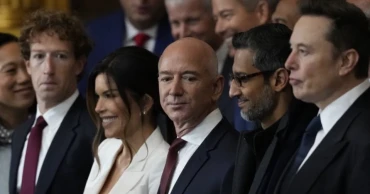
Trump, a populist president, is flanked by tech billionaires at his inauguration
President Donald Trump’s inauguration on Monday featured several high-profile tech CEOs occupying some of the most exclusive seats, a notable break from traditional inaugural guest lists.
Despite branding himself as a champion of the working class, Trump reserved spots close to the president typically held for family, former presidents, and distinguished guests for some of the world’s wealthiest tech leaders.
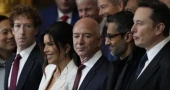
Photos from the event revealed tech magnates interacting with several of Trump’s key cabinet members, including Robert F. Kennedy Jr., the health secretary, and Marco Rubio, the secretary of state. In one image, Rubio is seen in the background as Meta CEO Mark Zuckerberg and his wife Priscilla Chan pose alongside Amazon CEO Jeff Bezos and his fiancée Lauren Sánchez, Google CEO Sundar Pichai, and Elon Musk. Musk, regarded as one of Trump’s closest advisers, also leads Tesla, SpaceX, and the social platform X.
Trump says 25% tariffs on Canada and Mexico coming on Feb. 1 as he signs several orders on economy
Other tech executives present at the event included Apple CEO Tim Cook and TikTok CEO Shou Zi Chew.
The involvement of billionaires in national politics is not new. Many influential donors, including billionaires, supported Trump’s Democratic opponent, Vice President Kamala Harris, during the campaign. Former President Joe Biden, in his final days in office, honored liberal donor George Soros with the Presidential Medal of Freedom.
However, the prominence of tech billionaires at Trump’s inauguration underscores the significant influence they could wield in his administration. In his farewell address, Biden cautioned against the growing power of tech oligarchs, warning they posed a threat to democracy.
Responding to Biden’s remarks, Trump dismissed the criticism, claiming the executives had shifted their allegiance from Democrats, particularly Biden, whom they no longer supported.
“They were all with him, every one of them, and now they are all with me,” Trump said in the Oval Office on Monday.
Trump sworn in as 47th President of the United States, promises new 'golden age of America'
Despite receiving substantial donations for his inauguration committee and more than $200 million in campaign support from Musk, Trump insisted he remained independent of their influence.
“They’re not going to get anything from me,” Trump asserted. “I don’t need their money. What I do want is for the country to succeed, and they are smart people creating jobs.”
1 year ago