Tech-News

TECNO unveils Universal Tone Imaging Technology
TECNO, a global pioneer in mobile imaging technology, unveiled its latest groundbreaking leap in camera technology, TECNO Universal Tone–the most advanced AI-Powered multi-skin tone imaging technology that integrates the industry's newest spectral database and insights recently.
Self-developed by TECNO, the technology was enhanced through joint research and development in cooperation with color science academics from leading global universities, with newly collected and analyzed data from scientific research integrated into the system. The Universal Tone technology made its debut in the captivating 'Portrait For Everyone' short film produced by BBC StoryWorks on October 2, said a media release.
Created to deliver precise representations of skin tones, TECNO Universal Tone embodies inclusivity and customization.
Jack Guo, General Manager of TECNO, highlighted the brand's commitment to fostering a positive mindset through technological development. The technology employs a rigorous scientific, data-based approach to ensure an accurate reflection of the diverse beauty of users worldwide.
TECNO Universal Tone technology incorporates three engines: the Multi-Skin Tone Restoration Engine, the Local-Tuning Engine, and the AI-Powered Computational Portrait Engine.
The Multi-Skin Tone Restoration Engine utilises a scientific approach, featuring the industry's largest diversified spectral database. It covers frequently overlooked skin colors, eliminating bias in technology. This engine allows for the creation of an inclusive skin tone scale and precise representation.
The Local-Tuning Engine tailors solutions for diverse real-world scenarios, considering local environments, lighting conditions, and color temperatures to achieve a harmonious output, it reads.
The AI-Powered Computational Portrait Engine delivers a personalized and localized portrait imaging experience. It considers aesthetic preferences, facial features, and skin tones unique to each region, ensuring enhanced accuracy, texture, and personalized beauty enhancements.
In synergy, these engines optimize TECNO Universal Tone. The Multi-Skin Tone Restoration Engine calibrates skin tones, the Local-Tuning Engine restructures facial tones and analyzes the environment, and the AI-Powered Computational Portrait Engine applies a personalized algorithm aligned with regional preferences.
Dr. Kaida Xiao, Associate Professor at the University of Leeds, emphasizes the data-based approach in developing accurate color cards for each skin tone. TheUniversal Tone technology ensures accurate identification and optimization of individual skin tones, setting a new standard for diversity and true-to-life portraits.
TECNO, guided by its user-centric philosophy and "Stop At Nothing" strategy, continues to pursue innovation. The development of TECNO Universal Tone marks a significant milestone in creating a more inclusive smartphone industry, emphasizing the brand's commitment to enhancing user lifestyles globally.
2 years ago

Microsoft hires OpenAI founder Sam Altman to lead AI research team
Microsoft announced Monday that it has hired Sam Altman and another co-founder of ChatGPT maker OpenAI after they unexpectedly departed the company days earlier in a corporate shakeup that shocked the artificial intelligence world.
Microsoft Chairman and CEO Satya Nadella also tweeted that the major investor in OpenAI — behind the chatbot that kicked off the generative AI craze — looked “forward to getting to know” OpenAI's new chief executive, former Twitch leader Emmett Shear, and the rest of the management team.
Nadella wrote on X, formerly known as Twitter, that Microsoft was “extremely excited to share the news that Sam Altman and Greg Brockman, together with colleagues, will be joining Microsoft to lead a new advanced AI research team.”
Altman said “the mission continues,” in reply to Nadella on X.
OpenAI said Friday that Altman was pushed out after a review found he was “not consistently candid in his communications” with the board of directors, which had lost confidence in his ability to lead OpenAI.
Altman catapulted ChatGPT to global fame while serving as company CEO and in the past year has become Silicon Valley’s sought-after voice on the promise and potential dangers of artificial intelligence.
OpenAI last week had announced co-founder Brockman would step down as board chairman but remain onas president. Brockman followed with a post on X reprinting a message he sent to OpenAI employees in which he wrote, “based on today’s news, i quit.”
In another X post Friday night, Brockman said Altman was asked to join a video meeting with the company’s board members, when co-founder and chief scientist Ilya Sutskever informed Altman he was being fired.
Brockman added that he was informed of his removal from the board in a separate call with Sutskever a short time later.
“Sam and I are shocked and saddened by what the board did today,” Brockman wrote on X.
2 years ago

Human drama at OpenAI: Board reportedly ‘in discussion’ with Sam Altman to return as CEO
The OpenAI board is reportedly "in discussion" with Sam Altman regarding his potential return as Chief Executive Officer (CEO) after he was suddenly fired on Friday (November 17, 2023), according to The Verge.
Quoting sources close to the matter, The Verge reported that Altman is “ambivalent” about coming back and would want significant governance changes.
Also read: ChatGPT-maker OpenAI fires CEO Sam Altman
Earlier, many staffers of OpenAI, the US-based AI research and deployment company that developed ChatGPT, gave an ultimatum to the OpenAI board to resign and bring back Sam Altman and Greg Brockman, chairman of OpenAI who resigned in protest of firing Altman.
As per The Verge, the board has initially reached an agreement to resign, making way for Altman and Brockman to return. However, there seems to have been a change in their stance since then.
A source close to Altman told Verge that if he decides to start a new company, those staffers will go with him, which could lead OpenAI towards a state of free-fall.
Also read: ChatGPT-4: All you need to know
Following Altman’s termination as CEO, a string of senior researchers of the organisation have resigned from their posts at OpenAI.
Meanwhile, in a memo sent to OpenAI staffers, one executive member of the company has reportedly said "we remain optimistic" about bringing back Sam Altman, The Verge reports, quoting The Information. The Verge, however, couldn't confirm whom the executive was referring to with the term "we."
2 years ago

Luna Shamsuddoha honoured posthumously by Portugal for contributions in ICT sector
Luna Shamsuddoha, a pioneer in Bangladesh’s ICT sector, was posthumously honoured with the ‘Meritorious Achievement Award-2023’ by Portugal for her contributions to ICT.
The award ceremony organized by the International Centre for Parliamentary Studies (ICPS) and the National Electoral Commission of Portugal was held in Lisbon on November 15.
The award was conferred on Luna Shamsuddoha in recognition of her invaluable contributions and lifetime dedication to electoral management including the formulation of fingerprint and photograph-based voter lists in Bangladesh alongside her contribution to electoral management in different countries of the world.
Her remarkable legacy in the realm of electoral affairs has left an indelible mark, the organisers said.
The ‘Meritorious Achievement Award’ was handed over to Reem Shamsuddoha, daughter of the late Luna Shamsuddoha, at the function which was attended by dignitaries from electoral commissions from around the world.
Soreto de Barros, president of the National Electoral Commission of Portugal, officials of election commissions of various countries, and former chief election commissioner of India Nasim Zaidi, were present, among others, on the occasion.
Luna Shamsuddoha breathed her last on February 17, 2021. The ICPS mentioned that Luna Shamsuddoha was conferred the prestigious award due to her invaluable contributions to the electoral management of various countries of the world including Bangladesh through the use of ICT.
Regarding the award, AKM Shamsuddoha, husband of the late Luna Shamsuddoha, said the ‘Meritorious Achievement Award’ conferred posthumously on Luna is a matter of great pride. He also recalled the tireless efforts of the engineers and officials of Dohatec New Media towards the achievement.
2 years ago
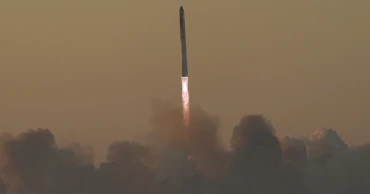
SpaceX launched its giant new rocket but explosions end the second test flight
SpaceX launched its mega rocket Starship but lost both the booster and the spacecraft in a pair of explosions minutes into Saturday’s test flight.
The rocketship reached space following liftoff from South Texas before communication suddenly was lost. SpaceX officials said it appears the ship’s self-destruct system blew it up over the Gulf of Mexico.
Minutes earlier, the separated booster had exploded over the gulf. By then, though, its job was done.
Saturday’s demo lasted eight or so minutes, about twice as long as the first test in April, which also ended in an explosion. The latest flight came to an end as the ship’s engines were almost done firing to put it on an around-the-world path.
Read: SpaceX sends Saudi astronauts, including nation’s 1st woman in space, to International Space Station
At nearly 400 feet (121 meters), Starship is the biggest and most powerful rocket ever built, with the goal of ferrying people to the moon and Mars.
“The real topping on the cake today, that successful liftoff,” said SpaceX commentator John Insprucker, noting that all 33 booster engines fired as designed, unlike last time. The booster also separated seamlessly from the spaceship, which reached an altitude of 92 miles (148 kilometers).
Added commentator Kate Tice: "We got so much data, and that will all help us to improve for our next flight.”
SpaceX founder Elon Musk watched from behind launch controllers at the southern tip of Texas near the Mexico border, near Boca Chica Beach. At company headquarters in Hawthorne, California, employees cheered as Starship soared at daybreak. The room grew quiet once it was clear that the spaceship had been destroyed.
Read: SpaceX launches 4 astronauts for NASA after private flight
SpaceX had been aiming for an altitude of 150 miles (240 kilometers), just high enough to send the bullet-shaped spacecraft around the globe before ditching into the Pacific near Hawaii about 1 1/2 hours after liftoff, short of a full orbit.
Following April's flight demo, SpaceX made dozens of improvements to the rocket as well as the launch pad. The Federal Aviation Administration cleared the rocket for flight on Wednesday, after confirming that all safety and environmental concerns had been met.
After Saturday's launch, the FAA said no injuries or public damage had been reported and that an investigation was underway to determine what went wrong. SpaceX cannot launch another Starship until the review is complete and corrections made, the FAA added.
NASA is counting on Starship to land astronauts on the moon by the end of 2025 or shortly thereafter. The space agency awarded SpaceX a $3 billion contract to make it happen, by transferring astronauts from its Orion capsule to Starship in lunar orbit before heading down to the surface.
Read: Four station astronauts catch ride with SpaceX back home
“Today’s test is an opportunity to learn — then fly again,” noted NASA Administrator Bill Nelson via X, formerly known as Twitter.
Starship is 34 feet (10 meters) taller than NASA’s Saturn V rocket which carried men to the moon more than a half-century ago, and 75 feet (23 meters) taller than NASA’s Space Launch System rocket that flew around the moon and back, without a crew, last year. And it’s got approximately double the liftoff thrust.
Like before, nothing of value was aboard Starship for the trial run.
Once Starship is proven, Musk plans to use the fully reusable mega rockets to launch satellites into orbit around Earth and equipment and people to the moon, and eventually, to Mars.
2 years ago

ChatGPT-maker OpenAI fires CEO Sam Altman
ChatGPT-maker Open AI said Friday it has pushed out its co-founder and CEO Sam Altman after a review found he was “not consistently candid in his communications” with the board of directors.
“The board no longer has confidence in his ability to continue leading OpenAI,” the artificial intelligence company said in a statement.
In the year since Altman catapulted ChatGPT to global fame, he has become Silicon Valley’s sought-after voice on the promise and potential dangers of artificial intelligence and his sudden and mostly unexplained exit brought uncertainty to the industry’s future.
Mira Murati, OpenAI’s chief technology officer, will take over as interim CEO effective immediately, the company said, while it searches for a permanent replacement.
The announcement also said another OpenAI co-founder and top executive, Greg Brockman, the board’s chairman, would be stepping down from that role but remain at the company, where he serves as president. But later on X, formerly Twitter, Brockman wrote, “based on today’s news, i quit.”
Docs say Zuckerberg 'rejected' proposals to improve teen mental health on Facebook, Instagram
OpenAI declined to answer questions on what Altman’s alleged lack of candor was about. The statement said his behavior was hindering the board’s ability to exercise its responsibilities.
Altman posted Friday on X: “i loved my time at openai. it was transformative for me personally, and hopefully the world a little bit. most of all i loved working with such talented people. will have more to say about what’s next later.”
The Associated Press and OpenAI have a licensing and technology agreement that allows OpenAI access to part of AP’s text archives.
Altman helped start OpenAI as a nonprofit research laboratory in 2015. But it was ChatGPT’s explosion into public consciousness that thrust Altman into the spotlight as a face of generative AI — technology that can produce novel imagery, passages of text and other media. On a world tour this year, he was mobbed by a crowd of adoring fans at an event in London.
He’s sat with multiple heads of state to discuss AI’s potential and perils. Just Thursday, he took part in a CEO summit at the Asia-Pacific Economic Cooperation conference in San Francisco, where OpenAI is based.
He predicted AI will prove to be “the greatest leap forward of any of the big technological revolutions we’ve had so far.” He also acknowledged the need for guardrails, calling attention to the existential dangers future AI could pose.
Some computer scientists have criticized that focus on far-off risks as distracting from the real-world limitations and harms of current AI products. The U.S. Federal Trade Commission has launched an investigation into whether OpenAI violated consumer protection laws by scraping public data and publishing false information through its chatbot.
The company said its board consists of OpenAI’s chief scientist, Ilya Sutskever, and three non-employees: Quora CEO Adam D’Angelo, tech entrepreneur Tasha McCauley, and Helen Toner of the Georgetown Center for Security and Emerging Technology.
OpenAI’s key business partner, Microsoft, which has invested billions of dollars into the startup and helped provide the computing power to run its AI systems, said that the transition won’t affect its relationship.
“We have a long-term partnership with OpenAI and Microsoft remains committed to Mira and their team as we bring this next era of AI to our customers,” said an emailed Microsoft statement.
While not trained as an AI engineer, Altman, now 38, has been seen as a Silicon Valley wunderkind since his early 20s. He was recruited in 2014 to take lead of the startup incubator YCombinator.
“Sam is one of the smartest people I know, and understands startups better than perhaps anyone I know, including myself,” read YCombinator co-founder Paul Graham’s 2014 announcement that Altman would become its president. Graham said at the time that Altman was “one of those rare people who manage to be both fearsomely effective and yet fundamentally benevolent.”
Industrial robot crushes worker to death
OpenAI started out as a nonprofit when it launched with financial backing from Tesla CEO Elon Musk and others. Its stated aims were to “advance digital intelligence in the way that is most likely to benefit humanity as a whole, unconstrained by a need to generate financial return.”
That changed in 2018 when it incorporated a for-profit business Open AI LP, and shifted nearly all its staff into the business, not long after releasing its first generation of the GPT large language model for mimicking human writing. Around the same time, Musk, who had co-chaired its board with Altman, resigned from the board in a move that OpenAI said would eliminate a “potential future conflict for Elon” due to Tesla’s work on building self-driving systems.
While OpenAI’s board has preserved its nonprofit governance structure, the startup it oversees has increasingly sought to capitalize on its technology by tailoring its popular chatbot to business customers.
At its first developer conference last week, Altman was the main speaker showcasing a vision for a future of AI agents that could help people with a variety of tasks. Days later, he announced the company would have to pause new subscriptions to its premium version of ChatGPT because it had exceeded capacity.
Altman’s exit “is indeed shocking as he has been the face of” generative AI technology, said Gartner analyst Arun Chandrasekaran.
He said OpenAI still has a “deep bench of technical leaders” but its next executives will have to steer it through the challenges of scaling the business and meeting the expectations of regulators and society.
Forrester analyst Rowan Curran speculated that Altman’s departure, “while sudden,” did not likely reflect deeper business problems.
“This seems to be a case of an executive transition that was about issues with the individual in question, and not with the underlying technology or business,” Curran said.
Altman has a number of possible next steps. Even while running OpenAI, he placed large bets on several other ambitious projects.
Google brings its AI chatbot Bard into its inner circle, opening door to Gmail, Maps, YouTube
Among them are Helion Energy, for developing fusion reactors that could produce prodigious amounts of energy from the hydrogen in seawater, and Retro Biosciences, which aims to add 10 years to the human lifespan using biotechnology. Altman also co-founded Worldcoin, a biometric and cryptocurrency project that’s been scanning people’s eyeballs with the goal of creating a vast digital identity and financial network.
2 years ago

UK cybersecurity center says 'deepfakes' and other AI tools pose a threat to the next election
Britain’s cybersecurity agency said Tuesday that artificial intelligence poses a threat to the country’s next national election, and cyberattacks by hostile countries and their proxies are proliferating and getting harder to track.
The National Cyber Security Center said “this year has seen the emergence of state-aligned actors as a new cyber threat to critical national infrastructure” such as power, water and internet networks.
Read: Surgeons perform world’s first eye transplant
The center — part of Britain’s cyberespionage agency, GCHQ — said in its annual review that the past year also has seen “the emergence of a new class of cyber adversary in the form of state-aligned actors, who are often sympathetic to Russia’s further invasion of Ukraine and are ideologically, rather than financially, motivated.”
It said states and state-aligned groups pose “an enduring and significant threat,” from Russian-language criminals targeting British firms with ransomware attacks, to “China state-affiliated cyber actors” using their skills to pursue “strategic objectives which threaten the security and stability of U.K. interests.”
Echoing warnings by Britain’s MI5 and MI6 intelligence agencies, the center called the rise of China as a tech superpower “an epoch-defining challenge for U.K security.”
“We risk China becoming the predominant power in cyberspace if our efforts to raise resilience and develop our capabilities do not keep pace,” it said.
Read: Docs say Zuckerberg 'rejected' proposals to improve teen mental health on Facebook, Instagram
The report also highlighted the threat posed by fast-evolving AI technology to elections, including a U.K. national election due to be held by January 2025.
While Britain’s old-fashioned method of voting, with pencil and paper, makes it hard for hackers to disrupt the vote itself, the center said deepfake videos and “hyper-realistic bots” would make the spread of disinformation during a campaign easier.
2 years ago

Surgeons perform world’s first eye transplant
Surgeons have performed the world’s first transplant of an entire human eye, an extraordinary addition to a face transplant — although it’s far too soon to know if the man will ever see through his new left eye.
An accident with high-voltage power lines had destroyed most of Aaron James’ face and one eye. His right eye still works. But surgeons at NYU Langone Health hoped replacing the missing one would yield better cosmetic results for his new face, by supporting the transplanted eye socket and lid.
The NYU team announced Thursday that so far, it's doing just that. James is recovering well from the dual transplant last May and the donated eye looks remarkably healthy.
“It feels good. I still don’t have any movement in it yet. My eyelid, I can’t blink yet. But I’m getting sensation now,” James told The Associated Press as doctors examined his progress recently.
“You got to start somewhere, there’s got to be a first person somewhere,” added James, 46, of Hot Springs, Arkansas. “Maybe you’ll learn something from it that will help the next person.”
Read: Industrial robot crushes worker to death
Today, transplants of the cornea — the clear tissue in front of the eye — are common to treat certain types of vision loss. But transplanting the whole eye — the eyeball, its blood supply and the critical optic nerve that must connect it to the brain — is considered a moonshot in the quest to cure blindness.
Whatever happens next, James' surgery offers scientists an unprecedented window into how the human eye tries to heal.
“We’re not claiming that we are going to restore sight,” said Dr. Eduardo Rodriguez, NYU's plastic surgery chief, who led the transplant. “But there’s no doubt in my mind we are one step closer.”
Some specialists had feared the eye would quickly shrivel like a raisin. Instead, when Rodriguez propped open James’ left eyelid last month, the donated hazel-colored eye was as plump and full of fluid as his own blue eye. Doctors see good blood flow and no sign of rejection.
Now researchers have begun analyzing scans of James’ brain that detected some puzzling signals from that all-important but injured optic nerve.
One scientist who has long studied how to make eye transplants a reality called the surgery exciting.
“It’s an amazing validation” of animal experiments that have kept transplanted eyes alive, said Dr. Jeffrey Goldberg, chair of ophthalmology at Stanford University.
Read: a2i’s NISE and Muktopaath win WITSA Award
The hurdle is how to regrow the optic nerve, although animal studies are making strides, Goldberg added. He praised the NYU team’s “audacity” in even aiming for optic nerve repair and hopes the transplant will spur more research.
“We’re really on the precipice of being able to do this,” Goldberg said.
James was working for a power line company in June 2021 when he was shocked by a live wire. He nearly died. Ultimately he lost his left arm, requiring a prosthetic. His damaged left eye was so painful it had to be removed. Multiple reconstructive surgeries couldn’t repair extensive facial injuries including his missing nose and lips.
James pushed through physical therapy until he was strong enough to escort his daughter Allie to a high school homecoming ceremony, wearing a face mask and eye patch. Still he required breathing and feeding tubes, and longed to smell, taste and eat solid food again.
“In his mind and his heart, it’s him — so I didn’t care that, you know, he didn’t have a nose. But I did care that it bothered him,” said his wife, Meagan James.
Face transplants remain rare and risky. James’ is only the 19th in the U.S., the fifth Rodriguez has performed. The eye experiment added even more complexity. But James figured he'd be no worse off if the donated eye failed.
Three months after James was placed on the national transplant waiting list, a matching donor was found. Kidneys, a liver and pancreas from the donor, a man in his 30s, saved three other people.
During James' 21-hour operation, surgeons added another experimental twist: When they spliced together the donated optic nerve to what remained of James’ original, they injected special stem cells from the donor in hopes of spurring its repair.
Last month, tingles heralded healing facial nerves. James can't yet open the eyelid, and wears a patch to protect it. But as Rodriguez pushed on the closed eye, James felt sensation — although on his nose rather than his eyelid, presumably until slow-growing nerves get reoriented. The surgeon also detected subtle movements beginning in muscles around the eye.
Read: 13th Anniversary of a2i's Digital Centre initiative celebrated
Then came a closer look. NYU ophthalmologist Dr. Vaidehi Dedania ran a battery of tests. She found expected damage in the light-sensing retina in the back of the eye. But she said it appears to have enough special cells called photoreceptors to do the job of converting light to electrical signals, one step in creating vision.
Normally, the optic nerve then would send those signals to the brain to be interpreted. James’ optic nerve clearly hasn't healed. Yet when light was flashed into the donated eye during an MRI, the scan recorded some sort of brain signaling.
That both excited and baffled researchers, although it wasn’t the right type for vision and may simply be a fluke, cautioned Dr. Steven Galetta, NYU’s neurology chair. Only time and more study may tell.
Still, the surgery marks “a technical tour de force,” said Dr. David Klassen, chief medical officer of the United Network for Organ Sharing, which runs the nation’s transplant system. "You can learn a tremendous amount from a single transplant” that could propel the field.
As for James, “we’re just taking it one day at a time,” he said.
2 years ago

13th Anniversary of a2i's Digital Centre initiative celebrated
Aspire to Innovate-a2i recently celebrated its 13th anniversary, marking over a decade of providing technology services to marginalized communities through digital centres.
State Minister for Information and Communication Technology Zunaid Ahmed Palak was present as the chief guest.
The event was also attended by the Project Director of a2i, Md Mamunur Rashid Bhuiyan; Natore Superintendent of Police Md. Tariqul Islam, PPM; and other special guests including Tariqul Islam, PPM; Sheikh Kamal IT Training and Incubation Center Establishment Project Deputy Project Director (Deputy Secretary) Md Mokhtar Ahmed, and Project Director of Bangladesh-India Digital Services and Employment Training Center Establishment Project, Md Amirul Islam.
The ICT state minister said Prime Minister Sheikh Hasina took the initiative to establish this digital centre to deliver the service to the doorstep of the people in a corruption-free way at an affordable price using technology. It has reduced the time from three months to three minutes. This is Sheikh Hasina's Digital Bangladesh, Palak added.
More than 17,800 women and men entrepreneurs of 9397 digital centers spread across the country are providing more than 385 public and private services to the citizens easily, quickly and at a low cost. More than 75 lakh services are being provided from digital centers every month. The entrepreneurs have so far saved 78.14 percent of the time, 16.55 percent of the cost and 17.38 percent of the commute of the citizens.
The state minister mentioned that the initiative has received international recognition and will be the model for a smart Bangladesh. This model is being followed in many countries, including the Philippines, South Africa, Ghana, and Cambodia. The government plans to set up 1,000 village digital centers across the country by 2024, ensuring that technology services are accessible to every corner of the village.
a2i Project Director Md Mamunur Rashid Bhuiyan said the digital centre will play a pivotal role in boosting the rural economy. He added that smart technology will serve as a powerful tool for the development of Bangladesh. The digital centre will be one of the key instruments for building a Smart Bangladesh, he added.
Natore Deputy Commissioner Abu Nasser Bhuiyan presided over the program while Nilufa Yasmin, deputy project director of ICT Division's Har Power Project conducted it.
2 years ago

Docs say Zuckerberg 'rejected' proposals to improve teen mental health on Facebook, Instagram
Meta CEO Mark Zuckerberg "personally rejected" proposals aimed at improving the mental health and wellbeing of teenagers on Facebook and Instagram, internal communications shared as part of an ongoing lawsuit have revealed, reports CNN.
According to the unsealed communications, Zuckerberg overruled senior executives, including Instagram CEO Adam Mosseri and President of Global Affairs Nick Clegg, who advocated for increased measures to protect more than 30 million teens using Instagram in the United States.
Elon Musk says he may need surgery before proposed 'cage match' with Mark Zuckerberg
One notable rejection involved a 2019 proposal to disable Instagram's "beauty filters," which digitally alter users' appearances and have been linked to promoting unrealistic body image expectations, negatively impacting teens' mental health, said the report.
Despite broad support from top executives, Zuckerberg insisted that there was a "demand" for the filters and claimed he had seen "no data" indicating harm.
Zuckerberg looks shredded in photo with MMA fighters
The lawsuit revealed internal tensions within Meta, with executives expressing concerns about the lack of investment in well-being initiatives. Instagram's policy chief, Karina Newton, and Meta's vice president of product design, Margaret Gould Stewart, had recommended disabling beauty filters based on advice from academics and external advisors. However, after Chief Technology Officer Andrew Bosworth brought the matter to Zuckerberg's attention, the proposal was rejected.
The newly unveiled documents also accused Meta of exploiting the psychology of adolescent brains and claimed that Zuckerberg personally set goals for increasing user engagement on Instagram, potentially prioritising profits over user wellbeing.
Agitated employees grill Meta CEO Zuckerberg following mass layoff announcement
In response, Meta spokesman Andy Stone defended the company, emphasising that they have a robust central team overseeing youth well-being efforts and have implemented various tools to support teens and families. Stone also stated that Meta banned filters promoting cosmetic surgery, changes in skin colour, or extreme weight loss.
2 years ago