tech-news

Group: Tesla workers fired after union push at NY plant
Several employees at a Tesla factory in New York have been fired a day after launching union organizing efforts, according to Tesla Workers United, but the company says they're not related.
The workers at the Buffalo plant received an email Wednesday evening updating them on a new policy that prohibits them from recording workplace meetings without all participants’ permission, Tesla Workers United said Thursday. The group, which is behind the union movement, said that such restrictions violate federal labor law and flouts New York’s one-party consent law to record conversations.
“We’re angry. This won’t slow us down. This won’t stop us,” Sara Costantino, a current Tesla employee and organizing committee member, said in a prepared statement. “They want us to be scared, but I think they just started a stampede. We can do this. But I believe we will do this.”
In a statement, Tesla said the terminations were the result of poor ratings on performance reviews that were conducted before the union campaign was announced. The list of employees being dismissed was finalized Feb. 3, and Tesla became aware of organizing activities Feb. 13, the company said.
“We learned in hindsight that one out of the 27 impacted employees officially identified as part of the union campaign,” Tesla said. “This exercise pre-dated any union campaign.”
TWU said that the firings were unacceptable and that the expectations placed on Tesla workers are “unfair, unattainable, ambiguous and ever changing.” The Tesla plant, which makes solar panels and other renewable energy technology, is not far from a Starbucks location where workers voted to unionize last year.
“I feel blindsided, I got COVID and was out of the office, then I had to take a bereavement leave. I returned to work, was told I was exceeding expectations and then Wednesday came along,” organizing committee member Arian Berek, who is one of the fired employees, said in a statement. “I strongly feel this is in retaliation to the committee announcement, and it’s shameful.”
The Rochester Regional Joint Board of Workers United has filed a complaint against Tesla with the National Labor Relations Board, accusing the electric vehicle maker of unfair labor practices.
In the complaint, the group lists the names of several employees who were part of the factory's autopilot department that were fired. The group says that it believes Tesla “terminated these individuals in retaliation for union activity and to discourage union activity.” It is asking the NLRB for injunctive relief “to prevent irreparable destruction of employee rights resulting from Tesla’s unlawful conduct.”
Read more: Elon Musk takes over Twitter: what to expect?
On Thursday, White House press secretary Karine Jean-Pierre said without specifically referring to the situation at the Tesla plant in Buffalo that, "the president supports fundamental rights for workers under the National Labor Relations Act, including the right to organize free from intimidation or coercion.”
As part of union organizing efforts, the Tesla Workers United organizing committee said in a letter to management Tuesday that employees are seeking a voice on the job at the plant in Buffalo and want to “build an even more collaborative environment that will strengthen the company.”
Tesla CEO Elon Musk has taken a hard line against organized labor, despite an invitation to the United Auto Workers union to hold an organizing vote at Tesla’s factory in Fremont, California. In 2021 Tesla was ordered by the National Labor Relations Board to make Musk delete a 2018 tweet in which it said that he unlawfully threatened employees with loss of stock options if they chose to be represented by the UAW.
3 years ago
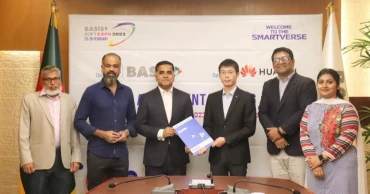
BASIS SoftExpo 2023 begins February 23
The four-day BASIS SoftExpo 2023 will begin on February 23 at Bangabandhu Bangladesh China Friendship Exhibition Center in the capital's Purbachal.
Bangladesh Association of Software and Information Services (BASIS) is organising the exhibition to showcase the latest technology innovations and ICT capabilities of Bangladesh to the world.
A memorandum of understanding (MoU) was signed between BASIS and Huawei recently in this connection.
BASIS President Russell T. Ahmed said: "We are now moving towards achieving the Smart Bangladesh goal. We are hopeful that BASIS SoftExpo 2023 will play a significant role in achieving this goal and take Bangladesh a step ahead in digitalisation."
"Huawei has achieved the leading position in the ICT field worldwide. We are delighted to partner with them."
Alex Li, vice-president of Cloud Business Group of Huawei South Asia, said: "Huawei will stand with Bangladesh in achieving the Smart Bangladesh goal as it did in fulfilling the dream of Digital Bangladesh. We have partnered with BASIS with the same vision and we will showcase our latest software and solutions at this SoftExpo."
Besides the inaugurating and closing events of BASIS SoftExpo 2023, there will be some special programs such as B2B matchmaking, ambassadors' night, outsourcing conference, startup conference, developers' conference, ministerial conference, ICT career camp/youth program, women in IT program and Japan Day program.
More than 800 corporate executives are expected to attend the "Business Leaders Meet." Also, more than 23 seminars and technical sessions will be held.
About three lakh visitors including government and private policymakers, about 200 national and international speakers, IT experts, IT sector businessmen, foreign delegations, domestic and foreign IT users and interested young students are expected to visit BASIS SoftExpo 2023.
Read more: 7th international electric expo begins on March 9 in Dhaka
3 years ago

Bangladesh IT Connect Portal-South Korea launched to explore business in IT
The government has launched a virtual desk in Bangladesh Embassy in South Korea aimed at connecting investors and partners, exploring business, and attracting Foreign Direct Investment (FDI) in the IT sector.
State Minister for ICT Zunaid Ahmed Palak inaugurated the virtual desk titled: `Bangladesh IT Connect Portal-South Korea (www.kr.itconnect.gov.bd)’ which will play a role of a catalyst to bring business and investment from South Korea by connecting IT companies of both countries.
ICT Secretary Md Shamsul Arefin, Ambassador of Bangladesh to South Korea M Delwar Hossain, Managing Director of Startup Bangladesh Sami Ahmed, Project Director of Enhancing Digital Government and Economy (EDGE) Dr Mohammed Mehedi Hassan, Director General of Korea Trade-Investment Promotion Agency (KOTRA) Jon Won Kim, President of BASIS Russell T Ahmed and Chief Operating Officer of Ulkasemi Mizan Rahman, among others, addressed the function.
The `Bangladesh IT Connect Portal-South Korea’ has been developed jointly by the World Bank-financed Enhancing Digital Government and Economy (EDGE) Project of Bangladesh Computer Council (BCC) under ICT Division to make it a Bangladesh and South Korean Business to Business (B2B) connectivity hub.
Speaking at the programme, Palak said Bangladesh and South Korea relations reached a new height in the last 51 years of independence of Bangladesh as both countries have been cooperating with each other in many areas, including trade and commerce.
“The volume of trade crossed the $3 billion mark for the first time in 2022 which was 38.71% up from the previous year,” he said adding Bangladesh’s export to South Korea also reached a record high of 678 million during the same period,” he said.
Seeking cooperation in Bangladesh’s journey towards becoming a Smart Nation by 2041, the state minister said South Korea ranked 5th in the world in terms of Foreign Direct Investment (FDI) and it would further continue to provide cooperation by investing in Bangladesh.
“The government has already created an enabling environment for investment in the IT sector by building Digital Bangladesh,’ he said calling upon the IT companies of South Korea to invest in Hi-tech Parks and the IT sector.
Palak proposed taking up a long-term joint skill development programme by Bangladesh and South Korea to provide training to the Bangladeshi educated youths.
He urged the state-owned Korea Trade-Investment Promotion Agency (KOTRA) and the Bangladesh embassy in South Korea to take immediate steps in this regard.
With the inauguration of Bangladesh IT Connect Portal- South Korea the number of such portals set up in foreign missions stood at four.
The necessary information relating to business and investment could be found on the website (www.kr.itconnect.gov.bd).
3 years ago

Elon Musk hopes to have Twitter CEO toward the end of year
Billionaire Elon Musk said Wednesday that he anticipates finding a CEO for Twitter “probably toward the end of this year."
Speaking via a video call to the World Government Summit in Dubai, Musk said making sure the platform can function remained the most important thing for him.
“I think I need to stabilize the organization and just make sure it’s in a financial healthy place,” Musk said when asked about when he'd name a CEO. “I’m guessing probably toward the end of this year would be good timing to find someone else to run the company.”
Musk, 51, made his wealth initially on the finance website PayPal, then created the spacecraft company SpaceX and invested in the electric car company Tesla. In recent months, however, more attention has been focused on the chaos surrounding his $44 billion purchase of the microblogging site Twitter.
Meanwhile, the Ukrainian military's use of Musk's satellite internet service Starlink as it defends itself against Russia's ongoing invasion has put Musk off and on at the center of the war.
Also Read: Elon Musk’s Tesla tweet trial delves into investor damages
Musk offered a wide-ranging 35-minute discussion that touched on the billionaire’s fears about artificial intelligence, the collapse of civilization and the possibility of space aliens. But questions about Twitter kept coming back up as Musk described both Tesla and SpaceX as able to function without his direct, day-to-day involvement.
“Twitter is still somewhat a startup in reverse,” he said. “There’s work required here to get Twitter to sort of a stable position and to really build the engine of software engineering."
Musk also sought to portray his takeover of San Francisco-based Twitter as a cultural correction.
“I think that the general idea is just to reflect the values of the people as opposed to imposing the values of essentially San Francisco and Berkeley, which are so somewhat of a niche ideology as compared to the rest of the world," he said. "And, you know, Twitter was, I think, doing a little too much to impose a niche.”
Musk's takeover at Twitter has seen mass firings and other cost-cutting measures. Musk, who is on the hook for about $1 billion in yearly interest payments for his purchase, has been trying to find way to maximize profits at the company.
However, some of Musk's decisions have conflicted with the reasons that journalists, governments and others rely on Twitter as an information-sharing platform.
Musk on Wednesday described the need for users to rely on Twitter for trusted information from verified accounts. However, a confused rollout to a paid verified account system saw some impersonate famous companies, leading to a further withdrawal of needed advertising cash to the site.
“Twitter is certainly quite the rollercoaster,” he acknowledged.
Forbes estimates Musk's wealth at just under $200 billion. The Forbes analysis ranks Musk as the second-wealthiest person on Earth, just behind French luxury brand magnate Bernard Arnault.
But Musk also has become a thought leader for some as well, albeit an oracle that is trying to get six hours of sleep a night despite the challenges at Twitter.
Musk described his children as being “programmed by Reddit and YouTube.” He warned that artificial intelligence should be regulated “very carefully,” describing it as akin to the promise of nuclear power but the danger of atomic bombs. He also cautioned against having a single civilization or “too much cooperation” on Earth, saying it could “collapse” a society that's like a “tiny candle in a vast darkness.”
And asked about the existence of aliens, Musk had a firm response.
“The crazy thing is, I’ve seen no evidence of alien technology or alien life whatsoever. And I think I’d know because of SpaceX,” he said. “I don't think anybody knows more about space, you know, than me.”
3 years ago

Rakuten Viber launches new chatbot, AI Chat and Create
Rakuten Viber, a global leader in private and secure messaging and voice-based communication, has launched a new chatbot, AI Chat and Create, providing users easy access to AI text and image generators.
By integrating advanced models of generative AI, such as DALL-E and Davinci, the Viber app now allows users to ask the chatbot any question or test the chatbot's creativity by designing unique images.
With just a few taps, users can transition between chatting with friends to using the bot, sharing their art, or answer a question effortlessly.
Read More: ChatGPT by Open AI: All you need to know
"Excitement about generative AI technology currently has much of the tech industry's attention and every day more and more people are exposed to the wonders that can be achieved with this technology. However, access to some of these tools is not very simple for everyone and now, we are offering the easiest way to try out various AI services in the comfort of a Viber chat, inside the app, without the need to register to a special service or further hassle and completely free," Ofir Eyal, CEO of Rakuten Viber, said.
"We provide access to these industry-leading AI tools directly on the app and users can quickly share their creations or answers. Right now, the chatbot offers two options – one for images and one for text - and we're looking continuously to expand the offering in the near future," Ofir added.
"The chatbot already has over 70,000 subscribers and over 250,000 viewers and is constantly growing. If people don't know where to start, they can easily click "Inspire Me" for the chatbot to share an example of its capabilities," Viber said.s
Read more: Viber cuts business ties with Facebook
The AI Chat and Create chatbot can be found by searching in the chat function of the Viber app or on its explore page.
3 years ago

Use AI to develop entrepreneurs: Speakers
The Entrepreneur Economist Club of Dhaka School of Economics organized a virtual seminar on the importance of big data and machine learning in entrepreneurship analysis.
Speakers from different countries connected the seminar through online, while the students and faculties of entrepreneurship economics joined the program as hosts, held on Tuesday.
The speakers emphasized increasing practice on machine learning and data analytics, to face the challenges of entrepreneurship in the new era.
There is a possibility of major changes in the economic activities of the country. So any skills in machine learning and data analytics will put an employee ahead, they said.
Read More;: Google's AI Chatbot Bard: All You Need to Know
Prof Parul Khanna, Vice Principal, IMT, Faridabad, India was the chief guest in the seminar while Economist and Coordinator of entrepreneurship economics Professor Dr. Muhammad Mahbub Ali chaired the session.
Prof.Dr.Rinku Sharma Dixit, New Delhi School of Management, India presents a keynote paper on ‘using big data and artificial intelligence to accelerate entrepreneurial development
Dr. Sudipta Bhattacharya, Dr. Dipika Kundal, Dr. Kunal Sheel, Dr. Pranjal Kumar Pukhan, Assistant Professors Rehena Parveen, and Dr. Sara Tasnim, among others, spoke at the function.
Read More: ChatGPT maker releases tool to help teachers detect if AI wrote homework
3 years ago

Google hopes ‘Bard’ will outsmart ChatGPT, Microsoft in AI
Google is girding for a battle of wits in the field of artificial intelligence with “Bard,” a conversational service apparently aimed at countering the popularity of the ChatGPT tool backed by Microsoft.
Bard initially will be available exclusively to a group of “trusted testers” before being widely released later this year, according to a Monday blog post from Google CEO Sundar Pichai.
Google’s chatbot is supposed to be able to explain complex subjects such as outer space discoveries in terms simple enough for a child to understand. It also claims the service will also perform other more mundane tasks, such as providing tips for planning a party, or lunch ideas based on what food is left in a refrigerator. Pichai didn’t say in his post whether Bard will be able to write prose in the vein of William Shakespeare, the playwright who apparently inspired the service’s name.
Read More: Google's AI Chatbot Bard: All You Need to Know
“Bard can be an outlet for creativity, and a launchpad for curiosity,” Pichai wrote
Google announced Bard’s existence less than two weeks after Microsoft disclosed it’s pouring billions of dollars into OpenAI, the San Francisco-based maker of ChatGPT and other tools that can write readable text and generate new images.
Microsoft’s decision to up the ante on a $1 billion investment that it previously made in OpenAI in 2019 intensified the pressure on Google to demonstrate that it will be able to keep pace in a field of technology that many analysts believe will be as transformational as personal computers, the internet and smartphones have been in various stages over the past 40 years.
Read More: ChatGPT maker releases tool to help teachers detect if AI wrote homework
In a report last week, CNBC said a team of Google engineers working on artificial intelligence technology “has been asked to prioritize working on a response to ChatGPT.” Bard had been a service being developed under a project called “Atlas,” as part of Google’s “code red” effort to counter the success of ChatGPT, which has attracted tens of millions of users since its general release late last year, while also raising concerns in schools about its ability to write entire essays for students.
Pichai has been emphasizing the importance of artificial intelligence for the past six years, with one of the most visible byproducts materializing in 2021 as part of a system called “Language Model for Dialogue Applications,” or LaMDA, which will be used to power Bard.
Google also plans to begin incorporating LaMDA and other artificial intelligence advancements into its dominant search engine to provide more helpful answers to the increasingly complicated questions being posed by its billion of users. Without providing a specific timeline, Pichai indicated the artificial intelligence tools will be deployed in Google’s search in the near future.
Read More: ChatGPT by Open AI: All you need to know
In another sign of Google’s deepening commitment to the field, Google announced last week that it is investing in and partnering with Anthropic, an AI startup led by some former leaders at OpenAI. Anthropic has also built its own AI chatbot named Claude and has a mission centered on AI safety.
3 years ago

Chill pervades China's tech firms even as crackdown eases
A grinding crackdown that wiped billions of dollars of value off Chinese technology companies is easing, but the once-freewheeling industry is bracing for much slower growth ahead.
Analysts say China’s easing of restrictions on companies like e-commerce giant Alibaba and online games company Tencent and talk of support for the private sector reflects Beijing’s decision to refocus on growth after the economy was ravaged by the pandemic and restrictions imposed to fight COVID-19.
But controls on internet content r emain firmly in place. And the crackdown has left a “chilling” effect on the industry, potentially slowing innovation, while U.S. restrictions against China’s computer chips industry are hindering progress in developing leading edge technology in 5G and artificial intelligence.
In January, a top official at China’s central bank said in an interview with state-owned media that the crackdown on technology companies was “basically” over, adding that companies would be encouraged to lead economic growth and create more jobs. That came just weeks after China dropped stringent entry restrictions and testing and quarantine requirements that were part of its “zero-COVID" strategy meant to quash the virus.
“With the end of the zero-COVID policy, China is returning to prioritizing economic growth, and the technology sector is obviously a critical driver of growth in China and a celebrated source of innovation,” said Gregory Allen, a senior fellow in the Strategic Technologies Program at the U.S. research organization Center for Strategic and International Studies.
Companies like Alibaba and Tencent control everyday apps and services that are used ubiquitously by large swathes of the population – including online payments, messaging, food delivery and e-commerce.
Such companies flourished for two decades with scant regulation before Beijing launched a barrage of anti-monopoly, data security and other restrictions from late 2020, seeking to rein in e-commerce, social media and other companies it viewed as too big and independent.
Signaling an easing, Didi Global — which was ordered to stop new-user registrations in 2021 following accusations that it violated data security rules — recently was allowed to resume taking on new users.
Regulators said e-commerce giant Alibaba’s finance affiliate Ant Group can go ahead with plans to raise $1.5 billion for its consumer finance unit, an important step forward after the government called off a planned IPO two years ago and ordered the firm to restructure.
After slamming online games as “spiritual opium” and enforcing strict controls on screen time for minors, regulators last April begun approving new games following an eight-month hiatus, with the first foreign titles greenlighted in December.
Stocks of technology companies, including Alibaba, Tencent as well as others such as food delivery company Meituan and search engine and artificial intelligence firm Baidu have seen their stock prices nearly double since they hit rock bottom in late October. The market valuations of these companies, however, are still far from their peak in 2019.
The crackdown’s chilling effects for investors and entrepreneurs will linger, Allen said, since the authorities have shown they're willing and able to forego growth to impose controls on the industry at any time.
Over the past two years, several founders of technology companies have stepped down as CEO or chairman of their respective firms – including Alibaba’s Jack Ma, JD.com’s Richard Liu, Bytedance’s Zhang Yiming and Pinduoduo’s Colin Huang.
In January, Alibaba’s financial affiliate Ant Group said that Ma — once China’s richest man — would give up control of the firm following a restructuring, and that no single shareholder would have control. Ma has rarely been seen in public since regulators pulled the plug on Ant Group's market debut in Hong Kong and Shanghai following his criticism of China’s financial sector in 2020. He since reportedly has moved to Tokyo.
“If you were a technology entrepreneur in China five years ago, very likely someone like Jack Ma was your hero, your idol, and was precisely what you aspired to achieve and the sort of person you aspire to become,” said Allen. “And to see a man like that kind of torn down, I think sends a really strong message.”
He and other analysts say the crackdown could potentially stifle innovation, as investors and entrepreneurs become more cautious about operating in China.
“The crackdown was deep and cut far to the bone, probably more than the government expected it to,” said Shaun Rein, founder and managing director of China Market Research Group in Shanghai. “Because what’s happened is over the last two years, venture capitalists and entrepreneurs have been scared to deploy capital and start new companies.”
The value of venture capital deals in China plunged 44% to $62.1 billion in the first 10 months of 2022 compared to the same period in 2021, according to research firm Preqin.
Some entrepreneurs and venture capitalists are taking a wait-and-see attitude, “worried in the long term that if they invest in a hot sector that the government that goes against China’s agenda or doesn’t fit with the government’s agenda for the private sector that they might get wiped out,” Rein said.
Well-established internet companies are still at an advantage to other tech industries in China that face added uncertainty due to friction between Washington and Beijing over advanced technology and trade as the U.S. seeks to block exports of high-end semiconductors and chip-making equipment and to limit Western dealings with companies like Huawei Technologies, the world's largest maker of telecommunications networking gear.
The Biden administration has stopped approving renewal of licenses to some U.S. companies that have been selling essential components to the Chinse tech giant. That’s according to two people familiar with the matter who were not authorized to comment publicly on the sensitive matter and spoke on the condition of anonymity.
Washington gradually has tightened controls over U.S. exports to Huawei but had allowed some companies like Intel and Qualcomm to sell it processors used in devices like laptops and lower-end smartphones. The U.S. has justified such sanctions on national security grounds. Huawei denies the accusations.
Under such pressure, China has accelerated efforts to become more self-sufficient in semiconductors and other advanced technologies, providing billions in subsidies and investments for the industry. But it remains years behind in some of the most advanced semiconductor manufacturing processes and a U.S. prohibition against supporting development and production of integrated circuits at some chip factories in China has deprived Chinese chip firms of the foreign talent that has long contributed to its domestic industry.
A U.S. ban on selling crucial semiconductor manufacturing equipment to China is another obstacle.
“It’s one thing to go into areas like software and cloud services, in which Chinese companies are already quite strong,” said Allen of CSIS.
“It’s a very different thing to take Chinese companies that are a decade or two behind in state-of-the-art semiconductor manufacturing equipment and tell them to grow up immediately by replicating some of the most advanced technologies that the world has ever produced.”
3 years ago

ChatGPT maker releases tool to help teachers detect if AI wrote homework
The maker of ChatGPT is trying to curb its reputation as a freewheeling cheating machine with a new tool that can help teachers detect if a student or artificial intelligence wrote that homework.
The new AI Text Classifier launched Tuesday (January 31, 2023) by OpenAI follows a weeks-long discussion at schools and colleges over fears that ChatGPT’s ability to write just about anything on command could fuel academic dishonesty and hinder learning.
OpenAI cautions that its new tool – like others already available – is not foolproof. The method for detecting AI-written text “is imperfect and it will be wrong sometimes,” said Jan Leike, head of OpenAI’s alignment team tasked to make its systems safer.
Read More: What is ChatGPT, why are schools blocking it?
“Because of that, it shouldn’t be solely relied upon when making decisions,” Leike said.
Teenagers and college students were among the millions of people who began experimenting with ChatGPT after it launched Nov. 30 as a free application on OpenAI’s website. And while many found ways to use it creatively and harmlessly, the ease with which it could answer take-home test questions and assist with other assignments sparked a panic among some educators.
By the time schools opened for the new year, New York City, Los Angeles and other big public school districts began to block its use in classrooms and on school devices.
Read More: CES 2023: Walton's smart AI products get huge response
The Seattle Public Schools district initially blocked ChatGPT on all school devices in December but then opened access to educators who want to use it as a teaching tool, said Tim Robinson, the district spokesman.
“We can’t afford to ignore it,” Robinson said.
The district is also discussing possibly expanding the use of ChatGPT into classrooms to let teachers use it to train students to be better critical thinkers and to let students use the application as a “personal tutor” or to help generate new ideas when working on an assignment, Robinson said.
Read More: AI & Future of Jobs: Will Artificial Intelligence or Robots Take Your Job?
School districts around the country say they are seeing the conversation around ChatGPT evolve quickly.
“The initial reaction was ‘OMG, how are we going to stem the tide of all the cheating that will happen with ChatGPT,’” said Devin Page, a technology specialist with the Calvert County Public School District in Maryland. Now there is a growing realization that “this is the future” and blocking it is not the solution, he said.
“I think we would be naïve if we were not aware of the dangers this tool poses, but we also would fail to serve our students if we ban them and us from using it for all its potential power,” said Page, who thinks districts like his own will eventually unblock ChatGPT, especially once the company’s detection service is in place.
Read More: How Can Artificial Intelligence Improve Healthcare?
OpenAI emphasized the limitations of its detection tool in a blog post Tuesday, but said that in addition to deterring plagiarism, it could help to detect automated disinformation campaigns and other misuse of AI to mimic humans.
The longer a passage of text, the better the tool is at detecting if an AI or human wrote something. Type in any text -- a college admissions essay, or a literary analysis of Ralph Ellison’s “Invisible Man” --- and the tool will label it as either “very unlikely, unlikely, unclear if it is, possibly, or likely” AI-generated.
But much like ChatGPT itself, which was trained on a huge trove of digitized books, newspapers and online writings but often confidently spits out falsehoods or nonsense, it’s not easy to interpret how it came up with a result.
Read More: Ai and Future of Content Writing: Will Artificial Intelligence replace writers?
“We don’t fundamentally know what kind of pattern it pays attention to, or how it works internally,” Leike said. “There’s really not much we could say at this point about how the classifier actually works.”
Higher education institutions around the world also have begun debating responsible use of AI technology. Sciences Po, one of France’s most prestigious universities, prohibited its use last week and warned that anyone found surreptitiously using ChatGPT and other AI tools to produce written or oral work could be banned from Sciences Po and other institutions.
In response to the backlash, OpenAI said it has been working for several weeks to craft new guidelines to help educators.
Read More: Ameca: World’s Most Realistic Advanced Humanoid Robot AI Platform
“Like many other technologies, it may be that one district decides that it’s inappropriate for use in their classrooms,” said OpenAI policy researcher Lama Ahmad. “We don’t really push them one way or another. We just want to give them the information that they need to be able to make the right decisions for them.”
It’s an unusually public role for the research-oriented San Francisco startup, now backed by billions of dollars in investment from its partner Microsoft and facing growing interest from the public and governments.
France’s digital economy minister Jean-Noël Barrot recently met in California with OpenAI executives, including CEO Sam Altman, and a week later told an audience at the World Economic Forum in Davos, Switzerland that he was optimistic about the technology. But the government minister — a former professor at the Massachusetts Institute of Technology and the French business school HEC in Paris — said there are also difficult ethical questions that will need to be addressed.
Read More: ChatGPT by Open AI: All you need to know
“So if you’re in the law faculty, there is room for concern because obviously ChatGPT, among other tools, will be able to deliver exams that are relatively impressive,” he said. “If you are in the economics faculty, then you’re fine because ChatGPT will have a hard time finding or delivering something that is expected when you are in a graduate-level economics faculty.”
He said it will be increasingly important for users to understand the basics of how these systems work so they know what biases might exist.
3 years ago

Elon Musk’s Tesla tweet trial delves into investor damages
An Elon Musk tweet declaring he had the financing to take Tesla private in 2018 caused billions of dollars in investor damages after the deal collapsed, according to estimates presented Tuesday at a trial examining the haphazard handling of the buyout proposal.
The mind-bending estimates laid out by two experts hired by attorneys representing Tesla shareholders underscored the challenges facing a nine-person jury as the three-week trial winds down this week. U.S. District Judge Edward Chen expects to turn the case over to the jury Friday.
Depending on the verdict, Musk and the electric automaker that he runs could be facing more financial fallout for his unpredictable behavior on the Twitter platform, which he now owns. Without acknowledging any wrongdoing, Musk and Tesla reached a $40 million settlement with securities regulators after Musk’s troublesome tweets in August 2018.
In this class-action lawsuit on behalf of Tesla shareholders, the jurors must first determine whether two tweets that Musk abruptly posted on Aug. 7, 2018 steered Tesla investors in the wrong direction. If the jury decides to hold Musk accountable for the tweets that Chen has already deemed falsehood s, they will will face what may be an even more formidable task — trying to calculate how much Musk — one of the world’s richest people — and Tesla should have to pay for the misleading tweets.
Read: Ex-Twitter execs to testify on block of Hunter Biden story
One of Tuesday’s two experts, economist Michael Hartzmark, reviewed a report peppered with terms such as “but-for” and “consequential inflation” that made a case for calculating the damages suffered by Tesla shareholders during a 10-day period in August 2018 at anywhere from $4 billion to $11 billion, or $22.55 to $66.67 per Tesla share at that time.
Another expert, University of Maryland finance professor Steven Heston, reviewed an even denser report analyzing the impact of Musk’s tweets on more than 2,000 types of Tesla stock options, drawing largely upon a formula known as the Black-Scholes model widely used by companies to value executive compensation packages.
When pressed by a Musk lawyer about the reliability of his model, Heston acknowledged: “All models deviate from reality, which is why they are models.”
Heston, who said he was paid $300,000 to $350,000 for his work in the case, demurred on trying to make a concrete estimate on the investor damages, saying that was a job for the jurors.
Read: Trump to be allowed back on Facebook after 2-year ban
The crux of the case hinges on an Aug. 7, 2018, tweet in which Musk declared “funding secured ” to take Tesla private. Musk abruptly posted the tweet minutes before boarding his private jet after being alerted that the Financial Times was about to publish a story that Saudi Arabia’s Public Investment Fund had spent about $2 billion buying a 5% stake in Tesla to diversify its interests beyond oil, according to his testimony.
Amid widespread confusion about whether Musk’s Twitter account had been hacked or he was joking, Musk followed up a few hours later with another tweet suggesting a deal was imminent.
During roughly eight hours of sworn testimony, Musk repeatedly insisted he was looking after shareholders’ best interests and believed he had a financing commitment from the Saudi fund that was recanted after his “funding secured” tweet. Musk also testified he could have still pulled off the buyout by raising money from other investors and selling some of his stock in SpaceX, a rocket ship maker that he founded.
After consulting with Tesla’s major shareholders, Musk decided the electric automaker should remain publicly traded — a decision that has paid off for him and other investors. Tesla’s shares are now worth more than eight times what they were at the time of Musk’s buyout tweet, after adjusting for two stock splits that have occurred since then.
3 years ago