Social-Media

Tweets with racial slurs soar since Musk takeover
Instances of racial slurs have soared on Twitter since Elon Musk purchased the influential platform, despite assurances from the platform that it had reduced hateful activity, a digital civil rights group reported Thursday.
Researchers at the Center for Countering Digital Hate found that the number of tweets containing one of several different racial slurs soared in the week after Musk bought Twitter.
A racial epithet used to attack Black people was found more than 26,000 times, three times the average for 2022. Use of a slur that targets trans people increased 53%, while instances of an offensive term for homosexual men went up 39% over the yearly average.
Examples of offensive terms used to target Jews and Hispanics also increased.
Read more: Twitter to add gray “official” label to some high-profile accounts
All told, the researchers looked at nearly 80,000 English-language tweets and retweets from around the world that contained one of the offensive terms they searched for.
“The figures show that despite claims from Twitter’s Head of Trust and Safety, Yoel Roth, that the platform had succeeded in reducing the number of times hate speech was being seen on Twitter’s search and trending page, the actual volume of hateful tweets has spiked,” according to the analysis from the center, a nonprofit with offices in the U.S. and United Kingdom.
Roth resigned Thursday, joining the large number of Twitter employees who have either resigned from Twitter or been laid off since Musk took control.
A day before, Roth acknowledged the recent increase in hate speech on the site but said the platform had made significant progress in bringing the numbers down.
“We’ve put a stop to the spike in hateful conduct, but that the level of hateful activity on the service is now about 95% lower than it was before the acquisition,” Roth said in remarks broadcast live on Twitter. “Changes that we’ve made and the proactive enforcement that we carried out are making Twitter safer relative to where it was before.”
Read more: Elon Musk says will ban impersonators on Twitter
An executive confirmed Roth’s resignation to coworkers on an internal messaging board seen by The Associated Press on Thursday.
On Oct. 31, Twitter announced that 1,500 accounts had been removed for posting hate speech. The company also said it had greatly reduced the visibility of posts containing slurs, making them harder to find on the platform.
“We have actually seen hateful speech at times this week decline (asterisk)below(asterisk) our prior norms, contrary to what you may read in the press,” Musk tweeted last week.
Musk has described himself as a free speech absolutist, and he is widely expected to revamp Twitter's content moderation policies. While he said no changes have been made so far, Musk has made significant layoffs at the company, raising questions about its ability to police misinformation and hate speech before Tuesday's midterm election.
It may take some time to accurately assess the platform's performance in the election and to determine whether Twitter has adopted a different strategy for content that violates its policies, said Renee DiResta, research manager at the Stanford Internet Observatory.
“The civic integrity policy was unchanged,” DiResta said of Twitter under its new ownership. "Now, there is a difference between having a policy and enforcing a policy.”
Shortly after Musk purchased Twitter, some users posted hate speech, seemingly to test the boundaries of the platform under its new owner.
Within just 12 hours of Musk’s purchase being finalized, references to a specific racist epithet used to demean Black people shot up by 500%, according to an analysis conducted by the Network Contagion Research Institute, a Princeton, New Jersey-based firm that tracks disinformation.
Twitter did not immediately respond Thursday to messages seeking comment on the findings of the new report.
3 years ago
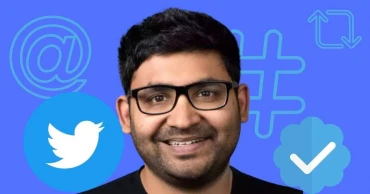
Ousted Twitter CEO Parag Agrawal could receive $42 million
Parag Agrawal, the ousted Indian-origin CEO of Twitter, is expected to receive $42 million following his departure from the company as Elon Musk has taken control of Twitter and fired the CEO, chief financial officer and the company’s general counsel.
If Agrawal is fired within a year of a change in control at the company, he would receive an estimated $42 million, reports NDTV.
Read more:Musk takes control of Twitter, fires CEO Parag Agrawal
Elon Musk, the new owner of Twitter, closed the $44-billion deal to buy the company, the NDTV report added.
Musk is in charge of the social media platform and has fired CEO Parag Agrawal, CFO Ned Segal and General Counsel Vijaya Gadde.
Musk had expressed his lack of faith in Twitter's management.
Read more:‘Entering Twitter HQ - let that sink in!’: Musk tweets
Agrawal, who served as Twitter's previous CTO, was appointed CEO in November last year. His total compensation for 2021 was $30.4 million, the majority of which came through stock awards, according to NDTV.
3 years ago
.jpg)
5 takeaways from Twitter whistleblower Peiter Zatko
Startling new revelations from Twitter's former head of security, Peiter Zatko, have raised serious new questions about the security of the platform's service, its ability to identify and remove fake accounts, and the truthfulness of its statements to users, shareholders and federal regulators.
Zatko — better known by his hacker handle “Mudge” — is a respected cybersecurity expert who first gained prominence in the 1990s and later worked in senior positions at the Pentagon’s Defense Advanced Research Agency and Google. Twitter fired him from the security job early this year for what the company called “ineffective leadership and poor performance.” Zatko's attorneys say that claim is false.
In a whistleblower complaint made public Tuesday, Zatko documented his uphill 14-month effort to bolster Twitter security, boost the reliability of its service, repel intrusions by agents of foreign governments and both measure and take action against fake “bot” accounts that spammed the platform. In a statement, Twitter called Zatko's description of events “a false narrative.”
Here are five takeaways from that whistleblower complaint.
TWITTER'S SECURITY AND PRIVACY SYSTEMS WERE GROSSLY INADEQUATE
In 2011, Twitter settled a Federal Trade Commission investigation into its privacy practices by agreeing to put stronger data security protections in place. Zatko's complaint charges that Twitter's problems grew worse over time instead.
For instance, the complaint states, Twitter's internal systems allowed far too many employees access to personal user data they didn't need for their jobs — a situation ripe for abuse. For years, Twitter also continued to mine user data such as phone numbers and email addresses — intended only for security purposes — for ad targeting and marketing campaigns, according to the complaint.
TWITTER’S ENTIRE SERVICE COULD HAVE COLLAPSED IRREPARABLY UNDER STRESS
One of the most striking revelations in Zatko's complaint is the claim that Twitter's internal data systems were so ramshackle — and the company's contingency plans so insufficient — that any widespread crash or unplanned shutdown could have tanked the entire platform.
Read: Musk says Twitter deal could move ahead with 'bot' info
The concern was that a “cascading” data-center failure could quickly spread across Twitter's fragile information systems. As the complaint put it: “That meant that if all the centers went offline simultaneously, even briefly, Twitter was unsure if they could bring the service back up. Downtime estimates ranged from weeks of round-the-clock work, to permanent irreparable failure.”
TWITTER MISLED REGULATORS, INVESTORS AND MUSK ABOUT FAKE "SPAM" BOTS
In essence, Zatko's complaint states that Tesla CEO Elon Musk — whose $44 billion bid to acquire Twitter is headed for October trial in a Delaware court — is correct when he charges that Twitter executives have little incentive to accurately measure the prevalence of fake accounts on the system.
The complaint charges that the company's executive leadership practiced “deliberate ignorance" on the subject of these so-called spam bots. “Senior management had no appetite to properly measure the prevalence of bot accounts,” the complaint states, adding that executives were concerned that accurate bot measurements would harm Twitter's “image and valuation.”
ON JAN. 6, 2021, TWITTER COULD HAVE BEEN AT THE MERCY OF DISGRUNTLED EMPLOYEES
Zatko's complaint states that as a mob assembled in front of the U.S. Capitol on Jan. 6, 2021, eventually storming the building, he began to worry that employees sympathetic to the rioters might try to sabotage Twitter. That concern spiked when he learned it was “impossible” to protect the platform's core systems from a hypothetical rogue or disgruntled engineer aiming to wreak havoc.
“There were no logs, nobody knew where data lived or whether it was critical, and all engineers had some form of critical access” to Twitter's core functions, the complaint states.
A PLAYGROUND FOR FOREIGN GOVERNMENTS
The Zatko complaint also highlights Twitter's difficulty in identifying — much less resisting — the presence of foreign agents on its service. In one instance, the complaint alleges, the Indian government required Twitter to hire specific individuals alleged to be spies, and who would have had significant access to sensitive data thanks to Twitter's own lax security controls. The complaint also alleges a murkier situation involving taking money from unidentified “Chinese entities” that then could access data that might endanger Twitter users in China.
3 years ago
.jpg)
Elon Musk's $44 billion Twitter deal gets board endorsement
Twitter's board has recommended unanimously that shareholders approve the proposed $44 billion sale of the company to billionaire and Tesla CEO Elon Musk, according to a regulatory filing Tuesday.
Musk reiterated his desire to move forward with the acquisition last week during a virtual meeting with Twitter employees, though shares of Twitter remain far below his offering price, signaling considerable doubt that it will happen.
Also read: Elon Musk says Twitter deal ‘temporarily on hold’
Shares rose about 3% to $38.98 before the opening bell Tuesday, far short of the $54.20 per-share that Musk has offered for each share. The company's stock last reached that level on April 5 when it offered Musk a seat on the board before he had offered to buy all of Twitter.
In a filing with the U.S. Securities and Exchange Commission detailing on Tuesday detailing a litter to investors, Twitter's board of directors said that it “unanimously recommends that you vote (for) the adoption of the merger agreement." If the deal were to close now, investors in the company would pocket a profit of $15.22 for each share they own.
3 years ago

Elon Musk says Twitter deal ‘temporarily on hold’
Elon Musk said Friday that his plan to buy Twitter for $44 billion is “temporarily on hold” as he tries to pinpoint the exact number of spam and fake accounts on the social media platform, another twist amid signs of internal turmoil over the proposed acquisition.
Musk, who has been vocal about his desire to clean up Twitter's problem with “spam bots” that mimic real people, appeared to question whether the company was underreporting them.
In a tweet, the Tesla billionaire linked to a Reuters story from May 2 about a quarterly report from Twitter that estimated false or spam accounts made up fewer than 5% of the company’s “monetizable daily active users” in the first quarter.
“Twitter deal temporarily on hold pending details supporting calculation that spam/fake accounts do indeed represent less than 5% of users,” Musk said, indicating he’s skeptical that the number of inauthentic accounts is that low.
It wasn’t clear whether the issue could scuttle the deal.
Twitter did not immediately respond to requests for comment early Friday.
Stock in both Twitter and Tesla swung sharply in opposite directions, with Twitter’s stock tumbling 14%, and shares of Tesla, which Musk had proposed using to help fund the Twitter deal, jumping 7%.
READ: Elon Musk buys Twitter for $44B and will privatize company
Investors have had to weigh legal troubles for Musk, as well as the possibility that acquiring Twitter could be a distraction from running the world’s most valuable automaker. The proposed deal continued to pressure shares of Tesla, which had already fallen 16% this week.
The sharp jump in the price of Tesla shares before the opening bell Friday singled rising doubts that the acquisition of Twitter will take place.
Musk has already sold off more than $8 billion worth of his Tesla shares to finance the purchase.
Originally Musk had committed to borrowing $12.5 billion with Tesla stock as collateral to buy Twitter. He also would borrow $13 billion from banks and put up $21 billion in Tesla equity.
Last week, Musk strengthened the equity stake in his offer for Twitter with commitments of more than $7 billion from a diverse group of investors including Silicon Valley heavy hitters like Oracle co-founder Larry Ellison.
Money from the new investors cuts the amount borrowed on the value of Tesla stock to $6.25 billion, according to the filing. The Tesla equity share could go from $21 billion to $27.25 billion.
Wedbush analyst Dan Ives, who follows both Tesla and Twitter, said Musk's “bizarre” tweet will lead Wall Street to either think the deal is likely falling apart, Musk is attempting to negotiate a lower deal price, or he is simply walking away from the deal with a $1 billion penalty.
“Many will view this as Musk using this Twitter filing/spam accounts as a way to get out of this deal in a vastly changing market,” Ives wrote.
He added that the Musk's use of Twitter rather than a financial filing to make the announcement was troubling and “sends this whole deal into a circus show with many questions and no concrete answers as to the path of this deal going forward.”
Musk’s tweet comes a day after the social media company fired two of its top managers. Twitter said the company is pausing most hiring, except for critical roles, and is “pulling back on non-labor costs to ensure we are being responsible and efficient.”
In a memo sent to employees and confirmed by Twitter, CEO Parag Agrawal said the company has not hit growth and revenue milestones after the company began to invest “aggressively” to expand its user base and revenue.
4 years ago

Musk gets $7B backing for Twitter bid from tech heavyweights
Billionaire Elon Musk has strengthened the equity stake of his offer to buy Twitter with commitments of more than $7 billion from a range of investors, including Silicon Valley heavy hitters like Oracle co-founder Larry Ellison.
Other investors include Sequoia Capital Fund, which pledged $800 million, and VyCapital, which pledged $700 million, according to a Thursday filing with the U.S. Securities and Exchange Commission. But Ellison, who is also a and Tesla board member, is making the biggest contribution, pegged at $1 billion.
Also read: Musk sells $4B in Tesla shares, presumably for Twitter deal
Saudi Prince Alwaleed Bin Talal Bin Abdulaziz Alsaud has pledged 35 million in Twitter shares in support of Musk, according to the filing.
Musk in earlier regulatory filings revealed that he has sold roughly $8.5 billion worth of shares in Tesla to help fund the purchase. Musk later tweeted that he doesn’t plan any further sales of the company’s shares, meaning he would need outside commitments to help fund the $44 billion deal.
Because of the new funding listed in the SEC filing Thursday, Musk will cut the $12.5 billion in margin loans he was leaning on in half, to $6.25 billion. The transaction is also now being funded by $27.25 billion in cash and equities, up from $21 billion.
The Thursday filing also said that Musk is in ongoing talks with other parties including former Twitter CEO Jack Dorsey, who is the second largest individual stakeholder in the company after Musk.
Also read: Elon Musk buys Twitter for $44B and will privatize company
“This was a smart financial and strategic move by Musk that will be well received across the board and also shows the Twitter deal is now on a glide path to get done by the end of this year,” wrote analyst Dan Ives who follows Twitter for Wedbush.
Shares of Twitter Inc. have remained below the per-share offering bid by Musk of $54.20 because there are still doubts on Wall Street about whether the deal will go through.
Shares of the San Francisco social media platform rose 2% before the opening bell, to $50.10.
4 years ago

Twitter abuse victims fear Musk’s plans, but may not quit
Perhaps no group of people is more alarmed about Elon Musk’s apparent plan to make Twitter a free speech free-for-all than those most likely to be targeted for harassment: women, racial minorities and other marginalized groups.
They fear that a more hands-off approach to policing the platform will embolden purveyors of hate speech, bullying and disinformation to ratchet up their bad behavior — a possibility Musk has done little to dispel.
Yet even those who have faced extreme harassment on Twitter say they are unlikely to quit the platform. Despite the negative psychological toll, they value Twitter as a diverse forum to express their views and engage with others.
That could help explain why Musk shows little concern for the underbelly of unfettered free speech, although advertisers - who account for about 90% of Twitter’s revenue - may not feel the same way.
Renee Bracey Sherman, a biracial abortion rights advocate, endures a steady stream of predictable criticism on Twitter and, occasionally, an eruption of vile tweets: messages calling for her death, photos of aborted fetuses and, recently, her likeness photo-shopped as a Nazi.
“It is a montage of hate and gore and violence,” Bracey Sherman said.
But while some famous people threaten to quit Twitter because of Musk, more typical users like Bracey Sherman say it’s not that simple. They cannot cannot leave Twitter and expect their followers to join them.
To mitigate the hate, Bracey Sherman blocks thousands of people and uses filters to hide the most extreme messages. She also reports the most egregious messages to Twitter, although she says the platform rarely takes action.
Twitter did not immediately respond for comment. The company says on its site that it does not permit targeted harassment or intimidation that could make people afraid to speak up. And it says it does not tolerate violent threats.
Also Read: What Musk’s past tweets reveal about Twitter’s next owner
Musk has called himself a “free-speech absolutist.” In tweets to his 85 million followers since Twitter accepted his $44 billion offer on Monday, Musk has made clear that he intends to regulate content with a much lighter touch, and that he isn’t too concerned by the groundswell of criticism that it is likely to fuel harmful content.
“The extreme antibody reaction from those who fear free speech says it all,” Musk tweeted Tuesday.
Playful, aggressive and often juvenile, Musk’s tweets show how he has used social media to craft his public image as a brash billionaire unafraid to offend. They may also reveal clues as to how Musk will govern the platform he hopes to own.
On Tuesday, Musk aimed criticism at one of Twitter’s top lawyers involved in content-moderation decisions. That led some of his followers to direct racist and misogynistic comments at the lawyer, Vijaya Gadde, who was born in India and immigrated to the U.S. as a child.
The uproar engulfing Twitter echoes what other social media companies have experienced in the recent past. When Facebook was slow to act to remove then-President Donald Trump from the platform for his role in the Jan. 6 insurrection at the Capitol, users called for a boycott, but there was no mass exodus.
Even when fed-up users do leave a social media platform, there’s typically a stream of new users that come in right behind them. It’s not the angriest users who leave, experts say, but those who simply find no use for the platform.
While polls show all types of people are susceptible to online harassment, extensive research has shown that women and people of color are far more likely to be targeted, something Twitter itself acknowledges. That targeting is also true for people with disabilities, people who belong to religious minorities and members of the LGBTQ community.
Michael Kleinman, who has studied online harassment for Amnesty International, said if Twitter allows more hateful and abusive speech, marginalized people who get attacked are likely to express themselves less.
“No one feels safe in a public square where as soon as you speak, a hostile mob screaming obscenities descends upon you. That’s no longer a public square. That’s an arena,” Kleinman said.
Brianna Wu understands that arena as well as anybody.
She has received sexual-assault and death threats on Twitter since 2014, when she created a video game, Revolution 60, that featured women as protagonists. The harassment was part of a larger online campaign targeting female game developers that became known as GamerGate.
Wu has since worked closely with Twitter’s trust and safety team to improve the platform. She said “it terrifies me” to hear Musk talk about rolling back - if not completely wiping away - these efforts.
“We fought very, very hard to improve the platform for women, for LGBTQ people and people of color,” said Wu, who is white and identifies as bisexual.
Also Read: Twitter bans ads that contradict science on climate change
But Wu has no plans to leave Twitter, which she - a former candidate for Congress in Massachusetts - relies on for personal and professional relationships. “I’ve developed life-long friends on Twitter. I think it’s really sad that to get that human connection I’m going to have to deal with harassment again that damages and deadens your humanity.”
Not everyone is dead set on staying. Comic book writer Kelly Sue DeConnick, who has faced harassment as an advocate for gender equity in the entertainment industry, said she’ll wait to see what changes Musk makes before deciding.
“If this just becomes a place where people scream at each other and call each other names and wish one another ill, I’m out,” DeConnick said.
Bridget Todd, a spokeswoman for UltraViolet, an organization that advocates against discrimination in all forms, said that even though Twitter has managed to reduce harassment on its platform in recent years, she doesn’t use it as much as she once did.
Todd said she is deeply worried about Musk guiding the company to eliminate the protections it does have - which she considers inadequate. But she doesn’t intend to leave the platform.
“Our voices are so powerful on platforms like Twitter,” she said. “I don’t necessarily think that this signals the end of that, because I know our voices can really endure.”
Evan Feeney, campaign director for Color of Change, an online racial justice organization that works to improve the lives of Black people in the United States, called Musk’s push to relax content standards on Twitter “an alarming development.” He predicted more coordinated attacks on Black people, particularly Black women.
“It is never good when a single billionaire who purposely conflates freedom to harm with freedom of speech controls one of the (largest) social media platforms in the world,” Feeney said. “We’ve spent years pushing Twitter to implement polices we think have made the platform better. It’s alarming that with a flip of a switch those could be rolled back.”
Harassment on Twitter also spills over into the real world, and it highlights just how much victims sometimes are forced to put up with.
Bracey Sherman says people have placed stickers of racist symbols, including swastikas and monkeys, on her potted plants and the front door of her home. It is why she bristles at those who extol limitless free speech, and who suggest she should just toughen up and ignore it.
“What am I supposed to be able to handle?” she asked. “The fact that you are sending me photos of Nazis and telling me I should be raped over and over and over again?”
4 years ago

What Musk’s past tweets reveal about Twitter’s next owner
Three days before Elon Musk agreed to buy Twitter, the world’s richest man tweeted a photo of Bill Gates and used a crude sexual term to make fun of his belly.
Playful, aggressive and often juvenile, Musk’s past tweets show how he has used social media to craft his public image as a brash billionaire unafraid to offend. They may also reveal clues as to how Musk will govern the platform he hopes to own.
“Look at the feed: It’s all over the place. It’s erratic. At times it’s pretty extreme,” said Jennifer Grygiel, a Syracuse University professor who studies social media and who recently assigned Musk’s tweets as reading material for their students. “It paints him as some sort of rebel leader who will take control of the public square to save it. That is a myth he has constructed.”
Musk joined Twitter in 2010 and now has more than 85 million followers — the seventh most of any account and the highest for any business leader. He had mused about buying the site before he agreed on Monday to pay $44 billion for Twitter, which he said he hopes to turn into a haven where all speech is allowed.
“I hope that even my worst critics remain on Twitter, because that is what free speech means,” Musk wrote in a tweet.
As the CEO of Tesla and SpaceX, Musk uses his Twitter account to make business announcements and promote his enterprises. He muses about technology and trade, but has also posted jokes about women’s breasts and once compared Canada’s prime minister to Hitler. He regularly weighs in on global events, as he did in March 2020 when he tweeted that “The coronavirus pandemic is dumb.”
He’s also used the account to punch back at critics, such as when he called a diver working to rescue boys trapped in a cave in Thailand a “pedo,” short for pedophile. The diver had previously criticized Musk’s proposal to use a sub to rescue the boys. Musk, who won a defamation suit filed by the diver, later said he never intended “pedo” to be interpreted as “pedophile.”
Also Read: Twitter bans ads that contradict science on climate change
A few years ago, after software engineer Cher Scarlett criticized Musk’s handling of the cave incident, the tech billionaire fired back and she was soon being harassed by dozens of Musk’s online fans. He later deleted the posts, but not before Scarlett had to lock down her account because she was receiving so many hateful messages.
“It’s ironic to me that somebody who claims they want to buy Twitter to protect free speech has such thin skin,” she said. “He’s a very smart man, and when he replies to people that criticize him, he knows what he’s doing. To me that’s not championing free speech, it’s weaponizing free speech, and I think that’s what he’ll do owning this platform.”
Nineteen-year-old Jack Sweeney got Musk’s attention when he created an automated Twitter account that tracked the movements of Musk’s jet. Musk responded by offering Sweeney $5,000 to pull the account. When Sweeney refused, Musk blocked him on Twitter.
Also Read: Shareholders await Musk's next move in Twitter takeover bid
Sweeney said he’s worried he may get kicked off the site entirely if Musk’s takeover is approved. But he said he likes Musk’s free speech absolutism, and hopes he sees it through.
“He’ll make it more open, and I think that’s a good thing,” Sweeney said.
Musk’s use of Twitter has also led to problems for his own companies. In one August 2018 tweet, for instance, Musk asserted that he had the funding to take Tesla private for $420 a share, although a court has ruled that it wasn’t true. That led to an SEC investigation that Musk is still fighting.
More recently, Musk appeared to have violated SEC rules that required him to disclose that he’d acquired a 5% stake in Twitter; instead he waited until he had more than 9%. Experts say these issues aren’t likely to affect his Twitter acquisition.
Last year another federal agency, the National Labor Relations Board, ordered Musk to delete a tweet that officials said illegally threatened to cut stock options for Tesla employees who joined the United Auto Workers union.
Those tweets helped cement Musk’s reputation as a brash outsider, a workingman’s billionaire, Grygiel said. But that doesn’t mean he is equipped to run a social media platform with more than 200 million users, the professor added.
“Maybe he wants to burn it down,” Grygiel said. “I don’t know. But I do know that it shows that no one person should have this kind of power.”
4 years ago

Viber to roll out two-step verification
Rakuten Viber has announced the rollout of its newest feature, two-step verification.
The extra layer of security will allow its users to authenticate their accounts using a pin code and email.
Messaging on Viber is already end-to-end encrypted, eliminating third parties from accessing its data, and the disappearing message feature allows users further control over who sees their messages.
Also read: Viber cuts business ties with Facebook
Users who choose to enable the two-step verification feature will create a six-digit PIN number and verify their email addresses.
To log in to Viber on a mobile device or desktop, the user will have to verify the account by providing their PIN code. If the code is forgotten, the verified email address will be used to help the user restore access to their account.
Also, having a PIN code will disable the ability to deactivate the account using Viber on a desktop. Anyone trying to deactivate a Viber account via desktop will need to use the PIN code.
read Twitter bans ads that contradict science on climate change
Viber's Two-step verification protects against hackers hijacking users' accounts to send spam or access private information.
Reducing the number of non-verified accounts within the platform will not only reduce the number of spam messages on the platform but will also create a more efficient and stable application for users to communicate with loved ones worldwide.
"We are committed to providing a secure, end-to-end encrypted messaging app, and this new feature takes it one step further," said Amir Ish-Shalom, chief information officer for Rakuten Viber.
Read Making money on TikTok: 10 Best Ways
4 years ago

Twitter bans ads that contradict science on climate change
Twitter says it will no longer allow advertisers on its site who deny the scientific consensus on climate change, echoing a policy already in place at Google.
"Ads shouldn’t detract from important conversations about the climate crisis,” the company said in a statement outlining its new policy Friday.
There was no indication that the change would affect what users post on the social media site, which along with Facebook has been targeted by groups seeking to promote misleading claims about climate change.
Also read: Musk says he has $46.5B in financing ready to buy Twitter
The announcement coinciding with Earth Day came hours before the European Union agreed a deal requiring big tech companies to vet their sites more closely for hate speech, disinformation and other harmful content.
Twitter said it would provide more information in the coming months on how it plans to provide “reliable, authoritative context to the climate conversations” its users engage in, including from the Intergovernmental Panel on Climate Change. The U.N.-backed science panel's reports on the causes and effects of climate change provide the basis for international negotiations to curb climate change.
Also read: Mamata blocks Bengal Governor on Twitter
The company already has a dedicate climate topic on its site and offered what it described as “pre-bunks” during last year's U.N. climate conference to counter misinformation surrounding the issue.
4 years ago