social-media

Balancing online trends with real-life budgets
Did you buy a new pink dress to watch the Barbie movie, only to never wear it again? An Oura ring because your favorite TikTok influencer had it? A new pair of baggy jeans because '90s fashion is making a comeback?
Niche trends fueled by social media can influence your shopping decisions. Participating often brings some happiness and a sense of community, but the problem comes when you do it so often that you’re not using your money to achieve your financial goals, or worse, you get into debt, said Erika Rasure, chief financial wellness advisor for Beyond Finance, a financial services company.
Whether it’s coastal grandma or clean girl aesthetic, microtrends can take a significant toll on already-strained budgets as prices rise and Gen Z struggles to pay off debt.
If you find yourself overspending to participate in microtrends, here are some expert recommendations:
Pause before purchasing
Before you click “buy” on TikTok Shop, it’s best if you take some time to reflect, said Jennifer Seitz, head of education for Greenlight, a financial literacy app for families. Pausing before a purchase can help you discern if the item is something you really want or a fleeting craving.
“Think if you want to put it in a schedule pause, whether it’s 24 hours or even a couple of days if it’s a larger expense,″ Seitz said.
Participating in personal challenges can be a good way to get in the habit of making purchases more deliberate. Back in 2022, Alyssa Barber participated in the no-buy year challenge, where she pledged to stop buying non-essential items for a year.
Barber shares sustainable practices with over 370,000 followers on TikTok, where one of her recurrent themes is how to stop impulse buying. Barber said the challenge gave her perspective on how much she was spending on things she didn’t need. Since then, she has changed her spending habits, focusing mainly on experiences.
Know your spending values
Taking a value-based spending approach can help you decide if you should participate in a trend you see online, Rasure said.
If, for example, you want to build an emergency fund, having this goal in mind while shopping can help avoid unnecessary spending.
Quynh Van, a 27-year-old UX designer from Minneapolis, was surprised by the number of ads on TikTok when she created an account after a four-year break from social media. And while being influenced by the ads is inevitable, she believes overspending comes in part from users not having defined goals.
“When you don’t know who you are or what you like, you’re so driven by over-consumerism and lifestyle creep because you don’t have your values in order,″ Van said.
Rasure recommends using your financial values as a guiding principle for your spending decisions. If you’re not sure of your values, allocate some time to map them out according to your life goals.
Create barriers to spending
If a purchase is one click away, it can make it easier to spend large amounts of money. If you consciously make it a little harder to pay for an item, you can spend more mindfully, Seitz said.
“Just that action of needing to input your payment information rather than just that simple click can help you give to really stop and think about purchases before moving ahead with them," she added.
To add barriers, you can remove your credit card details from your computer browser or social media and disable Apple Pay on your phone.
Think of it as an act of self-care
Finances are closely tied to emotions, and often, they evoke negative feelings such as shame or guilt. However, reframing them as an act of self-care can help you spend mindfully, Rasure said.
“It can help you create boundaries around what you value spending money on, helps you choose intentionally and it feels more like freedom instead of restriction,″ she said.
Your spending habits in the present can help your future financial situation. This mindset can inspire you when you’re tempted to overspend on the newest trending electronic or fashion item.
Engage with trends with moderation
It can be OK to engage with trends if they bring you positive feelings, Rasure said.
Van decided to participate in the matcha trend, but with moderation. For Barber, physical media, such as old records, DVDs, and cassettes, is on her list of non-negotiable expenses, as she loves collecting these items.
“Trends and engaging them, engaging in them really should spark that happiness or contentment, not the debt that can go with them,” Rasure said.
5 months ago

Trump reveals Murdochs and Dell could be part of TikTok deal
President Donald Trump said on Sunday that several prominent billionaires, including media mogul Rupert Murdoch and tech founder Michael Dell, could be involved in a potential deal that would place TikTok’s U.S. operations under American control.
In an interview recorded Friday and aired on Fox News, Trump named Rupert Murdoch, 94, and his son Lachlan Murdoch, head of Fox News and News Corp, as likely participants. “I think they’re going to be in the group. A couple of others. Really great people, very prominent people,” Trump said. “And they’re also American patriots, you know, they love this country. I think they’re going to do a really good job.”
Trump also confirmed that Oracle founder and CEO Larry Ellison is part of the group, something previously disclosed. White House press secretary Karoline Leavitt said Saturday that Oracle would oversee TikTok’s U.S. data and security, with Americans controlling six of the seven seats on a new governing board.
The president’s remarks mark the latest development in fast-moving negotiations to keep TikTok running in the U.S. while addressing national security concerns. Trump said he discussed the deal with Chinese President Xi Jinping during a lengthy phone call on Friday. Officials from both countries have until December 16 to finalize terms, following a recent deadline extension by the Trump administration.
Trump, Xi to hold call on TikTok deal and US-China ties
TikTok, owned by China’s ByteDance, has become one of the world’s most popular apps. U.S. officials warn that its algorithm could be exploited by Beijing to influence content in ways that are hard to detect. While Congress has already passed legislation mandating a TikTok ban starting in January, Trump has repeatedly signed orders allowing the app to operate as negotiations continue over a potential sale of its American operations.
Trump acknowledged he has a personal bias in favor of TikTok, crediting it with helping him reach younger voters. He said late conservative activist Charlie Kirk encouraged him to embrace the platform.
Representatives for Ellison, Dell, and the Murdochs did not immediately respond to requests for comment.
Notably, Trump filed a lawsuit in July against Rupert Murdoch and The Wall Street Journal after it published a story about his connections to late financier Jeffrey Epstein.
Source: Agency
5 months ago

Trump, Xi to hold call on TikTok deal and US-China ties
U.S. President Donald Trump is set to speak with Chinese President Xi Jinping on Friday in an effort to finalize an agreement that would allow TikTok to continue operating in the United States.
The call is expected to touch on wider U.S.-China relations and could signal whether the two leaders will meet in person to advance trade talks. It will be their second call since Trump returned to the White House and reimposed steep tariffs on China, reigniting tensions between the two largest economies.
Trump has pushed for a deal that would separate TikTok from its Chinese parent company ByteDance, citing data security concerns. U.S. officials have also raised questions about the platform’s algorithm and Chinese data laws. Beijing recently said both sides reached consensus on data handling and intellectual property issues.
While U.S. Treasury Secretary Scott Bessent said earlier this week that negotiators reached a framework deal, final approval is expected from Trump and Xi.
Trade remains a sticking point, with unresolved disputes over tariffs, agricultural purchases, and export controls. American farmers have been hit hard, with soybean and sorghum exports to China plummeting this year.
Trump extends TikTok shutdown deadline for fourth time after framework deal with China
Analysts say both leaders want to project strength: Trump by claiming leverage in trade talks, and Xi by emphasizing China’s economic influence.
Despite tensions, experts note both sides are motivated to reach a broader agreement, with Friday’s call seen as a critical step.
Source: Agency
5 months ago

Gemini AI saree edits take Instagram by storm
Turn your selfies into 90s Bollywood-style posters — Vintage Saree AI edits using Google Gemini’s Nano Banana tool have become Instagram’s latest viral trend.
Here’s a step-by-step guide.
Following the action-figure and Studio Ghibli-style portrait trends, Instagram now has a new sensation: Vintage Saree AI edits. This craze allows users to transform ordinary photos into dreamy portraits reminiscent of 1990s Bollywood films. Powered by Google Gemini’s Nano Banana tool, the edits evoke the charm of chiffon sarees, golden-hour lighting, and retro poster-style backdrops.
The results are eye-catching: moody black sarees with grainy film textures, chiffon yellows fluttering in cinematic winds, or polka-dot white sarees channeling the glamour of Raj Kapoor-era posters. With just a photo and the right AI prompt, users can turn themselves into vintage divas.
How to create your own Vintage Saree AI editsStep 1: Open Google GeminiDownload the Gemini app or access it on desktop and log in with your Google account.
Step 2: Enter editing modeTap the Banana icon and select “Try Image Editing.”
Step 3: Upload your photoChoose a clear solo portrait with your face visible. Avoid group shots or blurry selfies.
Step 4: Add a promptCopy a viral saree prompt or create your own. Prompts control everything from saree color to lighting style.
Source: With inputs from NDTV
5 months ago
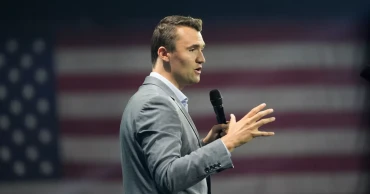
Kirk shooting video goes viral, showing limits of media gatekeeping in social media era
The assassination of conservative activist Charlie Kirk on Wednesday highlighted how the role of traditional media as a “gatekeeper” has eroded in the age of smartphones and social platforms.
While mainstream news outlets avoided showing the moment Kirk was shot, graphic videos of the attack were available almost instantly online — from multiple angles, in slow-motion and real time — and were viewed by millions on platforms including X, Facebook, TikTok, Instagram, YouTube and Truth Social.
Kirk was gunned down during a public event at a Utah college campus in front of hundreds of people, many of whom were filming on their phones. On X, videos showed the direct impact of the bullet, while others captured his remarks just before the shooting, reportedly about gun violence.
For generations, newspapers and broadcasters exercised editorial control over violent imagery. But in today’s fragmented media landscape, such restraint has little effect. The viral spread of the Kirk video demonstrated how fast images now circulate beyond the oversight of newsrooms.
The speed shocked many. In New York, a college professor recalled her teenage sons texting her about Kirk’s death after school, convinced by the video that he could not have survived. Others online pleaded for people not to share the footage, citing the pain for Kirk’s family.
Tech companies responded cautiously. YouTube said it removed some graphic clips and restricted others to adult users. Meta applied warning labels on Facebook and Instagram, while X offered no immediate comment. The episode echoed earlier challenges, such as when Facebook struggled with livestreams of mass shootings.
Some blurred versions of the video appeared in outlets like TMZ and the New York Post, but most traditional media stuck to showing the moments before and after the attack. Experts said this caution still matters — both to protect audiences and to signal what should be stigmatized rather than normalized.
Yet with the images already spreading widely, the episode underscored the challenges of a polarized country grappling with graphic violence in the digital age. “We are broken, and potentially beyond repair,” CNN’s David Chalian observed.
5 months ago

Louisiana sues Roblox over child safety concerns
Louisiana filed a lawsuit against the popular online gaming platform Roblox on Thursday, accusing the site of creating an environment where sexual predators can “thrive, unite, hunt and victimize children.”
The suit, brought by Attorney General Liz Murrill in state court, alleges Roblox has failed to put in place adequate safety measures to protect its young users. “Roblox prioritizes user growth and profits over child safety, leaving Louisiana’s children at risk,” Murrill said.
Musk threatens legal action against Apple over exclusion of X, Grok from top apps list
Roblox, which has over 111 million monthly users, has faced criticism for not doing enough to prevent exploitation. Recent cases include a 13-year-old girl in Iowa allegedly trafficked after meeting a predator on the platform. Local authorities in Louisiana report multiple Roblox-related incidents, though no arrests have been made.
While the company enforces age restrictions and monitors chats, Murrill argues its verification process is insufficient. Roblox has recently added AI systems and age-verification features to improve child safety, including reporting potential abuse to the National Center for Missing and Exploited Children.
Source: Agency
6 months ago

YouTube to test AI-based age verification system in U.S.
YouTube will start testing a new AI-powered age verification system in the U.S. from Wednesday, aimed at distinguishing adults from minors based on the types of videos they watch.
Initially, the trial will impact only a small portion of YouTube’s U.S. users but could expand if the system proves as effective as it has in other regions. The technology will operate only when users are logged into their accounts and will assess age regardless of the birth date provided during registration.
If the system identifies a logged-in user as under 18, YouTube will apply existing controls and restrictions designed to protect minors from inappropriate content and behavior on the platform. These measures include reminders to take breaks, privacy warnings, and limitations on recommended videos. Additionally, YouTube does not serve personalized ads to viewers under 18.
Users incorrectly flagged as minors can correct the error by verifying their age with government-issued ID, credit card, or a selfie.
James Beser, YouTube’s director of product management, said in a blog post, “YouTube was one of the first platforms to offer experiences designed specifically for young people, and we’re proud to again be at the forefront of introducing technology that allows us to deliver safety protections while preserving teen privacy.”
Australia bans YouTube accounts for children under 16 from December
Users can still watch videos without logging in, but this triggers automatic restrictions on some content due to lack of age verification.
Pressure has been mounting on online platforms to improve age verification following the U.S. Supreme Court’s recent approval of a Texas law aimed at blocking minors from accessing pornography online.
While platforms like YouTube are enhancing age checks, others argue that app stores operated by Apple and Google should bear more responsibility—a stance opposed by both companies.
Some digital rights groups, including the Electronic Frontier Foundation and the Center for Democracy & Technology, have voiced concerns that such age verification measures could threaten personal privacy and infringe upon free speech protections under the First Amendment. Source: Agency
6 months ago

Australia bans YouTube accounts for children under 16 from December
In a major policy reversal, the Australian government has announced that YouTube will be included among social media platforms prohibited for users less than 16 years of age, effective from December 10.
The move overturns a previous exemption granted to the video-sharing platform when Parliament passed landmark legislation last November restricting under-16s from accessing platforms like Facebook, Instagram, TikTok, Snapchat and X (formerly Twitter).
Communications Minister Anika Wells on Wednesday released a list of services that will fall under the “age-restricted social media platforms” category. She confirmed YouTube’s inclusion, citing government research that found four in 10 Australian children reported experiencing harm on the platform.
“We will not be intimidated by legal threats when this is a genuine fight for the wellbeing of Australian kids,” Wells told reporters. She said platforms that fail to take “reasonable steps” to exclude underage users could face fines of up to AUD 50 million (USD 33 million).
YouTube to shut down trending page on July 21
While children will still be able to access YouTube content, they will no longer be allowed to hold their own accounts.
YouTube’s parent company, Alphabet Inc., criticized the decision as a reversal of a prior public commitment. “Our position remains clear: YouTube is not social media, it is a video-sharing platform increasingly viewed on TV screens,” the company said in a statement, adding it would consult with the government on next steps.
Prime Minister Anthony Albanese said Australia would push for international backing for the under-16 social media ban at a UN forum in New York in September, calling the issue a “common global experience.”
Messaging, education, health, and gaming apps are excluded from the ban as they are deemed less harmful.
7 months ago

Meta to halt political ads in EU from October over regulatory concerns
Tech giant Meta, the parent company of Facebook, Instagram, and Threads, announced on Friday that it will stop running all political, electoral, and social issue advertisements in the European Union starting October, citing legal uncertainty stemming from the bloc’s new transparency regulations.
In a blog post, the company said the decision is driven by the 27-member EU’s upcoming Transparency and Targeting of Political Advertising regulations, which it described as “unworkable” due to the significant operational challenges and legal ambiguities they introduce.
The new rules, set to take effect on October 10, require digital platforms to label political advertisements clearly, disclose the identity of the payer, and specify the campaign, referendum, or legislative initiative they are connected to. Additionally, such ads must be stored in an accessible database and can only be targeted under strict guidelines.
Meta’s new cloud processing feature raises privacy concerns for Facebook users
Meta argued that the regulations impose “significant, additional obligations” that create an “untenable level of complexity and legal uncertainty” for advertisers and platforms operating within the EU.
Violations of the rules could lead to fines of up to 6% of a company’s annual global revenue.
Meta's move follows a similar decision by Google, which last year announced that it would stop serving political ads to EU users ahead of the regulation’s enforcement, citing comparable concerns.
The EU’s new rules are part of a broader initiative to strengthen election integrity, combat foreign interference, and ensure transparency in digital campaigning. These efforts are in line with the bloc’s wider push for digital accountability, including rules on user safety and data privacy.
Despite the ad ban, Meta clarified that users in the EU will still be able to discuss politics on its platforms, and politicians, candidates, and public office holders can continue to share political content organically.
“They just won’t be able to amplify this through paid advertising,” the company said.
7 months ago

Experts share tips to help teens navigate the rise of AI companions
As artificial intelligence becomes more embedded in everyday life, many teenagers are turning to AI chatbots for support, companionship, and conversation. These digital companions offer constant availability, a nonjudgmental tone, and seemingly endless patience — qualities that appeal to adolescents navigating complex emotions and social situations.
But experts are raising concerns over the growing use of AI companions, especially as most parents remain unaware of how frequently their children are using these tools or the amount of personal information being shared.
A new study by Common Sense Media finds that over 70% of American teens have used AI companions, and more than half interact with them regularly. The research focused on apps like Character.AI, Nomi, and Replika — programs designed to simulate “digital friends” — rather than AI tools like ChatGPT, although the line between them is increasingly blurred.
To help families address this emerging trend, experts recommend several strategies:
— Initiate open conversations. Michael Robb, lead researcher at Common Sense Media, urges parents to talk to their teens without judgment. Start by asking questions such as, “Have you heard of AI companions?” or “Do you use any apps that talk to you like a friend?” Listening without criticism can help build trust and lead to more honest discussions.
— Clarify the nature of AI relationships. AI companions are programmed to be agreeable and validating — something real relationships are not. Experts caution that this can give teens a distorted view of human connection. “These tools may feel comforting, but they lack the ability to challenge, disagree or truly empathize,” said Robb.
YouTube to shut down trending page on July 21
Mitch Prinstein, chief psychologist at the American Psychological Association (APA), emphasized the potential cost: “AI conversations might be taking away valuable time from real-life relationships. We must teach young people to see AI companions as entertainment — not reality.”
— Watch for signs of emotional overreliance. If a teen prefers AI conversations over real friendships, becomes distressed when not using them, or spends hours engaging with AI, parents should intervene. These behaviors may signal that AI is replacing, rather than supplementing, real social interactions.
— Set boundaries and rules. Just like screen time or social media, parents can establish limits around AI use. Many AI companions are designed for adults and can simulate romantic or intimate interactions. Experts recommend discussing what is appropriate and when AI tools should be used.
— Emphasize that AI is not a mental health solution. While AI may seem comforting, it is not equipped to handle crises or offer real emotional support. Children dealing with anxiety, depression, eating disorders, or loneliness should seek help from trusted people — whether family members, friends, or trained professionals.
— Stay informed and involved. “A lot of parents still don’t grasp how advanced AI has become or how many teens are relying on it,” said Prinstein. “When adults say, ‘This is crazy, I don’t understand it,’ kids feel like they can’t come to us with concerns.”
Teens themselves are urging a balanced approach. Ganesh Nair, an 18-year-old who is distancing himself from AI companions after noticing a negative impact on his friendships, said banning the technology is not the answer.
Is Outlook down? Thousands of users report issues accessing their email
“Trying not to use AI is like trying not to use social media. It’s too integrated,” Nair said. “The solution is not to run from it, but to accept the challenge. When AI makes everything easy, we become vulnerable. Seek out challenges — they build resilience and connection.”
Source: Agency
7 months ago