others

Top 10 Netflix English Originals to Watch in February 2025: Movies, Series, and Shows
Netflix remains at the forefront of the streaming world, delivering a constant stream of fresh, captivating content. In February 2025, the platform is set to unveil an exciting array of English originals, including must-watch movies, series, animations, and crowd-favorite reality shows. With genres ranging from thrilling action and heartfelt romance to laugh-out-loud comedy and magical fantasy, there’s something for everyone. Here’s a sneak peek at the most anticipated releases you won’t want to miss this month.
10 Must-see Netflix English Originals Streaming this February
.
Celebrity Bear Hunt / Reality Competition / February 5, 2025
Featuring Bear Grylls in a key role, this TV series headlines Holly Willoughby as its presenter.
The show features 12 British celebrities thrust into the untamed Central American jungle, where they become the hunted prey of Bear Grylls. Each failed challenge increases the risk of elimination in this intense ‘Bear Hunt’, testing their survival instincts and pushing their endurance to the limits.
The star-studded participants include Singers Mel B and Una Healy, Dancer Shirley Ballas, Rapper Big Zuu, actors Joe Thomas and Kola Bokinni, and fashion models Lottie Moss and Leomie Anderson. Moreover, the diverse participant group comprises tennis legend Boris Becker, interior expert Laurence Llewelyn-Bowen, journalist Steph McGovern, and ex-rugby player Danny Cipriani.
Read more: Top Bangladeshi Movies of 2024: Dhallywood’s Biggest Box Office Hits
Grylls also executive produced the reality show along with Ben Mitchell, Delbert Shoopman, Charlie Bennett, Olly Nash, and Saul Fearnley. The production houses are Grylls's The Natural Studios, Talkback, and Banijay UK's Workerbee.
Kinda Pregnant / Comedy / February 5, 2025
Directed by Tyler Spindel, and penned by Julie Paiva, this American film stars Amy Schumer, Will Forte, Jillian Bell, Brianne Howey, and Damon Wayans Jr.
The storyline centers on Lainy, who spirals into jealousy after learning her best friend is pregnant. In a twist of emotions, she begins wearing a prosthetic baby bump and unexpectedly crosses paths with the man destined to change her life.
The lead star, Schumer, is also in the production team, including Adam Sandler, Allen Covert, Tim Herlihy, Judit Maull, Molly Sims, Kevin Grady, and Eli Thomas.
Read more: Top 10 Indian Blockbusters of 2024: Record-Breaking Hits Ruling the Box Office
Apple Cider Vinegar / Biography Crime / February 6, 2025
This Australian limited series delves into the lives of wellness influencer Belle Gibson and her confidante Milla, who leverage their platforms to offer supposed cures. However, Gibson's deceit reaches a chilling peak when she fabricates a cancer diagnosis, manipulating her followers and the world with a web of lies.
This See-Saw Films Production is brought to fruition by creator Samantha Strauss who also contributed to the writing with Anya Beyersdorf and Angela Betzien.
Helmed by Jeffrey Walker, the crime drama series is inspired by ‘The Woman Who Fooled the World’ by Nick Toscano and Beau Donelly.
The cast includes Kaitlyn Dever, Alycia Debnam-Carey, Aisha Dee, Tilda Cobham-Hervey, Mark Coles Smith, Ashley Zukerman, and Susie Porter.
Read more: Top 10 Highest-Grossing Movies of 2024: Global Blockbusters That Shaped Cinema
Sweet Magnolias: Season 4 / Romantic Drama / February 6, 2025
Developed by Sheryl J. Anderson, this romantic series is Rooted in Sherryl Woods' beloved novels of the same name. The storyline follows lifelong best friends Maddie, Dana Sue, and Helen as they navigate the challenges of balancing love, family dynamics, and ambitious careers.
Season 3 introduced unexpected discord among the women, unraveling years of harmony. In Season 4, the series delves deeper into unresolved conflicts from the finale. It will weave together the unpredictability of romance, the delicate intricacies of friendship, and the unforeseen surprises that life throws their way.
The lead characters are played by JoAnna Garcia Swisher, Brooke Elliott, and Heather Headley.
Executive producer Sheryl J. Anderson returns as showrunner with EP Dan Paulson. Like previous seasons, the upcoming episodes showcase the directing of Lauren Petzke, Christine Swanson, Norman Buckley, JoAnna Garcia Swisher, and Matt Drake.
Read more: Popular Characters of Squid Game Season 2: Who's Your Favourite?
The Witcher: Sirens of the Deep / Action Fantasy / February 11, 2025
Based on ‘A Little Sacrifice’ by Andrzej Sapkowski, this animated film boasts Kang Hei Chul as its director and Mike Ostrowski and Rae Benjamin as the writers.
Set in the immersive world of ‘The Witcher’, this gripping dark fantasy film centers on Geralt, the legendary mutant monster hunter. He uncovers a long-buried feud between humans and sea-dwelling beings. With kingdoms on the brink of war, Geralt and his allies race against time to unravel the mystery and prevent a catastrophic conflict.
Bankrolled by Studio Mir, Platige Image, and Hivemind, the adventure animation features voice artists like Doug Cockle, Joey Batey, Anya Chalotra, and Christina Wren.
Read more: January 2025 K-drama Lineup: 10 Must-watch Premieres
1 year ago
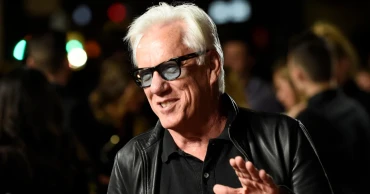
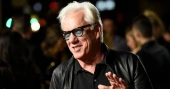
James Woods posts on X that his house survived LA wildfires
Actor James Woods says his house in Pacific Palisades has survived the Los Angeles wildfires that had devastated much of his neighborhood.
“A miracle has happened,” Woods posted Friday on X. "We managed to get to our property and our home, that we were told is gone forever, is still standing.”
Ben Affleck to Tom Hanks: Which stars face threats from raging LA wildfires?
Woods added: “In this hellish landscape ‘standing’ is relative, but smoke and other damage is not like the utter destruction around us."
Earlier this week, Woods was among hundreds of thousands around Los Angeles who were forced to evacuate as the fires spread and intensified. He has posted regular updates on X, showing charred ruins of homes near his, and had been convinced his house would fare no better, reports AP.
“So many beautiful messages from all of you,” he posted later Friday. “I’m so happy and grateful, but honestly the entire area looks like the dark side of the moon.”
Numerous celebrities, from Paris Hilton to Billy Crystal, have confirmed their homes were lost or sustained damage in blazes burning in and around Los Angeles. At least 10 people have died, and thousands of structures and vehicles have been destroyed.
1 year ago
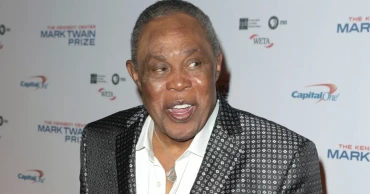
Sam Moore, who sang ‘Soul Man’ in Sam & Dave duo, dies at 89
Sam Moore, the surviving half and higher voice of the 1960s duo Sam & Dave that was known for such definitive hits of the era as “Soul Man” and “Hold On, I'm Comin,’” has died. He was 89.
Publicist Jeremy Westby said Moore died Friday morning in Coral Gables, Florida, due to complications while recovering from surgery. No additional details were immediately available.
Moore, whose admirers ranged from Al Green to Bruce Springsteen, was inducted with Dave Prater into the Rock and Roll Hall of Fame in 1992.
“Over on E Street, we are heartbroken to hear of the death of Sam Moore, one of America's greatest soul voices,” Springsteen said Saturday on Instagram. “He was filled with stories of the halcyon days of soul music, and to the end had that edge of deep authenticity in his voice I could only wonder at.”
At the Memphis, Tennessee-based Stax Records, Moore and Prater ranked only behind Otis Redding as the label's biggest stars. They transformed the “call and response” of gospel music into a frenzied stage show and recorded some of soul music’s most enduring hits, which also included “You Don’t Know Like I Know,” “When Something is Wrong With My Baby” and “I Thank You.”
Most of their hits were written and produced by the team of Isaac Hayes and David Porter and featured the Stax house band Booker T. & the MGs, whose guitarist Steve Cropper received one of music’s most famous shoutouts when Sam & Dave called “Play it, Steve” midway through “Soul Man.”
Read: James Woods posts on X that his house survived LA wildfires
Like many ’60s soul acts, Sam & Dave faded after the decade ended. But “Soul Man” hit the charts again in the late 1970s when “Blues Brothers” John Belushi and Dan Aykroyd recorded it with many of the same musicians. Moore had mixed feelings about the hit becoming associated with the “Saturday Night Live” stars, remembering how young people believed it originated with the Blues Brothers.
In 2008, the movie “Soul Men” depicted a pair of aging, estranged singers who bore more than a little resemblance to Sam & Dave. Moore lost a lawsuit claiming the resemblance was too close.
He also spent years suing Prater after Prater hired a substitute and toured as the New Sam & Dave. Prater died in a 1988 car crash in Georgia.
In 1993, Moore was among numerous artists who pressed legal claims that the record industry had cheated them out of retirement benefits. Moore and other artists sued multiple record companies and the American Federation of Television and Radio Artists.
Moore told The Associated Press in 1994 that he joined the legal effort after learning, despite his million-selling records, his pension amounted to just $2,285, which he could take as a lump sum or in payments of $73 monthly.
“Two thousand dollars for my lifetime?” Moore said then. “If you’re making a profit off of me, give me some too. Don’t give me cornbread and tell me it’s biscuits.”
Moore also became involved in politics. He wrote the song “Dole Man,” modeled on “Soul Man,” for Republican Bob Dole’s presidential campaign in 1996. In 2017, he was among the few entertainers who performed for Republican President Donald Trump’s inaugural festivities. Eight years earlier, Moore had objected when Democratic presidential candidate Barack Obama’s campaign used “Hold On, I’m Comin’.”
Read more: Alec Baldwin sues for malicious prosecution after 'Rust' set shooting case dismissed
Moore was born Oct. 12, 1935, in Miami and got his start singing in church.
He and Prater performed in soul and R&B clubs in the 1950s, but didn’t meet until 1961 in Miami. Moore helped coach Prater on the lyrics of a song and they quickly became a popular local duo. In 1965, after signing with Atlantic Records, producer Jerry Wexler sent them to the label’s Stax subsidiary in Memphis.
Moore and Prater argued often and Moore told the AP in 2006 that a drug habit, which he kicked in 1981, played a part in the band’s troubles and later made entertainment executives leery of giving him a fresh start. The duo broke up in 1970 and neither had another major hit, though Moore did work often with Springsteen, whom Moore would call one of his closest friends. They performed together on stage and sang on each other's albums, including on the high energy duet “Real World.”
“RIP Sam Moore," Springsteen sideman Steve Van Zandt posted on X. "Him and Dave Prater were the inspiration for me and Johnny to start Southside Johnny and the Asbury Jukes. An important righteous wonderful man.”
He married his wife, Joyce, in 1982, and she helped him get treatment for his addiction that he credited with saving his life.
“I did a lot of cruise ships, I did a lot of oldies shows," during those struggles, he said, adding that he once opened for a group of Elvis impersonators.
“That’s funny to think back to it now. And I did a lot of shows where if I did a show with an oldie show, I had to actually audition," he said. "But you know what? You keep your mouth shut and you get up there and you sing as hard and perform as hard as you can, and get the little money and go on about your business and try and pay those bills. I’m laughing about it now, but at that time, man, it was really serious.”
Moore kept recording and singing. He was a frequent performer at the Kennedy Center Honors and sang for Obama among other presidents.
Moore is survived by his wife, Joyce; daughter, Michell; and two grandchildren.
1 year ago

Curtain rises on 23rd Dhaka International Film Festival
The 23rd Dhaka International Film Festival (DIFF), showcasing 220 movies from 75 countries in five venues across the capital, officially kicked off on Saturday in the main auditorium of the capital’s National Museum.
The festival this year is observing 50 years of diplomatic relations between Bangladesh and China, and the inauguration ceremony on Saturday was joined by the Information and Broadcasting Adviser to the Interim Government Md Nahid Islam.
Prior to inaugurating the festival, the adviser, along with the special guests including Yao Wen, Chinese Ambassador to Bangladesh and Xu Yang, Director of the International Department of the Chinese Film Administration, inaugurated the poster exhibition corner of Chinese films outside the auditorium. Festival Committee Executive Member and Bangladesh Energy Regulatory Commission Chairman Jalal Ahmed presided over the opening ceremony; which was also joined by the face of the festival, the DIFF Director Ahmed Muztaba Zamal, alongside the festival committee Chairperson Kishwar Kamal and the Asian Competition Section Jury Board member, veteran actor Ilias Kanchan.
With an enthralling musical performance of Bangladesh's renowned band Joler Gaan, the 23rd edition began with Xu Yang’s gratitude note, who thanked the Rainbow Film Society authority for inviting him to the Dhaka International Film Festival this year, and the Chinese Embassy in Bangladesh for organising this year's China Film Week, where popular Chinese films are being showcased.
Ambassador Yao Wen said: “Dhaka International Film Festival is a medium of vibrant cultural exchange between Bangladesh and different countries across the world. Besides this flagship film festival in Dhaka, various events have started in China to celebrate 50 years of China's diplomatic relations with Bangladesh.”
The Chinese Ambassador informed at the inauguration ceremony that a total of 20 unique and special Chinese films will be screened at this year’s Dhaka International Film Festival, and 15 Chinese film professionals will engage in in-depth interactions with Bangladeshi audiences, as part of the DIFF 2025 activities.
Observing a minute of silence to commemorate the martyrs of the anti-fascist movement in July and urging film enthusiasts to highlight Bangladesh’s history, culture and struggles in the world forum, adviser Nahid Islam stated that the Dhaka International Film Festival will serve as an important medium of cultural exchange. The advisor mentioned the role of cinema in the development of Bangladesh's art and culture, stating that cinema is not merely a medium of entertainment; it is also a significant driver of social change.
Read: 23rd Dhaka International Film Festival begins Saturday
Regarding the July mass uprising, Nahid said that this uprising played an important role in establishing democracy in Bangladesh. He urged filmmakers to create films about the reality and spirit of the July mass uprising.
Jalal Ahmed, Chairman of the Bangladesh Energy Regulatory Commission and Executive Member of the Festival Committee said, "This flagship film festival of Bangladesh is going to celebrate its silver jubilee soon, and If the festival is listed for regular allocation of funds from the Ministry of Finance and Information and Broadcasting, there will be no more worries about the festival every year."
Read more: National Board of Review Awards hold space for ‘Wicked’
With China being the country of focus this year, the 2025 edition of DIFF then officially premiered its maiden film ‘Moon Man’ (directed by Zhang Chiyu) at 7 pm. From Sunday, the festival will continue screenings at the Bangladesh National Museum; Bangladesh Shilpakala Academy (BSA); Alliance Française de Dhaka (AFD), Dhanmondi; Green University of Bangladesh and North South University in the capital.
The films will be screened under the Asian Competition Section, Retrospective Section, Bangladesh Panorama, Wide Angle, Cinema of the World, Children's Film, Spiritual Films, Short and Independent Film and Women's Film Session.
1 year ago
Vandalism halts Hanif Sanket’s ‘Ityadi’ filming in Thakurgaon
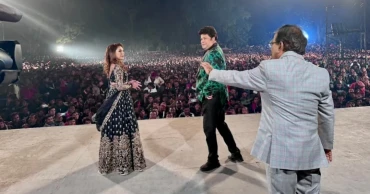
Filming for the extremely popular BTV programme “Ityadi,” hosted by Hanif Sanket, was cancelled due to a violent altercation and vandalism in Thakurgaon district on Thursday night.
An episode of “Ityadi” was being filmed at the historic Raja Tongkanath Palace in Ranisankail upazila when chaos ensued after a crowd of over 100,000 people gathered for the event, far exceeding the 4,000 entrance passes that had been distributed.
A retrospective of 2024 events in Bangladesh's music industry
As tensions flared over seating arrangements, a fight broke out, leading to the destruction of property and the vandalism of equipment, according to locals.
Despite repeated attempts by the organisers to control the situation, the unrest escalated, forcing the authorities to halt the filming before its scheduled conclusion.
Expressing disappointment, Hanif Sanket said, “Despite trying hard, I could not calm you down. I wanted to organise a beautiful event for you, but that was no longer possible. I could not, I failed.”
Following the cancellation, the audiences were escorted out of the venue, and some parts of the programme were filmed later in the night.
1 year ago

Alec Baldwin sues for malicious prosecution after 'Rust' set shooting case dismissed
Actor Alec Baldwin has filed a civil lawsuit for malicious prosecution and civil rights violations in the fatal shooting of a cinematographer on the set of the Western movie “Rust.”
The lawsuit was filed Thursday at state district court in Santa Fe, where a judge in July dismissed a charge of involuntary manslaughter against Baldwin in the death of cinematographer Halyna Hutchins.
Baldwin also alleges defamation in the suit, saying that prosecutors and investigators intentionally mishandled evidence as they pursued the case.
Defendants named in the lawsuit include special prosecutor Kari Morrissey and Santa Fe District Attorney Mary Carmack-Altwies, along with three investigators from the Santa Fe County sheriff's office and the county board of commissioners.
“Defendants sought at every turn to scapegoat Baldwin for the acts and omissions of others, regardless of the evidence or the law,” the lawsuit states. It also says prosecutors and investigators targeted Baldwin for professional or political gain.
Hutchins died shortly after being wounded during a rehearsal for the movie “Rust” in October 2021 at a film-set ranch on the outskirts of Santa Fe, New Mexico.
Baldwin, the lead actor and co-producer, was pointing a pistol at Hutchins when it discharged, killing Hutchins and wounding director Joel Souza. Baldwin has said he pulled back the hammer — but not the trigger — and the revolver fired.
Baldwin’s trial was upended by revelations that ammunition was brought into the Santa Fe County sheriff’s office in March by a man who said it could be related to Hutchins’ killing. Prosecutors said they deemed the ammo unrelated and unimportant, while Baldwin’s lawyers say investigators “buried” the evidence in a separate case folder and filed a successful motion to dismiss.
Morrissey said she learned more than a year ago that Baldwin was considering a lawsuit.
Read: Ben Affleck to Tom Hanks: Which stars face threats from raging LA wildfires?
“In October 2023 the prosecution team became aware that Mr. Baldwin intended to file a retaliatory civil lawsuit," she told The Associated Press in a text message Thursday. "We look forward to our day in court.”
Carmack-Altwies and the Santa Fe sheriff’s office did not immediately respond to requests for comment. Baldwin's lawsuit argues that prosecutors should not be afforded immunity in their official roles.
The state attorney general declined to pursue and appeal the dismissal on behalf of prosecutors, closing out the case in December.
Separately, the shooting led to an involuntary manslaughter conviction at trial last year against movie weapons supervisor Hannah Gutierrez-Reed. She is serving out a maximum sentence of 1 1/2 years at a state penitentiary.
The tort claim by Baldwin also takes aim at a special prosecutor who initially oversaw the investigation, while seeking unspecified punitive damages, compensatory damages, attorneys' fees and interest.
It adds to a thicket of post-trial litigation, even as Baldwin has returned to comic appearances on "Saturday Night Live" with plans in the works for a family reality TV show with wife Hilaria and seven children.
Read more: National Board of Review Awards hold space for ‘Wicked’
The parents and younger sister of Hutchins have sued Baldwin and other producers of “Rust" in New Mexico state court. A settlement has been reached in a lawsuit by Hutchins widower and son.
1 year ago

Ben Affleck to Tom Hanks: Which stars face threats from raging LA wildfires?
Hollywood celebrities' homes were at risk on Wednesday night as a fierce wildfire broke out in the Hollywood Hills, just a mile from the Hollywood Walk of Fame. While some stars lost their homes, others are perilously close to the uncontained flames.
Celebrity homes at risk or damaged
The homes of several Hollywood stars are in close proximity to the advancing wildfires. Page Six released a map of the affected zone, highlighting celebrity residences in the area.
National Board of Review Awards hold space for ‘Wicked’
Schitt's Creek actor Eugene Levy’s house has already been destroyed, as shown in an image shared by the outlet. The homes of Nobody Wants This actor Adam Brody, his wife and Gossip Girl actress Leighton Meester, Anna Faris, James Woods and reality TV duo Heidi Montag and Spencer Pratt have also been lost.
In Malibu, the fire threatens properties belonging to actor-singer Miley Cyrus and Star Wars actor Mark Hamill. In Santa Monica, the home of actress Jamie Lee Curtis faces danger, while farther north are the residences of Michael Keaton, Tom Hanks and his wife Rita Wilson.
Beyond Pacific Palisades are properties owned by filmmaker Steven Spielberg and actors Diane Keaton and Ben Affleck. Affleck, whose $20 million bachelor pad is at risk, was seen fleeing to ex-wife Jennifer Garner’s house for safety.
What to know about wildfires raining embers onto the Los Angeles area
Meanwhile, stars like Mandy Moore, Cary Elwes and Paris Hilton confirmed on Wednesday that their homes were destroyed. Actor Billy Crystal and his wife Janice also lost their Palisades home of 45 years.
Overview of the LA wildfires
Over 1,000 structures, primarily homes, have been reduced to ashes and more than 130,000 residents in the metropolitan area are under evacuation orders.
Despite the arrival of hundreds of firefighters from other states, the four uncontrolled blazes remain a significant threat. Combined, the fires have scorched roughly 42 square miles — an area comparable to the size of San Francisco.
Source: With inputs from wires
1 year ago
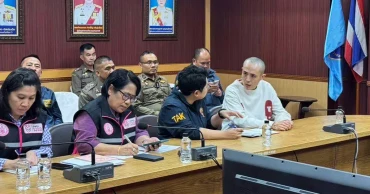
Chinese actor was trafficked to Myanmar to work in scam operation: Thai police
A Chinese actor who disappeared after traveling to Thailand and was found near the border of Myanmar in an area where online scam networks operate was a victim of human trafficking, Thai police said Wednesday.
Chinese state-owned newspaper The Global Times reported Monday that the family of Wang Xing requested help from the Chinese Embassy in Thailand after the actor went missing at the Thailand-Myanmar border.
Authorities found Wang on Tuesday in Myanmar and brought him to Thailand for questioning, Thai police said. Photos and videos showed Wang sitting with the police in the Thai border town of Mae Sot with his head shaved.
Wang told the police that he was lured by a promise of a job casting by a major Thai entertainment company, but instead was taken across the border into Myanmar, where police believe he was put to work in a call scam operation targeting Chinese people, said Senior Inspector General Thatchai Pitaneelaboot.
Salman Khan's Galaxy apartment undergoes security enhancements amid threats
The area is known as a haven for criminal syndicates who have forced hundreds of thousands of people in Southeast Asia into participating in online scams including false romantic ploys, bogus investment pitches and illegal gambling schemes. Many of the victims are trapped in virtual slavery. There also are allegations of drug trafficking.
An initial review of chat logs on Wang's phone confirmed his story, Thatchai told the Thai PBS TV.
He said Wang told police there were about 50 other Chinese at the same location. Like him, all had their heads shaved, he told police. He said he was too scared to resist or try to escape.
Criminal activity has flourished in border areas of military-ruled Myanmar, where fighting has pitted armed ethnic groups against the army for decades. Chinese authorities have said they had cracked down on criminal syndicates in joint operations with neighboring countries that led to thousands of people being returned to China, but those campaigns did not include arrests of ring leaders in Myanmar.
Chinese investors operate casino complexes in what amounts to autonomous development zones in cooperation with Myanmar's Border Guard Force, a militia belonging to the ethnic Karen minority.
Wang’s disappearance received attention after an internet user who claimed to be his girlfriend posted about it on Chinese social media, according to The Global Times. Wang has featured in popular Chinese TV dramas.
Thai Prime Minister Paetongtarn Shinawatra on Tuesday said the government was working as best it could to mitigate any impact the case might have on the reputation of Thailand as a safe tourist destination.
1 year ago
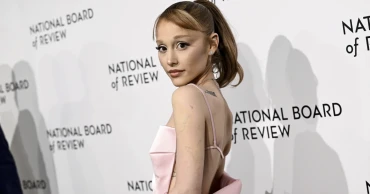
National Board of Review Awards hold space for ‘Wicked’
Days after “Wicked” went home from the Golden Globes with a single award for box office achievement, the National Board of Review Awards held space for the smash hit musical, celebrating its cast and director in the New York group's annual gala Tuesday.
The untelevised but starry NBR Awards were a chance for many of the nominees who didn’t win Sunday to trot out their would-be acceptance speeches, including Daniel Craig, Kieran Culkin and Nicole Kidman.
Accepting the award for best actress for her performance in the erotic thriller “Babygirl,” Kidman celebrated by chugging a glass of milk, a nod to some of the film's kinky sex games. After finishing, Kidman triumphantly announced “Good girl!" and left the stage.
It also was an opportunity for some jabs at the Globes. “Isn’t this room just a little bit classier than the Beverly Hilton?“ quipped presenter Christine Baranski, looking around the elegant marble-columned midtown venue, Cipriani’s.
Others were less impressed by the old-school New York vibe. “The bathroom attendant, that shouldn’t exist anymore,” Culkin said during a typically free-form acceptance speech for best supporting actor for his role in “A Real Pain.”
The night belonged to Jon M. Chu's “Wicked.” The musical was the board's pick for best film, best director for Chu and a special award for the creative collaboration of Cynthia Erivo and Ariana Grande. The two, in back-and-forth remarks, continued their mutual praise of each other.
“Also you’re welcome,” added Grande. “I truly think you would have murdered anyone else.”
“Probably true,” responded Erivo.
Chu, who was introduced by Lin Manuel-Miranda, used the moment to reflect on his yearslong journey with “Wicked,” which will be followed by an already-shot part two due out this November. So lengthy has his time in Oz been that the director noted he had three children during its making, including one born the day of the movie's premiere.
Read: Zendaya sparks engagement speculation at Golden Globes with a sparkling ring
“No twins, same mom,” assured Chu. “I know what you guys are whispering.”
Ryan Reynolds, an avowed fan of the film, took up the topic in his introduction to the film's final award.
“The man missed the premiere of his own film so he could attend the birth of his fifth child,” Reynolds said. “I barely made it to the inception of my own children.”
The common theme of the night was community and togetherness. Coming a day after the anniversary of the Jan. 6 Capitol riot and less than two weeks before the inauguration of President-elect Donald Trump, many alluded to Hollywood's role in the coming years.
Marc Platt, producer of “Wicked,” spoke about the deeper meanings of the film and having “the courage to speak truth to power especially when that power is manifested by those who come to it by blame or divisiveness.”
Craig, the best actor winner for his performance in Luca Guadagnino’s William S. Burroughs’ adaptation, “Queer,” declared: “We are in good shape.”
“If we continue to make and produce movies like this, our industry is going to continue to thrive,” said Craig, who dedicated his award “to the dreamers in the room.” “We need you now more than ever.”
A key feature of the NBR Awards, which were founded in 1909 by film enthusiasts, is its style of award presentation. Each winner is introduced by a close friend, collaborator or admirer. Last year’s surprise guest was Daniel Day-Lewis, who presented for Martin Scorsese and the best-film winner “Killers of the Flower Moon."
This year, Robert Pattinson dropped in to introduce India Donaldson, winner of the breakthrough director award for her acclaimed debut “Good One.” Pattinson called Donaldson “one of the most exciting filmmakers working today.”
Sofia Coppola presented best supporting actress to Elle Fanning, who starred as a 12-year-old in 2010's “Somewhere,” for her performance in “A Complete Unknown.” “She’s really the same person that I met when she was 11,” Coppola said.
Read more: Golden Globes Fashion: Ariana Grande eschews Glinda pink for pale yellow silk
Other introductions were more surprising. John Lithgow, there as part of the “Conclave” group that won best ensemble, introduced breakthrough performance winner and “Anora” star Mikey Madison. Lithgow had only just met her but profusely praised her performance, listing a wide array of its traits, one of which drew giggles from the crowd, and the 25-year-old Madison.
“I never thought John Lithgow would call me ‘sexually athletic,’” said Madison, who plays a Brooklyn sex worker in the film.
Carol Kane presented best animated film to the wondrous Latvian film “Flow,” about a cat and other animals in a flooded world. She didn’t, at first, seem well-suited to the job.
“I don’t get animation. I like to watch people, you know,” Kane said. Then she relented, calling “Flow” a revelation. “Animals, for a long time now, have been some of my favorite people.”
1 year ago
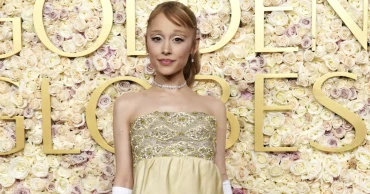
Golden Globes Fashion: Ariana Grande eschews Glinda pink for pale yellow (brick road) silk
Fasten your seatbelts, fashion fans! With some of Hollywood's most fashion-forward stars up for awards this year, it's going to be an eventful season. And the Golden Globes gets it all started, with stars (and their stylists) marking their territory at one of Hollywood's splashiest events. Big this year: lots of sparkle and shine.
Here are some of the looks catching attention Sunday at the Golden Globes:
Ariana Grande: From Glinda pink to Hepburn yellow
She didn't wear pink, the favored color of Glinda the Good. But “Wicked” star Grande evoked another Ozian color — yellow (of the yellow brick road, of course) in Givenchy haute couture. The gown was in pale silk with a hand-beaded bodice, a vintage 1966 gown from what the designer calls the Audrey Hepburn era of Givenchy. She wore a Swarovski choker and white opera gloves.
Mikey Madison: New movie star, new fashion star
Few red-carpet arrivals were more anticipated than that of Mikey Madison, the breakout “Anora” star who's been making waves in the fashion world, too, this season. Madison wore a shiny gold, strapless column gown from Bottega Veneta that emphasized her much-discussed fashion transformation into classic movie-star glamour.
Cate Blanchett: Glistening in gold
Actor Blanchett looked like an awards statue come to life in a glistening gold gown with a ruched top by Louis Vuitton — one that she also wore at the Cannes Film Festival. New gold stones were added to the gown, designed by Nicholas Ghesquière, to freshen the look.
Nicole Kidman: Sparkling in silver
Where Blanchett glistened in gold, Kidman sparkled in silver, in a daring, one-shoulder backless Balenciaga gown. The “Babygirl” star polished off the look with a chic, voluminous half-ponytail.
Ali Wong: Fiery in red
Actor-comedian Wong wasn’t easy to miss on the carpet: She wore a cascading gown of bright fire-engine red tulle. The grand Balenciaga number was accessorized with a satin belt and glamorous black spandex opera gloves, almost up to the shoulder.
Hania Aamir describes India and Pakistan as ‘distant cousins’
Zoë Kravitz: Old-school glamour, a pink bow
The “Don’t Blink Twice” director went traditional with a black velvet Saint Laurent gown featuring a plunging neckline, with a sweet pastel pink silk bow around her waist. She was a favorite of Kevin Hyunh, InStyle’s fashion director, who said he loved how she “channeled old-school Hollywood glamour.”
Timothée Chalamet: No wool beanie here
Globes host Nikki Glaser zeroed right in on Chalamet, one of the hottest stars in Hollywood, in her monologue, telling him: “You have the most gorgeous eyelashes on your upper lip.” As for the clothes on his body, Chalamet went more traditional than other recent trips to the carpet, wearing a sleek Tom Ford black suit with embellished jacket, a white shirt and a blue scarf tossed around his neck (or was it a tie?) No wool beanie like in the Dylan-inspired look he wore to the New York premiere of his film, “A Complete Unknown.”
Kerry Washington: Opera gloves are a thing
Those opera gloves are really a thing this year: Also wearing them was actor Washington, who sported a neon pink silk taffeta gown, also from Balenciaga, with a train – the combo providing “a bit of edgy glamour, Hyunh said.
Armeen Musa and Ghaashphoring Choir boycott tobacco sponsorships
Tyler James Williams: Schooling the masses in fashion
Williams, of “Abbott Elementary,” is never safe or boring on the carpet. On Sunday he sported a gray pinstripe suit with cropped, double-breasted jacket with dramatic shoulder pads and a bare chest peeking out, over loose trousers.
Quinta Brunson: Sequins to spare
WIlliams’ colleague, “Abbott Elementary” creator and star Quinta Bronson, looked sleek in a heavily embellished custom Roberto Cavalli gown. Hyunh called the color, chocolate brown, “the color of the season.”
Glen Powell: A (fashion) hitman in Armani
Powell eschewed the tie and instead channeled casual glamour in an open-necked brown shirt and black velvet jacket, by Giorgio Armani.
1 year ago