Arts-&-Culture
‘Remembering Monsoon Revolution’: 8 directors selected to make films on July uprising
The Ministry of Cultural Affairs has selected eight directors to make films on the July uprising under its “Remembering Monsoon Revolution” programme.
These directors will lead workshops in eight divisions of the country and produce medium-length films with the trained personnel.
Cultural Affairs Ministry unveils seven priority projects to inspire youth after July Revolution
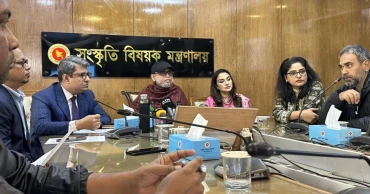
Suman Rahman, a member of the search committee, announced the names of the directors on Tuesday at a press conference held at the Secretariat. Cultural Affairs Adviser Mostofa Sarwar Farooki was present at the press conference.
Rahman said that the search committee aimed to select filmmakers who will conduct workshops in eight divisional cities of Bangladesh in 2025 and create eight films with participants trained during the workshops.
The selected directors are: Anom Biswas, Humayra Bilkis, Shankha Dasgupta, Shaheen Dil Riaz, Robiul Alam Robi, Tasmiya Afrin Mou, and Mohammad Tawkir Islam.
Shilpacharya Zainul Abedin’s 110th birth anniversary being observed
While outlining the initiative's objectives, Rahman said, “Firstly, the aim is to establish communication between young people interested in film production, both inside and outside Dhaka, and to provide opportunities for them to develop their skills and talents. Second, to directly apply the knowledge and skills acquired through the training by participating in film production with the same trainers.”
He added, “There is no fixed framework for these workshops and film productions. This will allow artists to implement their own work methods and creativity to the fullest, and they will be more comfortable creating artistic, politically charged, revolutionary, and youth-oriented languages.”
Rahman also expressed hope that the films would reflect the experiences of Bangladeshis, particularly following the long period of struggles and the blood-soaked July-August revolution. "We hope to see an artistic representation of that in these films," he said.
Cultural Affairs Adviser Mostofa Sarwar Farooki said, “In selecting these film directors, we didn’t look at whether they had done 50 films; what mattered more was whether they had done a work that we could refer to. We tried to see if they had the spark.”
He also assured that the selected directors have complete freedom to create their films. “We have given them complete freedom regarding what they will create. We don’t want this to become another failed government project. We want these eight films to be engaging. We want these films to show the way forward for the future of filmmaking. These elements will certainly be present in their stories.”
Curtain rises on 6th National Sculpture Exhibition at BSA
The government will provide full financial support for the films' creation. The directors, along with the search committee, will determine the budget. Farooki said that the production work for these films must be completed by June.
The ministry will create a Google form for each division’s workshop, allowing interested individuals to apply. The directors of the respective divisions will select the candidates, according to Rahman.
1 year ago
Shilpacharya Zainul Abedin’s 110th birth anniversary being observed
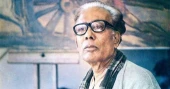
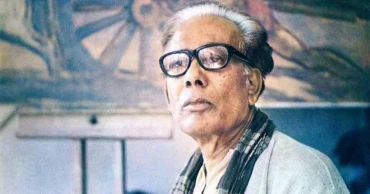
Sunday marks the 110th Birth Anniversary of the master painter and pioneering art maestro Zainul Abedin, widely revered as the 'Shilpacharya' (great master of fine arts).
Shilpacharya Zainul Abedin was born on December 29, 1914, in Kishoreganj in then-British India, and was a key figure in the establishment of the Dhaka University Faculty of Fine Art (FFA) and the Folk Art Museum in Sonargaon, Narayanganj.
The artist community is celebrating the 110th birth anniversary of the Shilpacharya with a variety of celebrations, most notably the traditional three-day ‘Zainul Utshab’ on December 27, 28 and 29 by Dhaka University's Faculty of Fine Art and Bangladesh Folk Art & Crafts Foundation, every day from 10 am to 8 pm.
The festival commenced with an inaugural ceremony on Friday (27 December) at 10 am, at the courtyard of the DU Faculty of Fine Art. DU Treasurer Professor M Jahangir Alam Chowdhury inaugurated the event.
The event was also joined by Dhaka University Proctor and Associate Professor Saifuddin Ahmed, Dean of the Faculty of Fine Art Professor Dr Azharul Islam Sheikh, Emeritus Professor Abul Hashem Khan, art maestro Professor Dr Md Abdus Sattar, Shilpacharya’s youngest son Engineer Mainul Abedin, Director of the Bangladesh Folk and Craft Foundation Kazi Mahbubul Alam, CEO of Berger Paints Bangladesh Limited Md Mohsin Habib Chowdhury, and fashion house Bishwa Rong founder-owner Biplab Saha, among others. After the inaugural ceremony, the exhibition of artworks created by various artists commenced.
On the second day of the festival, Professor Abdus Sattar delivered a commemorative lecture on Saturday at 3:30 pm. On Sunday, the concluding day of the festival, the Faculty of Fine Art and other art organisations placed floral wreaths on the grave of the Shilpacharya at 9 am.
This year, the prestigious ‘Zainul Award 2024' award was presented to Professor Mizanur Rahim and Professor Rafiqul Alam.
Bishwajit Roy's solo sculpture exhibition 'Haat Katali' opens at AFD
Zainul Abedin earned global respect for his 1943 illustrations of the Bengal famine. He visited Palestinian camps in Syria and Jordan in 1970 and made 60–70 paintings of the refugees there, adding another example of his calibre as a modern, international artist.
During childhood, he discovered his love of art while a young child frolicking by the Brahmaputra river.
His motherland, Bangladesh (then East Pakistan), welcomed him back after he graduated from the Government Art School in Kolkata in 1932. However, shortly after the Indian subcontinent was divided in 1947, he permanently departed Kolkata and returned to his motherland in Bangladesh.
The Dhaka Art Institute was subsequently founded with active help from Zainul Abedin, who was appointed as the institute's principal in 1949. The institute later developed into Dhaka University's Faculty of Fine Art.
The institute became the hub of fine arts practices in then East Pakistan and actively participated in historical foundation events of independent Bangladesh such as the 1952 Language Movement and the 1971 Liberation War under the_ artistic leadership of Zainul.
He retired from the Dhaka Art Institute in 1967 and was conferred the honorary title of Shilpacharya (great master of fine arts) by the institute.
Before taking the mantle of Shilpacharya, Zainul Abedin received two years of training from the Slade School of Fine Art in London and developed a new style of art called the 'Bengali style' featuring folk art forms with their geometric shapes including the usage of semi-abstract representation and primary colours.
However, he lacked the sense of perspective, realised the limitations of folk art, and went back to nature, rural life and the daily struggles of people to make art that would be realistic but modern in appearance, thus being the pioneer of modern artistic style in the subcontinent.
Known for the simple yet majestic projection of natural and social hazards, Zainul painted the 1970 Bhola cyclone that devastated then East Pakistan, portraying the effect of the cyclone through his painting ‘Monpura’.
As a fond lover of folk arts, Zainul formed Charu O Karu Shilpi Sangram Parishad and also collected a large number of traditional crafts, ceramic works, and nakshi kanthas in his lifetime which he preserved through founding the Folk Art Museum at Sonargaon, Narayanganj in 1975.
He also founded the Zainul Abedin Sangrahashala, a gallery of his works at the Shaheeb Quarter Park on the bank of his nostalgia-infused Brahmaputra River in Mymensingh in the same year.
In 1973, Zainul received an honorary D.Litt from Delhi University. He was declared the National Professor of Bangladesh in 1975. NASA honoured the iconic artist by naming a crater on the planet Mercury after the painter, called the 'Abedin Crater' in 2009.
The revered artist passed away in Dhaka on May 28, 1976, after losing his battle with lung cancer. He was buried beside the Dhaka University Central Mosque.
1 year ago

Bishwajit Roy's solo sculpture exhibition 'Haat Katali' opens at AFD
Artist Bishwajit Roy's solo sculpture exhibition 'Hat Katali' was inaugurated at La Galerie, Alliance Française de Dhaka (AFD) on Friday at 5 pm.
The exhibition was inaugurated by eminent contemporary visual artist Mahbubur Rahman. Bangladesh Shilpakala Academy’s Fine Arts Director Mustafa Zaman was also present at the inauguration.
Bishwajit Roy, a native of Sundarbans’ Channir Chack village in Khulna, derives inspiration from the region's unique biodiversity and folklore.
'Hat Katali' symbolizes the cultural and historical essence of the Sundarbans’ wildlife and its critical ecological value. The exhibition highlights the region’s biodiversity, including the endangered Bengal tiger and other animals, emphasizing the need for conservation through creative storytelling.
Curtain rises on 6th National Sculpture Exhibition at BSA
Bishwajit Roy's art revolves around nature, mythology, and the Sundarbans' socio-political narratives, bringing forth a blend of tradition and modernity. The artist employs materials such as ceramic, terracotta and natural materials to explore the untamed spirit of the Sundarbans’ natural heritage.
The exhibition will remain open to the public until January 7, 2025, everyday 5 pm to 9 pm except for Sunday.
1 year ago
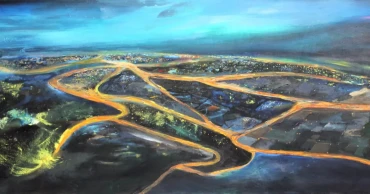
'Epic Journey of a Migratory Bird': Syed Golam Dastagir’s exhibition to masterfully depict freedom and unity
The Bhumi Gallery and Gallery Shilpangan are set to embrace and mesmerize art enthusiasts and connoisseurs with the art exhibition titled ‘Epic Journey of a Migratory Bird’ by the contemporary artist Syed Golam Dastagir in the capital's Lalmatia, opening on December 28.
The art exhibition will be inaugurated by Professor Abdullah Abu Sayeed and will be presided over by the distinguished artist Hamiduzzaman Khan.
The inextricable relationship between a person and nature begins at birth and marks a nomadic voyage of wandering souls into alleys that carry the history, legacy, and colors of eons and epochs. The artist documented this visual journey in his evocative work under this exhibition by using various forms of colors and canvas.
He portrayed this epic journey with great eloquence that is experienced not only through sight but also conscience that defies barriers and borders and is a reminder of the interconnectedness and coexistence of life.
This solo exhibition comprises the works of the artist’s over a decade-long project, started from 2010 to 2024, and depicts the journey of migratory birds through vulnerability and resilience. Around 40 curated artworks will be displayed for the visitors at the exhibition, showcasing the artist’s unwavering dedication and toil to express and manifest his inner monologues, understanding, epiphany and liberty, which ought to create an impeccable connection between the viewers and a greater perspective.
Read: Curtain rises on 6th National Sculpture Exhibition at BSA
This exhibition is a floating anecdote that aims to give the audience a new context of seeing and perceiving the palpable nuances in objectivity and attitude, leading to the moment of realization through the passage of time. While this project explores the relationship between a bird’s flight and its visual perception, Dastagir examines the birds’ perpetual movement and struggle for survival and dissects the observational engagement with the existential cryptographs embedded in the typography of shades, shapes, patterns, and vivid forms.
In this solo exhibition, the artist delves deeply into the wonder and magnificence of bird migration, buttressed by technological methods, including map study, satellite imagery and strong artistic manifestation, offering the viewers to ponder how our visual perception connects with the intangible narratives of understanding, transcending beyond a bird’s instinct of searching, navigating, and reinventing across distances.
The solo visual exhibition will remain open for visitors til January 14, 2025.
1 year ago
Curtain rises on 6th National Sculpture Exhibition at BSA
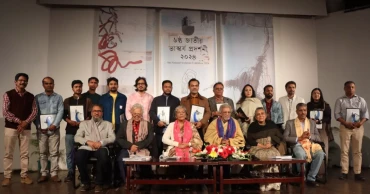
The month-long '6th National Sculpture Exhibition 2024', organised by the Fine Arts Department of Bangladesh Shilpakala Academy (BSA), began on Saturday.
One of the flagship events of BSA, the sculpture exhibition was inaugurated by Sharmin S Murshid, adviser to the Ministry of Social Welfare and Women and Children Affairs.
Eminent sculptor Hamiduzzaman Khan, Director General of Bengal Foundation Luva Nahid Chowdhury, and Chittagong University teacher-sculptor Atiqul Islam were present as special guests.
The chairman's speech was delivered online by the BSA Director General Dr Syed Jamil Ahmed, while Mustafa Zaman, Director of the Fine Arts Department, delivered the welcome speech at the event.
The first sculpture exhibition was organized in 1982 by the Bangladesh Shilpakala Academy with the aim of continuously encouraging and developing the practice of sculpture.
'Joke er Rajneeti': When stand-up came to Shilpakala
This year, the number of participating artists is 216, and 178 works of art in different categories by 159 artists are being exhibited.
A total of 13 awards, including 10 honorary awards, were presented at the inaugural ceremony. This time, the 6th National Sculpture Award went to Dr Azharul Islam Sheikh Chanchal, the second prize went to Abdul Khalek Chowdhury, and the third place went to Bilash Mondal.
Among the recipients of honorary awards are Asim Halder Sagar, Rupam Roy, Alok Kumar Sarkar, Abu Sadayat Md. Sohel, Amit Koch, Asfiqur Rahman, Syed Tarique Rahman, Habiba Akhtar Papia, Kanak Kumar Pathak and Srabanti Meherun.
At the same time, a multimedia 360-degree VR (Virtual Reality) version of the exhibition was also inaugurated at Gallery 05 of the Academy's National Art Gallery building under the management of the BSA Production Department.
The exhibition is open to everyone and will run at the National Art Gallery of Bangladesh Shilpakala Academy from December 21, 2024 to January 20, 2025, daily from 11 am (3 pm on public holidays) to 8 pm.
1 year ago

'Joke er Rajneeti': When stand-up came to Shilpakala
Bangladesh Shilpakala Academy (BSA) presented a stand-up comedy show for the first time on Friday, focusing on contemporary social and political realities.
Organized by the Department of Drama and Film, the comedy show titled 'Joke er Rajneeti' was performed at the Academy's Experimental Theatre Hall on Friday evening.
Akhlaq Siddiqui, Shawon Majumder, Syed Ridwan Hasan, Mehedi Hasan Toru and Sami Doha presented their jokes, enamoring the audiences.
At the inaugural ceremony, Bangladesh Shilpakala Academy Director General Dr Syed Jamil Ahmed said, "The Shilpakala Academy is always people-friendly; we want to create a people-friendly environment with everyone. Our programs are going on not only in Dhaka but also in the districts."
"Starting from photography training for garment workers, concerts, band shows, Jatra festivals, Sadhumelas, mass uprising songs, Bahas, sculpture exhibitions and other multi-dimensional programs across the country. Many of which have not been held in the last 15 years."
Regarding the naming of the academy auditorium, the Director General said, "The Experimental Theater Hall has been named Selim Al Din Theatre, the Studio Theater Hall has been named Chandrabati Theatre. The National Theater Auditorium will be named Kobi Alaol Theatre. The Experimental Theater Hall will be opened for drama performances from December 28, 2024."
On December 27, at 7pm, the second episode of stand-up comedy 'Stand Up Bangladesh' will be performed by the Buno Payra troupe, focusing on contemporary, social and political realities at the Experimental Theater Hall.
1 year ago

Curtain falls on Islami Chhatra Shibir's photo exhibition on July Movement at National Museum
To preserve the memory of July and revive the spirit of the July Movement among everyone, the anti-fascist photo exhibition organised by Bangladesh Islami Chhatra Shibir has concluded at National Museum at Shahbagh.
Titled 'Frame-a-Bondi 36 July: Obbhyutthyan er Purbapor’ (‘Framed Memories on 36 July: Before and After the Coup') the display came to a close on Monday.
The three-day exhibition began earlier on Saturday (December 7) with the inauguration announced by Shibir’s central president Monzurul Islam at the Poet Sufia Kamal Auditorium of the National Museum.
Musical Instrument Exhibition 'Harmony of Healing' begins at AFD
Concluded with the closing announcement by Secretary General of Islami Chhatra Shibir Jahidul Islam on Monday, the exhibition showcased historic photographs highlighting the moments of the July 36 Movement, and shed the spotlight on the stories behind the movement and its martyrs' sacrifices, the consequences of the mass uprising, and the brave struggle of the students against the dictatorship.
1 year ago
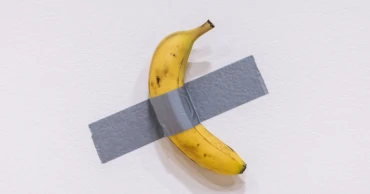
A $6.2 million banana and the Bangladeshi vendor who sold it for 25 cents in New York
Justin Sun, a Chinese cryptocurrency entrepreneur and art collector known for purchasing the famous $6.2 million banana taped to a wall at auction, has proposed buying 100,000 more bananas from the Bangladeshi vendor who sold the original fruit for just 25 cents.
This unexpected offer has sparked excitement and practical challenges for the vendor, Shah Alam, 74, and the fruit stand’s owner, Mohammad R. Islam, reports The New York Times.
Entrepreneur who purchased a banana artwork for $6.2 million eats the fruit in Hong Kong
The original “artwork”, sold at Sotheby’s in New York, captured worldwide attention for its price and conceptual nature.
Sun now seeks to buy bananas worth about $25,000 from Alam’s stand near Sotheby’s. However, sourcing this quantity from the Bronx wholesale market and handling logistics, including packaging and transport, pose significant hurdles and costs.
Alam, who earns $12 per hour working 12-hour shifts, clarified that any profit from the bulk sale would go to the stand’s owner. Alam estimated only a modest $6,000 profit would remain after expenses.
“There’s not any profit in selling bananas,” Alam said, underlining the stark difference between the art piece’s exorbitant cost and the realities of running a fruit stand, the report also said.
Sun, who has a history of purchasing unique and costly artworks, commented on the challenges in a text after a news event in Hong Kong, where he ate the original banana. “I am not personally familiar with the exact cost of the bananas,” he wrote, emphasising that the goal was to support Alam and highlight the artistic symbolism of the banana
Fruit stand owner Islam, 53, said he would consider sharing any potential profits with Alam and other employees. He learned about Sun’s proposal from a reporter and expressed concern over its impact.
Online support for Alam has grown, with two fundraising campaigns raising over $20,000, underscoring public interest in addressing the economic disparity highlighted by the original sale, added the report.
Alam’s brother, Mohammad Alam Badsha, who also works at the stand, shared his view on Thanksgiving Day. He acknowledged the potential of accepting the bulk sale but pointed out it would not substantially change the vendors’ circumstances or address the deep inequality exposed by the $6.2 million price tag. “It’s definitely an inequality,” Badsha said, using a Bengali saying to describe the vast difference as “the difference between heaven and hell.”
1 year ago

Musical Instrument Exhibition 'Harmony of Healing' begins at AFD
“Harmony of Healing', an exhibition featuring traditional and innovative musical instruments from the region, presented by Mohammad Jakir Hossain, begun at La Galerie of Alliance Française de Dhaka (AFD) in Dhaka on Monday.
Music artist Baul Shafi Mondol attended the exhibition as a special guest, and François Grosjean, director of the Alliance Française de Dhaka, also participated in the inauguration, among others.
Jakir Hossain, born in 1994 in Gaibandha, studied music in Kolkata from 2016 to 2022, where he learned various forms, including Indian classical, Bengali folk, Tagore songs, and modern music. After returning to Bangladesh, he explored the impact of music on humanism and healing.
In 2018, he founded “Obokalpo”, an initiative focused on preserving and developing traditional and experimental music while nurturing art and culture in vulnerable regions of Bangladesh.
In addition to the display of experimental indigenous musical instruments, the exhibition will feature seminars, workshops, and Bengali folk music performances. Lucy Tripti Gomes curated the exhibition.
Acrobatics featuring trained artists enthralls BSA
The exhibition is open to all and will run until Friday, November 29, from Monday to Saturday, 3 pm to 9 pm.
1 year ago
Acrobatics featuring trained artists enthralls BSA
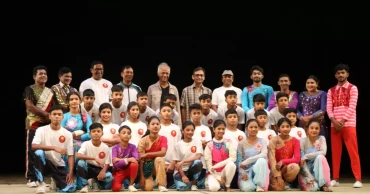
On Saturday evening, the Bangladesh Shilpakala Academy (BSA) hosted a unique 'Acrobatic Show' at the National Theatre Hall auditorium in the capital.
The acrobatic show was organized by the Theater and Film Department of BSA, as the academy is currently working in a variety of methods to advance the popular acrobatic art form.
The acrobatic team of Bangladesh Shilpakala Academy, which received special training from China, presented several enthralling performances featuring Rope Round Bill, Ariel Hoop, Blanket Balance, Barrel Balance, Chair Setting, Mount Skill, Diabo Balance, Fire/Bump, Ring Dance, Roller Balance, Ring Jump and more.
At the event, the Director General of Bangladesh Shilpakala Academy Dr Syed Jamil Ahmed said, "The art of Acrobatics has gained wide popularity for several hundred years. It was mentioned in "Mahua Pala" written in 1650, proving that acrobatics was already popular before that period; but today, its remnants survive somewhere in a dilapidated condition - and the circus that was popular during the British period is hardly seen today.”
"Bangladesh Shilpakala Academy thanks the state and people of China for helping to revive this almost lost heritage of Bangladesh, and I request our trained acrobats and their instructors to make acrobatics a part of our heritage. I also want the audience to stand by the circus, because Bangladesh Shilpakala Academy can take the circus back to a strong position with your undivided support,” Syed Jamil concluded..
The program was broadcast live from the official Facebook page of Bangladesh Shilpakala Academy.
1 year ago