Arts-&-Culture

Historic Belgrade house finds new life as intimate theatre
A crumbling 19th-century house on one of Belgrade’s busiest streets is defying time and urban development by thriving as a small, intimate theatre.
Built in 1894 by a prominent family, the mansion at 17 Takovska Street is a protected heritage site that now hosts Takovska17, a theatre staging early 20th-century plays for audiences of just a few dozen people. Though traffic roars past outside, stepping inside feels like entering another era, with period furniture, faded walls and wooden floors worn by more than a century of use.
Several local theatre troupes perform in the space, embracing its historic atmosphere. Actress Isidora Ristic said the house itself has become part of the performances, calling it “a character in our plays.”
Architect and performer Tamara Masic said the artists feel honored to breathe new life into the old building, describing it as “like a museum.”
The unique setting has drawn strong interest, with frequent waiting lists for tickets.
As many similar houses in Belgrade have been demolished to make way for modern buildings, Takovska17 stands out as a rare survivor, preserving the city’s past while creating new stories on stage.
1 month ago
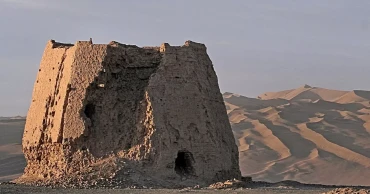
Archaeologists uncover well-planned Western Han settlement in China
Archaeologists in Xi’an, the capital of northwest China’s Shaanxi Province, have uncovered a well-planned suburban settlement dating back to the Western Han Dynasty, offering new insights into life on the outskirts of the ancient capital Chang’an.
The discovery was made during excavations at the Sanjiu relic site, according to the Shaanxi Provincial Institute of Archaeology. The settlement dates from the middle of the Western Han period to the Xin Dynasty, which ruled between 202 BC and 25 AD.
Also Read: Why a lone nihilist penguin from a 2007 documentary goes viral
The Sanjiu site is located in Xi’an’s Weiyang District, about 0.6 kilometres east of the eastern wall of ancient Chang’an City. Archaeological work carried out in 2025 also revealed remains from later periods, including a Northern Wei cemetery, tombs from the Song Dynasty, and pottery kilns dating to the Qing Dynasty.
Researchers found that the Western Han settlement was divided by a north to south ditch. On the eastern side, eight large courtyard-style residential complexes were arranged along a cross-shaped road system, forming what archaeologists believe was a central area for food processing activities.
On the western side of the ditch, excavators identified workshops for bone processing and metal smelting alongside residential areas. The team recovered about 78 kilograms of bone and shell materials, as well as iron tools and decorative items such as bone earrings and shell beads, suggesting the presence of a jewellery production workshop.
Also Read: Bird murals bring Hong Kong’s migratory stories to life in Lantau’s forgotten village
Project leader Zhang Yanglizheng said the findings reveal previously unknown details about how suburban areas near Chang’an City were organised, highlighting the site’s importance for understanding social and economic structures during the Western Han period.
1 month ago
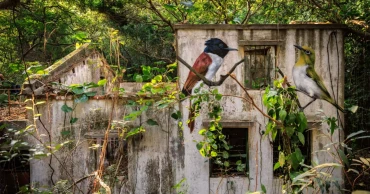
Bird murals bring Hong Kong’s migratory stories to life in Lantau’s forgotten village
Painted birds have begun appearing across the worn walls of Wang Tong Village, a quiet corner of Lantau Island in Hong Kong, turning abandoned homes into a trail of murals that spotlight both neglected places and the remarkable journeys of migratory species.
The project was conceived by Dominic Johnson-Hill after an ornithologist neighbor told him about the Amur falcon, which travels from Manchuria and stops in Lantau before continuing across Myanmar, India and Madagascar to South Africa. Johnson-Hill said the story changed how he saw the birds around him, not as permanent residents but as passing visitors.
Inspired, he looked at an empty house beside his own and imagined a red-billed blue magpie stretching across its wall, an idea that grew into what is now known as the Flock Project.
To translate the concept into art, Johnson-Hill brought in British muralist Rob Aspire, widely known as “The Birdman,” who is recognized for detailed and expressive bird paintings. The first mural was followed by more. A year later, Aspire returned to paint seven additional works.
Egypt’s Siwa Salt Lakes: why you float instead of sinking
Each bird was selected to match the surroundings through ecology, appearance or symbolism. A kingfisher appears near a stream where fishing has been banned, while a Swinhoe’s white-eye blends into walls close to trees where its call can still be heard.
Most of the paintings sit on abandoned houses, with one exception on Sunset Peak. There, at 868 meters above sea level, a long-tailed shrike is painted onto the rooftop of a 90-year-old stone home overlooking the mountains.
The project aims to gradually place more of Hong Kong’s native and migratory birds into view, integrating them into overlooked corners of the island as though they have always been part of the landscape.
The murals have started drawing hundreds of visitors, many from the city’s dense urban centre, who walk village trails in search of the painted birds. On weekends, some leave chalk arrows to guide others, turning the paths into a kind of informal treasure hunt. Organisers say building attention and appreciation can be a first step toward conservation.
Bali named world’s top travel destination for 2026 by TripAdvisor
Johnson-Hill has also created an online map for visitors and is considering the next phase, which will depend on whether new sites become available and whether conditions allow additional birds to be painted.
As the story suggests, birds come and go, and so do people. Villages may empty out, but their walls remain, now carrying painted birds and the memories they leave behind.
1 month ago

Artists sculpt magic at Northern China’s ice and snow festival
Every January, the northeastern Chinese city of Harbin hosts a remarkable winter tradition. Despite the city - capital of Heilongjiang province—already being blanketed in ice, artists flock here from near and far to create even more, competing to craft the year’s finest ice sculpture.
The result is enchanting. Illuminated from within, the sculptures transform parts of the city into a magical, almost cinematic landscape, reminiscent of a festive holiday show. Visitors, often traveling long distances, bundle up to experience the spectacle.
5 simple lifestyle changes that may help slow biological ageing: Experts
In images captured by Associated Press photographer Ng Han Guan on Saturday, an ice sculptor readies his piece for the festival’s competition, while spectators approach the glowing icy steps of a towering obelisk adorned in yellow and purple lights.
The festival continues through mid-February, and for the adventurous, it even offers the chance to swim among the ice.
2 months ago

Carnival returns to Louisiana with weeks of parades and festivities
As people in much of the US. pack away holiday decorations and settle back into normal routines after New Year’s, Louisiana is doing the opposite gearing up for its most anticipated season of the year.
Across the state, preparations are underway for Carnival, a festive, weeks-long celebration held before Lent. The season is marked by rich food, lavish balls and an ongoing lineup of large parades that take over city streets.
Carnival is known for excess and spectacle: elaborate costumes, nonstop celebrations and countless strings of colorful plastic beads draped around revelers’ necks. It’s a time devoted to enjoyment before the more reflective period of Lent begins.
Origins of CarnivalCarnival has deep roots in Christian, particularly Roman Catholic, traditions. It represents a time of eating, drinking and celebration leading up to Ash Wednesday, which signals the start of Lent a season of fasting and spiritual preparation for Easter.
Every year, more than a million visitors join Louisiana locals in New Orleans for the world-famous festivities. But Carnival isn’t confined to the city. Celebrations take place throughout Louisiana and across the Gulf Coast, including in Mobile, Alabama, home to what is considered the oldest Mardi Gras celebration in the U.S. Similar events are also held internationally, especially in parts of Europe and Brazil.
Carnival vs. Mardi GrasWhile the terms are often used interchangeably, Carnival and Mardi Gras are not the same. Carnival refers to the entire season leading up to Lent. Mardi Gras or Fat Tuesday is a single day that marks the final celebration before Lent begins.
Mardi Gras always falls on the day before Ash Wednesday and serves as the grand finale of Carnival, offering one last chance for indulgence.
Length of the SeasonCarnival officially begins on Jan. 6, known as Epiphany or Twelfth Night in the Catholic calendar. The season concludes on Mardi Gras, but the date changes each year because it depends on when Easter occurs. Mardi Gras can fall anytime between early February and early March. This year, Fat Tuesday lands on Feb. 17, making the Carnival season last 43 days.
King Cake TraditionThe start of Carnival also signals the return of king cake, a beloved seasonal dessert. Bakeries known for their king cakes often draw long lines as people eagerly await the treat.
The cake, typically made from sweet, brioche-style dough, is shaped like a ring and flavored with cinnamon. It’s decorated with purple, green and gold icing — the traditional Mardi Gras colors — and may be filled with fruit, nuts or cream cheese.
Hidden inside is a small plastic baby figurine. Tradition holds that whoever finds it in their slice is responsible for buying the next cake or hosting the next party, keeping the celebrations going.
Over time, king cake has evolved beyond tradition. Creative versions now include unconventional fillings such as boudin sausage or even sushi-inspired designs.
Parades and “Throws”Carnival is perhaps best known for its spectacular parades. More than 80 parades are scheduled in and around New Orleans this season, many lasting several hours.
These parades feature lively marching bands, dancers in costume and towering floats adorned with imaginative, handcrafted designs. Each parade has its own theme and personality — from all-women krewes and political satire to sci-fi themes featuring costumed characters. Some parades boast thousands of riders and dozens of floats, while others are charmingly small, with floats built from shoeboxes.
Members of krewes the social organizations that organize parades — invest significant time and money preparing for the season. Their efforts are rewarded as crowds line the streets, often dressed in costumes themselves.
Spectators eagerly reach for “throws,” the trinkets tossed from floats. These include beads, candy, cups and toys, along with prized items like decorated coconuts, hand-painted shoes and even glitter-covered plungers. One of the largest krewes, Endymion, estimates it distributes more than 15 million throws each year, living by its motto: “Throw ’til it Hurts.”
Other Carnival TraditionsWhile parades and formal balls dominate popular images of Carnival, many communities observe unique traditions.
In rural central Louisiana, people participate in the Courir de Mardi Gras, a Cajun French custom where masked revelers travel through the countryside singing, performing and asking for ingredients. They may even chase live chickens, all to gather supplies for a communal gumbo at the day’s end.
Chinese Embassy holds ‘Happy Chinese New Year Festival’ Temple Fair at Gulshan Society Lake Park
In New Orleans, another powerful tradition is practiced by Mardi Gras Indians — African Americans who create intricate suits adorned with beads and feathers. They parade through neighborhoods singing, dancing and drumming. This tradition dates back to at least the late 19th century and honors Native Americans who aided Black communities and escaped slaves. It also emerged during an era when segregation excluded Black residents from white-only parades.
2 months ago
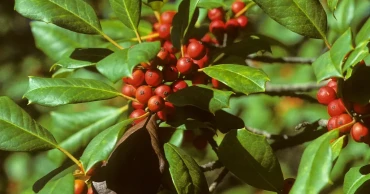
Deck your garden with holly: evergreen beauty with rich history
Holly has long been a symbol of the season, appearing in wreaths, boughs, holiday cards, and catalog covers. But have you considered adding it to your garden? With hundreds of species and hybrids from around the world — and over a dozen native to the continental U.S. — holly offers year-round appeal and winter interest.
Historically, ancient pagans used holly branches as crowns and believed the evergreens could repel evil spirits and hasten spring. Later, early Christians adopted holly as a symbol of eternal life. Its bright red berries and deep-green leaves complement traditional holiday colors, while providing an important food source for birds and wildlife (though most berries are toxic to humans).
Plant holly in early spring, after the last hard freeze but before summer heat sets in, and water regularly during the first year. Most hollies are dioecious, meaning male and female plants are needed for berry production. One male can pollinate up to ten females within 50 feet. Plant tags may not indicate sex, but variety names often help — for example, “China Girl” (female) requires “China Boy” (male) to bear fruit.
Here are a few top choices:
Yaupon Holly (Ilex vomitoria): Native to the southern U.S., adaptable to sun or shade, and suitable for hedges or trees. Hardy in zones 7-9.American Holly (Ilex opaca): Slow-growing, pyramid-shaped, reaching 25-60 feet, thriving in acidic soil, zones 5-9.Blue Holly (Ilex x meserveae): European hybrid with blue-green spiny leaves, 2-8 feet tall, zones 5-7.Winterberry Holly (Ilex verticillata): Deciduous, berries on bare branches offer winter interest, zones 3-9.Caution: English or common holly (Ilex aquifolium), native to Europe and North Africa, can be invasive in parts of the U.S., particularly the Pacific Northwest and California. Avoid planting it in regions where it threatens native vegetation.
With the right choices, holly can add beauty, history, and wildlife value to your garden all year long.
2 months ago

Christmas returns to Bethlehem after two years of Gaza war
After two years of shuttered shops and empty streets, Christmas celebrations have begun returning to Bethlehem, offering a fragile sense of hope to a city devastated by the war in Gaza and an economic crisis across the West Bank.
On Saturday evening, John Juka’s family restaurant — closed for most of the past two Christmases — was once again filled with families and glowing red lights. “It’s not like before the war,” said the 30-year-old. “But life is coming back again.”
Bethlehem, the traditional birthplace of Jesus, relies heavily on tourism. Nearly 80% of its Muslim-majority population depends on the industry, which collapsed after Hamas’ Oct. 7, 2023, attack on Israel and the subsequent Israeli offensive in Gaza, which Palestinian health officials say has killed more than 70,000 people. Israeli military operations in the West Bank, including near Bethlehem, further worsened the crisis. Unemployment surged to 65%, and thousands left the city searching for work.
Mayor Maher Nicola Canawati said reviving Christmas celebrations was meant to restore hope. “When Bethlehem thrives, the entire West Bank feels it,” he said.
On Saturday, Manger Square filled with crowds, children atop their fathers’ shoulders, and a towering Christmas tree lit up the night. Some tourists have begun to return, and hotels expect nearly 70% occupancy during Christmas — the highest since the war began.
But tensions remain high. Violence, raids, and settler attacks continue across the West Bank. On Saturday, Israeli forces shot dead two Palestinians near Hebron, saying they attempted to ram soldiers. Checkpoints have made everyday travel difficult; one resident said he spent six hours traveling less than 20 miles.
Still, many in Bethlehem cling to cautious optimism. “This celebration is for everyone — Christian, Jewish, Muslim,” said Issa Montas, a 29-year-old resident. “This Christmas is for all of us.”
3 months ago

Rare 1939 ‘Superman No. 1’ sells for record $9.12 million
A near-pristine copy of the first-ever Superman comic, discovered in an attic by three brothers cleaning out their late mother’s San Francisco home, fetched a record-breaking $9.12 million at a Texas auction this month, setting a new high for comic book sales.
The brothers uncovered the comic, along with a handful of other rare pre-World War II issues, beneath layers of newspapers and dust. Their mother had once mentioned the collection’s value, but the siblings had never seen it until preparing the house for sale, according to Lon Allen, vice president of comics at Heritage Auctions. Allen inspected the comic earlier this year and confirmed its exceptional condition.
Released in 1939 by Detective Comics Inc., Superman No. 1 is among the rarest comics in existence, with fewer than 500 copies believed to survive. The comic’s historical significance—as the first appearance of the Man of Steel—combined with its excellent preservation, contributed to its staggering value. Experts noted its crisp corners, firm spine, and vibrant colors, preserved in part by Northern California’s cool climate. The copy earned a 9.0 out of 10 from grading company CGC.
Previously, the record for the world’s most expensive comic was set last year when Action Comics No. 1, which first introduced Superman, sold for $6 million. Another Superman No. 1 sold for $5.3 million in 2022.
“This isn’t simply a story about old paper and ink,” one brother said. “This is a testament to memory, family and the unexpected ways the past finds its way back to us.”
The identities of both the brothers and the winning bidder remain confidential, underscoring the extraordinary nature of this once-in-a-lifetime discovery.
3 months ago

A soulful afternoon in Dhaka — artists enchant the audience with a unique classical music journey
A soulful musical evening of classical music, storytelling, and narration was conducted by Shri Aditya Nirmal, a distinguished disciple of Pandit Samaresh Chowdhury under the school of Pandit Ravi Shankar, from Lucknow, India. Was held in the city.
The soulful and mesmerizing Classical Music Concert was organized by Siddeshwari 69 Batch and held at An Auditorium in Dhaka.
The concert drew a full house of music lovers, turning into a celebration of melody, rhythm, and emotion.
The concert was inaugurated by the Advisor of Ad-Din Medical College, Dr. Munshi Anwar Hossain, and began with a warm welcome address by the Convener of Siddeshwari Batch ’69, Mr. Fazlul Karim Abid. Professor Mostafizur Rahman, an esteemed alumnus and inspiration for generations of students, graced the event with his presence.
Aditya led the session as the principal vocalist, narrator, storyteller, and music presenter, weaving together an intricate musical and cultural dialogue. The event was designed to explore the evolution of Bengali culture, people, and language, intertwined with the historical development of Indian classical music—tracing its roots from Dhrupad to Khayal, Thumri, and Bhajan traditions.
The narration was delivered in Bengali, accompanied by live renditions of several classical Ragas, including Raag Kaushik Dhvani, Raag Khamaj, Raag Bhairavi, Raag Yaman, and Raag Vasant. The presentation also featured Chhota Khayal and Bengali Khayal compositions—fields in which Aditya has been recognized as a pioneer and innovator.
Aditya Nirmal (Vocal) captivated the audience with his deep and expressive renditions of Raag Kaushik Dhvani, Raag Bhairavi, and Bangla Khayal, creating a serene connection between sound and soul. Aditya also shared the history of the Bangla language and people and its relationship with the history of Indian classical music. Simultaneously, the evolution of society and its interconnection with religion was expressed through Nazrul Sangeet, Hamnad, and Rabindra Sangeet.
The evening further included Nazrul Sangeet, among which “Bagichay Bulbuli Tui” and “Bhoriyapuran” were performed and beautifully rendered by Aditya Nirmal on harmonium. Another Nazrul Sangeet composition was also presented, enriching the musical diversity of the evening.
Several Rabindra Sangeet pieces were performed, deepening the audience’s connection to Bengali musical heritage. Additionally, the Thumri “Kakaroo Sajni” was rendered with profound emotion and classical depth, highlighting the expressive nuances of Hindustani semi-classical tradition.
The instrumental segment featured Dilip Biswas on harmonium, accompanied by Pandit Ujjwal Roy and Rahul Chatterjee on tabla in Teental, presenting an engaging jugalbandi and solo rhythmic dialogue.
Pandit Ujjwal Roy, one of India’s eminent tabla maestros, is a disciple of Pandit Swapan Chaudhuri, Pandit Ashok Mehta, Pandit Suresh Talwalkar, Pandit Yogesh Samsi, and Pandit Swaraj Bhattacharya. His co-performer, Rahul Chatterjee, is a devoted disciple of Pandit Ujjwal Roy, while Dilip Biswas has been trained under the guidance of Pandit Jyoti Goho.
Alongside the classical and instrumental performances, the session offered Rabindra Sangeet, Nazrul Sangeet, Thumri, and insightful interpretations of Bengali Khayal compositions by Kabir Suman, giving the audience a profound musical experience that seamlessly bridged tradition, innovation, and cultural depth.
The narration and session also incorporated the poetic and philosophical points of Jibanananda Das, Kazi Nazrul Islam, and Jasimuddin, as well as Hamnad, enriching the presentation with literary essence and spiritual reflection.
Throughout the evening, the audience remained spellbound, responding to every alaap, taan, and rhythm cycle with heartfelt applause. The performers’ dedication and artistry reminded everyone that music, in its truest form, transcends words and unites hearts.
The program was beautifully coordinated and hosted by Siddeshwari (69 Batch), whose efforts in promoting classical heritage were widely appreciated.
4 months ago
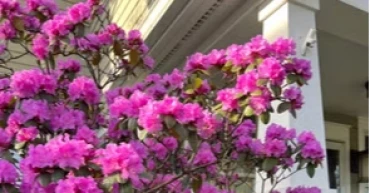
Proper timing key to successful shrub transplants, experts advise
As the gardening season draws to a close, many home gardeners may be tempted to rearrange shrubs for a better landscape design — but experts caution that timing is key to ensuring healthy transplants.
Gardeners should avoid rushing to move late-blooming shrubs. For example, Clethra bushes, which flower in late summer, should be transplanted in spring — right after emerging from dormancy — to allow enough time for roots to establish before blooming begins. Conversely, spring and early summer bloomers are best moved in the fall, after their flowering season has ended.
Start with the rootsBefore digging, it’s crucial to understand how deep and wide a shrub’s roots typically grow. Shallow-rooted plants like rhododendrons are easier to move than deep-rooted ones such as manzanita. The plant’s age also matters, as older shrubs have larger, tougher root systems.
When preparing the new site, the hole should be roughly twice as wide as the root system and the same depth as the plant’s original location. Always dig the new hole first to minimize the time the roots are exposed to air.
Gently tying branches together can prevent eye injuries and provide a clearer view while digging. Use a sharp shovel to carefully loosen soil around the plant’s perimeter, working gradually to lift as much of the rootball as possible.
The science behind growing a giant pumpkin
Planting with careTo move the shrub safely, place it on a tarp and drag it to its new location. Ensure the rootball sits at the same level as before — not too deep, to avoid rot, and not too shallow, to prevent drying and damage.
After positioning the plant, backfill the hole with soil, tamping it down periodically to remove air pockets. Water halfway through, continue filling, then water again before applying mulch over the root zone. Mulch helps retain moisture, regulate temperature, and suppress weeds.
Throughout the first year, water the shrub consistently until frost, but avoid fertilizing too soon. Experts recommend waiting until mid-to-late spring to apply a slow-release, low-nitrogen fertilizer — giving the plant time to recover and establish roots before promoting new growth.
Proper timing and technique, they say, can make the difference between a struggling transplant and a thriving shrub that flourishes for years.
Source: AP
4 months ago