Others
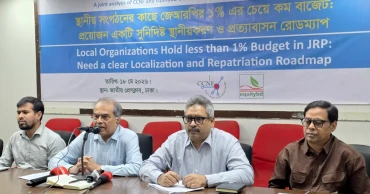
Civil society seeks Rohingya repatriation roadmap, greater local role in aid response
Civil society groups on Monday demanded a clear roadmap for Rohingya repatriation and greater localisation in the humanitarian response, alleging that local NGOs receive less than 1 percent of Joint Response Plan (JRP) funds.
The demands came at a press conference jointly organised by the Cox’s Bazar CSO NGO Forum (CCNF) and the Equity Justice Working Group (EquityBD) at the National Press Club in Dhaka.
Presenting the keynote paper, CCNF Coordinator Md Shahinur Islam criticised the JRP process, describing it as an UN-dominated fundraising mechanism.
UN food relief agency steps up aid for Rohingays amid heavy rains
He said UN agencies control around $811 million, or 87 percent, of the total JRP 2025 fund, while international NGOs receive 8.97 percent and national NGOs 4.19 percent. Local NGOs, he claimed, are allocated only 0.06 percent of the total budget.
He also said the Government of Bangladesh is making significant financial contributions to the Rohingya response, including taking bank loans, but such contributions are not reflected in the JRP framework.
Shahinur demanded that at least 25 percent of JRP funds be implemented through local NGOs and local communities and called for transparency regarding fund distribution among different actors.
EquityBD Coordinator Mostafa Kamal Akand urged the government to take responsibility for Rohingya repatriation and demanded the formation of a Rohingya Repatriation Commission.
He also called for an international conference during the upcoming UN General Assembly session to ensure justice for the Rohingyas and prepare a clear roadmap for their safe repatriation.
Another EquityBD Coordinator, Md Iqbal Uddin, said the humanitarian response has caused environmental degradation in Cox’s Bazar, including damage to agricultural land and groundwater resources.
He also alleged that criminal activities have increased in the camps and stressed the need to preserve groundwater by supplying treated water from the Naf River to the camps.
Rezaul Karim Chowdhury, chief moderator of CCNF and EquityBD, criticised UNHCR for implementing projects through international organisations instead of local NGOs and for constructing permanent shelters without approval from the government and the Forest Department, says a press release.
He also urged the government to ensure that all UN activities receive prior approval to protect national interests and said affected local communities should be included in consultations on the Rohingya crisis.
The press conference was moderated by Rezaul Karim Chowdhury and attended by EquityBD coordinators Mostafa Kamal Akand and Md Iqbal Uddin, among others.
17 days ago

High reliance on VAT, advance income tax fueling inflation, denting investment: Economists
Speakers in a discussion highlighted that excessive reliance on indirect taxes, such as Value Added Tax (VAT) and Advance Income Tax (AIT), to finance the national budget is significantly driving up inflation and slowing down investment growth in Bangladesh.
They voiced the concern at a roundtable discussion titled ‘Over-reliance on Indirect Taxes: Multifaceted Impacts on the Economy,’ organized by the platform 'Voice for Reform' at the BDBL Bhaban in the capital's Kawran Bazar on Monday.
Snehasish Barua (FCA), Director of SMAC Advisory Services, presented the keynote paper at the event, which was moderated by Fahim Mashroor, co-coordinator of Voice for Reform.
The roundtable brought together prominent economists, former National Board of Revenue (NBR) officials, business leaders, consumer rights advocates, and journalists.
In his keynote presentation, Snehasish Barua highlighted that the government’s reliance on indirect taxes over direct taxes has grown disproportionately in recent years.
"While indirect taxes account for less than 50 percent of the total tax revenue in neighboring India, it stands at nearly 80 percent in Bangladesh—the highest in Asia," Barua said, attributing this to the NBR's failure to collect direct taxes like personal income tax. As a result, the authorities are opting for the easier route of indirect taxation.
Barua argued that while Advance Income Tax (AIT) is theoretically a direct tax, it functions practically as an indirect tax.
He pointed out that a 5 percent advance tax is often levied alongside VAT and customs duties on the import of goods and raw materials. Because this advance tax is imposed at multiple stages, it creates a system of double taxation that directly inflates commodity prices.
He strongly linked recent inflationary pressures to VAT and AIT and proposed transitioning from the current uniform VAT rate to a multi-tiered VAT structure, as in other countries.
Participating in the discussion, former NBR Member Mohammad Farid Uddin asserted that the VAT rate should not exceed 10 percent under any circumstances.
He noted that a task force formed during the interim government's tenure had proposed a maximum VAT rate of 10 percent, alongside other crucial recommendations that have unfortunately been sidelined. "Digitalization will yield no results unless the VAT, customs, and income tax systems are fully integrated," Farid Uddin added.
Dr. Masrur Reiaz, Chairman of the Policy Exchange of Bangladesh, stressed the need for coordination in the government’s revenue management. "We cannot just focus on increasing revenue collection; we must also ensure the quality of public spending," he said. He further cautioned that spending Tk 35,000 crore on a new government pay-scale during the current economic crisis would be a flawed decision.
Speakers at the event unanimously agreed that the over-reliance on indirect taxes not only fuels inflation but also escalates the 'cost of doing business,' which ultimately discourages investment. They emphasized that reducing dependency on indirect taxes is imperative to curbing inflation and boosting investment.
On behalf of Voice for Reform, moderator Fahim Mashroor placed a set of specific reform proposals to be considered in the upcoming national budget. These are reducing the standard VAT rate to 7.5 percent, imposing a VAT rate of 25 percent or higher strictly on luxury goods, assessing the Advance Income Tax (AIT) on businesses to ensure that the total advance tax collected does not exceed their applicable corporate tax liability, withdrawing AIT on the import of essential food commodities, abolishing the 20 percent supplementary duty on mobile talk-time, and expanding the tax net to increase the share of direct tax in the national budget to 40 percent.
The roundtable was also addressed, among others, by Dr. M Abu Eusuf, Professor of Dhaka University and Executive Director of RAPID; Imran Hasan, Secretary General of the Bangladesh Restaurant Owners Association; Dr. Rushad Faridi, Assistant Professor of Dhaka University; Sayed Ahmed Khan, former Head of Tax at Unilever Bangladesh; Dr. Abdul Rouf, founder President of VAT Forum; and Daulat Akhter Mala, President of the Economic Reporters Forum (ERF).
17 days ago

Domestic capacity key to strengthening maritime security: Defence adviser
Defence Adviser to the Prime Minister Brigadier General (retd) Dr AKM Shamsul Islam on Monday said domestic capacity would be the main strength in enhancing maritime security, alongside strengthening the country’s defence capability and naval power.
He made the remarks after visiting the Bangladesh Navy-run Narayanganj Dockyard.
During the visit, the defence adviser was briefed in detail on the overall activities of the dockyard, including its shipbuilding and repair capabilities, modern technical facilities, infrastructural development, production activities, maintenance systems and ongoing development programmes carried out under the supervision of the Bangladesh Navy.
Navy seizes 3,000 litres of diesel, arrests one in Hatiya drive
He later toured key installations of the dockyard, including workshops, production areas, repair facilities and various ongoing development projects.
Speaking after the visit, he said the development of the domestic naval industry is crucial for ensuring national security, naval strength and protection of maritime interests.
“The Narayanganj Dockyard must be transformed into a modern, efficient and advanced naval industrial establishment by enhancing shipbuilding, repair and maintenance capabilities,” he said, adding that domestic capacity would be the country’s primary strength in strengthening maritime security.
He stressed the need to ensure quality, timeliness, technical efficiency and professionalism in all activities of the dockyard.
The adviser also instructed the authorities concerned to further enhance the institution’s capacity through the use of modern technology, development of skilled manpower through training and planned management.
“Maximum utilisation of domestic resources, skills and technology must be ensured to further strengthen national defence preparedness,” he said.
He noted that the Narayanganj Dockyard, operated under the supervision of the Bangladesh Navy, is not only a shipbuilding and repair facility but also a vital foundation for the country’s maritime capability, defence readiness and self-reliance.
“All projects, initiatives and development activities here must be advanced in alignment with national interests,” he added.
The defence adviser appreciated the professionalism, dedication and efficiency of the officials, engineers, technical staff and employees working at the dockyard, and called upon them to perform their duties with responsibility and patriotism.
He expressed hope that through collective efforts, discipline and strong commitment, the Narayanganj Dockyard would play an even greater role in enhancing the country’s naval and maritime capabilities in the future.
He also said the dockyard would further develop into a strong supporting institution in ensuring national security, economic progress and self-reliance in the defence sector.
He emphasised the need to accelerate ongoing development activities and to work in a coordinated manner in implementing future plans.
Senior officials of the Bangladesh Navy and Narayanganj Dockyard were present on the occasion.
17 days ago
Bangladesh, UNDP launch initiative to accelerate low-carbon urban development
A new initiative was launched on Monday to support Bangladesh’s transition toward a more sustainable, energy-efficient, and climate-resilient urban development.
The five-year initiative, titled ‘Promoting Energy-Related Low Carbon Urban Development (LCUD) in Bangladesh,’ is supported by a US$ 3.7 million grant from the Global Environment Facility (GEF).
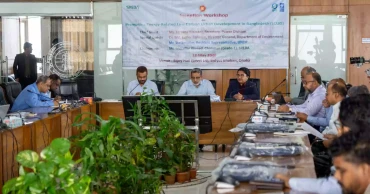
The Sustainable and Renewable Energy Development Authority (SREDA), under the Power Division of the Ministry of Power, Energy and Mineral Resources, together with the United Nations Development Programme (UNDP), launched the initiative at Bidyut Bhaban.
UNDP applauds Bangladesh’s continued commitment to development
The project will promote renewable energy adoption, energy-efficient infrastructure, and low-carbon urban planning solutions to help reduce greenhouse gas emissions in Bangladesh’s rapidly growing cities, through development of investment grade projects, interaction between public and private stakeholder and awareness-raising among city dwellers.
Attending the event as the chief guest, K M Ali Reza, Additional Secretary representing the Secretary of the Power Division, said dependence on imported fuel remains a major challenge to their energy sovereignty.
He emphasised the importance of energy efficiency and called for the development of investment-grade projects supported by scalable and sustainable business models with strong financial linkages.
“The LCUD project is a timely and critical initiative that aligns closely with our national priorities to scale up renewable energy and energy efficiency,” he added.
Sonali Dayaratne, Deputy Resident Representative, UNDP emphasised the importance of the partnership, stating, “Urbanization presents both a major challenge and a significant opportunity for climate action. The LCUD project reflects a strong partnership between the government, development partners, and the private sector to mobilize investment in practical low-carbon solutions. Its success will depend on a whole-of-government and whole-of-society approach.”
Muzaffar Ahmed, Chairman of SREDA, said, “SREDA envisions the LCUD Project as a practical, result-oriented, and investment-focused initiative. Success relies on strong cooperation among government agencies, city corporations, and the private sector to unlock both the environmental and economic benefits of renewable energy. Together, we believe the LCUD Project can become an effective and replicable model for Bangladesh."
Among others, Engr Md Muzibur Rahman Director, SREDA & Project Director of LCUD and Sarder M Asaduzzaman, Assistant Resident Representative, UNDP Bangladesh also spoke.
With rapid urbanization increasing pressure on energy systems and the environment, the LCUD project aims to support a more sustainable and low-carbon future for Bangladesh’s cities.
The initiative will promote investments in energy-efficient buildings, rooftop solar power, and waste-to-energy solutions in key urban areas, including Dhaka and Chittagong.
The project is expected to reduce more than 1.5 million tonnes of greenhouse gas emissions over its lifetime while contributing to Bangladesh’s national climate goals.
17 days ago
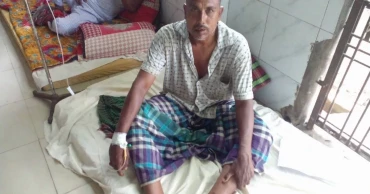
‘Van stolen’ after driver has epileptic fit in Jhenaidah
In an incident manifesting cruelty, miscreants allegedly stole a van after its driver had an epileptic fit in Jhenaidah on Monday morning.
The victim was identified as Kalam Sardar, 40, who is currently undergoing treatment at Jhenaidah 250-bed General Hospital.
According to locals, Kalam left home around 8:00am with his rickshaw van, as usual, to earn a living for his family.
While passing through the Kalicharanpur area of the town, he suddenly suffered a severe epileptic seizure and collapsed unconscious on the roadside.
Taking advantage of his helpless condition, unidentified miscreants allegedly fled with his van – his family’s only source of income.
A local resident, Sohagh Hossain, said another van driver found Kalam lying unconscious around 10:00am and took him to the hospital’s emergency department before leaving.
After regaining consciousness in the medicine ward, Kalam learned that his van had been stolen.
Speaking from his hospital bed with tears in his eyes, Kalam said he suffers from epilepsy and occasionally experiences seizures.
“I am a poor man. My van is the only way I support my wife and children. I remember falling sick while driving, but after that I remember nothing. Now I hear my van is gone. I do not know how I will survive or feed my family,” he said.
Dr Shahin Dhali of the hospital said Kalam was brought to the hospital in an unconscious state in the morning.
“Initially, we suspected he might have been drugged by criminals. But after medical examinations and reviewing his medical history, it was confirmed that he lost consciousness due to a severe epileptic seizure,” he said.
17 days ago
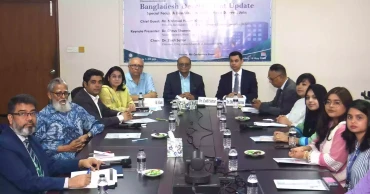
Bangladesh economy under stress, World Bank flags growth slide
Bangladesh's economy is heading into deeper trouble, with GDP growth projected to slow further to 3.9 percent in fiscal year 2025-26, marking three consecutive years of deceleration, as the country battles high inflation, a fragile banking sector, weak revenue collection, and the growing fallout from the Middle East conflict, the World Bank warned on Monday.
These findings were presented by Dhruv Sharma, Senior Economist at the World Bank, at a programme organised by the Policy Research Institute (PRI) at its conference room at Banani.
The event, titled “Bangladesh Development Update: Special Focus – A Business Environment That Delivers Jobs,” offered a sweeping assessment of the country's macroeconomic vulnerabilities and the structural barriers holding back job creation.
Dhruv Sharma painted a sobering picture of welfare outcomes, saying an estimated 1.4 million additional people fell into poverty in 2025 alone. National poverty is projected to rise from 18.7 percent in 2022 to 21.4 percent in 2025, driven by high inflation, weak labour incomes, and a shortage of productive jobs.
The Middle East conflict has compounded the damage. While a pre-conflict baseline projected 1.7 million people could be lifted out of poverty in 2026, the actual figure is now estimated at just 500,000 – a shortfall of 1.2 million people who remain trapped below the poverty line because of the conflict's ripple effects.
The presentation flagged severe vulnerabilities in Bangladesh's financial sector. The non-performing loan ratio stands at a troubling 30.6 percent, with a provisioning shortfall of approximately US$28.5 billion. System-wide regulatory capital has fallen to just 4.6 percent as of June 2025, less than half the 10 percent minimum requirement.
Twenty-two banks holding 47 percent of total banking sector assets are undercapitalised. State-owned commercial and development banks are in the worst shape, with deeply negative return on assets and NPL ratios far exceeding private and foreign commercial peers.
On the fiscal front, tax revenue as a share of GDP fell to 6.9 percent in FY25, its lowest level in 15 years. Meanwhile, rising subsidies and sticky current expenditure are crowding out capital spending. Public debt has climbed to 39.5 percent of GDP in FY25, up from 37.6 percent a year earlier, and is projected to reach 41.9 percent in FY26.
Inflation averaged 8.5 percent in FY26 (July-February), remaining stubbornly high despite monetary tightening, a stable exchange rate, and strong agricultural output. Real wages for low-income and unskilled workers have stayed negative, eroding household purchasing power across the board.
A central theme of the presentation was the disconnect between economic growth and job creation over the past decade. New employment has shifted overwhelmingly towards low-productivity agriculture, while manufacturing and services have lost momentum. For women, all net job gains since 2016 came from agriculture, reversing hard-won earlier progress in garments and other non-farm sectors.
Bangladesh's private sector, the report noted, is structured like a pyramid. A small group of “frontier firms”, the top 10 percent by productivity, mostly export-oriented RMG companies, account for 75 percent of revenues and 70 percent of exports, yet employ only 15 percent of the workforce. The remaining 85 percent of jobs sit with SMEs and informal firms at the bottom, which operate with far less support.
The World Bank economist identified the weak business environment as a key drag on job creation. Senior managers in Bangladesh spend 13 percent of their time complying with regulations, rising to as high as 60 percent, and starting a formal business can cost up to approximately $10,000.
Bangladesh ranks lowest in South Asia on the World Bank's B-READY indicators for market competition, dispute resolution, and insolvency. State-owned enterprises operating under preferential regimes are crowding out private players, while distortive tax incentives, such as preferential rates of 12 to 15 percent for RMG against a 27.5 percent standard rate, concentrate benefits at the top of the corporate pyramid.
Sharma outlined a set of immediate and structural reform priorities. In the short term, the focus must be on macroeconomic stabilisation, tightening monetary policy credibly, boosting domestic revenue mobilisation, and restoring banking sector health through recapitalisation and accelerated NPL resolution.
Over the medium term, the report called for closing four structural gaps to generate more and better jobs: the infrastructure gap, the regulatory and business environment gap, the skills gap, and the gender gap in labour force participation.
“Stabilising the economy and strengthening macroeconomic fundamentals is a necessary precondition for creating more and better jobs,” Sharma said, adding that smart deregulation, levelling the playing field for SMEs, and enabling private capital would be critical to reversing the jobs deficit.
17 days ago

Bangladesh to celebrate Eid-ul-Azha on May 28
The crescent moon of the Islamic month of Zilhajj was sighted in Bangladesh sky on Monday, confirming that the country will celebrate Eid-ul-Azha on May 28.
The National Moon Sighting Committee made the announcement following a meeting held at the conference hall of the Baitul Mukarram National Mosque in the evening.
The meeting was chaired by Religious Affairs Minister Kazi Shah Mofazzal Houssain (Kaikobad).
With this official sighting, the Islamic month of Zilhajj in the Hijri year 1446 has begun, setting the date for Eid-ul-Azha, one of the most significant religious festivals for Muslims worldwide.
Meanwhile, Saudi Arabia announced the sighting of the Zilhajj moon on Sunday, setting May 27 as Eid day.
Eid-ul-Azha, also known as the Festival of Sacrifice, commemorates the willingness of Prophet Ibrahim to sacrifice his son as an act of obedience to the Almighty Allah.
The festival is marked by special prayers, animal sacrifices and the distribution of meat to the poor and needy.
17 days ago
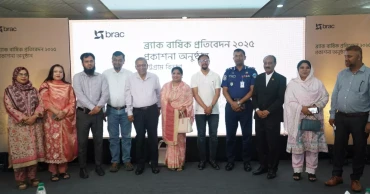
BRAC targets one million jobs in five years, unveils annual report in Chattogram
BRAC on Monday said it aims to create employment opportunities for one million people across Bangladesh over the next five years, with a focus on inclusive development centred on women and youth.
The announcement came during the publication ceremony of BRAC’s Annual Report 2025 for the Chattogram Division, held at a city hotel.
DSE, BRAC EPL sign deal to handle Bangladesh's first orange bond subscription digitally
Mayor of Chattogram City Corporation Dr Shahadat Hossain attended the programme as the special guest.
According to BRAC, its development initiatives have reached one in every six residents in the Chattogram Division through programmes on health, education, financial inclusion, disaster and crisis response, water, sanitation and hygiene (WASH), climate resilience, migration and skills development.
Over the next five years, BRAC aims to create employment opportunities for one million people across Bangladesh.
The organisation will place special emphasis on inclusive development centred on women and youth, quality education, financial inclusion, primary healthcare, and strengthening climate resilience.
Currently, 15,984 staff members are implementing BRAC’s programmes across the Chattogram Division, of whom 37 percent are women.
The initiatives are being operated through 915 offices under social development programmes and 39 offices under social enterprises.
KAM Morshed, Senior Director of Advocacy, Communications and Engagement at BRAC, highlighted the organisation’s ongoing development initiatives in Chattogram Division, its five-year strategic priorities, and integrated development approaches.
Senior officials from the local administration and police administration, academics, political leaders, representatives of civil society, and media professionals attended the event and shared their views and recommendations.
When speaking, Mayor Dr Shahadat Hossain called upon BRAC to support the development of Chattogram as a sustainable city.
He said BRAC could contribute to the city corporation’s waste management initiatives.
He also mentioned that initiatives have been undertaken to develop playgrounds for adolescents and youth in order to protect them from social challenges such as juvenile gangs, drugs, and terrorism.
KAM Morshed said that more than 80 percent of BRAC’s activities are financed through its own resources, while donor support accounts for only 18 to 19 percent.
“This enables BRAC to independently undertake development initiatives based on the needs of the country and its people without requiring external approval or consultation,” he said.
He added that although BRAC’s presence has expanded globally, Bangladesh and its people remain the organisation’s top priority.
“BRAC was born in Bangladesh, and it belongs to Bangladesh,” he said.
He also noted that one of BRAC’s core philosophies is to unlock people’s immense potential and support them in moving forward.
Additional Deputy Commissioner of Chattogram, Pathan Md. Saiduzzaman (Education and ICT), said BRAC is the most organised institution working at the grassroots level after the government.
He recommended expanding BRAC’s skills development initiatives to build a skilled youth workforce.
Civil Surgeon of Chattogram, Dr Jahangir Alam, stated that non-communicable diseases account for 70 percent of deaths in the country.
He stressed the importance of health education among the general public and said BRAC could play a vital role in this area.
Additional Deputy Inspector General (DIG) of Chattogram Division, Md Nazimul Haq, said NGOs have played a significant role in raising public awareness on health, education, and sanitation since the country’s independence. He urged BRAC and other NGOs to continue this contribution.
Divisional Commissioner of Chattogram, Dr. Md. Ziauddin, was also present at the event.
Other speakers included Dr. Sheikh Fazle Rabbi,Divisional Director of Health; Principal Muhammad Nurul Amin, Secretary of Chattogram Metropolitan Jamaat; Delwar Hossain Majumdar, President of Chattogram Conscious Citizens' Committee (SANAC); Public Prosecutor Mofizul Haque Bhuiyan; Woman Entrepreneur Sultana Jahan; Zahidul Karim Kachi, President of Chattogram Press Club; and Ifrat Ibrahim, Organising Secretary of NCP’s Chattogram Division, among others.
Anjuman Ara Begum, Senior Manager of BRAC’s Integrated Development Programme IDP), presented a summary of BRAC’s 2025 activities in the Chattogram Division.
The event highlighted that 8,507 ultra-poor families received financial assistance in the division, while 10,394 families successfully graduated out of extreme poverty.
A total of 9,464 people received climate resilience support, and 471 persons with disabilities were assisted.
Under BRAC’s microfinance programme, 2.77 million people received financial services. Among 1,413,965 members, 89.8 percent are women. In addition, 1,176 unemployed youth received training aimed at entrepreneurship development and employment generation.
Through community-based healthcare initiatives, 203,822 people received services. Besides, 13,666 pregnant women received complete antenatal care, and 7,213 safe deliveries were ensured. Eye examinations were conducted for 38,604 individuals, and 10,119 pairs of eyeglasses were distributed.
The programme also showcased BRAC’s activities over the past year in education and skills development, climate change and disaster resilience, gender equality, and social enterprises.
17 days ago
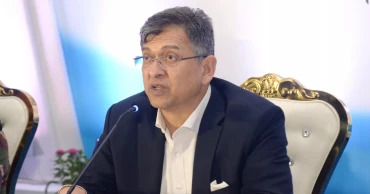
RAB to be restructured as people-friendly, responsible force: Salahuddin
Home Minister Salahuddin Ahmed on Monday said the government will restructure the Rapid Action Battalion (RAB) as a people-friendly and responsible force in the future.
He made the announcement while addressing a programme as the chief guest at the RAB headquarters in Uttara, marking the force’s 22nd founding anniversary.
The Home Minister said the government has undertaken a series of reform initiatives aimed at transforming RAB into a professional, modern, responsible and people-oriented institution.
“These initiatives include enhancing the operational capability and professional skills of RAB members, providing specialised training on the minimum use of force in line with international standards, human rights compliance, and the use of artificial intelligence in crime prevention,” he said.
Salahuddin also announced that a specialised training centre for RAB will soon be established at Jungle Salimpur in Chattogram to further strengthen the force’s operational capacity.
He said the government is also working to adopt time-befitting strategies to address evolving crime patterns, strengthen public engagement to restore confidence, and uphold the principles of human rights, rule of law and professional ethics to help build a safe and stable society.
“To ensure transparency and accountability, the government has taken initiatives to formulate a specific and comprehensive law for RAB,” the Home Minister added.
He said no institution remained unaffected during the Awami League “fascist regime” when the elite force was used for political interests, harming its image, but stressed that an entire institution should not be blamed for the unlawful activities of a few officials. “The institutions must continue their work while upholding their own reputation and dignity. There will be no political interference from the government in this regard,” he said.
Salahuddin wants to demonstrate to the world that all its institutions are accountable and committed to the rule of law.
He also said the government is considering changing the existing name of RAB.
Replying to a question, the Home Minister said RAB is essentially a combined elite force comprising members from Bangladesh Police (44 percent), the Armed Forces Division (44 percent), as well as Ansar, Border Guard Bangladesh (BGB), and civil staff.
Responding to a question about the withdrawal of US sanctions imposed on the force, he said, “During the previous fascist regime, Sheikh Hasina used this force like a puppet to fulfil her desire to establish a one-party rule and to achieve political objectives. Due to the unlawful and misguided activities of a small number of officers, the entire institution has suffered today. However, the whole institution cannot bear responsibility for the crimes of an individual or a few specific officers.”
Salahuddin added that directives have already been issued to take strict legal action against the accused officers under the legal frameworks of their own forces.
He also expressed hope that once the force is reformed, reorganised, or renamed under the new law, the United States government will reconsider the sanctions issue.
Explaining the rationale behind the legal reforms, the Home Minister said for the past 20 years, RAB had not operated under any specific independent law but had instead functioned on an ad hoc basis under a special provision of the Armed Police Battalion Act. “An elite force cannot continue for such a long time under an interim structure,” he said.
To address this legal gap, he said, the Ministry of Home Affairs has already formed a high-level law formulation committee comprising experts, which is being directly supervised by the minister himself.
He said the proposed new law will clearly define the force’s authority and responsibility while ensuring strict provisions for transparency and accountability.
Responding to another question regarding investigations and trials over enforced disappearances and crimes against humanity committed during the previous government, Salahuddin said the earlier commission on enforced disappearances had no specific legal authority to take punitive measures, which created legal complications.
The government is currently working to amend and strengthen the law related to the International Crimes Tribunal (ICT), he said, adding that once the reforms are completed, all crimes related to enforced disappearances, threats of disappearance and missing persons could be tried through a specific legal process under the special tribunal, ensuring justice directly for victims and their families.
17 days ago
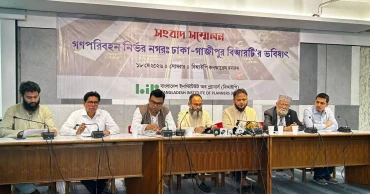
BRT service to bring ‘new dimension’ to public transport: Urban planners
Urban planners have said the long-delayed Dhaka-Gazipur Bus Rapid Transit (BRT) service is set to introduce a ‘new dimension’ to Bangladesh’s public transport system once it becomes operational.
They said the BRT service would make commuting easier and more comfortable, similar to the metro rail system, while reducing travel time by around 30 percent on the 20-kilometre route from Dhaka Airport to Gazipur’s Shibbari area.
The observations came at a press conference organised by the Bangladesh Institute of Planners (BIP) in Dhaka on Monday.
They said the unused funds from the BRT project itself could be utilised to purchase buses and launch the new transport service in Bangladesh.
However, an additional Tk 200-300 crore would be required to procure higher-quality buses capable of providing metro rail-like comfort. Introducing state-of-the-art electric buses would require an extra Tk 1,000 crore, they added.
On the other hand, if the project is scrapped and the BRT corridor opened to all vehicles, the government would have to remove BRT stations, ramps and escalators and pay compensation to contractors, resulting in losses estimated between Tk 1,000 crore and Tk 1,200 crore.
The press conference was chaired by BIP Vice-President planner Sheikh Muhammad Mehdi Ahsan.
The keynote paper was presented by Professor Dr Md Mosleh Uddin Hasan of the Department of Urban and Regional Planning at Bangladesh University of Engineering and Technology (Buet) and General Secretary of BIP.
In his presentation, Prof Hasan said the then BNP government first prepared a Strategic Transport Plan (STP) for Dhaka in 2005, which proposed two BRT lines, including the Gazipur-Dhaka-Keraniganj corridor.
Later revisions retained the recommendation for BRT implementation.
Subsequently, the Keraniganj section was dropped and work on the 20-km Gazipur-Airport BRT project began in 2012, with completion originally scheduled for 2016.
Despite numerous delays and setbacks, around 97 percent of the project work has now been completed.
“At this stage, converting the BRT corridor into a regular road would deprive people of BRT facilities,” he said.
Prof Hasan said concerns have been raised over issues such as increased congestion on other lanes and difficulties for pedestrians crossing roads after BRT operations begin.
However, he argued that efficient traffic management could minimise congestion, particularly since traffic jams are mainly caused by buses stopping at intersections and elevated ramps to pick up passengers.
He also said safety risks for pedestrians could be addressed through proper management of the five new foot overbridges and 13 grade-separated crossings built under the project.
Citing research by Buet’s Urban and Regional Planning Department, the planners said BRT services should have already been introduced not only in Dhaka but also in Chattogram.
They added that six more cities — Rajshahi, Bogura, Tangail, Mymensingh, Cumilla and Noakhali — currently require BRT services, while another 13 cities may need such services in the near future.
The urban planners observed that although Bangladesh has spent a large amount on the BRT project, construction costs for BRT systems are roughly one-tenth of metro rail costs.
According to the planners, since its introduction in the Brazilian city of Curitiba in 1974, BRT services are now operating in 191 cities worldwide. Although BRT systems carry roughly half the number of passengers per hour compared to metro rail, they remain globally popular due to lower costs, faster implementation and efficient mobility.
Prof Hasan also alleged that a “propaganda campaign” is being spread against BRT in Bangladesh.
“Paracetamol works worldwide to reduce fever. If it does not work here, it is easy to say our paracetamol is adulterated,” he said.
“Similarly, BRT systems are not only operating successfully across the world — except in one or two cities — but are revitalising entire urban areas. Yet here we call BRT a ‘thorn in the throat’. We should instead ask whose throat it is stuck in, and who tried to swallow it.”
17 days ago