Others
Gender Champions Network launched to promote workplace equity in Bangladesh
The Gender Champions Network (GCN), an initiative of SAJIDA Foundation supported by the Gates Foundation, was launched in Dhaka with a call for stronger private-sector commitment to gender equity and inclusive workplaces in Bangladesh.
The launch event, titled ‘Transforming Workplaces: Driving Equity and Empowering Action,’ was held at a hotel in Dhaka on Sunday, bringing together business leaders, development practitioners, academics, researchers and corporate professionals, said a press release issued on Tuesday.
Gender Champions Network launched to promote workplace equity in Bangladesh
At the event, organisers unveiled findings from a study titled ‘Gender at Work: A Study of Selected Private Sector Firms in Bangladesh,’ highlighting persistent gender disparities across sectors including manufacturing, healthcare, finance, pharmaceuticals, real estate and leather.
The study found significant gender disparities in the workplace. Women account for 22 percent of entry-level positions but only 6 percent of mid-management roles, indicating a sharp drop in female representation during career progression.
It also revealed that women earn 85 taka for every 100 taka earned by men, while the pay gap at leadership level exceeds 40 percent. Women were also found to have less access to technical and leadership training opportunities and shoulder a heavier overall workload when unpaid care responsibilities are considered.
The research focused on six key areas: gender representation, pay equity, fair recruitment and promotion, career advancement and mentorship, workplace culture and protections, and access to sexual and reproductive health and rights (SRHR) services.
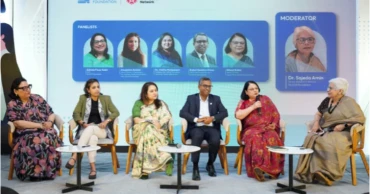
A panel discussion moderated by Dr. Sajeda Amin, Senior Research Advisor at SAJIDA Foundation, featured Anupama Anand of the Gates Foundation, Professor Dr. Melita Mehjabeen of University of Dhaka and Chairman of National Bank PLC, Ruhul Quddus Khan, CEO and Managing Director of Unilever Bangladesh, Nihad Kabir of Syed Ishtiaq Ahmed & Associates and Zahida Fizza Kabir, CEO of SAJIDA Foundation and Chairperson of the Gender Champions Network.
Speaking at the discussion, Ruhul Quddus Khan said gender equality must be treated as a business priority across organisations rather than remaining limited to human resources departments.
Zahida Fizza Kabir said gender justice is a human right and stressed the need for organisations at all levels to commit to inclusivity and institutional reform.
Anupama Anand noted that although women constitute half of Bangladesh’s working-age population, female labour force participation remains at 35 percent, attributing the gap to structural barriers rather than lack of aspiration.
According to organisers, the Gender Champions Network aims to bring together companies committed to inclusive practices and support measurable improvements through partnerships, expert guidance, workshops and policy advocacy.
Ten organisations have already joined the network as founding champions, organisers said.
23 days ago
BFIU, REHAB join forces to combat money laundering in real estate sector
Bangladesh Financial Intelligence Unit (BFIU) and the Real Estate and Housing Association of Bangladesh (REHAB) have pledged to work in a coordinated manner to prevent money laundering in the country's housing sector.
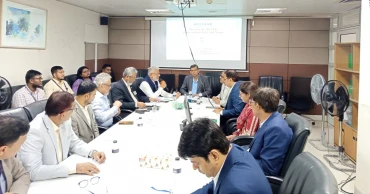
The commitment came during a view-exchange meeting held on Tuesday at the Bangladesh Bank's headquarters, where both sides outlined a joint compliance framework for the real estate industry.
The meeting focused on the obligations and responsibilities of reporting entities in the real estate sector under the Money Laundering Prevention Act, 2012 and the Money Laundering Prevention Rules, 2019, along with detailed discussions on compliance mechanisms.
REHAB leaders meet Housing Minister, seek policy support for affordable housing
REHAB President Ali Afzal reaffirmed his organisation's commitment to upholding government laws and policies aimed at transforming the housing sector into a modern, transparent and internationally competitive industry. "REHAB will play an effective role in making member organisations more aware and accountable by coordinating with BFIU to prevent money laundering."
He also called for reducing real estate registration costs to close loopholes that allow undisclosed income to flow into the sector.
REHAB Senior Vice President Abdur Razzaque stressed that ensuring compliance is critical to establishing good governance and maintaining investor confidence in the real estate sector. "REHAB will work consistently to make member firms more capable in legal reporting and risk management."
Other members of the REHAB Board of Directors present at the meeting welcomed the government's anti-money laundering drive and emphasised the need to strengthen training, awareness campaigns and coordinated action in collaboration with the Anti-Corruption Commission (ACC), the National Board of Revenue (NBR) and other relevant agencies.
BFIU officials, for their part, provided detailed guidance to real estate developers on applicable compliance requirements, reporting procedures, Know Your Customer (KYC) protocols and risk management practices.
23 days ago
Pension Scheme: Khosru pushes for covering one member of each family by 2030
Finance Minister Amir Khosru Mahmud Chowdhury on Tuesday directed the authorities concerned to set a target to bring at least one member from each of the country’s nearly 20 crore families under the Universal Pension Scheme by 2030, stressing the need for a stronger and more inclusive pension system to address Bangladesh’s future demographic challenges.
The directive came at a high-level meeting on the progress, challenges and future action plan of the Universal Pension Scheme held at the Finance Ministry conference room.
Inclusive economy key to taking ‘Bangladesh story’ global: Khosru
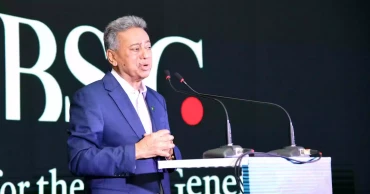
The meeting was chaired by the Finance Minister and attended by Executive Chairman of the National Pension Authority Dr Md Surujjaman, Finance Secretary Dr Khairuzzaman Mozumder and senior officials of the authority and the Finance Division.
During the meeting, the Executive Chairman of the National Pension Authority presented a detailed overview of the current status of the Universal Pension Scheme.
According to the presentation, a total of 377,545 citizens have been registered under the four pension schemes – Probash, Progoti, Surokkha and Samata – as of April 30, 2026.
The total amount deposits in the pension fund have reached around Tk 255.70 crore, while the cumulative investment, including profit, has stood at Tk 279.74 crore.
Officials told the meeting that nearly 85 percent of Bangladesh’s labour force is employed in the informal sector, highlighting the importance of expanding pension coverage beyond formal employment.
The meeting was also informed that the country’s old-age dependency ratio is projected to rise significantly from 9.4 percent in 2023 to 24 percent by 2050 and 48 percent by 2075, making long-term social protection and retirement security increasingly critical.
Against this backdrop, participants stressed the need to make the Universal Pension Scheme more sustainable, effective and inclusive.
The Finance Minister placed special emphasis on expanding the pension programme nationwide and making it more attractive to citizens.
He expressed a positive attitude towards introducing a Shariah-based pension scheme, considering lifetime pension benefits for nominees and bringing outsourcing workers under the Progoti scheme.
The meeting was informed that the Asian Development Bank has pledged to provide concessional financing of US$100 million for a project aimed at strengthening the universal pension system, while feasibility assessment activities are currently underway.
Officials also said pension contributions are now being collected through 45 banks and financial institutions, as well as through digital financial platforms, including bKash, Nagad and Teletalk Bangladesh Limited.
Registration activities are also being conducted through Union Digital Centres across the country to widen access to the scheme.
Khosru said establishing a pension fund for private sector employees is one of the key commitments outlined in the government’s election manifesto to ensure financial security for citizens during old age.
He also stressed the importance of increasing public confidence in the pension system through stronger awareness campaigns, enhanced cyber security measures and the recruitment of skilled and professional manpower.
Following detailed discussions, the meeting decided to take necessary measures to make the Universal Pension Scheme more effective and inclusive.
The Finance Minister thanked officials of the National Pension Authority for actively carrying forward the programme and urged all stakeholders to continue coordinated efforts to bring the scheme closer to every citizen in the country.
23 days ago
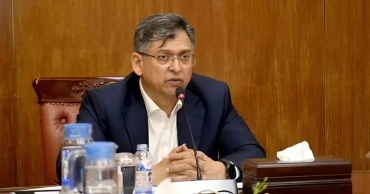
Action to be taken if evidence of extortion is provided: Salahuddin
Home Minister Salahuddin Ahmed on Tuesday said the government will take action if specific information or evidence of extortion is provided, in response to allegations made by the Leader of the Opposition that extortion is driving up commodity prices.
“If the Leader of the Opposition has any records showing that extortion has increased, he can provide them to me, or you (journalists) can provide them. Then we will be able to address the matter,” he told reporters after a meeting at the Secretariat on law and order, security at sacrificial cattle markets and overall preparations ahead of Eid-ul-Azha.
Old shirt to return as govt finalises new police uniform: Salahuddin
“Once we receive a list of places where extortion has increased, we will take action,” the minister added.
Leader of the Opposition and Bangladesh Jamaat-e-Islami Ameer Dr Shafiqur Rahman recently claimed that commodity prices had increased due to extortion.
He made the claim after visiting Shah Ali wholesale market in Mirpur-1 in the capital, where traders allegedly complained about silent extortion and excessive shop rents.
According to the traders, shops officially rented out for Tk 5,000 at the government market are being sublet for as much as Tk 1,50,000, creating extra pressure on businesses.
Many traders also said they were afraid of identifying those allegedly involved in extortion.
In response, Shafiqur Rahman said such practices must be resisted collectively and assured traders of support if they choose to stand against extortion.
Referring to the allegations, Salahuddin said immediate action will be taken if authorities receive concrete information on the matter.
Noting that a nationwide special drive has been underway since April 30 against extortionists, terrorists, armed criminals, drug traders and gamblers, he said, “Special emphasis has been given to arresting drug dealers and illegal arms holders.”
Police Headquarters, Dhaka Metropolitan Police and district police superintendents have been instructed to regularly submit progress reports on the drives, the minister said.
23 days ago
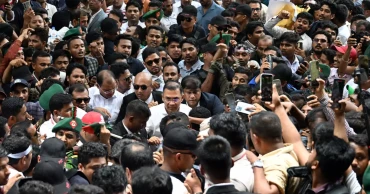
PM walks through DU campus to students’ cheers
Prime Minister Tarique Rahman on Tuesday walked on foot from Dhaka University’s Nabab Nawab Ali Chowdhury Senate Bhaban to the Prof Muzaffar Ahmed Chowdhury Auditorium in the Faculty of Social Sciences, in an unprecedented moment in campus history.
The Prime Minister began walking shortly before 12:00pm after attending the inaugural session of a national workshop titled “Transforming Higher Education in Bangladesh: Roadmap to Sustainable Excellence,” organised by the University Grants Commission of Bangladesh at the Senate Bhaban.
Despite an official motorcade being prepared outside the Senate Bhaban, Tarique Rahman chose to walk to the Social Sciences Faculty building near the Arts building (Kala Bhaban) to join an interactive session with students.
As students saw the Prime Minister walking through the campus, many clapped their hands while others chanted slogans.
Prime Minister’s Press Secretary Saleh Shibly, who accompanied him during the walk, described the moment as historic. “This is not only a first in Bangladesh’s history, but also in the history of Dhaka University – a head of government walking through the campus so freely to attend an event. It is a rare incident,” he said.
He noted that previous visits by heads of government to the campus were often marked by protests, counter-slogans, or clashes. “However, there was no such scene today.”
Saleh Shibly said students in the hundreds gathered along the path, many applauding, chanting slogans, and waving at the Prime Minister as he made his way through the campus.
At the Prof Muzaffar Ahmed Chowdhury Auditorium, the Prime Minister took part in an open question-and-answer session with around 150 students, where he responded candidly to a range of academic and campus-related issues.
The event drew such an overwhelming response that many students, unable to find seats inside the auditorium, watched the Prime Minister’s live interaction on their mobile phones from different spots across the campus.
PM seeks students’ cooperation to maintain stability for nation-building
Prof Morshed Hasan Khan, convener of the event organising committee, described the Prime Minister’s walk as “remarkable history.”
“There has never been an example of any head of government walking through the university campus like this without a heavy security cordon. There were students of diverse views and ideological backgrounds. But their reaction was truly memorable.”
23 days ago

Fund formed to enhance disaster response capacity
An NGO–Microfinance Institution (MFI) Resourced Pooled Fund has been launched to make locally-run humanitarian financing and disaster response activities more effective and sustainable in the country.
Local Government, Rural Development and Co-operatives Minister Mirza Fakhrul Islam Alamgir attended the national launching ceremony of the “NGO-MFI Resourced Pooled Fund” as the chief guest at a hotel in the capital on Monday night, said a PID handout on Tuesday.
Speaking at the event, the minister said there is no alternative to public-private partnership in ensuring quick and effective humanitarian assistance at the local level in disaster-prone Bangladesh.
He expressed optimism that this new fund would play an important role in enhancing the disaster response capacity of the country’s marginalised people and also accelerate emergency assistance programmes.
Mirza Fakhrul said this joint fund, formed by utilising the experience, capacity and public involvement of local NGOs and microfinance institutions, will open new horizons in humanitarian aid management.
He called on all the relevant institutions to work in a coordinated manner.
Representatives from various international organisations, development partners, NGOs and microfinance institutions were present.
23 days ago
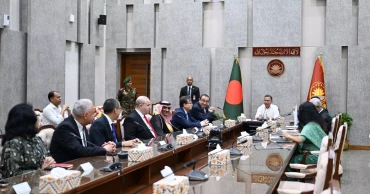
PM seeks OIC support in resolving Rohingya crisis
Prime Minister Tarique Rahman on Tuesday sought stronger support from the Organisation of Islamic Cooperation (OIC) member states in resolving the Rohingya crisis, stressing the need for greater cooperation from the Muslim world on the issue.
He made the call when ambassadors and high commissioners of OIC member countries stationed in Dhaka met him at his office at the Bangladesh Secretariat.
“The Prime Minister sought the support of OIC member countries in resolving the Rohingya crisis,” said a release issued by the PM’s Press Wing.
During the meeting, the diplomats congratulated Tarique Rahman on assuming office as the Prime Minister and reaffirmed their countries’ commitment to strengthening ties with Bangladesh in areas, including investment, trade, education, healthcare, textiles and the pharmaceutical sector.
They also reaffirmed their unwavering support for Bangladesh on various bilateral and international issues.
PM seeks students’ cooperation to maintain stability for nation-building
Welcoming their remarks, the Prime Minister thanked the OIC countries on behalf of the government and the people of Bangladesh for their cooperation and support.
Recalling the brotherly relations established with OIC member states during the tenure of late President Ziaur Rahman, he expressed hope that the ties will grow even stronger in the days ahead.
Tarique Rahman, also the Chairman of the ruling BNP, underscored the importance of enhancing people-to-people contact among the member nations.
The meeting was attended by envoys from Saudi Arabia, Türkiye, Palestine, Algeria, Brunei, Egypt, Indonesia, Kuwait, Malaysia, the Maldives, Morocco, Oman, Pakistan, Qatar and the United Arab Emirates, along with heads of mission from Iran, Iraq and Libya.
Prime Minister’s Foreign Affairs Adviser Humaiun Kobir, Secretary at the Ministry of Foreign Affairs (Intergovernmental Organisations) M Forhadul Islam and PM’s Additional Press Secretary Atikur Rahman Rumon were also present at the meeting.
23 days ago

PM greets Tigers for maiden home Test win over Pakistan
Prime Minister Tarique Rahman on Tuesday greeted the Bangladesh national cricket team for defeating Pakistan in a Test match for the first time on home soil.
“The Prime Minister congratulated the Bangladesh national cricket team on their historic Test victory over Pakistan national cricket team at home,” said a congratulatory message issued by the PM’s Press Wing.
The Tigers secured a 104-run victory over Pakistan in the first Test of the two-match series at Sher-e-Bangla National Cricket Stadium in Dhaka on Tuesday.
Bangladesh had earlier won their previous two Tests against Pakistan in Pakistan. The latest victory marked their first Test win over Pakistan on home soil.
It was also the Tigers’ third consecutive Test victory against Pakistan.
Bangladesh set a target of 268 runs in the Mirpur Test and, on the fifth day, bowled Pakistan out for 163.
23 days ago
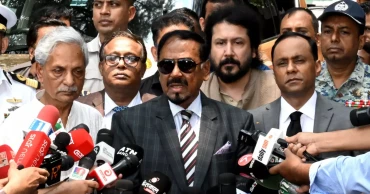
July Museum to preserve history of anti-authoritarian struggle: Speaker
Jatiya Sangsad Speaker Hafiz Uddin Ahmad on Tuesday said the July Museum will remain a lasting inspiration for future generations in the struggle against autocracy.
“As long as this museum exists, the history of the people’s resistance against authoritarianism in this country will be preserved,” he said while briefing reporters after visiting the July Mass Uprising Museum.
The Speaker said the museum has vividly portrayed the repression, violence and killings carried out during the ‘16 years of sham and staged elections’ under the rule of former prime minister Sheikh Hasina.
He said the sacrifices of Abu Sayed, Mugdha, Wasim and others during the July-August uprising would continue to inspire the nation.
He added that during the authoritarian regime, Sheikh Hasina’s expression of sympathy toward the families of the disappeared was insincere, leaving her disgraced in history
Hafiz Uddin Ahmed said the sacrifices made by ordinary people in every democratic and anti-autocracy movement in the country from 1971 to 2024 were unique contributions to the establishment of democracy.
“The sacrifices of the masses during the July mass uprising will remain an example for the world,” he said adding that the July fighters dedicated their present for the future of the nation.
23 days ago

Shopping malls, markets to stay open until 10pm till Eid-ul-Azha
Bangladesh Shop Owners Association has extended operating hours for all markets, shopping malls and commercial establishments across the country until 10pm effective immediately until Eid-ul-Azha.
In a press release issued Tuesday, the association said the government earlier directed shops to close by 7pm amid an ongoing energy crisis.
The new schedule has been set specifically in view of the Eid shopping season, it said.
The association noted that the decision was taken with government approval.
Following a formal request from the association, the Ministry of Power, Energy and Mineral Resources agreed to extend operating hours until 10pm from May 12 until Eid-ul-Azha.
However, establishments have been instructed to refrain from decorative lighting and any unnecessary use of electricity to help manage power consumption during the period.
Association President Helal Uddin said the body had initially sought permission to keep shops open until 11pm, four hours beyond the previous 7pm deadline, but the government approved the extension up to 10pm.
It may be recalled that the government on April 3 directed all commercial establishments to shut by 6pm owing to the fuel crisis.
Following discussions with business organisations, the closing time was revised to 7pm from April 5.
23 days ago