Others
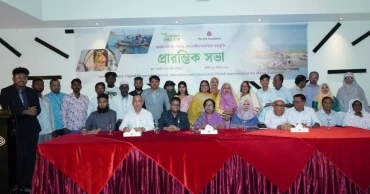
Manta Connect launched in Barishal to advance health, education inclusion for floating fishing community
A floating fishing community in Bangladesh’s southern coastal region is set to be digitally and socially integrated into mainstream services through a new multi-sector initiative aimed at improving access to financial services, education and healthcare.
The programme, titled “Manta Connect,” was officially launched on Wednesday at a city hotel in Barishal. It is being implemented by youth-led organisation YouthNet Global in partnership with The Asia Foundation, with support from JAAGO Foundation Trust and DocTime under The Asia Foundation’s Impact and Innovation Fund.
The initiative targets the Manta community, a traditionally mobile and boat-dwelling fishing population living on rivers in Bangladesh’s southern belt. Displaced over generations by river erosion, many Manta families continue to depend on fishing for their livelihoods while remaining outside formal systems of land ownership, civil registration, banking and public services.
Due to their mobile lifestyle and limited access to administrative systems, a significant number of Manta households lack birth registration and formal identity documents, creating barriers to school enrolment, healthcare access and financial inclusion. Children from the community frequently face difficulties in accessing education, while families often rely on informal mechanisms for health and income support.
Speaking at the launch, Barishal City Corporation Administrator Advocate Bilkis Akhter Jahan Shireen said inclusive development must ensure that no community is left behind.
“Development becomes meaningful only when it reaches the most excluded populations. A society cannot progress by leaving anyone behind,” she said, calling for coordinated efforts among local government, civil society and development organisations.
The event was chaired by Sohanur Rahman, Executive Coordinator of YouthNet Global.
Special guests included Dr S M Monzur-e-Elahi, Civil Surgeon of Barishal; Mocha: Farida Sultana, Upazila Nirbahi Officer (UNO) of Barishal Sadar; Md Anisuzzaman, Senior Assistant Director of the Department of Fisheries; Md Shahabuddin Sardar, Deputy Director of the Department of Youth Development; A K M Akhtaruzzaman Talukder, Deputy Director of the Department of Social Services; and Md Mostafa Kamal, District Primary Education Officer of Barishal.
From the development partner side, A M Sajjad Khan, Senior Project Manager of The Asia Foundation, attended as a special guest.
The programme was welcomed by Arifur Rahman (Shuvo), General Secretary of YouthNet Global, and Jasim Sardar, President of the Manta Development Committee, who delivered introductory remarks.
A panel discussion titled “Inclusive Development of the Manta Community: Livelihoods, Education, Health, Climate Challenges and Solutions” featured speakers including Sajjad Parvez, Assistant Director of the Department of Social Services; Nadhira Jahan, Chairperson of Tungibaria Union Parishad; Shah Alam, Chairperson of Charbariya Union Parishad; and Manta women leader Rabea Begum, among others.
Panelists highlighted the need for coordinated action to improve access to education for children, expand women’s income-generating opportunities and ensure accessible healthcare services for river-based communities.
Project organisers said Manta Connect will combine digital financial inclusion tools, education support services and community-based healthcare access. The programme will also include awareness-building activities and skills development training aimed at strengthening community resilience and improving access to public services.
YouthNet Global Executive Coordinator Sohanur Rahman said the intervention seeks to bridge long-standing service gaps affecting the community.
“This programme is designed to connect the Manta community with essential services they have been systematically excluded from, while strengthening their capacity to participate in formal systems,” he said.
Organisers added that the initiative will be implemented in phases, with the long-term objective of improving living standards and enabling sustainable social and economic inclusion for one of Bangladesh’s most climate-vulnerable and underserved populations.
1 month ago
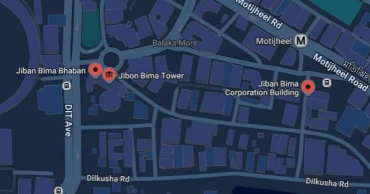
Fire hits Jiban Bima Tower again; thousands of bank employees at risk
A fire broke out at the Jiban Bima Tower in the city’s commercial hub, Motijheel, on Thursday, marking the second such incident in just 17 days.
The recurring fires in the 21-story building have sparked intense panic among thousands of officials and employees of various banks and financial institutions housed there, who now fear for their safety.
Witnesses said smoke was seen billowing from a section of the building around 11:00 am. Panic-stricken employees from Agrani Bank, City Bank, Rajshahi Krishi Unnayan Bank (RAKUB), and several other offices scrambled to evacuate the premises, with many rushing down the stairs to save their lives.
Upon receiving the news, multiple units of the Fire Service and Civil Defence rushed to the scene. However, the fire was brought under control quickly, preventing significant property damage.
Ruhul Amin Molla, a Fire Service official present at the scene, said, "Initially, it is suspected that the fire originated from an electric short circuit. The situation was brought under control shortly before we arrived. No major casualties were reported."
Previously, a similar fire occurred in the same building on the afternoon of April 13, causing a similar evacuation of the premises.
Following the latest incident, Fire Service officials warned the Jiban Bima authorities regarding the severe lack of adequate fire-fighting equipment in the building. They issued a stern reminder that the building management must remain more vigilant.
A ‘Death Trap’ in Dilkusha
Built in 1970, the ageing tower lacks modern fire safety measures, according to stakeholders and employees. Many alleged that no effective steps have been taken to upgrade the building's fire security protocols despite repeated warnings.
The building’s lift system has also been described as a "death trap." Of the four elevators designated for the 21-story structure, two are usually out of order. The remaining two frequently malfunction, experiencing violent jerks or getting stuck between floors, leaving passengers in life-threatening situations.
Employees working in the tower blamed the authorities' ‘indifference’ for the repeated accidents and called for immediate government intervention to ensure a safe working environment.
1 month ago
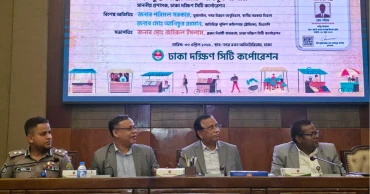
DSCC launches modern hawker rehabilitation programme under new policy framework
Dhaka South City Corporation (DSCC) on Thursday formally launched a modern hawker rehabilitation programme under the proposed “Dhaka City Hawker Management Policy-2026” aiming to ensure smooth pedestrian movement on footpaths and bring street vending activities under an organised system.
The inauguration ceremony was held at the Nagar Bhaban auditorium where DSCC Administrator Abdus Salam inaugurated the initiative as the chief guest.
As part of the programme, digital identity cards were distributed among 100 hawkers from the Gulistan area for their rehabilitation at the Link Road adjacent to Ramna Bhaban.
Under the proposed policy, DSCC has identified several designated locations and fixed operating hours for hawkers in different parts of the city.
The initially selected areas include the Link Road beside Ramna Bhaban in Gulistan for a daily market, AGB Colony ground opposite Motijheel Ideal School for an evening market from 6pm to 10pm, areas in front of and around Islam Chamber in Motijheel for evening vending from 6pm to 10pm, the area behind RAJUK Bhaban for a daily market, Gulistan Twin Tower lane for daily vending, the Link Road adjacent to the east gate of Baitul Mukarram for a daily market, one side of the road near the south gate of New Market for daily vending, and the road adjacent to the field inside Shahjahanpur Railway Colony for a daily market.
Speaking at the programme , DSCC Chief Executive Officer Jahirul Islam said 100 hawkers were initially provided with digital identity cards embedded with QR codes and more registered hawkers would gradually be brought under the system in phases.
He said the digital system would ensure transparency and accountability while enabling traffic police to easily verify the legitimacy of hawkers and their designated vending locations.
He also said hawkers would be required to keep at least five to six feet of space open on footpaths to ensure uninterrupted pedestrian movement.
In his speech, the DSCC administrator said the initiative was launched following the directive of the prime minister to bring discipline to street vending activities in the capital.
He said the programme would help ensure safer and pedestrian-friendly footpaths while improving the livelihoods of marginalised people through registration and rehabilitation of hawkers.
Describing the initiative as both humanitarian and transformative, he said coordinated efforts among hawkers, police, city authorities and citizens would help build a better-managed Dhaka city.
He also urged rehabilitated hawkers to conduct business legally by following all government and city corporation regulations and maintaining cleanliness in their allocated areas.
Officials at the programme said no markets would be allowed on playgrounds, school fields or in front of religious establishments. No permanent structures would be permitted in the designated vending zones either.
Authorities also warned that unlicensed or policy-violating hawkers could face eviction at any time, while law enforcement agencies would maintain strict vigilance to prevent illegal extortion from hawkers.
Among others, Joint Secretary of the Urban Development Wing of the Local Government Division Parimal Sarkar and Additional Commissioner (Traffic) of Dhaka Metropolitan Police Anisur Rahmab attended the event as special guests.
Speakers at the programme described the initiative as a timely step towards building a “Clean City, Green City.”
1 month ago

Buddha Purnima to be observed Friday
Buddha Purnima, the most sacred and largest religious festival of Buddhists community, will be celebrated on Friday across the country with traditional enthusiasm and due religious fervour.
The United Nations declared Buddha Purnima as International Vesak Day in 2000. The day commemorates three key events in the life of Gautama Buddha—the birth of Siddhartha Gautama, his attainment of supreme enlightenment, and his entry into Nirvana, the sublime cessation of all longing. The occasion holds profound significance for Buddhists worldwide.
The day is a public holiday in Bangladesh.
The festival is also known as Ashwini Purnima, marking the conclusion of the three-month-long seclusion of monks inside monasteries for self-edification and atonement of defilements.
It is followed by a month-long preaching of sermons by Buddhist monks for the welfare of all beings and humanity, along with a month-long yellow robes offering ceremony beginning the day after the Purnima.
According to legend, Buddha once clipped some strands of hair from his head and said that if he was destined to attain supreme wisdom and enlightenment, the hairs would not fall but rise upwards—which they ultimately did.
To mark the occasion, Buddhists release candle-lit air balloons made of coloured paper (fanush), which float into the autumn sky in the evening, one of the main attractions of the festival.
The Purnima will be observed in monasteries, offices of religious organisations and educational institutions through daylong programmes. The celebrations will begin at dawn with the hoisting of national and religious flags at monasteries, followed by chanting of verses from the sacred Tripitaka.
Other programmes include monks’ alms-breaking, mass prayers, blood donation, Sangadana, discussions, Panchashila, Asthashila and Pradip Puja.
President Mohammed Shahabuddin and Prime Minister Tarique Rahman issued separate messages on the occasion, extending greetings to the Buddhist community at home and abroad.
In his message, the President said Buddha Purnima marks the birth, enlightenment and Mahaparinirvana of Gautama Buddha, making it a deeply sacred and significant religious festival.
He said the life and teachings of Gautama Buddha continue to inspire humanity through the message of non-violence, equality, compassion and friendship, which are essential for building a peaceful and harmonious society.
Describing Buddha’s philosophy as a timeless guide for moral, social and spiritual development, the President said the principle of “Ahimsa Paramo Dharma” (non-violence is the highest virtue) remains highly relevant in today’s conflict-ridden world.
He expressed concern over ongoing global instability, conflict and intolerance, saying Buddha’s teachings can play an important role in promoting peace and resolving disputes among communities and nations.
Highlighting Bangladesh’s tradition of religious harmony, the President said people of all faiths in the country have long been practicing their religions freely in a peaceful environment.
He noted that the government is working to build a discrimination-free society and ensure equal participation of all communities in national development, including the Buddhist community.
The President urged Buddhists to uphold the ideals of Gautama Buddha and contribute further to national development through knowledge, skills and dedication. He wished that Buddha Purnima would bring happiness, peace and welfare to all.
In a separate message, Prime Minister Tarique Rahman also greeted Buddhists in Bangladesh and around the world.
He said Buddha Purnima is a sacred festival marking the birth, enlightenment and Mahaparinirvana of Gautama Buddha.
The Prime Minister said Bangladesh is a shining example of communal harmony, where people of all religions have long been celebrating their festivals in an atmosphere of mutual respect, harmony and peace.
Referring to Buddha’s teachings, he said Gautama Buddha devoted his life to spreading the message of non-violence, equality, compassion and friendship for the welfare of humanity. These teachings remain timeless and especially relevant in a world affected by conflict, hatred and intolerance.
He added that the values of peace, tolerance, compassion and humanity taught by Buddha can serve as a strong source of inspiration today.
The Prime Minister reiterated the government’s commitment to ensuring religious freedom, constitutional rights and the welfare of all citizens, aiming to build an inclusive society for people of all faiths and beliefs.
1 month ago
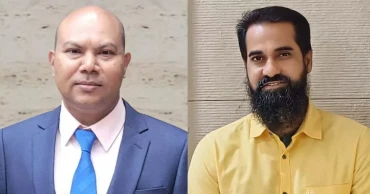
Alamgir re-elected DJAB president, Tarikul general secretary
The Defence Journalists Association of Bangladesh (DJAB) has elected a new executive committee for its next two-year term, with Alamgir Hossain re-elected as president and Tarikul Islam Masum elected as general secretary.
The election was held at a resort in Sreemangal on Thursday, following the association’s annual general meeting (AGM), where members also approved an 11-member executive body.
Alamgir Hossain, special correspondent of Dainik Khoborer Kagoj, also served as president of the outgoing committee, while Tarikul Islam Masum, joint assignment editor of Channel i, previously held the post of vice-president.
Jamal Uddin, special correspondent of Bangla Tribune, was elected vice-president, while Ali Asif Shawon, chief reporter of Dhaka Tribune, was elected joint general secretary.
Other elected members include Kazi Sohag, senior reporter of Bangladesh Pratidin, as treasurer; Saif Bablu, senior reporter of Rupali Bangladesh, as organising secretary; Kamal Hossain Talukder, special correspondent of The News Twenty-four, as office secretary (publicity and training); and Habibullah Mizan, editor of Allcrimes.tv, as international and research secretary.
The three executive members are Ainal Hossain, special correspondent at Citizen Journal; SM Mintu, senior reporter at Dainik Naya Diganta; and Moni Acharyya, senior reporter at Dhaka Post.
A three-member election commission, led by former DJAB president Mamunur Rashid as chief election commissioner, conducted the election.
The other members were Masud Karim, assignment editor of DeshkalNews, and Neserul Haque Khokon, president of the Investigative Journalists Association of Bangladesh (IJAB) and senior reporter at Jugantor.
An open discussion was also held at the event, where participants discussed the role of journalists in writing on various issues, including state security and the further modernisation and strengthening of the defence sector.
1 month ago
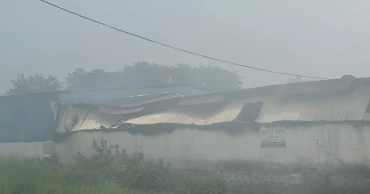
Firefighter injured in Demra ink factory fire
1 month ago

Retired Islami Bankers' concern over ‘Bank Resolution Ordinance’
The Association of Retired Islami Bankers (ARIB) has expressed deep concern over the state of the country’s banking sector, particularly the "unprecedented scam" and governance crisis within Shariah-based banks during the previous regime.
In a recent executive committee meeting chaired by ARIB President Nurul Islam Khalifa, the association called upon the interim government and the central bank to take immediate steps to restore public trust and ensure transparency in the sector.
The association noted that Islami Bank Bangladesh PLC (IBBL), once the only Bangladeshi bank among the world’s top 1,000, was pushed to the brink of collapse through state-sponsored looting under the past "fascist" administration. They alleged that the S. Alam Group and its associates systematically laundered thousands of crores of taka through fake loans.
"To hide massive losses, the looters manipulated accounts to show hollow profits and siphoned off depositors' money in the name of dividends," the committee stated. They further highlighted that thousands were recruited to these banks from a specific region without any merit-based competition, violating the constitutional rights of educated youth across the country.
The meeting flagged several recent decisions that have triggered a fresh crisis of confidence:
Bank Resolution Ordinance: ARIB demanded the immediate repeal of Section 18(ka) of the Bank Resolution Ordinance, fearing it might be used as a "legal cover" to rehabilitate the controversial S. Alam Group.
Leadership Vacuum: The association expressed alarm over the decision to send the Managing Director and CEO of Islami Bank Bangladesh PLC, Mohammed Monirul Moula (referred to in the context as a dedicated professional), on forced leave under central bank instructions.
Risk of Destabilization: They warned that attempts to reinstate old executives who were allegedly complicit in past looting would further pollute the internal and business environment of the bank.
Stressing that no Islamic bank is currently in a position to absorb further "shocks," the retired bankers placed a 5-point demand to the government and Bangladesh Bank, including-
Immediate repeal of Section 18(ka) of the Bank Resolution Ordinance, removal of collaborators of the "looting group" from all levels of the bank and a ban on their reinstatement, aggressive measures to recover laundered money from abroad, exemplary punishment for the looters and their associates through legal channels, restoration of ownership to the original shareholders from whom the bank was forcibly taken at gunpoint, and the reinstatement of the CEO to reassure customers.
Former Islami Bank official and President of ARIB Nurul Islam Khalifa, former Deputy Managing Directors of Islami Bank Syed Abdullah Mohammed Saleh, Engineer Abul Bashar, Abdus Sadek Bhuiyan, and AAM Habibur Rahman, as well as former executives from Al-Arafah Islami Bank. Former Executive Vice Presidents (EVP) of Al-Arafah Islami Bank,
Engineer Muhammad Golam Sarwar, Mujibur Rahman, Former Executive Vice Presidents (EVP) of Islami Bank PLC, AKM Shahidul Haque Khandakar, Md. Fayezul Kabir and Tofazzal Hossain Khan, among others, attended the meeting, according to a press release.
1 month ago

Fuel prices to remain unchanged in May
The government has decided to keep fuel prices unchanged in May despite a rise in the international market.
The Energy and Mineral Resources Division informed the Bangladesh Petroleum Corporation (BPC) of the decision through a letter on Thursday.
Under the current pricing framework, the retail price of per litre diesel is Tk115, kerosene Tk130, octane Tk140, and petrol Tk135.
Earlier on April 18, the government increased the prices of all types of fuel at the consumer level in line with the rise in global fuel prices.
The recent escalation of tensions in the Middle East following joint attacks by the United States and Israel on Iran has contributed to instability in global energy markets.
1 month ago

Remittance continues to surge: $3bn received in 29 days of April
Remittance inflows maintained strong momentum in April, with expatriate Bangladeshis sending around US$3.0 billion in the first 29 days of the month, according to the latest data from Bangladesh Bank (BB).
The inflow marks a notable increase compared to the same period last year, when remittances stood at $2.6 billion.
This reflects a year-on-year rise of $394 million, or 15.1 percent, for April.
The upward trajectory is even more pronounced in the cumulative data for the current fiscal year FY2025-26.
Total remittance receipts from July to April 29 reached $29.21 billion, up from $24.39 billion during the same period in FY2024-25—marking a substantial 19.8 percent growth.
Central bank officials noted that this momentum follows a historic performance in March 2026, which recorded the highest single-month remittance inflow in the country’s history at a staggering $3.75 billion.
Other recent milestones include $3.29 billion in March 2025, $3.22 billion in December 2025, and $3.17 billion in January 2026.
Financial analysts attribute this surge, in part, to ongoing instability in the Middle East, which has disrupted global foreign exchange markets.
The heightened international demand for the US Dollar has pushed its exchange rate higher against the local currency. Consequently, expatriates are finding it more lucrative to send money home as they receive a higher value in taka for their earnings.
However, while the influx provides a vital cushion for the economy, economists cautioned that a prolonged Middle East crisis could pose systemic risks to Bangladesh, mirroring broader global economic threats.
1 month ago

Pressure mounts to repay foreign debt: ERD report
Bangladesh is experiencing mounting pressure in repaying its foreign debt, as outflows for loan servicing continue to rise alongside fresh disbursements, according to the latest report from the Economic Relations Division (ERD).
In the first nine months of the current fiscal year (July–March), the country paid more than $3.5 billion in principal and interest on external loans to development partners, including the World Bank, Asian Development Bank, and Japan.
The ERD report shows that Bangladesh repaid $3.525 billion during the period, while receiving $3.89 billion in foreign loans and grants. Of the repayments, $2.276 billion was principal and $1.25 billion interest.
Foreign loans are primarily used to finance projects under the Annual Development Program (ADP), with the ERD maintaining records of disbursement and repayment.
At the same time, reliance on domestic borrowing has also increased. To bridge the budget deficit, the government borrowed over Tk 1 lakh crore from the banking system during the first nine months of the fiscal year. After partial repayments, the net borrowing now stands at around Tk 93,000 crore, adding further strain to overall debt servicing obligations.
Officials noted that Bangladesh has been facing a steady rise in foreign debt repayments over the past few years. In the previous fiscal year, the country crossed the $4 billion mark in external debt servicing for the first time, repaying $4.09 billion, up from $3.37 billion the year before.
If the current trend continues, total foreign loan repayments could exceed $5 billion by the end of the current fiscal year, according to related officials.
The report further reveals that Bangladesh received $3.5 billion in loans and $380 million in grants during the July-March period. However, total loan commitments declined slightly to $2.8 billion, compared to $3 billion in the same period of the previous fiscal year.
Among development partners, Russia disbursed the highest amount during the nine-month period, providing approximately $830 million. The World Bank followed with $765 million, while the Asian Development Bank disbursed about $610 million.
China and India released $520 million and $240 million respectively, while Japan provided around $310 million.
In addition, the government is securing about $4.7 billion in budget support loans from development partners. Foreign development partners also provide debt support to the private sector.
1 month ago