Others
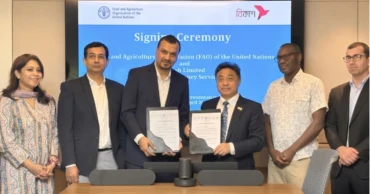
FAO signs deal with bKash to enable faster cash assistance, incentive distribution
The Food and Agriculture Organization of the United Nations (FAO) will now disburse cash assistance and incentives directly to its beneficiaries through bKash.
This initiative aims to make FAO’s financial management at the field level simpler, more transparent, and secure. As a result, beneficiaries can receive assistance instantly in their bKash accounts and use the funds for their emergency and daily needs.
An agreement was recently signed between the two organisations at the FAO Bangladesh Country Office in Dhaka, with senior representatives in attendance.
bKash Payment Speaker, NFC and Salesforce App win Bangladesh Retail Awards
Jiaoqun Shi, FAO Representative; Dia Sanou, Deputy FAO Representative; Ekramul Hoque, Assistant FAO Representative (Administration) were present from FAO. Representing bKash were Ali Ahmmed, Chief Commercial Officer; Masrur Chowdhury, Head of Business Sales; Novera Ayesha Zaman, VP, Micro Finance Payment, Business Sales.
Under this agreement, FAO will utilise bKash’s ‘Disbursement Solution’ to send non-conditional cash assistance to natural disaster-affected communities, including farmers, fishermen, livestock keepers, day-labourers etc.
Since disasters can occur at any time, this system allows FAO to make immediate disbursements whenever required, including weekends and holidays. This support will help them meet their immediate needs and aid in early recovery, according to a press release.
In addition, FAO will use bKash’s ‘Disbursement Solution’ to implement its Cash-for-Work (CFW) initiatives. Under this programme, vulnerable people receive cash wages in exchange for short-term work that supports agriculture, food security, and natural resource management. This will make it easier to build resilience and ensure sustainable livelihoods among vulnerable populations.
Programme facilitators of this programme will also receive their allowances directly through bKash.
Recipients can cash out their payments from bKash agent points or ATM booths spread across the country. They can also use their bKash accounts from home for various services, including merchant payments, utility bill payments (gas, electricity, water), money transfers, mobile recharging, educational or government fee payments, without needing to visit an agent point.
1 month ago
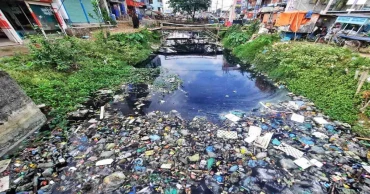
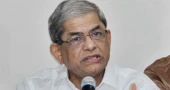
Fakhrul spells out measures to tackle waterlogging, dengue in Dhaka
Local Government, Rural Development (LGRD) and Co-operatives Minister Mirza Fakhrul Islam Alamgir on Monday outlined a comprehensive action plan in Parliament for Dhaka North City Corporation (DNCC) and Dhaka South City Corporation (DSCC) to tackle waterlogging and mosquito-borne diseases, including dengue, ahead of the monsoon season.
Responding to a tabled question from BNP lawmaker Md Abul Kalam, the minister said the strategies emphasise strengthened surveillance, public participation and modern pest control methods.
He said the DNCC has taken steps like control of Culex mosquitoes during the pre-monsoon season (March-May) and Aedes mosquitoes during the monsoon season, identification of risky areas and integrated mosquito control activities, strengthening the surveillance system and increasing public awareness and public involvement.
It has also undertaken necessary coordination with relevant government institutions to strengthen mosquito control efforts. These measures include morning larviciding, removal and destruction of mosquito breeding grounds, and evening fogging operations aimed at eradicating Culex mosquitoes. Joint mosquito control drives are being conducted in high-risk hotspots such as closed canals, drains, and sewers. Additionally, the DNCC has cleaned approximately 6,000 bighas of water bodies across its jurisdiction.
Under the slogan “Saturday’s Promise: Let’s Clean Our Own Homes,” the DNCC is conducting weekly cleanliness drives in 25 high-risk wards every Saturday from 8:00am to 12:00pm, based on guidance from the Directorate General of Health Services and the Institute of Epidemiology, Disease Control and Research. These activities are ongoing in accordance with the established work plan.
Fakhrul stated that the DNCC is also focusing on raising public awareness about dengue and eliminating mosquito breeding sites in vulnerable areas. As part of this initiative, a special initiative titled “Operation Clean Home: Healthy Lives” is being implemented in 25 dengue-prone wards from April 8, with activities continuing as planned.
Furthermore, through hospital surveillance, the city corporation is collecting the residential addresses of dengue patients and deploying Quick Response Teams (QRTs) to carry out targeted mosquito control measures at those locations. This activity has been in operation since April 21, 2026.
In addition to the chemical pesticides currently used, the more effective organic pesticide Bacillus Thuringiensis Israelensis (BTI) is under the procurement process after trial application.
To verify the quality of pesticides used by DNCC, pesticide testing activities are ongoing on a random basis by five reputable government/private organisations.
New stickers/leaflets, booklets are being prepared for public awareness and public involvement, which are ongoing.
Provision of precautionary bulk SMS during the monsoon season and OTV school promotion activities are also ongoing.
The proper use of pesticides has been ensured as per the guidelines of the Technical Committee of the Local Government Division and the effectiveness is being tested regularly.
Steps taken by DSCC
As part of the waterlogging and dengue control activities during the upcoming monsoon season, the DSCC is conducting special cleaning and mosquito extermination campaigns every week in every area by involving the local people.
In addition to waste management, mosquito repellent spraying activities are continuing every morning and evening to control dengue. Moreover, a monitoring team has been formed with officers to control mosquitoes in the DSCC areas.
Under the supervision of the monitoring team, a special crash programme is being conducted by identifying risky places.
Mobile court drives are being conducted in risky places to control dengue and fines are being imposed if necessary.
Leaflet distribution/miking activities are underway in various educational institutions, religious establishments, markets, etc. to increase public awareness. In addition, publicity in this regard is continuing in print and electronic media.
To reduce waterlogging during the season, cleaning activities are underway by identifying hotspots under short-term activities. Segunbagicha box culvert, Zia Sarani and Kajla canal cleaning activities are already being implemented. Cleaning work of other canals, box-culverts and sewers will be implemented in phases.
Six portable pumps have already been purchased to remove rainwater from waterlogging areas quickly.
Currently, water from the DSCC areas is being drained through three outlets. Activities to construct one more outlet are underway and a plan has been taken to construct one new outlet (large sewer) from Gulistan to Sadarghat section with World Bank funding.
A plan has been taken to construct the required number of outlets after conducting a survey and feasibility study by engaging a consulting firm.
If the overall action plan is implemented, waterlogging will be reduced in the upcoming monsoon season.
It is hoped that it will be possible to control dengue, chikungunya and other mosquito-borne diseases, the minister said.
1 month ago
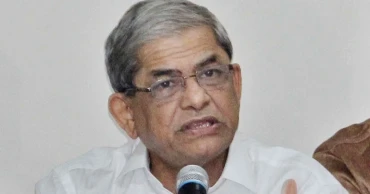
Investigation into Tk 3,825-cr EVM project underway: LGRD Minister
Local Government, Rural Development and Cooperatives Minister Mirza Fakhrul Islam Alamgir on Monday told Parliament that the Anti-Corruption Commission (ACC) continues its investigation into alleged anomalies in the Tk 3,825-crore Electronic Voting Machine (EVM) project.
“A project was implemented for the period of July 2018 to June 2024 at an estimated cost of Tk 3825.34 crore for procurement of 1.5 lakh EVMs under the Election Commission Secretariat,” he said.
The minister said this, replying to a scripted question from treasury bench lawmaker Md. Shamsur Rahman Simul Biswas (Pabna-5).
Earlier, the parliamentary session resumed at 3:00pm with Speaker Hafiz Uddin Ahmad, Bir Bikram, in the chair.
The LGRD Minister said The EVM project was completed in June, 2024 and the Project Completion Report (PCR) was sent to the Implementation Monitoring and Evaluation Division on May 13, 2025, but the evaluation report has not been received till date, he said
“Audit objections regarding the EVM project have been raised by the audit directorate, which have not been resolved yet. An investigation is underway under the Anti-Corruption Commission regarding the project,” he said.
Mirza Fakhrul Islam said the Election Commission at a meeting on July 10, 2025 decided that EVMs will not be used in any national and local level elections.
Currently, the EVMs are stored in various godowns, Bangladesh Machine Tools Factory (BMTF) and the basement of the Election Commission Secretariat, he said.
1 month ago
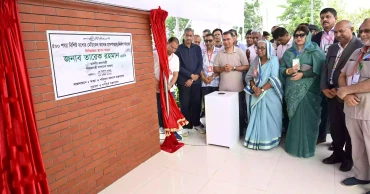
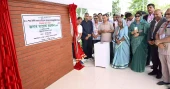
PM unveils plaque of 500-bed Jashore Medical College Hospital building
Prime Minister Tarique Rahman on Monday unveiled the foundation plaque of the 500-bed Jashore Medical College Hospital building, reiterating his government’s goal to improve and reach healthcare services to people promptly.
He unveiled the plaque at Harinar Beel in the Chachra area of the district town in the afternoon.
BNP Vice-Chairman and late party leader Tariqul Islam’s wife Prof Nargis Begum, Health and Family Welfare Minister Sardar Md Sakhawat Husain, Water Resources Minister Shahid Uddin Chowdhury Anee, State Minister Forhad Hossain Azad, State Minister for Power, Energy and Mineral Resources Aninda Islam Amit and State Minister for Local Government, Rural Development and Co-operatives Mir Shahe Alam were present on the occasion.
The building is being constructed by two ministries – Health and Family Welfare, and Housing and Public Works.
Speaking on the occasion, the Prime Minister highlighted his government’s commitment to improving healthcare services.
“Our goal is to ensure that healthcare services reach people as quickly as possible. Our government’s aim is to keep people away from illness. We want to build a more aware and conscious nation,” he said.
“Because we all must remember that if we want to move forward, if we want to take the country and the nation ahead, a healthy population is essential. If the nation is not healthy, we will fall behind. With that goal in mind, the current BNP government is working,” Tarique Rahman added.
He urged people to support the government in implementing its plans to develop healthcare services.
“If you cooperate with the government, it will be easier for us to carry forward these initiatives and deliver healthcare services to people’s doorsteps,” the Prime Minister said.
He said they want to ensure that they can provide healthcare services to the people of Bangladesh quickly. “Let this be our expectation, our hope and our plan for the future,” he added.
1 month ago

Northern Bangladesh faces early flood threat after record rainfall
Rising water levels in major rivers in the northern region have sparked fears of early flooding, as heavy rainfall continues to batter several districts.
Officials of the Water Development Board (WDB) said the water levels of the Teesta, Dharla and Brahmaputra rivers have been increasing due to persistent rain throughout April.
According to the Rangpur Meteorological Office, a total of 438 millimetres of rainfall was recorded in eight northern districts in the last 24 hours, an unusually high amount for this time of the year.
Although the Teesta River is still flowing below the danger level at the Dalia point, its water level has risen steadily, increasing by around 40 centimetres over the past three days.
Similar trends have also been observed in the Dharla and Brahmaputra rivers.
WDB officials warned that continued rainfall could trigger early flooding, posing risks to crops in low-lying char areas.
Farmers in Rangpur’s Gangachara and Kaunia upazilas said they cultivated various crops like chilies, onions, garlic, almonds, sweet pumpkins, rice and wheat on the sandbanks of the Teesta every year after the water recedes in winter.
But sudden rise in Teesta water in the Bengali month of Baishakh has already begun damaging standing crops, they said.
Many have started harvesting unripe paddy to avoid further losses.
Meteorologist Mostafizur Rahman said 131 millimetres of rain was recorded in Rangpur between in 24 hours till 9am on Monday, adding that the rainfall may continue for another four days.
“Such rainfall is unusual for April,” he said.
Ahsan Habib, Superintendent Engineer of the Rangpur region of the WDB, said the continued rainfall throughout the month has led to rising river levels, increasing the risk of early floods across the division.
Meanwhile, storms accompanying the rainfall also caused damage to trees and crops in several areas on Monday night.
1 month ago
Load shedding to ease next week, full solution still distant: Energy Minister
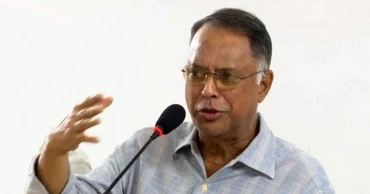
Power outages will not cease immediately but are set to ease considerably from next week, Energy Minister Iqbal Hassan Mahmood said Monday.
“Current load shedding stands at 1,200 to 1,500 megawatts. From next week the figure should drop to 800 to 900 megawatts. A complete halt, however, is not possible at this moment,” the minister said while speaking at the ‘Fourth Bangladesh-China Renewable Energy Forum’ organised by the Centre for Policy Dialogue (CPD) at a city hotel.
The minister cited mounting financial strain as a key constraint, disclosing that outstanding dues owed to power-importing entities have swelled to Tk 56,000 crore.
Compounding the fiscal burden, the ongoing Middle East crisis has already cost the country an additional $2 billion in energy expenditure, forcing the government to manage its resources with extreme caution.
Reflecting on the structural woes inherited by his ministry, Iqbal said, “Every time I have taken charge of this ministry, I have had to start from a deficit — in 2001 and again now in 2026. Unnecessary projects were executed whose financial liabilities we are now bearing.”
He noted a stark mismatch between installed capacity and actual demand: while national electricity demand stands at 18,000 megawatts, installed generation capacity was expanded to 30,000 megawatts in previous years. “Despite the surplus capacity, raw material shortages have left many plants idle, yet the government continues to pay for their upkeep.”
He cited the Rupsha power plant in Khulna shuttered for three years after a plan to supply it with Bhola gas failed to materialise, as a telling example of this mismanagement.
Turning to the path forward, the minister identified renewable energy, particularly solar as the most viable exit from the current crisis. “The government has set a target of generating 10,000 megawatts of solar power within five years.”
“Prime Minister Tarique Rahman wants work to begin today, if possible,” Iqbal said, adding that land scarcity remains the chief obstacle to large-scale solar deployment.
To address this, the government has decided to lease out state-owned khas land to the private sector for solar plant construction, alongside tax incentives for solar energy businesses, he said.
The Prime Minister has already directed the preparation of a ‘khas’ land inventory through an inter-ministerial meeting convened for this purpose, the minister said.
Distancing the current administration from coercive energy policies of the past, the minister criticised the previous government's mandatory rooftop solar panel directive.
“The previous fascist government forced solar panels onto every multi-storey building by diktat. Panels were installed, but electricity never came from them. We want to bring people to solar energy through encouragement, not compulsion.”
The minister also pledged that solar energy proposals rejected during the tenure of the interim government would be revisited and re-evaluated, urging the private sector to join the government in making Bangladesh a success story in renewable energy through public-private partnerships.
1 month ago
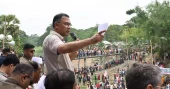
PM urges people not to pamper those trying to create chaos
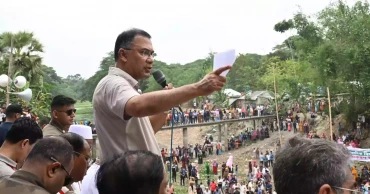
Prime Minister Tarique Rahman on Monday urged the country’s people not to pamper those who are trying to create chaos and mislead people over the referendum and the July National Charter for their own political gains.
“Some individuals and political parties are now trying to divert the referendum in a different direction and create confusion across the country,” he said while addressing a gathering on the bank of the historic Ulashi Canal after inaugurating its re-excavation work in Sharsha upazila of Jashore.
The Prime Minister listed several government initiatives, including family cards for women, farmer cards, canal excavation, reopening of closed mills to create jobs for unemployed youth, expanding healthcare to rural areas and tree plantation drives.
“We have seen that since independence, at different times, certain quarters have tried to create unrest, confusion and disorder in the country. Whenever BNP has taken programmes to improve people’s lives, we have seen how, in the name of movements, a 173-day hartal was enforced. Do you remember how those 173 days were used in an attempt to destroy the country’s economy?” he said.
Tarique Rahman said the same ‘ghost’ has now possessed others again, urging people to remain alert against this quarter.
“You must stay vigilant against those who want to divert the verdict of the referendum and present the July Charter in a misleading way to serve their own political interests,” he said.
The Prime Minister warned that such elements were trying to create disorder in the country, which could obstruct the government’s development programmes and harm public welfare.
“If they are pampered and they succeed in creating chaos, the programmes undertaken for the people’s welfare will be disrupted,” he said.
Tarique Rahman stressed that people themselves must ensure that no one is allowed to undermine the nation’s progress.
“If we remain united and alert, no one will be able to play with the destiny of Bangladesh,” he said.
The Prime Minister also recalled the mass uprising of August 5, 2024, saying people had already shown how they respond to attempts to ignore their will.
“Just as the people gave a fitting reply on August 5, they will do so again in the future if anyone tries to play with their fate,” he added.
Tarique Rahman also highlighted his government’s various development initiatives, expressing confidence that their successful implementation will bring meaningful changes to people’s lives across the country.
“We, who follow Shaheed Zia and are soldiers of Begum Khaleda Zia, believe that this country is our first and last address. That is why we say – Bangladesh first, Bangladesh last,” he said.
The Prime Minister reiterated that his government will gradually implement – word by word – the July Charter as signed by political parties at the South Plaza of Parliament.
Using 40 crore hands to build the nation
The Prime Minister called for mobilising the 40 crore hands of the country’s 20 crore people to build the nation.
“Today, we must take a pledge. The 40 crore hands of 20 crore people cannot remain idle. These hands must be used to build the nation and change the fate of its people. Only then will the destiny of the people of this country change,” he said.
Referring to the progress of different countries, Tarique Rahman said many nations have transformed their fortunes over the past 50 years.
“We often talk about Singapore – its condition in 1971 was worse than ours. Just look where they are today, 50 years later. If they can do it, why can't we? Inshallah, we can. The people of this country can do it,” he said.
Free education for girls up to degree level
The Prime Minister also announced a plan to make education free for girls up to degree level.
He said of Bangladesh’s nearly 20 crore population, half are women, and stressed the need to expand educational opportunities for them.
Referring to past initiatives taken by his mother and former Prime Minister Khaleda Zia, Tarique Rahman said education for girls had earlier been made free up to the school level during her first tenure and later extended to the intermediate level.
“We want to take that programme further…we have decided that, Inshallah, girls’ education will be made free up to the degree level. Not only that, stipends will also be introduced for those who achieve good academic results,” he said.
Inaugurating Ulashi Canal re-excavation work
Earlier, the Prime Minister formally inaugurated the Ulashi Canal re-excavation project by digging soil with a spade and later planted trees along the bank of the canal.
He said the canal had dried up due to siltation, encroachment and lack of maintenance, bringing no benefit to farmers or local residents.
“Nearly 50 years ago, Shaheed President Ziaur Rahman excavated this canal. If we can re-excavate about four kilometres of it, water will return to the area,” Tarique Rahman said.
He said around 20,000 farmers will directly benefit from the project, with an estimated additional 1,400 tonnes of food grains to be produced.
The Prime Minister also said about 72,000 people are expected to benefit overall if the canal is revived through re-excavation.
He also announced the government’s plans to plant around 3,000 trees along both sides of the canal.
“When there is water in the canal, local people benefit. Women, in particular, can earn extra income through duck rearing, which is now difficult due to a lack of water,” he added.
Health and Family Welfare Minister Sardar Md Sakhawat Husain, Water Resources Minister Shahid Uddin Chowdhury Anee, State Minister Forhad Hossain Azad and State Minister for Local Government Mir Shahe Alam, among others, were present at the programme, with State Minister for Power, Energy and Mineral Resources Aninda Islam Amit in the chair.
1 month ago

Jamaat MP Amir Hamza gets anticipatory bail
The High Court on Monday granted eight weeks’ anticipatory bail to Jamaat-e-Islami MP Mufti Amir Hamza in a defamation case filed in Sirajganj.
The HC bench of Justice Zahid Sarwar Kajal and Justice Sheikh Abu Taher passed the order after hearing a petition, his lawyer Advocate Mohammad Shishir Manir told media.
So, the arrest warrant issued against him will remain ineffective, he said.
Earlier, Amir Hamza filed a bail petition with the High Court in the case.
On April 2, Humayun Kabir, Additional Public Prosecutor of the Sirajganj District Sessions and Judge Court and General Secretary of the District Bar Association, filed the case against Hamza for allegedly making defamatory remarks about Power, Energy and Mineral Resources Minister Iqbal Hassan Mahmood Tuku.
On the same day, Amir Hamza was summoned to appear before the court on April 21. The court issued an arrest warrant as he failed to appear on the scheduled date.
On April 21, the Additional Chief Judicial Magistrate Court of Sirajganj issued another arrest warrant against him.
Earlier on March 26, Amir Hamza reportedly referred to Energy Minister Iqbal Hassan Mahmood Tuku as an atheist and Islamophobic during a discussion at the Hatsh Haripur Boro Jame Mosque in Kushtia Sadar upazila.
1 month ago
Ulashi villagers await PM Tarique; canal re-excavation rekindles memories of Zia
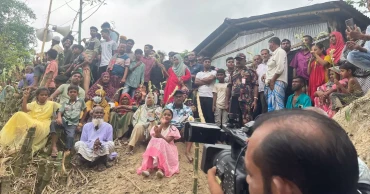
A festive atmosphere has filled remote Ulashi village in Jashore's Sharsha upazila where residents have been eagerly waiting since morning for Prime Minister Tarique Rahman.
Young and old alike have gathered along both banks of Ulashi Canal. Many are carrying spades and traditional bamboo hats, while others are standing in rows along the roadside for a glimpse of the Prime Minister.
Some people were seen waiting with marigold flowers to welcome the Prime Minister.
Soon after arriving in Jashore, Tarique is set to begin his first programme of the day by inaugurating the re-excavation of Ulashi-Jadunathpur Canal.
The nearly four-kilometre canal which connects with the Betna River was first excavated in 1976 under the initiative of former president Ziaur Rahman.
Centenarian Barik Mondol, a resident of Ulashi, was present at the original canal excavation ceremony in 1976. He has come again today, recalling that historic occasion.
"Ziaur Rahman arrived by helicopter and landed on the school field. He then walked to the canal, dug the soil himself with a spade and placed it in a basket," Barik said.
"The President then lifted the basket onto the head of my brother, Karim Box Mondol, who was a union parishad member. He even wore my brother's traditional bamboo hat," he added.
Barik also recalled the huge gathering that day.
"Later, local people, along with members of different government agencies, joined the excavation work. Several hundred people worked voluntarily without any payment. They were given only bread and molasses for lunch. People joined the work simply out of their love for the President," he said.
Octogenarian Shahdat Hossain also recalled that he had dug the canal alongside Ziaur Rahman 50 years ago.
"I am here today to see Ziaur Rahman's son, Tarique Rahman, and witness the re-excavation of the canal, which has become almost dead," he said.
Local shopkeeper Imran Ali said he had heard that Ziaur Rahman excavated the canal nearly five decades ago.
"We're very happy that now his son is coming to re-excavate the canal. We're eagerly waiting to welcome the Prime Minister," he said.
Local farmer Andur Rob said the canal has become almost useless due to years of neglect.
"It has created serious irrigation problems. Re-excavation of the canal will greatly benefit the people of this area," he said.
Rob said the villagers are overjoyed that Prime Minister Tarique Rahman is coming here to launch the project.
The historic plaque marking Ziaur Rahman's inauguration of the project still stands at the site. It has been cleaned ahead of the Prime Minister's visit.
Another plaque on the monument commemorates the formal inauguration of the project by President Ziaur Rahman on April 30, 1977.
1 month ago
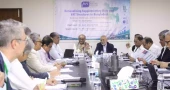
Bangladesh faces record gap between revenue target and collection, reveal speakers at seminar on tax policy
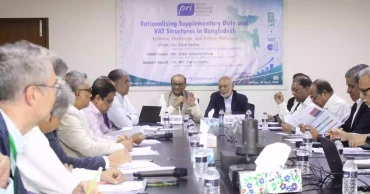
Bangladesh's tax revenue growth has collapsed from 21 percent to a mere 2.2 percent in fiscal year 2025, with actual collections running some 20 percent below revised budget targets, speakers warned at a policy dialogue organised by the Policy Research Institute of Bangladesh (PRI) on Sunday.
The dialogue, titled “Rationalizing Supplementary Duty and VAT in Bangladesh: Evidence, Challenges, and Reform Pathways,” brought together policymakers, economists, industry leaders and development partners to deliberate on structural weaknesses in the country's tax architecture.
Zakir Ahmed Khan, Chairman of Palli Karma Sahayak Foundation (PKSF) and Chief Guest at the event, said the most critical institutional reform on the table is the separation of tax policy from tax administration, the long-debated bifurcation of the National Board of Revenue (NBR).
“Tax policy should sit in a dedicated unit with research capability and broad inter-agency coordination. Implementation should remain with NBR, but with a greatly strengthened enforcement capacity,” he said, adding that the deficit in reform is one of political will, not analytical insight.
He cautioned that the current fiscal year already carries a revenue shortfall of approximately Tk 100 billion, leaving a narrow window before the next budget cycle.
Enforcing existing taxes rather than introducing new ones, remains the most accessible lever for revenue improvement, he argued, noting that a significant volume of transactions, even within organised firms, continues to be settled in cash and goes unreported.
Zakir also called for moving beyond annual, sector-level budget consultations toward frequent, targeted engagement meetings to properly assess the cross-sectoral spillover effects of any tax policy change.
Special guest Fariduddin Ahmed, Member, NBR, painted a stark picture of institutional decay within NBR, saying the board operates almost entirely on manual systems across its customs, VAT and income tax divisions, a consequence not of officer incompetence but of deliberate inaction by successive finance ministers.
He noted that NBR's published annual reports are severely behind schedule, with the last available report covering 2023, the 2024 edition still in draft, and work on the 2025 report yet to begin.
Farid also raised concerns about the integrity of customs revenue figures, saying officers routinely inflate declared prices to meet administratively imposed targets, generating an estimated Tk 15,000 crore annually in what amounts to arbitrary assessments rather than legitimate taxation.
The current tariff structure, he said, encompasses 113 different rates, with supplementary duties ranging from 5 to 500 percent.
He, too, pressed for immediate NBR bifurcation, arguing that separating policy from administration would unlock the full range of reforms currently stalled within the system.
Panelist Zakir Hossain, Senior Journalist, flagged that the tax-to-GDP ratio has fallen for three consecutive years and dropped below 7 percent in the last fiscal year, among the lowest in the region.
He projected that the full-year revenue gap for FY2025 would be the largest ever recorded, with the shortfall in the first nine months alone standing at approximately Tk 1 lakh crore.
Zakir criticised NBR's practice of releasing only aggregate monthly revenue figures without any sector-specific breakdown, rendering independent scrutiny of tax policy claims impossible.
He called on NBR to publish granular, sector-level data regularly so that media, researchers and industry could engage in evidence-based policy debate.
Daniel Alvarez Estrada, Senior Public Sector Management Specialist at the World Bank, endorsed the reform direction, urging that each tax instrument be deployed for its intended purpose, VAT for broad-based revenue, income and property taxes for equity, excise duties for correcting harmful externalities, and trade taxes for targeted industrial protection.
He described Bangladesh's current system as ad hoc, with all instruments conflated into generic revenue top-up tools rather than calibrated policy levers.
On sugar taxation specifically, he said fiscal measures alone are insufficient and must be embedded within a coordinated public health strategy spanning the ministries of finance and health alongside NBR.
Panelist Shamsul Huq Zahid, Editor, Financial Express, pointed to the imposition of 30–40 percent regulatory duties on imported sugar as a case study in policy distortion, arguing the levies exist primarily to shield loss-making state-owned enterprises rather than serve any revenue or public health objective.
He noted that Bangladesh was a pioneer in introducing VAT in South Asia in 1991, yet the country now lags India, Nepal and others in VAT productivity, a reflection, he said, of institutional stagnation. “A World Bank-financed VAT modernisation project was partially implemented before unspent funds were returned, pointing to entrenched implementation failure within NBR.”
Ahmet Zahit Erdem, Finance Head of 3J Coca-Cola Beverages, the Turkish-owned entity that acquired Coca-Cola Bangladesh two years ago said the company's total tax incidence (TTI) has surged from around 43 percent at the time of acquisition to approximately 54 percent, a level he described as among the highest in the sector globally.
The sharp escalation, he said, was driven by a fivefold increase in minimum tax within a single year (from 0.6 to 3 percent), a rise in supplementary duty from 25 to 30 percent, and a hike in import duty on concentrate from 10 to 15 percent, none of which had been factored into the investment thesis.
Erdem urged authorities to redirect focus from raising rates on fully compliant multinational operators toward expanding the tax base and drawing non-compliant businesses into the formal tax net.
The dialogue was chaired by Dr Zaidi Sattar, Chairman of PRI.
1 month ago