others
Plan underway to reopen closed mills, boost industrial output: Minister
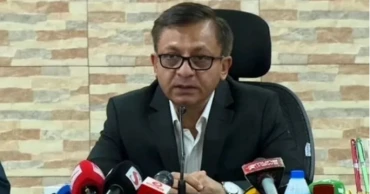
Industries, Commerce, and Textiles and Jute Minister Khandakar Abdul Muktadir on Monday said the government is moving ahead with a coordinated and timely action plan to revive the country’s industrial sector, stabilise markets and ensure uninterrupted supply of essential commodities.
“Reviving sick and closed industries to boost production and employment remains one of the government’s top priorities,” he said while talking to journalists after the fourth session of the second day of the Deputy Commissioners’ (DCs) Conference at the Osmani Memorial Auditorium in the capital.
The minister said the process of gradually handing over around 50 closed and loss-making textile and jute mills to the private sector is underway.
“This initiative will attract new investment, increase production and create large-scale employment opportunities,” he said, adding that the process is expected to be completed within a year.
Referring to proposals from deputy commissioners, Muktadir said they presented practical suggestions based on local realities, including industrial revival, development of new industrial zones, reopening of closed sugar mills and establishment of distilleries to enhance export potential.
“The government will give due consideration to these proposals,” he added.
Emphasising structural reforms in market management, the minister said the government is planning to introduce an AI-based supply chain monitoring system to reduce price gaps from producers to retail levels.
“This system will enable close monitoring of imports, stock, wholesale and retail stages, ensuring transparency and accountability in the market,” he said.
A strategic reserve for import-dependent goods is being developed to face the situation in case of any global market volatility, Muktadir said, adding that this will help prevent shortages and maintain price stability even during international supply disruptions.
Regarding the activities of the Trading Corporation of Bangladesh (TCB), he said a strong advisory council will be formed, comprising experts from both public and private sectors. “This will make TCB’s market interventions more effective, timely and targeted,” he said.
Ahead of upcoming Eid-ul-Azha, the minister outlined a special plan for proper preservation of raw hide, saying efforts are underway to ensure that no hide goes to waste.
Training will be provided through district and upazila administrations to mosque and madrasah stakeholders, he said.
Government-supplied salt, awareness leaflets and media campaigns will also be used, he said, adding that transport of hides will be regulated for seven days after Eid to ensure local preservation.
Stressing stronger roles of district administration in maintaining market stability, Muktadir said, “The administration and elected government will work together to keep supply chains active and protect consumer interests. This is our commitment.”
1 month ago

Barapukuria power plant shuts down again after boiler tube explosion
Power generation at the Barapukuria Thermal Power Plant in Dinajpur has come to a complete halt again following a boiler tube explosion in Unit-1, officials said.
Though the power generation was suspended on Saturday night, the matter was disclosed on Monday.
Chief Engineer Abu Bakkar Siddique said a boiler tube in Unit-1 burst on Saturday night, forcing the suspension of electricity generation.
Frequent mechanical faults have disrupted operations at the coal-fired plant, which has a total installed capacity of 525 megawatts.
Of the plant’s three units, only the 125MW Unit-1 had been in operation. The 125MW Unit-2 remained shut for the past five years, while the 275MW Unit-3 is currently out of service due to ongoing overhaul and maintenance work.
It may take around five days to resume production at the Unit-1 after necessary repairs, , as the overheated boiler water needs to be cooled and the damaged tube replaced, he said.
Earlier, on April 25, another tube in the same unit exploded, halting power generation for six days. The unit resumed operation around 10:00pm on Friday after repairs, supplying 55-60MW of electricity to the national grid.
However, within 24 hours, another tube burst, leading to a fresh shutdown.
Each unit contains numerous tubes that carry steam generated in the boiler to the turbine, officials said.
The power plant was commissioned in 2006 to utilise coal extracted from the nearby Barapukuria coal mine and to support irrigation in eight agriculturally-prone northern districts.
Initially, electricity generation began with two 125MW units. A third unit with a capacity of 275MW was added in 2017 to meet growing power demand.
However, due to recurring faults and other issues, the plant has never been able to operate at its full capacity, officials added.
1 month ago
DSCC declares first Saturday of every month as ‘Cleaning Day’ to fight dengue, other mosquito-borne diseases
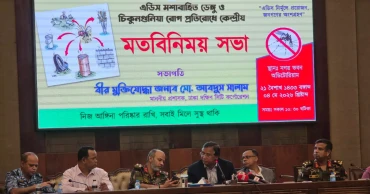
Dhaka South City Corporation (DSCC) Administrator Abdus Salam on Monday announced that the first Saturday of every month will be observed as ‘Cleaning Day’ across DSCC areas to prevent Aedes mosquito-borne diseases including dengue and to ensure a cleaner city environment.
The first official ‘Cleaning Day’ will be observed on May 9 across DSCC areas.
The decision was announced at a view-exchange meeting held at Nagar Bhaban conference room.
As per the meeting decisions, all government offices, residential quarters, educational institutions (schools, colleges, madrashas), areas under RAJUK and REHAB, as well as privately owned premises within DSCC jurisdiction, will conduct cleanliness drives and eliminate mosquito breeding grounds on their own initiatives.
Besides, directives have been issued to ensure the highest level of professionalism in mosquito control activities, including maintaining the quality of insecticides, proper application methods, monitoring, and training of field workers.
The DSCC Administrator said, “Public awareness and cleanliness are our main tools in preventing dengue and chikungunya. If both public and private institutions along with citizens keep their surroundings clean, it will be possible to eliminate mosquito-borne diseases. No negligence in mosquito control activities by DSCC will be tolerated.”
He also urged media representatives to broadcast awareness messages on dengue and chikungunya prevention alongside commercial programmes in the greater public interest.
Representatives from the Directorate General of Health Services (DGHS), Dhaka Metropolitan Police (DMP), Dhaka Medical College (DMC), Border Guard Bangladesh (BGB), Islamic Foundation, RAJUK, Bangladesh Railway, REHAB, Directorate of Secondary and Higher Education, and Jagannath University, among others, were present at the meeting.
DSCC Chief Executive Officer Md. Zahurul Islam and other senior officials were also present.
1 month ago
Brokers urge BSEC to scrap floor price as market gridlock deepens
Bangladesh's stockbrokers have called on the capital market regulator to immediately withdraw floor prices from the country's equity market, warning that the artificial price mechanism is choking trading activity and eroding investor confidence.
The DSE Brokers Association of Bangladesh (DBA) made the demand on Monday in a formal letter addressed to Bangladesh Securities and Exchange Commission (BSEC) Chairman Khondoker Rashed Maqsood, urging the regulator to lift the price floor without further delay to restore normal market operations.
Signed by DBA President Saiful Islam, the letter highlighted that floor price restrictions have left listed conglomerate Beximco Limited virtually untradeable for an extended period.
It also noted that shares of Islami Bank Bangladesh PLC and other floor-priced stocks were trading at their floor levels on May 3, effectively blocking sellers from executing normal transactions.
The association further flagged that prolonged trading restrictions tied to floor prices are heightening the risk of negative equity for margin loan borrowers, a development it described as a growing threat to overall market stability.
DBA also cautioned that such artificial price controls are projecting a negative image of Bangladesh's capital market to international investors, potentially undermining foreign participation at a time when the market needs fresh inflows.
It called on BSEC to promptly lift the floor price on all affected securities and allow the market to function freely, emphasising that a return to price discovery-driven trading is essential for restoring investor confidence and market dynamism.
A floor price is a regulatory mechanism that sets a minimum trading level for a stock, preventing its price from declining further. BSEC has previously imposed such controls during periods of sharp market downturns.
1 month ago

Housewife ‘gang raped’ in Cumilla; 4 held
A housewife has allegedly been gang raped by a group of people in Chandina upazila of Cumilla district.
Police rescued the victim early Monday and arrested four suspects over the incident, which took place at Madarpur village in the upazila, said Atiqur Rahman, officer-in-charge of Chandina Police Station.
He said a group of people waylaid the housewife and her husband while they were passing through the village around 11:00pm on Sunday.
Later, they took the housewife to an abandoned place and violated her in turns throughout the night after confining her husband.
As the victim’s husband prayed for his wife’s release, the offenders demanded Tk 1 lakh for it.
At one stage, the man managed to call the national emergency number 999, seeking help.
Following the phone call, police conducted a drive around 5:00am and rescued the woman from a maize field in the area.
They also arrested four people in connection with the incident.
1 month ago
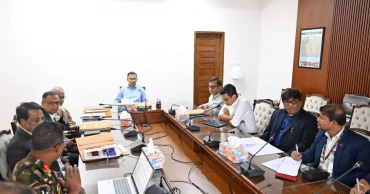
PM orders simplifying project approval process to attract investment
Prime Minister Tarique Rahman on Monday directed the authorities concerned to simplify the project approval process to attract both local and foreign investment.
He also assured necessary support for investors willing to invest in long-closed state-owned factories, said a press release issued by the Prime Minister’s press wing.
The directives came at a two-hour-long meeting beginning at 10:30am at the Prime Minister’s Office in the Bangladesh Secretariat, where the current condition of closed factories in the textiles and jute sector and the next steps were discussed.
The Prime Minister said the government is committed to creating an investment-friendly environment and stressed the need to remove existing complexities in the investment process.
PM holds meeting on reopening closed factories
According to an official present at the meeting, it often takes a long time to get final approval for projects, which discourages both local and foreign investors.
The need to obtain clearances from multiple agencies also acts as a major obstacle.
In this context, the Prime Minister instructed that the approval process be made simpler and more time-efficient.
“Approvals from ministries or agencies that are not essential should be removed from the process,” he said.
He also emphasised easing access to loans to encourage private investment in closed state-owned factories and asked the ministers concerned to take prompt and effective steps in this regard.
Commerce, Industries, Textiles and Jute Minister Khandaker Abdul Muktadir Chowdhury, the Prime Minister’s Political and Industry Affairs Adviser Ruhul Kabir Rizvi, Economic and Planning Adviser Dr Rashed Al Mahmud Titumir, State Minister for Textiles and Jute Shariful Alam, Principal Secretary ABM Abdus Sattar, Executive Chairman of Bangladesh Investment Development Authority Ashik Chowdhury, Chairman of Bangladesh Textile Mills Corporation Brig Gen SM Zahid Hasan, and Chairman of Bangladesh Jute Mills Corporation Kabir Uddin Sikder, among others, were present at the meeting.
Officials from the relevant ministries and agencies also attended the meeting.
1 month ago

DNCC distributes 2,500 raincoats among cleaners ahead of monsoon
Dhaka North City Corporation (DNCC) on Monday distributed around 2,500 raincoats among its cleanliness workers to ensure uninterrupted sanitation services during the monsoon.
The raincoats were handed over at a programme held at Gulshan Nagar Bhaban in the morning.
DNCC Administrator Md Shafiqul Islam Khan attended the programme as the chief guest.
Shafiqul said the programme was dedicated to those who work tirelessly from early morning to keep the city clean, enabling residents to enjoy a hygienic environment.
He noted that during the last Eid, the Prime Minister arranged a special bonus for cleanliness workers in recognition of their contribution.
“We have a responsibility towards you and remain committed to your welfare. You will continue your work with dedication and we will provide all necessary support. We will consider ourselves successful only when city dwellers are satisfied with your work,” he added.
Earlier, winter clothing, masks and gumboots were distributed and the raincoats are part of that ongoing initiative.
Speakers at the programme emphasised the need to ensure safety for sanitation workers alongside raising awareness among city residents, noting that a clean and livable Dhaka requires collective effort.
1 month ago
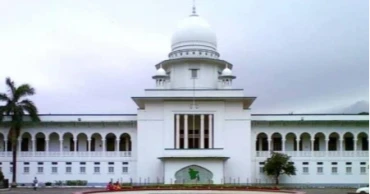
Writ petition challenges legality of BD-US trade deal during interim govt
A writ petition was filed with the High Court challenging the legality of the reciprocal trade agreement between Bangladesh and the US, describing it as unreasonable, structurally imbalanced and contrary to the national interests of Bangladesh.
Advocate Mohammad Maidul Islam Palak filed the writ petition with the HC bench concerned.
The HC bench of Justice Razik-Al-Jalil and Justice Debasish Roy Chowdhury is expected to hear the petition.
The secretaries of the Ministry of Foreign Affairs, Finance Ministry and Commerce Ministry were made respondents to the writ petition.
According to the writ petition, the trade agreement has failed to safeguard the country’s economic sovereignty and public welfare and was signed without following the procedures mandated by the Constitution.
The petitioner also expressed concern over an ‘unequal tariff structure’ imposed on Bangladesh, curtailment of policy-making independence and potential adverse impacts on local industries, agriculture and the environment.
The Agreement on Reciprocal Tariff between Bangladesh and the United States was signed on February 9 by the Prof Yunus-led interim government.
Negotiations on the agreement spanned over nine months since April last year.
1 month ago
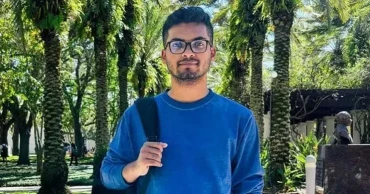
Mortal remains of Bangladeshi student Limon arrive in Dhaka from US
The mortal remains of Zamil Ahamed Limon, one of the two Bangladeshi doctoral students at the University of South Florida who were murdered in the United States, have been brought home.
An Emirates flight carrying the mortal remains of Limon landed at Hazrat Shahjalal International Airport in Dhaka at 8:40am on Monday.
According to a statement from the Bangladesh Embassy in Washington, the body was sent from Orlando International Airport in Florida on Saturday at around 8:50pm local time .
After completion of airport formalities, State Minister for Foreign Affairs Shama Obaed handed over Limon’s body to his family.
“We are maintaining communication with the United States. The government is working to ensure that those involved in this murder are brought to justice,” she told reporters at the airport.
She further said that the foreign ministry has not shown any negligence in handling the matter.
“We have come here on the instructions of the Prime Minister. All kinds of assistance will be ensured. Discussions are ongoing with US authorities for a proper investigation into the murder,” she added.
Limon will be buried at his family graveyard in Jamalpur after Maghrib prayers.
The Ministry of Foreign Affairs said following the recovery of Limon’s body on April 25, the Embassy of Bangladesh in Washington, the Bangladesh Consulate in Miami, the victim’s family, authorities of University of South Florida, members of the Bangladeshi community in Tampa, and the relevant local police department worked in coordination to complete all necessary legal formalities and ensure the earliest possible repatriation of the body.
1 month ago
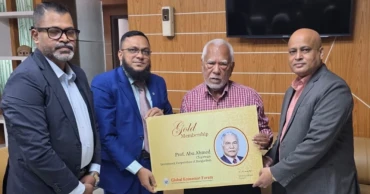
GEF–ICB meeting focuses on policy pathways to ease financial stress
President of the Global Economist Forum (GEF) Dr. Enayet Karim held a meeting with Chairman of the Investment Corporation of Bangladesh (ICB) Prof. Abu Ahmed to explore policy options for stabilising the country’s financial system and supporting economic recovery.
The discussion held on Sunday centred on practical steps to address ongoing pressures in Bangladesh’s financial and economic sectors, ncluding liquidity constraints, weak capital market performance, and investor confidence.
Both sides exchanged views on how coordinated policy could help to ease current challenges and lay the groundwork for sustainable growth.
The meeting highlighted the need for strengthening the capital market as a key pillar of economic stability.
They discussed the role ICB can play in improving market depth, enhancing institutional participation, and restoring confidence among investors, said a press releae on Monday.
Measures such as improving corporate governance, ensuring transparency, and promoting long-term investment instruments were also emphasised.
The meeting also reviewed broader macroeconomic concerns, including inflationary pressure, exchange rate stability, and access to finance for productive sectors.
Dr. Karim stressed the importance of aligning fiscal and monetary policies to support businesses while maintaining overall economic discipline.
Prof. Abu Ahmed noted that ICB remains committed to supporting market stability and mobilising investment, particularly in sectors that can drive employment and industrial growth.
He underscored the importance of policy consistency and regulatory clarity in attracting both domestic and foreign investment.
Both sides agreed that stronger collaboration between policy institutions, financial organisations, and economic think tanks would be essential to address the current challenges effectively.
They also discussed the need for data-driven decision-making and timely policy adjustments to respond to evolving economic conditions.
GEF member Mominur Rashid Mamun and Enamul Hasan Shahin, were, among others, present at the meeting.
1 month ago