USA
New Epstein files mention Trump but reveal little
The U.S. Justice Department has released tens of thousands of new documents related to Jeffrey Epstein, the latest and largest tranche of files on the late financier and convicted sex offender. The documents include multiple mentions of President Donald Trump but provide little new information, officials said.
Many references to Trump come from news clippings, though one email from a federal prosecutor highlighted that Trump flew on Epstein’s private jet more often than previously reported in the 1990s. Trump and Epstein were friends for years, but the president has not been accused of wrongdoing in connection with Epstein.
The Justice Department said some documents contained “untrue and sensationalist claims” about Trump made shortly before the 2020 election. One alleged letter from Epstein to convicted sports doctor Larry Nassar was confirmed as fake.
The latest release shows Trump listed on at least eight flights between 1993 and 1996, with co-passenger Ghislaine Maxwell on some trips. Other files revealed that Mar-a-Lago was subpoenaed in 2021 for employment records.
Trump dismissed the files as a distraction from his administration’s work and criticized the release of photos showing him with Epstein alongside other well-known figures.
Other high-profile names in the files include former President Bill Clinton, the late pop star Michael Jackson, singer Diana Ross, and the U.K.’s Prince Andrew. The documents include correspondence suggesting Andrew was in contact with Maxwell, though he denies any wrongdoing.
Monday’s release is the largest so far, adding nearly 30,000 pages of news clippings, law enforcement tips, and surveillance videos from Epstein’s New York jail. Many materials were already publicly known. Officials said the staged release aims to protect victims, though some have called for full transparency.
Senate Minority Leader Chuck Schumer said the documents still leave “more questions than answers,” pointing to mentions of 10 potential co-conspirators with few additional details.
5 months ago
Trump says US may keep or sell oil seized from Venezuela
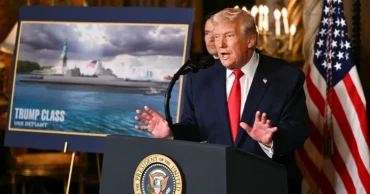
US President Donald Trump said on Monday that the United States will either keep or sell crude oil seized from Venezuelan tankers, as Washington continues to step up pressure on President Nicolás Maduro’s government.
Speaking to reporters in Florida, Trump said the oil could be sold, kept, or added to the US Strategic Petroleum Reserve. He also said the seized vessels would remain under US control.
The comments came as the US Coast Guard continued to pursue a third oil tanker that authorities described as part of a Venezuelan “dark fleet” used to bypass US sanctions. Trump said the tanker would eventually be seized.
Earlier this month, US forces seized two oil tankers linked to Venezuela. The Trump administration has accused Caracas of using oil revenues to fund drug-related crime, an allegation the Venezuelan government has rejected, calling the seizures acts of piracy.
Trump suggested the actions could increase pressure on Maduro to leave office but said the decision ultimately rested with the Venezuelan leader.
The US has expanded its military presence in the Caribbean and Pacific regions and has carried out strikes on vessels it claims were involved in drug trafficking. The military has faced criticism over a lack of public evidence linking the targets to drug smuggling.
Venezuelan President Maduro responded by accusing Trump of interfering in Venezuela’s internal affairs and said the US leader should focus on domestic issues.
The Trump administration has designated Maduro’s government as a foreign terrorist organisation and recently ordered a blockade of sanctioned oil tankers traveling to or from Venezuela.
Venezuela has requested an emergency meeting of the UN Security Council to discuss what it described as continued US aggression.
With inputs from BBC
5 months ago
Trump warns Maduro as US intensifies crackdown on Venezuelan tankers
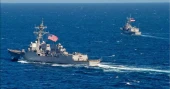
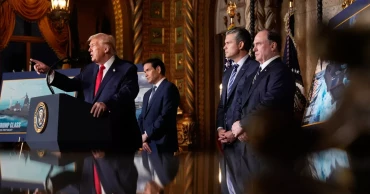
President Donald Trump on Monday warned Venezuelan President Nicolás Maduro against “playing tough” as the US Coast Guard stepped up efforts to intercept sanctioned oil tankers in the Caribbean, part of the Republican administration’s escalating pressure campaign on Caracas.
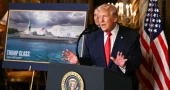
Trump, joined by top aides including Secretary of State Marco Rubio and Defense Secretary Pete Hegseth, said he is prepared to further intensify the four-month campaign, which began to curb the flow of illegal drugs from Venezuela but has since expanded. “If he wants to do something, if he plays tough, it'll be the last time he'll ever be able to play tough,” Trump said, while announcing plans for a new large Navy warship.
The Coast Guard continued a second day of pursuit of a sanctioned tanker the administration claims is part of Venezuela’s “dark fleet” used to evade US sanctions. The vessel is reportedly under a false flag and subject to a US judicial seizure order. This marks the third tanker targeted; previous seizures included the Panama-flagged Centuries and Skipper tankers.
Homeland Security Secretary Kristi Noem said the operations aim to send a global message that Maduro’s alleged illegal activities “cannot stand” and that the US will defend its interests.
Meanwhile, Russia began evacuating families of diplomats from Venezuela amid concerns over rising tensions, while Venezuelan Foreign Minister Yván Gil said Russian counterpart Sergey Lavrov reaffirmed support for Caracas against the US blockade of sanctioned tankers.
On Venezuelan beaches near the El Palito refinery, residents noted the stark contrast with past years. Once bustling with multiple tankers and festive celebrations, the area now sees fewer vessels and families struggling with rising food prices.
The Venezuelan National Assembly, controlled by Maduro’s party, on Monday approved a measure criminalizing acts linked to tanker seizures, with penalties of fines and up to 20 years in prison for offenses such as promoting or participating in “acts of piracy or blockades.”
Under Trump’s orders, the Defense Department continues strikes on vessels alleged to carry drugs toward the US, with at least 105 people killed in 29 strikes since September, prompting criticism from lawmakers and human rights groups over possible extrajudicial killings.
5 months ago
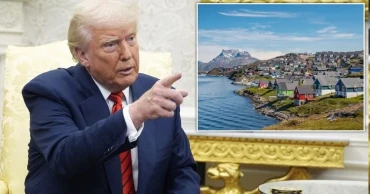
Trump renews call to take over Greenland despite strong objections
U.S. President Donald Trump on Monday reiterated his call to take over Greenland, which triggered strong objections from Greenland, Denmark and the European Union.
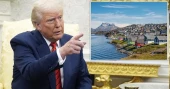
"We need Greenland for national security, not for minerals," Trump told reporters at his Mar-a-Lago resort in Palm Beach, Florida.
The claim contrasted with his administration's earlier remarks, which cited a combination of national security concerns, Arctic strategy, and the potential of critical minerals and natural resources as drivers of U.S. interest.
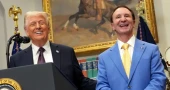
On Sunday, Trump announced the appointment of Louisiana Governor Jeff Landry as his special envoy to Greenland.
"We have to have it (Greenland) and he (Landry) wanted to lead the charge," Trump said.
In response, Landry said on X that the special envoy position would be "a volunteer position to make Greenland a part of the U.S."
"They say Denmark owns it. Denmark has spent no money and has no military protection," Trump said.
Greenland, a former Danish colony, was granted home rule in 1979. In 2009, Denmark passed the Act on Greenland Self-Government, expanding the island's authority over its domestic affairs. However, Denmark retains authority over Greenland's foreign, defense and security policy, according to information on the website of the Prime Minister's Office of Denmark.
Trump's appointment of the envoy to Greenland has sparked strong diplomatic reactions in Greenland, Denmark and the European Union.
Danish Foreign Minister Lars Lokke Rasmussen said on Monday that he would summon U.S. Ambassador to Denmark Kenneth Howery over the appointment.
"I am very upset about this appointment of a special envoy. And I am particularly upset about the envoy's statements, which we find completely unacceptable," Rasmussen told Danish broadcaster TV 2.
Danish Prime Minister Mette Frederiksen and Greenlandic Prime Minister Jens-Frederik Nielsen said on Monday in a joint statement that they expect respect for their "joint territorial integrity" from the U.S. side.
"We have said it very clearly before. Now we say it again. You cannot annex other countries. Not even with an argument about international security. Greenland belongs to the Greenlanders, and the U.S. should not take over Greenland," the statement said.
"Preserving the territorial integrity of the Kingdom of Denmark, its sovereignty and the inviolability of its borders is essential for the European Union (EU)," EU Foreign Affairs spokesperson Anouar El Anouni told a press conference Monday, adding that the bloc's stance is grounded in a long-standing position on the issue.
5 months ago
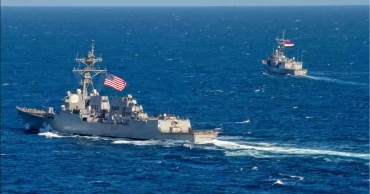
US conducts another strike on alleged drug-smuggling boat in eastern Pacific
The U.S. military carried out another strike Monday against a vessel it said was involved in drug-smuggling operations in the eastern Pacific Ocean, killing one person, according to U.S. Southern Command.
In a social media post, Southern Command said intelligence indicated the “low-profile vessel” was traveling along known narcotics trafficking routes and engaged in illegal operations. The command provided no evidence confirming drug smuggling. A video released shows the boat’s rear catching fire after a salvo, with the vessel later drifting while burning. Previous strike videos have depicted sudden explosions, suggesting missile attacks.
The Trump administration has framed the strikes as efforts to curb the flow of drugs into the United States and increase pressure on Venezuelan President Nicolás Maduro. Since early September, at least 105 people have been killed in 29 known strikes. The operations have drawn scrutiny from lawmakers and human rights groups, who argue the administration has offered little proof that targeted vessels were smuggling drugs, raising concerns of extrajudicial killings.
Meanwhile, the U.S. Coast Guard has intensified operations to intercept oil tankers in the Caribbean Sea as part of the administration’s broader campaign against Maduro. The strikes, conducted in the eastern Pacific and Caribbean, highlight the continued militarized approach to combating drug trafficking and exerting pressure on Venezuela.
5 months ago
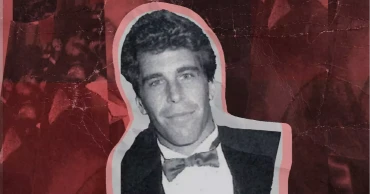
US lawmakers warn of legal steps over Epstein files
Two US lawmakers have warned of possible legal action against Attorney General Pam Bondi after the Justice Department released only part of the government files related to late convicted sex offender Jeffrey Epstein, missing a legal deadline for full disclosure.
The release of the long-anticipated documents drew criticism from both Republicans and Democrats, who said large portions were redacted or withheld despite a law requiring full publication.
Republican Congressman Thomas Massie said he may seek contempt proceedings against Bondi, accusing the Justice Department of failing to follow both the spirit and the letter of the law. He said such action could be taken directly by the House of Representatives without going through the courts.
At the same time, Senate Minority Leader Chuck Schumer announced plans to introduce a resolution to pressure the Justice Department and hold it accountable for not releasing the files in full. He urged bipartisan support, noting that the disclosure law was passed with backing from both parties.
The law compelling the release of the Epstein files was signed by US President Donald Trump in November, following pressure from lawmakers and supporters. Friday marked the deadline for the full release.
The Justice Department has said it is complying with its legal obligations and that more material will be released in the coming weeks. Bondi has said the administration is committed to transparency.
Massie, along with Democratic Congressman Ro Khanna, said they are drafting a bipartisan effort that could impose daily fines until the remaining documents are released.
Justice Department officials have defended the delay, citing the large volume of documents and the need to protect sensitive information related to victims. Deputy Attorney General Todd Blanche said many files contain victim details and releasing them in stages still meets legal requirements.
Some Democratic lawmakers, including Senator Tim Kaine, said contempt or impeachment moves may be premature, suggesting Congress has other tools to ensure compliance.
With inputs from BBC
5 months ago
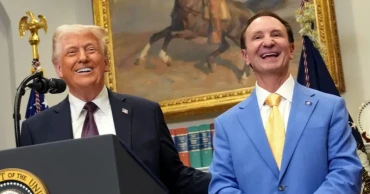
New Trump envoy says he will work to make Greenland part of US
US President Donald Trump has triggered fresh tensions with Denmark after appointing Louisiana Governor Jeff Landry as special envoy to Greenland, with Landry saying he will serve to help make the Arctic island part of the United States.
Trump announced the appointment on Sunday, reviving his long-standing interest in Greenland, a semi-autonomous territory of Denmark. In a post on X, Landry said it was an honour to serve in a voluntary role to make Greenland part of the US.
The move drew sharp reactions from Denmark and Greenland. Danish Foreign Minister Lars Lokke Rasmussen said Copenhagen would summon the US ambassador for an explanation, warning that Denmark cannot accept actions that undermine its territorial integrity.
Greenland Prime Minister Jens-Frederik Nielsen said the island decides its own future and stressed that Greenland belongs to its people. He added that while Greenland is open to cooperation with the US and others, this must be based on mutual respect.
Trump has repeatedly pointed to Greenland’s strategic location and mineral wealth and has not ruled out using force to gain control, a position that has alarmed Denmark, a Nato ally. Greenland has extensive self-rule, though defence and foreign policy remain under Danish authority. Opinion polls show strong opposition among Greenlanders to joining the US.
EU Commission President Ursula von der Leyen said the European Union stands in full solidarity with Denmark and the people of Greenland.
Trump said Landry understands how important Greenland is to US national security and will advance American interests. Envoys are informal appointments and do not require approval from the host country.
Landry, a former congressman, attorney general and military veteran, has previously expressed support for Greenland joining the US. He said his envoy role would not affect his duties as Louisiana governor.
The dispute comes amid growing strategic competition in the Arctic, where melting ice is opening new shipping routes and access to valuable resources. The US has maintained a military presence in Greenland since World War Two and reopened its consulate in the capital Nuuk in 2020.
With inputs from BBC
5 months ago
US forces stop oil tanker off Venezuela amid Trump’s pressure
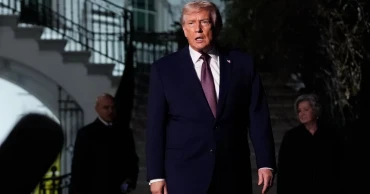
U.S. forces on Saturday intercepted an oil tanker off the coast of Venezuela for the second time in less than two weeks, as President Donald Trump intensifies pressure on Venezuelan President Nicolás Maduro.
The operation, conducted in the early hours, follows Trump’s recent announcement of a “blockade” on all sanctioned Venezuelan oil tankers and comes after the December 10 seizure of another tanker, the Skipper. Homeland Security Secretary Kristi Noem confirmed that the U.S. Coast Guard, assisted by the Defense Department, stopped the Panama-flagged vessel Centuries, which had recently been docked in Venezuela. An unclassified video showed U.S. personnel boarding the tanker via helicopter.
Officials described the boarding as “consented,” with the vessel stopping voluntarily. White House Deputy Press Secretary Anna Kelly said Centuries was part of Venezuela’s shadow fleet, transporting stolen, sanctioned oil. However, maritime expert Dr. Salvatore Mercogliano noted that shipping databases suggest the tanker is properly registered, though it likely carried sanctioned oil.
Venezuela condemned the action, calling it “criminal” and vowing legal action, including complaints to the UN Security Council.
Trump has linked the blockade to U.S. oil investments seized by Venezuela in past decades and accused Maduro of drug trafficking, while U.S. forces have also targeted vessels alleged to smuggle fentanyl into the Americas. At least 104 people have been killed in 28 such strikes since September.
The Trump administration has deployed a significant naval presence to the Caribbean and eastern Pacific, warning of potential further actions to pressure Maduro, who has dismissed U.S. operations as an attempt to force him from power.
Source: AP
5 months ago
Bill Clinton appears in first batch of newly released Epstein files
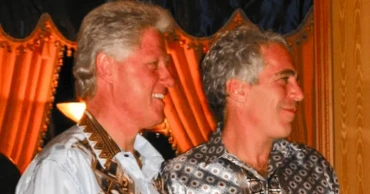
Former U.S. President Bill Clinton featured prominently in the first set of documents released Friday by the Justice Department from its investigation into convicted sex offender Jeffrey Epstein.
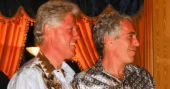
The files include several photos of Clinton, some showing him on a private plane with a woman whose face was redacted, and others depicting him in a pool and a hot tub with Epstein associate Ghislaine Maxwell and unidentified individuals. The timing and location of the images remain unclear.
Clinton, 79, has never been accused of wrongdoing in connection with Epstein. His spokesman, Angel Ureña, said the White House was attempting to deflect attention and stressed that the issue “is not about Bill Clinton.”
Republicans have seized on Clinton’s association with Epstein. The House Oversight Committee had subpoenaed Bill and Hillary Clinton earlier this year, seeking depositions, but the couple offered written statements instead. Committee Chair Rep. James Comer has threatened contempt proceedings if they fail to testify in person.
Clinton’s connections with Epstein, including multiple flights on Epstein’s private jet and White House visits during his presidency, have long been documented. The newly released files, part of hundreds of thousands tied to the investigation, underscore the complex network surrounding Epstein and Maxwell, complicating both Democratic and Republican narratives in the ongoing political debate.
5 months ago
Trump’s blockade of Venezuelan oil sparks legal questions and tensions
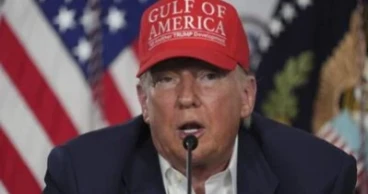
President Donald Trump’s blockade of sanctioned Venezuelan oil tankers off the country’s coast is raising new concerns about the legality of U.S. military operations in Latin America and fears that the United States could be edging closer to war.
The administration insists the measure targets only sanctioned vessels and not civilians, but legal experts warn that such actions without congressional approval may breach international law and risk provoking a Venezuelan military response. “The concern is that we are bootstrapping our way into armed conflict,” said Claire Finkelstein, a national security law professor at the University of Pennsylvania.
Trump’s campaign against Venezuela is part of a broader effort to pressure President Nicolás Maduro, accused of narcoterrorism and using oil revenue to fund drug trafficking. U.S. forces have attacked 28 suspected drug-smuggling boats since September, killing over 100 people, and the president has threatened land strikes.
Venezuelan authorities condemned the blockade. Maduro’s son, Nicolás Maduro Guerra, called for dialogue while warning of the threat posed by the world’s most powerful military.
The Pentagon prefers to describe the operation as a “quarantine” rather than a blockade, noting that an international law blockade constitutes an act of war. Critics argue the selective targeting of oil shipments resembles a wartime maneuver without formal authorization, leaving questions about the legal and strategic implications of Trump’s campaign.
Source: AP
5 months ago