USA
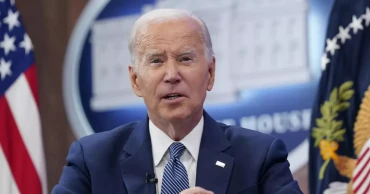
Joe Biden signs with talent agency to shape post-presidency career
Former US President Joe Biden has signed with a Los Angeles talent agency, marking a move in shaping his career after the presidency.
This signing reconnects him with Creative Artists Agency (CAA), which represented him from 2017 to 2020, reports BBC.
Biden’s semiconductor law to boost US chip output at high cost, says report
"President Biden is one of America's most respected and influential voices in both national and global matters," said Richard Lovett, co-chair of CAA, in a statement.
He added, "His lifelong dedication to public service embodies unity, optimism, dignity, and possibility. We are deeply honored to partner with him once again."
The agency also has connections with former President Barack Obama and former First Lady Michelle Obama, it said.
At 82, Biden has been relatively quiet about his future plans following his five-decade public service career. However, when leaving the White House in January, he reassured supporters, saying, "We're leaving office, we're not leaving the fight."
Biden declines to enforce TikTok ban, leaves decision to Trump
Only two weeks after departing office, there is no clear sign of a new book or project on the horizon.
During his previous tenure with the agency, he released his memoir, “Promise Me, Dad: A Year of Hope, Hardship, and Purpose” in 2017, added the report.
The memoir, which detailed the loss of his eldest son, Beau, became a New York Times number one bestseller and spurred his American Promise book tour, widely viewed as a precursor to his 2020 presidential campaign.
While maintaining a relatively low profile, the former president has been seen around his Delaware home and continues to keep in touch with former aides and associates. He also recently became a great-grandfather with the birth of his granddaughter Naomi's son, the report also said.
Although CAA is typically associated with major movie stars and A-list celebrities, the agency also works with politicians and social advocacy groups.
The Obamas have partnered with CAA through their production company, Higher Ground, which has produced award-winning films and television shows, including the Oscar-winning documentary “American Factory”.
1 year ago

El Salvador offers to take in US deportees, Rubio says
US Secretary of State Marco Rubio announced late on Monday that El Salvador’s president has agreed to accept deportees from the U.S., regardless of nationality, including violent American criminals currently incarcerated in the U.S, reports AP.
President Nayib Bukele “has agreed to the most unprecedented, extraordinary migratory agreement anywhere in the world,” Rubio stated after several hours of discussions with Bukele at his lakeside residence outside San Salvador.
New US Secretary of State Rubio meets Indian External Affairs Minister Jaishankar
“We can send them, and he will place them in his prisons,” Rubio said of migrants of all nationalities detained in the U.S. “He has also offered to do the same for dangerous criminals serving sentences in the U.S., even if they are U.S. citizens or legal residents.”
Rubio was in El Salvador to urge its government to take further action in response to President Donald Trump's demands for tougher immigration measures.
Bukele confirmed the offer on X, saying that El Salvador had “offered the United States of America the opportunity to outsource part of its prison system.” He clarified that the country would only accept “convicted criminals” and would charge a fee that would be “relatively low for the U.S. but significant for us, making our entire prison system sustainable.”
Elon Musk, collaborating with Trump on government reform, praised the idea on X: “Great idea!!”
After Rubio’s comments, a U.S. official mentioned that the Trump administration currently has no plans to deport American citizens, though the offer from Bukele was seen as significant. Deporting U.S. citizens would face considerable legal obstacles.
Marco Rubio confirmed as US secretary of state
The U.S. State Department describes El Salvador’s overcrowded prisons as “harsh and dangerous,” noting that many facilities suffer from inadequate sanitation, water, ventilation, temperature control, and lighting.
Rubio had just witnessed a U.S.-funded deportation flight carrying 43 migrants from Panama to Colombia. This followed a stern warning from Rubio to Panama that unless it took immediate action to remove Chinese influence at the Panama Canal, the U.S. would intervene.
Migration was the primary focus during Rubio's five-nation Central American tour, which also includes Costa Rica, Guatemala, and the Dominican Republic. His visit coincides with significant political turmoil in Washington over the future of the U.S. government’s main foreign development agency.
The Trump administration has focused on stopping people from migrating to the U.S., working with regional countries to enhance immigration enforcement and accept deportees from the U.S.
The arrangement Rubio described, in which El Salvador accepts foreign nationals detained in the U.S. for immigration violations, is a “safe third country” agreement. Officials suggested this could be an option for Venezuelan gang members convicted of crimes in the U.S., but Rubio stated that Bukele's offer applied to detainees of any nationality.
Rubio further explained that Bukele had also proposed accepting and incarcerating U.S. citizens or legal residents convicted of violent crimes.
Human rights advocates have expressed concern that El Salvador lacks a consistent policy for asylum seekers and refugees and warned that the agreement might extend beyond violent criminals.
Manuel Flores, secretary-general of the leftist opposition party, the Farabundo Martí National Liberation Front, criticized the “safe third country” plan, calling it a signal that the region is merely Washington’s “backyard to dump the garbage.”
After meeting with Bukele, Rubio signed a memorandum with his Salvadoran counterpart to advance U.S.-El Salvador civil nuclear cooperation, potentially leading to a more formal agreement on nuclear power and medicine.
The deportation flight Rubio witnessed was carrying migrants detained by Panamanian authorities after illegally crossing the Darien Gap from Colombia. The State Department views such deportations as a deterrent, with the U.S. having provided Panama nearly $2.7 million for flights and tickets since the agreement to fund them.
Rubio was present as the flight departed, which was taking 32 men and 11 women back to Colombia. It’s uncommon for a Secretary of State to witness such law enforcement operations, especially in front of cameras.
“Mass migration is one of the great tragedies of the modern era,” Rubio said afterward. “It impacts countries worldwide. We recognize that many of those who seek mass migration are often victims themselves, and it harms everyone.”
This deportation flight coincided with Trump’s threats to penalize countries that do not accept deportation flights from the U.S. He briefly imposed sanctions on Colombia last week after it initially refused two flights, while Panama has been more cooperative, accepting flights of third-country deportees.
Rubio's visit occurs during a freeze in U.S. foreign assistance and stop-work orders halting U.S.-funded programs targeting illegal migration and crime in Central America. The State Department confirmed that Rubio had approved waivers for certain critical programs in the countries he’s visiting, though details were not immediately available.
While Rubio was abroad, U.S. Agency for International Development (USAID) staff were instructed to stay away from the agency’s Washington headquarters following Musk’s announcement that Trump had agreed to shut it down.
Thousands of USAID employees have been laid off, and many programs have been discontinued. Rubio told reporters in San Salvador that he was now the acting administrator of USAID but had delegated day-to-day operations.
This restructuring means that USAID is no longer an independent agency and will now be run by the State Department, a move likely to be challenged in court.
Rubio noted that although some USAID programs would continue, the reorganization was necessary because the agency had become unaccountable to both the executive branch and Congress.
Regarding his recent discussion with Panama’s president on the Panama Canal, Rubio expressed hope that the Panamanians would heed his and Trump’s warnings about China. The issue remains sensitive in Panama, which agreed to withdraw from a Chinese infrastructure initiative but has resisted calls for the U.S. to regain control of the canal.
Florida s Val Demings launches bid to oust Rubio from Senate
“I understand that it’s a delicate issue in Panama,” Rubio told reporters in San Salvador. “We don’t want to have a hostile and negative relationship with Panama. I don’t think we do. We had a frank and respectful conversation, and I hope it will yield results.”
Back in Washington, Trump was more forceful, stating: "China’s involvement with the Panama Canal won’t last for long, and that’s how it must be."
“We either want it back, or we’ll take very strong actions, or we’ll take it back,” Trump declared. “And China will be dealt with.”
1 year ago

Protesters against deportations block major Los Angeles freeway
Thousands of people in Southern California protested against the mass deportations planned by President Donald Trump on Sunday, including in downtown Los Angeles, where demonstrators blocked a major freeway for several hours, reports AP>
The protesters assembled in the morning at LA's historic Olvera Street, which has ties to Spanish and Mexican heritage, before marching to City Hall. They called for immigration reform and carried banners with messages such as "Nobody is illegal.
"Trump's mass deportation plan could overwhelm U.S. Immigrant Detention System
By the afternoon, the marchers had blocked all lanes of U.S. 101, causing significant traffic congestion in both directions and on surface streets. The protesters sat down in the lanes, while a line of California Highway Patrol officers observed. It took over five hours for the freeway to fully reopen, according to CHP Lt. Matt Gutierrez.
Both the CHP and the Los Angeles Police Department reported no arrests.
Elsewhere, hundreds of people gathered in Riverside, where drivers honked and cheered in support of the demonstrators waving flags at an intersection, as reported by the Southern California News Group.
In San Diego, hundreds rallied near the city's convention centre on Sunday.
Meanwhile, in Texas, demonstrators held protests in downtown Dallas against recent arrests by U.S. Immigration and Customs Enforcement. Dallas police estimated around 1,600 people attended the two rallies.
As Trump returns to the White House, families brace for mass deportations
Marchers carried both Mexican and American flags, with speakers voicing their anger at Trump's rhetoric and his administration's actions to increase deportations. One sign read, “Immigrants Make America Great.”
1 year ago
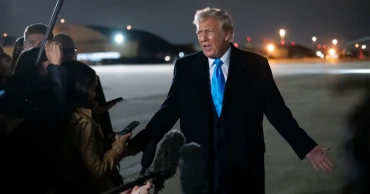
Americans could feel 'some pain' from trade war: Trump
President Donald Trump said Sunday that Americans could feel “some pain” from the emerging trade war triggered by his tariffs against Canada, Mexico and China, and claimed that Canada would “cease to exist” without its trade surplus with the United States.
The trade penalties that Trump signed Saturday at his Florida resort caused a mix of panic, anger and uncertainty, and threatened to rupture a decades-old partnership on trade in North America while further straining relations with China.
Trump on Sunday night returned from Florida and threatened to impose steeper tariffs elsewhere, telling reporters that the import taxes will “definitely happen” with the European Union and possibly with the United Kingdom as well.
He brushed aside retaliatory measures from Canada, saying, “If they want to play the game, I don’t mind. We can play the game all they want." Trump said he plans to speak with his Canadian and Mexican counterparts on Monday.
By following through on his tariffs campaign pledge, Trump may also have simultaneously broken his promise to voters in last year's election that his administration could quickly reduce inflation. That means the same frustration he is facing from other nations might also spread domestically to consumers and businesses.
“WILL THERE BE SOME PAIN? YES, MAYBE (AND MAYBE NOT!),” Trump said in a social media post. “BUT WE WILL MAKE AMERICA GREAT AGAIN, AND IT WILL ALL BE WORTH THE PRICE THAT MUST BE PAID.”
His administration has not said what specific improvements would need to be seen in stopping illegal immigration and the smuggling of fentanyl to merit the removal of the tariffs that Trump imposed under the legal justification of an economic emergency. But Trump, speaking to reporters after Air Force One, landed said that the trade imbalances with Canada and Mexico would also need to be erased as a condition for lifting the tariffs.
The president also tried to clarify his post about the possible inflation, saying on Sunday: “We may have in the short term, a little pain, and people understand that. But long term, the United States has been ripped off by virtually every country in the world.”
Canada imposes retaliatory tariffs on US, sparking trade war
The tariffs are set to launch Tuesday and triggered confusion as Canada's U.S. ambassador, Kirsten Hillman, told ABC News that her country was perplexed by the move because “we view ourselves as your neighbor, your closest friend, your ally.”
In his Truth Social post, Trump took particular aim at Canada, which responded with retaliatory measures. Trump is placing a 25% tariff on Canadian goods, with a 10% tax on oil, natural gas and electricity. Canada is imposing 25% tariffs, more than $155 billion Canadian (US$105 billion), on U.S. products, including alcohol and fruit.
Despite Trump’s assertions that the U.S. does not need Canada, one-quarter of the oil that America consumes per day is from its ally to the north. He reiterated his false claim that America subsidizes Canada by running a trade imbalance, a reflection in part of Canada exporting energy to the U.S.
Trump contended that without that surplus, "Canada ceases to exist as a viable Country. Harsh but true! Therefore, Canada should become our Cherished 51st State. Much lower taxes, and far better military protection for the people of Canada — AND NO TARIFFS!”
Prime Minister Justin Trudeau is encouraging Canadians to buy more Canadian goods, and says Trump's moves will only cause pain across North America. More than 75% of Canada's exports go to the U.S. Canada will first target alcohol, cosmetics and paper products; a second round later will include passenger vehicles, trucks, steel and aluminum products, certain fruits and vegetables, beef, pork, dairy products and more.
Canada is the largest export market for 36 states and Mexico is the largest trading partner of the U.S.
Mexico's president, Claudia Sheinbaum, also announced new tariffs and suggested the U.S. should do more within its own borders to address drug addiction. She and Trudeau spoke after Trump's announcement and agreed “to enhance the strong bilateral relations” between Canada and Mexico, according to the prime minister's office.
The Chinese government said it would take steps to defend its economic interests and intends to file a lawsuit with the World Trade Organization.
For Trump, the open question is whether inflation could be a political pressure point that would cause him to back down. As a candidate, Trump repeatedly hammered Democrats over the inflation under President Joe Biden that resulted from supply chain issues during the coronavirus pandemic, the Biden administration’s own spending to spur the recovery and Russia's invasion of Ukraine.
Trump said his previous four years as president had low inflation, so the public should expect the same if he came back to the White House. But he also said specifically that higher inflation would stagger the U.S. as a nation, a position from which he now appears to be retreating with the promise of even more tariffs to come.
Trump’s 2nd week in office marked by chaos, political shifts, controversial orders
The U.S. president did not offer details Sunday about when he would impose tariffs elsewhere, but he said they would be coming “pretty soon” for the EU, which is also composed of U.S. allies.
Larry Summers, treasury secretary in the Clinton administration, said the tariffs were a "self-inflicted wound to the American economy."
He told CNN's “Inside Politics” that “on the playground or in international relations, bullying is not an enduringly winning strategy. And that’s what this is.” And the ultimate winner, Summers suggested, would be Chinese leader Xi Jinping because “we’ve moved to drive some of our closest allies into his arms” and “we're legitimating everything he’s doing by violating all the international norms that we set up.”
Outside analyses make clear that Trump's tariffs would hurt the voters that he intended to help, meaning that he might ultimately need to find a resolution.
An analysis by the Budget Lab at Yale shows that if the tariffs were to continue, an average U.S. household would lose roughly $1,245 in income this year, in what would be the overall equivalent of a more than $1.4 trillion tax increase over the next 10 years.
Trump imposes tariffs on Canada, Mexico and China, spurring prospect of inflation and trade conflict
Goldman Sachs, in a Sunday analyst note, stressed that the tariffs go into effect on Tuesday, which means they're likely to proceed “though a last-minute compromise cannot be completely ruled out.”
The investment bank concluded that because of the possible economic damage and possible conditions for removal “we think it is more likely that the tariffs will be temporary but the outlook is unclear.”
1 year ago
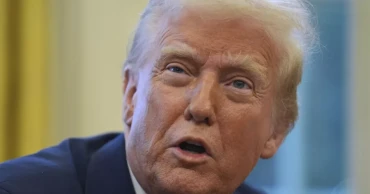
Trump imposes tariffs on Canada, Mexico and China, spurring prospect of inflation and trade conflict
President Donald Trump on Saturday signed an order to impose stiff tariffs on imports from Mexico, Canada and China — fulfilling one of his post-campaign commitments to voters that threatened to spark higher inflation and disrupt businesses across North America as the countries vowed harsh measures in response.
Mexico's president immediately ordered retaliatory tariffs and Canada's prime minister said it was “prepared” to quickly respond. Trump’s order includes a mechanism to escalate the rates if the countries retaliate against the U.S.
The decision throws the global economy and Trump's own political mandate to combat inflation into possible turmoil, though the Republican president posted on social media that it was necessary “to protect Americans.”
The tariffs risk an economic standoff with America's two largest trading partners in Mexico and Canada, upending a decades-old trade relationship with the possibility of harsh reprisals by those two nations. The tariffs also if sustained could cause inflation to significantly worsen, possibly eroding voters' trust that Trump could as promised lower the prices of groceries, gasoline, housing, autos and other goods.
Trump declared an economic emergency in order to place duties of 10% on all imports from China and 25% on imports from Mexico and Canada. But energy imported from Canada, including oil, natural gas and electricity, would be taxed at a 10% rate.
The tariffs would go into effect on Tuesday, setting a showdown in North America that could potentially sabotage economic growth. A new analysis by the Budget Lab at Yale laid out the possible damage to the U.S. economy, saying the average U.S. household would lose the equivalent of $1,170 in income from the taxes. Economic growth would slow and inflation would worsen — and the situation could be worse if Canada, Mexico and China retaliate.
Responding on X, Mexican President Claudia Sheinbaum said she had instructed her economy secretary to implement a response that includes retaliatory tariffs and other measures in defense of Mexico’s interests.
"We categorically reject the White House’s slander that the Mexican government has alliances with criminal organizations, as well as any intention of meddling in our territory,” Sheinbaum wrote.
“If the United States government and its agencies wanted to address the serious fentanyl consumption in their country, they could fight the sale of drugs on the streets of their major cities, which they don’t do and the laundering of money that this illegal activity generates that has done so much harm to its population.”
Canadian Prime Minister Justin Trudeau on Saturday said that Canada is ready to address the tariffs the U.S. government announced. On a message on his X account, he was to talk to Sheinbaum about the U.S. administration decision, and later he will speak to Canadians.
“We did not want this, but Canada is prepared,” he said.
Trump says tariffs on Canada and Mexico coming Saturday
Meanwhile, the Premier of Canadian province of British Columbia, David Eby, called on residents to stop buying liquor from U.S. “red” states and remove American alcohol brands from government store shelves as a response to the tariffs.
In a televised message, Eby deemed the Trump’s administration decision as “a declaration of economic war against a trusted ally and friend” and that he will stand up for his citizens and all Canadians in general.
“Effective today, I have directed B.C. liquor sales to immediately stop buying American liquor from red states,” he said. “Liquor store employees will be removing the most popular of these brands from government store shelves.”
A senior U.S. administration official, insisting on anonymity to brief reporters, said the lower rate on energy reflected a desire to minimize any disruptive increases on the price of gasoline or utilities. That's a sign White House officials understand the gamble they're taking on inflation. Price spikes under former President Joe Biden led to voter frustration that helped to return Trump to the White House last year.
The order signed by Trump contained no mechanism for granting exceptions, the official said, a possible blow to homebuilders who rely on Canadian lumber as well as farmers, automakers and other industries.
The Trump administration put the tariffs in place to force the three countries to stop the spread and manufacturing of fentanyl, in addition to pressuring Canada and Mexico to limit any illegal immigration into the United States.
The official did not provide specific benchmarks that could be met to lift the new tariffs, saying only that the best measure would be fewer Americans dying from fentanyl addiction.
The order would also allow for tariffs on Canadian imports of less than $800. Imports below that sum are currently able to cross into the United States without customs and duties.
Trump tells Davos leaders to invest in US to avoid tariffs
“It doesn’t make much economic sense,’’ said William Reinsch, senior adviser at the Center for Strategic and International Studies and a former U.S. trade official. “Historically, most of our tariffs on raw materials have been low because we want to get cheaper materials so our manufacturers will be competitive ... Now, what’s he talking about? He’s talking about tariffs on raw materials. I don’t get the economics of it.’’
The Republican president is making a major political bet that his actions will not significantly worsen inflation, cause financial aftershocks that could destabilize the worldwide economy or provoke a voter backlash. AP VoteCast, an extensive survey of the electorate in last year's election, found that the U.S. was split on support for tariffs.
With the tariffs, Trump is honoring promises that are at the core of his economic and national security philosophy. But the announcement showed his seriousness around the issue as some Trump allies had played down the threat of higher import taxes as mere negotiating tactics.
The president is preparing more import taxes in a sign that tariffs will be an ongoing part of his second term. On Friday, he mentioned imported computer chips, steel, oil and natural gas, as well as against copper, pharmaceutical drugs and imports from the European Union — moves that could essentially pit the U.S. against much of the global economy.
It is unclear how the tariffs could affect the business investments that Trump said would happen because of his plans to cut corporate tax rates and remove regulations. Tariffs tend to raise prices for consumers and businesses by making it more expensive to bring in foreign goods.
Trump says 25% tariffs on Canada and Mexico coming on Feb. 1 as he signs several orders on economy
Many voters turned to Trump in the November election on the belief that he could better handle the inflation that spiked under Biden. But inflation expectations are creeping upward in the University of Michigan's index of consumer sentiment as respondents expect prices to rise by 3.3%. That would be higher than the actual 2.9% annual inflation rate in December's consumer price index.
Trump has said that the government should raise more of its revenues from tariffs, as it did before the income tax became part of the Constitution in 1913. He claims, despite economic evidence to the contrary, that the U.S. was at its wealthiest in the 1890s under President William McKinley.
“We were the richest country in the world,” Trump said Friday. “We were a tariff country.”
Trudeau has told Canadians that they could be facing difficult times ahead, but that Ottawa was prepared to respond with retaliatory tariffs if needed and that the U.S. penalties would be self-sabotaging.
Trudeau said Canada is addressing Trump’s calls on border security by implementing a CDN$1.3 billion (US$900 million) border plan that includes helicopters, new canine teams and imaging tools.
Trump still has to get a budget, tax cuts and an increase to the government’s legal borrowing authority through Congress. The outcome of his tariff plans could strengthen his hand or weaken it.
Democrats were quick to say that any inflation going forward was the result of Trump, who is about to start his third week back as president.
Trump takes executive actions on energy, inflation, and tariffs on first day
“You’re worried about grocery prices. Don’s raising prices with his tariffs," Senate Democratic Leader Chuck Schumer of New York posted on X. "You’re worried about tomato prices. Wait till Trump’s Mexico tariffs raise your tomato prices. … You’re worried about car prices. Wait till Trump’s Canada tariffs raise your car prices,” he wrote in a series of posts.
1 year ago
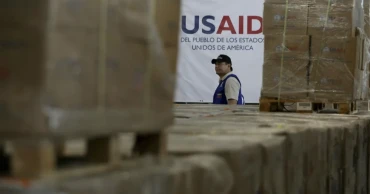
USAID website goes offline in Trump administration's 2-week-old freeze on foreign aid worldwide
The website of the U.S. Agency for International Development went offline without explanation Saturday as thousands of furloughs, layoffs and program shutdowns continued in President Donald Trump's freeze on U.S.-funded foreign aid and development worldwide.
Congressional Democrats battled the Trump administration increasingly openly, expressing concern that Trump may be headed toward ending USAID as an independent agency and absorbing it into the State Department. Democrats say Trump has no legal authority to eliminate a congressionally funded independent agency, and that the work of USAID is vital to national security.
Trump and congressional Republicans say much of foreign aid and development programs is wasteful. They single out programs they say advance liberal social agendas.
The fear of even tougher administration action against USAID comes two weeks into the administration's shutdown of billions of dollars of the United States' humanitarian, development and security assistance.
The U.S. is the world's largest donor of humanitarian aid by far. It spends less than 1% of its budget on foreign assistance, a smaller share overall than some other countries.
Administration officials had no comment Saturday when asked about concerns expressed by lawmakers and others that Trump may be planning to end USAID's separate status..
President John F. Kennedy created the organization at the height of the Cold War to counter Soviet influence. USAID today is at the center of U.S. challenges to the growing influence of China, which has a successful “Belt and Road” foreign aid program of its own.
Congress passed the Foreign Assistance Act in 1961, and Kennedy signed that law and an executive order establishing USAID as an independent agency.
USAID staffers spent Friday and Saturday in chat groups monitoring its fate, giving updates on whether the agency's flag and signs were still up outside agency headquarters in Washington. As of late Saturday afternoon, they were.
USAID to provide $ 15 mln to boost climate resilience in Bangladesh
In a post on X, Democratic Sen. Chris Murphy said presidents cannot eliminate congressionally appropriated federal agencies by executive order, and said Trump was poised to “double down on a constitutional crisis.”
“That’s what a despot — who wants to steal the taxpayers’ money to enrich his billionaire cabal — does,” Murphy said.
Billionaire Elon Musk, advising Trump in a campaign to whittle down the federal government in the name of efficiency, endorsed posts on his X site calling for dissolving USAID.
“Live by executive order, die by executive order,” Musk tweeted in reference to USAID.
Trump placed an unprecedented 90-day freeze on foreign assistance on his first day in office Jan. 20. The order, a tougher-than-expected interpretation of Trump’s freeze order on Jan. 24 drafted by Peter Marocco, a returning political appointee from Trump’s first term, shut down thousands of programs around the world and forced the furloughs or layoffs of many thousands.
Secretary of State Marco Rubio has since moved to keep more kinds of strictly life-saving emergency programs going during the freeze. Aid groups say confusion surrounding what programs are still allowed to operate is contributing to paralysis in global aid organizations.
Rubio, in his first public comments on the matter, said Thursday that USAID’s programs were being reviewed to eliminate any that are not in the U.S. national interest, but he said nothing about eliminating it as an agency.
The shutdown of U.S.-funded programs during the 90-day review meant the U.S. was “getting a lot more cooperation” from recipients of humanitarian, development and security assistance, Rubio said.
Republicans and Democrats long have fought over the agency, arguing whether humanitarian and development aid protects the U.S. by helping stabilize partner countries and economies or is a waste of money. Republicans typically push to give State more control of USAID’s policy and funds. Democrats typically build USAID autonomy and authority.
USAID highlights disaster preparedness, risk reduction efforts in Bangladesh
A version of that battle played out in Trump’s first term, when Trump tried to cut the budget for foreign operations by a third.
When Congress refused, the Trump administration used freezes and other tactics to cut the flow of funds already appropriated by Congress for foreign programs. The General Accounting Office later ruled that it violated a law known as the Impoundment Control Act.
1 year ago

Robert Santos resigns as US Census Bureau director
Robert Santos, who emphasized inclusivity and outreach to overlooked communities, has resigned as director of the U.S. Census Bureau, midway through his five-year term and in the midst of planning for the 2030 census, which will determine political power and federal funding nationwide for another decade to come.
Santos, who was appointed by former Democratic President Joe Biden, said in a letter Thursday evening that he had made the decision “after deep reflection.” Santos was sworn in as the bureau's 26th director, and its first Hispanic leader, in 2022.
His departure clears the way for Republican President Donald Trump to reshape the agency's leadership as his allies in Congress and among GOP state attorneys general renew efforts to exclude people in the U.S. illegally from the numbers used to divvy up congressional seats and Electoral College votes among states.
Trump’s foreign aid cuts send shockwaves through Eastern Europe
A Republican redistricting expert wrote that using citizen voting-age population instead of the total population for the purpose of redrawing congressional and legislative districts could be advantageous to Republicans and non-Hispanic whites. The census numbers also guide the distribution of $2.8 trillion in federal dollars to the states for roads, health care and other programs.
Civil rights groups on Friday urged Trump to appoint an impartial leader to head the nation's largest statistical agency.
“The integrity of the U.S. Census Bureau must remain above partisan influence, ensuring that data collection and reporting continue to serve the American people with accuracy, transparency, and fairness,” The Leadership Conference on Civil and Human Rights said in a statement.
During his term, Santos emphasized restoring trust to the Census Bureau following Trump's first term. Many census-watchers felt Trump's administration tried to politicize the 2020 census by installing large numbers of political appointees at the agency and through failed efforts to keep people in the U.S. illegally from being counted for apportionment.
Five years on, Brexit’s full impact still unfolding
The Fourteenth Amendment says that “the whole number of persons in each state” should be counted for the numbers used for apportionment.
Before joining the Census Bureau, Santos was a vice president and chief methodologist at the Urban Institute and had spent four decades in survey research, statistical design and analysis and executive-level management. The Texas native said in his letter that he planned to spend time with his family in retirement.
1 year ago

South Carolina set for 3rd execution since September
South Carolina is set to carry out its third execution since September as the state continues addressing a backlog of inmates who had exhausted their appeals while officials struggled to procure lethal injection drugs, reports AP.
Marion Bowman Jr.’s execution is planned for 6 p.m. on Friday at a prison in Columbia. The 44-year-old was found guilty of murder for the shooting death of a friend, whose charred remains were discovered in a car trunk.
Trump says tariffs on Canada and Mexico coming Saturday
Since his arrest, Bowman has insisted on his innocence. His attorneys argue that his conviction relied on testimony from multiple friends and relatives who received plea deals or had charges dismissed in exchange for their cooperation.
Bowman, who has spent more than half his life on death row, had the option of a plea deal that would have resulted in a life sentence. However, he chose to stand trial, maintaining that he was not guilty.
Friday’s execution follows the state’s decision to lift a 13-year halt, partly due to officials’ inability to acquire lethal injection drugs. After the General Assembly enacted a shield law, prison authorities secured a compounding pharmacy willing to produce pentobarbital under the condition that its identity remained confidential.
Bowman is not seeking clemency from Governor Henry McMaster. His attorney, Lindsey Vann, stated that Bowman did not want to spend further decades imprisoned for a crime he maintains he did not commit.
“After over twenty years of struggling against a flawed system that has failed him at every step, Marion’s choice is a strong rejection of an unfair process that has already taken so much of his life,” Vann said in a statement on Thursday.
No South Carolina governor has ever granted clemency to reduce a death sentence to life without parole in the 45 executions carried out since capital punishment resumed in 1976.
Bowman was convicted in 2002 in Dorchester County for the 2001 murder of 21-year-old Kandee Martin. Several friends and relatives testified against him as part of plea bargains.
One witness claimed Bowman was angry because Martin owed him money, while another said he suspected she was wearing a recording device to have him arrested.
Bowman admitted to selling drugs to Martin, whom he had known for years, and said she sometimes paid with sex. However, he denied killing her.
Bowman, like the two previously executed inmates since the moratorium ended, is Black. His lawyers argued in a final appeal that his trial attorney showed excessive sympathy toward his white victim, but the South Carolina Supreme Court dismissed the claim as baseless.
Another issue raised by Bowman’s legal team concerns his weight. An anaesthesiologist expressed concern that South Carolina’s undisclosed lethal injection procedures might not account for Bowman’s listed weight of 389 pounds (176 kilograms) in prison records. In cases of obesity, establishing an IV line correctly and determining the necessary drug dosage can be challenging.
According to autopsy reports, prison officials administered two doses of pentobarbital, spaced 11 minutes apart, during the last execution.
Before the 13-year suspension, South Carolina was among the most active states in carrying out executions. The shield law passed last year allowed the state to keep its pentobarbital supplier confidential, enabling prison authorities to acquire the drug.
The state Supreme Court approved the resumption of executions in July. Freddie Owens was put to death via lethal injection on September 20, followed by Richard Moore on November 1.
Executions will now occur every five weeks until the remaining three inmates who have exhausted their appeals are executed.
Since capital punishment was reinstated in the U.S. in 1976, South Carolina has executed 45 individuals. In the early 2000s, the state averaged three executions per year. Nine other states have carried out more executions.
Midair collision kills 67 people in the deadliest US air disaster in almost a quarter century
However, South Carolina’s death row population has significantly declined since the unintended pause. In early 2011, the state housed 63 condemned inmates. That number has since dropped to 30, with around 20 prisoners receiving different sentences following successful appeals, while others have died of natural causes.
1 year ago

Trump says tariffs on Canada and Mexico coming Saturday
President Donald Trump said his 25% tariffs on Canada and Mexico are coming on Saturday, but he’s still considering whether to include oil from those countries as part of his import taxes.
“We may or may not,” Trump told reporters Thursday in the Oval Office about tariffing oil from Canada and Mexico. “We’re going to make that determination probably tonight.”
Trump said his decision will be based on whether the price of oil charged by the two trading partners is fair, although the basis of his threatened tariffs pertains to stopping illegal immigration and the smuggling of chemicals used for fentanyl.
The risk of tariffs on Canadian and Mexican oil could undermine Trump's repeated pledge to lower overall inflation by reducing energy costs. Costs associated with tariffs could be passed along to consumers in the form of higher gasoline prices — an issue that Trump placed at the center of his Republican presidential campaign as he vowed to halve energy costs within one year.
Trump tells Davos leaders to invest in US to avoid tariffs
“One year from Jan. 20, we will have your energy prices cut in half all over the country,” Trump said at a 2024 town hall in Pennsylvania.
AP VoteCast, an extensive survey of the electorate, found that 80% of voters identified gas prices as a concern. Trump won nearly 6 in 10 voters who said they worried about prices at the pump.
The United States imported almost 4.6 million barrels of oil daily from Canada in October and 563,000 barrels from Mexico, according to the Energy Information Administration. U.S. daily production during that month averaged nearly 13.5 million barrels a day.
Matthew Holmes, executive vice president and chief of public policy at the Canadian Chamber of Commerce, said Trump's tariffs would “tax America first” in the form of higher costs.
“This is a lose-lose,” Holmes said. "We will keep working with partners to show President Trump and Americans that this doesn’t make life any more affordable. It makes life more expensive and sends our integrated businesses scrambling.”
But Trump showed no concerns that import taxes on the United States' trading partners would have a negative impact on the U.S. economy, despite the risk shown in many economic analyses of higher prices.
“We don’t need the products that they have," Trump said. "We have all the oil you need. We have all the trees you need, meaning the lumber.”
The president also said that China would pay tariffs for its exporting of the chemicals used to make fentanyl. He has previously stated a 10% tariff that would be on top of other import taxes charged on products from China.
Trump says 25% tariffs on Canada and Mexico coming on Feb. 1 as he signs several orders on economy
Oil prices were trading at roughly $73 a barrel on Thursday afternoon. Prices spiked in June 2022 under President Joe Biden to more than $120 per barrel, a period that overlapped with overall inflation hitting a four-decade high that fueled a broader sense of public dissatisfaction with the Democratic administration.
Gas prices are averaging $3.12 a gallon across the United States, roughly the same price as a year ago, according to AAA.
Later on Thursday, Trump threatened more tariffs against countries looking at alternatives to the U.S. dollar as a means of global exchange.
The president previously made the same threat in November against the so-called BRICS group, which includes Brazil, Russia, India, China, South Africa, Egypt, Ethiopia, Iran and the United Arab Emirates.
Russian President Vladimir Putin has suggested that sanctions against his country and others mean that nations need to develop a substitute for the dollar.
“We are going to require a commitment from these seemingly hostile Countries that they will neither create a new BRICS Currency, nor back any other Currency to replace the mighty U.S. Dollar or, they will face 100% Tariffs, and should expect to say goodbye to selling into the wonderful U.S. Economy,” Trump posted on social media.
1 year ago

Midair collision kills 67 people in the deadliest US air disaster in almost a quarter century
A midair collision between an Army helicopter and a jetliner killed all 67 people aboard the two aircraft, officials said Thursday, as they scrutinized the actions of the military pilot in the country's deadliest aviation disaster in almost a quarter century.
At least 28 bodies were pulled from the icy waters of the Potomac River after the helicopter apparently flew into the path of the American Airlines regional jet late Wednesday while it was landing at Ronald Reagan National Airport, just across the river from Washington, officials said. The plane carried 60 passengers and four crew members, and three soldiers were aboard the helicopter.
President Donald Trump told a White House news conference that no one survived.
“We are now at the point where we are switching from a rescue operation to a recovery operation,” said John Donnelly, the fire chief in the nation’s capital.
The crash occurred before 9 p.m. in some of the most tightly controlled and monitored airspace in the world, just over 3 miles (about 4.8 kilometers) south of the White House and the Capitol.
Air crash investigations can take months, and federal investigators told reporters they would not speculate on the cause.
National Transportation Safety Board investigators recovered the cockpit voice recorder and the flight data recorder from the Bombardier CRJ700 airplane, agency spokesperson Peter Knudson said. They were at the agency's labs for evaluation.
The plane was found upside-down in three sections in waist-deep water, and first responders were searching miles of the Potomac, Donnelly said. The helicopter wreckage was also found. Images from the river showed boats around the partly submerged wing and the mangled wreckage of the plane’s fuselage.
American Airlines CEO Robert Isom said the plane was making a normal approach when “the military aircraft came into the path” of the jet.
One air traffic controller was responsible for coordinating helicopter traffic and arriving and departing planes when the collision happened, according to a report by the Federal Aviation Administration that was obtained by The Associated Press. Those duties are often divided between two people, but the airport typically combines the roles at 9:30 p.m, once traffic begins to slow down. On Wednesday the tower supervisor directed that they be combined earlier.
“The position configuration was not normal for the time of day and volume of traffic,” the report said. A person familiar with the matter, however, said the tower staffing that night was at a normal level.
Read: 18 bodies recovered from river after aircraft crash near Reagan Nat'l Airport in D.C.
The positions are regularly combined when controllers need to step away from the console for breaks, during shift changes or when air traffic is slow, the person said, speaking on the condition of anonymity to discuss internal procedures.
The Federal Aviation Administration has long struggled with a shortage of air traffic controllers.
Officials said flight conditions were clear as the jet arrived from Wichita, Kansas, carrying, among others, a group of elite young figure skaters, their parents and coaches, and four union steamfitters from the Washington area.
A top Army aviation official said the crew of the helicopter, a Black Hawk, was “very experienced” and familiar with the congested flying that occurs daily around the city.
“Both pilots had flown this specific route before, at night. This wasn’t something new to either one of them,” said Jonathan Koziol, chief of staff for Army aviation.
The helicopter's maximum allowed altitude at the time was 200 feet (about 60 meters), Koziol said. It was not immediately clear whether it exceeded that limit, but Defense Secretary Pete Hegseth said altitude seemed to be a factor in the collision.
Koziol said investigators need to analyze the flight data before making conclusions about altitude.
Trump opened the news conference with a moment of silence honoring the crash victims, calling it an “hour of anguish” for the country.
But he spent most of his time casting political blame, lashing out at former President Joe Biden's administration and diversity efforts at the Federal Aviation Administration, saying they had led to slipping standards — even as he acknowledged that the cause of the crash was unknown.
Without evidence, Trump blamed air traffic controllers, the helicopter pilots and Democratic policies at federal agencies. He claimed that the FAA was “actively recruiting workers who suffer severe intellectual disabilities, psychiatric problems and other mental and physical conditions under a diversity and inclusion hiring initiative.”
Inside Reagan National, the mood was somber Thursday as stranded passengers waited for flights to resume, sidestepping camera crews and staring out the windows at the Potomac, where recovery efforts were barely visible in the distance.
Read more: 3 US Marines killed, 20 injured in an aircraft crash in Australia during a training exercise
Aster Andemicael had been there since the previous evening with her older adult father, who was flying to Indiana to visit relatives. She spent much of the long night thinking about the victims and their families.
“I’ve been crying since yesterday,” Andemicael said, her voice cracking. “This is devastating.”
Flights resumed around midday.
The deadliest plane crash since November 2001
Wednesday's crash was the deadliest in the U.S. since Nov. 12, 2001, when an American Airlines flight slammed into a residential area of Belle Harbor, New York, just after takeoff from Kennedy Airport, killing all 260 people aboard.
The last major fatal crash involving a U.S. commercial airline occurred in 2009 near Buffalo, New York. Everyone aboard the Bombardier DHC-8 propeller plane was killed, along with one person on the ground, bringing the total death toll to 50.
Experts often highlight that plane travel is overwhelmingly safe, however. The National Safety Council estimates that Americans have a 1-in-93 chance of dying in a motor vehicle crash, while deaths on airplanes are too rare to calculate the odds. Figures from the Department of Transportation tell a similar story.
But the airspace around Reagan National can challenge even the most experienced pilots no matter how ideal the conditions. They must navigate hundreds of other commercial planes, military aircraft and restricted areas around sensitive sites.
Read more: Five killed in California Marine aircraft crash identified
Just over 24 hours before the fatal collision, a different regional jet had to go around for a second chance at landing at Reagan National after it was advised about a military helicopter nearby, according to flight tracking sites and control logs. It landed safely minutes later.
Tragedy stuns Wichita
The crash devastated the Kansas city, which prides itself on being in America's heartland. Wichita hosted the U.S. Figure Skating Championships this year for the first time, along with training camps for top young skaters.
The city has been a major hub for the aircraft industry since the early days of commercial flight, and it is home to the U.S. headquarters for Bombardier, which manufactured the jetliner. So many regional workers have jobs tied to the industry that the area's economy slumps when sales dip.
Several hundred people gathered in the city council chambers for a prayer vigil.
“We will get through this, but the only way we will get through this is together,” said the Rev. Pamela Hughes Mason of St. Paul AME Church.
Collision happened in tightly controlled airspace
Flight 5342 was inbound to Reagan National at an altitude of about 400 feet (122 meters) and a speed of about 140 mph (225 kph) when it rapidly lost altitude over the Potomac, according to data from its radio transponder. The Canadian-made Bombardier CRJ-700 twin-engine jet, manufactured in 2004, can be configured to carry up to 70 passengers.
A few minutes before the crash, air traffic controllers directed the jet to a shorter runway, and flight-tracking sites showed that it adjusted its approach.
Less than 30 seconds before the collision, an air traffic controller asked the helicopter if it had the arriving plane in sight.
A crewmember said the aircraft was in sight and requested “visual separation” — allowing it to fly closer than otherwise might be allowed if pilots did not see the plane. Controllers approved the request.
Seconds later, the two aircraft collided.
1 year ago