USA
Trump signs order likely leading to future transgender troop ban
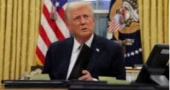
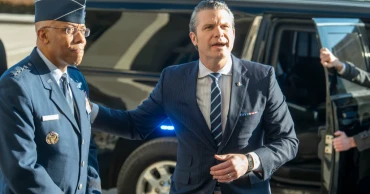
US President Donald Trump on Monday signed an executive order instructing Defense Secretary Pete Hegseth to overhaul the Pentagon’s policy regarding transgender service members, a move likely leading to a future ban on their military participation, reports AP.
The order also reinstates troops who had left or been discharged for refusing the COVID-19 vaccine, revises diversity programs, and initiates plans for a space-based missile defense system for the U.S.
Trump says Microsoft is one of the companies eyeing TikTok
The transgender ban, widely anticipated, primarily sets the stage for such a ban, directing Hegseth to determine the specific implementation. Trump justified the policy change by claiming that transgender service members' presence undermines the commitment to a disciplined and honorable lifestyle, which he believes is crucial for military readiness.
Trump had attempted a similar ban during his first term, but it was delayed by legal challenges and ultimately reversed by President Joe Biden. Lambda Legal and the Human Rights Campaign, who previously represented transgender troops, have vowed to challenge the order in court, echoing their success in blocking the earlier attempt.
On missile defense, Trump focused on enhancing U.S. space capabilities, directing the Pentagon to develop the technology to intercept missiles from space. The initiative builds on previous efforts, such as the establishment of U.S. Space Command and Space Force, and aims to counter growing threats from countries like China and Russia, which are advancing space-based weapons.
Colombia agrees to take deported migrants after Trump tariff showdown: White House
The executive order also addresses COVID-19 vaccination-related discharges, offering reinstatement to over 8,000 troops expelled for refusing the vaccine. Though the order may not drastically increase re-enlistment, it includes provisions for back pay and mandates that all returning service members meet military standards.
Trump’s order also seeks to eliminate diversity, equity, and inclusion (DEI) programs within the military, insisting that they promote divisive ideologies. The order prohibits any promotion of race- or sex-based preferences, gender ideology, or theories deemed un-American. Pentagon and Homeland Security officials are now tasked with reviewing and removing such programs, with a progress report due in six months.
In response, the Air Force clarified its earlier removal of historical content, such as the Tuskegee Airmen and WASPs, from training materials, stating that these were temporarily excluded for editing and would be reinstated in the curriculum.
1 year ago
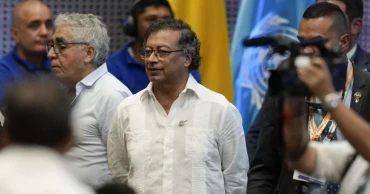
Colombia agrees to take deported migrants after Trump tariff showdown: White House
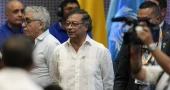
The White House claimed victory in a showdown with Colombia over accepting flights of deported migrants from the U.S. on Sunday, hours after President Donald Trump threatened steep tariffs on imports and other sanctions on the longtime U.S. partner.
Long close partners in anti-narcotics efforts, the U.S. and Colombia clashed Sunday over the deportation of migrants and imposed tariffs on each other’s goods in a show of what other countries could face if they intervene in the Trump administration’s crackdown on illegal immigration. The White House held up the episode as a warning to other nations who might seek to impede his plans.
Earlier, the U.S. president had ordered visa restrictions, 25% tariffs on all Colombian incoming goods, which would be raised to 50% in one week, and other retaliatory measures sparked by President Gustavo Petro's decision to reject two Colombia-bound U.S. military aircraft carrying migrants after Petro accused Trump of not treating immigrants with dignity during deportation. Petro also announced a retaliatory 25% increase in Colombian tariffs on U.S. goods.
Trump said the measures were necessary because Petro’s decision “jeopardized” national security in the U.S. by blocking the deportation flights.
“These measures are just the beginning,” Trump wrote on his social media platform Truth Social. “We will not allow the Colombian Government to violate its legal obligations with regard to the acceptance and return of the Criminals they forced into the United States.”
Press secretary Karoline Leavitt said in a late Sunday statement that the “Government of Colombia has agreed to all of President Trump’s terms, including the unrestricted acceptance of all illegal aliens from Colombia returned from the United States, including on U.S. military aircraft, without limitation or delay.”
Leavitt said the tariff orders will be “held in reserve, and not signed." But Leavitt said Trump would maintain visa restrictions on Colombian officials and enhanced customs inspections of goods from the country, “until the first planeload of Colombian deportees is successfully returned.”
The Colombian government late Sunday said it considered as “overcome” the episode with the Trump administration and Petro reposted the statement from the White House on X.
“We have overcome the impasse with the United States government,” said Colombian Foreign Minister Luis Gilberto Murillo. “We will continue to receive Colombians who return as deportees, guaranteeing them decent conditions as citizens subject to rights.”
Murillo added that the South American country’s presidential aircraft is available to facilitate the return of migrants who were to arrive hours earlier on the U.S. military airplanes.
Earlier Sunday, U.S. Secretary of State Marco Rubio announced he was authorizing the visa restrictions on Colombian government officials and their families “who were responsible for the interference of U.S. repatriation flight operations." They were being imposed on top of the State Department's move to suspend the processing of visas at the U.S. Embassy in Colombia’s capital, Bogota.
Read: Mexico relocates migrants far from US border
Petro had said earlier that his government would not accept flights carrying migrants deported from the U.S. until the Trump administration creates a protocol that treats them with “dignity.” Petro made the announcement in two X posts, one of which included a news video of migrants reportedly deported to Brazil walking on a tarmac with restraints on their hands and feet.
“A migrant is not a criminal and must be treated with the dignity that a human being deserves,” Petro said. “That is why I returned the U.S. military planes that were carrying Colombian migrants... In civilian planes, without being treated like criminals, we will receive our fellow citizens."
After Trump's earlier tariff threat, Petro said in a post on X that he had ordered the “foreign trade minister to raise import tariffs from the U.S. by 25%.”
Colombia has traditionally been the U.S.’s top ally in Latin America. But their relationship has strained since Petro, a former guerrilla, became Colombia’s first leftist president in 2022 and sought distance from the U.S.
Colombia accepted 475 deportation flights from the U.S. from 2020 to 2024, fifth behind Guatemala, Honduras, Mexico and El Salvador, according to Witness at the Border, an advocacy group that tracks flight data. It accepted 124 deportation flights in 2024.
Colombia is also among the countries that last year began accepting U.S.-funded deportation flights from Panama.
The U.S. government didn't immediately respond to a request for comment from The Associated Press regarding aircraft and protocols used in deportations to Colombia.
“This is a clear message we are sending that countries have an obligation to accept repatriation flights," a senior administration official told AP. The official spoke on the condition of anonymity because they were not authorized to discuss issue publicly.
Read more: Nearly 70 migrants dead after boat sinks en route to Spain, says Malian minister
Rubio in a statement said Petro “canceled his authorization” for the flights when the aircraft were in the air.
Colombians emerged in recent years as a major presence on the U.S. border with Mexico, aided in part by a visa regime that allows them to easily fly to Mexico and avoid trekking though the treacherous Darien Gap. They ranked fourth with 127,604 arrests for illegal crossings during a 12-month period through September, behind Mexicans, Guatemalans and Venezuelans.
Mexico hasn't imposed visa restrictions on Colombians, as they have on Venezuelans, Ecuadoreans and Peruvians.
Petro's government in a statement later announced that the South American country's presidential aircraft had been made available to facilitate the return of migrants who were to arrive hours earlier on the U.S. military airplanes and guarantee them “dignified conditions."
As part of a flurry of actions to make good on Trump's campaign promises to crack down on illegal immigration, his government is using active-duty military to help secure the border and carry out deportations.
Two U.S. Air Force C-17 cargo planes carrying migrants removed from the U.S. touched down early Friday in Guatemala. That same day, Honduras received two deportation flights carrying a total of 193 people.
Colombia is the U.S.’s fourth-largest overseas supplier of crude oil, shipping about 209,000 barrels of oil per day last year, although booming domestic production has reduced the U.S.’ dependence on foreign oil. The South American country is also the U.S.’s largest supplier of fresh cut flowers.
1 year ago
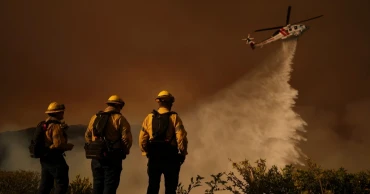
Trump criticises California water policy before touring LA
As President Donald Trump prepares to visit areas affected by wildfires in California, he is once again focusing on one of his regular targets for criticism: the state’s water policy.
Since the fires began on January 7, Trump has used social media and interviews to accuse the state of sending excessive amounts of water to the Pacific Ocean, rather than directing it south toward Los Angeles. He also pointed out that some hydrants ran dry during the early hours of the firefighting efforts in Pacific Palisades, reports AP.
Progress made on huge fire north of Los Angeles while new fires erupt in Southern California
Early in his second term, Trump urged federal officials to create plans to redirect more water to California’s Central Valley, an area with abundant crops, as well as to southern cities. A few days later, he threatened to withhold federal disaster assistance unless state leaders changed their water management strategy.
This article looks at the facts behind Trump’s comments and the extent of presidential influence over California’s water policies:
Where does Southern California’s water come from?
California's water is largely sourced from the north, while its population is mainly located in the drier southern region. Los Angeles, the nation’s second-largest city, relies on water from external sources. The Central Valley, which is relatively dry, contains fertile land where much of the country's fruits and vegetables are grown.
Two systems of dams and canals transport water from northern rain and snowmelt to the south. The federal government operates the Central Valley Project, while the state manages the State Water Project. Both systems channel water through the Sacramento-San Joaquin River Delta, an estuary crucial for fish and wildlife such as salmon and the endangered delta smelt, a species Trump has shown interest in.
Southern California’s water supply is split between local sources like groundwater, and state and federally managed systems, including the Colorado River. The Los Angeles Department of Water and Power also manages aqueducts that draw water from the Sierra Nevada.
What power does Washington have over California’s water?
Federal officials manage how much water is allocated to the delta to protect endangered species and to users of the Central Valley Project, mostly farms. This project does not supply water to Los Angeles. Both state and federal officials typically coordinate on water distribution, with the goal of maintaining water flow through the delta to support the ecosystem.
However, Trump and others argue that the state allows too much water to flow into the ocean, rather than redirecting it to cities and farms.
What actions has Trump taken regarding California’s water policy in the past?
During his previous administration, Trump allowed more water to be redirected from the delta to the Central Valley, a move opposed by environmental groups who claimed it would harm endangered species. California Governor Gavin Newsom filed a lawsuit, arguing that the policy would drive endangered fish species to extinction, including the delta smelt, chinook salmon, and steelhead trout.
Under President Joe Biden, new regulations were introduced in December, which environmental groups claimed offered some improvements over Trump’s first set of rules.
What is Trump’s stance now?
Trump continues to criticize California’s water management. On his Truth Social platform, he recently attacked the state for diverting millions of gallons of water to the Pacific Ocean, instead of using it for towns, cities, and farms across California.
Such comments have been welcomed by farmers and water managers in the Central Valley, who feel federal water allocations have been too limited over the past two years, despite a period of heavy rainfall in 2023 that helped the state recover from drought. However, dry conditions are returning to central and southern California.
Trump has now instructed the federal government to again redirect more water to farmers and cities.
How does this relate to the Los Angeles fires?
Not much. The ongoing debate about farms versus fish is a well-established issue in California’s water politics and does not always follow partisan lines. Some environmentalists argue that Newsom is too accommodating to farming interests, but this debate is not related to the water issues faced during the Los Angeles wildfires.
Over 50,000 under evacuation orders or warnings as wildfire imperils homes north of Los Angeles
Trump has suggested that state officials should “turn the valve” to provide more water to the city, but the state’s water supplies are not responsible for the hydrant shortages or the near-empty Santa Ynez Reservoir during the fire fight.
The hydrants failed because they were overstressed, and the reservoir was empty due to maintenance. Newsom has called for an investigation into how the Los Angeles Department of Water and Power handled these issues.
According to the Metropolitan Water District of Southern California, the region has enough water in storage to meet around three years of demand. Interim General Manager Deven Upadhyay affirmed, "We can deliver what our agencies need."
If the federal government decides to allocate more water, it may not benefit Los Angeles. Without coordination between state and federal systems, increasing federal water draw could lead California to reduce its own water allocations to protect the delta, Upadhyay added.
1 year ago
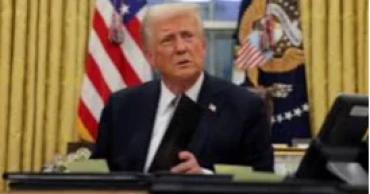
A federal judge temporarily blocks Trump’s executive order redefining birthright citizenship
A federal judge on Thursday temporarily blocked President Donald Trump’s executive order denying U.S. citizenship to the children of parents living in the country illegally, calling it “blatantly unconstitutional” during the first hearing in a multi-state effort challenging the order.
The 14th Amendment to the Constitution promises citizenship to those born on U.S. soil, a measure ratified in 1868 to ensure citizenship for former slaves after the Civil War. But in an effort to curb unlawful immigration, Trump issued the executive order just after being sworn in for his second term on Monday.
The order would deny citizenship to those born after Feb. 19 whose parents are in the country illegally. It also forbids U.S. agencies from issuing any document or accepting any state document recognizing citizenship for such children.
Trump's order drew immediate legal challenges across the country, with at least five lawsuits being brought by 22 states and a number of immigrants rights groups. A lawsuit brought by Washington, Arizona, Oregon and Illinois was the first to get a hearing.
"I’ve been on the bench for over four decades. I can’t remember another case where the question presented was as clear as this one is,” U.S. District Judge John Coughenour told a Justice Department attorney. “This is a blatantly unconstitutional order.”
Thursday’s decision prevents the Trump administration from taking steps to implement the executive order for 14 days. In the meantime, the parties will submit further arguments about the merits of Trump's order. Coughenour scheduled a hearing on Feb. 6 to decide whether to block it long term as the case proceeds.
Coughenour, 84, a Ronald Reagan appointee who was nominated to the federal bench in 1981, grilled the DOJ attorney, Brett Shumate, asking whether Shumate personally believed the order was constitutional.
“I have difficulty understanding how a member of the bar could state unequivocally that this is a constitutional order,” he added.
Shumate assured the judge he did — “absolutely.” He said the arguments the Trump administration is making now have never previously been litigated, and that there was no reason to issue a 14-day temporary restraining order when it would expire before the executive order takes effect.
The Department of Justice later said in a statement that it will “vigorously defend” the president’s executive order, which it said “correctly interprets the 14th Amendment of the U.S. Constitution.”
“We look forward to presenting a full merits argument to the Court and to the American people, who are desperate to see our Nation’s laws enforced,” the department said.
Read: Trump signs executive order to end birthright citizenship
The U.S. is among about 30 countries where birthright citizenship — the principle of jus soli or “right of the soil” — is applied. Most are in the Americas, and Canada and Mexico are among them.
The 14th Amendment was ratified in 1868, in the aftermath of the Civil War, to ensure citizenship for former slaves and free African Americans. It states: “All persons born or naturalized in the United States and subject to the jurisdiction thereof, are citizens of the United States and of the State wherein they reside.”
Trump’s order asserts that the children of noncitizens are not “subject to the jurisdiction” of the United States, and therefore not entitled to citizenship.
Arguing for the states on Thursday, Washington assistant attorney general Lane Polozola called that “absurd," noting that neither those who have immigrated illegally nor their children are immune from U.S. law.
“Are they not subject to the decisions of the immigration courts?” Polozola asked. “Must they not follow the law while they are here?”
Polozola also said the restraining order was warranted because, among other reasons, the executive order would immediately start requiring the states to spend millions to revamp health care and benefits systems to reconsider an applicant’s citizenship status.
“The executive order will impact hundreds of thousands of citizens nationwide who will lose their citizenship under this new rule,” Polozola said. “Births cannot be paused while the court considers this case.”
Washington Attorney General Nick Brown told reporters afterward he was not surprised that Coughenour had little patience with the Justice Department’s position, considering that the Citizenship Clause arose from one of the darkest chapters of American law, the Supreme Court’s 1857 Dred Scott decision, which held that African Americans, whether enslaved or free, were not entitled to citizenship.
Read more: Trump says birthright citizenship will be ended
“Babies are being born today, tomorrow, every day, all across this country, and so we had to act now,” Brown said. He added that it has been “the law of the land for generations, that you are an American citizen if you are born on American soil, period.”
“Nothing that the president can do will change that,” he said.
A key case involving birthright citizenship unfolded in 1898. The Supreme Court held that Wong Kim Ark, who was born in San Francisco to Chinese immigrants, was a U.S. citizen because he was born in the country. After a trip abroad, he had faced being denied reentry by the federal government on the grounds that he wasn’t a citizen under the Chinese Exclusion Act.
But some advocates of immigration restrictions have argued that case clearly applied to children born to parents who were both legal immigrants. They say it’s less clear whether it applies to children born to parents living in the country illegally.
Trump’s order prompted attorneys general to share their personal connections to birthright citizenship. Connecticut Attorney General William Tong, for instance, a U.S. citizen by birthright and the nation’s first Chinese American elected attorney general, said the lawsuit was personal for him. Later Thursday, he said Coughenour made the right decision.
“There is no legitimate legal debate on this question. But the fact that Trump is dead wrong will not prevent him from inflicting serious harm right now on American families like my own,” Tong said this week.
1 year ago
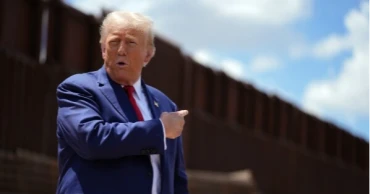
Trump's mass deportation plan could overwhelm U.S. Immigrant Detention System
President Donald Trump’s pledge to deport “millions and millions” of undocumented immigrants hinges on expanding detention facilities, but the U.S. faces significant logistical and financial challenges to achieve this goal.
Currently, Immigration and Customs Enforcement (ICE) has a budget to detain about 41,000 people, far below the estimated 11.7 million undocumented immigrants in the U.S.
The Department of Homeland Security (DHS) estimates it costs approximately $165 per day to detain one adult, with more facilities needed to hold individuals during processing and deportation arrangements.
Trump defends pardons for rioters and suggests Proud Boys could have place in politics
A DHS memo estimates that expanding capacity by 110,000 beds under the recently passed Laken Riley Act would cost $26.9 billion.
The act, named after a Georgia nursing student murdered by a Venezuelan man, mandates the detention of undocumented immigrants accused of theft or violent crimes.
Trump’s immigration strategy also includes deploying troops to halt illegal border crossings, invoking the Alien Enemies Act of 1798 to deport individuals from nations perceived as threats, and eliminating “catch and release,” a practice allowing migrants to await immigration proceedings outside of detention.
Limited Capacity
ICE relies on a network of government-run processing centers, private detention facilities, and local jails under contracts, but has no designated family detention centers, despite families making up one-third of arrivals at the southern border. Expanding detention capacity would require constructing new facilities, said John Sandweg, former acting ICE director under President Barack Obama.
The Trump administration declared a national emergency at the U.S.-Mexico border, leveraging military resources to support mass deportations and detention efforts. The Pentagon may provide air transport and additional detention space. Private companies such as GEO Group and CoreCivic are seeing rising stock prices, anticipating a detention infrastructure boom.
Trump administration directs all federal diversity, equity and inclusion staff be put on leave
Expansion Plans
The American Civil Liberties Union (ACLU) has identified potential detention facility expansions in at least eight states, including Leavenworth, Kansas, and areas near immigrant hubs like New York City and San Francisco. Detention providers are considering repurposing facilities previously used for immigrants, such as a tent complex in Carrizo Springs, Texas, and the South Texas Family Residential Center in Dilley, Texas.
According to Eunice Cho, senior staff attorney at the ACLU’s National Prison Project, the Trump administration aims to maximize detention capacity. However, she noted Congress controls funding, and military involvement raises concerns about its impact on readiness.
Criticism of Militarization
Immigrant advocates warn against creating a hyper-militarized system that could expand the world’s largest migrant detention infrastructure. ICE detention facilities have faced criticism for failing to meet federal care standards, according to a DHS inspector general report.
Trump previously authorized military bases to house detained immigrants, a practice also utilized under the Obama administration during a surge of Central American migrants. Military facilities have historically been used for immigrant resettlement during crises, including for refugees from Vietnam, Cuba, and Afghanistan.
The debate over Trump’s immigration plans is intensifying as advocates question their feasibility and potential humanitarian impacts.
1 year ago
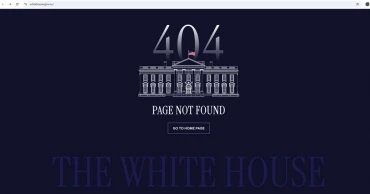
Trump administration shuts down White House Spanish-language pages
Within hours of President Donald Trump’s inauguration, the new administration took down the Spanish-language version of the official White House website.
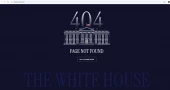
The site — currently https://www.whitehouse.gov/es/ — now gives users an “Error 404” message. It also included a “Go Home” button that directed viewers to a page featuring a video montage of Trump in his first term and on the campaign trail. The button was later updated to read “Go To Home Page”.
Hispanic advocacy groups and others expressed confusion at the abrupt change and frustration at what some called the administration’s lack of efforts to maintain communication with the Latino community, which helped propel him to the presidency.
The Spanish profile of the White House’ X, @LaCasaBlanca and the government page on reproductive freedom also were disbanded. Meanwhile, the Spanish versions of other government agencies such as the Department of Labor, Justice and Agriculture remained available for users on Tuesday.
Trump cancels Work-from-Home for federal workers
Asked about the changes, White House principal deputy press secretary Harrison Fields responded Tuesday that the administration is “committed to bringing back online the Spanish translation section of the website.”
“It’s day two. We are in the process of developing, editing and tweaking the White House website. As part of this ongoing work, some of the archived content on the website went dormant. We are committed to reloading that content in a short timeline," he said without elaborating.
Trump removed the Spanish version of the page in 2017. At that time, White House officials said they would reinstate it. President Joe Biden reinstated the page in 2021.
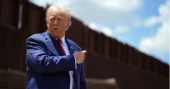
The page's removal coincided with Trump’s first-day wave of executive orders highlighted by the launch of an illegal immigration crackdown that was one of his key campaign pledges. Trump on Monday declared a national emergency at the U.S.-Mexico border and announced plans to send U.S. troops to help support immigration agents and restrict refugees and asylum.
According to 2023 Census Bureau estimates, about 43.4 million Americans — 13.7% of the U.S. population age 5 and older — speak Spanish at home. The U.S. has no official language.
Monica Rivera, a brand and communications strategist in New York City of Puerto Rican and Cuban descent, said the shutdown sends a clear signal.
Trump wants to pull the US out of the WHO again
“There are 43 million Latinos who speak Spanish as their first language and removing access to information directly from the White House draws a distinct line as to who they are serving and more dangerously, signals to the administration’s MAGA base that we as Latinos are ‘other’ and a less significant part of this country," Rivera said.
Anthony Hernandez, a paralegal in the nation's capital, wasn’t initially aware of the move and said it suggests what the coming years of a second Trump presidency would look like, with specific issues making headlines while “minor but equally malicious things like that go unnoticed.”
“A move like shutting down the Spanish White House page and X profile serves no purpose other than to cut off resources for millions of Hispanic Americans and immigrants attempting to enter the United States legally," Hernandez said. "And it’s a slap in the face to the millions of Hispanic voters that supported him in this recent election.”
Trump’s secretary of state, Marco Rubio, is Cuban American and speaks Spanish. At his swearing-in Tuesday, he gave remarks in Spanish, thanking God, his family and Trump.
Meanwhile, Hispanic leaders and communication strategy experts expressed surprise with the page's removal, given Trump’s popularity with certain Latino voters.
“If the White House is seriously interested in engaging with Latinos, the second largest group in this country, then they need to make sure that updates can also be distributed in Spanish, a preferred language for millions in our community,” said Frankie Miranda President and CEO of the Hispanic Federation.
Trump suspends US foreign aid for 90 days
He called that a way to ensure "everyone is a part of the civic process.”
Kris Klein Hernández, a U.S. historian specializing in race, gender, and sexuality at Connecticut College, said the content removal from official White House websites not only limits the access available to Spanish-speaking U.S. citizens and migrants but leads "some to question which constituencies the administration prioritizes.”
Jeff Lee, former deputy cabinet secretary and deputy director of external and international affairs for former California Gov. Jerry Brown, said the move seems counterintuitive given the opportunity to “showcase” policy changes, especially ones related to economics and border security.
“I didn’t see any other language mediums that got the kibosh. So I think that’s a really interesting thing to single out — if that’s the case," Lee said.
AP VoteCast, a nationwide survey of more than 120,000 voters, found Trump won a larger share of Black and Latino voters than he did in 2020, and most notably among men under age 45. Young Latinos, particularly young Latino men, also were more open to Trump than in 2020. Roughly half of young Latino men voted for Democratic Vice President Kamala Harris, compared with about 6 in 10 who went for Biden.
1 year ago
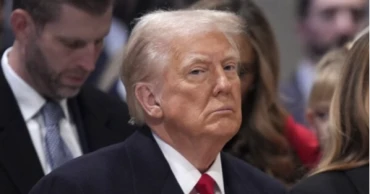
Trump defends pardons for rioters and suggests Proud Boys could have place in politics
President Donald Trump on his first full day in office Tuesday defended his decision to grant clemency to people convicted of assaulting police officers during the 2021 attack on the Capitol and suggested there could be a place in American politics for the Proud Boys and Oath Keepers, extremist groups whose leaders were convicted of seditious conspiracy against the U.S.
The president also continued to dismantle the government's promotion of diversity, equity and inclusion, known as DEI. The White House issued a memo placing on paid leave all federal staff who work on those efforts, with plans to lay them off soon. DEI trainings were also canceled.
Trump's actions were the latest step in his drive to overhaul Washington and erase the work of President Joe Biden's administration.
A priority for Trump has been helping supporters who laid siege to the Capitol on Jan. 6, 2021, making their pardons his first official action once he returned to the White House after his inauguration on Monday.
Among the roughly 1,500 people pardoned by Trump were more than 200 who pleaded guilty to assaulting police. At least 140 officers were injured during the riot — many beaten, bloodied and crushed by the crowd — as Trump's supporters tried to overturn Biden's election victory.
Before the Capitol attack, the Proud Boys was a group best known for street fights with anti-fascist activists when Trump infamously told the group to “stand back and stand by” during his first debate in 2020 with then-presidential candidate Biden.
The group’s former top leader, Enrique Tarrio, and three of his lieutenants were convicted of seditious conspiracy for a violent plot to stop the peaceful transfer of presidential power from Trump to Biden after the 2020 election. Tarrio was serving a 22-year prison sentence, the longest of any Capitol riot case, before Trump pardoned him on Monday. Some members of the group marched in Washington on Monday as Trump was sworn into another term.
When pressed by a reporter about the Proud Boys and Oath Keepers and whether there was a place for them in politics, Trump said, “Well, we have to see. They’ve been given a pardon. I thought their sentences were ridiculous and excessive.”
Trump spoke to reporters at the White House as he highlighted an investment in artificial intelligence infrastructure and declared, “We're back.”
“I think we’re going to do things that people will be shocked at,” he said.
When pressed about his decision to free people from prison who were shown on camera viciously attacking Capitol police officers, Trump declared, “I am a friend of police, more than any president who’s ever been in this office.”
The president on Tuesday said he thought the sentences handed down for actions that day were “ridiculous and excessive” and said, “These are people who actually love our country, so we thought a pardon would be appropriate.”
Two major law enforcement groups, The International Association of Chiefs of Police and the Fraternal Order of Police, issued a joint statement saying they were “deeply discouraged” by the pardons and commutations and believed those convicted should serve their full sentences.
The president was also asked about his personal net worth benefitting from his launch of a new cryptocurrency token the day before he was sworn into office, and whether he would continue to sell products to benefit himself while in office.
“I don’t know much about it other than I launched it," he said. "I heard it was very successful. I haven’t checked it. Where is it today?”
Trump had opened his first full day back in office by demonstrating one of his favored expressions of power: firing people.
The new president posted on his Truth social media network early Tuesday that he would fire more than 1,000 presidential appointees "who are not aligned with our vision," including some high-profile names.
Trump fired chef and humanitarian José Andrés from the President’s Council on Sports, Fitness and Nutrition, retired Gen. Mark Milley from the National Infrastructure Advisory Council, former State Department official Brian Hook from the board of the Wilson Center and former Atlanta Mayor Keisha Lance Bottoms from the President’s Export Council.
“YOU’RE FIRED!” Trump said in his post — his catchphrase from his reality TV show, “The Apprentice.”
Andrés and Bottoms disputed Trump's assertion that they were fired, saying in posts on social media that they had already submitted their resignations.
Biden also removed many Trump appointees in his first days in office, including former press secretary Sean Spicer from the board overseeing the U.S. Naval Academy.
Three major business leaders — SoftBank Group CEO Masayoshi Son, OpenAI CEO Sam Altman and Oracle Corp. Chairman Larry Ellison — joined Trump on Tuesday afternoon to announce the creation of a new company called Stargate, which would invest up to $500 billion over the next four years in AI infrastructure, according to the White House.
Initial plans for Stargate, which is beginning construction in Texas, date back to Biden’s time in office. Tech news outlet The Information reported on the project in March 2024.
Trump also attended a national prayer service Tuesday morning at Washington National Cathedral, a customary visit for new presidents and one that wrapped up four days of inauguration-related events.
One of the speakers at the interfaith service, the Right Rev. Mariann Budde, the Episcopal bishop of Washington, used her sermon to send a message to Trump, urging compassion for LGBTQ+ people and undocumented migrant workers.
“You have felt the providential hand of a loving God. In the name of our God, I ask you to have mercy on the people in our country who are scared now," said Budde, who has criticized Trump before.
Asked afterward by a reporter what he thought of the service, Trump said: “Not too exciting was it. I didn't think it was a good service. They could do much better.”
Later in the day, the president met with House Speaker Mike Johnson and Senate Majority Leader John Thune and other GOP legislators. It was the first formal sit-down for the GOP leadership teams, including House Majority Leader Steve Scalise, Senate GOP Whip John Barrasso and the new president, as they chart priorities for using Republican power in Washington.
It was more of a date than a marriage, said one person familiar with the private meeting, and granted anonymity to discuss it.
Trump floated many ideas on the priorities ahead — for tax cuts, disaster aid, regulatory reforms and the upcoming March deadline to fund the government — with no clear preference for their various strategies, only that they get the job done. Policy aides Stephen Miller and James Braid joined the talk.
The GOP leaders were given chocolate chip cookies and commemorative coins.
After the meeting, Senate Republicans raised the threat of recess appointments to install Trump's Cabinet. Thune pushed for a quick confirmation, but Trump has demanded that Republicans prepare to put the Senate in recess, allowing Trump to appoint his picks to Cabinet posts without Senate confirmation.
Trump mused Tuesday that the Los Angeles wildfires would give Republicans leverage with Democrats over budget negotiations, because Los Angeles is "going to need a lot of money. And generally speaking, I think you’ll find that a lot of Democrats are going to be asking for help.”
1 year ago
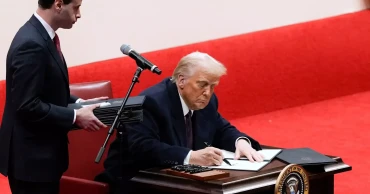
Trump administration directs all federal diversity, equity and inclusion staff be put on leave
President Donald Trump 's administration moved Tuesday to end affirmative action in federal contracting and directed that all federal diversity, equity and inclusion staff be put on paid leave and eventually be laid off.
The moves follow an executive order Trump signed on his first day ordering a sweeping dismantling of the federal government’s diversity and inclusion programs that could touch on everything from anti-bias training to funding for minority farmers and homeowners. Trump has called the programs “discrimination” and insisted on restoring strictly “merit-based” hiring.
The executive order on affirmative action revokes an order issued by President Lyndon Johnson, and curtails DEI programs by federal contractors and grant recipients. It’s using one of the key tools utilized by the Biden administration to promote DEI programs across the private sector — pushing their use by federal contractors — to now eradicate them.
The Office of Personnel Management in a Tuesday memo directed agencies to place DEI office staffers on paid leave by 5 p.m. Wednesday and take down all public DEI-focused webpages by the same deadline. Several federal departments had removed the webpages even before the memorandum. Agencies must also cancel any DEI-related training and end any related contracts, and federal workers are being asked to report to Trump's Office of Personnel Management if they suspect any DEI-related program has been renamed to obfuscate its purpose within 10 days or face “adverse consequences.”
By Thursday, federal agencies are directed to compile a list of federal DEI offices and workers as of Election Day. By next Friday, they are expected to develop a plan to execute a “reduction-in-force action” against those federal workers.
The memo was first reported by CBS News.
The move comes after Monday's executive order accused former President Joe Biden of forcing “discrimination” programs into “virtually all aspects of the federal government” through “diversity, equity and inclusion” programs, known as DEI.
That step is the first salvo in an aggressive campaign to upend DEI efforts nationwide, including leveraging the Justice Department and other agencies to investigate private companies pursuing training and hiring practices that conservative critics consider discriminatory against non-minority groups such as white men.
The executive order picks up where Trump's first administration left off: One of Trump’s final acts during his first term was an executive order banning federal agency contractors and recipients of federal funding from conducting anti-bias training that addressed concepts like systemic racism. Biden promptly rescinded that order on his first day in office and issued a pair of executive orders — now rescinded — outlining a plan to promote DEI throughout the federal government.
While many changes may take months or even years to implement, Trump’s new anti-DEI agenda is more aggressive than his first and comes amid far more amenable terrain in the corporate world. Prominent companies from Walmart to Facebook have already scaled back or ended some of their diversity practices in response to Trump's election and conservative-backed lawsuits against them.
Here's a look at some of the policies and programs that Trump will aim to dismantle:
Diversity offices, training and accountability
Trump's order will immediately gut Biden's wide-ranging effort to embed diversity and inclusion practices in the federal workforce, the nation's largest at about 2.4 million people.
Biden had mandated all agencies to develop a diversity plan, issue yearly progress reports, and contribute data for a government-wide dashboard to track demographic trends in hiring and promotions. The administration also set up a Chief Diversity Officers Council to oversee the implementation of the DEI plan. The government released its first DEI progress report in 2022 that included demographic data for the federal workforce, which is about 60% white and 55% male overall, and more than 75% white and more than 60% male at the senior executive level.
Trump's executive order will toss out equity plans developed by federal agencies and terminate any roles or offices dedicated to promoting diversity. It will include eliminating initiatives such as DEI-related training or diversity goals in performance reviews.
Federal grant and benefits programs
Trump's order paves the way for an aggressive but bureaucratically complicated overhaul of billions of dollars in federal spending that conservative activists claim unfairly carve out preference for racial minorities and women.
The order does not specify which programs it will target but mandates a government-wide review to ensure that contracts and grants are compliant with the Trump administration’s anti-DEI stance. It also proposes that the federal government settle ongoing lawsuits against federal programs that benefit historically underserved communities, including some that date back decades.
Trump’s executive order is a “seismic shift and a complete change in the focus and direction of the federal government,” said Dan Lennington, deputy council for the conservative Wisconsin Institute for Law & Liberty, which has pursued several lawsuits against federal programs. The institute recently released an influential report listing dozens of programs the Trump administration should consider dismantling, such as credits for minority farmers or emergency relief assistance for majority-Black neighborhoods.
He acknowledged that unwinding some entrenched programs may be difficult. For example, the Treasury Department implements housing and other assistance programs through block grants to states that have their own methods for implementing diversity criteria.
Pay equity and hiring practices
It's not clear whether the Trump administration will target every initiative that stemmed from Biden's DEI executive order.
For example, the Biden administration banned federal agencies from asking about an applicant's salary history when setting compensation, a practice many civil rights activists say perpetuates pay disparities for women and people of color.
It took three years for the Biden administration to issue the final regulations, and Trump would have to embark on a similar rule-making process, including a notice and comment period, to rescind it, said Chiraag Bains, former deputy director of the White House Domestic Policy Council under Biden and now a nonresident senior fellow with Brookings Metro.
Noreen Farrell, executive director of gender rights group Equal Rights Advocates, said that she was hopeful that the Trump administration “will not go out of its way to undo the rule,” which she said has proved popular in some state and cities that have enacted similar policies.
And Biden's DEI plan encompassed some initiatives with bipartisan support, said Bains. For example, he tasked the Chief Diversity Officers Executive Council with expanding federal employment opportunities for those with criminal records. That initiative stems from the Fair Chance Act, which Trump signed into law in 2019 and bans federal agencies and contractors from asking about an applicant’s criminal history before a conditional job offer is made.
Bains said that's what Biden's DEI policies were about: ensuring that the federal government was structured to include historically marginalized communities, not institute “reverse discrimination against white men.”
Despite the sweeping language of Trump's order, Farrell said, “the reality of implementing such massive structural changes is far more complex.”
"Federal agencies have deeply embedded policies and procedures that can’t simply be switched off overnight,” she added.
1 year ago
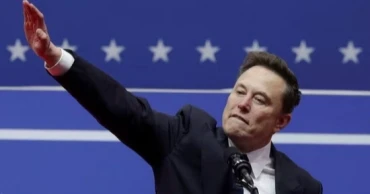
Elon Musk faces backlash after Nazi salute during Trump’s ceremony
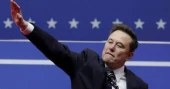
Elon Musk sparked widespread controversy after making a one-armed gesture during a speech at Donald Trump’s inauguration celebration in Washington, D.C.
The billionaire entrepreneur placed his right hand over his heart before extending the same arm straight ahead, repeating the action for the audience behind him. While Musk thanked the crowd for their support, many on X, the social media platform he owns, compared the gesture to a Nazi salute, reports BBC.
In response to the backlash, Musk dismissed the accusations, posting on X: "Frankly, they need better dirty tricks. The 'everyone is Hitler' attack is sooo tired."
Historians and social media users were divided over the gesture. Claire Aubin, a historian specializing in Nazism in the U.S., described it as a "sieg heil," while New York University historian Ruth Ben-Ghiat labeled it a "belligerent Nazi salute." Italian media reported that Andrea Stroppa, a Musk confidant, initially shared the clip with the caption "Roman Empire is back starting from Roman salute" but later deleted the post. Stroppa later clarified that Musk’s gesture was a personal expression of gratitude, unrelated to extremist symbolism.
Read: Trump signs order making Musk’s DOGE Commission official
Musk, who has publicly aligned himself with Trump and taken increasingly right-wing political stances, has faced growing scrutiny for his associations and statements. Critics noted his recent support for Germany’s far-right AfD party and the UK’s Reform Party.
Defenders, including the Anti-Defamation League, dismissed the gesture as an "awkward moment of enthusiasm," emphasizing Musk’s non-affiliation with extremism. German Chancellor Olaf Scholz commented on the controversy at the World Economic Forum, stating, "We value free speech but do not tolerate support for extreme-right positions."
As Musk continues to navigate his evolving political alliances, the incident highlights the polarizing nature of his public actions and statements.
Source: With input from agency
1 year ago

WHO regrets U.S. withdrawal announcement, hopes for continued partnership
The World Health Organization (WHO) has expressed regret over U.S. President Donald Trump's announcement of withdrawing the country from the organization.
It hopes the U.S. government will reconsider this decision.
In a statement released on Tuesday, the WHO also said it looks forward to maintaining its partnership through constructive dialogue. It reaffirmed its commitment to addressing the root causes of diseases, strengthening health systems, and detecting, preventing, and responding to health emergencies, such as disease outbreaks.
The organization emphasized its crucial role in safeguarding global health and safety, including the well-being of the American people.
Trump wants to pull the US out of the WHO again
The statement highlighted that the United States has been a founding member of the WHO since 1948 and has played a vital role in shaping and governing the organization with other 193 member states, actively participating in the World Health Assembly and the WHO Executive Board.
The WHO acknowledged the contributions of American institutions to its mission and the mutual benefits derived from the U.S. membership.
The statement also underscored the historic reforms undertaken by the WHO over the past seven years developed collaboratively with the United States and other member states. These reforms aim to enhance the organization's accountability, cost-effectiveness, and global impact, with ongoing efforts to strengthen these achievements.
1 year ago