usa
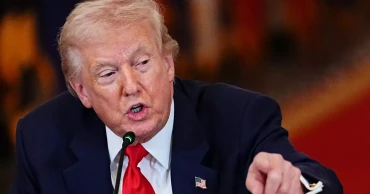
Trump warns Iran has 48 hours to make deal or face "Hell"
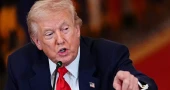
U.S. President Donald Trump said on Saturday that Iran has 48 hours to strike a deal on opening up the Strait of Hormuz or face "Hell."
"Remember when I gave Iran ten days to MAKE A DEAL or OPEN UP THE HORMUZ STRAIT," Trump wrote on his Truth Social platform. "Time is running out -- 48 hours before all Hell will reign (sic) down on them," Trump said.
On March 21, Trump threatened to "hit and obliterate" Iranian power plants if the country fails to fully open the Strait of Hormuz within 48 hours. Two days later, however, he postponed strikes on power plants for five days after holding "productive conversations" with Tehran. He later again pushed the deadline back.
1 day ago
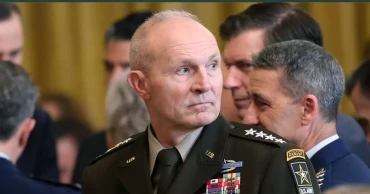
Hegseth asks US Army chief to step down amid Iran war
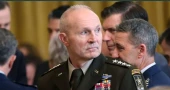
Gen. Randy George, the U.S. Army's top uniformed officer, was asked to step down Thursday by Defense Secretary Pete Hegseth. Pentagon officials have not given a reason for the departure, which comes during the Iran war and is the latest of more than a dozen firings of top generals and admirals.
Iran is firing more missiles at Israel and Gulf Arab states, with a spokesperson for its military insisting Thursday that Tehran maintains hidden stockpiles of arms, munitions and production facilities.
In Lebanon, where Israel has launched a ground invasion against Iran-backed Hezbollah militants, Israeli strikes have killed 27 people in a single day, Lebanon's Health Ministry said.
Stocks recovered most of their losses from earlier in the day, though oil prices remained elevated after Trump failed to offer a clear timetable for ending the conflict in his address. U.S. crude oil was up 8.4% at $108.82 per barrel, pulling back from over $110.
In his address Wednesday night, U.S. President Donald Trump said U.S. forces will keep hitting Iran “very hard” in the next two or three weeks and bring the country “back to the Stone Ages,” even as he touted the success of U.S. operations and argued that all of Washington’s objectives have so far been met or exceeded.
2 days ago
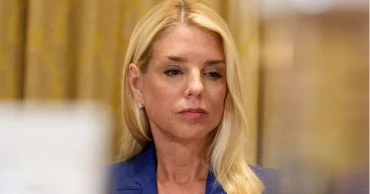
Trump removes Attorney General Pam Bondi
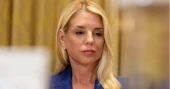
Donald Trump on Thursday announced the removal of Pam Bondi as attorney general, ending a contentious tenure marked by sweeping changes at the Justice Department.
Trump named Deputy Attorney General Todd Blanche as acting attorney general. He also praised Bondi as a “great American patriot” and said she would move to a private-sector role.
Bondi’s tenure drew criticism for undermining the department’s traditional independence, overseeing mass firings and resignations of career officials, and launching investigations into Trump’s perceived political opponents.
Her leadership faced growing scrutiny, particularly from conservatives over the handling of files linked to Jeffrey Epstein. Efforts to pursue high-profile cases against figures such as James Comey and Letitia James were dismissed by courts.
Bondi defended her actions, saying she aimed to restore credibility to the department after what she described as overreach during the previous administration.
Her departure continues a pattern of instability at the Justice Department during Trump’s presidency, with multiple attorneys general leaving under pressure.
3 days ago
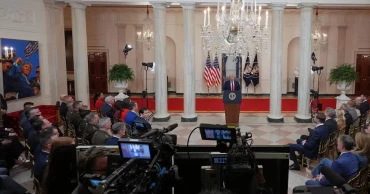
Fact focus: Trump makes misleading claims on Iran, US economy
US President Donald Trump made a series of misleading and exaggerated claims about Iran and the American economy while addressing the nation Wednesday night, as tensions in the Middle East and rising fuel prices dominate global concerns.
No inflation claim disputed
Trump said the US now has “no inflation” and described the economy he inherited as “dead and crippled.” However, data shows the economy was already growing steadily before his tenure. In 2024, the final year of Joe Biden’s presidency, US GDP grew by 2.8%, one of the fastest among advanced economies.
Inflation also persists. The consumer price index rose 2.4% in February from a year earlier, still above the Federal Reserve’s 2% target.
‘Regime change’ claim questioned
Trump suggested Iran had effectively undergone regime change following the deaths of senior leaders. But analysts say this claim lacks credibility.
After the killing of Supreme Leader Ali Khamenei, leadership reportedly passed to his son Mojtaba Khamenei, who is widely viewed as more hardline. Meanwhile, the Islamic Revolutionary Guard Corps has strengthened its influence, with civilian leadership having limited control.
Protester death toll unverified
Trump claimed Iran’s government killed 45,000 protesters. However, no credible source has confirmed such a figure.
A US-based rights group verified over 7,000 deaths during protests, while Iran’s government reported 3,117 fatalities. Though higher numbers are possible, independent verification remains difficult due to restrictions inside the country.
Oil independence overstated
Trump said the US no longer depends on Middle Eastern oil. While the US is the world’s largest oil producer and imports only a small share from the region, global oil prices still affect domestic fuel costs.
Since the Iran conflict began, crude oil prices have surged more than 50%, pushing US gasoline prices above $4 per gallon.
Investment figures exaggerated
Trump cited $18 trillion in investments entering the US, but provided no evidence. Official figures suggest a significantly lower amount, around $10.5 trillion, including commitments made before his presidency. Analysts also question how much of the pledged investment will materialize.
Iran cash payment mischaracterized
Trump repeated a long-standing claim that Barack Obama gave Iran $1.7 billion in cash. In reality, the payment settled a decades-old dispute over funds Iran had paid for undelivered military equipment before the 1979 revolution, including interest.
3 days ago
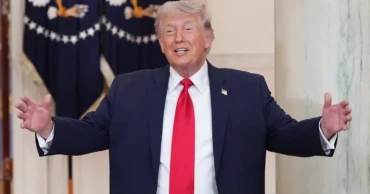
Trump threatens ‘extremely hard’ strikes on Iran, warns of attacks on power plants
US President Donald Trump has warned that the United States will launch intensified strikes on Iran over the next two to three weeks, saying military operations will continue until all American objectives are achieved.
Addressing the nation on Wednesday night, he said, “We will continue until our objectives are fully achieved. Thanks to the progress we’ve made, I can say we are on track to complete all of America’s objectives shortly, very shortly.”
The US president said Washington plans to escalate attacks significantly in the coming weeks.
“We are going to hit them extremely hard over the next two to three weeks. We are going to take them back to the stone ages where they belong,” he added.
Trump also said that “regime change was never our goal,” but claimed that “regime change has occurred because of their original leader’s death.”
He further warned Tehran of potential strikes on critical infrastructure, particularly power plants, if no agreement is reached.
“If during this period of time no deal is made, we have our eyes on key targets. If no deal is reached, we are going to hit every one of their electric generating plants very hard, and probably simultaneously,” he said.
#From Al Jazeera
3 days ago

Oil holds above $100 as Wall Street rebounds amid US-Iran strikes
Oil prices remained above $100 per barrel Tuesday while Wall Street futures rebounded, as the United States and Iran exchanged military strikes in the fifth week of their ongoing conflict.
In premarket trading, S&P 500 and Dow Jones Industrial Average futures each rose 0.9%, while Nasdaq futures gained 0.8%. U.S. strikes targeted a city hosting one of Iran’s main nuclear sites, producing a massive fireball, while Tehran launched an attack on a fully loaded Kuwaiti oil tanker in the Persian Gulf.
The ongoing war, now more than a month old, has claimed over 3,000 lives and disrupted global oil and gas supplies. Brent crude edged up to $107.56 per barrel, and U.S. benchmark crude rose to $103.71 per barrel, with Brent crude surging more than 40% since the start of the conflict in late February.
Drone strike on Kuwaiti tanker in UAE sparks fire, no casualties reported
Rising energy costs pushed average U.S. gasoline prices past $4 per gallon Tuesday, the first time since 2022. Meanwhile, official data showed Europe’s inflation rate jumped to 2.5% in March from February’s 1.9%.
Disruptions in maritime traffic at the Strait of Hormuz, which handles roughly a fifth of the world’s oil, remain a critical concern for global energy markets. U.S. Secretary of State Marco Rubio said President Donald Trump has “options available” in response to Tehran’s attempts to control the strait.
In equities, McCormick shares rose 3% amid speculation it would acquire Unilever’s food division, while Unilever shares edged up less than 1%. Separately, Sysco announced a $29 billion acquisition of supplier Jetro Restaurant Depot.
European markets saw moderate gains with Britain’s FTSE 100 up 0.9%, France’s CAC 40 up 0.5%, and Germany’s DAX up 0.6%. In Asia, Tokyo’s Nikkei 225 fell 1.6%, South Korea’s Kospi dropped 4.3%, Hong Kong’s Hang Seng gained 0.2%, and Shanghai Composite slipped 0.8%.
Precious metals rose as gold increased 0.6% to $1,584.10 an ounce, while silver surged 3.7% to $73.17 per ounce. The U.S. dollar weakened slightly against the Japanese yen, trading at 159.64, and the euro edged up to $1.1468.
5 days ago
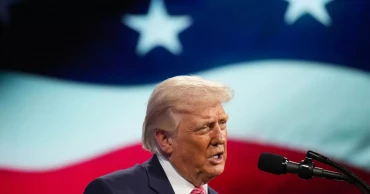
Trump's conflicting messages sow confusion over the Iran war
President Donald Trump says the United States is winning the war with Iran even as thousands of additional American troops deploy to the Middle East.
He has pilloried other countries for not helping the U.S., only to say later he does not need their assistance. He has twice delayed deadlines for Iran to reopen the Strait of Hormuz. He has both threatened to “obliterate” Iran's energy plants if the vital waterway remains largely shuttered and said the U.S. was “not affected" by the closure.
At one point this month, Trump said one of his predecessors — who, he strongly suggested, was a Democrat — privately told him he wished he had taken similar action against Iran. Representatives for every living former president quickly denied that such a conversation happened.
As the war entered its second month on Saturday, Trump's penchant for embellishments, exaggerations and falsehoods is being tested in an environment where the stakes are much higher than an isolated political fight.
A president who has long embraced bluster and salesmanship to shape narratives and focus attention is confronting the unpredictability of war.
Leon Panetta, who served Democratic presidents as defense secretary, CIA director and White House chief of staff, said he has “seen enough wars where truth becomes the first casualty.”
“It’s not the first administration that has not told the truth about war,” he said. “But the president has made it kind of a very standard approach to almost any question to in one way or another kind of lie about what’s really happening and basically describe everything as fine and that we’re winning the war.”
Michael Rubin, a historian at the American Enterprise Institute who worked as a staff adviser on Iran and Iraq at the Pentagon from 2002 to 2004, said Trump is “the first president of any party in recent history that hasn’t self-constrained to live within rhetorical boundaries.”
“So of course it creates a great deal of confusion,” he said.
The zigs and zags are the point
To his critics, Trump's style is a sign that doesn't have a coherent long-term strategy. But for Trump, the zigs and zags seem like the point, a method that keeps his opponents — and pretty much everyone else — always on their heels.
The approach was clear this week in the hours before he announced the second delay of the deadline for Iran to reopen the strait. Asked what he would do about the deadline, Trump said he did not know and that he had a day before he had to decide.
“In Trump time, a day, you know what it is, that’s an eternity,” the Republican president said to laughter from members of his Cabinet.
But investors are unimpressed, with U.S. stocks closing out their worst week since the war began. To some on Capitol Hill, the freewheeling is more frustrating than amusing.
Rep. Gregory Meeks of New York, the top Democrat on the House Foreign Affairs Committee, lamented that Trump is “going back and forth and constantly contradicting himself.”
“The administration is winging it,” he said. “So how can you trust what the president says?”
Republicans were not willing to go that far, but their concern was apparent heading into a two-week break from Washington. Sen. John Kennedy of Louisiana said his constituents “support what the president has done.”
“But most of my people are also equally or even more so concerned about cost of living,” he said.
Republican Rep. Chip Roy of Texas, who sits on the House Budget Committee and is a member of the conservative House Freedom Caucus, said his constituents were on board with “blowing some crap up.” Nonetheless, he expressed reservations about the prospect of ground troops and said the administration has not provided enough details in briefings for lawmakers. Such sessions, he said, only reveal information you “read in the papers.”
“Taking out bad guys, taking out conventional (weapons), taking out or at least working to take out nuclear capability, pressing to keep the straits open, all those are good things and I’ve been supportive and will continue to be supportive,” Roy said. “But we’ve got to have a serious conversation about how long this is going to go, boots on the ground, all those things, press for further briefings and understanding of where it’s all headed.”
Republicans back Trump but there are risks
While Trump has maintained deep support among Republicans, a poll this week from The Associated Press-NORC Center for Public Affairs Research indicates that the president risks frustrating his voters if the U.S. gets involved in the kind of prolonged war in the Middle East that he promised to avoid.
Although 63% of Republicans back airstrikes against Iranian military targets, the survey found, only 20% back deploying American ground troops.
That reflects the political challenges ahead for Trump, who did not prepare the country for such an extensive overseas conflict. If the war drags on or escalates, pressure on Republicans could build before the November elections, when their majorities in Congress are at risk. Some in the party have said sending in ground troops would be a red line that Trump should not cross.
The administration also will likely need congressional support for an additional $200 billion to support the war. That amount of money, which Trump has said would be “nice to have,” even as he said the war was “winding down,” would be a tough vote at any time. But it poses particular risks for budget-conscious Republicans in an election year.
White House spokesperson Anna Kelly said in a statement that Trump is “right to highlight the vast success of Operation Epic Fury.”
“Iran desperately wants to make a deal because of how badly they are being decimated, but the President reserves all options, military or not, at all times,” she said.
There could be some ‘logic’ to Trump's approach
Rubin, the former Iran and Iraq adviser at the Pentagon, said there could be some “logic” to the president's ever-evolving rhetorical approach to the war. He said Trump's initial comments about ongoing negotiations, which Iran denied, could “spread suspicion and fear within the regime circles.”
“Perhaps Donald Trump or those advising him simply want the Iranians to grow so paranoid they refuse to cooperate with each other or perhaps they even turn on each other,” he said. “But then again, there's always a danger with Donald Trump of assuming that his rhetoric is anything more than shooting from the hip.”
Rep. Adam Smith of Washington state, the top Democrat on the House Armed Services Committee, said Trump is not going to be able to fully achieve his objectives, including the complete elimination of Iran's nuclear program, “in the current trajectory.”
And if that is the case, Smith said, the president has the option to rely on his rhetorical skills to simply say the U.S. won — and end the war.
“As I've jokingly said, nobody I have ever met or heard of in human history is better at exaggerating his own accomplishments than Donald Trump,” Smith said. “So go knock yourself out and claim this was some great success.”
8 days ago

Nationwide “No Kings” protests target Trump, with Minnesota in spotlight
Organizers of Saturday’s nationwide “No Kings” rallies say protests against President Donald Trump and his administration could become one of the largest demonstrations in U.S. history, with Minnesota expected to take center stage.More than 3,100 events have been registered across all 50 states, with an estimated nine million participants anticipated. The protests began Saturday morning in Paris, France, where several hundred Americans living abroad, along with French labor unions and human rights groups, gathered at Bastille carrying anti-Trump signs. “I protest all of Trump’s illegal, immoral and reckless wars,” said Ada Shen, Paris rally organizer.
Trump says “Cuba is next” after US strikes on Venezuela, IranThe Minnesota Capitol in St. Paul has been designated the national flagship event, highlighting the state’s resistance following the federal agents’ fatal shooting of two people monitoring Trump’s immigration policies. The rally will feature performances by Bruce Springsteen, Joan Baez, and appearances by Jane Fonda, Senator Bernie Sanders, and other activists. Organizers expect up to 100,000 participants at the Capitol grounds.
8 days ago
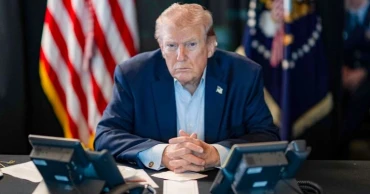
Trump says “Cuba is next” after US strikes on Venezuela, Iran
U.S. President Donald Trump on Friday suggested that “Cuba is next” in the sequence of U.S. actions following recent military operations in Venezuela and ongoing attacks on Iran, remarks that immediately drew global attention and added to regional tensions.
Speaking at the Future Investment Initiative conference in Miami, Florida, Trump made the comment in an off‑the‑cuff manner, urging the media to “pretend I didn’t say that,” before repeating that “Cuba’s next.” He did not outline specific plans for military or political action but his remarks were widely interpreted as signaling future pressure on Havana.
The comments come after U.S. forces raided Venezuela on January 3, ousting President Nicolás Maduro, and launched a series of large‑scale joint attacks with Israel on Iran beginning February 28. These operations have already heightened geopolitical tensions across multiple regions.
Cuba has been struggling under decades of U.S. sanctions and a severe economic and energy crisis, with the United Nations highlighting fuel shortages that have pushed parts of the country toward humanitarian stress.
Earlier this month, Trump had said that Cuba was “going to fall pretty soon,” although at that time he noted that the administration’s main focus remained on the conflict with Iran.
8 days ago
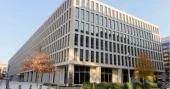
Education Department tells SAVE plan borrowers to prepare for repayment
The U.S. Education Department has said more than seven million student loan borrowers enrolled in the Biden-era SAVE repayment plan will begin receiving notices from Friday, instructing them to select a new plan to repay their debt.
The SAVE plan was recently struck down by a federal court, leaving borrowers in forbearance since July 2024 while legal challenges played out. Starting July 1, loan servicers will give borrowers 90 days to choose a new repayment plan, which for most will mean higher monthly payments.
Alexis Arredondo, a 2024 University of California, Los Angeles graduate with a microbiology degree, said he now faces tough choices. A first-generation college student with about $40,000 in debt, Arredondo joined the SAVE plan after graduation while working part-time and freelancing. He said higher monthly payments would be difficult, but a longer repayment period would increase interest costs.
The SAVE plan, one of several initiatives launched under President Joe Biden, offered more lenient terms than traditional plans, including reduced payments based on discretionary income and forgiveness for borrowers who made payments for at least 10 years and owed $12,000 or less.
Under Secretary of Education Nicholas Kent, citing the Trump administration’s perspective, said borrowers are responsible for repaying their loans. Meanwhile, experts warn that borrowers may face increased debt balances, as interest has accrued since the court blocked the plan last summer.
“The promises about fixing the broken student loan system are now colliding with reality,” said Mike Pierce, executive director of the Student Borrower Protection Center.
Notices from loan servicers will be sent in stages, with those enrolled in the SAVE plan the longest receiving them first. Borrowers will need to resume payments as early as this summer under new repayment options, which calculate the most lenient plan at a minimum of 10% of discretionary income.
8 days ago