usa

'Bomb cyclone' brings damaging winds, drenches California
Hurricane-force winds, surging surf and heavy rains from a powerful “atmospheric river” pounded California on Thursday, knocking out power to tens of thousands, causing flooding, and contributing to the deaths of at least two people, including a toddler whose home was crushed by a falling tree.
Raging seas damaged two historic piers, rock and mudslides closed down highways, and deep snow piled up at ski resorts in the latest in a series of atmospheric rivers — long plumes of moisture stretching far over the Pacific — to reach the drought-stricken state. The “Pineapple Express” storm originated near Hawaii and was pulled toward the West Coast by a rotating area of rapidly falling air pressure known as a “bomb cyclone.”
Even as rains were expected to let up and some evacuation orders lifted Thursday, crews were assessing damage, trying to restore power and beginning the cleanup while bracing for more wet and wild weather this weekend that could be particularly troublesome for communities along swollen rivers.
The blustery tempest that came ashore Wednesday knocked out power to more than 180,000 homes and businesses, according to poweroutage.us.
In Sonoma County, Aeon Tocchini, a 2-year-old boy, was killed when a redwood tree crumpled a section of his family's mobile home where he had been sitting on a sofa, authorities said. His father and neighbors freed the boy — nicknamed “Goldie” because of his light hair and sunny personality — but he couldn't be revived.
“He was the happiest child, always smiling and encouraging people,” his teary-eyed grandmother Aileen Tocchini said outside the damaged Occidental home where a red tricycle and yellow dump truck were buried under broken branches. "He was a love, an angel.”
Read more: Western NY death toll rises to 28 from cold, storm chaos
In Fairfield, a 19-year-old woman died after her vehicle hydroplaned on a flooded road and hit a utility pole, police said on Facebook.
The seaside village of Capitola in Santa Cruz County about 60 miles (100 kilometers) south of San Francisco suffered possibly the worst damage as waves that were forecast to top 25 feet (7.6 meters) crashed into homes and restaurants at the mouth of Soquel Creek and knocked out a section of its historic wooden pier.
Surf shattered the windows at Zelda’s on the Beach, tossing furniture around inside the eatery. The Wharf House restaurant, at the end of the Capitola Wharf, was cut off from the mainland after a midspan of the wooden structure collapsed.
Wharf House owner Willie Case said he had a “great degree of sadness” as he looked at the damage from a cliff above the village and lamented this his employees would be out of work until the pier is repaired. He noted that in 1982, the former restaurant at that site fell into the sea. He anticipates more damage as new storms roll in.
“I don’t think the party’s over yet,” he said.
Hurricane-strength gusts as high as 101 mph (162 kph) toppled trees onto buildings and roads, knocked out power lines and blew down the roof on a gas station in South San Francisco.
National Weather Service meteorologist Warren Blier said the wind speed recorded on a Marin County hilltop was among the highest he could recall in a 25-year career.
A large eucalyptus tree in Oakland crashed through the roof of Victoria James' apartment as she was preparing for dinner Wednesday. She and her children ran into the hallway, initially thinking it was an earthquake, and braced for an aftershock.
As water began pouring into their home, the family fled with only clothes on their backs – some of the children without shoes.
“There’s big holes in the ceiling. In my bedroom, the living room and the kitchen for sure,” she said from her car. “Everything’s damaged.”
A California Highway Patrol officer responding to a crash in San Jose was struck and injured by a tree on Highway 17, Officer Ross Lee said. The officer was expected to survive.
In Southern California, a helicopter crew plucked a man clinging to bamboo branches from an island in the Ventura River, Ventura County Fire Department spokesperson Andy VanSciver said.
Read more: Millions in US hunker down from frigid, deadly monster storm
The blustery winds and incessant rain were especially taxing for the homeless population in California, where 100,000 people live on the streets.
Glenn Scott, 59, who has arthritis in both knees and feet and needs a cane to walk, sought refuge on a bench outside the main San Francisco public library with a small group of other homeless people.
“I just have to do whatever I’ve gotta do and go wherever I can to get peace of mind,” Scott said.
California Gov. Gavin Newsom declared a state of emergency to allow for a quick response and to aid in cleanup from another powerful storm that hit just days earlier.
In the coastal community of Aptos, about dozen people were stuck at their homes because flooding, downed trees and debris blocked the road out, said Paul Karz, an employee at Seacliff State Beach. Violent waters had tossed picnic tables against a cliff, wiped out much of the beach boardwalk, damaged its wooden wharf and left only a “skeleton” of its sea wall.
Sonoma County authorities issued an evacuation warning for a string of towns along the Russian River, where greater flooding was expected by Sunday.
Sections of Highway 101 in Northern California were closed due to downed trees, while rockfall had shuttered several sections of the coastal Highway 1, including in the scenic Big Sur area.
As much as 2 feet (61 centimeters) of snow fell on Mammoth Mountain over 24 hours and more was expected, delivering another bonus to Sierra Nevada ski areas.
The storm came days after a New Year’s Eve downpour led to evacuations in Northern California, where at least four people died in flooding.
Atmospheric rivers, named by researchers in the 1990s, occur globally but are especially significant on the U.S. West Coast, where they create 30% to 50% of annual precipitation, according to the National Oceanic and Atmospheric Administration.
The storms won’t be enough to officially end the state’s ongoing drought, now entering its fourth year, but they have helped. Not including the latest deluge, recent storms moved parts of the state out of the “exceptional drought” category in the U.S. Drought Monitor. Most of the state, though, remains in the extreme or severe drought categories.
3 years ago

Violence hits Mexico cartel stronghold as 'Chapo' son nabbed
The sun wasn’t yet up in Culiacan when David Téllez and his family began making their way to the city’s airport for a return flight to Mexico after their vacation. But not long after they set out they encountered the first crude roadblock, an abandoned vehicle obstructing their way.
Téllez turned to social media to find out what was going on and saw that Sinaloa’s state capital, a stronghold of the cartel by the same name, was filled with roadblocks and gunfire.
It would be hours before Mexico’s defense secretary would confirm that the military had captured Ovidio Guzmán, a son of the notorious former Sinaloa cartel boss Joaquín “El Chapo” Guzmán, in a pre-dawn operation north of the city.
Just like that, Culiacan was thrust into a day of terror unlike any its residents had experienced since October 2019 — the last time authorities tried to capture the young Guzmán.
Mexican President Andrés Manuel López Obrador has railed against his predecessors’ aggressive efforts to capture drug lords, but his administration bagged the high-profile cartel figure just days before hosting U.S. President Joe Biden, and at least in the short term locals were paying the price.
Culiacan residents posted video on social media showing convoys of gunmen in pickup trucks and SUVs rolling down boulevards in the city. At least one convoy included a flatbed truck with a mounted gun in the back, the same kind of vehicle that caused chaos and mayhem in the 2019 unrest.
All entrances to the city were blocked and similar acts were playing out in other parts of Sinaloa.
Rev. Esteban Robles, spokesman for the Roman Catholic diocese in Culiacan, said that “there is an atmosphere of uncertainty, tension,” and that those who could were staying inside their homes.
“A lot of the streets are still blocked by the cars that were burned,” Robles said.
The Culiacan municipal government warned: “Don’t leave home! The safety of Culiacan’s citizens is the most important.” Schools, local government and many private businesses closed.
Oscar Loza, a human rights activist in Culiacan, described the situation as tense, with some looting at stores. On the south side of the city, where Loza lives, people reported convoys of gunmen moving toward a military base, but Loza said streets around his house were eerily quiet. “You don’t hear any traffic,” he said.
Read more: Biden intends to make his first visit to US-Mexico border
Téllez pressed on trying to get his family back to Mexico City, circumventing several more abandoned vehicles blocking roads and eventually making it to the airport.
There the family hurriedly checked in for their flight before employees of an airport restaurant urged them to shelter in a bathroom. Gunmen were arriving at the airport to prevent authorities from flying Guzmán out.
Juan Carlos Ayala, a Culiacan resident and Sinaloa University professor who studies the sociology of drug trafficking, said Ovidio Guzmán was an obvious target at least since 2019.
“Ovidio’s fate had been decided. Moreover, he was identified as the biggest trafficker of fentanyl and the most visible Chapos leader.” Asked how locals were reacting to the arrest, Ayala said “People have differing views, but I think the majority are with them" — the Sinaloa cartel.
That may be because of the money the cartel brings to the region, but also because locals know that even after federal troops withdraw, the cartel will still be there. As bad as it is, the cartel has ensured relative stability, if not peace.
Guzmán was indicted by the United States on drug trafficking charges in 2018. According to both governments, he had assumed a growing role among his brothers in carrying on their father's business, along with long- time cartel boss Ismael “El Mayo” Zambada.
Foreign Affairs Secretary Marcelo Ebrard confirmed that the government had received a request in 2019 from the United States for Guzmán’s arrest for purposes of extradition. He said that request would have to be updated and processed, but he added that first an open case in Mexico awaits Guzmán.
Read more: Mexico’s Supreme Court elects 1st female chief justice
Ismael Bojorquez, director of the local news outlet Riodoce, which specializes in coverage of the area’s drug trafficking, said the violent reaction had to do with the president’s less aggressive stance toward organized crime.
“They (cartels) have taken advantage of these four years to organize themselves, arm themselves, strengthen their structures, their finances,” he said. “I believe there are more weapons than three years ago. All of organized crime’s armies have strengthened, not just the Chapitos, and this is the price that society is paying for this strategy of the federal government.”
At Culiacan’s airport, a Mexican military flight was able to spirit Guzmán away to Mexico City. Téllez’s commercial flight waited for its chance to take off as two large military planes landed with troops as did three or four military helicopters, and marines and soldiers began deploying along the perimeter of the runway.
When the airline flight was finally preparing to accelerate, Téllez heard gunshots in the distance. Within 15 seconds the sound was suddenly more intense and much closer, and passengers threw themselves to the floor, he said.
He did not know the plane had been hit by gunfire until a flight attendant told them. No one was injured, but the plane hastily retreated to the terminal.
Samuel González, who founded Mexico’s special prosecutor’s office for organized crime in the 1990s, said Guzmán’s capture was a “gift” ahead of Biden’s visit. The Mexican government “is working to have a calm visit,” he said.
He called the shots that hit the commercial airliner “without a doubt an act of international terrorism” and suggested it could lead to very serious discussions between the two governments about the implications of these actions.
By evening, Téllez remained in the terminal. The government had shut down the airport, as well as airports in Los Mochis and Mazatlan for security reasons.
Asked if the attempt to capture Guzmán was worth another day of tension and uncertainty in Culiacan, Téllez said, “If they caught him, it was worth it.”
3 years ago

8 dead in Utah murder-suicide after wife sought divorce
A Utah man fatally shot his five children, his mother-in-law and his wife and then killed himself two weeks after the woman had filed for divorce, according to authorities and public records.
Police also revealed during a Thursday news conference that officers investigated the 42-year-old man and his family a “couple of years prior,” suggesting possible earlier problems inside the household. Enoch Police Chief Jackson Ames did not elaborate.
Investigators were aware of the divorce petition but didn’t know if it was the motivation behind the killings, Mayor Geoffrey Chesnut said.
City Manager Rob Dotson said people are “feeling loss, they’re feeling pain and they have a lot of questions.”
Community members gathered Thursday evening to mourn and sing hymns in a private vigil at a church up the street from the home where the victims were found the previous day.
Officials said they believe Michael Haight killed his wife, 40-year-old Tausha Haight; his mother-in-law; and the couple’s five children. Each appeared to have gunshot wounds.
The three girls and two boys ranged in age from 4 to 17 and included 7-year-old twins, authorities said. Tausha Haight’s mother, 78-year-old Gail Earl, was said to have been staying with the family to help during a difficult time.
Court records show that Tausha Haight filed for divorce Dec. 21. Her lawyer said Thursday that Haight had been served with the papers Dec. 27. The reasons for the divorce were unknown, in part because Utah law keeps details of divorce proceedings sealed from the public.
Tausha Haight and other members of the family were seen the night before the killings at a church group for young women, Chesnut said. Police were dispatched to the family’s home Wednesday afternoon for a welfare check after someone reported that she had missed an appointment earlier in the week, city officials said.
Family mass killings have become a disturbingly common tragedy across the country. In 2022 there were 17 of them, according to a database compiled by USA Today, The Associated Press and Northeastern University. Ten were murder-suicides, and 14 were shootings. The database defines a mass killing as four or more people slain, not including the assailant.
James Park, who represented Tausha Haight in the divorce case, said she had not expressed any fear that her husband would physically hurt her. Park declined to elaborate, citing the investigation into the killings. He said he met with Tausha Haight only twice, mostly recently on Tuesday, and she “was an incredibly nice lady.”
The White House said in a statement that President Joe Biden and first lady Jill Biden were mourning with the Enoch community. It called for further steps to reduce gun violence, now the leading cause of death for children in the U.S.
The home where the victims were found was decorated with Christmas lights and located in a neighborhood of newly built single-family houses on a ridge overlooking Enoch. It has a view of houses with snow-covered roofs and mountains in the distance. Half the surrounding block was cordoned off by police tape.
The Cedar City area, historically agricultural, is being transformed by new subdivisions. Cattle and sheep line the highway at the edge of town, along with signs that advertise “Custom New Homes” and recreation in southern Utah’s famous national parks.
Sharon Huntsman of Cedar City came to the neighborhood with a bouquet of white flowers Thursday morning. She said the deaths had deeply rattled Iron County and cried as she propped up the bouquet in the snow at a makeshift memorial where neighbors left stuffed animals and flowers.
“It’s just one big community,” she said. “We all have one heavenly father.”
Archives from a local newspaper capture moments in Michael Haight’s life beginning with a picture of him laughing as a baby in an announcement marking his first birthday. He was in the Boy Scouts and went on a church mission in Brazil.
In 2003, Haight married Tausha Earl at a church temple. She was from Overton, Nevada, about two hours south of Cedar City, where he grew up. As an adult, Haight worked as an insurance agent.
Tausha Haight’s Facebook page showed pictures of the family looking happy in picturesque settings of Utah, and in front of a large statue of Jesus.
Jennie Earl, who is Tausha’s sister-in-law and a member of the Utah State Board of Education, posted a photo on Facebook of Tausha and her children and wrote about the “stiff competition” to be their favorite aunt.
“I pray that Christ’s love will mend our broken hearts and fill us with forgiveness and peace,” Earl wrote. She declined to comment when reached by The Associated Press.
Community members who gathered at Enoch City Hall to listen to Thursday’s news conference said it was wrenching to have to tell their own children that their peers may not be at school the next day.
“We told them last night,” said city councilman Richard Jensen, a father of eight. “We gathered them around for a family prayer type of thing. We told them a family in town, everyone had been killed and when they show up to school tomorrow it’s possible kids will be missing.“
The killings rocked the small town of Enoch in southern Utah about halfway between Salt Lake City and Las Vegas. It’s in one of the fastest-growing areas of the country, and communities of new homes on big lots are made up primarily of large families that belong, like most in Utah, to The Church of Jesus Christ of Latter-day Saints, known widely as the Mormon church. Many residents work and do business in nearby Cedar City, a city of about 35,000 that serves as a commercial hub for Enoch, which doesn’t have its own downtown.
The deceased were members of the faith and well known in town. Many residents served in church alongside members of the slain family or went to school with the children, city officials said.
“This is a tremendous blow to many families who have spent many nights with these individuals who are now gone,” Chesnut said.
3 years ago
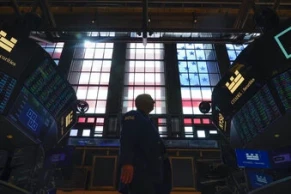
Wall Street braces for earnings to get hit by inflation
Wall Street expects companies to face a reckoning with the realities of hot inflation, a slowing economy and rising interest rates in the latest round of earnings results.
Analysts are forecasting an earnings contraction of about 3.5% for the fourth quarter, according to FactSet. That estimate, as of the end of last year, is an about-face from forecasts back in September of 3.5% growth and a sharp reversal from 8.5% growth forecasts in June.
The dismal forecast for the fourth quarter follows is part of a trend of shrinking earnings growth throughout 2022 as inflation tightened its grip on consumers. Spending remained strong in many retail areas and companies raised prices on everything from food to clothing to offset the impact of higher raw material costs and inflation in general. Many companies went further than just maintaining profits and increased their profit margins.
Corporate profits, though, aren’t likely going to continue bucking an economy that showed clear signs of damage during the fourth quarter, particularly with consumers increasingly cutting back on spending. Many analysts have been forecasting that the economy will slip into some level of recession in 2023 and company profits are starting to reflect that. The Federal Reserve’s aggressive fight against inflation carries the risk of slowing the economy too much.
Read more: Wall Street points lower after two days of gains
Morgan Stanley, in a December report, warned investors to brace for a rough round of corporate earnings in the coming month and into the rest of 2023.
“The fixation on inflation and the Fed continues, but markets appear to have moved past it and onto the real concern— earnings growth/recession,” the report said. “Rates and inflation may have peaked but we see that as a warning sign for profitability, a reality we believe is still underappreciated but can no longer be ignored.”
Analysts expect communications companies and technology firms to be among the biggest losers during the fourth quarter. Lower demand has been cutting into technology product sales and that has in turn led to warnings from chipmakers and other companies. Computer maker HP and chipmaker Micron have both announced job cuts as a part of their plans to deal with weaker demand. Analysts are forecasting a slight earnings contraction for both companies.
The weakening economy has cut into advertising budgets, which have raised concerns for companies including Facebook and Google. Retailers and other companies that rely on discretionary spending are also expected to get hit hard in the fourth quarter.
Read more: Asian shares decline after retreats on Wall Street, Europe
Analyst expect energy companies to keep powering past other sectors as the big earnings winners during the fourth quarter. The sector has outperformed all others in 2022 amid higher oil and natural gas prices.
3 years ago

8 found fatally shot in Utah home, including 5 children
Eight people including five children were found dead from gunshot wounds in a southern Utah home Wednesday, according to authorities who did not provide more details or a potential motive for the killings.
The victims were found when police did a welfare check at the residence, according to a statement by city officials in Enoch, a city of about 8,000 people located 245 miles (394 kilometers) south of Salt Lake City.
Read more: 3 dead in Paris shooting; suspect arrested
Police said they did not detect any threat to the public.
Iron County School District officials said in a letter sent to parents that the five children attended schools in the district.
Enoch City Manager Rob Dotson said the community was sent reeling by news of the eight bodies and that the deceased — all members of one family — were well known in the southern Utah town.
“Many of us have served with them in church, in the community and gone to school with these individuals,” Dotson said in a video statement Wednesday night.
“This community at this time is hurting. They’re feeling loss, they’re feeling pain and they have a lot of questions,” Dotson added, noting that officials planned on releasing more information as it becomes available and the police investigation progresses.
Read more: 5 dead and suspect killed in Toronto area condo shooting
Welfare checks based on calls to the police department like the one that led them to the residence where the bodies were found are routine when individuals are not seen for extended periods of time, Dotson said.
Utah Gov. Spencer Cox offered condolences in a tweet Wednesday night.
3 years ago

Biden intends to make his first visit to US-Mexico border
President Joe Biden intends to visit the U.S.-Mexico border — his first since taking office — in connection with his meeting next week in Mexico City with the leaders of Mexico and Canada.
“That’s my intention, we’re working out the details now,” Biden told reporters Wednesday during a trip to Kentucky.
Biden said upon his return to the White House that he hoped to see “what's going on” at the border and also planned to make remarks about border security on Thursday.
Read more: Analysis: Biden, Zelenskyy try to keep Congress from balking
There have been large increases in the number of migrants at the border even as a U.S. public health law remains in place that allows American authorities to turn away many people seeking asylum in the United States. Republican leaders have criticized the president for policies that they say are ineffective on border security and they have questioned why he has not made a trip there yet.
The increased focus from Biden on the border also comes as the president prepares for a 2024 reelection bid. His sole declared potential rival, Donald Trump, rose to the top of the GOP ranks by animating the party's base voters with his hardline stances on immigration.
But there was some praise Wednesday after the news.
“I’m pleased President Biden will finally visit our southern border - which has been completely surrendered to the cartels, smugglers, and human traffickers,” tweeted Sen. Lindsey Graham, R-S.C., among those most critical.
Among the complaints on border security by Republicans is the amount of fentanyl coming into the U.S. via Mexico. A 2022 report from a bipartisan federal commission found that fentanyl and similar drugs are being made mostly in labs in Mexico from chemicals shipped primarily from China.
And fentanyl and other lab-produced synthetic opioids now are driving an overdose crisis deadlier than any the U.S. has ever seen. But drug control advocates and experts say an anti-drug policy that relies on tighter border security is dangerous and likely futile. It's too easy to move in small, hard-to-detect quantities.
Drug trafficking and immigration are among the top talking points at the summit Monday and Tuesday when Biden and Canadian Prime Minister Justin Trudeau are hosted by Mexico President Andres Manuel Lopez Obrador.
Early in his presidency, Biden put Vice President Kamala Harris in charge of the White House effort to tackle the migration challenge at the border and work with Central American nations to address central causes of the problem. She visited El Paso, Texas, in June 2021 and was criticized for choosing a location too far from the epicenter of border crossings that straining federal resources. The number of migrants crossing the border has only risen.
Read more: Biden signs gay marriage law, calls it ‘a blow against hate’
For now, the Supreme Court has for now kept in place Trump-era restrictions, often known as Title 42 in reference to a 1944 public health law, after Biden acted to end them and Republicans sued in response. Title 42 was invoked to prevent the spread of COVID-19, but there always has been criticism that the restrictions were used as a pretext by then-President Donald Trump to seal off the border.
Biden also has yet to lay out any systemic changes to manage an expected surge of migrants should the health restrictions end. And the president is limited in what he can do without immigration law changes. But in Congress, a bipartisan immigration bill was buried shortly before Republicans assumed control of the House.
Biden made his comment about the upcoming visit during a stop in Kentucky at a highway bridge that is receiving federal dollars under the bipartisan infrastructure law.
Trump visited the U.S. side of the border as president several times times, including one trip to McAllen, Texas, where he claimed Mexico would pay for the border wall.
American taxpayers ended up covering the costs. Mexican leaders had flatly rejected the idea when Trump pressed them early on. "NO,” Enrique Peña Nieto, then Mexico’s president, tweeted in May 2018. “Mexico will NEVER pay for a wall. Not now, not ever. Sincerely, Mexico (all of us).”
3 years ago

Supply chain woes caused US auto sales to fall 8% last year
Shortages of computer chips and other parts continued to hobble the U.S. auto industry last year, contributing to vehicle sales dropping 8% from 2021 to their lowest level in more than a decade.
But there's good news for consumers in the gloomy numbers: Vehicle supplies on dealer lots are growing, albeit slowly, and automakers expect at least a small easing in prices this year as inventories grow.
Automakers reported Wednesday that they sold 13.9 million cars, trucks, SUVs and vans last year as the parts shortage limited factory output amid high demand for new vehicles. It was the lowest sales number since 2011 when the economy was recovering from the Great Recession.
But sales were up slightly in the fourth quarter and inventories grew as parts supplies improved enough to increase production a little. Analysts are now expecting sales to grow by roughly 1 million to around 14.8 million this year as demand remains strong. But they'll still be far short of the normal 17 million per year before the pandemic.
With many models still in short supply, though, the average new vehicle price rose 2.5% in December to a record of just over $46,000, according to J.D Power.
There are signs, however, that prices may be starting to ebb a little as inventories expand.
Toyota, for instance, finished the year with just under 24,000 vehicles on Toyota and Lexus brand dealer lots nationwide. That's up from about 19,000 at the end of 2021, but still far short of the 300,000 during normal years before the pandemic.
Read more: US economy likely returned to growth after shrinking in first 2 quarters of 2022
The improvement, although small, is allowing consumers to haggle a little on some slower-selling vehicles such as sedans, and even some luxury vehicles. But they're still getting top dollar for gas-electric hybrids and other more popular vehicles that are sold before they arrive on lots, said David Christ, general manager of the Toyota Division.
For most of last year, people who wanted new vehicles had to pay sticker price or above and take whatever models and colors dealers could get. But dealers have told Christ that changed a bit in the past two or three months for models that aren't as popular. Plus, he said more people are interested in lower-cost vehicles because inflation and higher interest rates are taking a bite out of their budgets.
“They're coming in and saying, ‘Hey, can I get a deal here?'" Christ said. “I do think that on some vehicles, not just in our brand, and across the industry, there has become a little more of a buyer's market where the customer can negotiate.”
Whether that holds up all year remains to be seen. If demand stays strong and people are willing to pay sticker price, then dealers will get that, Christ said. But if demand wanes or supplies increase dramatically, discounts could rise and prices could drop a bit.
Jessica Caldwell, executive director of insights at Edmunds.com, said Toyota's experience is likely to repeat itself through the industry with small price decreases on some models.
“There isn't as much disposable income to be put into a vehicle,” she said. “We've seen prices high before, but we've never really seen higher prices with the (higher) interest rates.”
But electric vehicles and other hot sellers will remain expensive because people want to buy them now, she added.
Read more: UK’s Sunak vows to halve inflation, tackle illegal migration
Caldwell doesn't see vehicle supplies or prices returning to pre-pandemic levels this year, and she's not sure if we'll ever get back to 2019 levels.
The computer chip shortage dates to the spring of 2020, when automakers were forced to shut down factories due to rapidly increasing COVID-19 cases. Chip makers shifted production to consumer electronics to feed a computer and gaming sales boom when people were stuck at home. When the auto plants restarted earlier than expected, chip makers weren't making as many semiconductors for automobiles, which must be made to withstand vibration and huge temperature extremes.
Auto chip production has improved, but still isn't back to pre-pandemic levels, so auto plants still aren't back to their full output.
As a result, the 13.9 million vehicles that automakers sold last year was about 1.2 million below 2021 numbers, according to Motorintelligence.com.
General Motors, with full-year sales up 2.5%, retook its traditional spot as the nation's top selling automaker. Toyota, which won the crown in 2021, saw its sales fall 9.6% last year. Ford reports sales on Thursday.
Sales at Stellantis, formerly Fiat Chrysler, dropped 13%, while Honda sales plummeted 32.9%. Hyundai posted just under a 1% increase to outsell Nissan, whose sales tumbled 25.4%. Kia sales fell 1.1% for the year, while Subaru was down 4.7%.
Electric vehicle sales hit more than 807,000 last year, up almost 65% from 2021.
Pickups and SUVs were 77.3% of sales while cars dropped to 22.7%.
3 years ago
Evacuations ordered as California braces for rain, floods
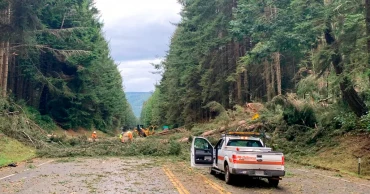
As a huge storm approached California on Wednesday, officials began ordering evacuations in a high-risk coastal area where mudslides killed 23 people in 2018, while residents elsewhere in the state scrambled to find sandbags, and braced themselves for flooding and power outages.
California Gov. Gavin Newsom declared a state of emergency to allow for a quick response and to aid in cleanup from another powerful storm just days earlier. Dozens of flights were cancelled at the San Francisco International Airport, and South San Francisco schools preemptively cancelled Thursday classes. As the storm intensified, state officials warned residents in Northern California to stay off the roads.
The first evacuations were ordered for those living in the burn scar areas of three recent wildfires in Santa Barbara County, where heavy rain is expected overnight, and could cause widespread flooding and unleash debris flows in several areas. Among them is the tony town of Montecito, home to many celebrities, including Oprah Winfrey and Prince Harry and his wife, Meghan Markle.
“We anticipate that this may be one of the most challenging and impactful series of storms to touch down in California in the last five years,” said Nancy Ward, the new director of the California Governor’s Office of Emergency Services.
Officials asked drivers to stay off the roads unless absolutely necessary — and to stay informed by signing up for updates from emergency officials about downed trees and power lines, and flooding. In Northern California, a 25-mile (40-kilometer) stretch of Highway 101 was closed between the towns of Trinidad and Orick due to several downed trees.
Before the storm arrives late Wednesday, Santa Barbara County Sheriff Bill Brown said people should evacuate the areas impacted by the Alisal Fire last year, the Cave Fire in 2019 and the devastating Thomas Fire in 2017, one of the largest in California history.
On Jan. 9, 2018, massive torrents carrying huge boulders, mud and debris roared down coastal mountains, and through the town of Montecito to the shoreline, killing 23 people and destroying more than 100 homes. Among those killed were two children whose bodies were never found.
Read more: 48 deaths reported in US from massive storm
Montecito Fire Department Chief Kevin Taylor said Wednesday that homes near waterways are at the greatest risk.
“What we’re talking about here is a lot of water coming off the top of the hills, coming down into the creeks and streams and as it comes down, it gains momentum and that’s what the initial danger is,” he said.
Storms in the last 30 days have produced between 8 to 13 inches of rain, soaking coastal hills in Santa Barbara County. The current storm is projected to drop up to 10 inches of rain in the area, Taylor said.
“This cumulative rain ... is what causes our risk,” he said.
The storm, set to be in full force in Northern California by Wednesday evening, is one of three so-called atmospheric river storms in the last week to reach the drought-stricken state. Because the states' major reservoirs are at a record low from a dry three-year period, they have plenty of room to fill with more water from the impending storm, officials said.
Still, trees are already stressed from years of limited rain. Now that the grounds are suddenly saturated and winds are heavy, trees are more likely to fall. That could cause widespread power outages or create flood hazards, said Karla Nemeth, director of the state’s Department of Water Resources.
“We are in the middle of a flood emergency and also in the middle of a drought emergency,” she said during an emergency briefing.
The storm comes days after a New Year’s Eve downpour led to the evacuations of people in rural Northern California communities and the rescue of several motorists from flooded roads. A few levees south of Sacramento were damaged.
In the San Francisco Bay Area, 8,500 sandbags distributed by officials weren’t enough to reach demand Wednesday as forecasters warned of imminent flooding. The South San Francisco Unified School District announced classes for its 8,000 students would be canceled Thursday “out of an abundance of caution.”
Heavy downpours accompanied by winds with gusts of up to 60 mph (96 kph) were expected later Wednesday and through Thursday, making driving conditions difficult, the National Weather Service said. In Southern California, the storm was expected to peak in intensity overnight, with Santa Barbara and Ventura counties likely to see the most rain, forecasters said.
Read more: Wild winter storm envelops US, snarling Christmas travel
Aaron Johnson, Pacific Gas & Electric regional vice president for the Bay Area, said the company has more than 3,000 employees working in crews of three to five people to assess damages to their equipment and restore power as soon as possible.
Robert O’Neill, an insurance broker who lives and works just south of San Francisco, said he lined up to get sandbags for his garage and for a co-worker’s home to prepare for the storm.
As president of Town & Country Insurance Services, he gave employees the option of working from home Wednesday, which many did, he said. He plans to leave the office early and head home where he has go-bags packed with clothes, medicine, electronic chargers and important papers. He has sleeping bags and three days’ worth of water, nuts and protein bars.
“We’re in a big city, so we wouldn’t be too stranded too long, but you never know,” he said.
The storms in California still aren’t enough to officially end the drought, now entering its fourth year. The U.S. Drought Monitor showed that most of the state is in severe to extreme drought.
Elsewhere, in the Midwest, ice and heavy snow has taken a toll this week, closing down schools in Minnesota and western Wisconsin — and causing a jet to go off an icy taxiway after landing in a snowstorm in Minneapolis. No passengers were injured, Delta airlines said.
To the south, a possible tornado damaged homes, downed trees and flipped a vehicle on its side in Montgomery, Alabama, early Wednesday. Christina Thornton, director of the Montgomery Emergency Management Agency, said radar indicated a possible, but unconfirmed, tornado. The storm had extremely high winds and moved through the area before dawn, she said.
Staff from the National Weather Service's Chicago office planned to survey storm damage on Wednesday following at least six tornados, the largest number of rare January tornadoes recorded in the state since 1989.
3 years ago

GOP's McCarthy voted down time after time for House speaker
House Republicans flailed through a long second day of fruitless balloting Wednesday, unable to either elect their leader Kevin McCarthy as House speaker or come up with a new strategy to end the political chaos that has tarnished the start of their new majority.
Yet McCarthy wasn’t giving up, even after the fourth, fifth and sixth ballots produced no better outcome and he was left trying to call off a night-time session. Even that was controversial, as the House voted 216-214 — amid shouting and crowding —to adjourn for the night.
“No deal yet,” McCarthy said shortly before that as he left a lengthy closed-door dinner-time meeting with key holdouts and his own allies. “But a lot of progress.”
No progress at all was evident though the day of vote-after-vote-after vote as Republicans tried to elevate McCarthy into the top job. The ballots were producing almost the same outcome, 20 conservative holdouts still refusing to support him, and leaving him far short of the 218 typically needed to win the gavel.
In fact, McCarthy saw his support slip to 201, as one fellow Republican switched to vote simply present.
Seeing no quick way out of the political standoff, Republicans voted abruptly late in the day to adjourn for a few hours as they desperately searched for an endgame to the chaos of their own making. They were due back in the evening, but McCarthy wanted to take a break until Thursday.
“I think people need to work a little more,” McCarthy said. "I don’t think a vote tonight would make any difference. But a vote in the future could.”
But even a simple motion to adjourn erupted into a floor fight, with Democrats and some Republicans insisting on a lengthy vote.
McCarthy, the California Republican, vowed to fight to the finish for the speaker's job despite the grueling spectacle, unlike any in modern times, that threw the new majority into tumult for the first days of the new Congress. Animated private discussions broke out on the chamber floor and in huddled meeting throughout the Capitol between McCarthy supporters and detractors searching for an offramp.
Read more: Ex-combat pilot's victory in the US House solidifies Republican control
“Well, it’s Groundhog Day,” said Rep. Kat Cammack, R-Fla., in nominating McCarthy on the sixth ballot.
She said, “To all Americans watching right now, We hear you. And we will get through this — no matter how messy.”
But the right-flank conservatives, led by the Freedom Caucus and aligned with Donald Trump, appeared emboldened by the standoff — though Trump publicly backed McCarthy,
“This is actually an invigorating day for America,” said Rep. Byron Donalds, R-Fla., who was nominated three times by his conservative colleagues as an alternative. “There’s a lot of members in the chamber who want to have serious conversations about how we can bring this all to a close and elect a speaker.”
The House gaveled in at noon, but no other work could be done — swearing in new members, forming committees, tackling legislation, investigating the Biden administration — until the speaker was elected.
“I still have the most votes,” McCarthy said at the start of the session. “At the end of the day, we’ll be able to get there.”
But the dynamic proved no different from Day One, as Democrats re-upped their leader, Rep. Hakeem Jeffries, for speaker, and Donalds offered his challenge to McCarthy in another history making moment. Both Jeffries and Donalds are Black.
“This country needs leadership,” said Rep. Chip Roy, the Texas Republican noting the first time in history two Black Americans were nominated for the high office, and lawmakers from both parties rose to applaud.
It was the first time in 100 years that a nominee for House speaker could not take the gavel on the first vote, but McCarthy appeared undeterred. Instead, he vowed to fight to the finish.
The disorganized start to the new Congress pointed to difficulties ahead with Republicans now in control of the House.
President Joe Biden, departing the White House for a bipartisan event in Kentucky with Senate GOP leader Mitch McConnell, said “the rest of the world is looking” at the scene on the House floor.
“I just think it’s really embarrassing it’s taking so long," Biden said. “I have no idea” who will prevail.
Tensions flared among the new House majority as their campaign promises stalled out. Not since 1923 has a speaker's election gone to multiple ballots, and the longest and most grueling fight for the gavel started in late 1855 and dragged out for two months, with 133 ballots, during debates over slavery in the run-up to the Civil War.
A new generation of conservative Republicans, many aligned with Trump’s Make America Great Again agenda, want to upend business as usual in Washington, and were committed to stopping McCarthy’s rise without concessions to their priorities.
Read more: GOP's narrow House victory complicates its ambitious agenda
But even Trump's strongest supporters disagreed on this issue. Rep. Lauren Boebert, a firm Colorado conservative who nominated Donalds the second time, called on the former president to tell McCarthy, “`Sir, you do not have the votes and it’s time to withdraw.”
Earlier Wednesday, Trump had done the opposite, urging Republicans to vote for McCarthy. “Close the deal, take the victory," he wrote on his social media site, using all capital letters. “Do not turn a great triumph into a giant & embarrassing defeat.”
As the spectacle of voting dragged on, McCarthy's backers implored the holdouts to fall in line for the California Republican.
“I do think members on both sides of this are getting a lot of pressure now,” said Rep. Tom Cole, R-Okla. “So I think the message from home is, ‘Hey, sort this stuff out, we don’t have time for the small stuff and the egos.’”
The standoff over McCarthy has been building since Republicans won the House majority in the midterm elections. While the Senate remains in Democratic hands, barely, House Republicans are eager to confront Biden after two years of the Democrats controlling both houses of Congress. The conservative Freedom Caucus led the opposition to McCarthy, believing he’s neither conservative enough nor tough enough to battle Democrats.
To win support, McCarthy has already agreed to many of the demands of the Freedom Caucus, who have been agitating for rules changes and other concessions that give rank-and-file members more influence in the legislative process. He has been here before, having bowed out of the speakers race in 2015 when he failed to win over conservatives.
"Everything’s on the table," said ally Rep. Patrick McHenry, R-N.C. — except, he said, having McCarthy step aside. “Not at all. That is not on the table.”
Democrats enthusiastically nominated Jeffries, who is taking over as party leader, as their choice for speaker. He won the most votes overall, 212.
If McCarthy could win 213 votes, and then persuade the remaining naysayers to simply vote present, he would be able to lower the threshold required under the rules to have the majority.
It's a strategy former House speakers, including outgoing Democratic Speaker Nancy Pelosi and Republican Speaker John Boehner had used when they confronted opposition, winning the gavel with fewer than 218 votes.
One Republican, Rep. Victoria Spartz of Indiana, voted present on multiple rounds, but it made no difference in the immediate outcome.
3 years ago

Transgender Missouri inmate executed for fatal stabbing
A Missouri inmate was put to death Tuesday for a 2003 killing, becoming what is believed to be the first transgender woman executed in the U.S.
Amber McLaughlin, 49, was convicted of stalking and killing a former girlfriend, then dumping the body near the Mississippi River in St. Louis. McLaughlin’s fate was sealed earlier Tuesday when Republican Gov. Mike Parson declined a clemency request.
McLaughlin spoke quietly with a spiritual adviser at her side as the fatal dose of pentobarbital was injected. McLaughlin breathed heavily a couple of times, then shut her eyes. She was pronounced dead a few minutes later.
“I am sorry for what I did,” McLaughlin said in a final, written, statement. “I am a loving and caring person.”
READ: Transgender Missouri inmate scheduled to be executed Tuesday
A database on the website for the anti-execution Death Penalty Information Center shows that 1,558 people have been executed since the death penalty was reinstated in the mid-1970s. All but 17 of those put to death were men. The center said there are no known previous cases of an openly transgender inmate being executed. McLaughlin began transitioning about three years ago at the state prison in Potosi.
The clemency petition cited McLaughlin’s traumatic childhood and mental health issues, which the jury never heard during her trial. A foster parent rubbed feces in her face when she was a toddler and her adoptive father used a stun gun on her, according to the petition. It cited severe depression that resulted in multiple suicide attempts, both as a child and as an adult.
The petition also included reports citing a diagnosis of gender dysphoria, a condition that causes anguish and other symptoms as a result of a disparity between a person’s gender identity and their assigned sex at birth. But McLaughlin’s sexual identity was “not the main focus” of the clemency request, her attorney, Larry Komp, said.
In 2003, long before transitioning, McLaughlin was in a relationship with Beverly Guenther. After they stopped dating, McLaughlin would show up at the suburban St. Louis office where the 45-year-old Guenther worked, sometimes hiding inside the building, according to court records. Guenther obtained a restraining order, and police officers occasionally escorted her to her car after work.
Guenther’s neighbors called police the night of Nov. 20, 2003, when she failed to return home. Officers went to the office building, where they found a broken knife handle near her car and a trail of blood. A day later, McLaughlin led police to a location near the Mississippi River in St. Louis, where the body had been dumped. Authorities said she had been raped and stabbed repeatedly with a steak knife.
McLaughlin was convicted of first-degree murder in 2006. A judge sentenced McLaughlin to death after a jury deadlocked on the sentence. Komp said Missouri and Indiana are the only states that allow a judge to sentence someone to death.
A court in 2016 ordered a new sentencing hearing, but a federal appeals court panel reinstated the death penalty in 2021.
“McLaughlin terrorized Ms. Guenther in the final years of her life, but we hope her family and loved ones may finally have some peace,” Parson said in a written statement after the execution.
READ: Israel indicts soldiers for trying to bomb Palestinian home
McLaughlin began transitioning about three years ago, according to Jessica Hicklin, who spent 26 years in prison for a drug-related killing before being released a year ago. Hicklin, now 43, sued the Missouri Department of Corrections, challenging a policy that prohibited hormone therapy for inmates who weren’t receiving it before being incarcerated. She won the lawsuit in 2018 and became a mentor to other transgender inmates, including McLaughlin. McLaughlin did not receive hormone treatments, however, Komp said.
Hicklin described McLaughlin as a painfully shy person who came out of her shell after she decided to transition.
“She always had a smile and a dad joke,” Hicklin said. “If you ever talked to her, it was always with the dad jokes.”
The Bureau of Justice Statistics has estimated there are 3,200 transgender inmates in the nation’s prisons and jails. Perhaps the best-known case of a transgender prisoner seeking treatment was that of Chelsea Manning, the former Army intelligence analyst who served seven years in federal prison for leaking government documents to Wikileaks until President Barack Obama commuted the sentence in 2017. The Army agreed to pay for hormone treatments for Manning in 2015.
In 2015, the U.S. Department of Justice wrote in a court filing that state prison officials must treat an inmate’s gender identity condition just as they would treat other medical or mental health conditions, regardless of when the diagnosis occurred.
The only woman ever executed in Missouri was Bonnie B. Heady, put to death on Dec. 18, 1953, for kidnapping and killing a 6-year-old boy. Heady was executed in the gas chamber, side by side with the other kidnapper and killer, Carl Austin Hall.
Nationally, 18 people were executed in 2022, including two in Missouri. Kevin Johnson was put to death in November for the ambush killing of a Kirkwood, Missouri, police officer. Carman Deck was executed in May for killing James and Zelma Long during a robbery at their home in De Soto, Missouri.
Another Missouri inmate, Leonard Taylor, is scheduled to die Feb. 7 for killing his girlfriend and her three young children.
3 years ago