usa
Trump's FBI director to face skeptical Democrats at Senate confirmation hearing
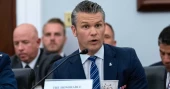
Kash Patel, President Donald Trump’s pick to lead the FBI, will encounter deeply skeptical questioning from Democratic senators Thursday about his loyalty to the president and stated desire to overhaul the bureau as he faces a high-stakes hearing that will help determine his path toward confirmation.
Patel, a Trump loyalist who has railed against the FBI over its investigations into the president and claimed that Jan. 6 rioters were mistreated by the Justice Department, was picked in November to replace Christopher Wray, who led the nation's premier federal law enforcement agency for more than seven years.
A former aide to the House Intelligence Committee and an ex-federal prosecutor who served in Trump's first administration, Patel has alarmed critics with rhetoric — in dozens of podcasts and books he has authored — in which he has demonstrated fealty to Trump, lambasted the decision-making of the agency he's now been asked to lead and identified by name officials he believes should be investigated.
In one such podcast interview last year, he said that if he were in charge of the FBI, he would “shut down” the bureau’s headquarters building on Pennsylvania Avenue in Washington, D.C., and “reopen it the next day as a museum of the ‘deep state.’”
“And I’d take the seven thousand employees that work in that building and send them across America to go chase down criminals. Go be cops," he added.
While signing Laken Riley Act, Trump says he’ll send ‘worst criminal aliens’ to Guantanamo
Patel has for years been a loyal ally to Trump, finding common cause over their shared skepticism of government surveillance and the “deep state” — a pejorative catchall used by Trump to refer to government bureaucracy.
He was part of a small group of supporters during Trump’s recent criminal trial in New York who accompanied him to the courthouse, where he told reporters that Trump was the victim of an “unconstitutional circus.”
That close bond would depart from the modern-day precedent of FBI directors looking to keep presidents at arm’s length.
Several Democratic senators on the Judiciary Committee who have met with Patel, including Sen. Dick Durbin of Illinois, have issued statements sounding the alarm and signaling their opposition to the pick. The lawmakers foreshadowed their interest in Patel by directing numerous questions about him to Pam Bondi, Trump's pick for attorney general, when she had her own confirmation hearing earlier this month.
“I’m deeply concerned about his fitness to serve as FBI Director. He has neither the experience, the judgment, nor the temperament to head this critical agency,” Durbin said in a statement.
Republican allies of Trump, who share the president's belief that the FBI has become politicized, have rallied around Patel and pledged to support him, seeing him as someone who can shake up the bureau and provide needed change.
Sen. Thom Tillis, a North Carolina Republican who will introduce Patel on Thursday, said that he had spent hours with him “pinning down every single thing I expect to see in the hearing.”
“So much so,” he added, “that I've created a bingo card for all the things that I know the Democrats are going to say about him that I believe are unfair, and I think he's ready to respond to.”
Tillis said that Patel is ready to respond to questions about his book, including the enemies list and the people mentioned in its glossary.
10 months ago
While signing Laken Riley Act, Trump says he’ll send ‘worst criminal aliens’ to Guantanamo
President Donald Trump on Wednesday signed the Laken Riley Act into law, giving federal authorities broader power to deport immigrants in the U.S. illegally who have been accused of crimes. He also announced at the ceremony that his administration planned to send the “worst criminal aliens” to a detention center in Guantanamo Bay, Cuba.
The bipartisan act, the first piece of legislation approved during Trump’s second term, was named for Riley, a 22-year-old Georgia nursing student who was slain last year by a Venezuelan man in the U.S. illegally.
“She was a light of warmth and kindness,” Trump said during a ceremony that included Riley’s parents and sister. “It’s a tremendous tribute to your daughter what’s taking place today, that’s all I can say. It’s so sad we have to be doing it.”
Trump has promised to drastically increase deportations, but he also said at the signing that some of the people being sent back to their home countries couldn’t be counted on to stay there.
“Some of them are so bad that we don’t even trust the countries to hold them because we don’t want them coming back, so we’re gonna send ’em out to Guantanamo,” Trump said. He said that he’d direct federal officials to get facilities in Cuba ready to receive immigrant criminals.
“We have 30,000 beds in Guantanamo to detain the worst criminal aliens threatening the American people,” the president said.
The White House announced a short time later that Trump had signed a presidential memorandum on Guantanamo. Migrant rights groups quickly expressed dismay.
“Guantanamo Bay’s abusive history speaks for itself and in no uncertain terms will put people’s physical and mental health in jeopardy,” Stacy Suh, program director of Detention Watch Network, said in a statement.
Trump said the move would double U.S. detention lockup capacities, and Guantanamo is “a tough place to get out of.”
The Guantanamo facility could hold “dangerous criminals” and people who are “hard to deport,” said a Trump administration official speaking on condition of anonymity because they weren’t authorized to speak publicly on the matter.
Defense Secretary Pete Hegseth said his department can set up a detention center “very rapidly” and called Guantanamo Bay “a perfect spot.”
“We don’t want illegal criminals in the United States, not a minute longer than they have to be,” he said Wednesday evening on Fox News’ “Jesse Watters Primetime.” “Move them off to Guantanamo Bay, where they can be safely maintained until they are deported to their final location, their country of origin.”
Homeland Security Secretary Kristi Noem said the administration would seek funding via spending bills Congress will eventually consider.
The U.S. military base has been used to house detainees from the U.S. war on terrorism for years. But authorities have also detained migrants at sea at a facility known as the Migrant Operations Center on Guantanamo, a site the U.S. has long leased from the Cuban government. Many of those housed there have been migrants from Haiti and Cuba.
Read: Trump to halt federal loans, grants for spending review
The U.S. has leased Guantanamo land from Cuba for more than a century. Cuba opposes the lease and typically rejects the nominal U.S. rent payments. Cuban President Miguel Díaz-Canel said Trump wanting to ship immigrants to the island is “an act of brutality.”
“The U.S. government’s decision to imprison migrants at the Guantanamo Naval Base, in an enclave where it created torture and indefinite detention centers, shows contempt for the human condition and international law,” Cuban Foreign Minister Bruno Rodríguez wrote in a post on X.
The Supreme Court ruled in 2008 that enemy combatants in the war on terror held without charge at the military prison at Guantanamo had the right to challenge their detention in federal court. But the justices did not decide whether the president had the authority to detain people at all.
Before Trump took office, the Democratic administrations of Barack Obama and Joe Biden worked to reduce the number of terrorism suspects held at Guantanamo.
Laken Riley was out for a run in February 2024 when she was killed by Jose Antonio Ibarra, a Venezuelan national who was in the country illegally. Ibarra was found guilty in November and sentenced to life without parole.
Ibarra had been arrested for illegal entry in September 2022 near El Paso, Texas, and released to pursue his case in immigration court. Federal officials say he was arrested by New York police in August 2023 for child endangerment and released. Police say he was also issued a citation for shoplifting in Georgia in October 2023.
The act quickly passed the newly Republican-controlled Congress with some Democratic support even though opponents said it possibly could lead to large roundups of people for offenses as minor as shoplifting.
Read more: Trump signs order likely leading to future transgender troop ban
The swift passage, and Trump’s quickly signing it, adds to the potent symbolism for conservatives. To critics, the measure has taken advantage of a tragedy and could lead to chaos and cruelty while doing little to fight crime or overhaul the immigration system.
Riley’s mother thanked Trump while holding back tears.
“He said he would secure our borders and he would never forget about Laken and he hasn’t,” she said.
Several top Republican lawmakers and Noem attended the signing ceremony, as did Democratic Sen. John Fetterman of Pennsylvania, a cosponsor.
Under the new law, federal officials would have to detain any immigrant arrested or charged with crimes such as theft or assaulting a police officer, or offenses that injure or kill someone. State attorneys general could sue the U.S. government for harm caused by federal immigration decisions — potentially allowing the leaders of conservative states to help dictate immigration policy set by Washington.
Some Democrats have questioned whether it is constitutional. The ALCU says the law can allow people to be “mandatorily locked up — potentially for years — because at some point in their lives, perhaps decades ago, they were accused of nonviolent offenses.”
Hannah Flamm, interim senior director of policy at the International Refugee Assistance Project, said the measure violates immigrants’ basic rights by allowing for detaining people who have not been charged with wrongdoing, much less convicted.
“The latent fear from the election cycle of looking soft on crime snowballed into aiding and abetting Trump’s total conflation of immigration with crime,” Flamm said.
She also noted, “I think it is pivotal to understand: This bill, framed as connected to a tragic death, is pretext to fortify a mass deportation system.”
10 months ago
Passenger jet with 60 aboard, army helicopter collide while landing at Reagan airport in US
A commercial jet carrying 60 passengers and four crew members collided with an Army helicopter Wednesday night while attempting to land at Ronald Reagan National Airport near Washington, triggering an extensive search-and-rescue operation in the Potomac River.
Authorities have not yet confirmed casualties or the cause of the crash. In response, all flights at the airport were suspended, while law enforcement helicopters conducted aerial searches for survivors. Rescue boats were also deployed from a location along the George Washington Parkway, just north of the airport.
President Donald Trump stated he had been "fully briefed on this terrible accident," and offered prayers for those on board, saying, "May God bless their souls."
The Federal Aviation Administration (FAA) reported that the collision took place around 9 p.m. EST when a regional passenger jet arriving from Wichita, Kansas, struck a military Black Hawk helicopter while on final approach. The incident occurred in highly monitored airspace, approximately three miles south of the White House and the Capitol.
While signing Laken Riley Act, Trump says he’ll send ‘worst criminal aliens’ to Guantanamo
Investigators are now working to reconstruct the final moments before the crash, examining air traffic control communications and flight data to determine what went wrong.
The aircraft involved was identified as American Airlines Flight 5342, a Canadian-built Bombardier CRJ-701 twin-engine jet, which was manufactured in 2004 and has a capacity of up to 70 passengers. Flight data indicates the plane was descending at approximately 400 feet and traveling at around 140 miles per hour over the Potomac River when it suddenly lost altitude.
Shortly before landing, air traffic controllers requested the crew to use the shorter Runway 33 at Reagan National. The pilots agreed, and the plane was cleared to land. Flight tracking data shows the aircraft adjusting its approach accordingly.
In the final moments before impact, an air traffic controller inquired whether the helicopter had visual contact with the approaching jet. Moments later, another transmission directed the helicopter, identified as "PAT 25," to pass behind the CRJ. Within seconds, the two aircraft collided.
The jet’s radio transponder stopped transmitting approximately 2,400 feet from the runway, directly above the Potomac River. Surveillance footage from a nearby camera at the Kennedy Center captured what appeared to be two sets of lights converging, followed by a fireball.
At the time of the accident, Washington was experiencing unseasonably warm weather, with temperatures reaching 60 degrees Fahrenheit. However, the Potomac River remained at a frigid 36 degrees, according to the National Oceanic and Atmospheric Administration. The National Weather Service also noted wind gusts of up to 25 mph throughout the evening.
Delayed emergency alerts failed Los Angeles residents during wildfires
The US Army identified the helicopter as a UH-60 Black Hawk from Fort Belvoir, Virginia, with three soldiers onboard at the time of the crash.
The accident presents an early challenge for two recently appointed US officials. Defense Secretary Pete Hegseth, who was sworn in only days ago, stated that his department was "actively monitoring" the situation. Meanwhile, newly appointed Transportation Secretary Sean Duffy shared that he was "at the FAA headquarters, closely monitoring developments."
Reagan National Airport, located along the Potomac River southwest of Washington, will remain closed until at least 5 am Friday. The airport is a preferred choice for travelers due to its proximity to the city, compared to Dulles International Airport, which is farther into Virginia.
Arriving flights at Reagan often offer passengers striking views of national landmarks, including the Washington Monument, the Lincoln Memorial, and the US Capitol.
This incident is reminiscent of a previous crash involving an Air Florida flight that plunged into the Potomac River on January 13, 1982, killing 78 people. That disaster was attributed to severe weather conditions.
Trump to halt federal loans, grants for spending review
The most recent fatal crash involving a US commercial airline occurred in 2009 near Buffalo, New York.
A Bombardier DHC-8 propeller plane crashed, killing all 49 people onboard, including two pilots, two flight attendants, and 45 passengers. Additionally, one person on the ground was killed, bringing the total fatalities to 50. Investigators determined that the pilot had unintentionally caused the plane to stall while approaching Buffalo’s airport.
10 months ago
Delayed emergency alerts failed Los Angeles residents during wildfires
Government emergency alert systems are designed with a simple purpose: to provide residents with critical information about nearby hazards and safety instructions, reports AP.
However, as seen in the devastating Los Angeles wildfires and other emergencies, these alerts depend on a complex communication chain involving first responders, government officials, third-party companies, and the public.
At times, this system fails.
When powerful winds ignited wildfires in Southern California on Jan. 7, evacuation orders for certain neighbourhoods—particularly the part of Altadena where most fatalities occurred—were issued long after houses had already caught fire. On Tuesday, Los Angeles County officials authorised an external review of the alert system’s performance during the Eaton Fire and Palisades Fire in response to residents’ concerns. City authorities refused to answer AP’s inquiries about delays in some Palisades Fire alerts, though Fire Captain Branden Silverman noted that assessing a fire and determining evacuation protocols can take time.
Progress made on huge fire north of Los Angeles while new fires erupt in Southern California
This problem is increasingly common. After-action reports and investigations have identified failures in alert systems in other major fires: the 2017 Tubbs Fire, which claimed 22 lives in Santa Rosa; the 2018 Camp Fire, which resulted in 85 deaths in Paradise; the Woolsey Fire, which broke out the same day and killed three in Malibu; Colorado’s 2021 Marshall Fire, which destroyed over 1,000 homes near Denver; and Hawaii’s 2023 Lahaina Fire, which devastated the historic town and killed 102 people.
It may take months to determine why some evacuation orders were delayed during the Los Angeles wildfires.
Several residents who lost their homes in the Eaton Fire told The Associated Press they never received any notifications about their area. For others, the first warning came as a frantic text message in the middle of the night.
Susan Lee Streets, who had registered for the Nixle alert app, did not receive any alerts specific to her West Altadena neighbourhood before she and her family evacuated on their own around 10 p.m. after losing power and mobile service.
“If we had been informed that houses and other structures were burning, we would have understood the gravity of the situation,” she said. “We almost went to bed that night with two kids, a dog, and two cats in the house.”
Her phone finally received an alert after 3 a.m. By then, her home—and irreplaceable family heirlooms, including her children’s Christmas ornaments—had been reduced to ashes.
“We lost everything. Absolutely everything,” Streets said, her voice breaking.
Tricia Wachtendorf, director of the Disaster Research Center at the University of Delaware, emphasised that alerts must be clear and specific. Research has shown that for alerts to be effective, people must hear, understand, believe, personalise, and confirm them before taking action.
“Sending a message at 3 a.m. doesn’t guarantee that someone will hear it,” Wachtendorf said.
The period between midnight and 3:30 a.m. was particularly difficult for first responders in Los Angeles County, according to an AP review of scanner traffic recordings and data from CalFire, FEMA, and the Watch Duty app.
Resources were stretched thin, and hurricane-force winds had grounded aerial firefighting support, making it harder for authorities to assess the fire’s spread from above.
Emergency calls reporting burning homes flooded in as embers ignited rooftops and gardens. During a 30-minute window, firefighters were dispatched to 17 new addresses while some crews ran dangerously low on fuel.
By 12:07 a.m., CalFire records showed that dozens of neighbourhoods east of Altadena’s North Lake Avenue had been ordered to evacuate due to the Eaton Fire. However, no warnings had been issued for the western areas—where all 17 confirmed fatalities occurred—even though house fires had been reported there more than an hour earlier, as first reported by the Los Angeles Times.
Over the next three hours, firefighters shifted from requesting reinforcements for the eastern edge of the fire to urgently notifying command that the flames were spreading west along the foothills near Sunset Ridge.
At 3:30 a.m., evacuation orders were significantly expanded, with residents in 12 Altadena neighbourhoods and beyond told to “leave now.”
Jodi and Jeff Moreno first learned about the fire from a neighbourhood app. The first official warning they received came around 2:30 a.m., when authorities shouted through a bullhorn instructing them to evacuate. They quickly gathered their three daughters, their dog, and essential documents before fleeing.
They received no text alerts until after they had left.
“On the neighbourhood apps, some people were leaving, while others were staying. There was a wide range of responses. We had to figure things out on our own,” Jodi Moreno said. “It was hard to determine exactly where the fire was and where embers were landing… That’s the kind of information we expect from authorities.”
Desperate for updates, both the Morenos and Streets downloaded the Watch Duty app, which consolidates evacuation maps and real-time information from multiple sources. Since launching in 2021, the app has expanded to cover 22 states and became an essential tool for many residents.
“The best warning system is one that actually informs people,” said Nick Russell, vice president of operations at Watch Duty.
Over 50,000 under evacuation orders or warnings as wildfire imperils homes north of Los Angeles
“There is a necessary process in issuing official evacuation warnings, orders, or shelter-in-place instructions,” he added. “But transparency is key—people need to understand why those discussions are happening between law enforcement and fire officials. That’s what we provide.”
The process of issuing evacuation orders begins when firefighters or other personnel on the ground recommend action, Russell explained. The decision then moves up the chain of command until the sheriff’s office officially issues an order.
During major emergencies, communication can be hindered by factors like poor radio signals, wind noise, or technical issues. Incident command centres may struggle to process vast amounts of data from different agencies, making it difficult to grasp the full scope of a disaster like a wildfire.
In Los Angeles County, residents who sign up for emergency alerts through the AlertLACounty website are directed to a list of 57 links to local or city-specific alert systems, along with a general one covering 19 cities. The city of Los Angeles and the Sheriff's Department also operate their own alert services.
It remains unclear how these overlapping systems, which use different software, integrate with each other—or whether officials coordinate their alerts effectively.
A 2024 Hazard Mitigation Plan instructed the city’s Emergency Management Department to identify gaps in alert systems in areas with poor mobile coverage and implement a solution. However, this objective was assigned only a “medium” priority and a long-term timeline, with completion expected within the next decade.
Meanwhile, the county’s Hazard Mitigation Plan—last updated in 2020—did not prioritise emergency alerts or public notifications. Instead, its primary objectives focused on educating residents about how wind increases wildfire risk and improving community wildfire protection efforts.
Officials at the County’s Coordinated Joint Information Center declined to comment, stating only that an independent review of evacuations and emergency notifications is planned. The Office of Emergency Management, County Fire Department, and Sheriff’s Department have committed to fully participating in the review.
11 months ago
Trump to halt federal loans, grants for spending review
The White House is pausing federal grants and loans starting on Tuesday as President Donald Trump's administration begins an across-the-board ideological review of its spending.
The decision by the Republican administration could affect trillions of dollars and cause widespread disruption in health care research, education programs and other initiatives. Even grants that have been awarded but not spent are supposed to be halted.
"The use of Federal resources to advance Marxist equity, transgenderism, and green new deal social engineering policies is a waste of taxpayer dollars that does not improve the day-to-day lives of those we serve," said a memo from Matthew Vaeth, the acting director of the Office of Management and Budget.
The pause takes effect at 5 pm ET, and it's unclear from the memo how sweeping it will be. Vaeth said that all spending must comply with Trump's executive orders, which are intended to undo progressive steps on transgender rights, environmental justice and diversity, equity and inclusion, or DEI, efforts.
Amid sweet-talk, Trump urges Modi to act on illegal immigration
Vaeth wrote that “each agency must complete a comprehensive analysis of all of their Federal financial assistance programs to identify programs, projects, and activities that may be implicated by any of the President’s executive orders."
Medicare and Social Security benefits will be unaffected, according to the memo.
Sen Patty Murray and Rep. Rose DeLauro, the top Democrats on the Senate and House appropriations committees, expressed “extreme alarm” in a letter to Vaeth.
"This Administration’s actions will have far-reaching consequences for nearly all federal programs and activities, putting the financial security of our families, our national security, and the success of our country at risk," they wrote.
11 months ago
Amid sweet-talk, Trump urges Modi to act on illegal immigration
US President Donald Trump has expressed confidence that Indian Prime Minister Narendra Modi will take appropriate steps regarding Indian immigrants residing in the United States illegally.
The remarks came after a "productive" phone call between the two leaders on Monday, during which they discussed bilateral cooperation, security, and trade.
Addressing reporters aboard Air Force One, President Trump revealed that Prime Minister Modi is expected to visit the United States next month, likely in February. "I had a long talk with him this morning. He is going to be coming to the White House next month. We have a very good relationship with India," Trump stated.
A federal judge temporarily blocks Trump’s executive order redefining birthright citizenship
The leaders' discussion included contentious immigration issues, with Trump underscoring the need for India to repatriate its nationals who have overstayed their visas or entered the US illegally. He expressed optimism about the matter, saying, "Prime Minister Modi will do what's right."
Growing Trade and Strategic Ties
The White House characterised the call as focusing on expanding trade ties and defence cooperation. Trump urged India to increase its purchase of American-made security equipment and work towards a "fair" bilateral trading relationship.
Trade between the two nations exceeded $118 billion in the 2023/24 financial year, with India enjoying a $32 billion surplus. Despite their strong partnership, Trump previously criticised India as a "very big abuser" of trade during his re-election campaign and vowed to address the imbalance through tariffs.
India’s strategic importance as a partner in countering China was also highlighted in the conversation. Prime Minister Modi called Trump a "dear friend" in a social media post, reaffirming their commitment to a "mutually beneficial and trusted partnership."
Tackling Irregular Migration
The immigration issue comes in the wake of reports suggesting that the US and India have identified approximately 18,000 Indian nationals living illegally in America. Trump, who has pledged to tackle irregular migration, indicated that his administration remains open to skilled legal migration.
Indian IT professionals, a key source of H-1B visa holders, play a significant role in the US technology sector.
Last week, US Secretary of State Marco Rubio met with Indian Foreign Minister S Jaishankar, discussing irregular migration among other issues.
Strengthening Quad Partnership
The phone call also underscored the importance of the Quad partnership, which includes the US, India, Japan, and Australia. Both leaders reiterated their commitment to the grouping, with India set to host the Quad leaders’ summit later this year.
Trump's mass deportation plan could overwhelm U.S. Immigrant Detention System
An Indian government statement highlighted discussions on technology, trade, energy, and defence. Both sides agreed to remain in touch and plan an early meeting.
Future Prospects
Prime Minister Modi’s upcoming visit to the US is expected to further solidify the bilateral relationship. Amid ongoing negotiations on trade and immigration, the visit will likely provide a platform to address mutual concerns and explore new avenues for collaboration.
As the US and India navigate their partnership, the resolution of immigration issues and trade imbalances will remain pivotal in shaping the trajectory of their relationship.
11 months ago
3 killed in US grocery store shooting
A shooting at a grocery store in northern Indiana on Monday resulted in three deaths, including the suspected shooter, and left two police officers injured, authorities confirmed, reports AP.
The Elkhart Police Department said they received a 911 call around 5:30 p.m. about a shooting at Martin’s Super Market. Upon arrival, officers found two victims dead inside the store.
Shooting from helicopter: ICT issues arrest warrant against ex-RAB DG
When the police confronted the suspect outside the store, two officers were shot and the suspect was killed, according to an update from the department. The officers were taken to hospitals, one of whom was later released, while the other remains in stable condition.
Elkhart Police Chief Dan Milanese expressed the community’s sorrow, stating that the tragedy left words insufficient to convey the pain felt by the community.
Names of the victims, suspect, and officers will not be disclosed until family members have been informed.
Erin Swary, a pregnant mother shopping at the store, recounted hearing a popping sound she initially mistook for a balloon. Realising something was wrong when others started ducking, she described hearing more shots and remaining frozen on the floor until she was able to leave, shaken and breathless.
Alec Baldwin sues for malicious prosecution after 'Rust' set shooting case dismissed
Elkhart Mayor Rod Roberson called for prayers for the victims, including the two injured officers and the first responders, while Indiana Governor Mike Braun expressed his condolences on social media, offering prayers for the victims and their families.
Elkhart is located about 15 miles east of South Bend, Indiana.
11 months ago
Trump signs order likely leading to future transgender troop ban
US President Donald Trump on Monday signed an executive order instructing Defense Secretary Pete Hegseth to overhaul the Pentagon’s policy regarding transgender service members, a move likely leading to a future ban on their military participation, reports AP.
The order also reinstates troops who had left or been discharged for refusing the COVID-19 vaccine, revises diversity programs, and initiates plans for a space-based missile defense system for the U.S.
Trump says Microsoft is one of the companies eyeing TikTok
The transgender ban, widely anticipated, primarily sets the stage for such a ban, directing Hegseth to determine the specific implementation. Trump justified the policy change by claiming that transgender service members' presence undermines the commitment to a disciplined and honorable lifestyle, which he believes is crucial for military readiness.
Trump had attempted a similar ban during his first term, but it was delayed by legal challenges and ultimately reversed by President Joe Biden. Lambda Legal and the Human Rights Campaign, who previously represented transgender troops, have vowed to challenge the order in court, echoing their success in blocking the earlier attempt.
On missile defense, Trump focused on enhancing U.S. space capabilities, directing the Pentagon to develop the technology to intercept missiles from space. The initiative builds on previous efforts, such as the establishment of U.S. Space Command and Space Force, and aims to counter growing threats from countries like China and Russia, which are advancing space-based weapons.
Colombia agrees to take deported migrants after Trump tariff showdown: White House
The executive order also addresses COVID-19 vaccination-related discharges, offering reinstatement to over 8,000 troops expelled for refusing the vaccine. Though the order may not drastically increase re-enlistment, it includes provisions for back pay and mandates that all returning service members meet military standards.
Trump’s order also seeks to eliminate diversity, equity, and inclusion (DEI) programs within the military, insisting that they promote divisive ideologies. The order prohibits any promotion of race- or sex-based preferences, gender ideology, or theories deemed un-American. Pentagon and Homeland Security officials are now tasked with reviewing and removing such programs, with a progress report due in six months.
In response, the Air Force clarified its earlier removal of historical content, such as the Tuskegee Airmen and WASPs, from training materials, stating that these were temporarily excluded for editing and would be reinstated in the curriculum.
11 months ago
Colombia agrees to take deported migrants after Trump tariff showdown: White House
The White House claimed victory in a showdown with Colombia over accepting flights of deported migrants from the U.S. on Sunday, hours after President Donald Trump threatened steep tariffs on imports and other sanctions on the longtime U.S. partner.
Long close partners in anti-narcotics efforts, the U.S. and Colombia clashed Sunday over the deportation of migrants and imposed tariffs on each other’s goods in a show of what other countries could face if they intervene in the Trump administration’s crackdown on illegal immigration. The White House held up the episode as a warning to other nations who might seek to impede his plans.
Earlier, the U.S. president had ordered visa restrictions, 25% tariffs on all Colombian incoming goods, which would be raised to 50% in one week, and other retaliatory measures sparked by President Gustavo Petro's decision to reject two Colombia-bound U.S. military aircraft carrying migrants after Petro accused Trump of not treating immigrants with dignity during deportation. Petro also announced a retaliatory 25% increase in Colombian tariffs on U.S. goods.
Trump said the measures were necessary because Petro’s decision “jeopardized” national security in the U.S. by blocking the deportation flights.
“These measures are just the beginning,” Trump wrote on his social media platform Truth Social. “We will not allow the Colombian Government to violate its legal obligations with regard to the acceptance and return of the Criminals they forced into the United States.”
Press secretary Karoline Leavitt said in a late Sunday statement that the “Government of Colombia has agreed to all of President Trump’s terms, including the unrestricted acceptance of all illegal aliens from Colombia returned from the United States, including on U.S. military aircraft, without limitation or delay.”
Leavitt said the tariff orders will be “held in reserve, and not signed." But Leavitt said Trump would maintain visa restrictions on Colombian officials and enhanced customs inspections of goods from the country, “until the first planeload of Colombian deportees is successfully returned.”
The Colombian government late Sunday said it considered as “overcome” the episode with the Trump administration and Petro reposted the statement from the White House on X.
“We have overcome the impasse with the United States government,” said Colombian Foreign Minister Luis Gilberto Murillo. “We will continue to receive Colombians who return as deportees, guaranteeing them decent conditions as citizens subject to rights.”
Murillo added that the South American country’s presidential aircraft is available to facilitate the return of migrants who were to arrive hours earlier on the U.S. military airplanes.
Earlier Sunday, U.S. Secretary of State Marco Rubio announced he was authorizing the visa restrictions on Colombian government officials and their families “who were responsible for the interference of U.S. repatriation flight operations." They were being imposed on top of the State Department's move to suspend the processing of visas at the U.S. Embassy in Colombia’s capital, Bogota.
Read: Mexico relocates migrants far from US border
Petro had said earlier that his government would not accept flights carrying migrants deported from the U.S. until the Trump administration creates a protocol that treats them with “dignity.” Petro made the announcement in two X posts, one of which included a news video of migrants reportedly deported to Brazil walking on a tarmac with restraints on their hands and feet.
“A migrant is not a criminal and must be treated with the dignity that a human being deserves,” Petro said. “That is why I returned the U.S. military planes that were carrying Colombian migrants... In civilian planes, without being treated like criminals, we will receive our fellow citizens."
After Trump's earlier tariff threat, Petro said in a post on X that he had ordered the “foreign trade minister to raise import tariffs from the U.S. by 25%.”
Colombia has traditionally been the U.S.’s top ally in Latin America. But their relationship has strained since Petro, a former guerrilla, became Colombia’s first leftist president in 2022 and sought distance from the U.S.
Colombia accepted 475 deportation flights from the U.S. from 2020 to 2024, fifth behind Guatemala, Honduras, Mexico and El Salvador, according to Witness at the Border, an advocacy group that tracks flight data. It accepted 124 deportation flights in 2024.
Colombia is also among the countries that last year began accepting U.S.-funded deportation flights from Panama.
The U.S. government didn't immediately respond to a request for comment from The Associated Press regarding aircraft and protocols used in deportations to Colombia.
“This is a clear message we are sending that countries have an obligation to accept repatriation flights," a senior administration official told AP. The official spoke on the condition of anonymity because they were not authorized to discuss issue publicly.
Read more: Nearly 70 migrants dead after boat sinks en route to Spain, says Malian minister
Rubio in a statement said Petro “canceled his authorization” for the flights when the aircraft were in the air.
Colombians emerged in recent years as a major presence on the U.S. border with Mexico, aided in part by a visa regime that allows them to easily fly to Mexico and avoid trekking though the treacherous Darien Gap. They ranked fourth with 127,604 arrests for illegal crossings during a 12-month period through September, behind Mexicans, Guatemalans and Venezuelans.
Mexico hasn't imposed visa restrictions on Colombians, as they have on Venezuelans, Ecuadoreans and Peruvians.
Petro's government in a statement later announced that the South American country's presidential aircraft had been made available to facilitate the return of migrants who were to arrive hours earlier on the U.S. military airplanes and guarantee them “dignified conditions."
As part of a flurry of actions to make good on Trump's campaign promises to crack down on illegal immigration, his government is using active-duty military to help secure the border and carry out deportations.
Two U.S. Air Force C-17 cargo planes carrying migrants removed from the U.S. touched down early Friday in Guatemala. That same day, Honduras received two deportation flights carrying a total of 193 people.
Colombia is the U.S.’s fourth-largest overseas supplier of crude oil, shipping about 209,000 barrels of oil per day last year, although booming domestic production has reduced the U.S.’ dependence on foreign oil. The South American country is also the U.S.’s largest supplier of fresh cut flowers.
11 months ago
Trump criticises California water policy before touring LA
As President Donald Trump prepares to visit areas affected by wildfires in California, he is once again focusing on one of his regular targets for criticism: the state’s water policy.
Since the fires began on January 7, Trump has used social media and interviews to accuse the state of sending excessive amounts of water to the Pacific Ocean, rather than directing it south toward Los Angeles. He also pointed out that some hydrants ran dry during the early hours of the firefighting efforts in Pacific Palisades, reports AP.
Progress made on huge fire north of Los Angeles while new fires erupt in Southern California
Early in his second term, Trump urged federal officials to create plans to redirect more water to California’s Central Valley, an area with abundant crops, as well as to southern cities. A few days later, he threatened to withhold federal disaster assistance unless state leaders changed their water management strategy.
This article looks at the facts behind Trump’s comments and the extent of presidential influence over California’s water policies:
Where does Southern California’s water come from?
California's water is largely sourced from the north, while its population is mainly located in the drier southern region. Los Angeles, the nation’s second-largest city, relies on water from external sources. The Central Valley, which is relatively dry, contains fertile land where much of the country's fruits and vegetables are grown.
Two systems of dams and canals transport water from northern rain and snowmelt to the south. The federal government operates the Central Valley Project, while the state manages the State Water Project. Both systems channel water through the Sacramento-San Joaquin River Delta, an estuary crucial for fish and wildlife such as salmon and the endangered delta smelt, a species Trump has shown interest in.
Southern California’s water supply is split between local sources like groundwater, and state and federally managed systems, including the Colorado River. The Los Angeles Department of Water and Power also manages aqueducts that draw water from the Sierra Nevada.
What power does Washington have over California’s water?
Federal officials manage how much water is allocated to the delta to protect endangered species and to users of the Central Valley Project, mostly farms. This project does not supply water to Los Angeles. Both state and federal officials typically coordinate on water distribution, with the goal of maintaining water flow through the delta to support the ecosystem.
However, Trump and others argue that the state allows too much water to flow into the ocean, rather than redirecting it to cities and farms.
What actions has Trump taken regarding California’s water policy in the past?
During his previous administration, Trump allowed more water to be redirected from the delta to the Central Valley, a move opposed by environmental groups who claimed it would harm endangered species. California Governor Gavin Newsom filed a lawsuit, arguing that the policy would drive endangered fish species to extinction, including the delta smelt, chinook salmon, and steelhead trout.
Under President Joe Biden, new regulations were introduced in December, which environmental groups claimed offered some improvements over Trump’s first set of rules.
What is Trump’s stance now?
Trump continues to criticize California’s water management. On his Truth Social platform, he recently attacked the state for diverting millions of gallons of water to the Pacific Ocean, instead of using it for towns, cities, and farms across California.
Such comments have been welcomed by farmers and water managers in the Central Valley, who feel federal water allocations have been too limited over the past two years, despite a period of heavy rainfall in 2023 that helped the state recover from drought. However, dry conditions are returning to central and southern California.
Trump has now instructed the federal government to again redirect more water to farmers and cities.
How does this relate to the Los Angeles fires?
Not much. The ongoing debate about farms versus fish is a well-established issue in California’s water politics and does not always follow partisan lines. Some environmentalists argue that Newsom is too accommodating to farming interests, but this debate is not related to the water issues faced during the Los Angeles wildfires.
Over 50,000 under evacuation orders or warnings as wildfire imperils homes north of Los Angeles
Trump has suggested that state officials should “turn the valve” to provide more water to the city, but the state’s water supplies are not responsible for the hydrant shortages or the near-empty Santa Ynez Reservoir during the fire fight.
The hydrants failed because they were overstressed, and the reservoir was empty due to maintenance. Newsom has called for an investigation into how the Los Angeles Department of Water and Power handled these issues.
According to the Metropolitan Water District of Southern California, the region has enough water in storage to meet around three years of demand. Interim General Manager Deven Upadhyay affirmed, "We can deliver what our agencies need."
If the federal government decides to allocate more water, it may not benefit Los Angeles. Without coordination between state and federal systems, increasing federal water draw could lead California to reduce its own water allocations to protect the delta, Upadhyay added.
11 months ago