Others
Russia attacks Ukraine's power grid again in freezing cold
Russia carried out another large-scale drone and missile attack on Ukraine its second in four days, Ukrainian officials said Tuesday, once again targeting energy infrastructure during subzero conditions. The strikes appeared to dismiss U.S.-backed peace initiatives as Moscow’s invasion nears its fourth year.
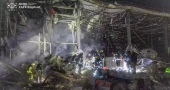
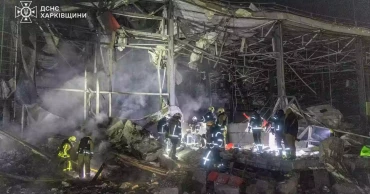
Russia unleashed a massive overnight aerial assault on Ukraine, firing nearly 300 drones along with 18 ballistic and seven cruise missiles across eight regions, President Volodymyr Zelenskyy said. One strike in the northeastern Kharkiv region hit a mail depot, killing four people and injuring at least 10 others. In the Kyiv region, hundreds of thousands of households were left without electricity as freezing weather gripped the country.
Kyiv has endured subzero temperatures for more than two weeks, with daytime readings dropping to minus 12 degrees Celsius. Ice-coated streets, snow-covered sidewalks and the constant hum of generators underscored the city’s worsening energy crisis. Mayor Vitali Klitschko said the latest strikes caused the most severe power outage the capital has experienced so far, leaving more than 500 residential buildings without central heating.
Residents sought warmth wherever possible. Many gathered at government-run “Points of Invincibility,” temporary shelters offering food, heat and electricity. Olena Davydova, a Kyiv resident, said her family had gone nearly two days without power, forcing them to adapt by sharing beds for warmth, storing food outdoors and relying on candles at night.
Elsewhere, friends and relatives crowded into apartments that still had electricity or hot water to charge phones, shower and share warm drinks. City authorities ordered daily hot meals for vulnerable residents and announced bonuses for utility workers laboring around the clock to restore essential services.
Read More: Ukrainian drone strike kills one, injures three in Russian city of Voronezh
The attack followed another large-scale Russian barrage just four days earlier, which included the rare use of a hypersonic missile. The United States condemned the renewed strikes as a dangerous escalation, accusing Moscow of deliberately targeting civilian infrastructure to deprive Ukrainians of heat and water-a tactic Ukrainian officials call “weaponizing winter.”
In response, Ukraine carried out drone strikes inside Russia, reportedly hitting a drone manufacturing facility in Taganrog. Russian officials said 11 Ukrainian drones were intercepted, though damage was reported. Independent verification of the claims was not possible.
1 month ago

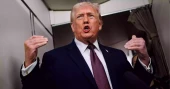
Trump urges Tehran to show humanity toward protesters
President Donald Trump was consulting with his national security team Tuesday about next steps with Iran as he looked to get a better understanding of the number of Iranian citizens who have been killed and arrested in more than two weeks of unrest throughout the country.
Trump said he believes that the killing is “significant” and that his administration would “act accordingly.” He added that he believed the Iranian government was “badly misbehaving.”
But the president said he has yet to receive a confirmed number of Iranians killed in the protests that began late last month, saying he has heard “five different sets of numbers” about the death toll.
Since the protests began Dec. 28, 16,700 people have been arrested and more than 2,000 have been killed, the vast majority protesters, according to Human Rights Activists News Agency. The organization relies on a network of activists inside Iran that confirms all reported fatalities.
“The message is they’ve got to show humanity,” Trump said of the Iranian government. “They’ve got a big problem. And I hope they’re not going to be killing people.”
The comments came after Trump earlier in the day announced he was cutting off the prospect of talks with Iranian officials amid a protest crackdown, telling Iranian citizens “help is on its way.”
Iran protest death toll jumps to 2,571
Trump did not offer any details about what the help would entail, but his remarks come just two days after the Republican president said Iran wants to negotiate with Washington after his threat to strike the Islamic Republic.
But Trump appeared to make an abrupt shift about his willingness to engage with the Iranian government.
“Iranian Patriots, keep protesting and take over your institutions if you can,” Trump said in speech Tuesday at an auto factory in Michigan. “Save the names of the killers and abusers that are abusing you. You are being very badly abused."
Iranian ambassador responds to Trump
Iran's chief envoy to the United Nations, Ambassador Amir Saeid Iravani, denounced Trump's latest comments in a letter to U.N. officials as “interventionist rhetoric.”
“This reckless statement explicitly encourages political destabilization, incites and invites violence and threatens the sovereignty, territorial integrity and national security of the Islamic Republic of Iran,” Iravani wrote.
Iranian state media has aired at least 97 confessions from protesters, many expressing remorse for their actions, since the protests began, according to a rights group that is tracking the videos.
Iran alleges these confessions, which often include references to Israel or America, are proof of foreign plots behind Iran’s nationwide protests. Activists say they are coerced confessions, long a staple of Iran’s hard-line state television, the only broadcaster in the country. And these videos are coming at an unprecedented clip.
Trump tells Iranians “help is on its way” amid deadly protests
Trump, in an exchange with reporters during the factory visit, demurred when asked what kind of help he would provide.
“You’re going to have to figure that one out,” he said.
The U.S. president has repeatedly threatened Tehran with military action if his administration found the Islamic Republic was using deadly force against antigovernment protesters. Trump on Sunday told reporters he believed Iran is “starting to cross” that line and has left him and his national security team weighing “very strong options” even as he said the Iranians had made outreach efforts to the U.S.
And on Monday, the president’s team offered guarded hope that a diplomatic solution could still be found.
Later Monday, Trump said he would slap 25% tariffs on countries doing business with Tehran “effective immediately,” but the White House has not provided details on that move. China, the United Arab Emirates, Turkey, Brazil and Russia are among economies that do business with Tehran.
Administration leaders weigh US options
Vice President JD Vance, Secretary of State Marco Rubio and key White House National Security Council officials began meeting Friday to develop options for Trump, ranging from a diplomatic approach to military strikes.
“We don’t want to see people killed and we want to see a little bit of freedom for these people," Trump said. "These people have been living in hell for a long time.”
Iraq PM race: al-Sudani withdraws in favor of Maliki
Iran, through the country’s parliamentary speaker, has warned that the U.S. military and Israel would be “legitimate targets” if Washington uses force to protect demonstrators.
Trump said he was undeterred by threats of Iranian retaliation.
“Iran said that the last time I blew them up,” said Trump, referring to threats from the government ahead of U.S. military strikes in June on key Iranian nuclear facilities. “They better behave.”
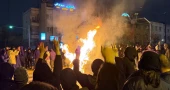
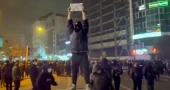
More than 600 protests have taken place across all of Iran’s 31 provinces, the Human Rights Activists News Agency reported Tuesday. The activist group said 1,850 of the dead were protesters and 135 were government-affiliated. It said more than 16,700 people had been detained.
Understanding the scale of the protests has been difficult. Iranian state media has provided little information about the demonstrations. Online videos offer only brief, shaky glimpses of people in the streets or the sound of gunfire.
Trump's push on the Iranian government to end the crackdown comes as he is dealing with a series of other foreign policy emergencies around the globe.
It’s been more than a week since the U.S. military launched a successful raid to arrest Venezuela’s Nicolás Maduro and remove him from power. The U.S. continues to mass an unusually large number of troops in the Caribbean Sea.
Trump is also focused on trying to get Israel and Hamas onto the second phase of a peace deal in Gaza and broker an agreement between Russia and Ukraine to end the nearly four-year war in Eastern Europe.
But advocates urging Trump to take strong action against Iran say this moment offers an opportunity to further diminish the theocratic government that’s ruled the country since the Islamic revolution in 1979.
The demonstrations are the biggest Iran has seen in years — protests spurred by the collapse of Iranian currency that have morphed into a larger test of supreme leader Ayatollah Ali Khamenei’s repressive rule.
1 month ago
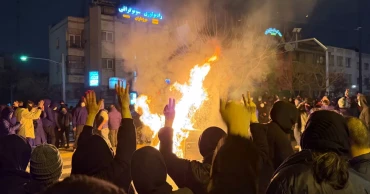
Iran protest death toll jumps to 2,571
The death toll from a crackdown on protests in Iran jumps to at least 2,571, activists said early Wednesday.
The figure came from the U.S.-based Human Rights Activists News Agency, which has been accurate in multiple rounds of unrest in Iran in recent years.
The activist group said 2,403 of the dead were protesters and 147 were government-affiliated. Twelve children were killed, along with nine civilians it said were not taking part in protests. More than 18,100 people have been detained, the group said.
With the internet down in Iran, gauging the demonstrations from abroad has grown more difficult. The Associated Press has been unable to independently assess the toll. Iran’s government has not offered overall casualty figures.
Trump urges Tehran to show humanity toward protesters
That death toll dwarfs the death toll from any other round of protest or unrest in Iran in decades and recalls the chaos surrounding the country’s 1979 Islamic Revolution.
Iranians reach out, but world can't reach in
Several people in Tehran were able to call the AP on Tuesday and speak to a journalist. The AP bureau in Dubai, United Arab Emirates, was unable to call those numbers back. Witnesses said text messaging was still down, and internet users in Iran could connect to government-approved websites locally but nothing abroad.
Anti-riot police officers wore helmets and body armor while carrying batons, shields, shotguns and tear gas launchers, according to the witnesses. Police stood watch at major intersections. Nearby, witnesses saw members of the Revolutionary Guard's all-volunteer Basij force, who carried firearms and batons. Security officials in plainclothes were visible in public spaces.
Several banks and government offices were burned during the unrest, witnesses said. Banks struggled to complete transactions without the internet, they added.
Trump tells Iranians “help is on its way” amid deadly protests
Shops were open, though there was little foot traffic in the capital. Tehran's Grand Bazaar, where the demonstrations began Dec. 28 over the collapse of Iran's rial currency, opened Tuesday. A witness described speaking to multiple shopkeepers who said security forces ordered them to reopen no matter what. Iranian state media did not acknowledge that order.
The witnesses spoke on condition of anonymity for fear of reprisal.
It also appeared that security service personnel were searching for Starlink terminals, as people in northern Tehran reported authorities raiding apartment buildings with satellite dishes. While satellite television dishes are illegal, many in the capital have them in homes, and officials broadly had given up on enforcing the law in recent years.
On the streets, people also could be seen challenging plainclothes security officials, who were stopping passersby at random.
State television also read a statement about mortuary and morgue services being free — a signal that some likely charged high fees for the release of bodies amid the crackdown.
Khamenei, in a statement carried by state TV, praised the tens of thousands who took part in pro-government demonstrations nationwide on Monday.
Russia strikes Ukraine with drones and missiles amid freezing winter
“This was a warning to American politicians to stop their deceit and not rely on traitorous mercenaries,” he said. “The Iranian nation is strong and powerful and aware of the enemy.”
State TV on Monday aired chants from the crowd, which appeared to number in the tens of thousands. They chanted “Death to America!” and “Death to Israel!” Others cried out, “Death to the enemies of God!” Iran’s attorney general has warned that anyone taking part in protests will be considered an “enemy of God,” a death-penalty charge.
1 month ago
Greenland chooses Denmark over US amid Trump annexation threat
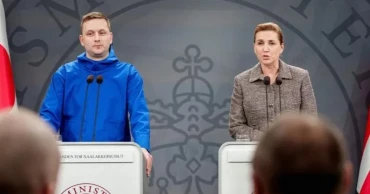
Greenland’s people would choose Denmark over the United States if asked today, Greenlandic Prime Minister Jens-Frederik Nielsen said, responding to renewed US pressure over the semi-autonomous island.
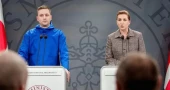
Nielsen made the remark at a joint news conference with Danish Prime Minister Mette Frederiksen, the strongest statement yet from Greenland since former US President Donald Trump revived plans to annex the island. Trump has claimed the US needs to “own” Greenland to counter Russia and China and suggested buying the territory, without ruling out force.
Frederiksen condemned the “completely unacceptable pressure” from the US and warned that any military action could harm the trans-Atlantic NATO alliance.
Greenland’s strategic location between North America and the Arctic makes it important for missile early warning systems and monitoring vessels. The US already has more than 100 military personnel stationed at Pituffik base under existing agreements with Denmark.
Nielsen said Greenland does not want to be governed or owned by the US, calling the situation a “geopolitical crisis.”
European allies, including major NATO members, have expressed support for Denmark, stressing that only Denmark and Greenland can decide on matters regarding the island.
Danish and Greenlandic officials are scheduled to travel to the US to meet Vice President JD Vance and Secretary of State Marco Rubio.
Greenland’s growing resource potential, including rare earth minerals, uranium, iron, oil, and gas, has increased international interest, especially as climate change melts ice and improves access.
With inputs from BBC
1 month ago
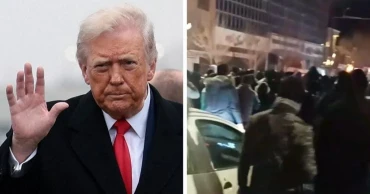
Trump tells Iranians “help is on its way” amid deadly protests
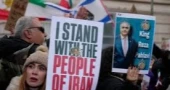
US President Donald Trump has called on Iranians to continue protesting against their government, saying “help is on its way.” He urged protesters to take note of the names of those responsible for killings and abuses.
Trump cancelled meetings with Iranian officials until the violent crackdown on protesters stops.
Thousands of people are feared dead after weeks of anti-government protests. Human rights groups estimate around 1,847 protesters have died, including children and security personnel.
Iranian authorities have sentenced some protesters to death. One, 26-year-old Erfan Soltani, is reportedly due to be executed on Jan 14. Families say the process is fast, raising fears of execution without notice.
Iranian security forces also seized a large shipment of Starlink satellite internet kits, alleging they were intended for espionage and sabotage. Use of Starlink devices is illegal in Iran, and internet blackouts are ongoing.
Meanwhile, the UK government has summoned the Iranian ambassador over the crackdown. Foreign Secretary Yvette Cooper called the violence “the most brutal and bloody repression against public protests in Iran for at least 13 years” and said the UK plans to push for further sanctions in coordination with the EU and the UN.
Trump’s threats have drawn criticism from Iran’s officials and Russia. Ali Larijani, adviser to Iran’s Supreme Leader, blamed Trump for protest deaths. Russia’s foreign ministry called US threats of strikes “categorically unacceptable” and warned of serious consequences in the Middle East.
The White House said Trump’s national security team is discussing possible options for intervention in Iran. It is unclear what kind of “help” the president intends or when it might come.
Economic sanctions are also escalating. Trump announced a 25% US tariff on trade with Iran’s partners. Analysts warn enforcement may be difficult, and secondary sanctions could further harm Iran’s struggling economy, already affected by inflation, reduced oil exports, and trade restrictions.
Internet blackouts and censorship continue to make verification of events inside Iran difficult. Human rights groups say the shutdowns violate international law and limit the ability to document abuses.
The protests and international response highlight growing tension over Iran’s human rights record, economic crisis, and geopolitical position.
With inputs from BBC
1 month ago
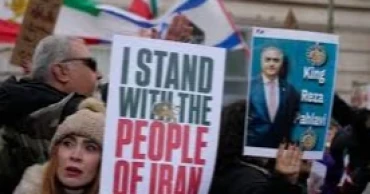
Iran relaxes limited controls as protest death toll climbs
Iranian authorities eased some communication restrictions on Tuesday by allowing mobile phone users to make overseas calls for the first time in days, but continued to block internet access and text messaging services as the death toll from nationwide protests climbed to at least 646.
Residents in Tehran told The Associated Press that while they were able to place international calls, people outside Iran were still unable to reach them. SMS services remained suspended and internet users could not access foreign websites, though limited connections to government-approved platforms were available.
It remained unclear whether further restrictions would be lifted after authorities shut down all domestic and international communications late last week amid intensifying demonstrations.
Meanwhile, Iran’s Foreign Minister Abbas Araghchi warned that Tehran would mirror any restrictions imposed by Europe, a day after the European Parliament announced a ban on Iranian diplomats and representatives.
“Iran does not seek enmity with the EU, but will reciprocate any restriction,” Araghchi wrote on X, accusing the European Parliament of failing to take meaningful action over Israel’s war in Gaza while acting swiftly against Iran following what he described as “a few days of violent riots.”
In the Netherlands, Foreign Minister David van Weel said he summoned Iran’s ambassador to formally protest what he called excessive violence against peaceful protesters, large-scale arbitrary arrests and the internet shutdown. He also voiced support for EU sanctions against Iranian human rights violators.
The United Nations human rights chief urged Iranian authorities to immediately halt violence against demonstrators. Volker Türk said reports of hundreds killed and thousands arrested were deeply alarming, adding that the killing of peaceful protesters must stop and that branding demonstrators as “terrorists” to justify repression was unacceptable.
Finnish Foreign Minister Elina Valtonen also said she was summoning Iran’s ambassador, accusing Tehran of shutting down the internet to “kill and oppress in silence,” and pledged support for measures with the European Union to restore freedoms for Iranians.
Iranian state television reported that security forces had arrested what it described as Israel-linked terrorist groups in the southeastern city of Zahedan, alleging they entered through Iran’s eastern borders with U.S.-made weapons and explosives. The Israeli military did not immediately comment.
Nobel Peace Prize laureate Malala Yousafzai expressed solidarity with Iran’s protest movement, linking the demonstrations to long-standing restrictions on women and girls and calling for a future driven by the Iranian people themselves.
France said it has “reconfigured” its embassy in Tehran after nonessential staff left the country earlier this week, while German Chancellor Friedrich Merz said he believes Iran’s government is in its “final days and weeks,” urging authorities to end violence immediately.
Israel said it remains on alert because of the unrest in Iran but stressed the protests are an internal matter.
The U.S.-based Human Rights Activists News Agency said at least 646 people have been killed so far, including 512 protesters and 134 members of the security forces. The group also reported that more than 10,700 people have been detained during the past two weeks of demonstrations.
1 month ago
Families of jailed Venezuelans suffer mounting agony as expected releases delayed
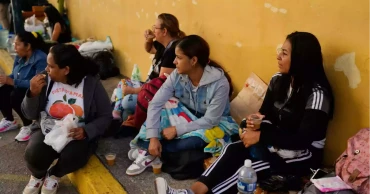
Yaxzodara Lozada awoke shivering on Tuesday after spending the night on the sidewalk outside a Caracas prison, clinging to the hope that her husband, a police officer detained on Nov. 17, would be released under a goodwill measure announced by the government last week.
Despite signs that daily life in Venezuela is slowly returning to normal, with shopping centers, schools and gyms reopening, the government’s pledge to release jailed opposition members, activists and journalists has moved far more slowly than expected, drawing growing criticism.
The reopening comes a week after a dramatic U.S. operation that resulted in the detention of President Nicolás Maduro.
Families of more than 800 people whom human rights groups classify as political prisoners began assembling outside detention centers on Thursday, following an announcement by acting President Delcy Rodríguez that a substantial number of detainees would be freed as a “peace-seeking” gesture. Authorities, however, have not disclosed how many prisoners would be released or who would qualify, leaving advocacy groups scrambling for information and relatives in limbo.
Read More: Slow pace marks third day of prisoner releases in Venezuela after government goodwill pledge
By Monday afternoon, the legal group Foro Penal confirmed that 49 detainees had been released, including several foreign nationals. That same day, the White House confirmed an upcoming meeting between opposition leader María Corina Machado and U.S. President Donald Trump, who said the releases occurred at Washington’s request.
While welcoming the releases, the UN-backed fact-finding mission said the number freed falls well short of demands for the immediate and unconditional release of all political prisoners.
Outside prisons, families slept on sidewalks awaiting news, contrasting sharply with the government’s push to project stability as schools reopened under heightened security.
Officials emphasized resilience and optimism, even as relatives described fear, uncertainty and anguish over loved ones they have not seen for weeks.
1 month ago
Trump imposes 25% tariff on countries doing business with Iran
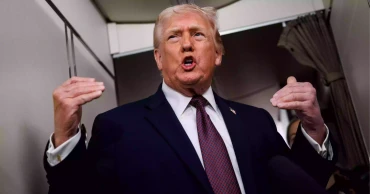
U.S. President Donald Trump has announced a 25 percent tariff on goods from countries that maintain commercial ties with Iran, effective immediately, according to media reports.
Trump posted the measure on Truth Social that the tariff was “effective immediately”, without providing details on what would constitute “doing business” with Iran, the BBC reported.
The announcement did not clarify what activities would qualify as “doing business” with Iran. China is Iran’s largest trading partner, followed by Iraq, the United Arab Emirates, Turkey, and India.
The new tariff comes amid rising tensions over protests in Iran triggered by the sharp decline of the national currency, the rial. White House spokeswoman Karoline Leavitt said military options, including air strikes, remain “on the table.”
Read More: Iran wants to negotiate as death toll mounts to 599, says Trump
Trump also claimed Iranian officials had contacted him for negotiations but suggested that action might be taken before talks occur.
Iran has been struggling under international sanctions related to its nuclear program, compounded by government mismanagement and corruption.
In late December, shopkeepers in Tehran staged protests over another steep fall in the rial’s value against the U.S. dollar.
1 month ago
Iran wants to negotiate as death toll mounts to 599, says Trump
U.S. President Donald Trump said Iran wants to negotiate with Washington after his threat to strike the Islamic Republic over its crackdown on protesters in nationwide demonstrations that activists said Monday had left at least 599 people dead.
Iran had no direct reaction to Trump's comments, which came after the foreign minister of Oman — long an interlocutor between Washington and Tehran — traveled to Iran this weekend. It also remains unclear just what Iran could promise, particularly as Trump has set strict demands over its nuclear program and its ballistic missile arsenal, which Tehran insists is crucial for its national defense.
Iranian Foreign Minister Abbas Araghchi, speaking to foreign diplomats in Tehran, insisted “the situation has come under total control” in remarks that blamed Israel and the U.S. for the violence, without offering evidence.
“That’s why the demonstrations turned violent and bloody to give an excuse to the American president to intervene,” Araghchi said, in comments carried by Al Jazeera. The Qatar-funded network has been allowed to report live from inside Iran, despite the internet being shut off.
However, Araghchi said Iran was “open to diplomacy.” Iranian Foreign Ministry spokesman Esmail Baghaei said that a channel to the U.S. remained open, but talks needed to be “based on the acceptance of mutual interests and concerns, not a negotiation that is one-sided, unilateral and based on dictation.”
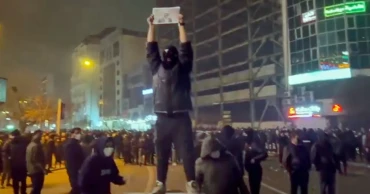
Meanwhile, pro-government demonstrators flooded the streets on Monday in support of the theocracy, a show of force after days of protests directly challenging the rule of 86-year-old Supreme Leader Ayatollah Ali Khamenei. Iranian state television aired chants from the crowd, which appeared to number in the tens of thousands, who shouted “Death to America!” and “Death to Israel!”
Others cried out: “Death to the enemies of God!” Iran’s attorney general has warned that anyone taking part in protests will be considered an “enemy of God,” a death-penalty charge.
Trump acknowledges proposal for talks
Trump and his national security team have been weighing a range of potential responses against Iran, including cyberattacks and direct strikes by the U.S. or Israel, according to two people familiar with internal White House discussions who weren't authorized to comment publicly and spoke on condition of anonymity.
“The military is looking at it, and we’re looking at some very strong options,” Trump told reporters on Air Force One on Sunday night. Asked about Iran’s threats of retaliation, he said: “If they do that, we will hit them at levels that they’ve never been hit before.”
Trump said that his administration was in talks to set up a meeting with Tehran, but cautioned that he may have to act first as reports of the death toll in Iran mount and the government continues to arrest protesters.
“I think they’re tired of being beat up by the United States,” Trump said. “Iran wants to negotiate.”
Iran, through the country's parliamentary speaker, warned Sunday that the U.S. military and Israel would be “legitimate targets” if Washington uses force to protect demonstrators.
More than 10,600 people also have been detained over the two weeks of protests, said the U.S.-based Human Rights Activists News Agency, which has been accurate in previous unrest in recent years and gave the death toll. It relies on supporters in Iran crosschecking information. It said 510 of the dead were protesters and 89 were security force members.
With the internet down in Iran and phone lines cut off, gauging the demonstrations from abroad has grown more difficult. The Associated Press has been unable to independently assess the toll. Iran’s government hasn't offered overall casualty figures.
Those abroad fear the information blackout is emboldening hard-liners within Iran’s security services to launch a violent crackdown. Protesters flooded Tehran's streets and its second-largest city on Saturday night into Sunday morning. Online videos purported to show more demonstrations Sunday night into Monday, with a Tehran official acknowledging them in state media.
At 2 p.m. Monday, Iranian state television showed images of demonstrators thronging Tehran toward Enghelab Square, or “Islamic Revolution” Square in the capital. It had been airing statements all morning from Iranian government, security and religious leaders to attend the demonstration.
It called the rally an “Iranian uprising against American-Zionist terrorism,” without addressing the underlying anger in the country over the nation’s ailing economy. State television aired images of such demonstrations around the country, trying to signal it had overcome the protests.
Fear pervades Iran's capital
In Tehran, a witness told the AP that the streets were empty at the sunset call to prayers each night. By the Isha, or nighttime prayer, the streets are deserted.
Part of that stems from the fear of getting caught in the crackdown. Police sent the public a text message that warned: “Given the presence of terrorist groups and armed individuals in some gatherings last night and their plans to cause death, and the firm decision to not tolerate any appeasement and to deal decisively with the rioters, families are strongly advised to take care of their youth and teenagers.”
Another text, which claimed to come from the intelligence arm of the paramilitary Revolutionary Guard, also directly warned people not to take part in demonstrations.
The witness spoke on condition of anonymity due to the ongoing crackdown.
The demonstrations began Dec. 28 over the collapse of the Iranian rial currency, which trades at more than 1.4 million to $1, as iran's economy is squeezed by international sanctions in part levied over its nuclear program. The protests intensified and grew into calls directly challenging Iran’s theocracy.
Video shows corpses outside capital
Meanwhile, video circulating online purports to show dozens of bodies in a morgue on the outskirts of Iran’s capital.
People with knowledge of the facility and the U.S.-based Human Rights Activists News Agency said Monday that the video shows the Kahrizak Forensic Medicine Center.
In the footage, people are seen walking by dozens of bodies in bags laid out in a large room, attempting to identify those there. In some cases, bodies can be seen lying outside on blue tarps. A large truck can be seen in part of the footage.
1 month ago
Why Baba Vanga’s 2026 ‘World War III’ prophecy is going viral worldwide
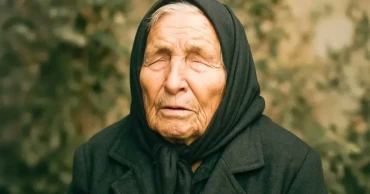
As 2026 begins amid mounting geopolitical strain, renewed attention has turned to Bulgarian mystic Baba Vanga, whose alleged warning of a year marked by “war and destruction” is spreading rapidly online.
Often dubbed the “Nostradamus of the Balkans,” Vanga is popularly credited with foreseeing major global events, including the 9/11 attacks, the death of Princess Diana and China’s emergence as a world power.
A New York Post report says she also predicted the outbreak of World War III in 2026 and humanity’s first encounter with extraterrestrial life. Nearly three decades after her death in 1996, her prophecies continue to fascinate audiences around the globe.
Who was Baba Vanga?
Born Vangelia Pandeva Gushterova in 1911 in Strumica, now in North Macedonia, Baba Vanga lost her eyesight at the age of 12 after being caught in a violent storm. Followers believe this incident triggered her supposed clairvoyant powers.
Despite having no formal education, she became a widely consulted figure in Bulgaria and beyond, offering guidance on personal and global issues. She continued giving readings until her death at 85. Admirers claim her visions stretched centuries ahead, reportedly up to the year 5079.
Why the prediction is trending
Centuries-old prophecies are resurfacing on social media as users link Baba Vanga’s 2026 warning of “war and destruction” to present-day geopolitical flashpoints.
The renewed interest has been fuelled by escalating US–Venezuela tensions following reports surrounding President Nicolás Maduro, debates over foreign intervention and regional stability, and widespread protests in Iran, all of which have added to a growing sense of global uncertainty.
From viral buzz to ancient prophecy
Claims about Baba Vanga predicting World War III are spreading fast on TikTok, X and YouTube, often blending conspiracy theories with current headlines. Analysts say the trend reflects online hype, global anxieties and fascination with myth, not any proven warning of an imminent world war.
Her record: some hits, many missesSupporters point to several predictions often described as accurate:
The 9/11 attacks, allegedly foretold as “American brethren falling after an assault by steel birds”The 2000 sinking of Russia’s Kursk submarineBarack Obama becoming US presidentThe Chernobyl nuclear disasterThe rise of global terrorismSceptics highlight major failures, including claims that:
World War III would begin in 2010Aliens would appear at a major sporting event in 2025A sweeping vision of the futureStories attributed to Vanga outline a timeline stretching far ahead:
2028: Humans explore Venus for energy2033: Severe melting of polar ice caps2076: Communism spreads worldwide2170: Massive drought hits large regions3005: War with a Martian civilisation3797: Earth becomes uninhabitable5079: The end of the worldWhy Vanga still captivates audiencesDespite the lack of reliable sources, Baba Vanga remains a powerful cultural figure. Her supposed prophecies about disasters, space travel, geopolitics and doomsday continue to grip imaginations around the world.
Analysts say her enduring appeal lies in how her legend connects humanity’s fear of the unknown with its deep curiosity about the future.
Source: Gulf News
1 month ago