Others
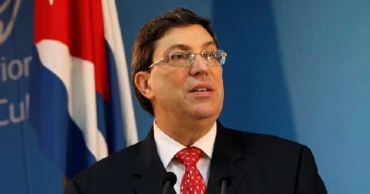
Cuba declares "international emergency" over U.S. tariff threat
Cuba on Friday declared an "international emergency" in response to a U.S. executive order threatening tariffs on goods linked to Cuba.
Cuban Foreign Minister Bruno Rodriguez Parrilla said the situation represents an "unusual and extraordinary threat" originating largely from the "U.S. anti-Cuban neo-fascist right wing."
He added that the threat endangers not only national security and foreign policy but also international peace and human survival amid nuclear risks and climate change.
The executive order, signed by U.S. President Donald Trump on Thursday, warns of tariffs on countries that sell or supply oil to Cuba.
4 months ago
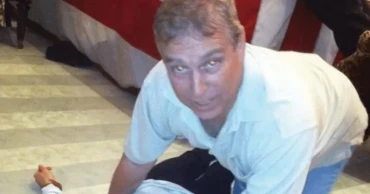
Epstein files reveal photos of Prince Andrew with unidentified woman, new emails emerge
Newly released documents from the Jeffrey Epstein investigation include photographs appearing to show Prince Andrew, formally Andrew Mountbatten-Windsor, kneeling on all fours over a fully clothed, unidentified woman.
The images, part of more than three million pages and 180,000 photos made public Friday by the U.S. Department of Justice, show Andrew touching the woman’s stomach in some shots and staring directly at the camera in others. No context is provided for the photos, and the timing and location remain unclear.
The latest batch also contains emails suggesting Epstein invited Andrew to dinner with a 26-year-old Russian woman in August 2010, two years after Epstein’s 2008 conviction for soliciting a minor. The messages indicate discussions about meeting arrangements but do not provide evidence of wrongdoing.
Prince Andrew has repeatedly denied any misconduct related to Epstein, including allegations of sexual assault made by Virginia Giuffre, which he settled in a 2022 civil case while maintaining he never met her. U.S. authorities previously stated that Andrew is not a target of their investigation and that no evidence indicates he committed a crime under U.S. law, though he may have been a witness to events relevant to the probe.
Additional emails in the release include correspondence between Epstein and Andrew’s former wife, Sarah Ferguson, discussing personal and business matters. The emails do not indicate illegal activity.
The DOJ’s release comes six weeks after a deadline mandated by law and features heavily redacted documents, including some pages entirely blacked out. The files also contain images of luxury apartments, hotel rooms, and a villa with a swimming pool.
The latest release adds to growing public scrutiny of Andrew’s past relationship with Epstein, but neither the Prince nor Ferguson have publicly commented on the new documents.
With inputs from BBC
4 months ago

Why gold prices hit record highs and what triggered the sudden drop
Gold prices have climbed to unprecedented levels in recent weeks as investors rushed into the traditional safe-haven asset amid intensifying global political uncertainty.
The precious metal surged beyond the $5,000 (£3,646) per ounce threshold for the first time on Monday and briefly touched $5,500. Silver and platinum prices also recorded sharp gains during the same period.
However, prices of all three metals later retreated sharply following indications of greater political stability in the United States. Even so, they remain significantly higher than a year ago.
Trump-driven uncertainty reshapes investments
Global trade flows have been disrupted by tariffs imposed by US President Donald Trump on countries he considers unfavourable trading partners. His trade stance has continued to unsettle markets, fuelling demand for gold, according to Emma Wall, chief investment strategist at Hargreaves Lansdown.
In January, both gold and silver reached record highs while global stock markets fell, after Trump threatened new tariffs on eight European countries opposed to his proposed takeover of Greenland.
Hamad Hussain, an economist at Capital Economics, said gold’s reputation as a safe asset, compared with risks linked to US foreign and fiscal policies under Trump, has pushed the metal “in the spotlight”.
Wars and Greenland threats heighten tensions
Ongoing wars in Ukraine and Gaza have added to wider geopolitical anxiety. The US seizure of Venezuelan President Nicolás Maduro also sent gold prices soaring.
Trump’s Greenland threats further strained global politics, weakening confidence in the US dollar and prompting investors to turn to precious metals. The dollar’s sharpest decline during Trump’s presidency followed his so-called “Liberation Day” tariffs announced last spring.
“Gold is doing what it does best when the world feels messy, jumping amid rising trade tensions, geopolitical flare-ups, political uncertainty in the US,” Wall says.
Gold sees sharpest one-day fall, down Tk15,746 per bhori
“Fresh friction between the US, Canada and China, unease around Europe and the Middle East, and even shutdown risks in Washington have all added to gold’s appeal.”
Central banks fuel the rally
Heavy buying by central banks has been another major driver behind rising gold prices.
“Investors and global central banks have... favoured gold as their reserve currency of choice, which they believe insulates them from US policy dependence,” Wall says.
“Certain nations will have observed the threat of Russia having its US dollar assets seized by global players supportive of Ukraine, and subsequently considered the metal a more attractive neutral reserve,” she added.
Although central banks are still purchasing more gold than before 2022, Hussain noted that demand appeared to ease somewhat in 2025.
China remains the world’s largest gold buyer, with demand coming from jewellery purchases and investment. Western investors have also poured money into gold-owning and trading firms.
Hussain said new market entrants have also played a role, citing digital currency firm Tether, which has reportedly amassed gold reserves larger than those of some small countries.
Why prices fell recently
Gold prices had surged partly on fears Trump might appoint a Federal Reserve chair willing to cut interest rates aggressively, potentially weakening the dollar and stoking inflation. Gold is often bought as a hedge against such risks.
But prices of gold, silver and platinum dropped after reports suggested Trump would nominate Kevin Warsh, viewed as a more reassuring choice than other contenders, reports BBC.
U.S. stocks control higher as gold sets a fresh record and the dollar weakens again
Despite the pullback, precious metals remain far above last year’s levels due to persistent geopolitical tensions, existing tariffs, fresh tariff threats and ongoing global conflicts, keeping safe-haven demand strong.
One of gold’s enduring attractions is its limited supply.
Nicholas Frappell, global head of institutional markets at ABC Refinery, told the BBC: “When you own gold, it’s not attached to the debt of somebody else like a bond is or an equity where the performance of a company will drive performance.
“It’s a really good diversifier in a very uncertain world.”
Recent volatility, however, underscores that gold prices can fall as quickly as they rise, like other traded commodities.
Gold prices drop sharply in Bangladesh
Gold prices in Bangladesh dropped sharply again on Saturday, with the rate of 22-carat gold falling by Tk15,746 per bhori (11.664 grams) in a single day, according to the Bangladesh Jewellers Association (Bajus).
In a morning notice, Bajus said the price of 22-carat gold has been reset at Tk255,617 per bhori, following a decline in the local price of refined gold, known as tejabi sona.
Under the updated rates, 21-carat gold now costs Tk244,011 per bhori, while 18-carat gold is priced at Tk209,136. Gold produced under the traditional method has been fixed at Tk171,869 per bhori.
Greenland’s strategic role in nuclear defense comes into focus amid Trump’s ‘Golden Dome’ push
Bajus added that buyers will have to pay a mandatory 5 percent VAT along with a minimum 6 percent making charge set by the association, although the making charge may vary depending on the design and quality of the jewellery.
Earlier, on January 30, Bajus had reduced the price of 22-carat gold by Tk14,638 per bhori, bringing it down to Tk271,363. With the latest cut, gold prices in the local market have declined by a total of Tk30,384 within just two days.
Prior to these back-to-back reductions, gold prices were raised by Tk16,213 per bhori on January 29, pushing the price of 22-carat gold to an all-time high of Tk286,001 per bhori—the highest ever recorded in Bangladesh.
So far in 2026, Bajus has adjusted gold prices 18 times, with increases on 13 occasions and reductions five times.
4 months ago
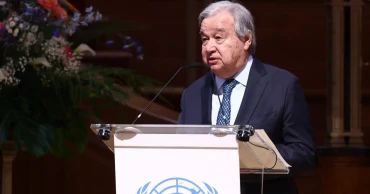
UN faces risk of ‘imminent financial collapse’, secretary general warns
The United Nations is facing the danger of an “imminent financial collapse” as several member states fail to pay their mandatory contributions, UN Secretary General António Guterres has warned.
In a letter sent to all 193 member states, Guterres said the organisation’s financial crisis was worsening and now “deepening, threatening programme delivery”, with funds potentially running out by July. He urged countries either to pay their assessed contributions in full or to reform the UN’s financial rules to avert collapse.
The warning comes as the United States, the UN’s largest contributor, has declined to pay into the organisation’s regular and peacekeeping budgets and has withdrawn from multiple UN agencies, describing them as a “waste of taxpayer dollars”. Several other countries are also in arrears or have refused to pay their dues.
Although the UN General Assembly approved limited changes to the financial system in late 2025, the organisation remains under severe cash strain. The situation is compounded by a rule requiring the UN to refund unspent funds even when the money was never received in the first place.
At the UN’s Geneva headquarters, notices highlighting the financial crisis have been widely displayed. Cost-cutting measures are visible, with escalators frequently shut down and heating reduced in an effort to conserve funds.
Guterres wrote that while the UN had experienced financial difficulties before, the current crisis was “categorically different”. He noted that “decisions not to honour assessed contributions that finance a significant share of the approved regular budget have now been formally announced,” without naming specific countries.
Read More: 12th DU National Model United Nations set to begin on May 29
He stressed that the “integrity of the entire system” relies on members fulfilling their obligations under the UN Charter to pay their “assessed contributions”. According to the secretary general, only 77 percent of total dues were paid in 2025, leaving an unprecedented amount outstanding.
Guterres also criticised a financial rule that forces the UN to return unused programme funds, describing it as a “double blow” in which the organisation is “expected to give back cash that does not exist”.
“I cannot overstate the urgency of the situation we now face. We cannot execute budgets with uncollected funds, nor return funds we never received,” he wrote.
As a result, the UN is now refunding millions of dollars it never had. The letter stated: “Just this month, as part of the 2026 assessment, we were compelled to return $227m [£165m] – funds we have not collected.”
“The bottom line is clear,” Guterres added. “Either all member states honour their obligations to pay in full and on time – or member states must fundamentally overhaul our financial rules to prevent an imminent financial collapse.”
UN agencies often struggle to secure full funding for humanitarian responses, but the past year has been especially challenging. The US did not pay its contribution to the UN’s regular budget in 2025 and provided only 30 percent of its expected funding for peacekeeping missions, reports BBC.
Read More: Kofi Annan was the United Nations
In January, President Donald Trump withdrew the US from dozens of international bodies, including 31 UN agencies, aiming to “end American taxpayer funding and involvement in entities that advance globalist agendas over US priorities”. Although Washington pledged $2 billion (£1.5 billion) for UN humanitarian work in late December, it warned the organisation must “adapt or die”, a sharp drop from the $17 billion it provided in 2022.
Other major donors, including the UK and Germany, have also announced significant cuts to foreign aid, further affecting UN operations.
Guterres had earlier cautioned that the organisation was in its most fragile financial position in years, blaming unpaid contributions and warning in October of a “race to bankruptcy”.
Meanwhile, Trump has faced criticism over proposals to replace some UN functions with his proposed Board of Peace to oversee reconstruction in Gaza. Although he said the initiative would work “in conjunction with the United Nations”, he previously suggested otherwise, saying: “Well, it might.”
4 months ago
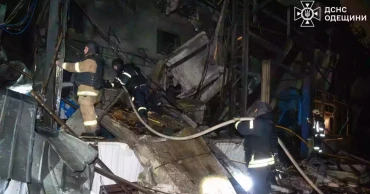
Trump says Putin agreed to brief pause in attacks on Ukraine’s energy sector, details remain vague
Uncertainty remained Friday over the scope and timing of a pledge by Russia to temporarily suspend attacks on Ukraine, after U.S. President Donald Trump said he secured a short-term commitment from Russian President Vladimir Putin amid one of Ukraine’s harshest winters in years.
Trump said late Thursday that Putin had agreed to halt strikes on Kyiv and other cities for a limited period as freezing temperatures continue to worsen living conditions for civilians.
“I personally asked President Putin not to strike Kyiv or other cities for a week during this period of extreme cold,” Trump said during a White House Cabinet meeting, adding that Putin had agreed. Trump did not clarify when the request was made or when the pause would take effect.
The White House did not immediately provide further details regarding the duration or scope of the reported halt.
Kremlin spokesman Dmitry Peskov confirmed Friday that Trump made a direct request to Putin to stop attacks on Kyiv until Feb. 1 in order to create conditions favorable for negotiations.
However, the reference to Feb. 1 raised questions, as the date is only days away and the coldest weather is expected to arrive starting Sunday, making the rationale for such a narrow time frame unclear.
Throughout the war, Russia has repeatedly targeted Ukraine’s energy infrastructure in what Ukrainian officials describe as an effort to deprive civilians of electricity, heating, and water during winter.
When asked whether Moscow had accepted Trump’s proposal, Peskov replied affirmatively but declined to specify whether the pause would apply only to energy facilities or to all aerial attacks, or when it would formally begin.
Conflicting signals on the ground
President Volodymyr Zelenskyy said Friday that while Russian strikes hit energy facilities in several regions on Thursday, no such attacks were reported overnight. He added, however, that Russia continued to target logistics networks and residential areas with drones and missiles, as it has on most nights during the conflict.
Although Trump characterized Putin’s response as a concession, Zelenskyy expressed doubt that Russia is genuinely seeking an end to the war, which will mark its fourth anniversary on Feb. 24.
“I do not believe Russia wants to stop this war. There is substantial evidence suggesting otherwise,” Zelenskyy said Thursday. He reiterated that Ukraine is prepared to halt attacks on Russian energy assets, including oil refineries, if Moscow also stops targeting Ukraine’s power grid and related infrastructure.
Read More: Ukraine, Russia, US discuss territorial concessions in Abu Dhabi
According to Ukraine’s Air Force, Russia launched 111 drones and one ballistic missile overnight, injuring at least three people. Russia’s Defense Ministry said its air defenses intercepted 18 Ukrainian drones over several regions, as well as over Crimea and the Black Sea.
Severe cold ahead
Meteorologists warned that Kyiv and other areas, already suffering from electricity shortages, are facing an intense cold spell beginning Friday and extending into next week. In some regions, temperatures could plunge to minus 30 degrees Celsius (minus 22 Fahrenheit), according to the State Emergency Service.
Zelenskyy said the idea of a temporary halt in energy-related attacks was discussed during talks in Abu Dhabi last weekend involving representatives from Ukraine, Russia and the United States. He said Ukraine agreed to a reciprocal approach.
“If Russia refrains from attacking us, we will take corresponding steps,” Zelenskyy told reporters.
Additional discussions were expected Sunday in Abu Dhabi, though those plans could be affected by rising tensions between the United States and Iran.
No formal ceasefire
Zelenskyy stressed that there is no official ceasefire in place and no formal agreement between Kyiv and Moscow.
“There has been no direct dialogue or signed agreement on a ceasefire,” he said, noting that Ukraine had proposed a limited energy truce during talks in Saudi Arabia last year, but the proposal did not advance.
Territorial disputes remain a central obstacle to peace, with Russia demanding control over occupied and unoccupied Ukrainian territory, Zelenskyy said.
Ukraine is open to compromises that lead to a genuine end to the war, he said, but not at the expense of its territorial integrity. He added that the United States is aware of Kyiv’s position and has discussed a potential compromise involving a free economic zone, which Ukraine insists must remain under its control.
4 months ago
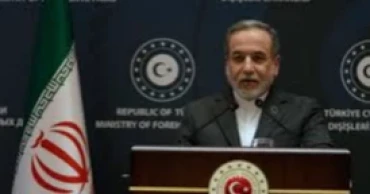
Arab partners call for caution as Trump presses Iran on nuclear talks
Middle Eastern allies of the United States are once again urging both Washington and Tehran to avoid escalation, as President Donald Trump warns of possible military action and increases U.S. force deployments in the region, according to an Arab diplomat familiar with the discussions.
Saudi Arabia, Turkey, Oman, and Qatar have contacted officials in both the U.S. and Iran, warning that any confrontation could severely destabilize the region and disrupt global energy markets, said the diplomat, who spoke anonymously due to the sensitive nature of the talks.
Regional Arab and Muslim governments fear that a U.S. strike on Iran would likely provoke retaliation from Tehran, potentially targeting neighboring countries or U.S. interests on their soil and causing widespread collateral damage.
Saudi Defense Minister Khalid bin Salman said Friday on social media that he met in Washington with Secretary of State Marco Rubio, Defense Secretary Pete Hegseth, Trump’s regional envoy Steve Witkoff, and Joint Chiefs Chairman Gen. Dan Caine to discuss efforts aimed at promoting regional and global stability.
The appeals for restraint come as Trump has shifted his public justification for potential military action—from condemning Iran’s violent suppression of nationwide protests to focusing on preventing Tehran from advancing its nuclear program. This is despite Trump’s repeated claims that U.S. strikes in June had already destroyed Iran’s nuclear facilities.
Trump signals interest in a deal
Trump said Friday that he hopes to reach an agreement with Iran, but warned reporters that consequences would follow if negotiations fail. Asked whether he had imposed a deadline, Trump replied ambiguously that only Iran would know, confirming that his warnings had been directly conveyed to Iranian officials.
According to two senior administration officials, Trump’s renewed emphasis on Iran’s nuclear ambitions reflects a broader strategy rather than a change in course. One official said Trump initially highlighted the protests to encourage demonstrators and to caution Tehran against further repression.
Trump said Iran appeared to heed earlier warnings about executions but acknowledged that many people were still being killed.
Despite this, the administration views Iran’s nuclear program as the central threat—particularly from the perspective of Israel. Officials said Trump wants to remind Iran that eliminating that risk remains the ultimate objective.
Trump wrote on social media that he hopes Iran will quickly return to negotiations for a “fair and equitable deal” that ensures it never develops nuclear weapons, warning that time is running short.
Another senior official emphasized that Trump retains all military options, though the White House has not confirmed whether it believes Iran is attempting to rebuild its nuclear capabilities.
Iran says it is open to talks—but prepared for conflict
Iranian Foreign Minister Abbas Araghchi said Friday during talks in Istanbul with Turkish officials that Iran is open to dialogue but that no formal negotiations with the U.S. are currently planned. He added that while Iran is prepared to negotiate, it is also ready for war.
Turkey has sought to ease tensions, with President Recep Tayyip Erdogan offering to act as a mediator between Tehran and Washington during a phone call with Iranian President Masoud Pezeshkian earlier Friday.
Earlier this month, Trump halted plans for military strikes after urging Iranians to continue protesting and saying support was forthcoming. He later said Iran assured him it would not carry out mass executions of demonstrators.
Protests that began in late December over economic conditions have since evolved into a broader challenge to Iran’s leadership. Activist groups claim at least 6,540 people have been killed in the government crackdown.
Trump has repeatedly highlighted the buildup of U.S. military forces in the region, including the deployment of the aircraft carrier USS Abraham Lincoln and several guided-missile destroyers, bringing thousands of additional U.S. personnel to the Middle East.
U.S. Central Command warned Iran against endangering freedom of navigation during an upcoming live-fire drill in the Strait of Hormuz, a critical route for roughly 20% of the world’s oil supply. The command said it would not tolerate unsafe behavior such as close flyovers, aggressive boat maneuvers, or weapons pointed at U.S. forces.
The Arab diplomat said regional governments are urging the U.S. to act with extreme caution, given the potential for widespread fallout. Iran, meanwhile, is being advised that if a strike does occur, its response should be carefully measured to avoid harming neighboring countries.
Iran previously retaliated against U.S. actions by targeting American assets in Qatar after last year’s strikes on Iranian nuclear sites.
Ideally, the diplomat said, the crisis would result in nothing more than heightened tension—but warned that the situation remains volatile and unpredictable, with only Trump knowing whether military action is imminent.
4 months ago

Israel to reopen Gaza–Egypt crossing after extended shutdown
Israeli authorities announced Friday that the pedestrian border crossing between Gaza and Egypt will reopen over the weekend, ending a prolonged closure and marking a significant development in U.S. President Donald Trump’s ceasefire initiative for Gaza.
Israel’s Coordinator of Government Activities in the Territories (COGAT) said that beginning Sunday, the Rafah crossing—Gaza’s primary exit point to the outside world—will permit restricted movement of people only.
The statement followed earlier comments by Prime Minister Benjamin Netanyahu and Ali Shaath, who was recently appointed to lead the Palestinian administrative body overseeing Gaza’s civilian affairs, both of whom indicated the crossing would reopen soon.
Although COGAT confirmed the crossing will be accessible in both directions on Sunday, Shaath described the first day as a test run, noting that regular two-way travel is expected to begin Monday.
According to an official familiar with the discussions, Israel has approved the daily departure of up to 150 people, including 50 medical patients accompanied by two relatives each. Additionally, up to 50 Palestinians who left Gaza during the conflict will be allowed to return each day. The official spoke anonymously due to the sensitivity of ongoing diplomatic negotiations.
Gaza’s Health Ministry estimates that around 20,000 injured or ill residents require medical treatment outside the enclave, as the territory’s healthcare system suffered severe damage during the war and can no longer provide many advanced procedures.
COGAT said Israel and Egypt will jointly screen travelers using the crossing, which will be monitored by European Union border officials. Palestinians will also undergo Israeli security checks in a nearby corridor that remains under Israeli military control.
The Rafah crossing has been almost entirely closed since May 2024, when Israel took control of the area, citing efforts to prevent Hamas from smuggling weapons. It was briefly reopened earlier this year to allow the evacuation of medical patients during a short-lived ceasefire.
Israel had previously opposed reopening the crossing, but the recovery of the remains of the final hostage held in Gaza earlier this week removed a major obstacle. Netanyahu said shortly afterward that the crossing would reopen in a limited and closely regulated manner.
Many Palestinians inside Gaza are seeking to leave the devastated territory, while tens of thousands who fled during intense fighting are hoping to return.
The reopening represents one of the initial steps in the second phase of the U.S.-mediated ceasefire agreement reached last year. This phase addresses complex issues, including the disarmament of Gaza, the dismantling of Hamas’ tunnel network, and the establishment of a new governing authority to manage reconstruction efforts.
Netanyahu reiterated this week that Israel’s priority remains dismantling Hamas’ military capabilities. He warned that without disarmament and tunnel destruction, rebuilding Gaza would not proceed—making Israeli control over Rafah a significant source of leverage.
Renewed violence in Gaza
On Friday, Palestinians mourned those killed earlier in the week in Israeli attacks, which have decreased in frequency but continue despite the ceasefire following the return of the last hostage’s remains.
Funeral processions were held for three Palestinians, with mourners carrying wrapped bodies through the streets before performing Islamic burial prayers.
The Israeli military said four people were killed in airstrikes in central Gaza on Friday, alleging they were armed and moving toward Israeli troops near the ceasefire boundary separating Israeli-controlled areas from much of Gaza.
These deaths add to the 492 Palestinians killed since the ceasefire began in October, according to Gaza’s Health Ministry. The ministry does not differentiate between civilians and fighters but maintains casualty records considered broadly credible by United Nations agencies and independent analysts.
4 months ago

Venezuela unveils amnesty proposal that may free large numbers of political detainees
Venezuela’s interim leader Delcy Rodríguez announced Friday that her government is introducing an amnesty law that could result in the release of hundreds of people imprisoned for political reasons, including opposition figures, journalists, and human rights defenders.
The proposal, long demanded by the U.S.-supported opposition, marks Rodríguez’s most recent compromise since she assumed power on Jan. 3 following the dramatic U.S. military operation in Caracas that removed former President Nicolás Maduro.
Speaking at a recorded ceremony attended by senior judges, cabinet members, military officials, and other top authorities, Rodríguez said the National Assembly—controlled by the ruling party—would move quickly to debate the bill.
She said the law is intended to mend the harm caused by years of political conflict marked by violence and extremism, restore justice, and promote peaceful coexistence among Venezuelans.
Rodríguez also revealed plans to close Helicoide, a notorious Caracas detention center where independent groups have repeatedly documented torture and serious rights violations. According to her, the facility will be converted into a recreational and cultural complex serving police officers and nearby communities.
The announcement was made in the presence of several officials whom former detainees and rights organizations have accused of authorizing abuses at Helicoide and other prisons.
Outside the prison, relatives of inmates watched Rodríguez’s address on a mobile phone. Emotions ran high—some wept while others shouted, “Freedom! Freedom!”
“God is good. God listened to us,” said Johana Chirinos, the aunt of a detainee, through tears.
Opposition leader and Nobel Peace Prize winner María Corina Machado said in a statement that the measures were not voluntary but instead driven by pressure from the U.S. government. She emphasized that Venezuelans have been jailed for political reasons for periods ranging from one month to as long as 23 years.
She described the government’s repression as severe, adding that once fear and repression end, authoritarian rule will collapse.
According to Foro Penal, a Venezuelan prisoners’ rights organization, 711 people are currently held nationwide for political reasons, with 183 already convicted.
The government has not yet made public the full text of the amnesty bill, leaving uncertainty over eligibility requirements.
Rodríguez said the proposed “general amnesty law” would apply to acts linked to political violence from 1999 to the present, but would exclude those convicted of crimes such as murder, drug trafficking, corruption, or human rights abuses.
Earlier this month, her administration pledged to free a significant number of detainees as a goodwill measure, though families have criticized the process for moving too slowly.
“A general amnesty is positive only if it applies to all of civil society without discrimination, avoids granting impunity, and helps dismantle the machinery of political persecution,” said Foro Penal president Alfredo Romero in a social media post.
The group reports that 302 prisoners have been released since Jan. 8, when National Assembly leader Jorge Rodríguez first announced plans for large-scale releases.
Human rights organization Provea also criticized the lack of clarity and the gradual pace of releases, stressing that freeing political prisoners is urgent. It warned that an amnesty should not be portrayed as an act of mercy by the state.
“These individuals were unlawfully detained for exercising rights guaranteed by international human rights standards, the constitution, and Venezuelan law,” Provea said.
4 months ago

Trump claims Russia will spare Kyiv during freezing winter spell
US President Donald Trump has said Russian President Vladimir Putin agreed not to carry out attacks on Kyiv and other Ukrainian cities for about a week due to exceptionally cold weather gripping the region.
Speaking at a televised cabinet meeting in Washington on Thursday, Trump said he personally asked Putin to halt strikes on Ukraine’s capital and other urban areas during the extreme cold, and that the Russian leader agreed. Trump did not specify when the pause would begin.
Russia has not confirmed any such agreement. However, Ukrainian President Volodymyr Zelensky welcomed Trump’s remarks, calling them an important signal about the possibility of protecting Kyiv and other cities during the harsh winter period.
Air raid sirens sounded overnight into Friday in only four Ukrainian regions close to the frontline, according to Ukrainian officials. Kyiv and other major cities were not included. Ukraine’s air force later said those areas were targeted by around 80 Russian drones and a ballistic missile.
Temperatures in Kyiv were forecast to drop sharply from Thursday, falling to as low as minus 24 degrees Celsius in the coming days. Russia has intensified strikes on Ukraine’s energy infrastructure during cold spells since launching its full-scale invasion in 2022, worsening power and heating shortages.
In a social media post, Zelensky said Ukrainian and US teams had discussed the issue during talks in the United Arab Emirates and expressed hope that the understandings would be implemented. Ukrainian media reported that Kyiv had agreed to mirror Moscow’s actions by pausing its own attacks on Russian oil refineries.
Russian, Ukrainian and US negotiators held their first trilateral talks since the war began during meetings in the UAE last week. While all sides described the discussions as constructive, there has been no formal announcement from Moscow of a pause in attacks.
Despite the reported understanding, Russian strikes have continued to damage Ukraine’s power grid, leaving millions without reliable heating or electricity as repair crews struggle to restore supplies amid ongoing attacks.
With inputs from BBC
4 months ago
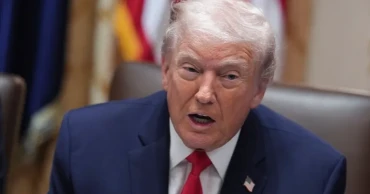
Trump orders reopening of Venezuela commercial airspace, signals travel resumption
US President Donald Trump announced Thursday that he has instructed U.S. officials to reopen Venezuela’s commercial airspace, a major step toward easing travel restrictions and potentially allowing American citizens to visit the South American country again. Trump said he informed Venezuela’s acting President Delcy Rodríguez of the decision and directed U.S. Transportation Secretary Sean Duffy and top military leaders to implement the reopening by the end of the day.
Speaking from the White House, Trump told reporters that “American citizens will be very shortly able to go to Venezuela, and they’ll be safe there,” signalling a shift in U.S. policy after years of diplomatic rupture. Venezuela’s government had not immediately responded to the announcement.
Earlier this week, the Trump administration notified Congress of initial steps to possibly reopen the long‑closed U.S. Embassy in Caracas, part of efforts to restore diplomatic ties following a controversial U.S. military operation that ousted former President Nicolás Maduro. The State Department said in letters dated Monday that it plans a phased approach to gradually resume embassy operations with a growing number of temporary staff conducting select diplomatic functions.
Diplomatic relations between Washington and Caracas collapsed in 2019, as the U.S. government raised its travel advisory for Venezuela to the highest “Do not travel” level, citing risks of wrongful detention, torture and kidnapping for U.S. citizens. The State Department still maintains that warning, and has not confirmed any changes in its advisory despite Trump’s airspace announcement.
In November, Trump had escalated tensions by declaring that the airspace “above and surrounding” Venezuela should be considered closed, prompting the U.S. Federal Aviation Administration to alert pilots about increased military activity in the region and leading major airlines to cancel flights.
The move to reopen Venezuelan airspace comes as American carriers eye resuming services that have been suspended for years, marking a potential revival in commercial links between the two nations.
4 months ago