Others
Veterans angered by Trump remarks on Nato role
British military veterans and families of soldiers killed in Afghanistan have expressed anger over remarks by US President Donald Trump, saying his comments downplayed the role of Nato allies in the war.
Trump said in a recent interview that America’s Nato partners sent “some troops” to Afghanistan but stayed away from the front lines, a claim strongly rejected by veterans and relatives of the dead.
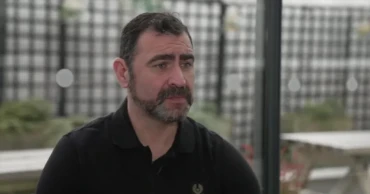
Andy Reid, a former British soldier who lost both legs and an arm after stepping on a Taliban explosive device in Helmand province, said Trump should apologise. He said British and American troops served side by side on the front lines.
Many veterans said the remarks were disrespectful to those who were injured or killed during the conflict. A total of 457 British service members died in Afghanistan, while thousands more were wounded.
British forces were deployed in Afghanistan from 2001 to 2014 after the US invoked Nato’s Article 5 following the 9/11 attacks. At its peak, the UK had around 11,000 troops in the country, making it the second-largest contributor after the US.
Andy Allen, a former soldier injured by an improvised explosive device in 2008, said he plans to write to the White House to stress that Nato troops fought alongside US forces on the front lines.
Relatives of fallen soldiers also voiced their pain. Diane Dernie, whose son Ben Parkinson was severely injured in Afghanistan, said the comments were shocking and ignored the sacrifices made by allied troops.
Other Nato veterans from Canada and the US also criticised Trump’s remarks, saying the mission could not have been carried out without allied support.
With inputs from BBC
4 months ago
Ukraine, Russia, US discuss territorial concessions in Abu Dhabi
Ukrainian President Volodymyr Zelenskyy said the future of eastern Ukraine’s Donbas region will be a central issue as negotiators from Ukraine, Russia and the United States hold talks in Abu Dhabi aimed at ending Russia’s nearly four-year full-scale invasion.
The UAE foreign ministry said the talks, which began Friday and continue Saturday, are intended “to promote dialogue and identify political solutions to the crisis.” The White House described the first day of discussions as productive.
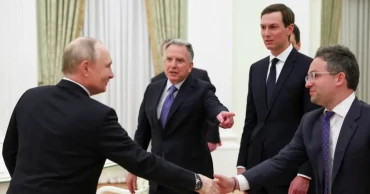
Hours before the three-way talks opened, Russian President Vladimir Putin held overnight discussions on a possible settlement with US President Donald Trump’s envoys Steve Witkoff and Jared Kushner. The Kremlin reiterated that any peace deal would require Ukraine to withdraw its troops from eastern territories illegally annexed by Russia but not fully controlled.
Zelenskyy said after meeting Trump on Thursday in Davos, Switzerland, that while the status of Russian-occupied land in eastern Ukraine remains unresolved, peace proposals are “nearly ready.” He also said he discussed with Trump the idea of establishing a Ukraine-controlled free trade zone in the east, calling it potentially positive for business.
Friday marked the first known instance of Trump administration officials meeting simultaneously with representatives from both Ukraine and Russia. Zelenskyy said the Ukrainian delegation was updating him almost hourly.
“They are discussing the parameters for ending the war,” Zelenskyy said in a late-night address. “The most important thing is whether Russia is ready to end the war it started.” He cautioned that it was too early to draw conclusions.
The Kremlin described the talks as a security working group, with spokesman Dmitry Peskov again calling troop withdrawal from Donbas an “important condition.” Kremlin adviser Yuri Ushakov said a lasting settlement would not be possible without resolving territorial issues, while Russian media reported discussions on buffer zones and control measures.
US officials confirmed that Witkoff and Kushner were joined in Abu Dhabi by Army Secretary Dan Driscoll and NATO’s top military commander, US Air Force Gen Alexus Grynkewich. Ukraine’s delegation includes senior security and military officials.
Earlier in Davos, Zelenskyy met Trump for about an hour, describing the talks as productive. Trump later said both sides want a deal but that territorial boundaries remain the main obstacle.
Russia currently controls about 20 percent of Ukraine’s territory, though gains have come at high military and economic cost. Ukraine continues to face financial strain, manpower shortages and dependence on Western military support.
Zelenskyy also sharply criticised European allies, accusing them of slow decision-making, insufficient defence spending and reluctance to use frozen Russian assets to support Ukraine.
“Europe looks lost,” he said, warning that the continent risks repeating the same mistakes unless it takes stronger action.
4 months ago
UK’s Starmer condemns Trump’s comments on NATO troops in Afghanistan as offensive
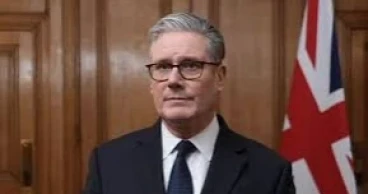
British Prime Minister Keir Starmer said Friday that U.S. President Donald Trump should apologize for wrongly suggesting that NATO troops from countries other than the United States avoided frontline combat during the war in Afghanistan, calling the remarks “insulting” and “deeply appalling.”
Trump’s suggestion that he doubted whether NATO’s other 31 members would support the U.S. if asked sparked anger across the United Kingdom, cutting across political divisions. In an interview in Davos, Trump claimed that while allies sent troops to Afghanistan, they remained largely away from the front lines.
Those comments conflict with the history of the war, which began in October 2001 after the Sept. 11 attacks, when the U.S. led a broad international coalition to dismantle al-Qaida and oust the Taliban. NATO’s collective defense clause was invoked for the first time, and forces from dozens of allied nations fought alongside American troops.
In Britain, the reaction was especially strong. Starmer honored the 457 British service members who were killed and those left with lifelong injuries, stressing that their bravery and sacrifice should never be diminished. He said Trump’s remarks had caused deep pain to the families of the fallen and to the nation as a whole.
Prince Harry also weighed in, saying the sacrifices made by British soldiers deserved to be discussed honestly and respectfully. Drawing on his own experience from two tours in Afghanistan, he noted that countless families were permanently affected, with parents burying children and children losing parents.
Following the 9/11 attacks, then–Prime Minister Tony Blair pledged that the UK would stand “shoulder to shoulder” with the United States. British forces played a major role throughout the conflict, particularly in Helmand Province, remaining in combat operations until 2014 and later in support roles until the chaotic withdrawal in 2021. More than 150,000 British troops served in Afghanistan, making the UK the largest contributor after the U.S.
Ben Obese-Jecty, a British lawmaker and former army captain who served in Afghanistan, said it was disheartening to see the sacrifices of British and other NATO forces dismissed by the U.S. president.
Criticism was intensified by Trump’s lack of military service during the Vietnam War era, when he received a deferment for bone spurs—fueling accusations of draft avoidance. Commentators called it ironic that such remarks came from someone who did not serve.
Trump’s comments are part of a broader pattern of criticizing NATO allies in recent days, particularly as he escalated rhetoric over Greenland, a Danish territory. His claims stand in contrast to NATO’s record, including the invocation of Article 5 after 9/11, which obligated all member states to come to the U.S.’s defense.
Denmark, one of America’s closest allies in Afghanistan, lost 44 soldiers there—the highest per capita toll among coalition forces—underscoring the cost paid by smaller nations.
The controversy follows a week of strained transatlantic relations, marked by Trump’s threats toward Greenland and proposed tariffs against European countries. While Trump later softened his stance after talks with NATO Secretary-General Mark Rutte, relations have already been affected.
For families of British veterans, the remarks cut deeply. Diane Dernie, whose son was severely injured by a land mine in Afghanistan, described Trump’s comments as “the ultimate insult” and urged Starmer to confront him directly.
Responding to her concerns, Starmer said that if he had made such remarks himself, he would have issued an apology, signaling that Trump should do the same.
4 months ago
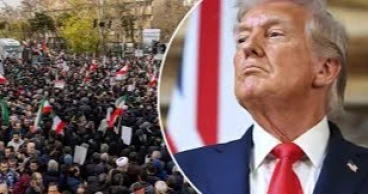
Iranian prosecutor rejects Trump’s claim that 800 detainees avoided execution
Iran’s chief prosecutor on Friday dismissed US President Donald Trump’s repeated assertion that he prevented the execution of 800 people arrested during recent protests, calling the claim “entirely untrue.” At the same time, activists reported that the death toll from Iran’s violent crackdown on nationwide demonstrations has climbed to at least 5,032.
Rights groups believe the actual number of deaths may be significantly higher, but verification has been difficult due to Iran’s ongoing internet shutdown, now the longest in the country’s history.
Relations between Washington and Tehran remain tense as a U.S. aircraft carrier group moves closer to the Middle East. Trump referred to the deployment as an “armada” and analysts say the military buildup gives him the option of launching strikes, even though he has so far stopped short of doing so. Trump has previously said mass executions or the killing of peaceful protesters would trigger military action.
According to an analysis by the Soufan Center, Trump appears to have stepped back from immediate military action, possibly due to regional pressure and doubts that airstrikes alone could destabilize Iran’s leadership. However, continued military movements suggest force remains a possibility.
Iran’s top prosecutor, Mohammad Movahedi, denied Trump’s claim in remarks carried by the judiciary’s Mizan news agency, saying no such executions were planned and no such number existed. He emphasized that Iran’s judiciary does not take orders from foreign governments.
Movahedi’s comments hinted that the disputed figure may have come from Iran’s Foreign Ministry, which has been in contact with U.S. envoy Steve Witkoff during nuclear negotiations. He stressed that Iran’s institutions operate independently.
A White House official later disputed the prosecutor’s denial, reiterating that executions were halted because of Trump’s warnings. Speaking anonymously, the official said the administration was closely monitoring the situation and warned that all options remain open if executions take place, though no evidence was provided to support the claim.
Iranian authorities have labeled some detainees as “mohareb,” or “enemies of God,” a charge punishable by death and previously used during the mass executions of 1988.
At a special session of the U.N. Human Rights Council in Geneva, U.N. human rights chief Volker Türk voiced concern over mixed signals from Iranian officials about whether protesters could face execution. He noted that Iran remains among the world’s leading executioners, with at least 1,500 executions reported last year, a sharp increase from the year before.
Meanwhile, Tehran’s Friday prayer leader Mohammad Javad Haji Ali Akbari mocked Trump in a speech aired on state radio and warned that any harm to Iran’s leadership would prompt retaliation against U.S. interests and military bases in the region.
Iran’s Foreign Ministry also condemned a European Parliament resolution criticizing Tehran for repression and mass killings of protesters and calling for the designation of Iran’s Revolutionary Guard as a terrorist organization. The ministry warned that any such actions would be met with a response from Iran.
The U.S.-based Human Rights Activists News Agency reported that more than 4,700 of those killed were protesters and said over 27,600 people have been detained. The group’s figures, based on activist networks inside Iran, exceed any protest-related death toll in the country in decades. Iran’s government, however, has reported a lower death toll of 3,117, including civilians, security forces, and what it described as “terrorists.”
The Associated Press has not been able to independently verify casualty figures due to restrictions on communications within Iran.
The U.S. military has continued moving forces into the region, including the aircraft carrier USS Abraham Lincoln, now operating in the Indian Ocean. Trump said the deployment was precautionary, adding that he hoped it would not be necessary to use the force.
He also referenced previous nuclear talks with Iran and warned that future U.S. military action could be far more severe than earlier strikes. Separately, the U.K. Defense Ministry announced that its joint fighter jet squadron with Qatar has been deployed to the Persian Gulf for defensive purposes amid rising regional tensions.
4 months ago
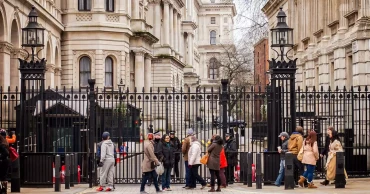
Downing Street says Trump wrong on Nato’s Afghanistan combat role
Downing Street has rejected US President Donald Trump’s claim that Nato troops stayed away from the front lines during the war in Afghanistan, calling the remarks wrong and dismissive of allied sacrifices.
The Prime Minister’s office said Trump was “wrong to diminish” the role of Nato forces, including British troops, who fought alongside the United States following the 9/11 attacks. Britain joined the US-led operation in 2001 after Nato invoked its collective defence clause for the first and only time.
Trump’s comments, made in an interview with Fox News, triggered strong criticism across the UK political spectrum and among veterans. Armed Forces Minister Al Carns described the remarks as “utterly ridiculous” and “a real shame,” while Defence Secretary John Healey said British soldiers who died in Afghanistan should be remembered as heroes.
Opposition leaders also condemned the statement. Conservative leader Kemi Badenoch called it “flat-out nonsense,” and Liberal Democrat leader Ed Davey said the prime minister should demand an apology from Trump.
Veterans and families of those injured or killed expressed anger and hurt. Former soldiers said the suggestion that Nato forces avoided combat was disrespectful, noting that British and allied troops fought in some of the most dangerous regions, including Helmand province.
According to official figures, 457 British service personnel were killed during nearly two decades of conflict in Afghanistan, with many more suffering life-changing injuries. Downing Street said their service and sacrifice, alongside US and other Nato allies, would never be forgotten.
With inputs from BBC
4 months ago
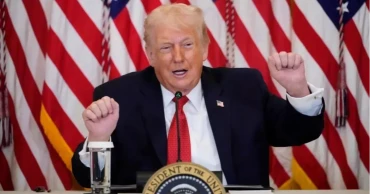
Trump's Afghanistan claim sparks anger in UK
US President Donald Trump’s claim that Nato troops stayed “a little off the front lines” in Afghanistan has drawn strong criticism from UK politicians and veterans’ families.
Trump made the remarks during a Fox News interview on Thursday. He said he was “not sure” Nato would support the US if needed and suggested that allied troops in Afghanistan stayed behind the front lines.
UK Health and Social Care Minister Stephen Kinnock called the comments “deeply disappointing” and “plainly wrong.” He said British and other Nato troops had always stood alongside US forces and many had lost their lives in American-led missions.
Conservative Party leader Kemi Badenoch described Trump’s remarks as “flat-out nonsense.” Labour MP Emily Thornberry called them “an absolute insult” to British service personnel. Liberal Democrats leader Ed Davey said Trump, who avoided military service five times, had no right to question the sacrifices of 457 British troops killed in Afghanistan.
The UK joined the US in Afghanistan in 2001 after the 9/11 attacks, invoking Nato’s collective security clause. Thousands of British soldiers served there over the next two decades.
Stephen Kinnock said UK Prime Minister Keir Starmer would convey the country’s position to Trump, highlighting the service and sacrifices of the armed forces.
With inputs from BBC
4 months ago
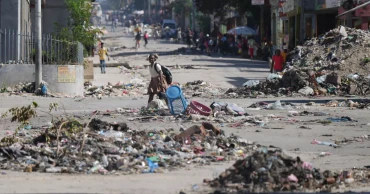
US warns of action if Haitian politicians destabilize country
The U.S. warned the transitional council in charge of Haiti against making changes to the troubled country’s government late Wednesday, as pressure mounts for the unelected body to move toward elections for the first time in a decade.
In a statement posted on X, the U.S. Embassy in Haiti wrote that “The United States would consider that any person who supports such a destabilizing initiative, which favors the gangs, would be acting against the interests of the United States, the region, and the Haitian people, and will take appropriate measures accordingly."
The U.S. Embassy added that such a maneuver would undermine efforts to establish “a minimal level of security and stability” in Haiti, where gang violence is surging and poverty deepening.
The statement came as some members of the council are at odds with Haitian Prime Minister Alix Didier Fils-Aimé, although it wasn’t immediately clear why. The council met behind closed doors earlier Wednesday and again on Thursday.
The U.S. Bureau of Western Hemisphere Affairs wrote on X Thursday night that Haiti's chronic instability is a result of “corrupt Haitian politicians who use gangs and other armed groups to create chaos in the streets and then insist on a role in government to turn down the chaos they themselves have created.”
“Real stability will come when political leaders get their power from the support of voters rather than their ability to sow chaos. The members of the (council) who have followed this path are not Haitian patriots. They are criminals like the gangs they conspire with,” the bureau wrote.
A spokesman for the prime minister’s office said he could not comment on the situation. The council’s seven members with voting powers did not return messages asking for comment.
Meanwhile, Laurent Saint-Cyr, the council's leader, said in a statement that he opposes any push to undermine government stability ahead of Feb. 7, when the council is provisionally scheduled to step down.
“As major institutional deadlines for the Nation approach, any initiative likely to fuel instability, confusion or a breakdown of trust carries serious risks for the country," he wrote. “Haiti cannot afford to make unilateral decisions or engage in short-sighted political calculations that would compromise the stability and continuity of the State, as well as the well-being of the already sorely tested population.”
Unelected council was put in charge to quell chaos
It's the latest episode in years of political chaos that erupted after Haiti's last elected president, Jovenel Moïse, was slain at his home in July 2021.
The council has been one of the country's top authorities since April 2024. It was created with the help of Caribbean leaders after powerful gangs forced the closure of Haiti’s main international airport and targeted key state infrastructure in a series of unprecedented attacks that eventually led former Prime Minister Ariel Henry to resign.
The council was charged with selecting Haiti’s prime minister in a bid to quickly bring some stability to the beleaguered country.
Fils-Aimé is the third person chosen by the council. A businessman and former head of Haiti's Chamber of Commerce and Industry, he was appointed in November 2025 after the council fired previous leader Garry Conille.
The council is supposed to step down by Feb. 7, but it’s unclear if that will happen. Critics say some council members are trying to stay in power longer, and many fear the move could unleash a fresh round of violent protests.
The Feb. 7 deadline was approved in early 2024 on the assumption that Haiti would have held general elections to elect a new president. Gang violence has prevented officials from holding elections so far, although they are tentatively set for August, with a runoff to be held in December.
UN Security Council meets to discuss Haiti
A new U.N. report released Wednesday noted that “national stakeholders remain divided over the transitional governance architecture that is to lead the country to elections.”
Earlier on Wednesday, the U.N. Security Council met to discuss the unraveling situation in Haiti.
“Haiti has entered a critical phase in its process of restoring democratic institutions,” said Carlos Ruiz-Massieu, special representative of the U.N. Secretary General in Haiti. “The country no longer has time to waste in prolonged infighting.”
Panamanian Ambassador Eloy Alfaro de Alba noted at the meeting that Haiti is at a “critical juncture,” with only 18 days left for the transitional presidential council’s mandate to end.
“The persistent nature of violence … remains of utmost concern,” he said.
Several U.N. Security Council members noted that Haiti needs to quickly move toward a democratic transition as gangs continue to seize control of more territory.
“There’s a need to approach this deadline with a sense of responsibility … to sustain continuity of state and avoid any disruptions that may undermine the operation of national institutions,” said Ericq Pierre, permanent representative of Haiti to the United Nations.
Gangs control an estimated 90% of Port-au-Prince, Haiti’s capital, and they have seized swaths of land in the country’s central region.
More than 8,100 killings were reported across Haiti from January to November last year, “with figures likely underreported owing to limited access to gang-controlled areas,” according to the U.N. report.
Haiti’s National Police has been trying to quell gang violence with help from a U.N.-backed mission led by Kenyan police that remains understaffed and underfunded.
The mission is transitioning into a so-called “gang suppression force” that would have the power to arrest suspected gang members.
Haiti’s government also has been working with a private military contractor to launch drone strikes targeting suspected gang members, but which have also killed civilians. The strikes killed more than 970 people from March to December last year, including 39 civilians, 16 of them children, according to the Office of the United Nations High Commissioner for Human Rights.
4 months ago
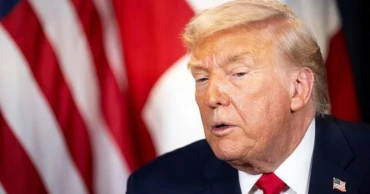
Nato says Greenland sovereignty not discussed after Trump talks of deal framework
Nato said the issue of Greenland’s sovereignty was not discussed in a meeting between US President Donald Trump and Nato Secretary General Mark Rutte, after Trump claimed a “framework of a future deal” had been discussed.
Trump said the United States is exploring a potential deal on Greenland following the talks with Nato. He also dropped planned tariffs on eight European countries and repeated that he would not use force to take the island.
Diplomatic sources, cited by US media, said there was no agreement for American control or ownership of Greenland.
Rutte said he did not discuss Denmark’s sovereignty over Greenland during his meeting with Trump.
Denmark’s Prime Minister Mette Frederiksen said Denmark is open to talks on security, investment and the economy, but sovereignty is not negotiable. She said decisions on issues related to Denmark and Greenland can only be taken by Denmark and Greenland.
UK Foreign Secretary Yvette Cooper said allies have been working on ideas to strengthen Arctic security, including an “Arctic sentry” plan under Nato. She said the UK has stayed firm in supporting Danish and Greenlandic sovereignty.
UK Prime Minister Keir Starmer is due to meet Frederiksen for talks later.
With inputs from BBC
4 months ago
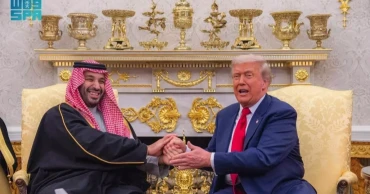
Seven nations join Trump’s Board of Peace for Gaza
Seven countries, including Saudi Arabia, Turkey and Egypt, have agreed to join US President Donald Trump’s newly formed Board of Peace, according to a joint statement. Israel had earlier confirmed its participation.
Trump on Wednesday said Russian President Vladimir Putin had also accepted the invitation, though Moscow later clarified it was still under consideration.
The board, initially linked to ending the two-year Israel-Hamas conflict and overseeing Gaza reconstruction, does not specifically mention Palestine in its charter and appears aimed at taking on functions similar to the UN.
Saudi Arabia said the Muslim-majority nations – Saudi Arabia, Turkey, Egypt, Jordan, Indonesia, Pakistan and Qatar – support efforts for a lasting ceasefire in Gaza, reconstruction, and what they called a “just and lasting peace”.
The body’s charter will take effect once three states formally agree, with member nations holding renewable three-year terms. Contributions of $1 billion will secure permanent seats. Trump will serve as chairman and US representative with authority to appoint executive board members.
The White House last week named seven founding Executive Board members, including US Secretary of State Marco Rubio, Trump’s son-in-law Jared Kushner, former UK Prime Minister Tony Blair, and former UN Middle East envoy Nickolay Mladenov.
Phase one of the plan involved a ceasefire, partial prisoner exchange, limited Israeli withdrawal, and increased humanitarian aid. Israel says the second phase, including reconstruction and demilitarisation, will proceed only after the return of the last hostages.
Humanitarian conditions remain fragile. Gaza’s Hamas-run health ministry reports over 460 Palestinian deaths from Israeli strikes since the ceasefire, while Israel reports three soldiers killed in Palestinian attacks.
The board faces challenges, as Hamas has resisted disarming without recognition of a Palestinian state, and Israel has not fully committed to withdrawing from Gaza.
With inputs from BBC
4 months ago
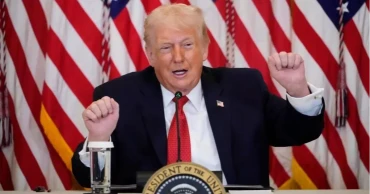
Trump drops Greenland tariff threat after Nato talks on Arctic security
US President Donald Trump said the United States and Nato have discussed a “framework of a future deal” linked to Greenland and the wider Arctic region, as he backed off a threat to impose new tariffs on several European allies.
In a social media post after meeting Nato Secretary General Mark Rutte on Wednesday, Trump described the talks as “very productive” and claimed they produced a framework for an agreement concerning Greenland and the Arctic, without offering specific details.
Nato also termed the meeting “very productive” and said discussions among allies would focus on strengthening Arctic security through collective efforts, including the seven Arctic allies.
Trump said Secretary of State Marco Rubio and Special Envoy Steve Witkoff would report directly to him as discussions continue.
Danish Foreign Minister Lars Løkke Rasmussen welcomed what he described as a better end to the day, while stressing Denmark’s “red lines” and the need to respect sovereignty as talks address US security concerns in the Arctic.
Trump later told US media the possible arrangement could involve mineral rights and elements tied to his proposed “Golden Dome” missile defence concept, while repeating that he would not use military force to pursue the territory.
The US president had threatened to impose a 10% tariff from Feb 1 — and raise it to 25% from June 1 — on imports from several European countries unless a deal was reached related to Greenland. After the Nato talks, he said those tariffs would not go into effect.
With inputs from BBC
4 months ago