Others
EU to convene emergency summit Thursday over Trump’s Greenland threats
Leaders of EU countries will hold an emergency summit in Brussels on Thursday to discuss U.S. threats related to Greenland, European Commission spokesperson Olof Gill said on Monday.
The summit will assess possible retaliatory measures in response to threatened tariffs imposed by U.S. President Donald Trump on countries that oppose his plan to "acquire" Greenland.
Gill said the EU continues to engage "at all levels" with Washington over its new tariff threats and is taking "every possible step" to protect the bloc's economic interests. He added that the use of the anti-coercion instrument is not ruled out.
He stressed that the priority is engagement rather than escalation with the United States. However, "should the threatened tariffs be imposed, the European Union has tools at its disposal and is prepared to respond," he added.
4 months ago
US invites more nations to join Trump’s Board of Peace for Gaza
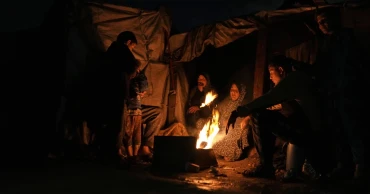
At least eight more countries say the United States has invited them to join President Donald Trump’s newly formed Board of Peace, a group of world leaders tasked with overseeing the next phase in Gaza and signalling a wider global role.
Hungary and Vietnam have accepted the invitation, officials from the two countries said.
Under the board’s draft charter, a permanent seat requires a $1 billion contribution, while three-year appointments carry no such requirement, a US official said on condition of anonymity as the document has not been made public. The funds are expected to be used for rebuilding Gaza.
Hungarian Prime Minister Viktor Orban has agreed to join, Foreign Minister Peter Szijjarto told state radio. Vietnam’s Communist Party chief To Lam has also accepted, according to a foreign ministry statement.
India has received an invitation, a senior government official said, while Australia confirmed it has been invited and will consult with Washington to better understand the proposal.
Jordan, Greece, Cyprus and Pakistan said they were invited on Sunday. Canada, Turkey, Egypt, Paraguay, Argentina and Albania have already said they received invitations. The total number of invitees has not been disclosed.
The United States is expected to announce the official list of members in the coming days, likely during the World Economic Forum in Davos.
The board is set to oversee the next steps in Gaza as the ceasefire that began on Oct. 10 enters its second phase, including the formation of a new Palestinian committee, deployment of an international security force, disarmament of Hamas and reconstruction of the territory.
In letters sent to world leaders, Trump said the Board of Peace would pursue a new approach to resolving global conflicts. Some invitees posted the letters on social media.
The White House has also announced an executive committee to implement the board’s plans, though Israel has objected, saying it was not coordinated and runs counter to its policy.
Members of the executive committee include US Secretary of State Marco Rubio, Trump envoy Steve Witkoff, Jared Kushner, former British prime minister Tony Blair, World Bank president Ajay Banga and US deputy national security adviser Robert Gabriel, along with Israeli businessman Yakir Gabay. Representatives from Qatar, Egypt and Turkey, which are monitoring the ceasefire, are also included.
4 months ago
Europe rejects Trump tariff threat over Greenland
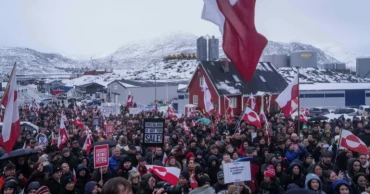
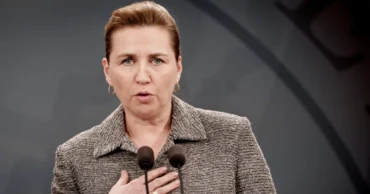
Danish Prime Minister Mette Frederiksen has said Europe will not bow to pressure from US President Donald Trump, as European leaders rallied behind Greenland in response to Washington’s threat of tariffs over the autonomous Danish territory.
Trump has warned he will impose new tariffs on eight US allies – Denmark, Finland, France, Germany, the Netherlands, Norway, Sweden and the UK – from February if they oppose his plan to take control of Greenland. He has described the island as vital for US security and has not ruled out using force, triggering strong criticism across Europe.
In a joint statement, the countries threatened with tariffs said Trump’s move could spark a “dangerous downward spiral” and undermine transatlantic relations.
“We stand in full solidarity with the Kingdom of Denmark and the people of Greenland,” the statement said, stressing that Arctic security is a shared Nato interest and that sovereignty and territorial integrity must be respected.
Writing on Facebook, Frederiksen said Europe wanted cooperation, not conflict, but would stand firm on its core values.
“Europe will not be blackmailed,” she wrote.
UK Prime Minister Sir Keir Starmer said he had spoken with Frederiksen, European Commission President Ursula von der Leyen and Nato Secretary-General Mark Rutte before holding talks with Trump. A Downing Street spokeswoman said Starmer made clear that Greenland’s security was a priority for all Nato members and that imposing tariffs on allies over collective security was wrong.
Trump has threatened a 10 percent tariff on goods from the eight countries from February 1, with the possibility of raising it to 25 percent until a deal is reached.
European leaders have warned the move would damage long-standing alliances, while public protests have already taken place in Denmark and Greenland against Trump’s takeover plan.
With inputs from BBC
4 months ago
Trump expresses appreciation to Iran for halting executions of political detainees
US President Donald Trump on Friday publicly thanked Iranian authorities for stopping what he said were planned executions of hundreds of political detainees, a rare gesture that appeared to signal a softening of his earlier warnings toward Tehran.
Speaking to reporters as he departed the White House for his Mar-a-Lago resort in Florida, Trump said Iran had called off the execution of more than 800 people. “They canceled the hangings, and I have great respect for that,” he said.
Trump echoed the message on social media, claiming that over 800 executions had been scheduled but were no longer going ahead. “Thank you!” he wrote.
The remarks followed days of heightened rhetoric in which Trump suggested the United States could take military action if Iran carried out mass executions during widespread protests that have since subsided. His comments on Friday hinted that the likelihood of U.S. military intervention may now be diminishing.
While activist groups say the death toll from the protests continues to climb, Trump’s optimistic assessment appeared to contrast with reports of severe repression inside Iran. Still, his statements suggested he was stepping back from earlier suggestions that a U.S. strike was imminent.
Trump had earlier promised protesters that “help is on the way,” but when asked Friday whether that remained true, he replied, “We’re going to see.” He also denied that pressure from Arab or Israeli leaders influenced his shift in tone, saying the decision was his own.
Trump did not specify who in Iran confirmed that the executions were halted. Meanwhile, demonstrations that began on Dec. 28 over economic hardship and evolved into direct challenges to Iran’s ruling system appear to have ended. Tehran has seen no protests for days, daily life has largely resumed, and authorities have reported no unrest elsewhere, though an internet blackout has continued.
The U.S.-based Human Rights Activists News Agency said on Friday that at least 2,797 people have been killed during the unrest, with the figure still rising.
In contrast, Iran’s exiled Crown Prince Reza Pahlavi urged the United States to follow through on its pledge to support protesters, saying he still believed Trump would keep his word.
4 months ago

7.8 million ounces of new gold resources discovered in Saudi Arabia
Saudi Arabian Mining Company (Maaden) has reported the discovery of 7.8 million ounces of additional gold resources across four locations in the Kingdom, strengthening its drive to grow domestic mineral reserves and build a global gold business.
The new resources were identified at Mansourah Massarah, Uruq 20/21, Umm As Salam and the newly defined Wadi Al Jaww site. The expansion follows an intensive drilling programme that initially outlined more than nine million ounces before standard annual reporting adjustments.
Mansourah Massarah delivered the biggest increase, adding three million ounces year-on-year. Uruq 20/21 and Umm As Salam together contributed 1.67 million ounces, while Wadi Al Jaww delivered a maiden resource of 3.08 million ounces.
CEO Bob Wilt said the findings validate Maaden’s long-term strategy. “The results leave no doubt that the company’s long-term strategy is working on the ground. This is exactly why we continue to invest heavily in Saudi Arabia’s gold endowment,” he said.
Read more: What Does Gold Carat Mean? Decoding Gold Purity Levels
He added that the latest discoveries highlight the scale of Maaden’s exploration pipeline. “The addition of more than seven million ounces through drilling across the four areas demonstrates the scale and ongoing potential of Maaden’s gold portfolio, and it continues to deliver as we advance exploration and mine development. Our assets are growing, and that growth directly supports future cash generation.”
Maaden’s 2026 exploration programme is focused on the Central Arabian Gold Region, where drilling has identified new mineralised zones and possible mine extensions. Work is also underway near the historic Mahd gold site to assess opportunities to extend mine life, reports Gulf News.
Wilt said the results also support Maaden’s diversification plans. “The results underline the strength of the company’s broader pipeline. These early copper and nickel results show the same signals we saw first in gold and that the Arabian Shield has real scale to continue developing,” he said. “What we’re seeing at Shayban and Jabal Al Wakil points to a much bigger opportunity across the Kingdom and reinforces our ambition to build a strong multi-commodity portfolio alongside our growing gold business.”
Read More: Gold price hits record Tk 234,680 per bhori in Bangladesh
Maaden’s flagship Mansourah Massarah project now hosts an estimated 116 million tonnes grading 2.8 grams of gold per tonne, equivalent to a total resource of 10.4 million ounces. The company said mineralisation remains open at depth, with further drilling planned through 2026.
4 months ago
Trump hints at tariffs on countries opposing U.S. control of Greenland
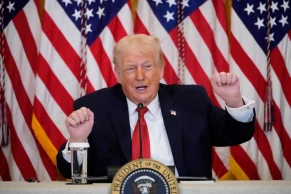
U.S. President Donald Trump on Friday suggested that countries could face tariffs if they do not support U.S. control over Greenland, as a bipartisan Congressional delegation met in Copenhagen to ease tensions over the issue.
Trump has repeatedly asserted that the U.S. should have control over Greenland, a semiautonomous territory of NATO ally Denmark, calling any outcome short of U.S. ownership “unacceptable.” Speaking at a White House event on rural health care, Trump said he had previously threatened European allies with tariffs on pharmaceuticals and added, “I may do that for Greenland too… because we need Greenland for national security.”
This marks the first time Trump mentioned tariffs as a possible means to assert control over the Arctic territory. Earlier this week, Denmark’s and Greenland’s foreign ministers met in Washington with U.S. Vice President JD Vance and Secretary of State Marco Rubio, resulting in the formation of a working group, though disagreements between Denmark and the White House remain. Denmark has emphasized that decisions on Greenland are a matter for Denmark and Greenland and announced plans to strengthen its military presence on the island.
In Copenhagen, U.S. senators and representatives met with Danish and Greenlandic officials, including Danish Prime Minister Mette Frederiksen. Sen. Chris Coons, a Delaware Democrat, thanked Denmark for “225 years of being a good and trusted ally” and highlighted discussions on sustaining the relationship. Alaska Republican Sen. Lisa Murkowski said the visit underscored the importance of viewing Greenland as an ally rather than an asset, contrasting with the White House’s more confrontational tone.
Read More: Donald Trump claims India, Russia have fallen to China
Trump has justified his push for U.S. control by citing potential Chinese and Russian interest in Greenland, which contains vast reserves of strategic minerals, and the White House has not ruled out forceful acquisition. Aaja Chemnitz, a Greenlandic politician in the Danish parliament, said the U.S. has been the main source of threats, while Murkowski noted that public opinion strongly opposes U.S. annexation, with about 75% against it. She and Sen. Jeanne Shaheen have introduced bipartisan legislation barring the use of U.S. funds to seize Greenland or any NATO ally’s territory without consent.
The debate has sparked concern among Greenlanders. Greenlandic Prime Minister Jens-Frederik Nielsen affirmed the territory’s allegiance to Denmark, NATO, and the EU. Sara Olsvig, chair of the Inuit Circumpolar Council, criticized the U.S. stance, saying it shows a troubling view of Indigenous peoples and smaller nations, emphasizing that Greenlanders do not want to be colonized again.
4 months ago
White House identifies leaders for Gaza’s next phase as Palestinian governing committee convenes
The White House on Friday announced the names of several figures expected to help oversee the next phase in Gaza, as a U.S.-backed Palestinian committee tasked with governing the territory met for the first time in Cairo.
The committee’s head, Ali Shaath, a Gaza-born engineer and former Palestinian Authority official, said the group would begin work immediately to improve living conditions. He estimated that reconstruction would take around three years and said the initial focus would be on urgent needs such as housing.
“The Palestinian people were waiting for this committee and its work to help save them,” Shaath told Egypt’s state-run Al-Qahera News following the meeting.
Dhaka yet to decide on sending forces under ISF to Gaza; reiterates conditions
U.S. President Donald Trump has endorsed the committee’s role in managing Gaza after the two-year conflict between Israel and Hamas. Following a ceasefire that took effect on Oct. 10, Israeli forces withdrew from parts of the territory, allowing thousands of displaced Palestinians to return to heavily damaged neighborhoods.
Significant challenges remain, including the deployment of an international security force to monitor the ceasefire and the complex task of disarming Hamas.
Under Trump’s proposal, the technocratic committee would handle Gaza’s daily administration under the supervision of a Trump-led “Board of Peace,” whose full membership has yet to be announced.
White House names oversight officialsThe White House said an executive board will be responsible for implementing the Board of Peace’s strategy. Members include U.S. Secretary of State Marco Rubio, Trump envoy Steve Witkoff, Jared Kushner, former British Prime Minister Tony Blair, Apollo Global Management CEO Marc Rowan, World Bank President Ajay Banga, and Deputy National Security Adviser Robert Gabriel.
Former U.N. Middle East envoy Nickolay Mladenov will serve as the executive board’s on-the-ground representative, overseeing day-to-day operations.
In addition, the administration unveiled the “Gaza Executive Board,” which will coordinate with Mladenov, the Palestinian committee, and an international stabilization force. Witkoff, Kushner, Blair, Rowan, and Mladenov will also serve on this board, joined by Turkish Foreign Minister Hakan Fidan, Qatari diplomat Ali Al-Thawadi, Egypt’s intelligence chief Hassan Rashad, Emirati minister Reem Al-Hashimy, Israeli businessman Yakir Gabay, and former Dutch deputy prime minister and Middle East expert Sigrid Kaag.
Violence in the West Bank and GazaIn the occupied West Bank, mourners gathered Friday for the funeral of a 14-year-old Palestinian boy killed by Israeli forces. The Palestinian Health Ministry identified the victim as Mohammad Na’san, saying he was the first child killed by Israeli troops in the West Bank in 2026.
Local residents said Israeli forces used stun grenades and tear gas without provocation, while Israel’s military said the operation followed stone-throwing and tire-burning by Palestinians.
The killing marked another violent incident in al-Mughayyir, a village east of Ramallah that has become a focal point of tension. Earlier this year, Israeli forces and settlers damaged olive groves and demolished a children’s park while searching for militants.
According to U.N. figures, 240 Palestinians — including 55 children — were killed in the West Bank in 2025, while 17 Israelis, including one child, were killed by Palestinians.
In Gaza, hospital officials said two children — a 7-year-old girl and a 16-year-old boy — were killed Friday in Beit Lahiya near the Yellow Line. Their bodies were taken to al-Shifa Hospital, and further details were not immediately available.
4 months ago
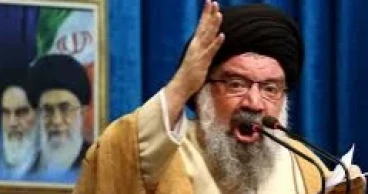
No new protests in Iran amid threats from hard-line cleric
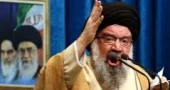
Iran appeared to have slipped back into a tense calm following weeks of unrest that ended in a violent government crackdown. On Friday, a senior conservative cleric called for the execution of detained protesters and openly threatened U.S. President Donald Trump, underscoring the anger and anxiety gripping Iran’s leadership.
At the same time, Trump adopted a more measured tone, expressing appreciation toward Iranian officials for refraining from executing hundreds of detainees. His comments suggested a possible step back from military action. Trump has previously warned that executions and the killing of peaceful demonstrators would cross U.S. “red lines.”
The harsh suppression of protests—reportedly leaving thousands dead—appears to have halted demonstrations that began on Dec. 28 over economic grievances and later evolved into direct challenges to Iran’s ruling system.
In Tehran, daily life seemed to return to the surface-level normalcy, with shops open and streets busy, although an internet shutdown that began a week earlier remained in effect. Authorities reported no new unrest elsewhere in the country.
“Iran canceled the hanging of more than 800 people,” Trump told reporters in Washington, saying he respected the decision. He did not specify who in Iran had confirmed this information.
The U.S.-based Human Rights Activists News Agency reported a death toll of 3,090 as of Friday—higher than any previous unrest in Iran in decades and reminiscent of the turmoil surrounding the 1979 revolution. While the figure could not be independently verified by the AP, the organization has historically relied on a credible network of activists inside Iran. The Iranian government has released no official casualty numbers.
Hard-line cleric delivers incendiary sermonState radio broadcast a sermon by Ayatollah Ahmad Khatami that drew chants such as “Armed hypocrites should be executed!” from worshippers. Khatami, a member of both the Assembly of Experts and the Guardian Council, labeled protesters as agents of Israeli Prime Minister Benjamin Netanyahu and “soldiers of Trump.”
He warned that both Netanyahu and Trump should expect severe retaliation, declaring that “Americans and Zionists should not expect peace.”
His remarks came as international efforts sought to ease tensions. Russian President Vladimir Putin spoke separately with Iranian President Masoud Pezeshkian and Israeli Prime Minister Netanyahu, according to the Kremlin. Russia, previously quiet about the protests, has been strained by its prolonged war in Ukraine and recent setbacks involving key allies.
Exiled royal urges protests to continueAlthough Trump had earlier promised that “help is on its way,” both protests and the likelihood of U.S. military action appeared to fade. A diplomat told the AP that officials from Egypt, Oman, Saudi Arabia, and Qatar warned Trump that military intervention could destabilize the region and harm the global economy.
Iran’s exiled Crown Prince Reza Pahlavi urged the U.S. to follow through on its promises. Speaking in Washington, he said he still trusted Trump’s commitment and insisted that Iranians must continue their struggle regardless of foreign intervention.
“I will return to Iran,” Pahlavi said, later calling on protesters to resume demonstrations from Saturday through Monday.
Despite limited support inside Iran, Pahlavi continues to position himself as a potential transitional leader should the government collapse.
Authorities detail damage from unrestKhatami also released the first official estimates of damage caused during the protests, claiming that hundreds of mosques, prayer halls, hospitals, ambulances, and emergency vehicles were damaged, along with dozens of homes belonging to Friday prayer leaders—figures that highlight public anger toward state institutions.
While protests inside Iran appear to have subsided, large demonstrations by exiled Iranians and supporters have taken place across Europe.
Due to the internet shutdown, some Iranians crossed borders to communicate with the outside world. At Turkey’s Van province border, travelers said they were leaving Iran temporarily to bypass the blackout.
“I’ll return once the internet is restored,” said Mehdi, who withheld his last name for security reasons.
Exiled crown prince urges world support to topple Iran government
Some Turkish citizens also fled the unrest. Mehmet Önder, a Turkish textile businessman, said he heard heavy gunfire while sheltering in Tehran. Based on his military experience, he said the weapons used were machine guns, not light firearms.
Adding to regional tensions, a Kurdish separatist group based in Iraq claimed responsibility for recent attacks on Iran’s Revolutionary Guard, saying the strikes were retaliation for Tehran’s violent crackdown and were carried out by its fighters operating inside Iran.
4 months ago
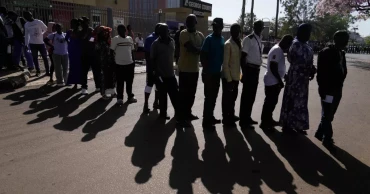
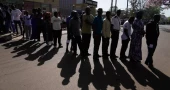
Delays plague voting in Uganda's presidential election
Uganda’s presidential election was plagued by widespread delays Thursday in addition to a days-long internet shutdown that has been criticized as an anti-democratic tactic in a country where the president has held office since 1986.
Some polling stations remained closed for up to four hours after the scheduled 7 a.m. start time due to “technical challenges," according to the nation's electoral commission, which asked polling officers to use paper registration records to ensure the difficulties did not “disenfranchise any voter.”
President Yoweri Museveni, 81, faces seven other candidates, including Robert Kyagulanyi, a musician-turned-politician best known as Bobi Wine, who is calling for political change.
The East African country of roughly 45 million people has 21.6 million registered voters. Polls were expected to close at 4 p.m., but voting was extended one hour until 5 p.m. local time. Results are constitutionally required to be announced in 48 hours.
In the morning, impatient crowds gathered outside polling stations expressing concerns over the delays. Umaru Mutyaba, a polling agent for a parliamentary candidate, said it was “frustrating” to be waiting outside a station in the capital Kampala.
“We can’t be standing here waiting to vote as if we have nothing else to do," he said.
Wine, the candidate, alleged electoral fraud, noting that biometric voter identification machines were not working at polling places and claiming that there was “ballot stuffing.”
Wine wrote in a post on X that his party's leaders had been arrested. “Many of our polling agents and supervisors abducted, and others chased off polling stations,” the post said.
Museveni told journalists he was notified that biometric machines weren't working at some stations and that he supported the electoral body's decision to revert to paper registration records. He did not comment on allegations of fraud.
Ssemujju Nganda, a prominent opposition figure and lawmaker seeking reelection in Kira municipality, told The Associated Press he had been waiting in line to vote for three hours.
Nganda said the delays likely would lead to apathy and low turnout in urban areas where the opposition has substantial support. "It’s going to be chaos,” he said.
Nicholas Sengoba, an independent analyst and newspaper columnist, said delays to the start of voting in urban, opposition areas favored the ruling party.
Emmanuel Tusiime, a young man who was among dozens prevented from entering a polling station in Kampala past closing time said the officials had prevented him from participating.
“My vote has not been counted, and, as you can see, I am not alone," he said he was left feeling “very disappointed.”
Museveni serving Africa's third-longest presidential term
Uganda has not witnessed a peaceful transfer of presidential power since independence from British colonial rule six decades ago.
Museveni has served the third-longest term of any African leader and is seeking to extend his rule into a fifth decade. The aging president’s authority has become increasingly dependent on the military led by his son, Muhoozi Kainerugaba.
Museveni and Wine are reprising their rivalry from the previous election in 2021, when Wine appealed to mostly young people in urban areas. With voter turnout of 59%, Wine secured 35% of the ballots against Museveni’s 58%, the president’s smallest vote share since his first electoral campaign three decades ago.
The lead-up to Thursday's election produced concerns about transparency, the possibility of hereditary rule, military interference and possible vote tampering.
Uganda's internet was shut down Tuesday by the government communications agency, which cited misinformation, electoral fraud and incitement of violence. The shutdown has affected the public and disrupted critical sectors such as banking.
Heavy security deployed
There has been heavy security leading up to voting, including military units deployed on the streets this week.
Amnesty International said security forces are engaging in a “brutal campaign of repression,” citing a Nov. 28 opposition rally in eastern Uganda where the military blocked exits and opened fire on supporters, killing one person.
Museveni urged voters to come out in large numbers during his final rally Tuesday.
“You go and vote, anybody who tries to interfere with your freedom will be crushed. I am telling you this. We are ready to put an end to this indiscipline,” he said.
The national electoral commission chairperson, Simon Byabakama, urged tolerance among Ugandans as they vote.
“Let us keep the peace that we have,” Byabakama said late Wednesday. “Let us be civil. Let us be courteous. Let’s be tolerant. Even if you know that this person does not support (your) candidate, please give him or her room or opportunity to go and exercise his or her constitutional right."
Authorities also suspended the activities of several civic groups during the campaign season. That Group, a prominent media watchdog, closed its office Wednesday after the interior ministry alleged in a letter that the group was involved in activities “prejudicial to the security and laws of Uganda.”
Veteran opposition figure Kizza Besigye, a four-time presidential candidate, remains in prison after he was charged with treason in February 2025.
4 months ago
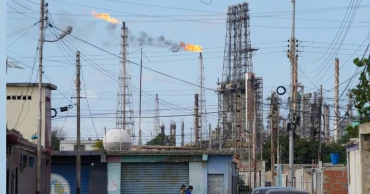
Venezuela’s new leader signals oil sector reforms and warmer US ties
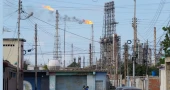
Venezuela’s acting President Delcy Rodríguez used her first state of the union message Thursday to advocate for opening the crucial state-run oil industry to more foreign investment following the Trump administration's pledge to seize control of Venezuelan crude sales.
For the first time, Rodríguez laid out a vision for Venezuela’s new political reality — one that challenges her government’s most deeply rooted beliefs less than two weeks after the United States captured and toppled former President Nicolás Maduro.
Under pressure from the U.S. to cooperate with its plans for reshaping Venezuela’s sanctioned oil industry, Maduro's former vice president declared that a “new policy is being formed in Venezuela."
She urged the foreign diplomats in attendance to tell investors abroad about the changes and called on lawmakers to approve oil sector reforms that would secure foreign firms' access to Venezuela’s vast reserves.
“Venezuela, in free trade relations with the world, can sell the products of its energy industry,” she said.
The Trump administration has said it plans to control future oil export revenues to ensure it benefits the Venezuelan people.
In that vein, Rodríguez described cash from the oil sales flowing into two sovereign wealth funds, one to support crisis-stricken health services and another to bolster public infrastructure, much of which was built under Maduro’s predecessor, Hugo Chávez, and has since deteriorated.
These days the country's hospitals are so poorly equipped that patients are asked to provide supplies needed for their care, from syringes to surgical screws.
While Rodríguez criticized the U.S. capture of Maduro and referred to a “stain on our relations," she also promoted the resumption of diplomacy between the historic adversaries. Her succinct, 44-minute speech and mollifying tone marked a dramatic contrast to her predecessors' fiery rants against U.S. imperialism that often went on for hours.
“Let us not be afraid of diplomacy,” Rodriguez. “I ask that politics not be transformed, that it not begin with hatred and intolerance.”
The day before, she gave a 4-minute briefing to the media to say her government would continue releasing prisoners detained under Maduro's harsh rule. But human rights groups have verified just a fraction of the releases that she claimed took place.
Rodríguez appears to be threading a needle.
A portrait of Maduro and his wife, Cilia Flores, was displayed next to her as she spoke. She called for the U.S. government to "respect the dignity" of Maduro, who is being held in a Brooklyn jail after pleading not guilty to drug-trafficking charges. She portrayed herself as defending Venezuela's sovereignty even as the country warmed up to the U.S. with dizzying speed.
“If one day, as acting president, I have to go to Washington, I will do so standing up, walking, not being dragged," she said. "I'll go standing tall ... never crawling.”
Rodríguez delivered her speech as Venezuela's Nobel Prize-winning opposition leader María Corina Machado was the one in Washington to meet President Donald Trump.
4 months ago