Others
Swiss bar fire linked to skipped inspections since 2019
Fire safety inspections had not been conducted since 2019 at Le Constellation, the Swiss bar where a New Year’s party fire killed 40 people and injured over 100, authorities said Tuesday.
Investigators believe the blaze was triggered by sparkling candles on Champagne bottles that came too close to the ceiling. Authorities are examining whether ceiling soundproofing met regulations and if the candles were allowed. A criminal investigation has been launched against the bar’s two managers for involuntary homicide, bodily harm, and causing a fire, the Valais chief prosecutor said.
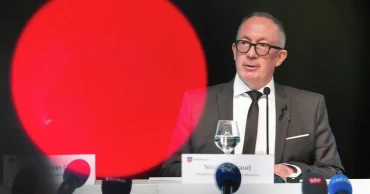
Crans-Montana municipality said fire safety checks were carried out in 2016, 2018, and 2019, with modifications requested, but no issues were raised regarding soundproofing. Municipal head Nicolas Féraud said inspections were not done between 2020 and 2025, a lapse he described as “bitterly regrettable.”
Severe burns complicated victim identification, requiring DNA samples. Investigators confirmed all 40 deceased and 116 injured, including nine French citizens, have been identified. The Paris prosecutor’s office opened a probe to support the Swiss investigation.
Authorities noted the bar’s capacity was 100 on the ground floor and 100 in the basement, though the exact number present during the fire remains unknown. Following the tragedy, the municipality banned indoor fireworks and will commission external agencies to inspect similar venues.
4 months ago
Maduro says he was ‘abducted’ as he pleads not guilty to US drug charges
Former Venezuelan leader Nicolás Maduro defiantly proclaimed himself “the president of my country” on Monday as he rejected federal drug trafficking charges in a New York courtroom, denouncing what he described as his forcible capture by U.S. authorities.
“I was abducted,” Maduro said in Spanish through an interpreter before the judge halted his remarks. When formally asked to enter a plea, he responded: “I am innocent. I am not guilty. I am a decent man and the constitutional president of my country.”
The appearance marked Maduro’s first time in a U.S. courtroom since he and his wife, Cilia Flores, were taken from their home in Caracas during a surprise overnight military operation on Saturday. Flores also entered a not-guilty plea. The case represents one of the most significant U.S. criminal prosecutions ever brought against a foreign head of state.
The legal proceedings are unfolding amid sweeping geopolitical consequences following President Donald Trump’s assertion that Maduro’s removal would allow Washington to temporarily oversee Venezuela’s affairs.
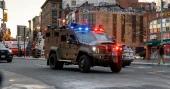
Maduro, 63, was transported to Manhattan under heavy security early Monday, arriving by helicopter from a Brooklyn detention facility before being driven in an armored convoy to the courthouse. He and Flores appeared shortly before noon, wearing jail uniforms and leg restraints, and listened to the English-language hearing through Spanish translation headsets.
As Maduro exited the courtroom, someone in the gallery shouted that he was an “illegitimate” leader.
Legal battle beginsAlthough Maduro will technically receive the same legal rights as any U.S. criminal defendant — including the right to a jury trial — his case is unusual given the manner of his arrest and the international implications involved.
From the outset, Maduro insisted that he had been unlawfully seized.
“I have been held here since Saturday, January 3,” he said, leaning toward the microphone. “I was taken from my home in Caracas.”
U.S. District Judge Alvin Hellerstein interrupted, telling Maduro that his objections would be addressed later through his attorney. The judge then asked a single question: “Are you Nicolás Maduro Moros?”
“I am Nicolás Maduro Moros,” he replied.
Maduro’s attorney, Barry Pollack, said the defense plans to challenge the legality of what he called a “military kidnapping.” Pollack argued that Maduro, as head of a sovereign state, is entitled to diplomatic immunity.
A similar argument failed in the case of Panamanian leader Manuel Noriega following his U.S. capture in 1990. Washington does not recognize Maduro as Venezuela’s legitimate president, particularly after his disputed reelection in 2024.
Flores, who introduced herself in court as Venezuela’s first lady, appeared with visible bandages on her head. Her lawyer said she sustained serious injuries during the operation.
A sweeping 25-page indictment accuses Maduro and associates of conspiring with drug cartels to ship massive quantities of cocaine into the United States. If convicted, they could face life sentences.
The charges allege that Maduro and Flores ordered kidnappings, assaults, and killings to enforce their trafficking operation, including the murder of a local drug figure in Caracas.
Outside the courthouse, police separated demonstrators protesting the U.S. action from those supporting it. Inside, as the hearing concluded, a Venezuelan man stood and confronted Maduro in Spanish. The former leader responded sharply as he was escorted out, saying: “I am a kidnapped president. I am a prisoner of war.”
Calls for Maduro’s returnTrump said over the weekend that the United States would temporarily “run” Venezuela, reiterating on Sunday that “we’re in charge.”
Secretary of State Marco Rubio later sought to soften the message, saying the U.S. would not manage Venezuela’s daily governance beyond enforcing an existing oil embargo.
Before his capture, Maduro had accused Washington of targeting him to gain control of Venezuela’s oil and mineral wealth. While Trump suggested the move could boost oil exports, prices climbed 1.7% on Monday amid uncertainty over Venezuela’s capacity to revive production.
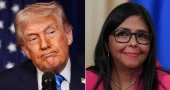
Venezuela’s interim leader, Delcy Rodríguez, demanded Maduro’s return, though she later struck a more conciliatory tone, expressing openness to cooperation with Washington. She was sworn in Monday by her brother, National Assembly President Jorge Rodríguez.
Speaking during the ceremony, she condemned the U.S. operation and described Maduro and Flores as heroes who had been kidnapped.
Maduro’s son, lawmaker Nicolás Maduro Guerra, warned that the seizure of a sitting head of state could set a dangerous global precedent.
“If abducting a president becomes acceptable, no country is safe,” he said. “Today it is Venezuela. Tomorrow it could be anyone.”
The United Nations Security Council convened an emergency session on Monday, with senior U.N. officials cautioning that the U.S. action may have breached international law and highlighting Venezuela’s deep humanitarian crisis following years of economic turmoil.
4 months ago
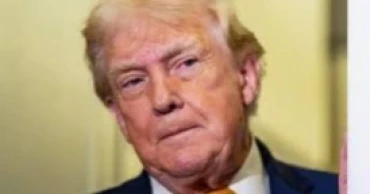
Trump’s post-Maduro rhetoric revives echoes of American imperialism
President Donald Trump has delivered an unmistakable message following the U.S. military operation that captured former Venezuelan leader Nicolás Maduro and transported him and his wife to the United States to face federal drug trafficking charges.
Declaring that “American dominance in the Western Hemisphere will never be questioned again,” Trump framed the raid as a demonstration of renewed U.S. supremacy in the region.
In the days since the operation, Trump and senior officials have reinforced the idea that Washington’s assertive posture in the hemisphere is not temporary. The president has repeatedly pointed to Maduro’s capture as a warning to neighboring countries to align with U.S. interests or risk consequences.
Trump’s language has drawn comparisons to the forceful rhetoric of late 19th- and early 20th-century American leaders, when U.S. presidents openly used military power to secure territory and resources in places such as Cuba, Puerto Rico, Hawaii, Panama, Nicaragua, Haiti, Mexico and the Dominican Republic.
“Past conflicts like Vietnam and Iraq raised concerns about American imperialism, but leaders at the time justified their actions through the language of democracy,” said Edward Frantz, a historian at the University of Indianapolis. “Trump’s rhetoric is far more direct and reminiscent of an era we haven’t seen in decades.”
Following the raid, Trump has also aimed sharp criticism at traditional partners, including Greenland and Mexico. He renewed calls for U.S. control of the Danish territory, citing national security concerns, and said Mexico must “get its act together” in combating drug cartels.
He further warned that longtime U.S. adversary Cuba is “going down” after losing access to heavily discounted Venezuelan oil, and heightened regional anxiety by suggesting that a military operation in Colombia — a major hub of global cocaine production — would be acceptable.
Trump has asserted that Washington will effectively oversee Venezuela’s future, threatening interim President Delcy Rodríguez with consequences worse than Maduro’s if she fails to comply with U.S. demands. He has made clear that he expects Venezuela to open its vast oil reserves to American companies, fueling debate over U.S. overreach.
Over the weekend, Trump said U.S. energy firms would invest billions of dollars to rebuild Venezuela’s oil infrastructure and profit from its production.
The operation has divided Latin America. Right-leaning governments aligned with Trump largely welcomed Maduro’s removal, while non-aligned leaders condemned the action as a violation of national sovereignty. The episode has also intensified concerns that Trump’s desire to annex Greenland may be genuine.
Monroe Doctrine rhetoric unsettles allies
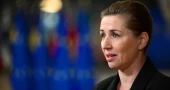
Danish Prime Minister Mette Frederiksen warned Monday that any U.S. attempt to seize Greenland would threaten the future of NATO, calling it a direct assault on the post-World War II security alliance.
“If the United States chooses to attack another NATO country militarily, then everything stops,” she told Danish broadcaster TV2.
Historically, U.S. leaders relied on the Monroe Doctrine — originally designed to prevent European interference in the Americas — to justify interventions across the hemisphere. Trump has now revived that doctrine to defend U.S. action in Venezuela and to warn other nations in the region.
According to Frantz, Trump’s language recalls President Theodore Roosevelt’s era of “gunboat diplomacy,” when U.S. power was openly asserted to protect national interests throughout the Caribbean and Central America.
Only weeks before Maduro’s removal, Trump released a long-awaited National Security Strategy that appeared internally contradictory. While it emphasized a preference for avoiding foreign conflicts, it also pledged to restore U.S. dominance in the Western Hemisphere.
With the Venezuelan operation, the administration appears firmly committed to the latter.
“This is where we live,” Secretary of State Marco Rubio said Sunday on NBC’s Meet the Press. “We’re not going to allow this hemisphere to be a base for our adversaries.”
Global backlash grows
At an emergency meeting of the U.N. Security Council on Monday, Colombia’s ambassador, Leonor Zalabata Torres, described the U.S. action as reminiscent of some of the region’s darkest moments of foreign interference.
“Democracy cannot be defended through violence or coercion, nor replaced by economic interests,” she said.
Democrats in the United States have also questioned whether Trump’s actions could embolden authoritarian leaders elsewhere, including Russia’s Vladimir Putin and China’s Xi Jinping.
“What the president has done here effectively gives Putin and Xi a green light,” said Sen. Angus King of Maine on CNN.
Russia has condemned the U.S. operation. Its U.N. ambassador, Vassily Nebenzia, said the international community cannot allow the United States to act as a “supreme judge” over other nations.
4 months ago
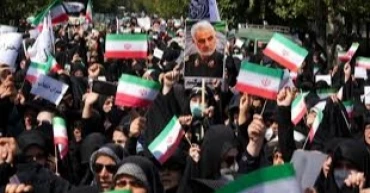
35 dead, 1,200 detained amid Iran’s economic unrest
Activists said on Tuesday that at least 35 people have been killed in clashes linked to ongoing protests across Iran, with demonstrations continuing unabated.
According to the U.S.-based Human Rights Activists News Agency, more than 1,200 people have been arrested since the protests began over a week ago. The group reported that those killed include 29 demonstrators, four children, and two members of Iran’s security forces. Protests have spread to more than 250 locations across 27 of the country’s 31 provinces.
The organization, which gathers information through a network of activists inside Iran, has previously provided reliable data during periods of unrest.
Meanwhile, the semi-official Fars news agency, which is considered close to Iran’s Islamic Revolutionary Guard Corps, reported late Monday that around 250 police officers and 45 members of the volunteer Basij force were injured during the protests.
As the death toll continues to rise, concerns have emerged over possible U.S. involvement. On Friday, U.S. President Donald Trump warned that if Iranian authorities “violently kill peaceful protesters,” the United States would “come to their rescue.”
Although it remains uncertain whether or how Washington might act, Trump’s remarks prompted sharp reactions from Iranian officials, who threatened retaliation against U.S. troops stationed in the Middle East. The comments gained further attention after the U.S. military captured Venezuelan President Nicolás Maduro on Saturday, a key ally of Tehran.
These demonstrations mark the largest wave of protests in Iran since 2022, when nationwide unrest erupted following the death of 22-year-old Mahsa Amini while in police custody. However, the current protests have not yet reached the same level of intensity or scale as those sparked by Amini’s death, which followed her detention over alleged violations of Iran’s hijab rules.
Iran has experienced repeated nationwide protests in recent years. Economic pressure has intensified as sanctions tightened and the country struggled in the aftermath of a 12-day conflict with Israel. In December, the Iranian rial plunged to 1.4 million to the U.S. dollar, triggering fresh demonstrations shortly afterward.
Assessing the full extent of the current unrest has proven challenging. State media has offered limited coverage, while online videos provide only brief and unclear snapshots of crowds or gunfire. Journalists also face strict reporting restrictions, including travel permits and the risk of harassment or arrest.
Despite these challenges, the protests show little sign of ending, even after Supreme Leader Ayatollah Ali Khamenei warned on Saturday that “rioters must be put in their place.”
4 months ago
Maduro denies guilt, claims innocence
A defiant Nicolás Maduro declared himself the “president of my country” as he protested his capture and pleaded not guilty on Monday to the federal drug trafficking charges that the Trump administration used to justify removing him from power.
“I was captured,” Maduro said in Spanish as translated by a courtroom reporter before being cut off by the judge. Asked later for his plea to the charges, he stated: "“I’m innocent. I am not guilty. I am a decent man, the president of my country.”
The courtroom appearance, Maduro's first since he and his wife were seized from their home in a stunning middle-of-the-night military operation, kick-starts the U.S. government’s most consequential prosecution in decades of a foreign head of state. The criminal case in Manhattan is unfolding against the diplomatic backdrop of an audacious U.S.-engineered regime change that President Donald Trump has said will enable his administration to “run” the South American country.
Maduro makes first US court appearance on drug charges
Maduro, wearing a blue jail uniform, was led into court along with his co-defendant wife just before noon for the brief, but required, legal proceeding. Both put on headsets to hear the English-language proceeding as it is translated into Spanish.
The couple were transported to the Manhattan courthouse under armed guard early Monday from the Brooklyn jail where they've been detained since arriving in the U.S. on Saturday.
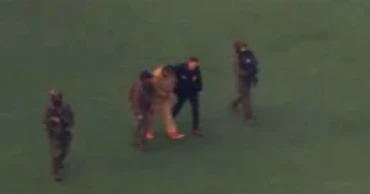
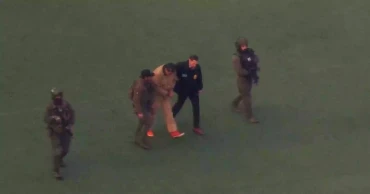
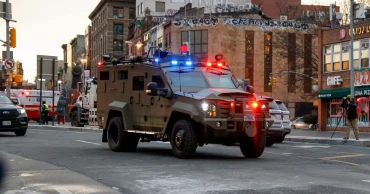
The trip was swift. A motorcade carrying Maduro left jail around 7:15 a.m. and made its way to a nearby athletic field, where Maduro slowly made his way to a waiting helicopter. The chopper flew across New York harbor and landed at a Manhattan heliport, where Maduro, limping, was loaded into an armored vehicle.
A few minutes later, the law enforcement caravan was inside a garage at the courthouse complex, just around the corner from the one where Trump was convicted in 2024 of falsifying business records. Across the street from the courthouse, the police separated a small but growing group of protesters from about a dozen pro-intervention demonstrators, including one man who pulled a Venezuelan flag away from those protesting the U.S. action.
As a criminal defendant in the U.S. legal system, Maduro will have the same rights as any other person accused of a crime — including the right to a trial by a jury of regular New Yorkers. But he'll also be nearly — but not quite — unique.
Trump threatens Colombia, warns Cuba ‘ready to fall’
Maduro’s lawyers are expected to contest the legality of his arrest, arguing that he is immune from prosecution as a sovereign head of state.
Panamanian strongman Manuel Noriega unsuccessfully tried the same defense after the U.S. captured him in a similar military invasion in 1990. But the U.S. doesn’t recognize Maduro as Venezuela’s legitimate head of state — particularly after a much-disputed 2024 reelection.
Venezuela’s new interim president, Delcy Rodríguez, has demanded that the U.S. return Maduro, who long denied any involvement in drug trafficking — although late Sunday she also struck a more conciliatory tone in a social media post, inviting collaboration with Trump and “respectful relations” with the U.S.
Before his capture, Maduro and his allies claimed U.S. hostility was motivated by lust for Venezuela’s rich oil and mineral resources.
The U.S. seized Maduro and his wife in a military operation early Saturday, capturing them in their home on a military base. Trump said the U.S. would “run” Venezuela temporarily, but Secretary of State Marco Rubio said Sunday that it would not govern the country day-to-day other than enforcing an existing " oil quarantine."
Trump suggested Sunday that he wants to extend American power further in the Western Hemisphere.
Speaking aboard Air Force One, he called Colombia's president, Gustavo Petro, "a sick man who likes making cocaine and selling it to the United States. And he’s not going to be doing it very long.”
He called on Venezuela's Rodriguez to provide “total access” to her country, or else face consequences.
Trump has suggested that removing Maduro would enable more oil to flow out of Venezuela, but oil prices rose a bit more than 1% in Monday morning trading to roughly $58 a barrel. There are uncertainties about how fast oil production can be ramped up in Venezuela after years of neglect and needed investments, as well as questions about governance and oversight of the sector.
A 25-page indictment made public Saturday accuses Maduro and others of working with drug cartels to facilitate the shipment of thousands of tons of cocaine into the U.S. They could face life in prison if convicted.
North Korea claims progress in hypersonic missile program amid regional tensions
He and his wife, Cilia Flores, have been under U.S. sanctions for years, making it illegal for any American to take money from them without first securing a license from the Treasury Department.
While the indictment against Maduro says Venezuelan officials worked directly with the Tren de Aragua gang, a U.S. intelligence assessment published in April, drawing on input from the intelligence community's 18 agencies, found no coordination between Tren de Aragua and the Venezuelan government.
Maduro, his wife and his son — who remains free — are charged along with Venezuela's interior and justice minister, a former interior and justice minister and Hector Rusthenford Guerrero Flores, an alleged Tren de Aragua leader who has been criminally charged in another case and remains at large.
Among other things, the indictment accuses Maduro and his wife of ordering kidnappings, beatings and murders of those who owed them drug money or undermined their drug trafficking operation. That included a local drug boss' killing in Caracas, the indictment said.
Maduro’s wife is also accused of accepting hundreds of thousands of dollars in bribes in 2007 to arrange a meeting between “a large-scale drug trafficker” and the director of Venezuela’s National Anti-Drug Office, resulting in additional monthly bribes, with some of the money going to Maduro's wife, according to the indictment.
4 months ago
Maduro makes first US court appearance on drug charges
Deposed Venezuelan President Nicolás Maduro is set to make his first appearance Monday in an American courtroom on the narco-terrorism charges the Trump administration used to justify capturing him and bringing him to New York.
Maduro and his wife are expected to appear at noon before a judge for a brief, but required, legal proceeding that will likely kick off a prolonged legal fight over whether he can be put on trial in the U.S.
The couple were transported under armed guard early Monday from the Brooklyn jail where they've been detained to a Manhattan courthouse.
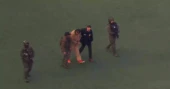
The trip was swift. A motorcade carrying Maduro left jail around 7:15 a.m. and made its way to a nearby athletic field, where Maduro slowly made his way to a waiting helicopter. The chopper flew across New York harbor and landed at a Manhattan heliport, where Maduro, limping, was loaded into an armored vehicle.
A few minutes later, the law enforcement caravan was inside a garage at the courthouse complex, just around the corner from the one where Donald Trump was convicted in 2024 of falsifying business records.
As a criminal defendant in the U.S. legal system, Maduro will have the same rights as any other person accused of a crime — including the right to a trial by a jury of regular New Yorkers. But he'll also be nearly — but not quite — unique.
Maduro’s lawyers are expected to contest the legality of his arrest, arguing that he is immune from prosecution as a sovereign head of state.
Panamanian strongman Manuel Noriegaunsuccessfully tried the same defense after the U.S. captured him in a similar military invasion in 1990. But the U.S. doesn’t recognize Maduro as Venezuela’s legitimate head of state — particularly after a much-disputed 2024 reelection.
Venezuela’s new interim president, Delcy Rodríguez, has demanded that the U.S. return Maduro, who long denied any involvement in drug trafficking — although late Sunday she also struck a more conciliatory tone in a social media post, inviting collaboration with President Trump and “respectful relations” with the U.S.
Before his capture, Maduro and his allies claimed U.S. hostility was motivated by lust for Venezuela’s rich oil and mineral resources.
The U.S. seized Maduro and his wife in a military operation Saturday, capturing them in their home on a military base. Trump said the U.S. would “run” Venezuela temporarily, but Secretary of State Marco Rubio said Sunday that it would not govern the country day-to-day other than enforcing an existing " oil quarantine."
Trump suggested Sunday that he wants to extend American power further in the western hemisphere.
Speaking aboard Air Force One, he called Colombia's president, Gustavo Petro, "a sick man who likes making cocaine and selling it to the United States. And he’s not going to be doing it very long.”
He called on Venezuela's Rodriguez to provide “total access” to her country, or else face consequences.
A 25-page indictment made public Saturday accuses Maduro and others of working with drug cartels to facilitate the shipment of thousands of tons of cocaine into the U.S. They could face life in prison if convicted.
It was unclear as of Sunday whether Maduro had hired a U.S. lawyer yet.
He and his wife, Cilia Flores, have been under U.S. sanctions for years, making it illegal for any American to take money from them without first securing a license from the Treasury Department.
While the indictment against Maduro says Venezuelan officials worked directly with the Tren de Aragua gang, a U.S. intelligence assessment published in April, drawing on input from the intelligence community's 18 agencies, found no coordination between Tren de Aragua and the Venezuelan government.
Maduro, his wife and his son — who remains free — are charged along with Venezuela's interior and justice minister, a former interior and justice minister and Hector Rusthenford Guerrero Flores, an alleged Tren de Aragua leader who has been criminally charged in another case and remains at large.
Among other things, the indictment accuses Maduro and his wife of ordering kidnappings, beatings and murders of those who owed them drug money or undermined their drug trafficking operation. That included a local drug boss' killing in Caracas, the indictment said.
Maduro’s wife is also accused of accepting hundreds of thousands of dollars in bribes in 2007 to arrange a meeting between “a large-scale drug trafficker” and the director of Venezuela’s National Anti-Drug Office, resulting in additional monthly bribes, with some of the money going to Maduro's wife, according to the indictment.
4 months ago
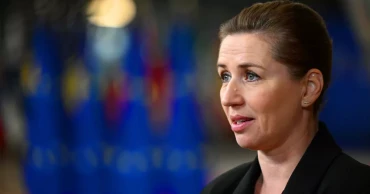
Danish PM warns Trump over Greenland remarks
Danish Prime Minister Mette Frederiksen has urged US President Donald Trump to stop making what she described as “threats” about taking over Greenland, saying Washington has no right to annex any part of the Danish kingdom.
Frederiksen said it was “absolutely senseless” to suggest that the United States needs to take control of Greenland, stressing that Denmark, Greenland and the Faroe Islands are sovereign parts of the same kingdom.
Her remarks followed a social media post by Katie Miller, wife of Trump aide Stephen Miller, who shared an image of Greenland coloured like the US flag with the word “soon,” fuelling fresh controversy.
In a statement posted on the Danish government’s website, Frederiksen said she was addressing the United States “very directly,” noting that Denmark and Greenland are Nato members covered by the alliance’s collective security guarantee. She added that Denmark already has a defence agreement granting the US access to Greenland and has increased its own investment in Arctic security.
“I strongly urge the United States to stop the threats against a historically close ally and against another country and another people who have clearly said they are not for sale,” she said.
Speaking later aboard Air Force One, Trump repeated his stance, saying the US needs Greenland for national security reasons and questioning Denmark’s ability to manage the territory.
The Danish ambassador to the United States also responded to the social media post, reminding Washington that the two countries are allies and that Denmark expects respect for its territorial integrity.
Trump has repeatedly floated the idea of Greenland becoming part of the United States, citing its strategic location in the Arctic and its mineral resources. He has previously declined to rule out the use of force to secure control of the island.
Greenland, home to about 57,000 people, has enjoyed extensive self-rule since 1979, though defence and foreign policy remain under Danish authority. While many Greenlanders support eventual independence from Denmark, opinion polls show strong opposition to becoming part of the United States.
With inputs from BBC
5 months ago
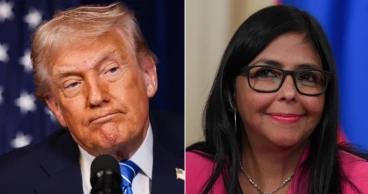
Trump warns Delcy Rodríguez after Maduro capture
US President Donald Trump has issued a stern warning to Venezuela’s interim leader Delcy Rodríguez, saying she could face consequences “probably bigger than Maduro” if she fails to cooperate with Washington, as deposed President Nicolás Maduro prepared to appear in a New York court.
Trump made the remarks in an interview with US magazine The Atlantic on Sunday, a day after Maduro and his wife were captured in a US military operation in Caracas and flown to the United States. Maduro, who has been charged with drug trafficking and weapons offences, denies US accusations that he ran a “narco-terrorist” regime.
US Secretary of State Marco Rubio said the United States is not at war with Venezuela, despite air strikes on military targets in the capital that preceded Maduro’s arrest. However, some Democratic lawmakers have described the operation as an “act of war”.
“If she doesn’t do what’s right, she is going to pay a very big price, probably bigger than Maduro,” Trump said of Rodríguez, who has been sworn in as interim president following a Supreme Court ruling and backing from the Venezuelan military.
Trump also suggested that “regime change” in Venezuela would be preferable, arguing the situation “can’t get any worse”. He earlier said the US would effectively oversee the country until what he described as a “safe and proper” transition takes place, and claimed American oil companies would move in to repair infrastructure and boost production.
Despite those assertions, Maduro’s allies continue to hold key positions of power. Cuba, a close ally of Caracas, said 32 Cuban officers were killed during the US operation and announced two days of national mourning.
Rubio defended the action in multiple television interviews, describing it as a law enforcement operation rather than an invasion. He said the US was targeting drug trafficking networks, not waging war against Venezuela, and warned Washington retains “multiple levers” to protect its interests, including restrictions on Venezuelan oil.
Trump also issued sharp remarks against neighbouring Colombia, saying he would not rule out military action and accusing Colombian President Gustavo Petro of ties to cocaine trafficking.
Maduro, who has ruled Venezuela since 2013, is widely accused by opponents and foreign governments of repressing dissent and illegitimately winning the 2024 election. He and his wife, Cilia Flores, were seized during a pre-dawn special forces raid that also hit several military bases. They are scheduled to appear in a New York court on Monday.
Venezuela’s Defence Minister Vladimir Padrino claimed that members of Maduro’s security detail, soldiers and civilians were killed during the US operation, though Washington has said no American troops were harmed.
Rodríguez, formerly vice president, is set to be formally sworn in as president in Caracas on Monday. While US officials say they do not recognise the Venezuelan government as legitimate, they have indicated they will judge the interim leadership by its actions.
Several Democratic leaders in the US Congress criticised the operation for being carried out without congressional approval and vowed to pursue measures to limit further action in Venezuela. A group of Latin American and European governments also warned that the US military move set a dangerous precedent and called for a peaceful, negotiated solution to the crisis.
With inputs from BBC
5 months ago
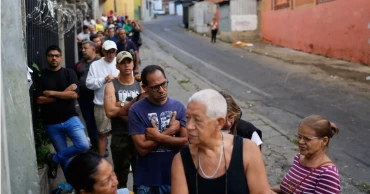
Venezuela in shock after Maduro capture
Venezuelans on Sunday remained shell-shocked a day after President Nicolás Maduro was deposed and captured in a U.S. military operation, with an uncertain future ahead in the South American nation.
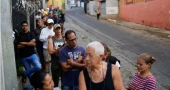
A tense calm settled over the capital, Caracas, which was unusually quiet. Many stores, gas stations and churches remained closed and people patiently lined up outside others, staring at their phones or into the distance.
“People are still shaken,” said 77-year-old David Leal, who arrived to work as a parking attendant but realized he likely would not have customers. He pointed to the deserted street.
While Maduro was in custody in New York, the officials who had surrounded him remained in power and demanded his release. Venezuela’s presidential palace was guarded by armed civilians and members of the military.
U.S. President Donald Trump on Saturday asserted that his administration would “run” Venezuela with the help of Delcy Rodríguez, Maduro’s vice president and now the interim president after a high court’s order.
But Secretary of State Marco Rubio on Sunday appeared to back off Trump's assertion. In interviews with CBS and ABC, he insisted instead that Washington will use control of Venezuela’s oil industry to force policy changes. He said the government currently in place was illegitimate but a step toward where the U.S. wanted Venezuela to be.
“We want to see Venezuela transition to be a place completely different than what it looks like today. But obviously, we don’t have the expectation that’s going to happen in the next 15 hours,” Rubio said. “There has to be a little realism here.”
5 months ago
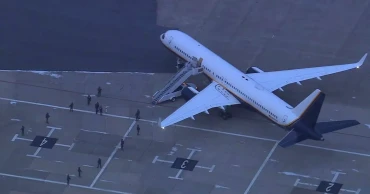
Maduro taken to US following stunning operation
Deposed Venezuelan leader Nicolás Maduro arrived in the United States to face criminal charges after being captured in an audacious nighttime military operation that President Donald Trump said would set the U.S. up to “run” the South American country and tap its vast oil reserves to sell to other nations.
Maduro landed late Saturday afternoon at a small airport in New York following the middle-of-the-night operation that extracted him and his wife, Cilia Flores, from their home in a military base in the capital, Caracas — an act that Maduro's government called “imperialist.” The couple faces U.S. charges of participating in a narco-terrorism conspiracy.
The dramatic action capped an intensive Trump administration pressure campaign on Venezuela's autocratic leader and months of secret planning, resulting in the most assertive American action to achieve regime change since the 2003 invasion of Iraq. Legal experts raised questions about the lawfulness of the operation, which was done without congressional approval. Venezuela's vice president, Delcy Rodriguez, meanwhile, demanded that the United States free Maduro and called him the country’s rightful leader as her nation's high court named her interim president.
Some Venezuelan civilians and members of the military were killed, said Rodríguez, who didn’t give a number. Trump said some U.S. forces were injured, but none was killed.
Speaking to reporters hours after Maduro's capture, Trump revealed his plans to exploit the leadership void to “fix” the country’s oil infrastructure and sell “large amounts” of oil to other countries.
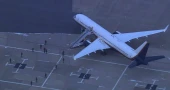
After arriving at a small airport in New York City's northern suburbs, Maduro was flown by helicopter to Manhattan, where a convoy of law enforcement vehicles, including an armored car, was waiting to whisk him to a nearby U.S. Drug Enforcement Administration office.
A video posted on social media by a White House account showed Maduro, smiling, as he was escorted through that office by two DEA agents grasping his arms.
Trump says US will ‘run the country’
The Trump administration promoted the ouster as a step toward reducing the flow of dangerous drugs into the U.S. The president touted what he saw as other potential benefits, including a leadership stake in the country and greater control of oil.
Trump claimed the U.S. government would help lead the country and was already doing so, though there were no immediate visible signs of that. Venezuelan state TV aired pro-Maduro propaganda and broadcast live images of supporters taking to the streets in Caracas in protest.
“We're going to run the country until such time as we can do a safe, proper and judicious transition,” Trump said at a Mar-a-Lago news conference. He boasted that this “extremely successful operation should serve as warning to anyone who would threaten American sovereignty or endanger American lives.”
Maduro and other Venezuelan officials were indicted in 2020 on narco-terrorism conspiracy charges, and the Justice Department released a new indictment Saturday of Maduro and his wife that painted his administration as a “corrupt, illegitimate government” fueled by a drug-trafficking operation that flooded the U.S with cocaine. The U.S. government does not recognize Maduro as the country's leader.
The Trump administration spent months building up American forces in the region and carrying out attacks on boats in the Caribbean Sea and eastern Pacific Ocean for allegedly ferrying drugs. Last week, the CIA was behind a drone strike at a docking area believed to have been used by Venezuelan drug cartels — the first known direct operation on Venezuelan soil since the U.S. campaign began in September.
Early morning attack
Taking place 36 years to the day after the 1990 surrender and seizure of Panama leader Manuel Antonio Noriega following a U.S. invasion, the Venezuela operation unfolded under the cover of darkness early Saturday. Trump said the U.S. turned off “almost all of the lights" in Caracas while forces moved in to extract Maduro and his wife.
Gen. Dan Caine, chairman of the Joint Chiefs of Staff, said U.S. forces had rehearsed their maneuvers for months, learning everything about Maduro — where he was and what he ate, as well as details of his pets and his clothes.
“We think, we develop, we train, we rehearse, we debrief, we rehearse again and again,” Caine said. “Not to get it right, but to ensure we cannot get it wrong.”
Multiple explosions rang out that morning, and low-flying aircraft swept through Caracas. Maduro's government accused the United States of hitting civilian and military installations, calling it an “imperialist attack” and urging citizens to take to the streets. The explosions — at least seven blasts — sent people rushing into the streets, while others took to social media to report what they saw and heard.
Restrictions imposed by the U.S. government on airspace around Venezuela and the Caribbean expired early Sunday, Transportation Secretary Sean Duffy said on X, an announcement that suggested any further immediate major U.S. military action was unlikely. “Airlines are informed, and will update their schedules quickly,” he posted.
Under Venezuelan law, Rodríguez would take over from Maduro. Rodríguez, however, stressed during a Saturday appearance on state television that she did not plan to assume power, before Venezuela’s high court ordered that she become interim president.
“There is only one president in Venezuela," Rodriguez said, “and his name is Nicolás Maduro Moros.”
Some streets in Caracas fill up
Venezuela’s ruling party has held power since 1999, when Maduro’s predecessor, Hugo Chávez, took office, promising to uplift poor people and later to implement a self-described socialist revolution.
Maduro took over when Chávez died in 2013. His 2018 reelection was widely considered a sham because the main opposition parties were banned from participating. During the 2024 election, electoral authorities loyal to the ruling party declared him the winner hours after polls closed, but the opposition gathered overwhelming evidence that he lost by a more than 2-to-1 margin.
Venezuela’s capital remained unusually quiet Sunday with few vehicles moving around and convenience stores, gas stations and other businesses closed. A road typically filled with runners, cyclists and other fitness enthusiasts on Sundays only had a handful of people working out the day after Maduro was deposed.
The presidential palace was guarded by armed civilians and members of the military. At a nearby plaza, only a street sweeper and a soldier stood, and across the street, a church remained close for a second day in a row.
Caracas resident David Leal arrived to the lot where he parks vehicles for a living only to quickly realize that he would likely not see any clients for a second day.
“People are still shaken,” Leal, 77, said.
Questions of legalitylinger
Whether the United States violated any laws, international or otherwise, was still a question early Sunday. “There are a number of international legal concepts which the United States might have broken by capturing Maduro,” said Ilan Katz, an international law analyst.
Pope Leo XIV, who last month had expressed concern about growing U.S. threats of military intervention in Venezuela, raised alarms during his Sunday noon blessing and said the good of the Venezuelan people must prevail above everything else. History’s first U.S. pope demanded an end to violence and for Venezuela’s sovereignty to be guaranteed.
In New York, the U.N. Security Council, acting on an emergency request from Colombia, planned to hold a meeting on U.S. operations in Venezuela on Monday morning.
Lawmakers from both American political parties have raised reservations and flat-out objections to the U.S. attacks on boats suspected of drug smuggling. Congress has not approved an authorization for the use of military force for such operations in the region.
Connecticut Rep. Jim Himes, the top Democrat on the House Intelligence Committee, said he had seen no evidence that would justify Trump striking Venezuela without approval from Congress and demanded an immediate briefing by the administration on "its plan to ensure stability in the region and its legal justification for this decision.”
5 months ago