others

Negotiators to visit Pakistan for Iran talks on Monday: Trump
US President Donald Trump has said American negotiators will travel to Islamabad on Monday to resume high-stakes talks with Iran, as efforts intensify to salvage a fragile ceasefire and ease tensions in the Gulf.
The upcoming round of negotiations comes amid deep disagreements over Tehran’s nuclear programme and recent flare-ups in the Strait of Hormuz.
The president’s post on social media Sunday did not detail which official the U.S. would sending to a second round of in-person talks with Iran.
The White House and the office of Vice President JD Vance, who led the first round of talks, did not immediately respond to messages Sunday morning.
Trump in his post accused Iran of violating the ceasefire agreement by firing bullets Saturday in the Strait of Hormuz, and threatened to destroy civilian infrastructure in Iran if it does not take the deal the U.S. is offering.
“If they don’t, the United States is going to knock out every single Power Plant, and every single Bridge, in Iran,” Trump wrote.
1 month ago
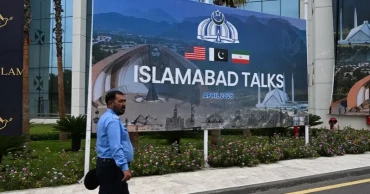
Islamabad gears up for potential ceasefire negotiations
Pakistani authorities have begun tightening security in the capital, Islamabad, ahead of a possible second round of ceasefire talks between the U.S. and Iran.
Authorities on Sunday deployed troops at roadside checkpoints, closed tourist sites and ordered major hotels to cancel bookings and keep facilities available.
Islamabad’s streets are largely deserted, as residents stayed home to avoid road closures seen earlier this month during the first round of talks.
While there were no formal announcements, Pakistani officials said arrangements are in place for talks in the coming days.
A regional official involved in the mediation efforts said mediators were finalizing the preparations. He said U.S. advance security teams are already on the ground. The officials spoke on condition of anonymity to discuss the preparations.
Pakistan has led mediation efforts to end the war. Its military chief visited Tehran last week, while Prime Minister Shehbaz Sharif met with regional leaders in Saudi Arabia, Qatar and Turkey.
1 month ago

India summons Iran envoy after tanker attack
India on Saturday summoned Iran’s ambassador in New Delhi after two Indian vessels were forced to reverse course in the Strait of Hormuz following reports of gunfire from Iran’s Revolutionary Guard.
India’s foreign secretary conveyed New Delhi’s “deep concern at the shooting incident” at two Indian-flagged ships in the Strait of Hormuz to the Iranian ambassador, a statement by India’s External Affairs Ministry said.
The foreign secretary told the Iranian envoy that Tehran had earlier facilitated the safe passage of several ships bound for India. The statement said the Indian official urged the Iranian ambassador to “convey India’s views to the authorities in Iran and resume at the earliest the process of facilitating India-bound ships across the Strait.”
1 month ago
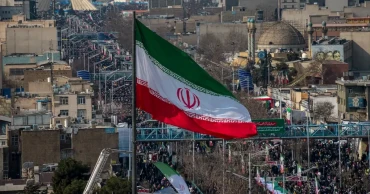
Reviewing fresh proposals put forward by US, says Iran
Iran’s Supreme National Security Council said in a statement that Pakistan’s army chief, serving as an intermediary, presented the proposals to Iran when he recently visited Tehran, and they were still under review.
It was not revealed what was in the proposals.
The council said Iran has yet to respond, but further talks would require the U.S. to abandon “excessive demands and adjust its requests to the realities on the ground.”
It also said that Iran will maintain full control over traffic through the Strait of Hormuz until “the war fully ends and lasting peace is achieved in the region,” adding that it would collect detailed information on passing vessels, issue transit certificates and impose tolls.
The council added that it considered the U.S. naval blockade a violation of the ceasefire, and there would be no reopening of the Strait of Hormuz until that was lifted.
1 month ago
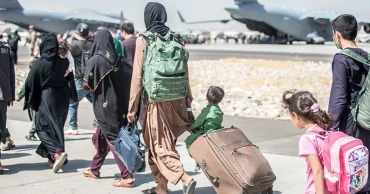
Over 86,000 Afghan refugees return home in a month: UN
The United Nations High Commissioner for Refugees (UNHCR) has reported that more than 86,000 Afghan migrants returned to the country from Iran and Pakistan within one month, according to local media Tolonews on Saturday.
The report described the scale of returns as a significant humanitarian concern, highlighting challenges related to reintegration, access to essential services, and the limited capacity of host communities to absorb large numbers of returnees.
The ongoing movement reflects broader regional migration dynamics, with Afghan nationals returning for various reasons, including legal, economic, and protection-related factors.
The agency further emphasized that sustained monitoring and strengthened international coordination are essential to ensure returning families receive adequate assistance and that their reintegration into society is both sustainable and dignified.
1 month ago
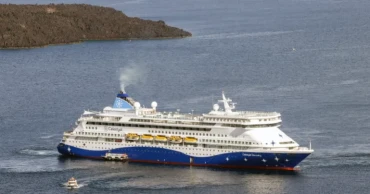
First cruise ship successfully crosses Strait of Hormuz since war began
A cruise ship has completed a passage through the Strait of Hormuz for the first time since the outbreak of the war, according to ship tracking data.
MarineTraffic reported that the Malta-flagged vessel Celestyal Discovery—believed to be operating without passengers—successfully sailed through the strategic waterway on Friday. The ship had been anchored in Dubai for nearly 47 days after arriving there in early March, reports Al Jazeera.
The tracking service added that the vessel is now en route to Muscat, Oman, with an expected arrival later the same day.
The transit marks a notable development amid ongoing tensions in the region, where maritime movement has faced disruption since the conflict began.
1 month ago
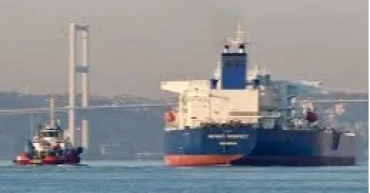
US extends waiver for purchase of Russian oil
The United States has extended a waiver permitting countries to continue purchasing Russian oil and petroleum products at sea for roughly another month, as the Trump administration seeks to stabilise global oil supplies amid disruptions linked to the conflict with Iran.
According to a notice from the US Treasury Department, the extension allows transactions involving Russian oil loaded onto vessels as of Friday to continue until May 16.
The earlier waiver had been due to expire on April 11, reports Al Jazeera.
Russia’s presidential envoy Kirill Dmitriev previously said the initial waiver could release around 100 million barrels of crude into the market—nearly equivalent to one day of global oil production.
However, the decision has drawn criticism in some Western circles. European Commission President Ursula von der Leyen, among others, argued that such measures could undermine sanctions aimed at cutting off revenue streams that Russia has used to finance its war in Ukraine.
1 month ago
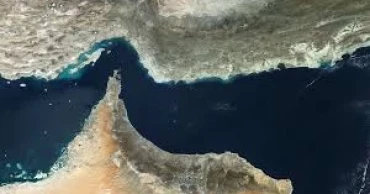
Iran reopens Strait of Hormuz but warns of closure as US blockade continues
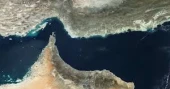
Iran has reopened the Strait of Hormuz to commercial shipping, but warned it could shut it again if the United States continues blocking Iranian vessels and ports.
In Beirut on April 18, officials said ships can pass through the key waterway—responsible for about 20% of global oil transport—but only along routes approved by Iran, indicating Tehran still maintains significant control. It remains unclear whether ships must pay fees. Data from a monitoring firm showed that traffic is still restricted to corridors requiring Iranian permission.
U.S. President Donald Trump stated that the American blockade will stay in place until Iran reaches a broader agreement with Washington, including over its nuclear program. Although he initially welcomed Iran’s move, he quickly clarified that the blockade would continue until negotiations are fully concluded.
Iranian leaders criticized the blockade as a breach of a recent ceasefire agreement and warned the strait could be closed again if U.S. restrictions persist. Since the blockade began, U.S. forces have reportedly turned back multiple Iranian ships.
Trump indicated that new talks with Iran could take place soon, after earlier discussions failed to produce an agreement, particularly over nuclear issues. Optimism around potential negotiations led to a drop in oil prices, amid concerns that continued disruption in the strait could worsen the global energy situation.
However, there were mixed signals within Iran itself, as some semi-official media outlets questioned the clarity and authority behind the decision to reopen the strait, suggesting it may still require approval from top leadership.
Meanwhile, a ceasefire between Israel and the Iran-backed Hezbollah group in Lebanon appeared to be holding, which could ease broader tensions and support diplomatic efforts. Still, uncertainty remains about whether all parties will fully adhere to the truce, especially with Israeli troops still present in southern Lebanon.
Despite the ceasefire, isolated violence continued, including an Israeli strike that caused casualties shortly after the truce began. Both sides have yet to confirm full compliance.
The broader conflict has caused thousands of deaths across multiple countries, and key sticking points in ongoing mediation include Iran’s nuclear program, control of the Strait of Hormuz, and compensation for war damages.
Trump also claimed Iran might concede on its enriched uranium stockpile—though this has not been confirmed by Iran or mediators.
1 month ago
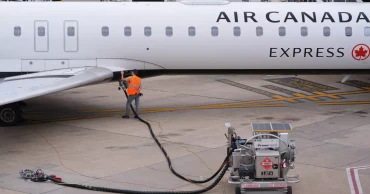
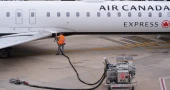
What jet fuel shortages could mean for your next trip
A looming jet fuel shortage in Europe and Asia sparked by the Iran war and the effective closure of the Strait of Hormuz could further upend world travel within weeks if oil doesn’t start flowing again soon — meaning higher airfares and flight cancellations as the summer travel season approaches.
In an exclusive Associated Press interview Thursday, International Energy Agency Director Fatih Birol said Europe has “maybe six weeks” of remaining jet fuel supplies and said the global economy faces its “largest energy crisis.”
In general, some European countries hold several months’ worth of jet fuel inventory at a time, according to an IEA report released this week.
Jet fuel — a refined kerosene-based oil product — is airlines’ biggest cost, making up about 30% of overall expenses, according to the International Air Transport Association. And jet fuel prices have roughly doubled since the war began. Shortages could start next.
“Every passing day that the Strait of Hormuz remains shut, Europe is edging closer to supply shortages,” said Amaar Khan, head of European jet fuel pricing at Argus Media. “The strait accounts for around 40% of Europe’s jet fuel imports, but no jet fuel has passed the strait since the war broke out.”
Airline officials have largely reacted with caution, acknowledging potential fuel issues but working to reassure customers. Still, some carriers have already passed costs on to consumers by increasing fees for baggage and other add-ons, embedding costs into ticket prices, or raising fuel surcharges.
A handful of airlines already are cutting flights. Experts say other parts of air travel — such as scheduling flexibility and routes — would likely be impacted.
Here’s a look at how jet fuel supplies work and how consumers might see effects.
How does jet fuel get to the plane?
Jet fuel is made from crude oil at refineries, which also create gasoline and diesel.
Airlines generally buy jet fuel from refineries or fuel companies, similar to drivers buying gasoline from stations, but on a much larger scale. Jet fuel travels on ships and through pipelines and is stored by airlines at airports.
Purchasing is handled by airlines. If fuel supplies are running out in a region, that doesn’t necessarily mean there will be no flights. Some airlines might have more stored than others.
But remaining flights are likely to be expensive, reflecting fuel costs.
Larger airlines have advantages in regions with shortages. They have the financial means to deal with high prices, said Jacques Rousseau, managing director at financial firm Clearview Energy Partners.
In Europe, a number of countries are now relying on less than 20 days of coverage in their fuel supplies, according to this week’s IEA report. Supplies haven’t dropped below 29 days since 2020, the report said.
If that falls under 23 days, physical shortages may emerge at some airports, resulting in flight cancellations and lower demand, the report warned.
Which regions could feel pain?
Asia-Pacific countries are the most reliant on oil and jet fuel from the Middle East, followed by Europe, Rousseau said.
Most of Europe’s jet fuel is produced by European refiners, but about 20-25% of its supply is missing because of the war, Rousseau said.
To fill some gaps, the U.S. has increased its exports of jet fuel to Europe considerably, sending about 150,000 barrels per day in April, or about six times the normal level, Rousseau said.
Availability of jet fuel is less of an issue in the U.S., a major oil producer, he added.
“I tell my kids ... we’re not so much going to run out of supply,” Rousseau said. “It’s just going to cost more here, whereas in different parts of the world you could actually get to a point where there’s just no fuel.”
How much is the world supply of jet fuel lagging?
The world is losing 10 million to 15 million barrels of oil a day due to the closure of the Strait of Hormuz, said Pavel Molchanov, senior investment strategist at investment firm Raymond James & Associates.
“There are exactly the same refineries in exactly the same places in Asia and Europe, but if there is not enough oil for those refineries to operate, it’s going to lead to physical supply disruption,” he said.
Even though the IEA has released 400 million barrels of oil from members’ emergency reserves, that won’t help in the short term, he added.
“It could take until the end of the year to get all of those barrels onto the market,” he said.
How will my travel be affected?
Christopher Anderson, a professor of operations, technology and information management at Cornell University, said travelers should prepare for more than just higher airfares.
“This is no longer just a fuel-price story. For airlines, it is now a network-planning story,” he said. “Higher fuel costs matter, but so do longer routings, reduced scheduling flexibility and greater uncertainty about what demand will look like even a few weeks out.”
Travelers might see “a market with later booking patterns, more schedule volatility and fewer low-fare options if this disruption lasts into the core summer season,” he said.
What are airlines doing?
Dutch airline KLM and U.K. budget carrier easyJet told AP they weren’t experiencing current fuel shortages, without commenting further on the IEA’s warning.
Still, both airlines are among those that have seen higher costs eat into their budgets.
On Thursday, KLM said it would cut 160 flights next month — about 1% of its total European routes. The airline cited “rising kerosene costs” and said a limited number of flights are “no longer financially viable to operate.”
In a Thursday update, EasyJet said it expects to see a pretax loss of 540 million to 560 million pounds (about $731 million to $758 million) for the first half of the 2026 fiscal year. Still, CEO Kenton Jarvis said demand remains strong overall — noting that Easter travel was easyJet’s busiest ever for that holiday period.
Lufthansa said Thursday that labor disputes and high fuel prices are forcing it to immediately shut down feeder airline CityLine, earlier than planned, and take its 27 older, less fuel-efficient planes out of service. The decision accelerates a shutdown that had been expected for next year.
U.S. carrier Delta Air Lines — which frequently flies to European destinations — said on Thursday that it was “aware of the potential jet fuel supply issue” on the continent and monitoring the situation. Delta, which bought a refinery in Philadelphia in 2012 to manage its largest expense, said it doesn’t expect any “near-term impact to our operations.”
How are prices affected?
Other airlines have sounded the alarm about rising fuel prices, with some already passing along new costs to travelers, often embedded into ticket prices and add-on fees.
U.S. carriers Delta, United, American Airlines, Southwest Airlines and JetBlue have all increased checked baggage fees, for example, in recent weeks.
United CEO Scott Kirby said in a recent memo to staff that if fuel prices stay elevated, it could add $11 billion in annual costs. “For perspective,” Kirby wrote, “in United’s best year ever, we made less than $5B.”
Meanwhile, Hong Kong’s Cathay Pacific recently bumped fuel surcharges by roughly 34% across all routes, while Air India added up to $280 in fees to some flights earlier this month. Emirates, Lufthansa and KLM have also adjusted fees or fares to keep pace with the price volatility.
1 month ago
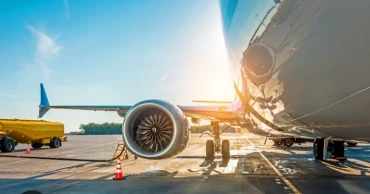
Europe may have just 6 weeks of jet fuel left: Energy Chief
Europe has “maybe six weeks or so” of remaining jet fuel supplies, the head of the International Energy Agency said Thursday in a wide-ranging interview, warning of possible flight cancellations “soon” if oil supplies remain blocked by the Iran war.
IEA Executive Director Fatih Birol painted a sobering picture of the global repercussions of what he called “the largest energy crisis we have ever faced,” stemming from the pinch-off of oil, gas and other vital supplies through the Strait of Hormuz.
“In the past there was a group called ‘Dire Straits.’ It’s a dire strait now, and it is going to have major implications for the global economy. And the longer it goes, the worse it will be for the economic growth and inflation around the world,” he told The Associated Press.
The impact will be “higher petrol (gasoline) prices, higher gas prices, high electricity prices,” said Birol, speaking in his Paris office looking out over the Eiffel Tower.
Economic pain will be felt unevenly and “the countries who will suffer the most will not be those whose voice are heard a lot. It will be mainly the developing countries. Poorer countries in Asia, in Africa and in Latin America,” said the Turkish economist and energy expert who has led the IEA since 2015.
But without a settlement of the Iran war that permanently reopens the Strait of Hormuz, “Everybody is going to suffer,” he added.
“Some countries may be richer than the others. Some countries may have more energy than the others, but no country, no country is immune to this crisis,” he said.
1 month ago