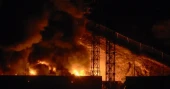
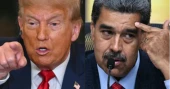
others
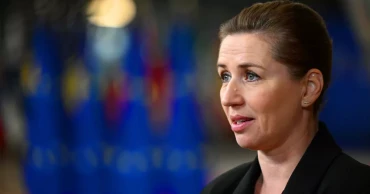
Danish PM warns Trump over Greenland remarks
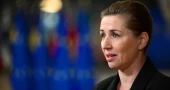
Danish Prime Minister Mette Frederiksen has urged US President Donald Trump to stop making what she described as “threats” about taking over Greenland, saying Washington has no right to annex any part of the Danish kingdom.
Frederiksen said it was “absolutely senseless” to suggest that the United States needs to take control of Greenland, stressing that Denmark, Greenland and the Faroe Islands are sovereign parts of the same kingdom.
Her remarks followed a social media post by Katie Miller, wife of Trump aide Stephen Miller, who shared an image of Greenland coloured like the US flag with the word “soon,” fuelling fresh controversy.
In a statement posted on the Danish government’s website, Frederiksen said she was addressing the United States “very directly,” noting that Denmark and Greenland are Nato members covered by the alliance’s collective security guarantee. She added that Denmark already has a defence agreement granting the US access to Greenland and has increased its own investment in Arctic security.
“I strongly urge the United States to stop the threats against a historically close ally and against another country and another people who have clearly said they are not for sale,” she said.
Speaking later aboard Air Force One, Trump repeated his stance, saying the US needs Greenland for national security reasons and questioning Denmark’s ability to manage the territory.
The Danish ambassador to the United States also responded to the social media post, reminding Washington that the two countries are allies and that Denmark expects respect for its territorial integrity.
Trump has repeatedly floated the idea of Greenland becoming part of the United States, citing its strategic location in the Arctic and its mineral resources. He has previously declined to rule out the use of force to secure control of the island.
Greenland, home to about 57,000 people, has enjoyed extensive self-rule since 1979, though defence and foreign policy remain under Danish authority. While many Greenlanders support eventual independence from Denmark, opinion polls show strong opposition to becoming part of the United States.
With inputs from BBC
2 months ago
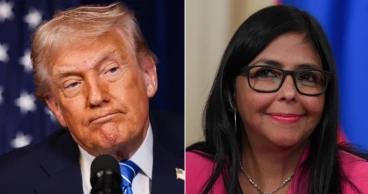
Trump warns Delcy Rodríguez after Maduro capture
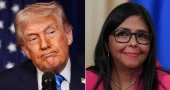
US President Donald Trump has issued a stern warning to Venezuela’s interim leader Delcy Rodríguez, saying she could face consequences “probably bigger than Maduro” if she fails to cooperate with Washington, as deposed President Nicolás Maduro prepared to appear in a New York court.
Trump made the remarks in an interview with US magazine The Atlantic on Sunday, a day after Maduro and his wife were captured in a US military operation in Caracas and flown to the United States. Maduro, who has been charged with drug trafficking and weapons offences, denies US accusations that he ran a “narco-terrorist” regime.
US Secretary of State Marco Rubio said the United States is not at war with Venezuela, despite air strikes on military targets in the capital that preceded Maduro’s arrest. However, some Democratic lawmakers have described the operation as an “act of war”.
“If she doesn’t do what’s right, she is going to pay a very big price, probably bigger than Maduro,” Trump said of Rodríguez, who has been sworn in as interim president following a Supreme Court ruling and backing from the Venezuelan military.
Trump also suggested that “regime change” in Venezuela would be preferable, arguing the situation “can’t get any worse”. He earlier said the US would effectively oversee the country until what he described as a “safe and proper” transition takes place, and claimed American oil companies would move in to repair infrastructure and boost production.
Despite those assertions, Maduro’s allies continue to hold key positions of power. Cuba, a close ally of Caracas, said 32 Cuban officers were killed during the US operation and announced two days of national mourning.
Rubio defended the action in multiple television interviews, describing it as a law enforcement operation rather than an invasion. He said the US was targeting drug trafficking networks, not waging war against Venezuela, and warned Washington retains “multiple levers” to protect its interests, including restrictions on Venezuelan oil.
Trump also issued sharp remarks against neighbouring Colombia, saying he would not rule out military action and accusing Colombian President Gustavo Petro of ties to cocaine trafficking.
Maduro, who has ruled Venezuela since 2013, is widely accused by opponents and foreign governments of repressing dissent and illegitimately winning the 2024 election. He and his wife, Cilia Flores, were seized during a pre-dawn special forces raid that also hit several military bases. They are scheduled to appear in a New York court on Monday.
Venezuela’s Defence Minister Vladimir Padrino claimed that members of Maduro’s security detail, soldiers and civilians were killed during the US operation, though Washington has said no American troops were harmed.
Rodríguez, formerly vice president, is set to be formally sworn in as president in Caracas on Monday. While US officials say they do not recognise the Venezuelan government as legitimate, they have indicated they will judge the interim leadership by its actions.
Several Democratic leaders in the US Congress criticised the operation for being carried out without congressional approval and vowed to pursue measures to limit further action in Venezuela. A group of Latin American and European governments also warned that the US military move set a dangerous precedent and called for a peaceful, negotiated solution to the crisis.
With inputs from BBC
2 months ago
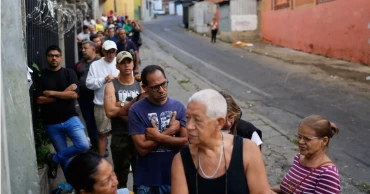
Venezuela in shock after Maduro capture
Venezuelans on Sunday remained shell-shocked a day after President Nicolás Maduro was deposed and captured in a U.S. military operation, with an uncertain future ahead in the South American nation.
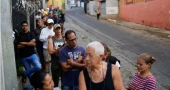
A tense calm settled over the capital, Caracas, which was unusually quiet. Many stores, gas stations and churches remained closed and people patiently lined up outside others, staring at their phones or into the distance.
“People are still shaken,” said 77-year-old David Leal, who arrived to work as a parking attendant but realized he likely would not have customers. He pointed to the deserted street.
While Maduro was in custody in New York, the officials who had surrounded him remained in power and demanded his release. Venezuela’s presidential palace was guarded by armed civilians and members of the military.
U.S. President Donald Trump on Saturday asserted that his administration would “run” Venezuela with the help of Delcy Rodríguez, Maduro’s vice president and now the interim president after a high court’s order.
But Secretary of State Marco Rubio on Sunday appeared to back off Trump's assertion. In interviews with CBS and ABC, he insisted instead that Washington will use control of Venezuela’s oil industry to force policy changes. He said the government currently in place was illegitimate but a step toward where the U.S. wanted Venezuela to be.
“We want to see Venezuela transition to be a place completely different than what it looks like today. But obviously, we don’t have the expectation that’s going to happen in the next 15 hours,” Rubio said. “There has to be a little realism here.”
2 months ago
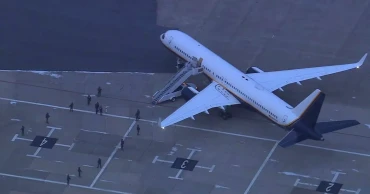
Maduro taken to US following stunning operation
Deposed Venezuelan leader Nicolás Maduro arrived in the United States to face criminal charges after being captured in an audacious nighttime military operation that President Donald Trump said would set the U.S. up to “run” the South American country and tap its vast oil reserves to sell to other nations.
Maduro landed late Saturday afternoon at a small airport in New York following the middle-of-the-night operation that extracted him and his wife, Cilia Flores, from their home in a military base in the capital, Caracas — an act that Maduro's government called “imperialist.” The couple faces U.S. charges of participating in a narco-terrorism conspiracy.
The dramatic action capped an intensive Trump administration pressure campaign on Venezuela's autocratic leader and months of secret planning, resulting in the most assertive American action to achieve regime change since the 2003 invasion of Iraq. Legal experts raised questions about the lawfulness of the operation, which was done without congressional approval. Venezuela's vice president, Delcy Rodriguez, meanwhile, demanded that the United States free Maduro and called him the country’s rightful leader as her nation's high court named her interim president.
Some Venezuelan civilians and members of the military were killed, said Rodríguez, who didn’t give a number. Trump said some U.S. forces were injured, but none was killed.
Speaking to reporters hours after Maduro's capture, Trump revealed his plans to exploit the leadership void to “fix” the country’s oil infrastructure and sell “large amounts” of oil to other countries.
After arriving at a small airport in New York City's northern suburbs, Maduro was flown by helicopter to Manhattan, where a convoy of law enforcement vehicles, including an armored car, was waiting to whisk him to a nearby U.S. Drug Enforcement Administration office.
A video posted on social media by a White House account showed Maduro, smiling, as he was escorted through that office by two DEA agents grasping his arms.
Trump says US will ‘run the country’
The Trump administration promoted the ouster as a step toward reducing the flow of dangerous drugs into the U.S. The president touted what he saw as other potential benefits, including a leadership stake in the country and greater control of oil.
Trump claimed the U.S. government would help lead the country and was already doing so, though there were no immediate visible signs of that. Venezuelan state TV aired pro-Maduro propaganda and broadcast live images of supporters taking to the streets in Caracas in protest.
“We're going to run the country until such time as we can do a safe, proper and judicious transition,” Trump said at a Mar-a-Lago news conference. He boasted that this “extremely successful operation should serve as warning to anyone who would threaten American sovereignty or endanger American lives.”
Maduro and other Venezuelan officials were indicted in 2020 on narco-terrorism conspiracy charges, and the Justice Department released a new indictment Saturday of Maduro and his wife that painted his administration as a “corrupt, illegitimate government” fueled by a drug-trafficking operation that flooded the U.S with cocaine. The U.S. government does not recognize Maduro as the country's leader.
The Trump administration spent months building up American forces in the region and carrying out attacks on boats in the Caribbean Sea and eastern Pacific Ocean for allegedly ferrying drugs. Last week, the CIA was behind a drone strike at a docking area believed to have been used by Venezuelan drug cartels — the first known direct operation on Venezuelan soil since the U.S. campaign began in September.
Early morning attack
Taking place 36 years to the day after the 1990 surrender and seizure of Panama leader Manuel Antonio Noriega following a U.S. invasion, the Venezuela operation unfolded under the cover of darkness early Saturday. Trump said the U.S. turned off “almost all of the lights" in Caracas while forces moved in to extract Maduro and his wife.
Gen. Dan Caine, chairman of the Joint Chiefs of Staff, said U.S. forces had rehearsed their maneuvers for months, learning everything about Maduro — where he was and what he ate, as well as details of his pets and his clothes.
“We think, we develop, we train, we rehearse, we debrief, we rehearse again and again,” Caine said. “Not to get it right, but to ensure we cannot get it wrong.”
Multiple explosions rang out that morning, and low-flying aircraft swept through Caracas. Maduro's government accused the United States of hitting civilian and military installations, calling it an “imperialist attack” and urging citizens to take to the streets. The explosions — at least seven blasts — sent people rushing into the streets, while others took to social media to report what they saw and heard.
Restrictions imposed by the U.S. government on airspace around Venezuela and the Caribbean expired early Sunday, Transportation Secretary Sean Duffy said on X, an announcement that suggested any further immediate major U.S. military action was unlikely. “Airlines are informed, and will update their schedules quickly,” he posted.
Under Venezuelan law, Rodríguez would take over from Maduro. Rodríguez, however, stressed during a Saturday appearance on state television that she did not plan to assume power, before Venezuela’s high court ordered that she become interim president.
“There is only one president in Venezuela," Rodriguez said, “and his name is Nicolás Maduro Moros.”
Some streets in Caracas fill up
Venezuela’s ruling party has held power since 1999, when Maduro’s predecessor, Hugo Chávez, took office, promising to uplift poor people and later to implement a self-described socialist revolution.
Maduro took over when Chávez died in 2013. His 2018 reelection was widely considered a sham because the main opposition parties were banned from participating. During the 2024 election, electoral authorities loyal to the ruling party declared him the winner hours after polls closed, but the opposition gathered overwhelming evidence that he lost by a more than 2-to-1 margin.
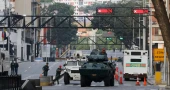
Venezuela’s capital remained unusually quiet Sunday with few vehicles moving around and convenience stores, gas stations and other businesses closed. A road typically filled with runners, cyclists and other fitness enthusiasts on Sundays only had a handful of people working out the day after Maduro was deposed.
The presidential palace was guarded by armed civilians and members of the military. At a nearby plaza, only a street sweeper and a soldier stood, and across the street, a church remained close for a second day in a row.
Caracas resident David Leal arrived to the lot where he parks vehicles for a living only to quickly realize that he would likely not see any clients for a second day.
“People are still shaken,” Leal, 77, said.
Questions of legalitylinger
Whether the United States violated any laws, international or otherwise, was still a question early Sunday. “There are a number of international legal concepts which the United States might have broken by capturing Maduro,” said Ilan Katz, an international law analyst.
Pope Leo XIV, who last month had expressed concern about growing U.S. threats of military intervention in Venezuela, raised alarms during his Sunday noon blessing and said the good of the Venezuelan people must prevail above everything else. History’s first U.S. pope demanded an end to violence and for Venezuela’s sovereignty to be guaranteed.
In New York, the U.N. Security Council, acting on an emergency request from Colombia, planned to hold a meeting on U.S. operations in Venezuela on Monday morning.
Lawmakers from both American political parties have raised reservations and flat-out objections to the U.S. attacks on boats suspected of drug smuggling. Congress has not approved an authorization for the use of military force for such operations in the region.
Connecticut Rep. Jim Himes, the top Democrat on the House Intelligence Committee, said he had seen no evidence that would justify Trump striking Venezuela without approval from Congress and demanded an immediate briefing by the administration on "its plan to ensure stability in the region and its legal justification for this decision.”
2 months ago
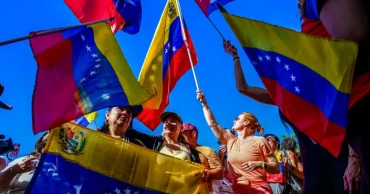
Venezuelans react to Maduro’s arrest with hope, fear and uncertainty
Venezuelans are responding with mixed emotions following the arrest of President Nicolás Maduro by US forces, expressing relief, anxiety and uncertainty about the country’s future.
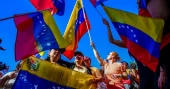
Residents cautiously emerged onto the streets of Caracas on Saturday after a night of explosions, with reactions ranging from celebration to anger. Some citizens said Maduro’s removal offered hope after years of political repression and economic hardship, though many feared instabilities in the days ahead.
Several people who spoke anonymously said they were grateful to the United States but uncertain about what would follow. While some welcomed promises of international support and investment, others questioned US President Donald Trump’s long-term intentions.
At the same time, Maduro loyalists staged protests in Caracas, demanding his release. Mayor Carmen Meléndez denounced the arrest as a “kidnapping,” while government supporters rallied in defense of the ruling party.
Maduro, who has ruled since 2013 and is accused by Washington of drug trafficking and weapons charges, is being extradited to New York along with his wife. The US says it will temporarily oversee Venezuela’s administration and oil resources until a new leadership is established.
Fear remains widespread as pro-government armed groups patrol neighborhoods and laws criminalize support for US actions. With nearly eight million Venezuelans living in exile, many say Maduro’s arrest marks only the beginning of a long and uncertain transition.
Earlier on Saturday, after months of growing military pressure on Venezuelan President Nicolás Maduro, President Donald Trump ordered a brazen operation into the South American country to capture its leader and whisk him to the United States where his administration planned to put him on trial.
In a Saturday morning interview on “Fox and Friends Weekend,” Trump laid out the details of the overnight strike, after which he said Maduro and his wife, Cilia Flores, were flown by helicopter to a U.S. warship.
With inputs from BBC
2 months ago
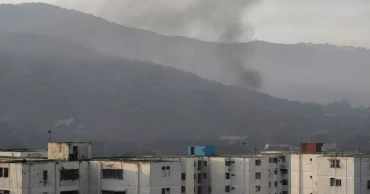
Maduro’s capture triggers Caribbean travel disruptions
The U.S. military operation that captured Venezuelan President Nicolás Maduro and flew him out of the country early Saturday has also disrupted Caribbean travel at a busy travel time for the region.
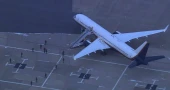
No airline flights were crossing over Venezuela on Saturday, according to FlightRadar24.com. And major airlines canceled hundreds of flights across the eastern Caribbean region and warned passengers that the disruptions could continue for days after the Federal Aviation Administration imposed restrictions.
Flights to Puerto Rico, the Virgin Islands, Aruba and other destinations near Venezuela were canceled. The airlines are waiving change fees for passengers who have to reschedule their flights this weekend.
US will 'run' Venezuela until 'safe transition can take place': Trump
The FAA had earlier said it imposed a temporary airspace restriction on Puerto Rico’s international airport and surrounding regions.
An announcement by Luis Muñoz Marín International Airport in San Juan posted on the social media site X said restrictions were put in place because of the “security situation related to military activity” in Venezuela.
As a result, most commercial airlines to and from the airport that are operated by U.S. airlines have been suspended or may be canceled.
Foreign airlines and military aircraft are not included in this restriction, the statement said. “Passengers are urged to check the status of their flight directly with their airline before heading to the airport.”
How the US captured Maduro
JetBlue said it canceled about 215 flights “due to airspace closures across the Caribbean related to military activity.” It also noted that flights to the Dominican Republic and Jamaica were not affected by the government’s restrictions. Customers could rebook their travel or request a refund if the flights were canceled, the company said.
United said it was adjusting its schedule to account for airspace closures in the Venezuela region. It said customers could change their travel plans in the region for free as it continued to monitor the situation and worked with U.S. aviation authorities.
Southwest said it canceled all Aruba flights for Saturday and suspended Puerto Rico flights until late afternoon, but flights to the Dominican Republic were unaffected.
American said it was waiving change fees for flights to and from about 20 island destinations, including Anguilla, Antigua, Curacao, Saint Lucia and the U.S. and British Virgin Islands.
Delta said it has issued a travel waiver for customers traveling to or from 13 impacted airports through Tuesday.
2 months ago
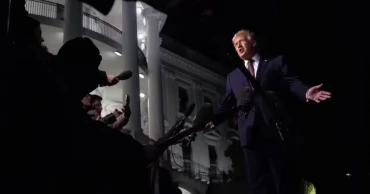
US will 'run' Venezuela until 'safe transition can take place': Trump
US President Donald Trump on Saturday said the US will take charge of Venezuela until a safe transition of power can happen. “We will do a safe, proper transition. We want liberty, peace, and justice for Venezuelans," Trump said. He also asserted that the US will make people of Venezuela “rich and safe."
The statement comes following the capture of Venezuelan President Nicolás Maduro. The US attacked Venezuela early on Saturday morning, carrying out military strikes, capturing Maduro and his wife.
Meanwhile, the US President has claimed that Venezuelan President Nicolás Maduro and his wife, Cilia Flores, are being taken to New York after being captured by US forces.
Speaking in an interview with Fox News, Trump said Maduro and Flores have been indicted in New York and are being transported to the state by helicopter and ship. He alleged that the Venezuelan leader was responsible for the deaths of many people, including American citizens.
Trump said the operation to capture Maduro had been planned earlier but was delayed due to weather conditions. “The weather has to be perfect,” he said, adding that the mission was launched once conditions improved.
Describing the raid, Trump said Maduro was captured from a location “more like a fortress than a house,” with heavy steel fortifications. He claimed no US soldiers were killed in the operation, though a few were injured and are now in stable condition.
With inputs from Agencies
2 months ago
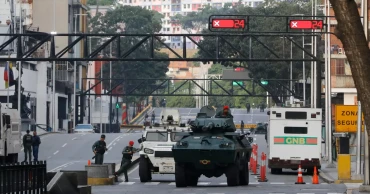
How the US captured Maduro
After months of growing military pressure on Venezuelan President Nicolás Maduro, President Donald Trump ordered a brazen operation into the South American country to capture its leader and whisk him to the United States where his administration planned to put him on trial.
In a Saturday morning interview on “Fox and Friends Weekend,” Trump laid out the details of the overnight strike, after which he said Maduro and his wife, Cilia Flores, were flown by helicopter to a U.S. warship.
Maduro was in a ‘fortress,’ Trump says
Trump described Maduro as being “highly guarded" in a presidential palace that was “like a fortress,” although the Venezuelan leader was unable to get to a safe room.
American forces were armed with “massive blowtorches,” which they would have used to cut through steel walls had Maduro locked himself in the room, Trump said.
“It had what they call a safety space, where it’s solid steel all around,” Trump said. “He didn’t get that space closed. He was trying to get into it, but he got bum-rushed right so fast that he didn’t get into that. We were prepared.”
Part of that preparation, Trump said, included practicing maneuvers on a replica building.
“They actually built a house which was identical to the one they went into with all the same, all that steel all over the place,” Trump said.
‘We turned off all the lights’
Trump said that the U.S. operation took place in darkness, although he did not detail how that had happened. He said the U.S. turned off “almost all of the lights in Caracas,” the capital of Venezuela.
“This thing was so organized,” he said. “And they go into a dark space with machine guns facing them all over the place.”
At least seven explosions were heard in Caracas. The attack lasted less than 30 minutes.
Venezuela’s vice president, Delcy Rodríguez, who under that country’s law takes power, said some Venezuelan civilians and members of the military were killed.
Trump says ‘a couple of guys injured’
Trump said a few U.S. members of the operation were injured but he believed no one was killed.
“A couple of guys were hit, but they came back and they’re supposed to be in pretty good shape,” he said.
The Republican president said the U.S. had lost no aircraft, but that a helicopter was “hit pretty hard."
“We had to do it because it’s a war," he added.
The weather was a factor
Trump said U.S. forces held off on conducting the operation for days, waiting for cloud cover to pass because the “weather has to be perfect.”
“We waited four days,” he said. “We were going to do this four days ago, three days ago, two days ago. And then all of a sudden it opened up and we said, go. And I’ll tell you, it’s, it was just amazing.”
Where is Maduro now?
Trump said that Maduro and Flores were flown by helicopter to a U.S. warship and would go on to New York to face charges. The Justice Department released an indictment accusing the pair of having an alleged role in a narco-terrorism conspiracy.
Months of escalating actions
The raid was a dramatic escalation from a series of strikes the U.S. military has carried out on what Trump has said were drug carrying boats in the Caribbean Sea and eastern Pacific Ocean since early September. There had been 35 known strikes that killed at least 115 people.
On Dec. 29, Trump said the U.S. struck a facility where boats accused of carrying drugs “load up.” The CIA was behind the drone strike at a docking area believed to have been used by Venezuelan drug cartels. It was the first known direct operation on Venezuelan soil since the U.S. began its strikes in September.
2 months ago
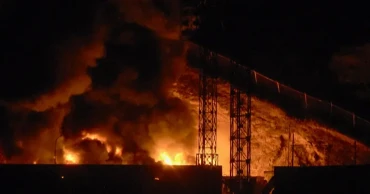
EU urges de-escalation in Venezuela
European Council President Antonio Costa said on Saturday the European Union (EU) was following the situation in Venezuela "with great concern" and urged de-escalation.
"The European Union calls for de-escalation and a resolution in full respect of international law and the principles enshrined in the Charter of the United Nations," he wrote on X.
He said the bloc would continue to support a peaceful, democratic and inclusive solution in Venezuela, and backed efforts by EU foreign policy chief Kaja Kallas, working with member states, to ensure the safety of European citizens in the country.
Earlier on Saturday, Kallas said the EU was closely monitoring developments and called for restraint, stressing that the principles of international law and the United Nations Charter must be respected.
Kallas said she had spoken with U.S. Secretary of State Marco Rubio and the EU ambassador in Caracas, adding that the safety of EU citizens in Venezuela was the bloc's top priority.
U.S. President Donald Trump said on Saturday that the United States has struck Venezuela and captured its President Nicolas Maduro, who was flown out of the country along with his wife.
Venezuela on Saturday denounced a "military aggression" by the United States, after large explosions were heard and aircraft were seen over the capital Caracas earlier in the day.
2 months ago
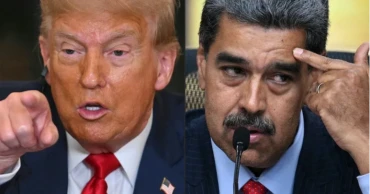
Trump claims Maduro captured as US launches major strikes on Venezuela
US President Donald Trump said the United States has carried out “large scale strikes” against Venezuela and claimed that Venezuelan President Nicolás Maduro and his wife have been captured and flown out of the country.
In a statement posted on his Truth Social platform, Trump said the operation was conducted in coordination with US law enforcement agencies and that further details would be announced at a news conference scheduled later in the day at his Mar-a-Lago residence.
Venezuela’s government earlier rejected and condemned what it described as “military aggression by the United States,” declaring a national emergency across the country. Authorities accused Washington of attempting to seize Venezuela’s strategic resources, particularly oil and minerals, and of trying to undermine the country’s political independence.
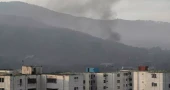
Explosions were reported in the capital Caracas, with witnesses describing loud blasts, low-flying aircraft and helicopters overhead. Footage circulating on social media and broadcast by international media showed large plumes of smoke and fires burning in different parts of the city, including near military facilities.
An eyewitness in Caracas told the BBC that the explosions were extremely loud and shook buildings. “My heart was pumping and my legs were shaking,” the witness said, adding that the blasts appeared precise but frighteningly close. After the explosions, the city fell largely silent as residents frantically contacted friends and relatives to check on their safety.
According to reports from US officials cited by CBS News, the strikes targeted sites inside Venezuela, including military installations in and around Caracas. The White House had not immediately issued an official response.
Venezuelan President Maduro signed a decree declaring a “state of external commotion” nationwide and ordered the implementation of national defense plans. The government also urged social and political groups, including militias and grassroots organisations, to mobilise and condemn what it called an imperialist attack.
The escalation follows weeks of rising tension between Washington and Caracas. Trump has intensified pressure on Maduro, accusing his government of drug trafficking and of using oil revenues to fund criminal activity. Since September, the US has launched multiple strikes on boats it claims were involved in drug smuggling in the Caribbean and Pacific, actions that have reportedly killed more than 110 people.
Just days earlier, Maduro said he was open to talks with the US on drug trafficking and oil issues, but avoided directly responding to Trump’s claims about earlier strikes on Venezuelan infrastructure.
Analysts say the latest developments mark a significant escalation in a crisis that has been building for months. Venezuelan journalists and residents have expressed deep concern over the scale of the strikes and the uncertainty surrounding their consequences, as power outages were reported in some areas and fear spread across the capital.
Reports of explosions first emerged in the early hours of the morning, with witnesses describing blasts near key military sites, including the La Carlota airstrip and the Fuerte Tiuna military complex. Venezuelan authorities say the situation remains fluid as they assess the damage and prepare further responses.
With inputs from BBC
2 months ago