others

A cholera outbreak in Zambia has caused more than 400 deaths and infected 10,000
Zambia is reeling from a major cholera outbreak that has killed more than 400 people and infected more than 10,000, leading authorities to order schools across the country to remain shut after the end-of-year holidays.
A large soccer stadium in the capital city has been converted into a treatment facility.
The Zambian government is embarking on a mass vaccination program and says it's providing clean water — 2.4 million liters a day — to communities that are affected across the southern African nation.
2nd dose of Cholera vaccination to start in two areas of Chattogram city Sunday
The national disaster management agency has been mobilized.
Cholera is an acute diarrhea infection caused by a bacteria that is typically spread via contaminated food or water. The disease is strongly linked to poverty and inadequate access to clean water.
The outbreak in Zambia began in October and 412 people have died and 10,413 cases have been recorded, according to the latest count on Wednesday from the Zambia Public Health Institute, the government body that deals with health emergencies.
The Health Ministry says cholera has been detected in nearly half of the country's districts and nine out of 10 provinces, and the nation of about 20 million people has been recording more than 400 cases a day.
Cholera vaccination campaign to begin in Ctg from Sept 17
“This outbreak continues to pose a threat to the health security of the nation,” Health Minister Sylvia Masebo said, outlining it was a nationwide problem.
The United Nations Children's Fund, UNICEF, called the fatality rate of around 4% in the three-month outbreak “a devastatingly high number.” When treated, cholera typically has a death rate of less than 1%.
There have been recent cholera outbreaks in other southern African nations including Malawi, Mozambique and Zimbabwe. More than 200,000 cases and over 3,000 deaths have been reported in southern Africa since the start of 2023, UNICEF said.
Malawi had its worst cholera outbreak in decades in 2023. Last year, the World Health Organization reported that about 30 countries globally, also including Nigeria and Uganda in Africa, suffered serious outbreaks in the last few years.
Cholera barely affects countries in the developed world and can be easily treated but can be quickly fatal if not treated.
More than half — 229 — of the victims in the Zambian outbreak died before being admitted to a health facility, the public health institute said.
Zambia has had several major cholera outbreaks since the 1970s but this one is the worst for 20 years in terms of the caseload, according to Dr. Mazyanga Mazaba, the director of public health policy and communication at the public health institute.
The cholera bacteria can also survive longer in warmer weather and unusually heavy rains and storms in southern Africa have contributed to recent outbreaks, experts say.
WHO said last year that while poverty and conflict remain the main drivers for cholera, climate change has contributed to the disease's upsurge in many places across the globe since 2021 by making storms wetter and more frequent. A cyclone sparked a spiraling cholera outbreak in Mozambique last year.
Heavy rains and flash flooding in Zambia have converted some neighborhoods into soggy or waterlogged areas.
The Zambian government announced in early January that schools — which were meant to open for the year on Jan. 8 — will only open on Jan. 29. Parents and children were urged to make use of education programs on public TV and radio, a situation that had echoes of the COVID-19 pandemic.
The education minister ordered schools to be cleaned and inspected.
Zambia's Disaster Management and Mitigation Unit was mobilized and it was delivering large water tanks and trucking in clean water to some neighborhoods daily. Granulated chlorine to treat water was also being provided, it said.
The majority of cases are in the capital, Lusaka, where a 60,000-seat national soccer stadium has been converted into a treatment center and is dealing with around 500 patients at any one time, the health minister said.
She said Zambia had received around 1.4 million doses of the oral cholera vaccine from the WHO and expected more than 200,000 more to arrive soon. Zambian government officials, including Masebo, took a vaccine publicly to encourage others to also do so.
Health experts have previously warned that the numerous cholera outbreaks globally have strained the supply of vaccines, which are mostly distributed to poor countries through an international body run by the U.N. and partners. Vaccines alliance Gavi predicted that the vaccine shortage could last until 2025.
2 years ago

Israeli hostages to get medicine delivery, and US bombs Yemen again
Qatar and France said Tuesday they have mediated a deal between Israel and Hamas to allow the delivery of medications to around 45 of the more than 100 Israeli hostages held captive in Gaza. This marks the first agreement between the warring sides since a weeklong cease-fire collapsed in late November.
In Yemen, the U.S. launched the third strike in recent days against the Houthi rebel group, according to a U.S. official. The Houthis have attacked shipping in the crucial Red Sea corridor, saying they seek to halt Israel’s war in Gaza against Hamas.
Dhaka backs South Africa's ICJ move against violation by Israel in Gaza
In northern Gaza, Palestinian militants battled Israeli forces and launched a barrage of rockets from farther south. In the past 24 hours, the bodies of 158 people killed in Israeli strikes have been brought to hospitals, bringing the Palestinian death toll to 24,285 people, Gaza's Health Ministry said Tuesday.
Over one hundred days into the war, Israel destroying Gaza’s food system, weaponizing food: UN human rights experts
In Israel, around 1,200 people were killed during Hamas' Oct. 7 attack that sparked the war and saw some 250 people taken hostage by the militants.
2 years ago
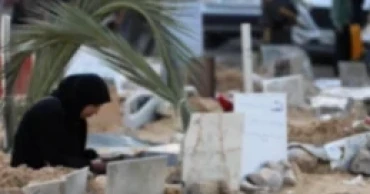
Over one hundred days into the war, Israel destroying Gaza’s food system, weaponizing food: UN human rights experts
Gazans now make up 80 per cent of all people facing famine or catastrophic hunger worldwide, marking an unparalleled humanitarian crisis in the Gaza Strip amid Israel’s continued bombardment and siege, according to UN human rights experts.
“Currently every single person in Gaza is hungry, a quarter of the population are starving and struggling to find food and drinkable water, and famine is imminent. Pregnant women are not receiving adequate nutrition and healthcare, putting their lives at risk. In addition all children under five – 335,000 – are at high risk of severe malnutrition as the risk of famine conditions continues to increase, a whole generation is now in danger of suffering from stunting,” said the experts on Tuesday.
Stunting occurs when young children’s growth is hampered due to lack of adequate nourishment and causes irreparable physical and cognitive impairments. This will undermine the learning capacity of an entire generation, according to a statement issued from Geneva on Tuesday.
Nowhere is safe in Gaza. Since 9 October, Israel declared and imposed a “total siege” on Gaza, depriving 2.3 million Palestinians of water, food, fuel, medicine, and medical supplies, this against the backdrop of a 17-year Israeli blockade, which before this war made approximately half of the people in Gaza food insecure and more than 80 percent reliant on humanitarian aid.
While the majority of aid distribution is concentrated in the southern governorates, since 1 January, only 21 per cent (5 out of 24) of planned deliveries of aid containing food and other lifesaving supplies reached their destination north of Wadi Gaza.
The experts are particularly alarmed about conditions in northern Gaza, where the population faces prolonged food shortages and extremely restricted access to essential resources. In southern Gaza, a large concentration of individuals resides in inadequate shelters or areas devoid of basic amenities, escalating the brutal situation.
“It is unprecedented to make an entire civilian population go hungry this completely and quickly. Israel is destroying Gaza’s food system and using food as a weapon against the Palestinian people.”
Israel is destroying and blocking access to farmland and the sea. Recent reports allege that since Israeli military's ground offensive started on 27 October, approximately 22% of agricultural land, including orchards, greenhouses, and farmland in northern Gaza, has been razed by Israeli forces. Israel has reportedly destroyed approximately 70% of Gaza’s fishing fleet.
Even with little humanitarian aid that has been allowed to enter, people still lack food and fuel to cook. Most bakeries are not operational, due to the lack of fuel, water, and wheat flour along with structural damage. Livestock are starving and unable to provide food or be a source of food.
Meanwhile, access to safe water continues to diminish while the healthcare system has collapsed due to the wide-spread destruction of hospitals, significantly heightening the spread of communicable diseases.
Israel has also destroyed more than 60% of Palestinian homes in Gaza, directly affecting the ability to cook any food, and causing domicide through the mass destruction of dwellings, making the territory uninhabitable.
The U.N. Office for the Coordination of Humanitarian Affairs has estimated that nearly 85% of Gaza's population — representing 1.9 million people — is internally displaced, including many who have been displaced multiple times, as families are forced to move repeatedly in search of safety.
“We have raised the alarm of the risk of genocide several times reminding all governments they have a duty to prevent genocide. Not only is Israel killing and causing irreparable harm against Palestinian civilians with its indiscriminate bombardments, it is also knowingly and intentionally imposing a high rate of disease, prolonged malnutrition, dehydration, and starvation by destroying civilian infrastructure,” said the experts. “Aid needs to be delivered to Gazans immediately and without any hindrance to prevent starvation.”
“Our alarm for the unfolding genocide does not only refer to the ongoing bombardment of Gaza but also concerns the slow suffering and death caused by Israel’s long-standing occupation, blockade and current civic destruction, since genocide advances through an ongoing process and is not a singular event.”
"The clear path to achieving peace, safety, and stability for both Israelis and Palestinians lies in the realization of Palestinian self-determination. This can only be achieved through an immediate ceasefire and the cessation of the Israeli occupation”.
The experts are Michael Fakhri, Special Rapporteur on the right to food; Farida Shaheed, Special Rapporteur on the right to education; Tlaleng Mofokeng, Special Rapporteur on the right of everyone to the enjoyment of the highest attainable standard of physical and mental health; Balakrishnan Rajagopal, Special Rapporteur on the right to adequate housing, Paula Gaviria Betancur, Special Rapporteur on the human rights of internally displaced persons; Francesca Albanese, Special Rapporteur on the situation of human rights in the Palestinian Territory occupied since 1967; Reem Alsalem, Special Rapporteur on violence against women and girls, its causes and consequences; Pedro Arrojo Agudo, Special Rapporteur on the human rights to safe drinking water and sanitation.
2 years ago
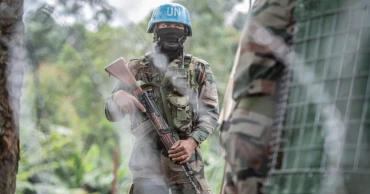
UN sets December deadline for its peacekeepers in Congo to completely withdraw
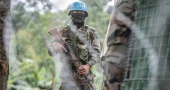
The U.N. peacekeeping mission in Congo, which helped in the fight against rebels for more than two decades before being asked by the Congolese government to leave, will complete its withdrawal from the Central African nation by the end of 2024, the mission said Saturday.
A three-phased withdrawal of the 15,000-force will begin in the South Kivu province where at least 2,000 security personnel will leave by the end of April in the first phase, according to Bintou Keita, head of the mission known as MONUSCO, after which forces in the North Kivu and Ituri provinces will also leave.
"After 25 years of presence, MONUSCO will definitively leave the DRC no later than the end of 2024,” Keita said at a media briefing in the Congolese capital of Kinshasa. The end of the mission will not be “the end of the United Nations” in the country, she added.
The U.N. and Congolese officials worked together to produce a disengagement plan for “a progressive, responsible, honorable and exemplary withdrawal of MONUSCO,” Congolese Foreign Minister Christophe Lutundula said. Modalities have also been set for “the gradual transfer of tasks from MONUSCO to Congolese government,” Lutundula added.
The MONUSCO force arrived in Congo in 2010 after taking over from an earlier U.N. peacekeeping mission to protect civilians and humanitarian personnel and to support the Congolese government in its stabilization and peace consolidation efforts.
However, frustrated Congolese say that no one is protecting them from rebel attacks, leading to protests against the U.N. mission and others that have at times turned deadly.
Over the years of its existence, eastern Congo continues to be ravaged by more than 120 armed groups seeking a share of the region’s resources such as gold and trying to protect their communities, some of them quietly backed by Congo’s neighbors. The violence is occasioned by rampant mass killings and has displaced nearly 7 million people.
The Congolese government — which has just been reelected in a disputed vote — requested the U.N. mission to leave the country after claiming the security collaboration “has proved its limits in a context of permanent war, without the longed-for peace being restored to eastern Congo.” The government has also directed an East African regional force, deployed last year to help end the fighting, to leave the country for similar reasons.
2 years ago

After years of delays, former New Zealand Prime Minister Jacinda Ardern ties the knot
After almost five years of engagement and a postponement due to the coronavirus pandemic, former New Zealand Prime Minister Jacinda Ardern married longtime partner Clarke Gayford in a private ceremony Saturday.
Details of the event were closely held by the pair, but the ceremony is reported to have been staged at a luxury vineyard in the scenic Hawke's Bay region, 325 kilometers (200 miles) from New Zealand's capital, Wellington.
It is believed only family, close friends and a few of the 43-year-old Ardern's former lawmaker colleagues were invited, including Ardern’s successor and former prime minister Chris Hipkins.
Read: People's rights are threatened everywhere, from wars to silence about abuses, rights group says
Earlier, police met with a small group of protesters who had plastered a wall with dozens of anti-vaccination posters outside the venue. One protester was also seen holding a sign that read, "Lest we forget jab mandates," on the outskirts of the property.
Ardern and Gayford, 47, reportedly began dating in 2014 and were engaged five years later, but due to Ardern's government's COVID-19 restrictions that reduced gatherings to 100 people, the wedding planned for the southern hemisphere summer of 2022 was postponed.
“Such is life,” Ardern said at the time of their decision to call off the wedding. “I am no different to, dare I say, thousands of other New Zealanders.”
Just 37 when she became leader in 2017, Ardern quickly became a global icon of the left. She exemplified a new style of leadership and was praised around the world for her handling of the nation’s worst-ever mass shooting and the early stages of the coronavirus pandemic.
In 2018, Ardern became just the second elected world leader to give birth while holding office. Later that year, she brought her infant daughter to the floor of the United Nations General Assembly in New York.
New Zealand, under Ardern’s government, had some of the strictest coronavirus mandates in the world, which prompted several rallies during her final year as prime minister. It also led to a level of vitriol from some that hadn’t been experienced by previous New Zealand leaders.
Ardern shocked New Zealanders in January 2023 when she said she was stepping down after five-and-a-half years as prime minister because she no longer had “enough in the tank” to do the job justice in an election year.
Read: Nelson Mandela's support for Palestinians endures with South Africa's genocide case against Israel
Since then, Ardern announced she would temporarily join Harvard University after being appointed to dual fellowships at the Harvard Kennedy School. She has also took an unpaid role combating online extremism.
In June, Ardern received one of New Zealand’s highest honors for her service leading the country through a mass shooting and pandemic. She was made a Dame Grand Companion, meaning people will now call her Dame Jacinda Ardern.
2 years ago

ICJ hearings wrap up with Israel's defence against allegations of genocide
Accused of committing genocide against Palestinians, Israel insisted at the United Nations’ highest court Friday that its war in Gaza was a legitimate defense of its people and said that it was Hamas militants who were guilty of genocide.
Israel described the allegations leveled by South Africa as hypocritical and said that one of the biggest cases ever to come before an international court reflected a world turned upside down. Israeli leaders defend their air and ground offensive in Gaza as a legitimate response to Hamas' Oct. 7 attack, when militants stormed through Israeli communities, killed some 1,200 people and took around 250 hostage.
Israeli legal advisor Tal Becker told a packed auditorium at the ornate Palace of Peace in The Hague that the country is fighting a “war it did not start and did not want.”
“In these circumstances, there can hardly be a charge more false and more malevolent than the allegation against Israel of genocide,” he added, noting that the horrible suffering of civilians in war was not enough to level that charge.
Read: People's rights are threatened everywhere, from wars to silence about abuses, rights group says
South African lawyers asked the court Thursday to order an immediate halt to Israeli military operations in the besieged coastal territory that is home to 2.3 million Palestinians. A decision on that request will probably take weeks, and the full case is likely to last years — and it's unclear if Israel would follow any court orders.
On Friday, Israel focused on the brutality of the Oct. 7 attacks, presenting chilling video and audio to a hushed audience to highlight what happened that day.
“They tortured children in front of parents and parents in front of children, burned people, including infants alive, and systematically raped and mutilated scores of women, men and children,” Becker said.
South Africa’s request for an immediate halt to the Gaza fighting, he said, amounts to an attempt to prevent Israel from defending itself against that assault.
Even when acting in self-defense, countries are required by international law to follow the rules of war, and judges must decide if Israel has. As the two days of hearings ended Friday, ICJ President Joan E. Donoghue said the court would rule on the request for urgent measures “as soon as possible.”
Israel often boycotts international tribunals and U.N. investigations, saying they are unfair and biased. But this time, Israeli leaders took the rare step of sending a high-level legal team — a sign of how seriously they regard the case and likely their fear that any court order to halt operations would be a major blow to the country's international standing.
Read: In Day 2 of hearings, Israel rejects South Africa's allegation of genocide
Still, Becker dismissed the accusations as crude and attention-seeking.
“We live at a time when words are cheap in an age of social media and identity politics. The temptation to reach for the most outrageous term to vilify and demonize has become, for many, irresistible," he said.
He said charges Israel is facing should be leveled at Hamas.
“If there have been acts that may be characterized as genocidal, then they have been perpetrated against Israel," Becker said. Hamas has, he said, a "proudly declared agenda of annihilation, which is not a secret and is not in doubt.”
More than 23,000 people in Gaza have been killed during Israel's military campaign, according to the Health Ministry in the Hamas-run territory. Nearly 85% of Gaza’s people have been driven their homes, a quarter of the enclave's residents face starvation, and much of northern Gaza has been reduced to rubble.
South Africa says this amounts to genocide and is part of decades of Israeli oppression of Palestinians.
“The scale of destruction in Gaza, the targeting of family homes and civilians, the war being a war on children, all make clear that genocidal intent is both understood and has been put into practice. The articulated intent is the destruction of Palestinian life,” said lawyer Tembeka Ngcukaitobi, adding that several leading politicians had made dehumanizing comments about people in Gaza.
Malcolm Shaw, an international law expert on Israel's legal team, rejected the accusation of genocidal intent and called the remarks Ngcukaitobi referenced “random quotes not in conformity with government policy."
Another member of the team, Christopher Staker, called South Africa’s request “frankly astonishing.” He said that, if granted, it would mandate “unilateral suspension of military operations by one party to the conflict, only leaving the other party free to continue attacks which it has a stated intention to do.”
Read: Top UN court opens hearings on South Africa's allegation that Israel is committing genocide in Gaza
If the court issues an order to halt the fighting and Israel doesn't comply, it could face U.N. sanctions, although those may be blocked by a veto from the United States, Israel's staunch ally. In Washington, National Security Council spokesperson John Kirby called the allegations “unfounded.”
The extraordinary case goes to the core of one of the world’s most intractable conflicts — and for the second day protesters rallied outside the court.
Pro-Israeli demonstrators set up a table near the court grounds for a Sabbath meal with empty seats, commemorating the hostages still being held by Hamas. “We want to symbolize the empty chairs, because we are missing them,” said Nathan Bouscher from Center for Information and Documentation on Israel.
Nearby, over 100 pro-Palestinian protesters waved flags and shouted protests.
The case also strikes at the heart of both Israel’s and South Africa's national identities.
Israel was founded as a Jewish state in the wake of the Nazis' slaughter of 6 million Jews during World War II. South Africa’s governing party, meanwhile, has long compared Israel’s policies in Gaza and the West Bank to its own history under the apartheid regime of white minority rule, which restricted most Black people to “homelands.”
The world court, which rules on disputes between nations, has never judged a country to be responsible for genocide. The closest it came was in 2007, when it ruled that Serbia “violated the obligation to prevent genocide" in the July 1995 massacre by Bosnian Serb forces of more than 8,000 Muslim men and boys in the Bosnian enclave of Srebrenica.
2 years ago

In Day 2 of hearings, Israel rejects South Africa's allegation of genocide
As the second day of hearings began Friday at the United Nations' top court, Israel is rejecting allegations levied by South Africa that its campaign against Hamas amounts to genocide against the Palestinian people, saying that, if anything, it is Hamas that is guilty of genocide.
Although the case is likely to take years to resolve, South Africa is asking the International Court of Justice to order an immediate suspension of Israel’s military offensive in the Gaza Strip. It’s unclear if Israel would comply with any court order.
Meanwhile, United States and British militaries launched strikes on sites used by the Iran-backed Houthi rebel group in Yemen in retaliation for their attacks on ships in the Red Sea. The Houthis say their attacks are aimed at stopping Israel’s war on Hamas, but their targets increasingly have little or no connection to Israel and imperil a crucial trade route linking Asia and the Middle East with Europe.
The Oct. 7 Hamas attack from Gaza into southern Israel that triggered the war killed around 1,200 people and saw some 250 others taken hostage by militants. Israel’s air, ground and sea assault in Gaza has killed more than 23,000 people, some 70% of them women and children, according to the Health Ministry in the Hamas-ruled territory. The count does not differentiate between civilians and combatants.
2 years ago
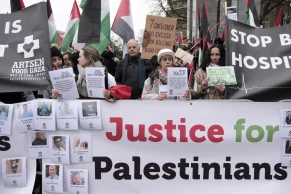
People's rights are threatened everywhere, from wars to silence about abuses, rights group says
People’s rights are being suppressed and threatened everywhere in the world, from wars to selective government outrage about some abuses and silence about others because of “political expediency,” a leading human rights group said Thursday.
“We only have to look at the human rights challenges of 2023 to tell us what we need to do differently in 2024,” Human Rights Watch said in its annual global report.
Armed conflicts have mushroomed, leading with the Israel-Hamas war, and the issue is how governments respond to them, Tirana Hassan, the New York-based watchdog's executive director, told a news conference. "It needs to be an end to double standards.”
As an example, she said many governments quickly and justifiably condemned the “unlawful” killings and atrocities by the Palestinian militant Hamas group when it attacked southern Israel on Oct. 7, killing hundreds and taking hostages. After the attacks, Israel “unlawfully blocked” aid to Gaza residents and its ongoing offensive in the territory has killed more than 23,000 people, according to the Health Ministry in the Hamas-run Gaza Strip, while reducing entire neighborhoods to rubble.
“Yet many of the governments that condemned Hamas’ war crimes have been muted in responding to the war crimes committed by the Israeli government,” Hassan said.
She said such selective outrage sends a dangerous message that some people’s lives matter more than others and shakes the legitimacy of the international rules that protect everyone’s human rights, she said.
Human Rights Watch praised South Africa for seeking a ruling from the International Court of Justice on whether Israel is committing genocide in Gaza in a landmark case that began Thursday. Hassan said other countries including the United States should support South Africa’s action “and ensure that Israel complies with the court’s decision.”
The HRW report said tradeoffs on human rights in the name of politics are also clear. It cited the failure of many governments to speak out about the Chinese government’s repression and control over civil society, the internet and media.
“Chinese authorities’ cultural persecution and arbitrary detention of a million Uyghurs and other Turkic Muslims amount to crimes against humanity,” it said. “Yet many governments, including in predominantly Muslim countries, stay silent.”
The report described the United States and European Union as ignoring their human rights obligations in favor of politically expedient solutions.
“U.S. President Joe Biden has shown little appetite to hold responsible human rights abusers who are key to his domestic agenda or are seen as bulwarks to China,” it said.
“U.S. allies like Saudi Arabia, India, and Egypt violate the rights of their people on a massive scale yet have not had to overcome hurdles to deepen their ties with the U.S.,” the report said. “Vietnam, the Philippines, India, and other nations the U.S. wants as counters to China have been feted at the White House without regard for their human rights abuses at home.”
Also, HRW said the EU circumvents its human rights obligations to asylum seekers and migrants, “especially those from Africa and the Middle East, striking deals with abusive governments like Libya, Turkey and Tunisia to keep migrants outside of the European bloc.”
Several national leaders were named as examples of worrying trends. India's “democracy has slid toward autocracy" under Prime Minister Narendra Modi, Tunisia’s President Kais Saied has weakened the judiciary and El Salvador’s President Nayib Bukele has used mass detention as an ostensible solution for fighting crime, the report said.
The group cited as a bright spot for the year the International Criminal Court’s arrest warrants for Russian President Vladimir Putin and his children’s rights commissioner alleging war crimes related to the forced transfer of Ukrainian children Russian-occupied areas, and their deportation to Russia.
In Pakistan, authorities last year “used threats, abuse, and detention to coerce Afghans without legal status to return” to Afghanistan, now ruled by the Taliban — forcing even refugees and asylum seekers to go back, the annual report said.
Since the government in Islamabad launched the crackdown, saying it was aimed at foreigners living in Pakistan illegally, nearly half a million Afghans have gone back or been expelled.
Hassan also pointed to the movement toward marriage equality in places like Nepal but especially to the determination of Afghan girls and women who took to the streets to oppose the Taliban bans on work and education and have found alternative ways to learn.
“If the people at the center whose human rights are being abused are still prepared to fight then human rights matter,” she said.
2 years ago

Nelson Mandela's support for Palestinians endures with South Africa's genocide case against Israel
Barely two weeks after he was released from prison in 1990, Nelson Mandela flew to Zambia to meet with African leaders who had supported his fight against South Africa's apartheid system of forced racial segregation.
One figure stood out among the men in dark suits eagerly waiting to greet Mandela on the airport tarmac: Palestinian leader Yasser Arafat, wearing his black and white checkered keffiyeh headdress, had traveled to see the newly freed Mandela.
He grabbed Mandela in a bear hug and kissed him on each cheek. Mandela smiled broadly. It was confirmation of the solidarity between two men who considered their peoples' struggles for freedom to be the same.
South Africans continue to support the Palestinian cause, and the country has taken the rare step of bringing a genocide case against Israel at the International Court of Justice because of its war in Gaza.
South Africa is not a diplomatic heavyweight and is geographically far from the conflict. But its ruling African National Congress, which Mandela led from an anti-apartheid liberation movement to a political party in government, has retained its strong pro-Palestinian stance even after Mandela died in 2013.
“We have stood with the Palestinians and we will continue to stand with our Palestinian brothers and sisters,” Mandela's grandson, Mandla Mandela, said at a pro-Palestinian rally in Cape Town in October, days after the Hamas attack in southern Israel spurred the war on Gaza. Mandla Mandela, an ANC lawmaker, wore a black and white Palestinian keffiyeh around his neck as he spoke to a large crowd.
Read: Top UN court opens hearings on South Africa's allegation that Israel is committing genocide in Gaza
A SHARED STRUGGLENelson Mandela regularly raised the plight of the Palestinians. Three years after apartheid and white minority rule was dismantled in South Africa and Mandela was elected president in historic all-race elections in 1994, he thanked the international community for its help. He added: “But we know too well that our freedom is incomplete without the freedom of the Palestinians.”
Mandela and South African leaders after him compared the restrictions Israel placed on Palestinians in Gaza and the West Bank with the treatment of Black South Africans during apartheid, framing the two issues as fundamentally about people oppressed in their homeland. Israel provided weapons systems to South Africa’s apartheid government and maintained secret military ties with it up until the mid-1980s, even after publicly denouncing apartheid.
The ANC has consistently criticized Israel as an “apartheid state," even before the current war. International rights groups have also accused Israel of the crime of apartheid against Palestinians and that “resonates strongly with South Africa,” said Thamsanqa Malusi, a South African human rights lawyer.
Malusi said many in the South African government experienced the oppression of apartheid and that could help explain its decision to lodge the case against Israel at the U.N.'s top court.
While Mandela, the Nobel Peace Prize-winning statesman, also reached out to Israel in an attempt to foster a peaceful solution, anti-Israeli rhetoric in South Africa has strengthened over the years, sometimes seeping into everyday life. For example, the ANC's youth wing pressured South African grocery store chains to drop Israeli products and threatened to forcibly shut them down if they didn't.
RESPONSE TO THE WARIsrael's assault on Gaza sparked renewed solidarity with the Palestinian cause in South Africa. Thousands have marched in support of Gaza in Cape Town and Johannesburg, and buildings in the Cape Town neighborhood of Bo Kaap were adorned with pro-Palestine graffiti in the weeks after the war broke out.
South African President Cyril Ramaphosa — the current leader of the ANC — has criticized both Israel and Hamas for what he calls atrocities committed by both sides in the conflict. But he also appeared in public wearing a keffiyeh and holding a Palestine flag, even as he offered condolences to Israel over the Oct. 7 Hamas attacks, leaving little doubt where South Africa's sympathies lie.
HAMAS CONNECTIONSANC officials, including Mandla Mandela, hosted three Hamas officials in South Africa last month, including the group's top representative in Iran. They attended a ceremony marking the 10th anniversary of Nelson Mandela's death before a statue of the former South African President at the seat of government in a nod to his historic connection with the Palestinian cause.
Read: Nearly 10,000 died from COVID-19 last month, fueled by holiday gatherings and new variant, WHO says
On Wednesday, the eve of the court proceedings, Palestinians in the West Bank city of Ramallah crowded around another statue of Mandela, waving Palestinian and South African flags and holding signs that read: “Thank You South Africa.”
The Hamas visit to South Africa was not welcomed by all, though.
South Africa's main opposition party has said it considers Hamas a terrorist organization, as do the United States and European Union, and support for Palestinians in South Africa has complicated racial connotations. Black and mixed-race South Africans, brutally oppressed under apartheid, have been at the forefront of the support for Palestinians. Support is not as pronounced among South Africa's white minority.
HYPOCRISY?South Africa's ANC-led government says it is taking a morale stance in its genocide case against Israel, first seeking an order for Israel to stop the assaults in Gaza that have killed more than 23,300 Palestinians, two-thirds of them women and children, according to the Gaza Health Ministry.
But the case has given rise to accusations of hypocrisy: The ANC has itself ignored international court orders.
The ANC government refused to arrest then-Sudanese President Omar al-Bashir when he visited South Africa in 2015 while the subject of a warrant on allegations of genocide by the separate International Criminal Court. South Africa has also retained strong ties with Russia and President Vladimir Putin since the invasion of Ukraine, overlooking an ICC indictment against Putin for alleged war crimes in relation to the abduction of children from Ukraine.
2 years ago

Top UN court opens hearings on South Africa's allegation that Israel is committing genocide in Gaza
The United Nations' top court opens hearings Thursday into South Africa's allegation that Israel's war with Hamas amounts to genocide against Palestinians, a claim that Israel strongly denies.
South Africa is initially asking the International Court of Justice to order an immediate suspension of Israel's military offensive in the Gaza Strip as part of a case that is likely to take years to resolve.
The dispute strikes at the heart of Israel's national identity as a Jewish state created in the aftermath of the Nazi genocide in the Holocaust.
It also involves South Africa's identity: Its governing party, the African National Congress, has long compared Israel’s policies in Gaza and the West Bank to its own history under the apartheid regime of white minority rule, which restricted most Blacks to “homelands” before ending in 1994.
Although it normally considers U.N. and international tribunals unfair and biased, Israel has sent a strong legal team to defend its military operation launched in the aftermath of the Oct. 7 attacks by Hamas.
“I think they have come because they want to be exonerated and think they can successfully resist the accusation of genocide,” said Juliette McIntyre, an expert on international law at the University of South Australia.
In a statement after the case was filed late last year, the Palestinian Authority's foreign ministry urged the court to “immediately take action to protect the Palestinian people and call on Israel, the occupying power, to halt its onslaught against the Palestinian people, in order to ensure an objective legal resolution.”
Two days of preliminary hearings will begin with lawyers for South Africa explaining why the country has accused Israel of “acts and omissions" that are “genocidal in character” in the Gaza war and why it is calling for the court to issue an interim order for an immediate halt to Israel's military actions. A decision will likely take weeks.
Read: Nearly 10,000 died from COVID-19 last month, fueled by holiday gatherings and new variant, WHO says
Israel’s offensive has killed more than 23,200 Palestinians in Gaza, according to the Health Ministry in Hamas-run Gaza. About two-thirds of the dead are women and children, health officials say. The death toll does not distinguish between combatants and civilians.
In the Oct. 7 attack, in which Hamas fighters stormed through several communities in Israel and killed some 1,200 people, mainly civilians. They abducted around 250 others, nearly half of whom have been released.
U.S. Secretary of State Antony Blinken dismissed the case as “ meritless ” during a visit to Tel Aviv on Tuesday.
“It is particularly galling, given that those who are attacking Israel — Hamas, Hezbollah, the Houthis, as well as their supporter Iran — continue to call for the annihilation of Israel and the mass murder of Jews,” he said.
The world court, which rules on disputes between nations, has never judged a country to be responsible for genocide. The closest it came was in 2007 when it ruled that Serbia “violated the obligation to prevent genocide" in the July 1995 massacre by Bosnian Serb forces of more than 8,000 Muslim men and boys in the Bosnian enclave of Srebrenica.
South Africa “will have a hard time getting over the threshold” of proving genocide, McIntyre said.
“It’s not simply a matter of killing enormous numbers of people,” she said in an email to The Associated Press. “There must be an intent to destroy a group of people (classified by race or religion for example) in whole or in part, in a particular place.”
In a detailed, 84-page document launching the case, South Africa argued Israel has demonstrated that intent.
Israel responded by insisting it operates according to international law and focuses its military actions solely against Hamas. It said that the residents of Gaza are not an enemy and that it takes steps to minimize harm to civilians and to allow humanitarian aid to enter the territory.
An Israeli Foreign Ministry statement called South Africa’s case a “despicable and contemptuous exploitation” of the court.
The case revolves around the genocide convention that was drawn up in 1948 in the aftermath of World War II and the murder of 6 million Jews in the Holocaust. Both Israel and South Africa are signatories.
Read: US defends its veto of call for Gaza ceasefire while Palestinians and others demand halt to fighting
In its written filing, South Africa says it wants the court “to establish Israel’s responsibility for violations of the Genocide Convention; to hold it fully accountable under international law for those violations" and to "ensure the urgent and fullest possible protection for Palestinians in Gaza who remain at grave and immediate risk of continuing and further acts of genocide.”
A team of lawyers representing South Africa will present three hours of arguments in the court's wood-paneled Great Hall of Justice. Israel's legal team will have three hours Friday morning to answer the allegations.
Among South Africa's delegation will be former British opposition leader Jeremy Corbyn, whose leadership of the left-of-center Labour Party was stained by allegations of antisemitism. He is a longtime supporter of the Palestinian cause and a fierce critic of Israel.
Human Rights Watch said the hearings will provide scrutiny of Israel's actions.
“South Africa’s genocide case unlocks a legal process at the world’s highest court to credibly examine Israel’s conduct in Gaza in the hopes of curtailing further suffering,” said Balkees Jarrah, the group's associate international justice director.
The U.N. court, headquartered in the ornate Peace Palace in a leafy suburb of The Hague, deals with disputes between nations. The International Criminal Court, based a few miles (kilometers) away in the same Dutch city, prosecutes individuals for war crimes, crimes against humanity and genocide.
Israel is back on the International Court of Justice's docket next month, when hearings open into a U.N. request for a non-binding advisory opinion on the legality of Israeli policies in the West Bank and east Jerusalem.
2 years ago