others

Nearly 10,000 died from COVID-19 last month, fueled by holiday gatherings and new variant, WHO says
The head of the U.N. health agency said Wednesday holiday gatherings and the spread of the most prominent variant globally led to increased transmission of COVID-19 last month.
Tedros Adhanom Ghebreyesus said nearly 10,000 deaths were reported in December, while hospital admissions during the month jumped 42% in nearly 50 countries — mostly in Europe and the Americas — that shared such trend information.
"Although 10,000 deaths a month is far less than the peak of the pandemic, this level of preventable deaths is not acceptable," the World Health Organization director-general told reporters from its headquarters in Geneva.
Bangladesh registers 16 more Covid-19 cases in 24hrs
He said it was “certain” that cases were on the rise in other places that haven't been reporting, calling on governments to keep up surveillance and provide continued access to treatments and vaccines.
Tedros said the JN.1 variant was now the most prominent in the world. It is an omicron variant, so current vaccines should still provide some protection.
Maria Van Kerkhove, technical lead at WHO for COVID-19, cited an increase in respiratory diseases across the globe due to the coronavirus but also flu, rhinovirus and pneumonia.
“We expect those trends to continue into January through the winter months in the northern hemisphere,” she said, while noting increases in COVID-19 in the southern hemisphere — where it's now summer.
JN.1 Covid: Nat’l advisory committee recommends wearing masks, precautions
While bouts of coughs, sniffling, fever and fatigue in the winter are nothing new, Van Kerkhove said this year in particular, "we are seeing co-circulation of many different types of pathogens.”
WHO officials recommend that people get vaccinated when possible, wear masks, and make sure indoor areas are well ventilated.
“The vaccines may not stop you being infected, but the vaccines are certainly reducing significantly your chance of being hospitalized or dying,” said Dr. Michael Ryan, head of emergencies at WHO.
2 years ago

US defends its veto of call for Gaza ceasefire while Palestinians and others demand halt to fighting
The United States defended its veto of a call for the immediate suspension of hostilities in Gaza at a U.N. meeting Tuesday and again faced demands by the Palestinians and many other countries for a cease-fire now in the Israel-Hamas war – as well as by a group of rabbis in the gallery.
U.S. deputy ambassador Robert Wood called the Russian-proposed amendment to a Dec. 22 Security Council resolution which it vetoed “disconnected from the situation on the ground.” The council then adopted a watered-down resolution, with the U.S. abstaining, calling for urgent steps to immediately allow expanded humanitarian aid into Gaza, “and to create conditions for a sustainable cessation of hostilities.”
An Al Jazeera journalist is the fifth member of his family killed by Israeli strikes on Gaza
Wood called it “striking” that those urging an end to the conflict have made very few demands of Hamas, following its surprise Oct. 7 invasion of southern Israel that killed around 1,200 people, “to stop hiding behind civilians, lay down its arms, and surrender.” And he reiterated ongoing U.S. efforts to secure a “pause” in the fighting to get 136 Israeli hostages out of Gaza.
The U.N. General Assembly was meeting because of a resolution it adopted in April 2022 requiring any of the five permanent Security Council members — the U.S., Russia, China, Britain and France — that vetoes a resolution to explain why to the 193-member world body.
The U.S, only got support Tuesday from Israel’s U.N. Ambassador Gilad Erdan who said a cease-fire would be “a victory for Hamas … to continue the reign of terror in Gaza,” which it has ruled since 2007.
He said Israel supports every effort to deliver aid and accused Hamas of looting humanitarian assistance before it reaches the people of Gaza. He also accused the United Nations of becoming “an accomplice to terrorists,” being “obsessed” with Gazans, ignoring Israeli victims and doing nothing to bring the hostages home, and remaining silent on condemning Hamas.
Israel is pulling thousands of troops from Gaza in a possible precursor to a scaled-back offensive
To illustrate the plight of the hostages, Erdan brought a cake with him for Kfir Bibas who will turn one-year-old in the coming days while in captivity. He accused the U.N. of all but forgetting the pain of the innocent baby and asked the General Assembly president to leave the cake – with the name Kfir on it – on the speaker’s podium “as a painful reminder.” But as soon as Erdan finished, a U.N. staff member whisked the cake away.
As a sign of the growing division among Jews over the war, three dozen rabbis from the group Rabbis 4 Ceasefire came to the U.N. as tourists to protest Israel’s offensive in Gaza. The majority of them briefly held signs in the empty Security Council chamber saying “Biden Stop Vetoing Peace,” and a small group called for a ceasefire from the balcony of the General Assembly chamber before being hustled out by U.N. security officers.
Wood, the U.S. envoy, praised U.N. humanitarian efforts, telling the assembly “the United Nations is playing an irreplaceable role in delivering and distributing lifesaving assistance to people in Gaza."
U.N. spokesman Stephane Dujarric said the U.N. has seen no reports of looting — just videos of some hungry, desperate people trying to take food from trucks — and reiterated that delivering aid to combat zones is very challenging.
The Health Ministry in Hamas-run Gaza has said Israel’s military campaign has killed over 23,000 people, more than two-thirds of them women and children. The count doesn’t differentiate between civilians and combatants. Last Friday, U.N. humanitarian chief called Gaza “uninhabitable” and said “People are facing the highest levels of food insecurity ever recorded (and) famine is around the corner.”
Riyad Mansour, the U.N. Palestinian ambassador, told the assembly his people are “being slaughtered,” and declared “the horrors need to end and the only way to end them is a ceasefire.”
“The whole world is calling for an immediate humanitarian ceasefire,” he said, pointing to the 153 countries that supported a General Assembly resolution urging an end to the fighting along with U.N. Secretary-General Antonio Guterres, humanitarian organizations, and “moral voices.”
Cuba’s U.N. Ambassador Gerardo Peñalver Portal called it “deplorable” that the Dec. 22 resolution didn’t include a call for an immediate cessation of hostilities, saying a ceasefire is “a priority to halt the genocide against the Palestinian population.”
2 years ago

Iran says at least 95 were killed in blasts at a ceremony honoring slain general
Two bombs exploded and killed at least 95 people at a commemoration for a prominent Iranian general slain by the U.S. in a 2020 drone strike, Iranian officials said, as the Middle East remains on edge over Israel's war with Hamas in Gaza.
No one immediately claimed responsibility for what appeared to be the deadliest militant attack to target Iran since its 1979 Islamic Revolution. Iran's leaders vowed to punish those responsible for the blasts, which wounded at least 211 people.
The explosions struck minutes apart on Wednesday, shaking the city of Kerman, about 820 kilometers (510 miles) southeast of the capital, Tehran. The second blast sprayed shrapnel into a screaming crowd fleeing the first explosion.
Blasts kill 103 people at ceremony honouring slain Iranian general Qassim Soleimani
An earlier death toll of 103 was revised lower after officials realized that some names had been repeated on a list of victims, Iran's health minister, Bahram Einollahi, told state TV. Many of the wounded were in critical condition, however, so the death toll could rise.
The gathering marked the fourth anniversary of the killing of Gen. Qassem Soleimani, the head of the Revolutionary Guard’s elite Quds Force, in a U.S. drone strike in Iraq. The explosions occurred near his grave site as long lines of people gathered for the event.
Iranian state television and officials described the attacks as bombings, without immediately giving clear details of what happened. The attacks came a day after a deputy head of the Palestinian militant group Hamas was killed in a suspected Israeli strike in Beirut.
The first bomb Wednesday was detonated around 3 p.m., and the other went off some 20 minutes later, the Iranian interior minister, Ahmad Vahidi, told state television. He said the second blast killed and wounded the most people.
Images and video shared on social media appeared to correspond with the accounts of officials, who said the first blast happened about 700 meters (765 yards) from Soleimani's grave in the Kerman Martyrs Cemetery near a parking lot. The crowd then rushed west along Shohada Street, where the second blast struck about 1 kilometer (0.62 miles) from the grave.
A delayed second explosion is often used by militants to inflict more casualties by targeting emergency personnel responding to an attack.
Iranian state TV and state-run IRNA news agency quoted emergency officials for the casualty figures. Authorities said Thursday would be a national day of mourning.
Top Hamas official Saleh Arouri, who headed West Bank operations, killed in Beirut blast
Iran's Supreme Leader Ayatollah Ali Khamenei said the attackers will face “a harsh response,” though he didn't name any possible suspect. Iranian President Ebrahim Raisi added: "Undoubtedly, the perpetrators and leaders of this cowardly act will soon be identified and punished.”
Iran has multiple foes who could be behind the assault, including exile groups, militant organizations and state actors.
While Israel has carried out attacks in Iran over its nuclear program, it has conducted targeted assassinations, not mass casualty bombings. A U.S. State Department spokesman, Matthew Miller, said American officials had “no reason” to believe Israel was involved in Wednesday's attack in Iran. That was echoed by National Security Council spokesman John Kirby at the White House, who said “our hearts go out to all the innocent victims and their family members.”
Sunni extremist groups including the Islamic State group have conducted large-scale attacks in the past that killed civilians in Shiite-majority Iran, though not in relatively peaceful Kerman.
Iran also has seen mass protests in recent years, including those over the death of 22-year-old Mahsa Amini in 2022. The country also has been targeted by exile groups in attacks dating back to the turmoil surrounding its 1979 Islamic Revolution.
Iran itself has been arming militant groups over the decades, including Hamas, the Lebanese Shiite militia Hezbollah and Yemen’s Houthi rebels. As Israel wages its devastating war in Gaza after Hamas' Oct. 7 attacks that killed 1,200 people, both Hezbollah and the Houthis have launched attacks targeting Israel that they say come on behalf of the Palestinians.
Israel is suspected of launching the attack Tuesday that killed a deputy head of Hamas in Beirut, but that attack caused limited casualties in a densely populated neighborhood of the Lebanese capital. Last week, a suspected Israeli strike killed a Revolutionary Guard commander in Syria.
A Houthi spokesman, Mohammed Abdel-Salam, sought to link the bombings to Iran's “support for the resistance forces in Palestine and Lebanon,” though he did not specifically blame anyone for the attack. Some Iranian officials also hinted at Israeli and American involvement without offering evidence, which is common after militant attacks.
In Beirut, Hezbollah leader Hassan Nasrallah called the people who died in the attacks “martyrs who died on the same road, cause and battle that was led by” Soleimani.
The government of neighboring Iraq expressed condolences to the victims, and the European Union issued a statement offering “its solidarity with the Iranian people.” Even Saudi Arabia, a longtime regional rival which r eached a détente with Iran last year, offered its sympathies.
Soleimani was the architect of Iran’s regional military activities and is hailed as a national icon among supporters of Iran’s theocracy. He also helped secure Syrian President Bashar Assad’s government after the 2011 Arab Spring protests against him turned into a civil, and later a regional, war that still rages today.
Soleimani had been relatively unknown in Iran until the 2003 U.S. invasion of Iraq. His popularity and mystique grew after American officials called for his killing over his help in arming militants with penetrating roadside bombs that killed and maimed U.S. troops.
A decade and a half later, Soleimani had become Iran’s most recognizable battlefield commander. He ignored calls to enter politics but grew as powerful, if not more so, than its civilian leadership.
Ultimately, a drone strike launched by the Trump administration killed the general, part of escalating incidents that followed America’s 2018 unilateral withdrawal from Tehran’s nuclear deal with world powers.
Soleimani’s death has drawn large processions in the past. At his funeral in 2020, a stampede broke out in Kerman and at least 56 people were killed and more than 200 were injured as thousands thronged the procession.
Until Wednesday, the deadliest attack to strike Iran since the revolution was the 1981 truck bombing of the Islamic Republican Party’s headquarters in Tehran. That attack killed at least 72 people, including the party’s leader, four government ministers, eight deputy ministers and 23 parliament members.
In 1978 just ahead of the revolution, an intentionally set fire at the Cinema Rex in Abadan killed hundreds of people.
2 years ago

Powerful earthquakes in Japan leave at least 62 dead. Fears grow about saving people still trapped
A series of powerful earthquakes that hit western Japan left at least 62 people dead as rescue workers fought Wednesday to save those feared trapped under the rubble of collapsed buildings.
Aftershocks continued to shake Ishikawa prefecture and nearby areas two days after a magnitude 7.6 temblor slammed the area. The first 72 hours are considered crucial to save lives after disasters.
Water, power and cell phone service were still down in some areas. Residents expressed sorrow about their uncertain futures.
Bangladesh to stand steadfast beside Japan in its hour of need
Water, power and cell phone service were still down in some areas. Residents expressed sorrow about their uncertain futures.
"It’s not just that it’s a mess. The wall has collapsed, and you can see through to the next room. I don’t think we can live here anymore,” Miki Kobayashi, an Ishikawa resident, said as she swept around her house.
The house was also damaged in a 2007 quake, she said.
Two of the latest reported deaths came from Suzu, where the death toll grew to 22 people, according to city officials. Twenty-four people died in nearby Wajima city.
Although casualty numbers continued to climb gradually, the prompt public warnings, relayed on broadcasts and phones, and the quick response from the general public and officials appeared to have limited some of the damage.
5 die as planes catch fire after collision at Japan's Haneda Airport
"It's not just that it's a mess. The wall has collapsed, and you can see through to the next room. I don't think we can live here anymore," Miki Kobayashi, an Ishikawa resident, said as she swept around her house.
The house was also damaged in a 2007 quake, she said.
Of the deaths, 29 were counted in Wajima city, while 22 people died in Suzu, according to Ishikawa Prefectural authorities. Dozens of people have been seriously injured, including in nearby prefectures.
Although casualty numbers continued to climb gradually, the prompt public warnings, relayed on broadcasts and phones, and the quick response from the general public and officials appeared to have limited some of the damage.
Toshitaka Katada, a University of Tokyo professor specializing in disasters, said people were prepared because the area had been hit by quakes in recent years. They had evacuation plans and emergency supplies in stock.
"There are probably no people on Earth who are as disaster-ready as the Japanese," he told The Associated Press.
Japan is frequently hit by earthquakes because of its location along the "Ring of Fire," an arc of volcanoes and fault lines in the Pacific Basin.
Katada warned the situation remains precarious and unpredictable. The March 2011 quake and tsunami in northeastern Japan had been preceded by other quakes.
"This is far from over," Katada said.
Predictions by scientists have repeatedly been proven wrong, such as with the 2016 quake in southwestern Kumamoto, an area previously seen as relatively quake-free.
"Having too much confidence in the power of science is very dangerous. We are dealing with nature," Katada said.
Japanese media's aerial footage showed widespread damage in the hardest-hit spots, with landslides burying roads, boats tossed in the waters and a fire that had turned an entire section of Wajima city to ashes.
Powerful earthquakes leave at least 48 dead, destroy buildings along Japan’s western coast
Japan's military has dispatched 1,000 soldiers to the disaster zones to join rescue efforts. It was uncertain how many more victims might still be in the rubble.
Nuclear regulators said several nuclear plants in the region were operating normally. A major quake and tsunami in 2011 caused three reactors to melt and release large amounts of radiation at a nuclear plant in northeastern Japan.
On Monday, the Japan Meteorological Agency issued a major tsunami warning for Ishikawa and lower-level tsunami warnings or advisories for the rest of the western coast of Japan's main island of Honshu, as well as for the northern island of Hokkaido.
The warning was downgraded several hours later, and all tsunami warnings were lifted as of early Tuesday. Waves measuring more than one meter (3 feet) hit some places.
Still, half-sunken ships floated in bays where tsunami waves had rolled in, leaving a muddied coastline.
People who were evacuated from their houses huddled in auditoriums, schools and community centers. Bullet trains in the region were halted, but service was mostly restored. Sections of highways were closed.
Weather forecasters predicted rain, setting off worries about crumbling buildings and infrastructure.
The region includes tourist spots famous for lacquerware and other traditional crafts, along with designated cultural heritage sites.
Australian Prime Minister Anthony Albanese joined President Joe Biden and other world leaders in expressing support for the Japanese.
"Our hearts go out to our friends in Japan," he said. "We will provide, and have offered, whatever support is requested by our friends in Japan."
2 years ago

New Year's Eve sweeps across the globe, but wars cast a shadow on 2024
Revelers counted down to midnight on New Year's Eve across the globe Sunday as fireworks and festive lights offered a hopeful start to 2024 for some, even as the world's ongoing conflicts subdued celebrations and raised security concerns.
In Australia, more than 1 million people watched a pyrotechnic display centered around Sydney’s famous Opera House and harbor bridge — a number of spectators equivalent to one in five of the city’s residents.
“It’s total madness,” said German tourist Janna Thomas, who waited in line since 7:30 a.m. to secure a prime waterfront location.
Some 90,000 police and security officers were deployed around France including along Champs-Elysees Avenue, where large crowds took in a multidimensional light show projected onto the Arc de Triomphe showcasing the history of Paris and sports on the menu for next year's Summer Olympics in the city.
In New York, people lined up early to nab a spot in Times Square for the midnight ball drop. Officials and party organizers said they were prepared to keep tens of thousands of revelers safe in the heart of Manhattan, as the city has seen near-daily protests sparked by the Israel-Hamas war.
FIREWORKS LIGHT UP THE NIGHT
Stunning fireworks displays bloomed at iconic locations like the Acropolis in Athens, Greece; reflected in the sleek glass walls of the world’s tallest building, the Burj Khalifa, in Dubai, the United Arab Emirates; and accompanied a collective cheer filling the air in Nairobi, Kenya.
China celebrated relatively quietly, with most major cities banning fireworks over safety and pollution concerns. Still, people gathered and performers danced in colorful costumes in Beijing, while a crowd released wish balloons in Chongqing. During his New Year address, President Xi Jinping said the country would focus on building momentum for economic recovery in 2024 and pledged China would “surely be reunified” with Taiwan.
In Taipei, Taiwan’s capital, the mood was upbeat as revelers gathered for a fireworks show at the bamboo-shaped Taipei 101 skyscraper and at concerts and other events citywide.
In India, thousands of revelers from the financial hub of Mumbai watched the sun set over the Arabian Sea. Fireworks in New Delhi raised concerns that the capital — already infamous for its poor air quality — would be blanketed by a toxic haze on the first morning of the new year.
Across Japan, people gathered at temples such as the Tsukiji Temple in Tokyo, where visitors were given free hot milk and corn soup as they stood in line to strike a massive bell.
POPE HIGHLIGHTS THE HUMAN COST OF WAR
At the Vatican, Pope Francis recalled 2023 as a year marked by wartime suffering. During his traditional Sunday blessing from a window overlooking St. Peter’s Square, he offered prayers for “the tormented Ukrainian people and the Palestinian and Israeli populations, the Sudanese people and many others.”
“At the end of the year, we will have the courage to ask ourselves how many human lives have been shattered by armed conflict, how many dead and how much destruction, how much suffering, how much poverty,” the pontiff said.
GAZA AND UKRAINE WARS GRIND ON
In Russia, the country's military actions in Ukraine overshadowed end-of-year celebrations, with the usual fireworks and concert on Moscow’s Red Square canceled, as they were last year. Even without the festivities, people gathered in the square,and some cheered and pointed their phones at a clock counting down the year's final seconds.
After shelling in the Russian border city of Belgorod Saturday killed 24 people, some local authorities across the country also canceled their firework displays, including in Vladivostok. Millions were expected to tune in to President Vladimir Putin’s New Year’s prerecorded address, in which he said no force could divide Russians and stop the country’s development.
Israeli strikes in the Gaza Strip killed at least 35 people Sunday, hospital officials said, as fighting raged across the tiny enclave a day after Israeli Prime Minister Benjamin Netanyahu said the war will continue for “many more months,” resisting international calls for a cease-fire.
Skyscrapers in Tel Aviv were lit up in yellow to call for the release of hostages held by Palestinian militants in Gaza for more than 80 days.
“While you are counting down until the new year, our time and our lives stopped," said Moran Betzer Tayar, the aunt of Yagev Buchshtab, a 34-year-old hostage.
In the Gaza Strip, displaced Palestinians huddled around fires in a makeshift refugee camp.
“From the intensity of the pain we live, we do not feel that there is a new year,” said Kamal al-Zeinaty, who has lost multiple family members in the conflict. “All the days are the same.”
In Iraq, a Christmas tree was decorated with Palestinian flags and symbolic bodies in funeral shrouds, placed beside a liberty monument in central Baghdad. Many Christians in Iraq have cancelled this year’s festivities in solidarity with Gaza, and have chosen to limit their celebrations to prayers and rituals.
“We hope that the new year, 2024, will be a year of goodness, prosperity and joy,” said Ahmed Ali, a Baghdad resident.
In Muslim-majority Pakistan, the government banned all New Year’s Eve celebrations in solidarity with the Palestinians.
GLOBAL TENSIONS SPUR SECURITY VIGILANCE
New York Mayor Eric Adams said there were “no specific threats” to his city’s annual bash. Nevertheless, police said they would expand the security perimeter around the party, creating a “buffer zone” that would allow them to head off potential demonstrations. On New Year's Eve 2022, a machete-wielding man attacked three police officers a few blocks from Times Square.
Security was also heightened across European cities on Sunday.
German authorities said they etained three more people in connection with a reported threat of a New Year’s Eve attack by Islamic extremists on the world-famous Cologne Cathedral.
In Berlin, some 4,500 police officers were expected to keep order and avoid riots like those seen a year ago. Authorities also banned the traditional use of firecrackers for several streets across the city. They also banned a pro-Palestinian protest in the Neukoelln neighborhood of the German capital, which has seen several pro-Palestinian riots.
2 years ago

Australians and New Zealanders preparing to be among first nations to ring in 2024 with fireworks
Australians and New Zealanders are making final preparations on New Year’s Eve to become among the first nations to ring in 2024 as ongoing wars in Ukraine and Gaza cast a pall over celebrations and heightened tensions across parts of the world.
Rain in New Zealand’s largest city Auckland is expected to ease by midnight when downtown Sky Tower, the country’s tallest structure, erupts with fireworks as the centerpiece of a spectacular annual light show.
Two hours later in neighboring Australia, the Sydney Harbor Bridge will become the focal point of a renowned midnight fireworks display and light show viewed annually by around 425 million people worldwide, according to city authorities.
More police than ever have been deployed throughout Sydney to ensure safety as more than 1 million people — equivalent to one in five of the city’s population — converge on the harbor waterfront for the best available views, state government authorities said in a statement.
READ: New Year's Eve 2024 Celebration in Dhaka: Events and Dinner Packages
Many revelers have been camping at the best vantage points since Sunday morning.
The waterfront has been the scene of heated pro-Palestinian protests after the sails of the Sydney Opera House were illuminated in the colors of the Israeli flag in response to the Oct. 7 attack by Palestinian militant group Hamas that triggered the war.
In New York’s Times Square, officials and party organizers say they are prepared to welcome crowds of revelers and ensure their safety.
At a security briefing Friday, New York City Mayor Eric Adams said there were “no specific threats” to the annual New Year’s Eve bash, which is expected to draw tens of thousands of people to the heart of midtown Manhattan.
The celebrity-filled event will include live performances from Flo Rida, Megan Thee Stallion and LL Cool J, as well as televised appearances from Cardi B and others. Organizers said in-person attendance is expected to return to pre-COVID levels, even as foot traffic around Times Square remains down slightly since the pandemic.
READ: Netflix’s holiday highlights: Top English Christmas films and series of 2023
Amid near-daily protests in New York sparked by the Israel-Hamas war in Gaza, police said they would expand the security perimeter around the party, creating a “buffer zone” that will allow them to head off potential demonstrations.
“We will be out here with our canines, on horseback, our helicopters, our boats,” Adams said. Officials will also monitor protests with drones, he said. “But as we saw last year, after having no specific threats, we get a threat.”
During last year’s New Year’s Eve party, a machete-wielding man attacked three police officers a few blocks from Times Square.
Security will also be heightened across France on Sunday, with 90,000 law enforcement officers set to be deployed, domestic intelligence chief Céline Berthon said Friday.
Of those, 6,000 will be in Paris, where French Interior Minister Gerald Darmanin said over 1.5 million people are expected to attend celebrations on the Champs-Elysees.
Speaking at a press conference, Darmanin cited a “very high terrorist threat” because, in part, of “what is happening in Israel and Palestine,” referring to the Israel-Hamas war.
Darmanin said that police for the first time will be able to use drones as part of security work and that tens of thousands of firefighters and 5,000 soldiers would also be deployed.
New Year’s Eve celebrations in the French capital will center on the 2024 Paris Olympic Games, including DJ sets, fireworks and video projections on the Arc de Triomphe, highlighting “changes in the city and faces of the Games,” according to the press service of the City of Paris. Other planned events include “the largest Mexican wave ever performed” and a “giant karaoke.” Local authorities have instituted a ban on the sale of alcohol on and around the Champs Elysees on New Year’s Eve, and the public will not be able to access the area with glass bottles and flasks.
READ: Welcoming 2024: Fun and Eco-Friendly Alternatives to Fireworks
The security challenge ahead of the Olympics was highlighted when a tourist was killed in a knife attack near the Eiffel Tower on Dec. 2. Large-scale attacks — such as that at the Bataclan in 2015, when Islamic extremists invaded the music hall and shot up cafe terraces, killing 130 people — also loom in memory.
The knife attack raised concern in France and abroad about security for the Games that begin July 26, in just under seven months. But law enforcement officials appear eager to show off a security-ready Paris.
In Muslim-majority Pakistan, the government has banned all New Year’s Eve celebrations as an act of solidarity with the Palestinians.
In an overnight televised message, caretaker Prime Minister Anwaar-ul-Haq Kakar urged Pakistanis to “show solidarity with the oppressed people of Gaza” by beginning the new year with simplicity.
Kakar said Muslims across the world were saddened over Israel’s attacks on Gaza that resulted in the killings of thousands of innocent people.
2 years ago
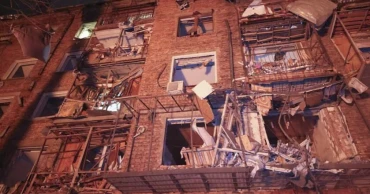
Russia launches fresh drone strikes on Ukraine after promising retaliation for Belgorod attack
Russia launched a fresh drone assault on Ukraine on Saturday night, after promising that strikes on the Russian border city of Belgorod earlier in the day “would not go unpunished”.
The Ukrainian Air Force said Sunday that it had shot down 21 of 49 drones launched by Russian forces overnight.
Twenty-eight people were wounded in an attack on the eastern city of Kharkiv, regional Gov. Oleh Syniehubov said Sunday. A central hotel, apartment buildings, kindergarten, shops and administrative buildings sustained damage, according to the regional prosecutor’s office.
In the Kyiv region that surrounds the capital, a Russian drone attack caused a fire to break out at a critical infrastructure facility, local officials said. They did not identify the facility further.
Read: Russia launches the biggest aerial barrage of the war and kills 30 civilians, Ukraine says
The Russian attacks came after shelling in the center of the Russian border city of Belgorod Saturday killed 24 people, including three children.
A further 108 people were wounded in the strike, regional governor Vyacheslav Gladkov said Sunday, making it one of the deadliest attacks on Russian soil since the start of Moscow’s invasion of Ukraine 22 months ago.
Russian authorities accused Kyiv of carrying out the attack, which took place the day after an 18-hour Russian aerial bombardment across Ukraine killed at least 41 civilians.
Russia’s Defense Ministry said it identified the ammunition used in the strike as Czech-made Vampire rockets and Olkha missiles fitted with cluster-munition warheads. It provided no additional information, and The Associated Press was unable to verify its claims.
Read: Ukraine celebrates Christmas on Dec. 25 for the first time, distancing itself from Russia
“This crime will not go unpunished,” the ministry said in a statement on social media.
In an emergency meeting at the U.N. Security Council demanded by Russia Saturday night, envoy Vasily Nebenzya accused Kyiv of a “terrorist attack.” In comments carried by Russian state media, Nebenzya claimed Ukraine had launched “a deliberate act of terrorism directed against civilians.”
2 years ago


South Africa launches case at top UN court accusing Israel of genocide in Gaza
South Africa launched a case Friday at the United Nations' top court accusing Israel of genocide against Palestinians in Gaza and asking the court to order Israel to halt its attacks — the first such challenge made at the court over the current war. Israel swiftly rejected the filing “with disgust.”
South Africa's submission to the International Court of Justice alleges that “acts and omissions by Israel ... are genocidal in character" as they are committed with the intent “to destroy Palestinians in Gaza” as a part of the broader Palestinian national, racial and ethnic group.
South Africa has been a fierce critic of Israel’s military campaign in Gaza. Many there, including President Cyril Ramaphosa, have compared Israel’s policies regarding Palestinians in Gaza and the West Bank with South Africa’s past apartheid regime of racial segregation. Israel rejects such allegations.
Read: Chattogram seaport handles 3.1 mln TEUs in 2023
South Africa asked The Hague-based court to issue an interim order for Israel to immediately suspend its military operations in Gaza. A hearing into that request is likely in the coming days or weeks. The case, if it goes ahead, will take years, but an interim order could be issued within weeks.
The Israeli government rejected “with disgust” the genocide accusations, calling it a “blood libel.” A Foreign Ministry statement said South Africa's case lacks a legal foundation and constitutes a “despicable and contemptuous exploitation” of the court.
Israel also accused South Africa of cooperating with Hamas, the Palestinian militant group behind the deadly Oct. 7 attack in southern Israel that triggered the ongoing war.
The statement also said Israel operates according to international law and focuses its military actions solely against Hamas, adding that the residents of Gaza are not an enemy. It asserted that it takes steps to minimize harm to civilians and to allow humanitarian aid to enter the territory.
South Africa can bring the case under the Genocide Convention because both it and Israel are signatories to it.
Whether the case will succeed in halting the war remains to be seen. While the court's orders are legally binding, they are not always followed. In March 2022, the court ordered Russia to halt hostilities in Ukraine, a binding legal ruling that Moscow flouted as it pressed ahead with its attacks.
Read: Americans beg for help getting family out of Gaza. "I just want to see my mother again,' a son says
South Africa's foreign ministry said in a statement that the country is “gravely concerned with the plight of civilians caught in the present Israeli attacks on the Gaza Strip due to the indiscriminate use of force and forcible removal of inhabitants.”
The ministry added that there are “ongoing reports of international crimes, such as crimes against humanity and war crimes, being committed as well as reports that acts meeting the threshold of genocide or related crimes as defined in the 1948 Convention on the Prevention and Punishment of Genocide, have been and may still be committed in the context of the ongoing massacres in Gaza."
South Africa's president earlier accused Israel of war crimes and acts “tantamount to genocide." And South Africa last month pushed for the International Criminal Court, which also is based in The Hague, to investigate Israel's actions in Gaza.
The ICC prosecutes individuals for war crimes, crimes against humanity and genocide, while the International Court of Justice settles disputes between nations.
In the Israeli-occupied West Bank, the Palestinian Foreign Ministry welcomed South Africa's accusations against Israel. In a statement on social media, it urged the court to “immediately take action to protect Palestinian people and call on Israel, the occupying power, to halt its onslaught against the Palestinian people.”
Balkees Jarrah, associate international justice director at Human Rights Watch, said South Africa's case “provides an important opportunity for the International Court of Justice to scrutinize Israel’s actions in Gaza using the Genocide Convention of 1948." She said South Africa is looking to the United Nations’ highest judicial body "to provide clear, definitive answers on the question of whether Israel is committing genocide against the Palestinian people.”
Jarrah stressed that the ICJ case "is not a criminal case against individual alleged perpetrators, and it does not involve the International Criminal Court (ICC), a separate body. But the ICJ case should also propel greater international support for impartial justice at the ICC and other credible venues.”
2 years ago
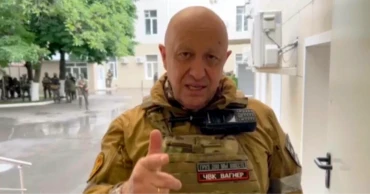
The year in review: Influential people who died in 2023
Yevgeny Prigozhin rose from being an ex-con and hot dog vendor to winning lucrative Kremlin contracts and heading a formidable mercenary army. But it all came to a sudden end when the private plane carrying him and others mysteriously exploded over Russia.
Prigozhin's Aug. 23 death put an exclamation point on what had already been an eventful year for the brutal mercenary leader. His Wagner Group troops brought Russia a rare victory in its grinding war in Ukraine, capturing the city of Bakhmut. But internal friction with Russian military leaders later burst into the open, with Prigozhin briefly mounting an armed rebellion — the most severe challenge yet to Russian President Vladimir Putin’s rule.
The rebellion was called off and a deal was struck in less than 24 hours. However, just two months later, Prigozhin joined the list of those who have run afoul of the Kremlin and died unexpectedly.
He was just one of a number of noteworthy people who died in 2023.
The world also said goodbye to former U.S. Secretary of State Henry Kissinger, who died Nov. 29. Serving under two presidents, Kissinger's shadow loomed large in the foreign policy arena, prompting both admiration and criticism from around the globe. And he continued his involvement in global affairs even in his final months.
Another political figure who died this year was former U.S. first lady Rosalynn Carter, who died Nov. 19. She was the closest adviser to her husband, former President Jimmy Carter, during his one term in the White House and then across four decades of global humanitarian work.
Others from the world of politics who died this year include: former Italian Premier Silvio Berlusconi; former U.S. senators Dianne Feinstein, James Buckley and James Abourezk; former British treasury chief Nigel Lawson; former Pakistani leader Pervez Musharraf; former U.S. Supreme Court Justice Sandra Day O’Connor; former Chinese Premier Li Keqiang; former Finnish President Martti Ahtisaari; former New Mexico governor and American ambassador to the United Nations Bill Richardson; former New Jersey Lt. Gov. Sheila Oliver; and former Greek Foreign Minister Theodoros Pangalos.
Among the entertainers who left the world this year was singer Tina Turner, who died May 24. Turner's powerful voice and stage presence brought her fame across multiple decades, first with her abusive husband, Ike Turner, in the 1960's and 70's. But after leaving their marriage, she found fame again in the 1980's with her hit “What’s Love Got to Do With It.”
Others in the world of arts and entertainment who died this year include: actors Suzanne Somers, Matthew Perry, Raquel Welch, Richard Belzer, Chaim Topol, Jacklyn Zeman, Lance Reddick, Alan Arkin, Paul Reubens, David McCallum, Richard Roundtree and Tom Sizemore; musicians Jimmy Buffett, Sinéad O’Connor, Rita Lee Jones, Burt Bacharach, David Crosby, Fito Olivares, Ryuichi Sakamoto, Astrud Gilberto, Coco Lee and Tony Bennett; civil rights activist and entertainer Harry Belafonte; TV producer Norman Lear; author Cormac McCarthy; filmmaker William Friedkin; TV hosts Bob Barker and Jerry Springer; poet Louise Glück; guitarist Jeff Beck; fashion designer Mary Quant; wrestler The Iron Sheik; composer Kaija Saariaho; and “Sesame Street” co-creator Lloyd Morrisett.
2 years ago