others
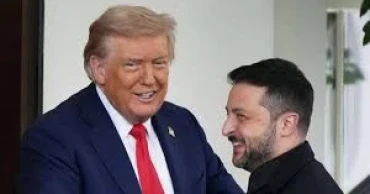
Zelenskyy says upcoming Trump talks to focus on security assurances and Ukraine’s rebuilding
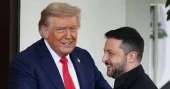
Ukrainian President Volodymyr Zelenskyy said on Friday that he is set to meet U.S. President Donald Trump in Florida this weekend to discuss key issues including security guarantees for Ukraine and postwar reconstruction.
Speaking to reporters, Zelenskyy said Sunday’s discussions will center on security arrangements and a proposed 20-point framework that he said is nearly complete. He added that the two sides would also consider an economic deal, though it remains uncertain whether any agreements will be finalized during the meeting.
Territorial matters will also be raised, Zelenskyy said. Russia has demanded that Ukraine give up the territory it still controls in the Donbas region, a condition Kyiv has firmly rejected. Moscow currently occupies most of Luhansk and roughly 70% of Donetsk.
Zelenskyy stressed that Ukraine wants European countries to be part of future talks, though he questioned whether their involvement could be arranged on short notice. He said a format including Ukraine, the United States, and Europe is essential in the near term.
The planned meeting comes as part of an intensified U.S.-led effort to bring an end to the nearly four-year war between Russia and Ukraine, negotiations that remain stalled due to deeply opposing positions from both sides.
Zelenskyy’s remarks followed comments he made Thursday about having a productive discussion with U.S. special envoy Steve Witkoff and Jared Kushner, Trump’s son-in-law.
Meanwhile, Kremlin spokesman Dmitry Peskov said Friday that Russian officials have already been in contact with U.S. representatives after Russian presidential envoy Kirill Dmitriev recently met American envoys in Florida. Peskov said both sides agreed to continue talks.
Trump has pushed for a negotiated end to the conflict that began on Feb. 24, 2022, but progress has been limited by incompatible demands from Moscow and Kyiv.
Earlier this week, Zelenskyy said Ukraine could consider withdrawing troops from parts of its eastern industrial region as part of a peace plan, provided Russia also pulls back and the area is placed under international monitoring as a demilitarized zone. However, Russia has not signaled any willingness to relinquish occupied territory, despite Moscow claiming gradual progress in negotiations.
Fighting continued on the ground Friday. Ukrainian officials said guided aerial bombs and missile strikes killed several people and wounded others in Kharkiv, Zaporizhzhia, and Uman. Drone attacks damaged power, energy, and port facilities in Mykolaiv and Odesa, leaving parts of Mykolaiv without electricity.
Ukraine also reported that it struck a major Russian oil refinery in the Rostov region on Thursday using British-supplied Storm Shadow missiles. Ukraine’s General Staff said the Novoshakhtinsk refinery was hit, causing multiple explosions. Russian officials confirmed a firefighter was injured while battling the resulting blaze.
Kyiv says such long-range strikes are intended to weaken Russia’s oil revenue, which funds its war effort. Russia, meanwhile, continues attacks on Ukraine’s energy infrastructure, a strategy Ukrainian officials say is aimed at depriving civilians of basic services during winter.
2 months ago
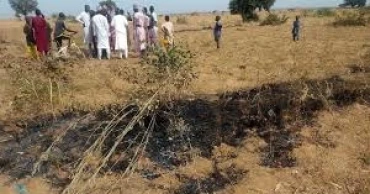
US carries out airstrikes on Islamic State fighters in Nigeria following attacks on Christians
Former President Donald Trump said the United States carried out what he described as a “strong and lethal” military strike against Islamic State-linked militants in Nigeria, following weeks of criticism that Nigerian authorities were not doing enough to stop attacks on Christians.
In a post shared on his social media platform on Christmas night, Trump offered few details and did not specify the level of destruction caused by the strikes, which reportedly took place in Nigeria’s northwestern Sokoto state.
A U.S. Defense Department official, speaking anonymously because the information had not been formally released, said the operation was conducted in coordination with Nigeria and had the approval of the government in Abuja.
Nigeria’s Foreign Ministry confirmed the joint effort, saying it involved intelligence sharing and strategic cooperation carried out in line with international law, respect for national sovereignty, and shared security goals. The Associated Press was unable to independently verify the results of the strikes.
Multiple militant threats in Nigeria
Nigeria continues to face violence from several armed groups, including two with links to the Islamic State. These include the Islamic State West Africa Province, which split from Boko Haram and operates mainly in the northeast, and the lesser-known Lakurawa group, which is active in the northwest and uses forested areas as bases.
Security experts believe the U.S. operation may have targeted Lakurawa, a group that has grown increasingly dangerous over the past year by attacking isolated communities and security personnel.
Malik Samuel, a Nigerian security analyst with Good Governance Africa, said Lakurawa has taken control of territory in Sokoto and neighboring states such as Kebbi. He added that extremist groups have expanded in the northwest partly due to the weak presence of government authorities and security forces.
Impact of violence
Trump said the strikes were aimed at IS militants responsible for killing “primarily innocent Christians.” However, residents and analysts note that Nigeria’s insecurity affects people of all faiths, with Christians concentrated mainly in the south and Muslims forming the majority in the north.
Nigeria’s Foreign Ministry emphasized that terrorism, regardless of whether it targets Christians, Muslims, or others, contradicts the country’s values and threatens global peace. Nigerian officials have repeatedly stated that extremist violence has harmed citizens across religious lines.
US pressure on Nigeria
Last month, Trump directed the Pentagon to prepare for possible military action in Nigeria, citing concerns over the persecution of Christians. The U.S. State Department has also announced visa restrictions on Nigerians implicated in attacks on Christians and recently classified Nigeria as a “country of particular concern” under the International Religious Freedom Act.
Trump claimed that U.S. forces carried out “flawless strikes” and vowed that the United States would not allow extremist groups to thrive.
Nigeria, home to about 220 million people, is nearly evenly divided between Christians and Muslims. The country has long struggled with insecurity driven by extremist insurgencies, communal disputes, farmer-herder clashes, ethnic tensions, and separatist movements. Boko Haram, which seeks to impose a strict form of Islamic law, has also targeted Muslims it considers insufficiently devout.
While the U.S. military presence in Africa has declined in recent years, Trump has continued to press Nigerian authorities amid ongoing attacks on schools and churches that observers say affect both Christian and Muslim communities.
U.S. Defense Secretary Pete Hegseth wrote on X late Thursday that the president had made it clear the killing of innocent Christians must stop, adding that U.S. forces were prepared to act. He praised cooperation from the Nigerian government and ended his message with a Christmas greeting.
2 months ago
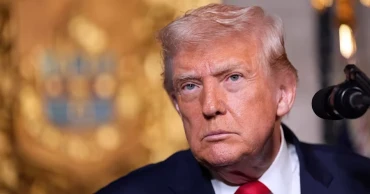
Trump says US airstrikes hit IS targets in Nigeria after attacks on Christians
US President Donald Trump said the United States carried out airstrikes against Islamic State targets in Nigeria, citing attacks by the militant group that he said had mainly targeted Christians.
In a Christmas night post on social media, Trump described the operation as a powerful strike but did not give details about the damage or casualties. A US defense official said the strikes were conducted in coordination with Nigeria and had the approval of the Nigerian government.
Nigeria’s Ministry of Foreign Affairs said the cooperation involved intelligence sharing and strategic coordination in line with international law and respect for Nigeria’s sovereignty.
Trump said the strikes targeted Islamic State militants who had been killing innocent civilians. Nigerian officials and analysts, however, have said extremist violence in the country affects both Christians and Muslims.
Nigeria is battling several armed groups, including factions linked to Islamic State. Security experts said the strikes may have targeted the Lakurawa group, which has expanded its presence in northwestern states such as Sokoto and has carried out deadly attacks on communities and security forces.
Trump has repeatedly criticized Nigeria over what he described as the persecution of Christians. Last month, he directed the Pentagon to prepare options for military action in the country. The US has also restricted visas for Nigerians linked to killings of Christians and recently designated Nigeria a country of particular concern under its religious freedom law.
Nigeria, Africa’s most populous nation, has faced years of violence driven by extremist attacks, local conflicts, and criminal gangs. The government has said people of different faiths have been victims of such violence.
US Defense Secretary Pete Hegseth said American forces were ready to act and praised cooperation from the Nigerian government, adding that the United States would not allow extremist groups to thrive.
2 months ago
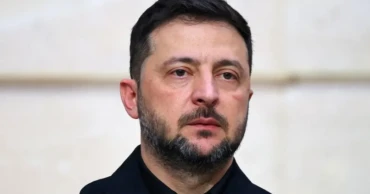
Zelenskyy says Trump meeting soon
Ukrainian President Volodymyr Zelenskyy said a meeting with US President Donald Trump will take place in the near future, pointing to progress in talks aimed at ending the almost four-year war with Russia.
Writing on X on Friday, Zelenskyy said both sides had agreed on a high-level meeting and stressed that Kyiv was not wasting time. He added that many important decisions could be taken before the New Year.
The Ukrainian leader made the remarks a day after saying he had a good conversation with US special envoy Steve Witkoff and Trump’s son-in-law Jared Kushner, as Washington steps up diplomatic efforts to push for an end to the war.
Trump has been pursuing a diplomatic track, but the talks face major differences between Moscow and Kyiv. Zelenskyy has said Ukraine could consider withdrawing troops from parts of its eastern industrial region as part of a peace plan, if Russia also pulls back and the area becomes a demilitarized zone under international monitoring.
Russia, however, has not shown willingness to withdraw from the territories it has occupied. Moscow has instead demanded that Ukraine give up the remaining areas it controls in the Donbas region, a condition Kyiv has rejected. Russia currently holds most of Luhansk and about 70 percent of Donetsk.
Fighting continued on the ground. One person was killed and three others injured when a guided aerial bomb hit a house in Ukraine’s Zaporizhzhia region, local officials said. Overnight Russian drone attacks left parts of the southern city of Mykolaiv without electricity, while energy and port facilities were damaged in the Black Sea city of Odesa.
Ukraine also said it struck a major Russian oil refinery on Thursday using British-supplied Storm Shadow missiles. The Ukrainian military said the Novoshakhtinsk refinery in Russia’s Rostov region was hit, with multiple explosions reported. A firefighter was wounded while putting out the blaze, according to regional authorities.
Kyiv says its long-range strikes on Russian refineries are aimed at cutting Moscow’s oil export revenue, while Russia continues attacks on Ukraine’s power system, which Ukrainian officials say are intended to deprive civilians of heat, light and water during winter.
2 months ago
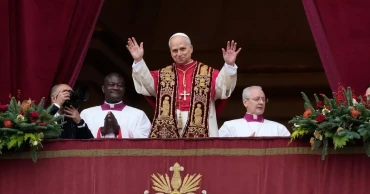
New Pope’s Christmas message highlights Gaza, Yemen, and migrant struggles
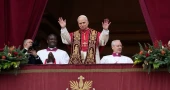
Pope Leo XIV during his first Christmas Day message on Thursday urged the faithful to shed indifference in the face of those who have lost everything, such as in Gaza, those who are impoverished, such as in Yemen, and the many migrants who cross the Mediterranean Sea and the American continent for a better future.
The first U.S. pontiff addressed some 26,000 people from the loggia overlooking St. Peter's Square for the traditional papal “Urbi et Orbi'' address, Latin for “To the City and to the World,'' which serves as a summary of the woes facing the world.
While the crowd gathered under a steady downpour during the papal Mass inside St. Peter's Basilica, the rain had subsided by the time Leo took a brief tour of the square in the popemobile, then spoke to the crowd from the loggia.
Leo revived the tradition of offering Christmas greetings in multiple languages abandoned by his predecessor, Pope Francis. He received especially warm cheers when he made his greetings in his native English and Spanish, the language of his adopted country of Peru where he served first as a missionary and then as archbishop.
Someone in the crowd shouted out “Viva il papa!'' or ”Long live the pope!'' before he retreated into the basilica. Leo took off his glasses for a final wave.
Leo surveys the world's distress
During the traditional address, the pope emphasized that everyone could contribute to peace by acting with humility and responsibility.
“If he would truly enter into the suffering of others and stand in solidarity with the weak and the oppressed, then the world would change,'' the pope said.
Leo called for “justice, peace and stability” in Lebanon, the Palestinian territories, Israel and Syria, prayers for “the tormented people of Ukraine,'' and “peace and consolation” for victims of wars, injustice, political instability, religious persecution and terrorism, citing Sudan, South Sudan, Mali, Burkina Faso and Congo.
The pope also urged dialogue to address “numerous challenges” in Latin America, reconciliation in Myanmar, the restoration of “the ancient friendship between Thailand and Cambodia,'' and assistance for the suffering of those hit by natural disasters in South Asia and Oceania.
“In becoming man, Jesus took upon himself our fragility, identifying with each one of us: with those who have nothing left and have lost everything, like the inhabitants of Gaza; with those who are prey to hunger and poverty, like the Yemeni people; with those who are fleeing their homeland to seek a future elsewhere, like the many refugees and migrants who cross the Mediterranean or traverse the American continent,'' the pontiff said.
He also remembered those who have lost their jobs or are seeking work, especially young people, underpaid workers and those in prison.
Peace through dialogue
Earlier, Leo led the Christmas Day Mass from the central altar beneath the balustrade of St. Peter’s Basilica, adorned with floral garlands and clusters of red poinsettias. White flowers were set at the feet of a statue of Mary, mother of Jesus, whose birth is celebrated on Christmas Day.
In his homily, Leo underlined that peace can emerge only through dialogue.
“There will be peace when our monologues are interrupted and, enriched by listening, we fall to our knees before the humanity of the other,” he said.
He remembered the people of Gaza, “exposed for weeks to rain, wind and cold” and the fragility of “defenseless populations, tried by so many wars,’’ and of “young people forced to take up arms, who on the front lines feel the senselessness of what is asked of them, and the falsehoods that fill the pompous speeches of those who send them to their deaths.’’
Thousands of people packed the basilica for the pope’s first Christmas Day Mass, holding aloft their smartphones to capture images of the opening procession.
This Christmas season marks the winding down of the Holy Year celebrations, which will close on Jan. 6, the Catholic Epiphany holiday marking the visit of the three wise men to the baby Jesus in Bethlehem.
2 months ago
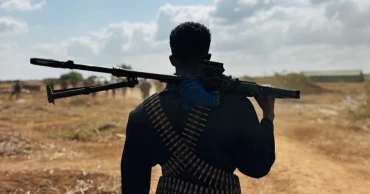
UN warns al-Shabab remains top threat
Al-Shabab continues to pose the most serious immediate threat to peace and stability in Somalia and neighboring countries, particularly Kenya, according to a report released Wednesday by United Nations experts.
The panel said that despite sustained pressure from Somali forces and their international partners, the al-Qaida-linked group retains the capability to carry out complex and asymmetric attacks across Somalia. Its operational strength, they noted, has not been significantly reduced.
Beyond its ability to strike high-profile targets, including an attempted assassination of Somalia’s president in Mogadishu on March 18, the group also relies on widespread extortion, forced recruitment and a highly effective propaganda network to maintain influence.
On Tuesday, the UN Security Council unanimously extended the mandate of the African Union’s support and stabilization mission in Somalia through Dec. 31, 2026. The force comprises 11,826 uniformed personnel, including 680 police officers.
The experts warned that al-Shabab also presents a major security risk to Kenya, carrying out attacks ranging from improvised explosive device strikes on security forces to kidnappings, raids on homes, assaults on infrastructure and cattle theft.
According to the report, the group carried out an average of about six attacks per month in Kenya this year, mainly in Mandera and Lamu counties along the border with Somalia.
The panel said al-Shabab remains committed to overthrowing Somalia’s government, expelling foreign forces and creating a so-called Greater Somalia that would unite ethnic Somalis across East Africa under strict Islamic rule.
The experts also examined the presence of the Islamic State in Somalia, noting that ISIL-Somalia has recruited fighters from various parts of the world, mostly from East Africa. By the end of 2024, the group was estimated to have more than 1,000 fighters, at least 60% of them foreigners.
While smaller and less well-funded than al-Shabab, the panel said the Islamic State’s expansion still represents a serious threat to security in Somalia and the wider region.
2 months ago
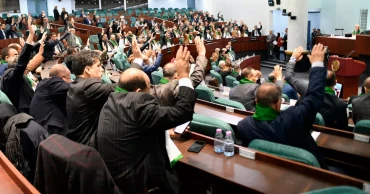
Algeria brands French colonization a crime
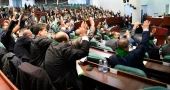
Algeria’s parliament has passed a law declaring France’s 130-year rule over the North African nation a crime, while formally demanding restitution for land, archives and other property taken during the colonial era.
In a late-night vote on Wednesday, 340 of the 407 members of the National Assembly backed the bill, which seeks to address what lawmakers described as long-standing historical injustices. The move comes weeks after several African states jointly called for recognition and reparations for colonial-era abuses.
The law defines the colonial period from the 1830 landing of French forces near Algiers to July 5, 1962, when Algeria gained independence. It calls for the return of Algerian archives and property transferred to France, the handover of detailed maps of French nuclear tests carried out in Algeria between 1960 and 1966, and the repatriation of the remains of Algerian resistance fighters taken to France.
It also introduces penalties, including prison terms, for actions or remarks within Algeria that praise French colonialism or insult symbols of the country’s anti-colonial resistance.
France reacted sharply, calling the legislation a hostile act that could undermine efforts to improve ties. In a statement to The Associated Press, the French Foreign Ministry said Paris would continue dialogue with Algeria, particularly on security and migration, while pointing to steps taken under President Emmanuel Macron to confront aspects of the colonial past.
Macron has previously described parts of France’s history in Algeria as crimes against humanity but has stopped short of issuing a formal state apology. French officials have indicated the restitution demands outlined in the law are unlikely to be met.
The parliamentary session approving the bill was highly symbolic. Large Algerian flags decorated the chamber as Speaker Mohamed Boughali described the vote as a historic moment, calling the law a clear political and moral statement. Lawmakers broke into chants from the national anthem and slogans hailing Algeria as the decision was announced.
Supporters of the bill say it marks the culmination of years of advocacy. Former lawmaker Mohamed Arezki Ferrad, who first proposed the legislation, said the vote honored the memory of those who fought against colonial rule.
The law, comprising five chapters and 27 articles, states that crimes committed during the colonial period are not subject to any statute of limitations.
2 months ago
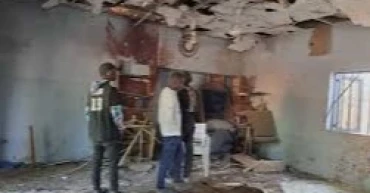
Five killed, over 30 wounded in suspected suicide blast at Nigeria mosque
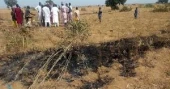
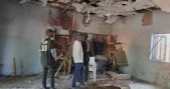
At least five people were killed and more than 30 others injured when an explosion ripped through a mosque during prayers in Maiduguri, a city in northeastern Nigeria, on Wednesday night, police said, indicating it was likely a suicide bombing.
Police reported that 35 worshippers sustained injuries in the blast.
Nahum Daso, spokesman for the Borno State police command, said debris believed to be from a suicide vest was recovered from the scene.
The attack adds to a long string of violence in Nigeria’s restive north, where security forces are fighting several armed groups, including Boko Haram and its offshoot, the Islamic State West Africa Province.
According to the United Nations, the insurgency that began in 2009 has claimed thousands of lives and forced millions of people to flee their homes.
Although no group has claimed responsibility for the latest attack, suicide bombings have long been associated with Boko Haram, which has carried out numerous similar assaults in the region.
Security analysts note that while the group’s use of suicide bombers has declined in recent years, it remains capable of carrying out such operations. In July 2024, coordinated suicide attacks at a wedding in Borno renewed concerns about a possible resurgence of the tactic.
2 months ago
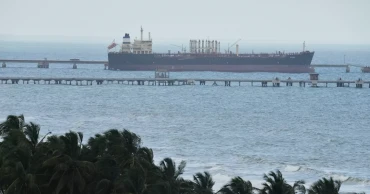
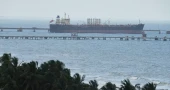
Venezuela criminalizes tanker seizures amid U.S. pressure
Venezuela’s parliament on Tuesday approved a measure that criminalizes a wide range of activities that disrupt navigation and commerce, including the seizure of oil tankers, in a move seen as a response to U.S. actions against the country.
The bill, debated and approved within two days in the National Assembly, follows this month’s U.S. seizures of two tankers carrying Venezuelan oil in international waters, part of President Donald Trump’s four-month campaign to pressure Venezuelan leader Nicolás Maduro. The U.S. has said the vessels are part of a fleet used by Venezuela to bypass economic sanctions.
Although the National Assembly, controlled by Maduro’s party, did not immediately publish the full text, the measure provides fines and prison sentences of up to 20 years for anyone who “promotes, requests, supports, finances or participates in acts of piracy, blockades or other international illegal acts” against commercial entities doing business with Venezuela.
The bill, awaiting Maduro’s signature, also directs the executive branch to develop “incentives and mechanisms for economic, commercial and other protections” for national or foreign entities affected by piracy, maritime blockades, or other unlawful acts.
Venezuela’s political opposition, including Nobel Peace laureate María Corina Machado, has expressed support for U.S. measures, saying Maduro’s days in power are numbered.
Earlier this month, the U.S. Coast Guard seized a Panama-flagged tanker, Centuries, and, with Navy support, another vessel, Skipper, alleging they were transporting sanctioned Venezuelan oil. Following the first seizure, Trump announced a “blockade” of Venezuela and demanded the return of assets previously seized from U.S. oil companies.
At a U.N. Security Council meeting called by Venezuela, U.S. Ambassador Mike Waltz described sanctioned tankers as Maduro’s primary economic lifeline, funding “narco-terrorist activities” and the Cartel de los Soles. Maduro was indicted in 2020 in the U.S. on narcoterrorism charges linked to the cartel, a network of high-ranking Venezuelan officials involved in drug and fuel trafficking.
Venezuela’s U.N. Ambassador Samuel Moncada accused the U.S. of acting outside international and domestic law, calling the seizures a “military act” aimed at crippling the country’s economy and social cohesion.
The move has raised concerns globally over potential violations of international maritime law, with most U.N. member states stressing the importance of respecting sovereignty and territorial integrity, though a few countries, including Panama and Argentina, have supported U.S. actions.
2 months ago
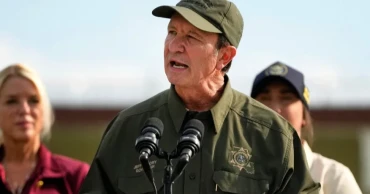
Trump envoy says US not seeking to take over Greenland
President Donald Trump’s newly appointed envoy to Greenland said Tuesday the U.S. is seeking dialogue with residents of the semi-autonomous Danish territory, and is not aiming to seize or control the strategically important Arctic island.
Louisiana Governor Jeff Landry, speaking publicly for the first time since his appointment, stressed that the administration will not “go in there trying to conquer anybody” or take over another country.
Landry’s remarks appeared to contrast with Trump’s repeated statements advocating U.S. control over Greenland for security reasons, including the possibility of military involvement to secure the mineral-rich island.
“We should be talking to the Greenlanders directly,” Landry said on Fox News’ “The Will Cain Show.” “What are they looking for? What opportunities have they not received? Why haven’t they gotten the protection they deserve?”
Trump’s appointment of Landry has again raised concerns in Denmark and across Europe. Danish officials said they would summon the U.S. ambassador to discuss the issue.
“National borders and the sovereignty of states are rooted in international law,” Danish Prime Minister Mette Frederiksen and Greenlandic Premier Jens-Frederik Nielsen said in a joint statement Monday. “You cannot annex another country, even under the guise of international security.”
Trump had previously called for U.S. jurisdiction over Greenland during his presidential transition and early second term. Vice President JD Vance visited a U.S. military base on the island in March, criticizing Denmark for under-investment.
The issue resurfaced in August after Danish officials reported covert influence operations in Greenland linked to Trump associates. Danish authorities said the U.S. administration gave no advance notice of Landry’s appointment, and Congress has yet to receive details.
Sen. Jeanne Shaheen, top Democrat on the Senate Foreign Relations Committee, criticized the timing of the move. “Greenland’s sovereignty is not up for debate,” she said. “Denmark is a critical NATO ally that has stood side by side with the U.S.”
2 months ago