others
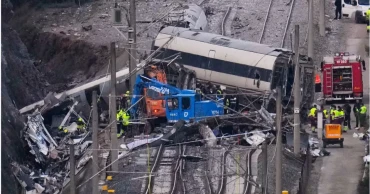
Another train crash in Spain leaves one dead
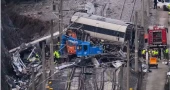
Commuter rail service in Spain's northeastern Catalonia region was suspended Wednesday after a Barcelona commuter train crashed the night before, Spanish authorities said.
At least one person died in the Barcelona-area crash, and 37 others were injured as crews worked at night to complete the rescue effort. The train hit a retaining wall that fell onto the tracks, authorities said.
The news late Tuesday of another train crash mere days after Spain’s worst railway disaster since 2013 left many Spaniards in disbelief. Emergency workers were still searching for victims in the wreckage from Sunday’s high-speed crash in southern Spain that killed at least 42 people and injured dozens some 800 kilometers (497 miles) away.
Three days of national mourning were underway, while the cause of that crash was being investigated.
The victim of Tuesday night’s crash was a conductor in training, regional authorities said. Most of the injured had ridden in the first train car.
The disruptions Wednesday morning caused significant traffic jams on roads leading into Barcelona. Regional authorities in Catalonia asked people to reduce unnecessary travel and companies to allow remote work while the disruptions continued.
Spanish Prime Minister Pedro Sánchez offered condolences to those affected in the Barcelona crash, writing on X: “All my affection and solidarity with the victims and their families.”
While Spain’s high-speed rail network generally runs smoothly, and at least until Sunday had been a source of confidence, commuter rail services are plagued by reliability issues. However, accidents causing injury or death are not common.
The commuter train crashed near the town of Gelida, located about 37 kilometers (23 miles) outside Barcelona.
Spain’s railway operator ADIF said the containment wall likely collapsed due to heavy rainfall that swept across the northeastern Spanish region this week.
Sunday's derailment in southern Spain
Sunday evening's crash happened when the tail end of a train carrying 289 passengers on the route from Malaga to the capital, Madrid, derailed and crashed into an incoming train traveling from Madrid to Huelva, another southern city, according to rail operator Adif. The collision took place near Adamuz, a town about 370 kilometers (roughly 230 miles) from the Spanish capital, Madrid.
The front of the second train, which was carrying 184 people, took the brunt of the impact, which knocked its first two carriages off the track and down a 4-meter (13-foot) slope. Some bodies were found hundreds of meters (feet) from the crash site, according to Andalusia regional President Juanma Moreno.
Authorities were still searching for more bodies Wednesday. Health authorities said 37 people remained in hospitals Wednesday morning, while 86 people were treated and discharged.
Among the injured was Santiago Tavares, a Portuguese traveler who broke his leg in the rail accident.
“Minutes before the train crash I had a feeling that an accident would happen because the carriage was moving a lot,” Tavares told Portuguese broadcaster TVI. “I even mentioned to my girlfriend that the carriage was moving more than normal. Ten minutes later the accident happens, I started to fly ... Then, I woke up and I realized I was alive.”
‘All hypotheses are open’
Officials are continuing to investigate what caused both train accidents. Transport Minister Oscar Puente called Sunday's collision “truly strange” since it occurred on a straight line and neither train was speeding.
Puente said officials had found a broken section of track that could possibly be related to the accident’s origin, while insisting that is just a hypothesis and that it could take weeks to reach any conclusions.
In August, the Spanish Union of Railway Drivers sent a letter asking Spain’s national railway operator to investigate flaws on train lines across the country and to reduce speeds at certain points until the tracks were fully repaired. Those recommendations were made for high-speed train lines, including the one where Sunday’s accident took place, the union told The Associated Press.
The train that jumped the track belonged to the private company Iryo, while the second train belonged to Spain’s public train company, Renfe.
Iryo said in a statement Monday that its train was manufactured in 2022 and had passed a safety check on Jan. 15.
Puente and Renfe president Álvaro Fernández said that both trains were traveling well under the speed limit of 250 kph (155 mph) and “human error could be ruled out.”
The accident shook a nation that leads Europe in high-speed train mileage and takes pride in a network that is considered at the cutting edge of rail transport.
4 months ago

Pro-Greenland protesters mock Trump's MAGA slogan with 'Make America Go Away' caps
Red baseball caps spoofing Donald Trump’s iconic MAGS hats have become a symbol of Danish and Greenlandic defiance against the U.S. president's threat to seize the frozen territory.
The caps reading “Make America Go Away” — parodying Trump’s “Make America Great Again” slogan — have gained popularity along with several variants on social media and at public protests, including a weekend demonstration held in freezing weather in the Danish capital.
European governments are rallying behind Denmark, citing the need to defend Arctic regions and warning that threats against Greenland undermine Western security.
Protesters, however, are less diplomatic.
“I want to show my support to Greenland and also show that I don’t like the president of the United States,” said 76-year-old Copenhagen resident Lars Hermansen, who wore one of the red caps at a protest Saturday.
The mock hats were created by Copenhagen vintage clothing store owner Jesper Rabe Tonnesen. Early batches flopped last year — until the Trump administration recently escalated its rhetoric over Greenland. Now there are popping up everywhere.
“When a delegation from America went up to Greenland, we started to realize this probably wasn’t a joke — it’s not reality TV, it’s actually reality,” said Tonnesen, 58. “So I said, OK, what can I do?” Can I communicate in a funny way with a good message and unite the Danes to show that Danish people support the people of Greenland?”
Read More: Trump vows to impose Greenland tariffs as EU warns against threats
Demand suddenly surged from a trickle to selling out in the space of one weekend. Tonnesen said he has now ordered “several thousand.”
The original version designed by Tonnesen featured a play on words: “Nu det NUUK!” — a twist on the Danish phrase “Nu det nok,” meaning “Now it’s enough,” substituting Nuuk, Greenland’s tiny capital.
Protesters at Saturday’s rally waved red-and-white Danish and Greenlandic flags and carried handmade signs mocking U.S. claims over the territory, which is slightly larger than Saudi Arabia.
“No Means No,” read one sign. Another declared, “Make America Smart Again.”
Wearing one of the spoof hats, protester Kristian Boye, 49, said the gathering in front of Copenhagen City Hall struck a lighthearted tone while delivering a serious message.
“I’m here to support the Greenlanders, who are going through a very hard time right now,” he said. “They are being threatened with having their country invaded. I think it’s totally unacceptable.”
4 months ago
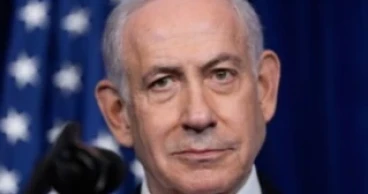
Netanyahu confirms Israel’s participation in Trump’s proposed Board of Peace
Israeli Prime Minister Benjamin Netanyahu said Wednesday he has agreed to join US President Donald Trump’s newly formed Board of Peace, reversing earlier concerns raised by his office over the composition of the board’s executive committee, which includes regional rival Turkey.
In a statement, Netanyahu’s office confirmed he had accepted Trump’s invitation.
Initially conceived as a small group of leaders to oversee a Gaza ceasefire framework, the Board of Peace has since expanded significantly. The Trump administration has broadened its scope, inviting dozens of countries and suggesting the body could play a role in mediating global conflicts, resembling an informal UN Security Council.
Further details are expected Thursday, when Trump is scheduled to make an announcement about the initiative at the World Economic Forum in Davos, Switzerland.
Although the board’s charter has not been officially released, a draft obtained by The Associated Press suggests substantial authority would rest with Trump. According to the draft, a $1 billion contribution would guarantee permanent membership.
Read More: Israel hits multiple targets in Lebanon ahead of key Hezbollah disarmament talks
At least eight countries- Israel, the United Arab Emirates, Morocco, Vietnam, Kazakhstan, Hungary, Argentina and Belarus have agreed to participate. Invitations have also been sent to leaders in Paraguay, Canada, Egypt and Turkey, while Russia, India, Slovenia, Thailand and the European Union’s executive arm have confirmed receiving invitations.
The Kremlin said it is reviewing the proposal. Trump has confirmed that Russian President Vladimir Putin was invited.
The executive board includes senior US officials and international figures, while a separate Gaza Executive Board will oversee implementation of the ceasefire’s second phase, including security deployment, Hamas disarmament and reconstruction efforts.
4 months ago
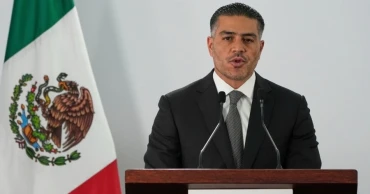
Mexico transfers 37 cartel suspects to the US amid pressure from Trump administration
Mexico has transferred another 37 alleged members of drug cartels to the United States, the country’s security minister said on Tuesday, amid rising pressure from the administration of U.S. President Donald Trump to curb cross-border drug trafficking.
Mexican Security Minister Omar García Harfuch said in a post on X that those handed over were “high impact criminals” who “represented a real threat to the country’s security.”
The latest move marks the third such transfer in less than a year. García Harfuch said Mexico has now sent a total of 92 detainees to the United States as it seeks to respond to mounting threats from Washington.
Footage released by Mexican authorities showed handcuffed prisoners guarded by heavily armed, masked officers as they were boarded onto a military aircraft at an airport near Mexico City.
“As the pressure increases, as demands from the White House dial up, (Mexico’s government) needs to resort to extraordinary measures, such as these transfers,” said David Mora, a Mexico analyst at the International Crisis Group.
Read More: Mexico plans to build Latin America’s most powerful supercomputer
The U.S. State Department and Justice Department did not immediately comment.
Those transferred include figures from the Sinaloa Cartel, Beltrán-Leyva cartel, Jalisco New Generation Cartel, the Northeast Cartel and a Zetas splinter group based in Tamaulipas. Mexican officials said all face pending U.S. cases.
Among them was María Del Rosario Navarro Sánchez, the first Mexican charged in the U.S. with supporting a terrorist organization.
Trump has floated military action against cartels and recently said, “We’ve knocked out 97% of the drugs coming in by water and we are going to start now hitting land.”
4 months ago
US forces seize seventh Venezuela-linked oil tanker amid Trump oil crackdown
U.S. military forces on Tuesday boarded and took control of a seventh oil tanker linked to Venezuela as part of the Trump administration’s drive to assert control over the South American country’s oil sector.
U.S. Southern Command said in a social media post that American forces apprehended the Motor Vessel Sagitta without incident, saying the tanker was operating in defiance of President Donald Trump’s declared quarantine on sanctioned vessels in the Caribbean.
The command did not specify whether the U.S. Coast Guard carried out the operation, as in previous seizures. The Pentagon and Southern Command said they had no additional details.
The Sagitta, a Liberian-flagged tanker, is registered to a Hong Kong-based company. The vessel last transmitted its location more than two months ago after leaving the Baltic Sea in northern Europe. It was sanctioned by the U.S. Treasury Department under an executive order tied to Russia’s 2022 invasion of Ukraine.
Southern Command said the tanker had taken oil from Venezuela, adding that the seizure “demonstrates our resolve to ensure that the only oil leaving Venezuela will be oil that is coordinated properly and lawfully.”
The command released aerial footage showing the Sagitta at sea, though unlike earlier operations the video did not show U.S. helicopters approaching or troops boarding the vessel.
Since the U.S.-led ouster of Venezuelan President Nicolás Maduro in a surprise overnight raid on Jan 3, the Trump administration has moved to take control of Venezuela’s oil production, refining and global distribution. Administration officials have said seizing tankers is part of an effort to generate revenue to rebuild the country’s battered oil industry and revive its economy.
Trump met oil industry executives nearly two weeks ago to discuss plans to invest $100 billion in Venezuela’s energy sector and said the United States expects to sell between 30 million and 50 million barrels of Venezuelan oil.
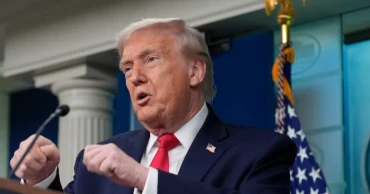
Speaking at the White House on Tuesday, Trump said the U.S. has already taken 50 million barrels of oil out of Venezuela. “We’ve got millions of barrels of oil left,” he said. “We’re selling it on the open market. We’re bringing down oil prices incredibly.”
The first tanker was seized off Venezuela’s coast on Dec 10. Most of the others were captured in nearby waters, except for the Bella 1, which was intercepted in the North Atlantic after abruptly turning back toward Europe on Dec 15 and was seized on Jan 7.
4 months ago
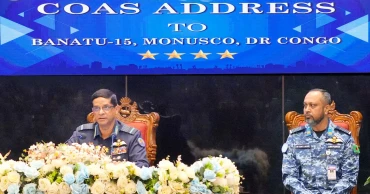
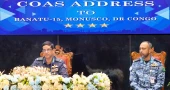
BAF Chief briefs contingent for UN Peacekeeping mission in Congo
Bangladesh Air Force (BAF) is on the verge of replacing its BANATU-14, MONUSCO, DR Congo contingent.
Chief of Air Staff Air Chief Marshal Hasan Mahmood Khan addressed the contingent members of BANATU-15 at Air Headquarters on Tuesday.
While addressing, Chief of Air Staff advised peacekeepers to discharge their duties with discipline, honesty, professionalism and sincerity to bring good reputation for Bangladesh Air Force as well as for the country.
Read More: Islamic State-linked rebels kill 17 in eastern Congo
Thereafter, the chief of Air Staff participated in a special munajat arranged for the success of the contingent. Amongst others Principal Staff Officers, Air Officer Commanding of Dhaka area, senior BAF officers of Air Headquarters and Bases were present on the occasion, says an ISPR media release.
Mentionable that, BAF deployed 01 x C-130B aircraft and necessary ground support equipment in the said mission area. The BANATU-15 contingent will be led by Group Captain Mohammad Salim Javed. A total of 35 members of BANATU-15 contingent will depart from Hazrat Shahjalal International Airport, Dhaka to the Democratic Republic of Congo on January 25. Rest 27 contingent members will depart to the Democratic Republic of Congo on February 2.
4 months ago
Greenland, tariffs and Trump dominate Davos talks
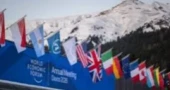
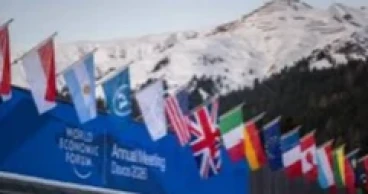
The World Economic Forum’s annual gathering once again brings global business leaders, academics, philanthropists and journalists to the Swiss mountain resort of Davos for discussions, negotiations and policy debates.
Launched in 1971 by the Geneva-based organization to strengthen European management practices, the forum has grown into a major global event. Starting Tuesday, around 3,000 participants from 130 countries—including about 850 chief executives and board chairs of leading multinational companies—are expected to attend the meeting, which runs through Friday.
U.S. President Donald Trump is making his third appearance at Davos during his presidency at a time when his policies are unsettling allies and markets alike. Concerns range from his stated interest in taking control of Greenland, to tensions in Latin America linked to his push to secure Venezuela’s oil, as well as domestic unease over his confrontational approach toward Federal Reserve Chair Jerome Powell.
Trump shares altered images of Greenland and Canada
Early Tuesday, Trump posted a series of digitally altered images on social media that drew sharp attention. One image showed him placing a U.S. flag beside a sign declaring “Greenland, U.S. Territory, Est. 2026.” Another depicted Trump in the Oval Office with a map portraying both Greenland and Canada draped in the American flag.
Trump publishes private message from Macron
Trump also shared a private text message from French President Emmanuel Macron, prompting a response from the French presidency. An official close to Macron said the message demonstrates that the French leader’s private views are consistent with his public positions.
In the message, Macron proposed holding a meeting of leaders from the Group of Seven industrialized nations in Paris following the Davos forum, with the possible inclusion of Denmark, Ukraine and Russia. French officials confirmed the message shared by Trump was authentic.
Regarding Greenland, the French presidency stressed that respect for national sovereignty and territorial integrity is “non-negotiable.” On Macron’s proposal to host a G7-related meeting in Paris, the official said France hopes it would serve as a constructive platform for dialogue and cooperation, without elaborating on the suggestion to invite Russia.
4 months ago
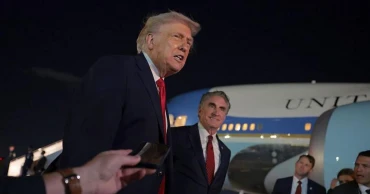
Trump criticises UK over Chagos Islands deal
US President Donald Trump has strongly criticised the United Kingdom’s plan to hand over sovereignty of the Chagos Islands to Mauritius, calling the move an act of great stupidity.
In a post on his social media platform Truth Social, Trump said the UK was wrong to give up control of Diego Garcia, home to a key US military base. He said the decision weakens security and sends the wrong message to rival powers such as China and Russia.
Under the deal, Britain plans to transfer sovereignty of the Chagos Islands to Mauritius while leasing back the Diego Garcia base for 99 years. British Prime Minister Sir Keir Starmer said the lease would cost the UK £101 million a year.
Trump said the agreement is one of the reasons he believes the United States should take control of Greenland for national security reasons. He accused the UK of giving away important land without any clear benefit.
The Trump administration had earlier supported the Chagos deal. In May last year, US Secretary of State Marco Rubio described it as a major achievement and welcomed the agreement.
European leaders have defended the UK’s decision, saying the deal helps secure the future of the military base and avoids long legal disputes over the islands’ ownership.
With inputs from BBC
4 months ago
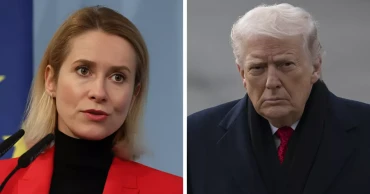
Trump vows to impose Greenland tariffs as EU warns against threats
US President Donald Trump has said he will “100 percent” go ahead with his threat to impose tariffs on European countries that oppose his demand for Washington to take control of Greenland, as the European Union vowed to defend its interests and sovereignty.
Speaking to NBC News, Trump confirmed he would press ahead with the tariff plan, including a 10 percent duty on all goods from Britain from February 1, rising to 25 percent from June 1, until a deal is reached for the United States to purchase Greenland from Denmark.
The US president said the same measures would apply to Denmark, Norway, Sweden, France, Germany, the Netherlands and Finland, all Nato allies.
“I will, 100 percent,” Trump said when asked if he would follow through on the tariff threat.
European leaders have rallied behind Greenland’s sovereignty, rejecting Trump’s claims. Danish Foreign Minister Lars Løkke Rasmussen said Europe must show Washington that tariffs and threats are “not the way forward.”
“You can’t threaten your way to ownership of Greenland. We have red lines that can’t be crossed,” Rasmussen said.
EU foreign policy chief Kaja Kallas said the bloc has “no interest to pick a fight, but we will hold our ground,” adding that “sovereignty is not for trade.”
The European Union is set to hold an emergency summit in Brussels on Thursday to discuss its response to Trump’s latest statements.
Trump also declined to rule out the use of force when asked whether he would seize Greenland, replying: “No comment.”
Denmark has warned that any US military action in Greenland would threaten the future of Nato, while several European allies have voiced firm support for Denmark and Greenland’s position.
With inputs from BBC
4 months ago
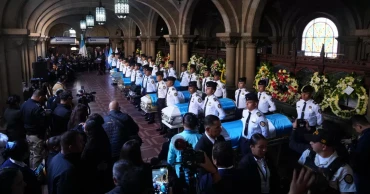
Guatemala declares emergency as police deaths rise to 9 in gang attacks
The death toll from coordinated attacks by suspected gang members on Guatemalan police rose to nine on Monday, prompting President Bernardo Arévalo to impose a 30-day state of emergency that curtails several civil rights and expands security powers.
National Civil Police Director David Custodio Boteo said a ninth officer died early Monday from injuries sustained in the attacks, while several others remain in critical condition. Some officers also suffered amputations.
The violence erupted over the weekend after inmates seized control of three prisons in apparently coordinated riots, taking 43 guards hostage. Authorities said the gangs were demanding privileges for their members and leaders. Shortly after police regained control of one prison on Sunday morning, suspected gang members launched a wave of attacks against police across the capital.
On Monday, police honored the fallen officers in a ceremony at the Interior Ministry, where flag-draped coffins were displayed. President Arévalo said the nation would not forget the sacrifice of the officers who died in the line of duty.
The government gazette published the emergency decree on Monday, citing “coordinated actions by self-named maras or gangs against state security forces, including armed attacks against civilian authorities.”
Under the emergency measures, authorities have limited freedom of movement and demonstrations. Police are also allowed to detain suspected gang members without a judicial order and may restrict or search vehicles in designated areas.
The unicameral Congress approved the state of emergency with minor changes on Monday night by a vote of 149 to 1, with 10 lawmakers absent or on approved leave. The decree, however, took effect on Sunday.
Traffic in Guatemala City was lighter than usual on Monday as residents stayed indoors amid heightened security. Schools were suspended nationwide as a precaution.
The US Embassy in Guatemala condemned the attacks on police and reaffirmed its support for Guatemala’s security forces. It had earlier instructed US government personnel to shelter in place on Sunday before later lifting the order and advising continued caution.
In October, Guatemala’s Congress amended the law to designate members of the Barrio 18 and Mara Salvatrucha gangs as terrorists, increasing prison sentences for gang-related crimes. The United States also designated the two groups as foreign terrorist organizations last year.
4 months ago