others
US proposes 15-year security guarantee for Ukraine as peace talks continue
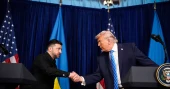
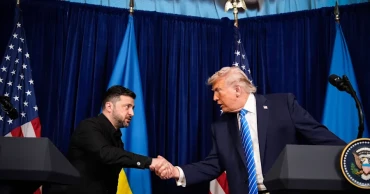
The United States has proposed security guarantees for Ukraine lasting 15 years as part of a draft peace plan, President Volodymyr Zelenskyy said on Monday, while stressing that a longer commitment would be needed to deter Russia from future aggression.
Zelenskyy said he would prefer US-backed guarantees for up to 50 years to prevent Moscow from attempting to seize Ukrainian territory again.
US President Donald Trump hosted Zelenskyy at his Florida resort on Sunday and said Ukraine and Russia were “closer than ever before” to reaching a peace agreement, though he cautioned that the negotiations could still fail.
Despite months of US-led talks, major sticking points remain unresolved, including the withdrawal of forces and the future of the Russian-occupied Zaporizhzhia nuclear power plant, one of the largest in the world.
“Without security guarantees, realistically, this war will not end,” Zelenskyy told reporters in voice messages sent in response to questions via WhatsApp.
Ukraine has been at war with Russia since 2014, when Moscow illegally annexed Crimea and Russia-backed separatists launched an armed uprising in the eastern Donbas region.
While details of the proposed guarantees have not been made public, Zelenskyy said they include mechanisms to monitor a peace deal and the “presence” of international partners. Russia, however, has repeatedly said it would not accept the deployment of NATO troops on Ukrainian territory.
Kremlin spokesman Dmitry Peskov said on Monday that President Vladimir Putin and Trump were expected to speak soon, though there was no indication that Putin would hold talks with Zelenskyy.
French President Emmanuel Macron said Ukraine’s allies would meet in Paris in early January to finalise each country’s concrete contributions to the security guarantees.
Zelenskyy said Trump had indicated a willingness to consider extending US guarantees beyond 15 years. Any such guarantees would require approval from the US Congress and parliaments in other participating countries overseeing a settlement, he added.
The Ukrainian president also said he wants the proposed 20-point peace plan to be approved through a national referendum. However, holding such a vote would require a ceasefire lasting at least 60 days, and Russia has shown no readiness to agree to a truce without a comprehensive settlement.
5 months ago
At least 13 killed as Interoceanic Train derails in southern Mexico
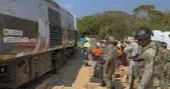
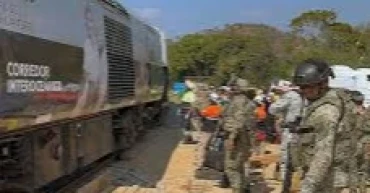
An Interoceanic Train accident in southern Mexico has left at least 13 people dead and dozens injured, disrupting rail services along a key route linking the Pacific Ocean and the Gulf of Mexico.
According to officials, the train derailed on Sunday while negotiating a curve near the town of Nizanda, as it was travelling between the states of Oaxaca and Veracruz.
Mexican President Claudia Sheinbaum said the Mexican Navy confirmed that 13 passengers were killed in the accident, while 98 others sustained injuries, five of them in critical condition. In a post on X, she said she had directed the navy secretary and the undersecretary for human rights at the Ministry of the Interior to visit the scene and provide direct support to the affected families.
Oaxaca Governor Salomon Jara said in a separate message that multiple government agencies were deployed to the site to assist the injured and manage the emergency response.
Officials noted that the train was carrying 241 passengers along with nine crew members at the time of the derailment.
The Interoceanic Train service was launched in 2023 during the presidency of Andres Manuel Lopez Obrador. It forms part of a wider initiative to revive rail transport in southern Mexico and strengthen infrastructure across the Isthmus of Tehuantepec, the narrow land bridge between the Pacific and Atlantic regions.
The Mexican government aims to develop the isthmus into a major international trade corridor by linking ports and railways connecting the Atlantic and Pacific Oceans. Currently, the Interoceanic Train operates between the Pacific port of Salina Cruz and Coatzacoalcos, covering roughly 180 miles (290 kilometres).
5 months ago
Winter rain floods Gaza camps; Netanyahu heads to US talks
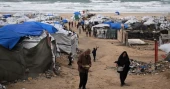
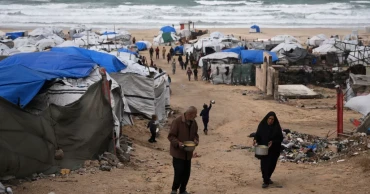
Winter rain lashed the Gaza Strip over the weekend, flooding camps with ankle-deep puddles as Palestinians displaced by two years of war attempted to stay dry in tents frayed by months of use.
Israeli Prime Minister Benjamin Netanyahu traveled for an expected meeting on Monday with U.S. President Donald Trump in Florida about the second phase of the ceasefire. The first phase that took effect on Oct. 10 was meant to bring a surge in humanitarian aid for Gaza, including shelter.
Netanyahu made no public statement as he departed.
Nowhere to escape the rain
In the southern city of Khan Younis, blankets were soaked and clay ovens meant for cooking were swamped. Children wearing flip-flops waded through puddles. Some people used shovels or tin cans to remove water from tents. Others clawed at the ground to pry collapsed shelters from the mud.
"We drowned last night,” said Majdoleen Tarabein, displaced from Rafah in southern Gaza. “Puddles formed, and there was a bad smell. The tent flew away. We don’t know what to do or where to go.” She and family members tried to wring muddy blankets dry by hand.
“When we woke up in the morning, we found that the water had entered the tent,” said Eman Abu Riziq, also displaced in Khan Younis. “These are the mattresses. They are all completely soaked.” She said her family is still reeling from her husband’s death less than two weeks ago.
“Where are the mediators? We don’t want food. We don’t want anything. We are exhausted. We just want mattresses and covers,” said Fatima Abu Omar as she tried to prop up a collapsing shelter.
At least 12 people, including a 2-week-old infant, have died since Dec. 13 from hypothermia or weather-related collapses of war-damaged homes, according to Gaza’s Health Ministry, part of the Hamas-run government.
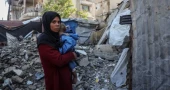
Emergency workers have warned people not to stay in damaged buildings because they could collapse. But with much of the territory in rubble, there are few places to escape the rain. The United Nations in July estimated that almost 80% of buildings in Gaza have been destroyed or damaged.
Since the ceasefire between Israel and Hamas began, 414 people have been killed and 1,142 wounded in Gaza, according to the Health Ministry. The overall Palestinian death toll from the war is at least 71,266. The ministry, which does not distinguish between militants and civilians in its count, is staffed by medical professionals and maintains detailed records viewed as generally reliable by the international community.
Aid in Gaza falls short
Aid deliveries into Gaza are falling far short of the amount called for under the U.S.-brokered ceasefire, according to aid organizations and an Associated Press analysis of the Israeli military’s figures.
The Israeli military body in charge of humanitarian aid said in the past week that 4,200 trucks with aid entered Gaza, plus eight garbage trucks to assist with sanitation, as well as tents and winter clothing. It refused to elaborate on the number of tents; aid groups have said the need far outstrips the number that have entered.
Since the ceasefire began, approximately 72,000 tents and 403,000 tarps have entered, according to the Shelter Cluster, an international coalition of aid providers led by the Norwegian Refugee Council.
“Harsh winter weather is compounding more than two years of suffering. People in Gaza are surviving in flimsy, waterlogged tents and among ruins. There is nothing inevitable about this. Aid supplies are not being allowed in at the scale required,” Philippe Lazzarini, commissioner-general of the top U.N. group overseeing aid in Gaza, wrote on social media.
Ceasefire's next phase
Though the ceasefire agreement has mostly held, its progress has slowed.
Israel has said it refuses to move to the next phase while the remains of the final hostage killed in the Hamas-led attack on Oct. 7, 2023, that sparked the war are still in Gaza. Hamas has said the destruction in Gaza has hampered efforts to find remains.
Challenges in the next phase include the deployment of an international stabilization force, a technocratic governing body for Gaza, the disarmament of Hamas and further Israeli troop withdrawals from the territory.
Both Israel and Hamas have accused each other of truce violations.
5 months ago
Gaza's monthly births fall by 40 pc
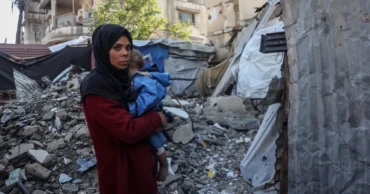
The number of monthly births in the Gaza Strip has fallen by 40 percent as health officials warn of a surge in miscarriages linked to malnutrition and the breakdown of medical services.
Munir al-Bursh, director general of the Gaza-based health authorities, said in a statement on Sunday that the number of newborns has dropped to approximately 17,000 per month, down from a monthly average of 26,000 in 2024.
Al-Bursh attributed the sharp decline to widespread maternal malnutrition, which he said has led to a spike in low birth weights and fetal loss. He accused Israel of exacerbating the crisis by restricting the entry of essential prenatal supplements and medical aid.
The director general further alleged that Israeli military operations had directly impacted reproductive health infrastructure, citing the destruction of fertility clinics and the loss of roughly 4,000 fertilized embryos following the damage of nitrogen storage units.
Separately, the Hamas-run government media office reported Sunday that Israel had committed 969 violations of the ceasefire agreement that took effect on Oct. 10. The office stated that 418 people have been killed and 1,141 injured in related incidents since the truce began.
Aid delivery also remains a point of contention. The media office said only 19,764 truckloads of humanitarian relief have entered Gaza since the ceasefire, far below the 48,000 truckloads it says were stipulated in the agreement.
5 months ago
War-hit Myanmar holds widely criticised ‘sham’ election
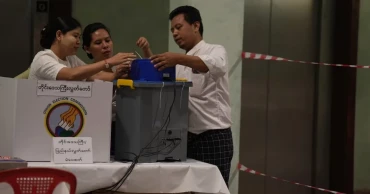
Myanmar has begun voting in an election that has been broadly rejected as illegitimate, with most major political parties dissolved, many senior politicians imprisoned and up to half of the country unlikely to take part because of the ongoing civil war.
The military authorities are conducting the vote in stages, almost five years after seizing power in a coup that triggered mass protests and later escalated into nationwide armed conflict.
Analysts say the junta, backed by China, is trying to secure domestic and international legitimacy and cement its grip on power as it looks for an exit from a prolonged and destructive stalemate, reports BBC.
More than 200 people have been charged under a new law for disrupting or opposing the election. The legislation carries harsh penalties, including the death sentence.
Voting started on Sunday amid reports of explosions and airstrikes in several parts of the country. In the Mandalay region, three people were hospitalised after a rocket struck an uninhabited house early Sunday, the regional chief minister told the BBC, adding that one victim was seriously injured.
In a separate incident, over ten houses were damaged in Myawaddy township near the Thai border following multiple explosions late on Saturday. A local resident told the BBC that a child was killed and three others were taken to hospital in critical condition. Additional reports of casualties have since emerged from other blasts.
Some voters told the BBC the process felt more “disciplined and systematic” than previous elections.
“The experience of voting has changed a lot,” said Ma Su ZarChi from the Mandalay region.“Before I voted, I was afraid. Now that I have voted, I feel relieved. I cast my ballot as someone who has tried their best for the country.”
Ei Pyay Phyo Maung, 22, voting for the first time, said she participated because she believed voting is “the responsibility of every citizen”.
“My hope is for the lower classes - right now, the prices of goods are skyrocketing, and I want to support someone who can bring them down for those struggling the most,” she said.“I want a president who provides equally for all people.”
The junta has brushed aside criticism, insisting the vote is meant to “return [the country] to a multi-party democratic system”. After voting at a heavily guarded polling station in the capital, junta leader Min Aung Hlaing told the BBC the election would be free and fair.
“I am the Commander-in-Chief of the Armed Forces, a civil servant. I can't just say that I want to be president,” he said, noting that the election is being held in three phases.
Earlier, he warned that refusing to vote amounted to rejecting “progress toward democracy”.
Several well-known figures, including film director Mike Tee, actor Kyaw Win Htut and comedian Ohn Daing, have been convicted under the election disruption law introduced in July. State media reported they were each sentenced to seven years in prison for criticising a film that promoted the vote.
UN Special Rapporteur Tom Andrews urged the international community on Sunday to reject the election, saying “nothing legitimate” can result from it.
“An election organised by a junta that continues to bomb civilians, jail political leaders, and criminalise all forms of dissent is not an election - it is a theatre of the absurd performed at gunpoint,” he said.
The military continues to fight on multiple fronts against armed groups opposing the coup as well as ethnic armies with their own militias. While it suffered major territorial losses earlier, it has regained ground this year through sustained airstrikes, aided by support from China and Russia.
The conflict has killed thousands, displaced millions, devastated the economy and created a severe humanitarian crisis. A powerful earthquake in March and cuts to international aid have further worsened conditions.
These factors, along with the fact that large areas remain under opposition control, pose serious logistical obstacles to holding the election. Voting is scheduled in three phases over the next month in 265 of Myanmar’s 330 townships, with the remainder deemed too unstable. Results are expected by late January.
Up to half of the country is not expected to vote. Even in areas where polling is taking place, not all constituencies will participate, making turnout difficult to predict.
Six parties, including the military-backed Union Solidarity and Development Party, are contesting nationwide, while 51 other parties and independent candidates are running only at regional or state level. About 40 parties have been banned, among them Aung San Suu Kyi’s National League of Democracy, which won landslides in 2015 and 2020.
Suu Kyi and many senior party figures remain in prison on charges widely viewed as politically motivated, while others have fled abroad.
“By splitting the vote into phases, the authorities can adjust tactics if the results in the first phase do not go their way,” said Htin Kyaw Aye of the election monitoring group Spring Sprouts, speaking to Myanmar Now.
Ral Uk Thang, a resident of western Chin state, said civilians “don't want the election”.
“The military does not know how to govern our country. They only work for the benefit of their high-ranking leaders.“When Daw Aung San Suu Kyi's party was in power, we experienced a bit of democracy. But now all we do is cry and shed tears,” the 80-year-old told the BBC.
Western governments, including the UK and the European Parliament, have rejected the vote as a sham, while the regional bloc Asean has said political dialogue should come before any election.
5 months ago

Thailand and Cambodia agree to ceasefire to stop border clashes
Thailand and Cambodia on Saturday signed a new ceasefire deal aimed at ending weeks of armed confrontations along their disputed border.
The ceasefire came into force at noon and requires both sides to stop troop movements and prevent the use of airspace for military operations. Cambodian officials said Thailand was the only country to have launched air attacks, including strikes carried out earlier on Saturday.
Under the agreement, Thailand will return 18 Cambodian soldiers it captured during fighting in July once the ceasefire has remained intact for 72 hours. Their release has been a key demand from Cambodia.
Soon after the agreement was signed, Thailand’s Foreign Ministry lodged a protest, claiming a Thai soldier suffered permanent injuries after stepping on an anti-personnel land mine allegedly planted by Cambodian forces.
The ceasefire was formally signed at a border checkpoint by Cambodia’s Defense Minister Tea Seiha and Thailand’s Defense Minister Nattaphon Narkphanit, following three days of discussions among military officials.
The deal reaffirms earlier ceasefire arrangements reached in July after five days of clashes, as well as subsequent agreements. The July truce was mediated by Malaysia and supported by pressure from U.S. President Donald Trump, who threatened to suspend trade benefits unless both sides agreed. A more detailed agreement was finalized in October at a regional meeting in Malaysia attended by Trump.
Despite those earlier efforts, tensions continued through hostile rhetoric and sporadic border violence, which escalated into intense fighting in early December.
U.S. Secretary of State Marco Rubio welcomed the new ceasefire and called on both countries to fully comply with it and previous peace commitments. U.N. Secretary-General Antonio Guterres described the ceasefire as an important move toward reducing civilian suffering, stopping hostilities, and creating conditions for long-term peace. He also praised Malaysia, China, and the United States for their mediation efforts, adding that the United Nations is ready to support peace and stability in the region.
China’s Foreign Ministry also praised the agreement and announced it would host trilateral talks with Thai and Cambodian foreign ministers in Yunnan province on Sunday and Monday. Beijing said it would play a constructive role in strengthening the ceasefire, rebuilding trust, improving relations, and maintaining regional peace.
Civilians have suffered heavily during the conflict. Thai officials reported that since Dec. 7, 26 soldiers and one civilian were killed directly in combat, while total civilian deaths reached 44. Cambodia has not released official military casualty figures but reported 30 civilian deaths and 90 injuries. Hundreds of thousands of residents on both sides of the border have been displaced.
Cambodia’s defense minister said the ceasefire would allow displaced residents to return home, resume farming, and enable children to go back to school.
Both countries accused each other of starting the violence and insisted their actions were defensive.
The agreement also commits both sides to respecting international bans on land mines, a major concern for Thailand. Thai officials say soldiers have been injured in at least 10 incidents this year by newly laid mines, while Cambodia claims the explosives are remnants from its civil war that ended in the late 1990s.
Following Saturday’s injury, Thailand noted that the agreement includes provisions for joint humanitarian demining operations to protect both soldiers and civilians. Another clause requires both sides to avoid spreading misinformation.
The deal also calls for renewed efforts to demarcate the border and for cooperation against transnational crimes, particularly online scam networks that have caused massive financial losses worldwide and are often linked to Cambodia.
Malaysia’s Prime Minister Anwar Ibrahim praised the agreement, saying it shows a shared understanding that restraint is essential, especially to protect civilians.
However, concerns remain over the durability of the ceasefire. Thailand’s Defense Ministry spokesperson said the return of displaced civilians would signal enough stability to proceed with releasing the Cambodian prisoners. He stressed that the 72-hour ceasefire period is meant to test Cambodia’s commitment to halting violence, warning that failure to do so would raise doubts about its sincerity in pursuing lasting peace.
5 months ago

Zelenskyy says upcoming Trump talks to focus on security assurances and Ukraine’s rebuilding
Ukrainian President Volodymyr Zelenskyy said on Friday that he is set to meet U.S. President Donald Trump in Florida this weekend to discuss key issues including security guarantees for Ukraine and postwar reconstruction.
Speaking to reporters, Zelenskyy said Sunday’s discussions will center on security arrangements and a proposed 20-point framework that he said is nearly complete. He added that the two sides would also consider an economic deal, though it remains uncertain whether any agreements will be finalized during the meeting.
Territorial matters will also be raised, Zelenskyy said. Russia has demanded that Ukraine give up the territory it still controls in the Donbas region, a condition Kyiv has firmly rejected. Moscow currently occupies most of Luhansk and roughly 70% of Donetsk.
Zelenskyy stressed that Ukraine wants European countries to be part of future talks, though he questioned whether their involvement could be arranged on short notice. He said a format including Ukraine, the United States, and Europe is essential in the near term.
The planned meeting comes as part of an intensified U.S.-led effort to bring an end to the nearly four-year war between Russia and Ukraine, negotiations that remain stalled due to deeply opposing positions from both sides.
Zelenskyy’s remarks followed comments he made Thursday about having a productive discussion with U.S. special envoy Steve Witkoff and Jared Kushner, Trump’s son-in-law.
Meanwhile, Kremlin spokesman Dmitry Peskov said Friday that Russian officials have already been in contact with U.S. representatives after Russian presidential envoy Kirill Dmitriev recently met American envoys in Florida. Peskov said both sides agreed to continue talks.
Trump has pushed for a negotiated end to the conflict that began on Feb. 24, 2022, but progress has been limited by incompatible demands from Moscow and Kyiv.
Earlier this week, Zelenskyy said Ukraine could consider withdrawing troops from parts of its eastern industrial region as part of a peace plan, provided Russia also pulls back and the area is placed under international monitoring as a demilitarized zone. However, Russia has not signaled any willingness to relinquish occupied territory, despite Moscow claiming gradual progress in negotiations.
Fighting continued on the ground Friday. Ukrainian officials said guided aerial bombs and missile strikes killed several people and wounded others in Kharkiv, Zaporizhzhia, and Uman. Drone attacks damaged power, energy, and port facilities in Mykolaiv and Odesa, leaving parts of Mykolaiv without electricity.
Ukraine also reported that it struck a major Russian oil refinery in the Rostov region on Thursday using British-supplied Storm Shadow missiles. Ukraine’s General Staff said the Novoshakhtinsk refinery was hit, causing multiple explosions. Russian officials confirmed a firefighter was injured while battling the resulting blaze.
Kyiv says such long-range strikes are intended to weaken Russia’s oil revenue, which funds its war effort. Russia, meanwhile, continues attacks on Ukraine’s energy infrastructure, a strategy Ukrainian officials say is aimed at depriving civilians of basic services during winter.
5 months ago
US carries out airstrikes on Islamic State fighters in Nigeria following attacks on Christians
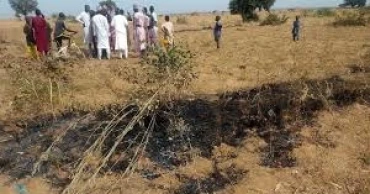
Former President Donald Trump said the United States carried out what he described as a “strong and lethal” military strike against Islamic State-linked militants in Nigeria, following weeks of criticism that Nigerian authorities were not doing enough to stop attacks on Christians.
In a post shared on his social media platform on Christmas night, Trump offered few details and did not specify the level of destruction caused by the strikes, which reportedly took place in Nigeria’s northwestern Sokoto state.
A U.S. Defense Department official, speaking anonymously because the information had not been formally released, said the operation was conducted in coordination with Nigeria and had the approval of the government in Abuja.
Nigeria’s Foreign Ministry confirmed the joint effort, saying it involved intelligence sharing and strategic cooperation carried out in line with international law, respect for national sovereignty, and shared security goals. The Associated Press was unable to independently verify the results of the strikes.
Multiple militant threats in Nigeria
Nigeria continues to face violence from several armed groups, including two with links to the Islamic State. These include the Islamic State West Africa Province, which split from Boko Haram and operates mainly in the northeast, and the lesser-known Lakurawa group, which is active in the northwest and uses forested areas as bases.
Security experts believe the U.S. operation may have targeted Lakurawa, a group that has grown increasingly dangerous over the past year by attacking isolated communities and security personnel.
Malik Samuel, a Nigerian security analyst with Good Governance Africa, said Lakurawa has taken control of territory in Sokoto and neighboring states such as Kebbi. He added that extremist groups have expanded in the northwest partly due to the weak presence of government authorities and security forces.
Impact of violence
Trump said the strikes were aimed at IS militants responsible for killing “primarily innocent Christians.” However, residents and analysts note that Nigeria’s insecurity affects people of all faiths, with Christians concentrated mainly in the south and Muslims forming the majority in the north.
Nigeria’s Foreign Ministry emphasized that terrorism, regardless of whether it targets Christians, Muslims, or others, contradicts the country’s values and threatens global peace. Nigerian officials have repeatedly stated that extremist violence has harmed citizens across religious lines.
US pressure on Nigeria
Last month, Trump directed the Pentagon to prepare for possible military action in Nigeria, citing concerns over the persecution of Christians. The U.S. State Department has also announced visa restrictions on Nigerians implicated in attacks on Christians and recently classified Nigeria as a “country of particular concern” under the International Religious Freedom Act.
Trump claimed that U.S. forces carried out “flawless strikes” and vowed that the United States would not allow extremist groups to thrive.
Nigeria, home to about 220 million people, is nearly evenly divided between Christians and Muslims. The country has long struggled with insecurity driven by extremist insurgencies, communal disputes, farmer-herder clashes, ethnic tensions, and separatist movements. Boko Haram, which seeks to impose a strict form of Islamic law, has also targeted Muslims it considers insufficiently devout.
While the U.S. military presence in Africa has declined in recent years, Trump has continued to press Nigerian authorities amid ongoing attacks on schools and churches that observers say affect both Christian and Muslim communities.
U.S. Defense Secretary Pete Hegseth wrote on X late Thursday that the president had made it clear the killing of innocent Christians must stop, adding that U.S. forces were prepared to act. He praised cooperation from the Nigerian government and ended his message with a Christmas greeting.
5 months ago
Trump says US airstrikes hit IS targets in Nigeria after attacks on Christians
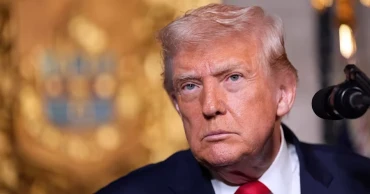
US President Donald Trump said the United States carried out airstrikes against Islamic State targets in Nigeria, citing attacks by the militant group that he said had mainly targeted Christians.
In a Christmas night post on social media, Trump described the operation as a powerful strike but did not give details about the damage or casualties. A US defense official said the strikes were conducted in coordination with Nigeria and had the approval of the Nigerian government.
Nigeria’s Ministry of Foreign Affairs said the cooperation involved intelligence sharing and strategic coordination in line with international law and respect for Nigeria’s sovereignty.
Trump said the strikes targeted Islamic State militants who had been killing innocent civilians. Nigerian officials and analysts, however, have said extremist violence in the country affects both Christians and Muslims.
Nigeria is battling several armed groups, including factions linked to Islamic State. Security experts said the strikes may have targeted the Lakurawa group, which has expanded its presence in northwestern states such as Sokoto and has carried out deadly attacks on communities and security forces.
Trump has repeatedly criticized Nigeria over what he described as the persecution of Christians. Last month, he directed the Pentagon to prepare options for military action in the country. The US has also restricted visas for Nigerians linked to killings of Christians and recently designated Nigeria a country of particular concern under its religious freedom law.
Nigeria, Africa’s most populous nation, has faced years of violence driven by extremist attacks, local conflicts, and criminal gangs. The government has said people of different faiths have been victims of such violence.
US Defense Secretary Pete Hegseth said American forces were ready to act and praised cooperation from the Nigerian government, adding that the United States would not allow extremist groups to thrive.
5 months ago
Zelenskyy says Trump meeting soon
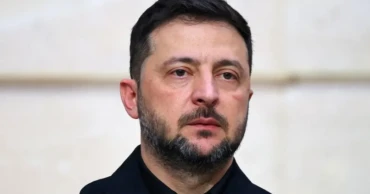
Ukrainian President Volodymyr Zelenskyy said a meeting with US President Donald Trump will take place in the near future, pointing to progress in talks aimed at ending the almost four-year war with Russia.
Writing on X on Friday, Zelenskyy said both sides had agreed on a high-level meeting and stressed that Kyiv was not wasting time. He added that many important decisions could be taken before the New Year.
The Ukrainian leader made the remarks a day after saying he had a good conversation with US special envoy Steve Witkoff and Trump’s son-in-law Jared Kushner, as Washington steps up diplomatic efforts to push for an end to the war.
Trump has been pursuing a diplomatic track, but the talks face major differences between Moscow and Kyiv. Zelenskyy has said Ukraine could consider withdrawing troops from parts of its eastern industrial region as part of a peace plan, if Russia also pulls back and the area becomes a demilitarized zone under international monitoring.
Russia, however, has not shown willingness to withdraw from the territories it has occupied. Moscow has instead demanded that Ukraine give up the remaining areas it controls in the Donbas region, a condition Kyiv has rejected. Russia currently holds most of Luhansk and about 70 percent of Donetsk.
Fighting continued on the ground. One person was killed and three others injured when a guided aerial bomb hit a house in Ukraine’s Zaporizhzhia region, local officials said. Overnight Russian drone attacks left parts of the southern city of Mykolaiv without electricity, while energy and port facilities were damaged in the Black Sea city of Odesa.
Ukraine also said it struck a major Russian oil refinery on Thursday using British-supplied Storm Shadow missiles. The Ukrainian military said the Novoshakhtinsk refinery in Russia’s Rostov region was hit, with multiple explosions reported. A firefighter was wounded while putting out the blaze, according to regional authorities.
Kyiv says its long-range strikes on Russian refineries are aimed at cutting Moscow’s oil export revenue, while Russia continues attacks on Ukraine’s power system, which Ukrainian officials say are intended to deprive civilians of heat, light and water during winter.
5 months ago