others
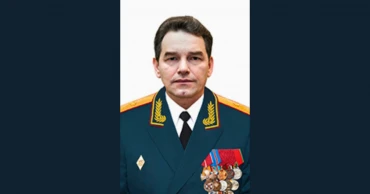
Car bomb kills Russian general in Moscow
A car bomb killed a Russian general on Monday, the third such killing of a senior military officer in just over a year. Investigators said Ukraine may be behind the attack.
Lt. Gen. Fanil Sarvarov, head of the Operational Training Directorate of the Russian Armed Forces' General Staff, died from his injuries, said Svetlana Petrenko, the spokesperson for Russia’s Investigative Committee, the nation's top criminal investigation agency. He was 56.
“Investigators are pursuing numerous lines of inquiry regarding the murder. One of these is that the crime was orchestrated by Ukrainian intelligence services,” Petrenko said.
Since Moscow sent troops into Ukraine nearly four years ago, Russian authorities have blamed Kyiv for several assassinations of military officers and public figures in Russia. Ukraine has claimed responsibility for some of them. It has not yet commented on Monday’s death.
Kremlin spokesman Dmitry Peskov said that President Vladimir Putin had been immediately informed about the killing of Sarvarov, who fought in Chechnya and had taken part in Moscow's military campaign in Syria.
Russia has blamed a series of other apparent assassinations on Ukraine.
Just over a year ago, Lt. Gen. Igor Kirillov, the chief of the military’s nuclear, biological and chemical protection forces, was killed by a bomb hidden on an electric scooter outside his apartment building. Kirillov's assistant also died. Ukraine’s security service claimed responsibility for the attack.
An Uzbek man was quickly arrested and charged with killing Kirillov on behalf of the Ukrainian security service.
Putin described Kirillov’s killing as a “major blunder” by Russia’s security agencies, noting they should learn from it and improve their efficiency.
In April, another senior Russian military officer, Lt. Gen. Yaroslav Moskalik, a deputy head of the main operational department in the General Staff, was killed by an explosive device placed in his car parked near his apartment building just outside Moscow. A suspected perpetrator was quickly arrested.
Days after Moskalik's killing, Ukraine's President Volodymyr Zelenskyy said he received a report from the head of Ukraine’s foreign intelligence agency on the “liquidation” of top Russian military figures, adding that “justice inevitably comes" although he didn't mention Moskalik's name.
Ukraine, which is outnumbered by Russia’s larger, better equipped military, has frequently tried to change the course of the conflict by attacking in unexpected ways. In August last year, Ukrainian forces staged a surprise incursion into Russia’s Kursk region even as they struggled to stem Russian offensives on many parts of the front line. Moscow's troops eventually drove them out, but the incursion distracted the Russian military resources from other areas and raised Ukrainian morale.
Ukraine has also launched repeated attacks on the Russian navy in the Black Sea with sea drones and missiles, forcing it to relocate its warships and limit the scale of its operations.
And in June, swarms of drones launched from trucks targeted bomber bases across Russia. Ukraine said over 40 long-range bombers were damaged or destroyed, although Moscow said only several planes were struck.
Meanwhile, Western officials have accused Russia of staging a campaign away from the battlefield, accusing it of orchestrating dozens of incidents of disruption and sabotage across Europe as part of an effort to sap support for Ukraine. Moscow has denied the claims.
5 months ago
US calls Ukraine, Europe war talks constructive
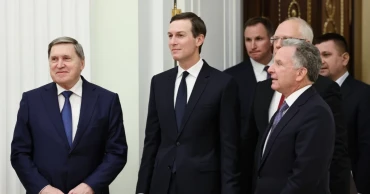
The United States on Sunday said its recent talks with Ukraine and European partners on ending the war with Russia were “productive and constructive,” as Washington continues diplomatic efforts to push for a negotiated peace.
White House envoy Steve Witkoff said the discussions, held in Florida, focused on aligning a shared strategic approach among Ukraine, the United States and Europe. In a social media post, Witkoff said the common priority was to stop the fighting, ensure security guarantees and lay the groundwork for Ukraine’s long-term recovery and stability.
He said peace must go beyond a halt in hostilities and provide a dignified and durable foundation for the future.
The talks are part of President Donald Trump’s sustained push to end the nearly four-year war. However, efforts have faced obstacles as Moscow and Kyiv remain far apart, with Russian President Vladimir Putin maintaining tough demands while Russian forces continue gradual advances on the battlefield.
Negotiations with Russia have also been ongoing. A Kremlin envoy said Saturday that discussions in Florida were progressing constructively and would continue. Russian media reported that envoy Kirill Dmitriev met Witkoff and Trump’s son-in-law Jared Kushner, though there were no updates on Sunday.
Ukrainian President Volodymyr Zelenskyy said diplomatic efforts were moving quickly, noting that Ukraine’s team in Florida had been working closely with the U.S. side. The Kremlin, however, denied that any trilateral talks involving Ukraine, Russia and the United States were under preparation.
Meanwhile, Ukraine’s human rights ombudsman accused Russian forces of forcibly transferring around 50 civilians from the Sumy border region into Russia, demanding their immediate return.
In Europe, France said it welcomed Putin’s reported openness to talks with President Emmanuel Macron, adding that renewed dialogue could be useful once prospects for a ceasefire and peace negotiations become clearer.
Separately, European Union leaders agreed to provide 90 billion euros to support Ukraine’s military and economic needs over the next two years, funding the package through borrowing after failing to reach consensus on using frozen Russian assets.
5 months ago
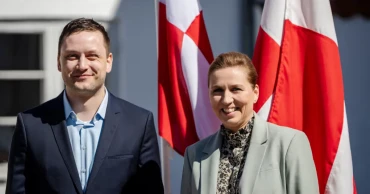
Denmark, Greenland reject US takeover after Trump envoy appointment
Denmark and Greenland on Monday asserted that the United States will not take over Greenland, calling for full respect for their territorial integrity following President Donald Trump’s announcement of a special envoy to the Arctic territory.
Trump on Sunday named Louisiana Governor Jeff Landry as the U.S. special envoy to Greenland, sparking renewed tensions over Washington’s interest in the semi-autonomous territory of the NATO ally. In response, Denmark’s Foreign Minister Lars Løkke Rasmussen said he plans to summon the U.S. ambassador in Copenhagen.
In a joint statement, Danish Prime Minister Mette Frederiksen and Greenlandic Premier Jens-Frederik Nielsen said, “National borders and state sovereignty are rooted in international law. They are fundamental principles. You cannot annex another country, not even citing international security.”
The statement added, “Greenland belongs to the Greenlanders and the U.S. shall not take over Greenland. We expect respect for our joint territorial integrity.”
Trump has repeatedly suggested U.S. jurisdiction over Greenland and has not ruled out military options for the strategically located, resource-rich island. Earlier this year, Vice President JD Vance visited a U.S. military base in Greenland and criticized Denmark for underinvestment there.
The issue re-emerged in August when Danish authorities summoned the U.S. ambassador after reports that individuals linked to Trump conducted covert influence operations in Greenland.
Landry described his appointment as “an honor” and said he will work to “make Greenland a part of the U.S.”
Rasmussen told Danish media that while the appointment shows continued American interest, “everyone — including the U.S. — must respect the territorial integrity of the Kingdom of Denmark.”
Before the joint statement, Nielsen wrote on Facebook that the new U.S. announcement “does not change anything for us at home.”
The EU also stressed the importance of Denmark’s sovereignty. An EU Commission spokesperson said Monday that preserving the territorial integrity and inviolability of Denmark’s borders is “essential for the European Union.”
5 months ago

Bus crash in Indonesia kills at least 16
At least 16 people were killed when a passenger bus crashed on Indonesia’s main island of Java shortly after midnight on Monday, officials said.
The bus, which was carrying 34 passengers, went out of control on a toll road, slammed into a concrete divider and then overturned, according to Budiono, head of a search and rescue agency.
The interprovincial bus was en route from Jakarta to the historic city of Yogyakarta when it overturned while negotiating a curved exit ramp on the Krapyak toll road in Semarang, Central Java.
Budiono said the strong impact flung several passengers from their seats and trapped others inside the wreckage.
Police and rescue workers reached the scene around 40 minutes later and found six passengers dead on the spot. Ten more victims later died while being taken to hospital or during treatment.
A total of 18 injured passengers were admitted to two nearby hospitals, including five in critical condition and 13 in serious condition, Budiono added.
Television footage showed the yellow bus lying on its side as personnel from the National Search and Rescue Agency, police officers and bystanders gathered at the scene, while ambulances carried away the injured and the deceased.
Central Java Police Chief Ribut Hari Wibowo said witnesses reported the bus was speeding before the driver lost control. Speaking at Dr Karyadi General Hospital in Semarang, where the bodies were being identified, he said the driver was a replacement who suffered serious injuries but remained able to speak.
Police are still investigating the cause of the accident and questioning the injured substitute driver, Wibowo said, adding that tests would be conducted to check for the presence of banned substances, including drugs.
5 months ago

The evolution of Christmas into a worldwide holiday
Christmas is a Christian holiday that observes the birth of Jesus. But did you know that the earliest followers of Jesus did not annually commemorate his birth? Or that Santa Claus is inspired by the acts of kindness of a fourth-century Christian saint? And have you heard about the modern-day Japanese tradition of eating Kentucky Fried Chicken on Christmas?
Since the early 20th century, Christmas has evolved from a religious holiday to a hugely popular cultural holiday observed by Christian and secular people across the globe who gather with families, exchange gifts and cards and decorate Christmas trees.
Here’s a look at the history, beliefs and the evolution of Christmas:
Origins and early history of Christmas
Early followers of Jesus did not annually commemorate his birth but instead focused on commemorating their belief in his resurrection at Easter.
The story of the birth of Jesus appears only in two of the four Gospels of the New Testament: Matthew and Luke. They provide different details, though both say Jesus was born in Bethlehem.
The exact day, month and even year of Jesus’s birth are unknown, said Christine Shepardson, a professor at the University of Tennessee who studies early Christianity.
The tradition of celebrating Jesus’ birth on Dec. 25, she said, only emerged in the fourth century.
“It’s hard to overemphasize how important the fourth century is for constructing Christianity as we experience it in our world today,” Shepardson said. It was then, under Emperor Constantine, that Christians began the practice of gathering at churches instead of meeting at homes.
Some theories say the date coincides with existing pagan winter solstice festivals, including the Roman celebration of Sol Invictus, or the “Unconquered Sun,” on Dec 25.
While most Christians celebrate Christmas on Dec. 25, some Eastern Orthodox traditions celebrate the holy day on Jan. 7. That’s because they follow the ancient Julian calendar, which runs 13 days behind the Gregorian calendar, used by Catholic and Protestant churches as well as by much of the secular world.
Rowdy medieval celebrations
For centuries, especially during the Middle Ages, Christmas was associated with rowdy street celebrations of feasting and drinking, and for many Christians, it “was not in good standing as a holiday,” said Thomas Ruys Smith, a professor of American literature and culture at the University of East Anglia in England.
“Puritans,” he said, “were not fond of Christmas.”
But in the 19th century, he said, Christmas became “respectable” with “the domestic celebration that we understand today — one centered around the home, the family, children, gift-giving.”
The roots of modern-day Christmas can be traced back to Germany. In the late 19th century, there are accounts of Christmas trees and gift-giving that, according to Smith, later spread to Britain and America, helping to revitalize Christmas on both sides of the Atlantic.
Christmas became further popularized with the publication of “A Christmas Carol” by Charles Dickens in 1843, and the writings of Washington Irving, who was a fan of St. Nicholas and helped popularize the celebration of Christmas in America.
The first Rockefeller Center Christmas tree was put up by workers in 1931 to raise spirits during the Great Depression. The tradition stuck as the first tree-lighting ceremony was held in 1933 and remains one of New York City’s most popular holiday attractions.
America’s secular Santa is inspired by a Christian saint
St. Nicholas was a fourth-century Christian bishop from the Mediterranean port city of Myra (in modern-day Turkey). His acts of generosity inspired the secular Santa Claus legend.
The legends surrounding jolly old St. Nicholas — celebrated annually on Dec. 6 — go way beyond delivering candy and toys to children. He is believed to have interceded on behalf of wrongly condemned prisoners and miraculously saved sailors from storms.
Devotion to St. Nicholas spread during the Middle Ages across Europe and he became a favorite subject for medieval artists and liturgical plays. He is the patron saint of sailors and children, as well as of Greece, Russia and New York.
Devotion to St. Nicholas seems to have faded after the 16th century Protestant Reformation, except in the Netherlands, where his legend remained as Sinterklaas. In the 17th century, Dutch Protestants who settled in New York brought the Sinterklaas tradition with them.
Eventually, St. Nicholas morphed into the secular Santa Claus.
It’s not just Santa who delivers the gifts
In the U.K., it’s Father Christmas; in Greece and Cyprus, St. Basil (who arrives on New Year’s Eve). In some parts of Italy, it’s St. Lucy (earlier in December) and in other Italian regions, Befana, a witch-like figure, who brings presents on the Epiphany on Jan. 6.
Instead of a friendly Santa Claus, children in Iceland enjoy favors from 13 mischievous troll brothers, called the Yule Lads. They come down from their mountain cave 13 days before Christmas, according to folklore.
Christian traditions of Christmas
One of the oldest traditions around Christmas is bringing greenery — holly, ivy or evergreen trees — into homes. But determining whether it’s a Christian tradition is harder. “For many people, the evergreen can symbolize Christ’s promise of eternal life and his return from death,” Smith said. “So, you can interpret that evergreen tradition within the Christian concept.”
The decorating of evergreen trees is a German custom that began in the 16th century, said Maria Kennedy, a professor at Rutgers University—New Brunswick’s Department of American Studies. It was later popularized in England and America.
“Mistletoe, an evergreen shrub, was used in celebrations dating back to the ancient Druids — Celtic religious leaders — some 2,000 years ago,” Kennedy writes in The Surprising History of Christmas Traditions.
“Mistletoe represented immortality because it continued to grow in the darkest time of the year and bore white berries when everything else had died.”
Other traditions include Christmas services and Nativity scenes at homes and churches. More recently, Nativity scenes — when erected on public property in the U.S. — have triggered legal battles over the question of the separation of church and state.
Christmas caroling, Kennedy writes, can also be traced back to European traditions, where people would go from home to home during the darkest time of the year to renew relationships within their communities and give wishes for good luck, health and wealth for the forthcoming year.
“They would recite poetry, sing and sometimes perform a skit. The idea was that these acts would bring about good fortune to influence a future harvest,” Kennedy writes.
Kentucky Fried Chicken for Christmas in Japan
Among the many Christmas traditions that have been adopted and localized globally, there’s one that involves KFC.
In 1974, KFC launched a Christmas campaign where they began to sell fried chicken with a bottle of wine so it could be used for a Christmas party.
KFC says the idea for the campaign came from an employee who overheard a foreign customer at one of its Tokyo restaurants saying that since he couldn’t get turkey in Japan, he’d have to celebrate Christmas with Kentucky Fried Chicken.
“That really stuck,” Smith said. “And still today, you have to order your KFC months in advance to make sure that you’re going to get it at Christmas Day.”
5 months ago
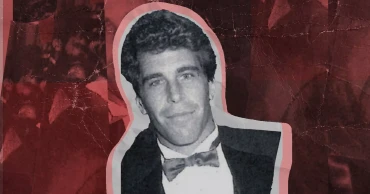
Unveiling the Epstein files: Who appears and what they reveal
The US Department of Justice (DOJ) released the first batch of highly anticipated documents related to convicted sex offender Jeffrey Epstein on Friday, offering a glimpse into thousands of pages of investigative records, photographs, and videos. The release follows a law passed by Congress requiring the Justice Department to make the files public in their entirety, although officials said they could not meet the full deadline.
The initial tranche of documents includes numerous high-profile figures, such as former US President Bill Clinton, Prince Andrew, and entertainers including Mick Jagger, Michael Jackson, Diana Ross, and Chris Tucker. However, legal experts and authorities emphasize that being mentioned or pictured in the files does not imply any wrongdoing. Many of those named in the documents have consistently denied any involvement in Epstein’s criminal activities.
Bill Clinton appears in multiple images
Several photographs released feature former US President Bill Clinton. Some images show him swimming in a pool, while others depict him reclining in a hot tub with his hands behind his head. Clinton had multiple documented interactions with Epstein during the 1990s and early 2000s, before Epstein’s first arrest. Survivors of Epstein’s abuse have not accused Clinton of wrongdoing, and he has consistently denied any knowledge of Epstein’s criminal acts.
Clinton’s spokesperson, Angel Ureña, commented on the photos, describing them as decades old and reiterating that the former president was not involved in Epstein’s crimes. “They can release as many grainy 20-plus-year-old photos as they want, but this isn’t about Bill Clinton. Never has, never will be,” Ureña said on social media.
Trump mentioned in files
The documents also reference current US President Donald Trump, though the mention is limited. Court filings suggest that Epstein allegedly introduced a 14-year-old girl to Trump at his Mar-a-Lago resort in Florida during the 1990s. The documents claim Epstein “playfully asked” Trump, in reference to the girl, “this is a good one, right?” According to the filing, Trump smiled and nodded, and both men laughed, leaving the girl feeling uncomfortable. The alleged victim did not accuse Trump of any wrongdoing in the filing.
Following the release, Trump’s political team highlighted the photographs of Clinton rather than addressing the allegations involving the president. Trump has previously stated that he was a friend of Epstein but said their relationship ended around 2004, years before Epstein’s arrest. He has repeatedly denied any wrongdoing in connection with Epstein.
Prince Andrew and other high-profile figures
One photograph in the files appears to show Prince Andrew lying across the laps of several people, with convicted Epstein associate Ghislaine Maxwell standing nearby. Andrew has faced years of scrutiny for his past association with Epstein, although he has consistently denied witnessing or participating in any criminal activity related to Epstein.
The newly released documents also feature multiple celebrities. Epstein is shown posing with Michael Jackson, Diana Ross, and Mick Jagger. In some images, Clinton is pictured alongside Jackson and Ross. Other photos include Chris Tucker sitting next to Clinton at a dining table or standing near a private jet with Maxwell. The DOJ has not provided details regarding when or where these photographs were taken, or the nature of Epstein’s association with those pictured.
Ghislaine Maxwell and Downing Street
A photograph released shows Ghislaine Maxwell alone in front of 10 Downing Street. There is no accompanying context regarding the timing or reason for her visit. Maxwell, who was convicted in connection with Epstein’s crimes, has been a recurring figure in previous file releases.
Accuser statements and historical reports
The files include early reports from Epstein’s accusers. Artist Maria Farmer, who worked for Epstein, reported to the FBI in 1996 that Epstein had stolen photographs of her 12- and 16-year-old sisters and allegedly threatened to burn her house if she disclosed the theft. Farmer said Epstein asked her to photograph young girls at swimming pools. Her name is redacted in the released documents, though she has confirmed the account belongs to her.
“I feel redeemed,” Farmer said, reflecting on nearly 30 years since the incident.
Redacted pages and pending releases
Many of the documents released on Friday are heavily redacted. Some files, including more than 100 pages from a grand jury investigation, are completely blacked out. The DOJ has said that redactions are necessary to protect the identities of victims or details of ongoing investigations. Deputy Attorney General Todd Blanche stated that the department is reviewing hundreds of thousands of pages, with many more expected to be released in the coming weeks. Blanche emphasized that each page is being vetted to ensure that all victim information is fully protected.
The delay in releasing all documents has drawn criticism from lawmakers. Democrats, including Congressman Ro Khanna, have threatened action against DOJ officials, citing potential impeachment or prosecution. Khanna, together with Republican Congressman Thomas Massie, pushed for the Epstein Files Transparency Act to ensure full disclosure, despite opposition from former President Donald Trump.
Legal and public context
The Epstein files shed light on a vast network of social, political, and entertainment connections that the late financier maintained over decades. While many photos and documents raise questions, officials stress that inclusion in the files is not evidence of criminal behavior. The ongoing public and legal scrutiny surrounding Epstein and Maxwell continues to generate global attention, with hundreds of thousands of pages still under review.
With inputs from BBC
5 months ago
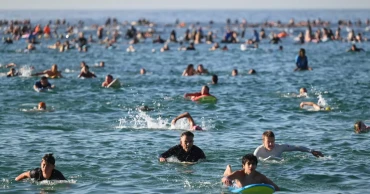
Bondi Beach reopens as Australians remember massacre victims
Bondi Beach reopened on Friday as residents gathered to remember the 15 people killed in a mass shooting at a Hanukkah celebration earlier this month.
Thousands of people formed a large circle in the ocean, observed a minute’s silence, and stood near remnants of the crime scene, paying tribute to the victims and those who helped during the attack. Armed officers were stationed at synagogues and mosques to ensure public safety.
Life gradually returned to the beach and boardwalk as people walked, jogged, and surfed, while community members acknowledged acts of bravery, including that of Ahmed al Ahmed, who helped disarm one of the attackers despite being injured.
A menorah was projected onto the Sydney Opera House, and record numbers of blood donations were reported. Authorities and community leaders continue to discuss ways to address antisemitism and prevent similar incidents in the future.
5 months ago

US launches Syria strikes after deaths of American troops
The United States military carried out strikes in Syria on Friday targeting Islamic State (IS) fighters and weapons sites in retaliation for an ambush that killed two American soldiers and a U.S. civilian interpreter last week.
U.S. officials described the operation as “large-scale,” hitting around 70 IS targets across central Syria. More strikes are expected, they added.
Defense Secretary Pete Hegseth said on social media that the action was “not the beginning of a war” but “a declaration of vengeance,” emphasizing that the U.S. would protect its personnel under President Donald Trump’s leadership.
President Trump earlier pledged “very serious retaliation” and described the operation as a “massive strike” against IS fighters attempting to regroup in Syria. He also warned terrorists against attacking U.S. personnel again, saying they would face unprecedented consequences.
The strikes involved F-15 Eagle jets, A-10 Thunderbolt attack aircraft, AH-64 Apache helicopters, F-16 jets from Jordan, and HIMARS rocket systems. U.S. Central Command said over 100 precision munitions were used against IS targets.
Syria’s foreign ministry condemned last week’s attack, underlining the need for international cooperation against terrorism, and confirmed its commitment to continue fighting IS. Syrian state media reported that U.S. strikes hit IS facilities in Deir ez-Zor, Raqqa, and Jabal al-Amour near Palmyra.
The ambush that prompted the retaliation killed Sgt. Edgar Brian Torres-Tovar, 25, Sgt. William Nathaniel Howard, 29, and U.S. civilian interpreter Ayad Mansoor Sakat. Three other American troops and Syrian security personnel were injured. The gunman, who had recently been reassigned as a security guard over suspected IS links, was killed during the attack.
Trump met with the families of the slain Americans before attending the dignified transfer ceremony at Dover Air Force Base, honoring the fallen service members.
5 months ago

US Treasury urges states to adopt Trump-era tax cuts
State lawmakers heading into next year’s legislative sessions will face a key decision: whether to exempt tips from taxation.
The Trump administration is pressing states to mirror new federal tax reductions by approving a range of tax breaks for individuals and businesses. These include deductions for tips, overtime pay, interest on car loans, and purchases of business equipment.
In some states, federal tax changes automatically flow through to state income taxes unless lawmakers choose to block them. In many others, however, state tax laws require legislatures to explicitly approve such changes before they appear on state tax returns.
As a result, workers in states that do not adopt the new provisions could avoid federal taxes on tips or overtime pay but still owe state taxes on those earnings.
States that fully align with Trump’s tax cuts could deliver hundreds of millions of dollars in yearly savings to residents and businesses. However, doing so could strain state budgets, particularly as states face rising expenses tied to new Medicaid and SNAP food assistance requirements included in the same federal law.
Most state legislatures convene in January. To apply the tax changes retroactively to 2025, lawmakers would need to act quickly so tax forms can be updated in time for filing season. Alternatively, states could choose to implement the changes starting in 2026.
So far, only a handful of states have taken action.
“States are generally taking a cautious approach,” said Carl Davis of the Institute on Taxation and Economic Policy.
Treasury pushes for rapid compliance
The tax legislation Trump signed on July 4 includes roughly $4.5 trillion in tax cuts spread over a decade.
The law introduces temporary deductions for tips, overtime pay, and interest on loans for U.S.-assembled vehicles, expands tax breaks for older Americans, and raises the cap on state and local tax deductions from $10,000 to $40,000. It also offers businesses major incentives, such as allowing immediate deductions for the full cost of equipment and research.
Individual income taxes are levied on wages and salaries in 41 states, while 44 states impose corporate income taxes.
Treasury Secretary Scott Bessent has urged states to “immediately conform” to the federal changes, criticizing some Democratic-led states for what he described as political resistance. However, many Republican-led states also have yet to decide whether to adopt the tax breaks.
Bessent argued that states declining to follow suit are leaving residents with higher tax bills and denying them meaningful financial relief, particularly for low- and middle-income households.
Some experts say the decision is more complicated. For example, a proposed IRS rule would extend the tip tax break to nearly 70 occupations, but many low-wage workers would still be excluded, according to Jared Walczak of the Tax Foundation.
Lawmakers, he said, must weigh whether the benefits justify the cost.
Limited adoption of tip and overtime exemptions
Under existing state tax laws, the federal exemptions for tips and overtime would have automatically applied in only seven states: Colorado, Idaho, Iowa, Montana, North Dakota, Oregon and South Carolina. Colorado, however, opted out of the overtime exemption before the federal law took effect.
Michigan became the first—and so far only—state to approve the tip and overtime tax breaks through legislative action, with implementation set for 2026. State officials estimate the overtime exemption will cost nearly $113 million this budget year, while the tip exemption will cost about $45 million.
To offset those losses, Michigan lawmakers rejected several federal corporate tax changes that the state treasury estimated would have reduced revenue by $540 million.
Republican state Rep. Ann Bollin said Michigan could not afford to adopt all the federal tax cuts while still funding infrastructure, public safety and education.
Arizona may be next to act. Democratic Gov. Katie Hobbs has urged lawmakers to adopt tax breaks for tips, overtime, seniors and vehicle loans, as well as increase the state’s standard deduction. Republican leaders in the state House have said they are prepared to pass the measures when the session begins Jan. 12.
Some states block corporate tax cuts
Beyond Michigan, lawmakers in Delaware, Illinois, Pennsylvania and Rhode Island have moved to prevent some or all of the federal corporate tax changes from taking effect at the state level.
In Illinois, a new law separating the state from part of the federal corporate tax provisions could save nearly $250 million, according to Democratic state Sen. Elgie Sims. He said the savings would help maintain funding for education, health care and other essential services.
Illinois Gov. JB Pritzker cited similar budget concerns in opposing the corporate tax breaks, noting that states are already facing financial pressure from other elements of Trump’s legislation, including higher costs for administering food assistance programs.
He said the decision to block the tax cuts was aimed at protecting state-funded programs amid what he described as growing financial demands from the federal government.
5 months ago

US carries out airstrikes in Syria against Islamic State following deaths of Americans
The Trump administration carried out military attacks in Syria on Friday, aiming to destroy Islamic State fighters and weapons facilities after an ambush last week killed two U.S. soldiers and an American civilian interpreter.
U.S. officials said the operation was extensive, striking about 70 Islamic State targets across central Syria, including weapons depots and infrastructure. One official noted that additional strikes are likely in the coming days.
Defense Secretary Pete Hegseth said the action was not the start of a broader conflict but a forceful response meant to protect Americans, emphasizing that the U.S. would act decisively against threats to its personnel.
The strikes come as the administration has emphasized shifting U.S. military attention closer to the Western Hemisphere, including expanded operations in the Caribbean and pressure on Venezuela. In line with that shift, significant military assets have been moved out of the Middle East, including the redeployment of an advanced aircraft carrier to South America.
Trump promises strong response
President Donald Trump vowed a “very serious retaliation” after the attack in the Syrian desert, which U.S. officials attributed to Islamic State. The victims were part of the U.S. military presence in eastern Syria supporting an international coalition against the militant group.
Trump said the strikes targeted Islamic State strongholds and reiterated his support for Syrian President Ahmad al-Sharaa, stating that the Syrian leader backed the U.S. operation. He also issued a stark warning to Islamic State, threatening even harsher consequences for any future attacks on Americans.
The operation involved F-15 and F-16 fighter jets, A-10 attack aircraft, AH-64 Apache helicopters, and HIMARS rocket artillery. U.S. Central Command said more than 100 precision-guided munitions were used.
Syria’s reaction
The strikes tested improving relations between Washington and Damascus following the removal of former president Bashar Assad a year ago. Trump said Syrian forces were cooperating closely with the U.S. and that President al-Sharaa was deeply angered by the attack on American troops.
Syria’s foreign ministry said the incident highlighted the need for stronger international cooperation against terrorism and reaffirmed the country’s commitment to eliminating Islamic State and denying it safe havens. Syrian state media reported that the strikes hit locations in Deir ez-Zor, Raqqa, and areas near Palmyra, targeting weapons caches and command centers.
Islamic State has not claimed responsibility for the attack on U.S. personnel but has acknowledged carrying out recent assaults on Syrian security forces. The group has condemned al-Sharaa’s government, despite his past ties to al-Qaida and long-standing hostility toward IS.
Victims of the attack
Trump met privately this week with the families of those killed at Dover Air Force Base, attending the dignified transfer ceremony honoring the fallen.
The U.S. service members killed were Sgt. Edgar Brian Torres-Tovar, 25, of Des Moines, and Sgt. William Nathaniel Howard, 29, of Marshalltown. Ayad Mansoor Sakat, a civilian interpreter from Macomb, Michigan, also lost his life.
The shooting near Palmyra injured three additional U.S. troops and members of Syrian security forces. The attacker, who was killed during the incident, had recently joined Syria’s internal security forces and was under suspicion of Islamic State ties. He opened fire during a joint meeting between U.S. and Syrian officials after a confrontation with Syrian guards.
5 months ago