Foreign-Affairs
India seeks forward-looking cooperation with Bangladesh
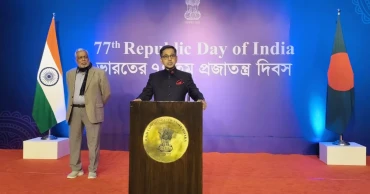
India on Saturday reaffirmed the value of its long-standing partnership with Bangladesh and wished the people of Bangladesh peace, prosperity and success on their journey ahead.
"We have and will continue to support a democratic, stable, peaceful, progressive and inclusive Bangladesh," said Indian High Commissioner to Bangladesh Pranay Verma while commemorating India’s Republic Day in the evening.
Moving forward, the High Commissioner said successes achieved across diverse areas inspire them to seek even more forward-looking and future-ready collaborations.
Energy Adviser Md Fauzul Kabir Khan spoke at the reception held at a city hotel attended by political leaders, senior government officials, diplomats stationed in Dhaka, civil society members, cultural activists, among others.
Today, the High Commissioner said, as two fast-growing economies and aspiring societies, powered by young, skilled, and innovative populations, Bangladesh and India are capable of becoming catalysts for each other’s sustainable growth, enablers of each other’s future prosperity, and anchors for robust regional integration.
"Together, we can build regional value chains, shared digital ecosystems, and energy corridors that serve both our economies," he said.
Together, the High Commissioner said, they can ensure that the region’s energy future is clean, affordable and secure.
He said the two countries can work to address shared challenges of environmental sustainability and climate change for our shared ecology.
"In short, as forward moving societies, there is so much that we can offer to each other, and to our region, when we work together, transforming our geographical proximity into new opportunities," said the High Commissioner.
Collaborations that are anchored in their shared aspirations for prosperity, progress, and partnership, he said.
"Partnership that is rooted in trust. Partnership that is driven by innovation and technology; and a partnership that is nurtured and sustained by mutual interest, mutual benefit and mutual sensitivity," said the High Commissioner.
On 26 January 1950, the people of a newly-independent India gave themselves a new Constitution; declared their country a sovereign republic; and committed themselves to the ideals of justice, liberty, equality, and dignity for all.
In the 76 years since then, India has moved from being an impoverished nation to become the largest democracy and one of the largest economies in the world, a modern, confident nation that is today contributing to global progress and offering solutions to global challenges.
"Bangladesh has been an important co-traveler in this journey of ours. We share a special relationship, along with an indelible history of shared sacrifices during Bangladesh’s Liberation War of 1971," Pranay Verma said.
He said their shared love for literature, music, and art defines the Dhaka-Delhi ties.
"From Rabindranath Tagore and Kazi Nazrul Islam, whose works connect our cultures and literatures, to the rich traditions of dance, theater, and cinema – people of our two nations share a deep cultural affinity," said the High Commissioner.
Over the years, he said their mutual exchanges and shared interdependence have been reinforced by a rapidly transforming landscape of connectivity and economic engagement, bringing their societies, people and businesses closer together.
A cross-border pipeline carrying high-speed diesel from an Indian refinery to Bangladesh; the cross-border power transmission lines, bringing power from both India and Nepal to Bangladesh through the Indian grid –are some examples of how the two countries have, together, laid the foundations of energy connectivity leading to regional economic integration in a true sense, said the Indian envoy.
"Our supply chains fuel Bangladesh’s prolific RMG and pharmaceutical sectors, proving the merits of mutual cooperation and interdependence," the High Commissioner said.
He said there are numerous such examples of how the partnership has brought benefits to the people and businesses on both sides.
1 month ago

Bangladesh, Costa Rica eye opening new avenues for strengthening ties
Bangladesh Ambassador accredited to the Republic of Costa Rica Mushfiqul Fazal Ansarey has met with President Rodrigo Chaves Robles at a reception at the National Theatre Hall and they underscored the importance of strengthening bilateral cooperation between the two countries.
During the meeting on Friday, the Ambassador conveyed the warm greetings and best wishes of the Government and the people of Bangladesh.
President Chaves recalled his visit to Dhaka during his tenure as a senior official of the World Bank and expressed his appreciation for Nobel Laureate Professor Muhammad Yunus, Chief Adviser of the interim government of Bangladesh.
Ambassador Mushfiqul thanked the President for his gracious gesture and extended an invitation to visit Bangladesh.
On Thursday, Ambassador Mushfiqul presented his Letters of Credence to the Vice President of Costa Rica, Dr. Mary Munive Angermu ller, said the Bangladesh Embassy on Saturday.
The formal ceremony took place at the The Yellow House, the Ministry of Foreign Affairs of Costa Rica.
1 month ago
Dhaka objects to Myanmar’s denial of Rohingya identity at World Cour
Bangladesh has strongly rejected Myanmar’s recent submissions before the International Court of Justice (ICJ) in the case brought by The Gambia over the Rohingya genocide, saying Naypyidaw’s attempt to label the Rohingya as ‘Bengalis’ is a deliberate effort to justify atrocities committed against them in 2016–17.
In a press release on Thursday, the Ministry of Foreign Affairs said Myanmar is trying to create a false narrative of illegal migration and internal security threats by referring to the Rohingya as ‘Bengalis’, portraying the so-called ‘clearance operations’ as counter-terrorism measures while diverting attention from crimes against humanity.
The government emphasised that the Rohingya are a distinct ethnic group that evolved over centuries in Arakan, even before it became part of the Barman Kingdom in 1785. Their historical presence in the old Arakan capital Myo-Haung (Mro-Haung or Rohaung) led to them being identified as people of Roshang or Rohang in Chittagong and greater Bengal, initially as an exonym. As marginalisation intensified in Burma, the community adopted the name ‘Rohingya’ for self-identification.
Bangladesh said they have deep historical, cultural, and social roots in Arakan and present-day Rakhine, predating modern borders, a fact documented in historical records, colonial demographic accounts, and independent scholarship.
The government noted that the Rohingya were integral to Myanmar’s politics, society, and governance until the 1982 Citizenship Law excluded them on ethno-religious grounds. Despite marginalisation, they retained voting rights until full disenfranchisement in the 2015 elections. Myanmar has persistently denied them constitutional guarantees of equal rights, and the final stage of this planned destruction was their eviction from Rakhine, rendering them stateless.
Bangladesh highlighted that the Rohingya possess a distinct ethnic identity, cultural heritage, traditions, social practices, and language, clearly distinct from Bangla despite similarities with the Chittagonian dialect. Calling them ‘Bengalis’ systematically denies their right to self-identify and has been used to justify exclusion, persecution, and ethnic cleansing. Myanmar itself recognised them as “lawful residents of Burma” under the 1978 bilateral repatriation agreement, which assured their integration into society as equal members.
The release said Myanmar’s failure over the past eight years to create a conducive environment in Rakhine and facilitate repatriation violates bilateral agreements signed in 2017–18 and may indicate intent to destroy the Rohingya community. Bangladesh also rejected Myanmar’s 2023 claim that “half a million Bangladeshi people took refuge in Rakhine during the Liberation War,” noting no evidence supports this, and the presence of such a large refugee population would have created massive disruption.
Bangladesh called on Myanmar and authorities in Rakhine to recognise the Rohingya as an integral part of society and state, and to ensure their safe, dignified, and voluntary return with equal rights.
1 month ago
Bangladesh, Costa Rica eye stronger ties
Costa Rica has expressed its support for Bangladesh’s upcoming candidacy as a non-permanent member of the UN Security Council, as the two countries seek to strengthen relations across all potential areas.
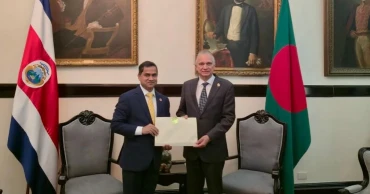
Mushfiqul Fazal Ansarey, Ambassador of Bangladesh to Mexico with concurrent accreditation to Costa Rica, recently held a “very warm and productive” meeting with Arnoldo André Tinoco, Minister of Foreign Affairs of Costa Rica.
“During our discussions, we covered a wide range of bilateral and multilateral issues, including visa waivers for diplomatic and official passport holders,” Ambassador Mushfiqul said in a brief message following the meeting, shared via his verified Facebook page.
They also discussed ways to strengthen trade cooperation, particularly through the import of textile and pharmaceutical products from Bangladesh, as well as closer collaboration in international forums, on which they reached a shared understanding.
“We also exchanged views on future UN leadership, during which the Foreign Minister sought Bangladesh’s support for the possible candidacy of Rebeca Grynspan, the current Secretary-General of UNCTAD,” the Ambassador said, noting that he deeply appreciated the warm hospitality of Costa Rica.
Bangladesh-Costa Rica relations, managed through Bangladesh’s embassy in Mexico (with concurrent accreditation), focus on fostering cultural ties, facilitating consular services such as visas and emergency assistance, and exploring avenues for bilateral cooperation. Recent diplomatic engagements reflect a strong commitment by both sides to strengthening connections despite the geographical distance.
1 month ago
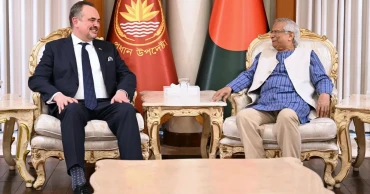
Feb-12 election to set standards for future votes in Bangladesh: Prof Yunus tells US Ambassador
Chief Adviser Prof Muhammad Yunus has said the February 12 general elections would set a benchmark for all future polls in Bangladesh, stressing the government is fully prepared to hold 'free, fair, and transparent' elections.
He said the European Union would deploy a large number of election observers and expressed hope that other development partners would also send observers to monitor the polls.
“It will be a festive election. It will set the standard for good elections in the future. Let’s keep our fingers crossed,” the Chief Adviser said when the newly appointed US Ambassador to Bangladesh, Brent Christensen, paid his maiden courtesy call on the Chief Adviser at the State Guest House Jamuna on Thursday.
During the meeting, the two sides discussed a wide range of issues, including the upcoming general elections, sweeping labour laws approved by the Interim Government, the planned Bangladesh-US tariff agreement and Rohingya crisis.
The Chief Advisor also highlighted key foreign policy initiatives of the Interim Government including Dhaka’s planned bid for ASEAN membership, and the need to revive SAARC as a key platform for regional and economic cooperation in South Asia.
Ambassador Christensen, who arrived in Bangladesh earlier this month, said he was looking forward to working with whoever wins the February elections, said the Chief Adviser’s press wing on Friday.
The US envoy praised the Interim Government’s efforts to implement vital reforms and commended Professor Yunus’s leadership over the past 18 months.
1 month ago

Bangladesh approves proposal to sign EPA with Japan
The Council of Advisers on Thursday approved a proposal to sign the Economic Partnership Agreement (EPA) with Japan which will help Bangladesh enjoy immediate duty-free access to the Japanese market for 7,379 products.
In return, Japan will receive immediate duty-free access to 1,039 products from Bangladesh through the signing of the EPA between Bangladesh and Japan.
It will be a milestone and historic agreement, Chief Adviser’s Press Secretary Shafiqul Alam told the reporters at the Foreign Service Academy.
While briefing the journalists, Alam said this will eventually help Bangladesh negotiate better with other countries on the trade front.
"We are trying to diversify exports and markets," said the Press Secretary, noting Bangladesh's RMG products will enjoy duty-free market access to Japan’s market.
As a Least Developed Country (LDC), the Press Secretary said, Bangladesh will, for the first time, sign an EPA with Japan, the world’s fourth-largest economy.
The signing of this agreement is expected to bring far-reaching trade and economic benefits for Bangladesh, including enhanced trade, investment, and employment opportunities, marking a new chapter in the nation’s economic relations with Japan.
As an early step in the negotiations, a Joint Study Group was established, which published its report on 27 December 2023.
The report recommended a comprehensive approach covering 17 sectors for negotiation.
The official negotiations for the EPA commenced on 12 March 2024, as per the Agreed Work Plan.
The first round was held in Dhaka from 19–23 May 2024, but due to unforeseen challenges, the talks were temporarily paused.
Bangladesh and Japan finalised the draft of an Economic Partnership Agreement (EPA) last month.
The Council of Advisers also approved several key ordinances, proposals and policies at its weekly meeting at the Chief Adviser's Office (CAO).
Chief Adviser Prof Muhammad Yunus chaired the meeting.
The Council discussed 13 major agendas, including multiple ordinances and proposals.
Of them, the Council of Advisers approved 11 items while two drafts of two ordinances were sent back for further review, said the Press Secretary.
The Council gave final approval to drafts of the Bangladesh Private Export Processing Zones Act (Repeal) Ordinance, 2026, the Negotiable Instruments (Amendment) Ordinance, 2026, the Bangladesh House Building Finance Corporation (Amendment) Ordinance, 2026, the Gambling Prevention Ordinance, 2026, the Dhaka Central University Ordinance, 2026, the Private Educational Institutions Teachers and Employees Retirement Benefits Board Ordinance, 2026 and the Private Educational Institutions Teachers and Employees Welfare Trust Ordinance, 2026.
The draft of the Right to Information Ordinance, 2026 also got approval of the Council of Advisers.
The meeting also approved the draft of the Mutual Legal Assistance (MLA) Treaty between Bangladesh and Malaysia and the National Poultry Development Policy, 2026.
The Press Secretary said the Council sent back the drafts of the Money Laundering Prevention (Amendment) Ordinance, 2026, and the Bangladesh National Qualifications Framework (BNQF) Policy, 2026, for further review.
Chief Adviser's Senior Assistant Press Secretary Foyez Ahammad was present at the briefing.
1 month ago

US reaffirms support for Bangladesh’s democratic transition
US Ambassador to Bangladesh Brent Christensen on Thursday reiterated strong US support for Bangladesh’s democratic transition and lauded the interim government’s efforts towards the upcoming elections and wide-ranging reforms.
The Ambassador called on National Security Advisor Dr Khalilur Rahman at the latter's office on Thursday afternoon and discussed issues of mutual interest.
During the hour-long meeting, they discussed key aspects of Bangladesh-US relations, including the reciprocal tariff agreement, support to Rohingyas, immigration including visa bond and the return of undocumented Bangladeshis from the USA.
American business and investment in Bangladesh, as well as regional issues of common concern were also discussed.
Dr Rahman welcomed Ambassador Christensen as the new American envoy to Bangladesh and recalled his many contributions to promote bilateral relations during his previous stint in Dhaka and also in his various positions in the US government in Washington DC.
He expressed the hope that the relations between the two countries will reach new heights during his current tenure, said the Chief Adviser’s press wing.
Political and Economic Counsellor of the US embassy in Dhaka Eric Geelan was present during the meeting.
1 month ago

Beijing urges Washington to focus more on actions ‘conducive to Bangladesh’s stability’
China on Thursday reacted to China-related remarks by the US Ambassador to Bangladesh, urging the US side ‘to be more aware of its responsibilities, and focus more on actions’ that are ‘conducive to Bangladesh’s stability’ as well as the development and cooperation in the region.
"Such remarks by the US Ambassador to Bangladesh are irresponsible and utterly unfounded," said the Spokesperson at the Chinese Embassy in Bangladesh, refuting China-related remarks by the US Ambassador to Bangladesh.
The spokesperson said they confuse right and wrong, and are ‘completely out of ulterior motives’, according to the reaction shared by the Embassy from its verified Facebook page.
New US Ambassador to Bangladesh raises concern over China’s regional influence
Over the past 50 years since the establishment of diplomatic ties, the spokesperson said, Bangladesh and China have always supported each other, treated one another as equals, and engaged in win-win cooperation.
"The China-Bangladesh cooperation has delivered benefits to and received broad support from the people of both countries. It is conducive to the development and stability in the region," said the spokesperson.
China said the cooperation between Bangladesh and China is a matter between the two countries and their peoples, and brooks no interference or finger-pointing by the US side.
Newly appointed US Ambassador to Bangladesh Brent T Christensen on Wednesday said he is concerned about broader Chinese influence in South Asia, stressing that they have a host of options available to try to help their partner militaries meet their capability needs.
‘You know, as I said in my hearing…I am concerned about broader Chinese influence in South Asia. I think the United States government has been very clear about that," he said while responding to a question during an interaction with a small group of journalists.
US doesn't take sides in Bangladesh elections: Ambassador Christensen
"And as I committed to my hearing, I will always engage with our friends in the government—be it the interim government or the newly elected government-- to clearly articulate the risks of involvement with the Chinese in certain areas should the Bangladesh government choose to go down that path," Ambassador Christensen said.
1 month ago
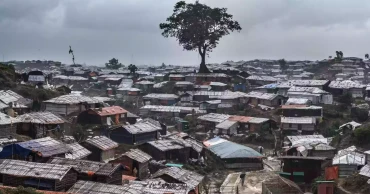
Fire risks still high in Rohingya camps: IOM
The International Organization for Migration (IOM) has said it continues to work closely with sector partners to scale up assistance and address urgent and evolving needs, stressing that fire risks remain high in the Rohingya camps.
While immediate assistance continues, the latest incident underscores the persistent fire risks facing refugee communities in Cox’s Bazar, which hosts more than one million Rohingya refugees, it said.
The fire risks remain high, particularly during the dry season, due to the dense layout of the camps and the use of highly flammable materials in temporary shelters, IOM said.
It launched an emergency response following a large fire in a Rohingya refugee camp in Cox’s Bazar early Tuesday morning.
Read more: Canada reaffirms commitment to dignity and justice for Rohingya
Relief efforts are being carried out in close coordination with the Government of Bangladesh and humanitarian partners to ensure timely and appropriate assistance to affected families. “When fires strike in overcrowded camp settings, the impact extends far beyond damaged infrastructure,” said Lance Bonneau, IOM Chief of Mission in Bangladesh.
“Families lose shelter, essential belongings, and access to basic services, increasing immediate protection risks. Our response is guided by a clear responsibility to protect lives, uphold dignity and ensure that those affected receive assistance quickly and safely, so families can begin to regain a sense of normalcy.”
The fire affected more than 2,000 refugees, causing extensive damage to shelters and camp-based facilities. No fatalities or major injuries have been reported.
More than 400 shelters were damaged and camp infrastructure was severely impacted, including over 160 water, sanitation and hygiene (WASH) facilities such as water points and latrines, as well as 11 learning centres and two mosques.
Beyond the destruction of shelters, the fire also destabilized the hillside terrain on which much of the camp is constructed, damaging drainage networks and public infrastructure, and increasing risks related to access and erosion.
After the fire was contained, IOM deployed health teams and ambulances to support those with minor injuries and worked with partners to rapidly assess damage and immediate needs.
Building on these assessments, IOM and its partners rapidly deployed specialized teams in shelter, WASH, and protection to support affected families. Within 24 hours of the incident, IOM’s camp management team, together with refugee volunteers, cleared debris from the fire-affected areas to restore safe access for emergency assistance and essential services.
Over 49.5 lakh Bangladeshis internally displaced by natural disasters: IOM
In coordination with the World Food Programme (WFP), emergency food assistance was provided, while affected households received emergency shelter assistance, blankets, floor mats, mosquito nets, and portable solar lights.
Following previous devastating fires, including the March 2021 incident that displaced 45,000 people, IOM and humanitarian partners have continued to strengthen refugee-led emergency preparedness and response mechanisms to enable faster, safer, and more effective action when hazards occur.
1 month ago
Bangladesh to join ministerial roundtable as part of Global Labor Market Conf in Riyadh
Riyadh will host the ministerial roundtable on Monday, as part of the third edition of the Global Labor Market Conference (GLMC), which will be held under the patronage of the Custodian of the Two Holy Mosques, King Salman bin Abdulaziz Al Saud, under the theme “Furture in Progress.”
Expatriates’ Welfare and Overseas Employment Adviser Dr. Asif Nazrul will represent Bangladesh at the event, said the organisers on Wednesday.
The event will take place at the King Abdulaziz International Conference Center, with the participation of 40 labor ministers from around the world, aiming to strengthen practical responses to the most pressing issues facing labor markets today.
In its third edition, the ministerial roundtable will focus on moving from dialogue to implementation.
Ministers will discuss actionable and immediately applicable employment pathways, exchange international best practices, and explore ways to enhance multilateral international cooperation in skills development, technology adoption, job quality, and social protection, contributing to strengthening labor market resilience.
Eng. Ahmed bin Sulaiman Al Rajhi, Minister of Human Resources and Social Development, said the ministerial roundtable represents a unique and important opportunity to harness the accumulated knowledge and expertise of participating countries and translate them into tangible and practical cooperation.
"By bringing together ministers and international partners, we strengthen collaboration, exchange successful policy models, and work to develop regulatory frameworks that improve work environments, enhance competitiveness, and support labor market resilience," he said.
The Saudi Minister said the impact of these efforts will not be limited to advancing the Saudi labor market alone, but will also contribute to creating positive and sustainable impact on labor systems worldwide.
The ministerial roundtable will be chaired by Eng. Ahmed bin Sulaiman Al Rajhi, Minister of Human Resources and Social Development, with the participation of Gilbert F. Houngbo, Director General of the International Labour Organization, as part of the Global Labor Market Conference, which will be held in Riyadh from 26 to 27 January.
The conference is organized by the Ministry of Human Resources and Social Development, in strategic partnership with several international organizations.
The ministerial roundtable serves as a strategic global platform for the exchange of insights and expertise on the future of labor markets, building on the outcomes of previous editions of the Ministerial Roundtable.
The Global Labor Market Conference (GLMC) is an international platform that brings together governments, international institutions, the private sector, experts, academics, and youth voices to examine the current state of global labor markets and shape their future.
Through year-round initiatives and a flagship annual event, GLMC promotes evidence-based dialogue, knowledge exchange, and cross-sector collaboration to identify practical and sustainable solutions that support fair, resilient, and competitive labor markets.
Focusing on critical issues such as workforce development, technological transformation, economic mobility, and the evolving nature of work, GLMC is committed to translating insights into practical, sustainable solutions that deliver real-world impact.
1 month ago