Foreign-Affairs

Islami Chhatra Shibir condemns attack on Bangladesh mission in India’s Agartala
Islami Chhatra Shibir, the student wing of Bangladesh Jamaat-e-Islami, has strongly condemned the attack and vandalism at the Bangladesh Assistant High Commission in India’s Agartala.
The student organization expressed its deep concern over the incident, urging both the governments of Bangladesh and India to take immediate steps to prevent further escalation.
Dhaka sharply reacts over “heinous attack” on its Agartala mission
In a statement, Chhatra Shibir's central president, Monzurul Islam, said, “Relations between neighboring countries must be founded on mutual respect and trust. Diplomatic missions are safeguarded by international law.”
“Attacks like these not only jeopardize diplomatic ties but also harm the overall relationship between the two nations. This incident threatens regional stability and could contribute to the spread of extremism and violence,” he further added.
Security enhanced for Bangladesh missions in India
He also urged the Indian government to promptly identify the attackers, ensure they are held accountable, and reinforce the security of the mission.
“It is crucial to take concrete measures to prevent such incidents from occurring in the future,” he added.
1 year ago

Dhaka sharply reacts over “heinous attack” on its Agartala mission
The government of Bangladesh on Monday said it “deeply resents” the “violent demonstration and attack” by a large group of protesters of the Hindu Sangharsh Samity of Agartala on the premises of the Assistant High Commission of Bangladesh in Agartala.
The Ministry of Foreign Affairs, in a statement, underlined that this “heinous attack” on a diplomatic mission of Bangladesh and desecration of the national flag of Bangladesh comes in a pattern, further to a similar violent demonstration in Kolkata on 28 November 2024.
“This particular act in Agartala stands in violation of the inviolability of diplomatic missions, as the Vienna Convention on Diplomatic Relations, 1961, asks for,” the ministry said.
BNP demands withdrawal of Mamata's UN peacekeeper statement
The government of India, in a separate statement, said they are taking action to step up security arrangements for the Bangladesh High Commission in New Delhi and their Deputy/Assistant High Commissions in the country.
"The incident earlier today of the breach of premises at the Bangladesh Assistant High Commission in Agartala is deeply regrettable," said the Ministry of External Affairs.
Security enhanced for Bangladesh missions in India
Diplomatic and consular properties should not be targeted under any circumstances, the Indian ministry said.
As it is the responsibility of the host government to protect the diplomatic missions from any form of intrusion or damage, the government of Bangladesh called upon the government of India to take immediate action to address this incident, to undertake a thorough investigation into the incident.
Bangladesh sought steps to prevent any further acts of violence against the diplomatic missions of Bangladesh in India, including the safety and security of the diplomats and the non-diplomatic members of staff and members of their families.
The accounts received conclusively attest that the protesters were allowed to aggress into the premises, by breaking down the main gate of Bangladesh Assistant High Commission in a pre-planned manner, the Ministry of Foreign Affairs said.
Indian media spreading propaganda about Bangladesh: Home Affairs Adviser
In the process, in the presence of the members of the local law enforcement agencies, they vandalised the flag pole, desecrated the national flag of Bangladesh and also damaged properties inside the Assistant High Commission, the government of Bangladesh said.
Regrettably, the ministry said, the local police persons present in charge of protecting the premises were found not to be active in containing the situation from the beginning.
Bangladesh wants friendly, normal relations with India: Foreign Affairs Adviser
All members of the Assistant High Commission are left with a deep sense of insecurity, said the Ministry of Foreign Affairs.
1 year ago

BTRC rejects proposal for bandwidth transit to India’s northeast
Bangladesh Telecommunication Regulatory Commission (BTRC) has declined a proposal to provide transit for bandwidth through Bangladesh to India’s northeastern seven states
The approval process for the proposal had progressed significantly and was on the verge of finalisation. Sources at BTRC believe that the deal failed to go through due to the political changes on August 5.
The initiative to establish the bandwidth infrastructure was jointly undertaken by two International Terrestrial Cable (ITC) operators, Summit Communications and Fiber at Home, along with Indian telecom giant Bharti Airtel during the tenure of the Awami League government.
Bharti Airtel had submitted the proposal to Bangladesh’s Ministry of Foreign Affairs, which subsequently forwarded it to the Post and Telecommunication Division and then to BTRC for evaluation.
Security enhanced for Bangladesh missions in India
The plan involved setting up a Terrestrial Cable Landing Station (TCLS) at the Akhaura border by Summit and Fiber at Home. From this TCLS, fiber cables were to connect to the submarine cable landing stations of the Bangladesh Submarine Cable Company Limited in Cox’s Bazar and Kuakata, enabling services to extend to Singapore.
From the TCLS on the border, Bharti Airtel intended to provide high-speed internet services to the northeastern states of Tripura, Mizoram, Manipur, Arunachal Pradesh, Assam, Nagaland, and Meghalaya.
However, high-ranking officials, speaking on condition of anonymity due to the matter's sensitivity, indicated that the transit would offer minimal benefits to Bangladesh. The primary beneficiaries would have been Summit Communications and Fiber at Home, businesses aligned with the ousted Awami League government. The real advantage would have gone to India.
Currently, India’s northeastern states are about 5,500 kilometers away from the Chennai submarine cable landing station, with Singapore located an additional 8,700 kilometers beyond. The mountainous terrain within India makes it challenging and expensive to establish and maintain fiber networks in these areas. Due to this extended distance, the latency is 55 milliseconds for connections to Chennai and 87 milliseconds for connections to Singapore.
1 year ago
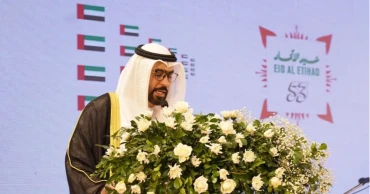
UAE reaffirms commitment to working with Bangladesh
Ambassador of the United Arab Emirates (UAE) to Bangladesh Abdulla Ali ALHmoudi has said his country is keen to share its experiences with Bangladesh in the areas of civil aviation, ports and logistics, and defense partnership.
Moreover, he said, the UAE remains focused on direct investment for strengthening mutual economic and business partnership.
“I would like to take this opportunity to extend my best wishes to the current interim government in all their efforts. I also reaffirm our unwavering commitment to working together for a better and more prosperous Bangladesh,” said UAE Ambassador on Monday.
Chief Adviser Yunus hopeful SAARC can give dividends to people of the region if revitalised
Earlier, the UAE Embassy in Dhaka celebrated the 53rd Union Day amid festivities and enthusiasm. Civil Aviation and Tourism Adviser AF Hassan Ariff attended the reception as the chief guest.
Advisers, Ambassadors, heads of diplomatic missions, senior government officials, business persons, and representatives from the media, academic and social institutions also attended the ceremony.
Ambassador Ali AlHmoudi said the UAE and Bangladesh enjoy deep-rooted historical relations and this year is unique and remarkable as both are celebrating the Golden Jubilee- 50 years of diplomatic relations. “We are looking forward to strategic partnership between the brotherly countries,” he added.
The UAE Ambassador said it is a matter of pride that 1.2 million Bangladeshis are residing in the UAE, making significant contributions to both the UAE and Bangladesh.
Bangladeshi brothers and sisters in the UAE are now sending the highest remittance for Bangladesh, he said.
1 year ago

Security enhanced for Bangladesh missions in India
The government of India on Monday said they are taking action to step up security arrangements for the Bangladesh High Commission in New Delhi and their Deputy/Assistant High Commissions in the country.
Indian media spreading propaganda about Bangladesh: Home Affairs Adviser
"The incident earlier today of the breach of premises at the Bangladesh Assistant High Commission in Agartala is deeply regrettable," said the Ministry of External Affairs in a statement.
Diplomatic and consular properties should not be targeted under any circumstances, the Indian ministry said.
1 year ago
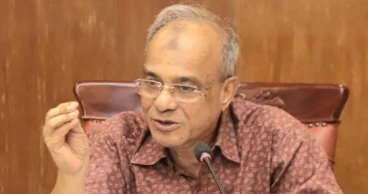
Indian media spreading propaganda about Bangladesh: Home Affairs Adviser
Home Affairs Adviser Lieutenant General (retd) Md Jahangir Alam Chowdhury has criticised the Indian media for spreading false and misleading information about Bangladesh.
Speaking to journalists in Rangpur’s Pirganj on Monday, the adviser urged local media to counter this propaganda by reporting the truth.
"The Indian media is spreading lies about us. No unstable environment has been created in our country," he said. "I request journalists to expose these lies and publish the truth. By doing so, those spreading misinformation will be exposed."
Bangladesh wants friendly, normal relations with India: Foreign Affairs Adviser
Chowdhury also addressed the recent murder of Abu Sayed, a martyr in the anti-discrimination student movement.
He praised Sayed's bravery and confirmed that three suspects have been arrested in connection with the crime. "We will start hearing the case soon. If anyone else is involved, they will be brought to justice," he added.
The Adviser responded to questions about a potential ban on ISKCON, stating that he had no information on the matter but assured that anyone filing false cases would be held accountable.
Calling on the people of the country to remain patient, Jahangir Alam said, "We must all work together for the development of the country.”
“Whatever is happening, including the law and order situation, will improve if we cooperate. I urge the media to present the true facts. If you uncover any corruption within us, expose it. If you see any corruption in me personally, please bring it to light," he added.
Changed scenario: Dhaka optimistic to establish good ties with Delhi
He also urged journalists to investigate and report any corruption, including irregularities in police recruitment. "If you find any corruption, whether in the police or elsewhere, please expose it. We will take action against anyone involved," he said.
During his visit, the Home Affairs Adviser met with the family of Abu Sayed and visited his grave.
Senior officials, including BGB Director General Major General Mohammad Ashrafuzzaman Siddiqui, RAB Director General AKM Shahidur Rahman, and Rangpur Range DIG Aminul Islam, were also present.
1 year ago

US Embassy Dhaka screens documentary ‘A Woman's Place’
The US Embassy in Dhaka, in partnership with the American Film Showcase (AFS), hosted a screening of the documentary "A Woman's Place" at the American Centre to observe the 16 Days of Activism Against Gender-Based Violence.
The event drew an engaged audience, including faculty from Gender Studies, Development Studies, Sociology, and Criminology, as well as exchange alumni.
Leveraging its alumni network, the Embassy aims to support women's empowerment and raise awareness of gender-based discrimination through meaningful dialogue and engagement.
Bren Flanigan, deputy director of Public Engagement at the US Embassy in Dhaka, opened the event.
He underscored the importance of fostering safe, inclusive environments where women can thrive.
He emphasised the US. Embassy's dedication to promoting gender equality and human rights in Bangladesh.
"A Woman's Place" spotlights the challenges women face in male-dominated industries, following the stories of three pioneering female chefs as they confront gender-based discrimination.
1 year ago
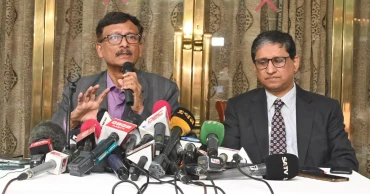
Bangladesh wants friendly, normal relations with India: Foreign Affairs Adviser
Foreign Affairs Adviser Md Touhid Hossain on Monday said Bangladesh wants to see a “normal and friendly” relationship with India protecting mutual interest, noting that he sees West Bengal Chief Minister Mamata Banerjee's remark as usual that goes with her.
"I would like to see this as Mamata-like remarks. I don’t understand why she has made such remarks," he said while responding to a question at a media briefing.
Hossain said he personally thinks it is not a right step from her though politicians make remarks on various perspectives.
Indian media on Monday reported that West Bengal chief minister Mamata Banerjee urged the central government to seek the deployment of a peacekeeping mission by the Union Nations in Bangladesh to tackle the ongoing situation there.
"We have families... properties... and loved ones in Bangladesh. We accept whatever stance the Government of India takes on this...but we condemn atrocities on religious grounds anywhere in the world and appeal to the union government, and the Prime Minister, to intervene," NDTV quoted Mamata as saying.
Earlier, the Adviser briefed the diplomats stationed in Dhaka at state guesthouse Padma on minority issues explaining the government's position and describing the situation on the grounds.
He said a section of the media, especially in India, is engaged in propaganda. “We said that we as a society have always been maintaining communal harmony. "We are not saying that there are no such incidents of attacks on minorities, but those are isolated and happen more or less during all regimes.”
Hossain said the government conveyed to the diplomats that religious harmony is part of the society and the government is firmly determined to maintain it.
He said there are efforts domestically and globally to give an impression that the country is heading towards a deteriorated situation. “We should not forget that there is a global campaign (against the government) by a certain group.”
The Adviser said the government will handle it with an iron-hand if anyone tries to create chaos in the country.
Responding to a question, he said they did not say anything specific about India but media issues came up.
He said a representative of the Indian High Commission in Dhaka was also present at the briefing largely attended by the diplomats.
Responding to a question, Hossain said they shared with the diplomats under what circumstances former ISKCON leader Chandan Kumar Dhar, alias Chinmoy Krishna Das Brahmachari, was arrested. He is now in jail.
He said the government will not allow any communal activities in the country and it sees all its citizens equally.
“We did not say that there is no problem in the country. There are proble4ms and we are trying to fix those problems,” Hossain said, adding that they have become successful in addressing issues in many areas.
Asked whether the scheduled Foreign Office Consultations (FOC) will be held this month, he said, “I think it will be held.”
Hossain acknowledged that there has been a change in the dynamics of bilateral relations with India since the August 5 political changeover.
1 year ago
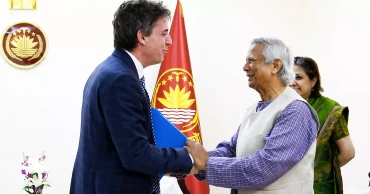
Dr Yunus seeks more Swedish investment
Chief Adviser Prof Muhammad Yunus on Monday invited more Swedish investment, saying the interim government is carrying out vital reforms to ensure ease in doing business in the country.
Dr Yunus made the request when Swedish Ambassador to Bangladesh Nicolas Weeks met him at his Tejgaon office.
"We encourage more Swedish investment in Bangladesh," the 2006 Nobel Peace Laureate said, adding that his government has curbed corruption, made investment in export processing zones easier, and moved to ratify ILO conventions on labour laws.
Ambassador Weeks said his government supports the Yunus-led interim government and its move to reform the police, judiciary, election commission and civil administration.
"Let me assure you that you have our full support in this transition," Weeks said.
Chief Adviser Yunus hopeful SAARC can give dividends to people of the region if revitalised
During the meeting, they also discussed different aspects of the July-August revolution, the government's reform initiatives, Swedish investment in Bangladesh, and women's role in the mass uprising.
Mentioning that the key word of the revolution was ‘reform’, Prof Yunus said his government is determined to carry out reforms before holding elections.
Bangladesh plays "pivotal role" in advancing SAARC process, says its SG
The Chief Adviser said the situation in the country has stabilised, although some challenges remain, including managing high expectations, from various groups in the society. "Managing expectations is a big task. We are trying, but we are very careful."
Lamiya Morshed, senior secretary and principal coordinator of the SDG Affairs, and Shahnaz Gazi, Director General of the foreign ministry, were present.
1 year ago

Bangladesh plays "pivotal role" in advancing SAARC process, says its SG
Secretary General of the South Asian Association for Regional Cooperation (SAARC) Golam Sarwar said Bangladesh plays a "pivotal role" in advancing the SAARC process.
He said this when he paid a call on Foreign Affairs Adviser Md. Touhid Hossain at the Ministry of Foreign Affairs on Monday.
The SAARC Secretary General was accompanied by Hari Prasad Odari, Director (Poverty Alleviation & Information) at the SAARC Secretariat.
Chief Adviser Yunus hopeful SAARC can give dividends to people of the region if revitalised
Abdul Motaleb Sarker, Director General (SAARC & BIMSTEC) was also present during the meeting.
The Secretary General briefed the Foreign Adviser on the various ongoing activities of SAARC, including convening the next session of the Programming Committee in the first quarter of 2025, activities of regional centres, and celebrating the 40th anniversary of SAARC Charter Day.
The Foreign Adviser told the Secretary General that Bangladesh stands ready to play a proactive role to revitalize the organization.
He advised the Secretary General to work closely with the other SAARC Member States to revitalize SAARC.
Broken criminal justice system needs to be fixed: CA's Press Secretary
He emphasised the importance of holding a Foreign Secretary level (Standing Committee) meeting for advancing its activities at the functional level.
He assured the Secretary General of Bangladesh’s full support in facilitating the SAARC Secretariat to fulfil its mandate and strengthening the SAARC process.
1 year ago